Bootstrap
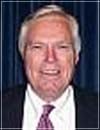
Winston Pannell

An Honourable Man

1 Chronicles 4:9-10
Winston Pannell March, 22 2009 Audio
0 Comments
1 Chronicles 4:9 And Jabez was more honourable than his brethren: and his mother called his name Jabez, saying, Because I bare him with sorrow. 10 And Jabez called on the God of Israel, saying, Oh that thou wouldest bless me indeed, and enlarge my coast, and that thine hand might be with me, and that thou wouldest keep me from evil, that it may not grieve me! And God granted him that which he requested.

Sermon Transcript

Auto-generated transcript • May contain errors

100%
Let me add my welcome to Mark.
It's good to see you here this morning to worship the Lord through
the preaching of his word and singing of the hymns. I'm glad
you're here. The title of my message this
morning is An Honorable Man. The Congressional Medal of Honor
is awarded to members of the armed forces in recognition for
service above and beyond the call of duty. Since its inception
in 1861 by a joint resolution of Congress, 3,450 and counting,
still counting, have received this Medal of Honor for their
service to our country. The men and women who receive
this medal exemplify the bravest and the best of America. The
Presidential Medal of Freedom is also given to civilians who
bravely sacrifice their time and energy to contribute to the
security and national interest of the United States of America.
This Medal of Freedom also honors those who contribute to the values
of human rights and world peace and this medal is given to those
who are not even, some are not even citizens of America, even
the non-citizens. Our nation was founded and built
upon the principles of self-sacrifice of such heroes and these or America's
way of honoring our heroes. Well, in the kingdom of God,
there are honorable men and women also. And this kingdom is built
upon the foundation of the apostles and the prophets, Jesus Christ
himself being the chief cornerstone, Ephesians 2.20. For example,
David slew Goliath with a simple sling and one stone, one smooth
stone. Samson killed a thousand men
with the jawbone of an ass. Rahab the harlot, he had despised
at the, not the cost of her own life, but at the peril or risk
of her own life. And Paul the Apostle outlined
in 2 Corinthians his suffering for the gospel. Listen to what
he says. Of the Jews, five times received I forty strikes less
one. Thrice was I beaten with rods.
Once was I stoned. Three times I suffered shipwreck.
A night and a day have I been in the deep." So we see here
from these saints of old the contribution that they made to
the kingdom of God. But they wouldn't boast in that. Turn with me, if you would, to
Hebrews chapter 11. We see another record of those
who sacrificed themselves for the ongoing of the kingdom of
God. In Hebrews 11 and verse 31, we
read these words, By faith the Rahab harlot perished not with
them that believed not, when she had received the spies with
peace. And what shall I say more? For the time will fail me to
tell of Gideon, of Barak, and of Samson, and of Jephthah, of
David also, and Samuel, and of the prophets, who through faith
subdued kingdoms, wrought righteousness, obtained promises, stopped the
mouths of lions, quenched the violence of fire, escaped the
edge of the sword, out of weakness were made strong, waxed valiant
in flight, turned the flight of armies of the alien. Women
received their dead, raised to life again, and others were tortured,
not accepting deliverance that they might obtain a better resurrection.
Here God details for us those honorable souls in the Old and
the New Testament who would have been worthy of the Medal of Honor
had it been offered to them and had it been conditioned on some
performance that they performed. What they did receive was far
more than a Medal of Honor. They received eternal life, and
that transcends the value of any medal that they might have
been given. Their standing against all opposition
was the fruit and results of free grace from God upon them. They were awarded a medal, alright.
It was the medal of eternal life, and that was earned by another,
not by them. And they would have been quick,
and were quick, to tell you, salvation is not of me, it's
all of grace. And their whole livelihood was
spent proclaiming the merits of Christ's work to secure all
of their salvation by His finished work on the cross. And some did
this even at the peril of their own life. Well, today we're going
to look at another one of these saints of old. If you would,
turn to 1 Chronicles chapter 4. This man that we're going
to be looking at today, his name is Jabez. And you're probably
saying, who? Not much is said about that.
In fact, there's only two verses in the whole of Scripture that
speaks of this man in 1 Chronicles 4. Though little is known of
him, what is revealed is of great significance to us that we can
learn from this man's life. His life is an encouragement
and a pattern to us, and it calls us to honor and duty in the service
of our God, motivated by grace and gratitude alone, not by anything
that we might do. to gain or maintain our salvation,
but simply salvation totally by the doing and the dying of
our Lord Jesus Christ. Look at verse 9 of 1 Chronicles
chapter 4. And Jabez was more honorable
than his brethren. Here God declares him to be an
honorable man. My message today, as I said,
is titled An Honorable Man. Three things I'd like for us
to look at. concerning an honorable man. First of all, an honorable
man is called of God. God called this man Jabez, an
honorable man. Secondly, an honorable man calls
upon God. In verse 10, Jabez called upon
the God of Israel. And thirdly, an honorable man
is compensated by God. The scripture says God granted
him his request. So we have a man called of God,
a man who calls upon God, and a man who is blessed of God.
So let's look at these three things for just a moment this
morning. An honorable man is called of God. What a privilege
it is to be called of God. We know that all men are not.
Many are called, but few are chosen, Jesus told his heirs.
God has his elect out of every kindred, tongue, tribe, and nation. And in every generation, He calls
them out of this world unto Himself. Those of us who have experienced
this call know how, that if He hadn't called us, we wouldn't
come. Turn with me, if you would, to
1 Corinthians chapter 1. 1 Corinthians chapter 1, talking
about this calling of God. In verse 21 of 1 Corinthians
chapter 1. Verse 23, I'm sorry. Paul writes
to the church at Corinth in 1 Corinthians 1, 23, But we preach Christ crucified
unto the Jews a stumbling block, and unto the Greeks foolishness,
but unto them which are called, both Jew and Greek, Christ the
power of God, and the wisdom of God. Because the foolishness
of God is wiser than men, and the weakness of God is stronger
than men. For you see your calling, brethren, how that not many wise
men after the flesh, not many mighty, not many noble, are called. But God has chosen the foolish
things of this world to confound the wise, and God has chosen
the weak things of this world to confound the things which
are mighty, and base things of this world, and things which
are despised hath God chosen, yea, and things which are not,
to bring to naught things that are, that no flesh should glory
in his sight. And in 2 Thessalonians, Paul
wrote this to the church of Thessalonica, whereunto he called you by our
gospel. But verse 10 says that Jabez
called upon the God of Israel. Look back at 1 Chronicles chapter
4. Jabez was more honorable than
his brother, and in verse 10 it says he called upon the name
of the Lord. He did, but only after God had
called him. How do we know this to be true?
Based on to whom he prayed and for what his prayer request was.
And we'll see this in verse 10 in just a moment. But you remember
Jesus's words in John chapter 15. He said, you have not chosen
me, but I have chosen you and ordained you that you could you
should go forth and bring forth fruit and that your fruit should
remain that whatsoever you ask the father in my name, he may
give it. Jabez asked of God and brought
forth fruit, and his fruit remains even until today. We have God's
testimony in Scripture that he was an honorable man. And how
many men of all those untold numbered in the Scriptures are
remembered as an honorable man. Jabez received honor from God,
and his faith is recorded for us in history. So we can learn
from this man and his testimony of God. God called Jabez an honorable
man. Well, who is an honorable man?
What about Jabez would inspire God, if God can be inspired,
would inspire God to call him an honorable man? Well, the Hebrew
word honorable is kabed. In the Hebrew, this word is an
antonym. It means it has different meanings,
two different meanings, two opposite meanings. On the one hand, it
means to be made heavy or grieve, to grieve. On the other hand,
it means to be honored, to be exalted. And his mother named
him Jabez, which means in the Hebrew sorrow. which means in the Hebrew, to
grieve. She said, because I bear him
in sorrow, I named him Jabez. The Hebrew word sorrow is oshib,
which means idolatry. Jabez's mother said this, I,
who am an idolater myself by nature, bear a son in idolatry,
who came forth from the womb, speaking lies, according to Psalm
58.3. We all did. Dead in trespasses and sin, Ephesians
2.1. And yet God says of this man
Jabez, he was more honorable than his brethren. Here was a
man who was born in idolatry, who practiced idolatry, and yet
he was blessed of God, honored of God in the annals
of history as a chosen vessel of honor. His life is reminiscent
of that of Benjamin. You remember the story of Benjamin,
the youngest son of Jacob and Rachel. She bore him. She died in childbirth, bearing
him. Before she died, she named him
Benoni, which in the Hebrew is son of sorrow. But Jacob changed
his name to Benjamin, which is in the Hebrew, son of thy right
hand. You can read about that in Genesis 35. Jabez was born
of sorrows, but blessed of God, as was Well, that's the case of all
God's elect. Our mothers, every one of our
mothers, bear us in sorrow, in idolatry. We were born children
of sorrow by nature. Job 14 says this, man that is
born of woman is of a few days and full of trouble, full of
sorrow, full of idolatry. In Job chapter 5, God says this,
Yet man is born to trouble, as the sparks fly upward. And to
Eve in the garden God said, I will greatly multiply thy sorrow and
thy conception. In sorrow thou shalt bring forth
children, and thy desire shall be to thy husband, and he shall
rule over thee. Well, how can a child of sorrow
be honorable in God's sight? How can a child of idolatry,
a practicing idolater, be honorable in God's sight? Job asked this
question. three times in the book of Job. How should man be
just with God? How should sinful man be just
with the God, the only true and living God? We'll see more of
this in a little bit. Well, how can a man be honorable?
That's the question. We know that there's only one
who's honorable, and that's Jesus Christ. He was called of God
to honor God by making men honorable by His doing and His dying. to
establish the only righteousness which God approves and imputes
to all the heirs of grace. Jabez was a man of sorrows and
acquainted with grief, but the angels said, I mean like Jabez,
Jesus was a man of sorrows, but the angels had called his name
Jesus for he shall save his people from their sin. He was a man
of sorrows on one hand, down, and then he was highly exalted
and given a name. because he was the Savior of
his people. In other words, call his name
Jesus, for he shall save his people from their sins. He shall
honor his Father and make men honorable in that process. Only
as we are in Christ are we, who by nature are ourselves idolaters,
made honorable, and that by our union with Christ. Paul said
it this way in 2 Timothy 1.9, Who hath saved us? who hath saved
us, and called us with an holy calling, not according to our
works, but according to his own purpose and grace, which was
given us in Christ Jesus before the world began. Jesus said of
his elect in John chapter 12, If any man serve me, let him
follow me, and where I am, there shall my servant be. If any man
serve him, he will my father honor. God called Jabez. God honored Jabez, and Jabez
served God. He honored God. Well, the question
is, has God called you? God calls honorable men and women
to Himself. Secondly, an honorable man calls
upon God. Look at verse 10. And Jabez called
upon the God of Israel, saying, O that thou wouldst bless me
indeed, and enlarge my coast, and that thine hand might be
with me, that thou wouldest keep me from evil, that it may not
grieve me." And the Lord granted him what he requested. Honorable
people, made honorable by their oneness with Christ, walk the
walk of honor in calling upon God. Notice God declared Jabez
honorable, and then he called on God. He didn't call on God
to make himself honorable. But it's the opposite, and that's
a critical difference. Men don't make themselves honorable
by activity or by abstinence. Their honor is the fruit and
result of Christ's person and work to secure their complete
salvation before a holy God. Notice how Jabez demonstrates
this. I think that Jabez was one of
those who believed that whosoever shall call upon the name of the
Lord shall be saved. He called on God. But notice
the God he called on. Verse 10, And Jabez called upon
the God of Israel. Jabez called upon the God of
Israel. Turn to Isaiah chapter 45. It's significant that he said
he called upon the God of Israel. Multitudes today call on God,
but few call on the God of Abraham, Isaac, and Jacob. And remember,
Jacob's name was changed to Israel, the God of Israel. Here, God
identifies the idol of false worship in Isaiah 45. Look at verse 19. Isaiah 45, 19. God says, I have
not spoken in secret in a dark place of the earth. I said not
under the seed of Jacob or Israel. Seek ye me in vain. I, the Lord,
speak righteousness. I declare things that are right.
Assemble yourselves and come near. Come, draw near together,
ye that are escaped of the nations. They have no knowledge to set
up the wood of their graven image and pray to a God they can't
save. Tear to you and bring them near. Yea, let them take counsel
together. Who hath declared this from ancient
times? Who hath told it from that time? Have not I the Lord,
and there is no God else beside me, a just God and a Savior? There is none beside me. So look
unto me. And be ye saved, all the ends
of the earth. For I am God, and there is no God else. There is
none else beside me." Here God exposes the idolatry of Jacob.
He says you pray to a God that can't save. This God is powerless
to save. The scripture says you notice
He cannot save. Underline cannot. There is no
possibility that this God can save. This God would save. He wants to save, he's trying
to save, but he can't do it by himself. He needs the sinner's
permission. He needs the sinner to do his
part. Without that help, it's impossible for this God to save
anyone. This God, now this is their scenario,
this God sent his son to die for the whole world, they say,
and he did die for the whole world, they say. He paid their
sin debt. but this God still charges them
with some part of their sin. This God will send millions to
misery because he does not honor the work of the true and living
Christ that he did for his people. Their Christ died for all and
paid their sin debt, but their God still charges them with sin. Their Savior is a failure and
their God is an unjust God, nothing more than an idol of the imagination. of sinful man. For them, Jesus
did not pay at all. That sin that was left to crimson
stain, He didn't wash it quite as snow. And God asks in verse
20, look, why do you pray to this God? Why do you pray to
a God that cannot save? Well, by contrast, the God of
Israel, this God of Israel's revenge has to be both a just
God and a Savior. Look at verse 21. the latter
part. There is no God else beside me,
a just God and a Savior. Aren't you glad God put that
verse of Scripture in there? That gives us a clear picture
of who the true and living God is, a just God and a Savior. Well, the question is, the question
is not, does God save? The Scriptures redound with that
affirmative there. Our God is mighty to save. Whosoever
shall call upon the name of the Lord shall be saved." The question
is this, how does God save? The soul that sinned shall surely
die. How can a holy God who has made that statement to Adam in
the garden, in the day you eat you will die, and in Ezekiel
chapter 18, how can he remain true to his word and still save
sinners? That is the question. The scriptures from Genesis to
Revelation answer, there is only one way, God the Father charged
God the Son with the sins of His people, and God the Father
charged His elect, those Christ died for, with the righteousness
He established when He suffered, bled, and died on that cross.
The only holy, harmless, undefiled person who ever lived, who knew
no sin, was made sin by imputation and tried to wind press of God's
wrath alone to satisfy every charge God had against the object
of His love. By His obedience, by His suffering
and His death, He established the only righteousness which
God recognizes and which the Father freely imputed to all
the heirs of grace. And who are those heirs of grace?
All who by nature and practice are nothing but a mass of sin
who can do nothing good within ourselves. In this exchange,
the principles of substitution, satisfaction, and imputation
were displayed and executed to perfection by God's appointed
surety and substitute, the Lord Jesus Christ. He, God the Father,
made Him, God the Son, to be sin for us who knew no sin, that
we might be made the righteousness of God in Him. That's why Jabez
called upon the daughter of Israel. That's why. Because he was an honorable man.
An honorable man knows how God is just to justify the ungodly. And this will be proved out in
the context of his prayers we'll see in a minute. What he requested
of God proves that he was a vessel under honor, fashioned as such
by the potter who of the same lump makes one vessel under honor
and the other under dishonor. Now look at verse 10 again, 1
Chronicles 4. And Jabez called on the God of
Israel, saying, O that thou wouldst bless me indeed, and enlarge
my coast. Let's stop right there. What
does he mean, enlarge my coast? Well, contrary to what most religionists
believe today, that he's not praying for God to expand his
fences, to increase his personal, physical possessions. The word
bless is an interesting word in the Hebrew. In addition to
meaning enlarge, It also means to kneel down. In the Hebrew
word, enlarge means to expand. The Hebrew word kos means vision. It seems that what his prayer
is this, bless me indeed, not with physical possessions, but
like Moses who prayed before him in Exodus 33, Lord, show
me thy glory. Jabez is praying for an expanded
vision of God's glory. Enlarge my vision of your redemptive
glory. I understand how you can be both
a just God and a Savior, but I am woefully inadequate in the
particulars and implications of the gospel. Although my vision
is that of seeing through a glass darkly, I desire to know Him
and the power of His resurrection and the fellowship of His suffering
being made conformable unto His death," Paul wrote in Philippians
3. Give me the vision, he is praying, to see more clearly.
that Christ's righteousness imputed is all my salvation. Grow me
in grace and knowledge of the Lord Jesus Christ seems to be
his prayer. And he says, enable me to behold
more and more the glory of God in the face of Jesus Christ,
as I see and understand more clearly how you save sinners
and remain just in so doing. Jabez was a praying man, and
he followed the prayer of his example, our Lord and Savior,
Jesus Christ. We know that Jesus was a praying
man. He prayed, Father, glorify me thou with the glory I had
with thee before the world began in John 17. And then he prayed
again in John 17. I pray not for the world, but
for those who gave me out of the world. And again in John
17. that those the Father gave him
might be with him, that we might behold his glory was his prayer.
Christ's prayer always honored the Father's glory and salvation.
So did Jabez. Listen to what he says in his
prayer. Oh, that thou wouldest bless me indeed and enlarge my
coast, and that thine hand might be with me, that thou wouldest
keep me from evil. He's praying this. I pray that
thou, which have hoarsed evil, would keep me whose every imagination
of the thoughts of my heart is only evil continually from evil. And this evil is more than immorality.
It's more than lawlessness. It's more than greed. It's idolatry. He's talking about idolatry here.
What is idolatry? It's that frame of mind that
says that I can do something to gain or maintain my standing
before God. I can do something to improve
my standing or I can do something that will diminish my standing
with God. It's that frame of mind of thinking, those thoughts, that I can enhance my standing
before God. This is the sin that does so
easily beset us, which God commands us in Hebrews chapter 12 to lay
aside. Lay aside every weight in that
sin that does so easily beset us, looking to Jesus. It's a
sin of thinking something I do improves my standing or something
I fail to do diminishes my standing with God. That's his prayer here. He says, Hold my hand that evil
might not grieve me. In other words, that sin might
not vex me. The Hebrew word grieve means
to labor, to form, to fashion as a sculptor with a piece of
wood or stone. The thought is this. hold me
with thy hand, that evil might not grieve me." In other words,
that I might not be guilty or even tempted of fashioning in
my mind some image of God that dishonors Him and causes me to
go about seeking to establish a righteousness of my own. Lord,
deliver me from ever thinking that anything but the imputed
righteousness of Christ could ever recommend me to God. Another
objective of Jabez here, another motive, when he asked God to
enlarge his coast, could have been this. It could have been
an obedience to the commandment to go into all the world and
preach the gospel to every creature. It could have been this. Lord,
open a door that I might preach this gospel. that could have
been part of his plea, too. But that's what Jesus did. You
know, when the scribes and the Pharisees and the Sadducees would
limit God to the nation only, Jesus sent his disciples into
all the world to preach the gospel. And we honor God when we desire
the salvation of his sheep, wherever they are in the world. In either
case, such was the prayer, such is the prayer of an honorable
man. Honorable men are called of God And honorable men call
upon God. And last of all, honorable men
are compensated by God. Look at the latter part of verse
14. And God granted him, I mean verse 10. And God granted him
that which he requested. Jabez prayed that God would bless
him indeed. The Hebrew word bless is the
word barak, which means to kneel down as an opposition as in a
posture of worship and adoration. Lord, keep me focused on Christ
and his finished work. Keep me looking to the cross.
Keep me looking to Jesus, the author and finisher of my faith,
who for the joy that was set before him endured the cross,
despised the shame, and is sat down on the right hand of the
throne of God. In other words, don't let me
turn to the right or the left, but look to the cross as my benchmark. Well, God honored Jabez with
the grace to worship God in spirit and in truth. He compensated
for his faith. Jabez for his faith. Listen to
what the psalmist said in Psalm 37. Delight thyself in the Lord. In other words, honor the Lord.
And he shall give thee the desires of thy heart. He will honor you. If we honor God, he'll honor
us. As God confirmed Christ by his
resurrection from the dead and seated him at the right hand
of God, Having made me an honorable, he confirmed Jabez by enabling
him to look solely to Christ and His righteousness for all
of salvation. That's the focus of an honorable man. Paul said
it this way in Philippians 2, Let this mind be in you, which
was also in Christ Jesus, who, being in the form of God, thought
it not robbery to be equal with God, but made himself of no reputation,
and took upon him the form of a serpent, found in fashion as
a man. And being found in fashion as
a man, he humbled himself and became obedient unto death, even
the death of the cross. Wherefore, God hath also highly
exalted him, and given him a name that is above every name. In
other words, God honored Christ. That at the name of Jesus every
knee should bow in honor of him, which every knee will someday
honor him, of things in heaven and things in earth, and that
every tongue should confess that Jesus Christ is Lord to the glory
of God the Father. Well, what about you? What about
me? Are you an honorable person?
Christ was an honorable man. He honored the Father in everything
he did. Honorable men honor Christ by
looking to him for all of salvation. He was a man of sorrows and yet
highly exalted. His sheep were born a few days
and full of sorrow or idolatry. And yet God honored those whom
Christ died for and has raised us up and made us to sit in heavenly
places in Christ Jesus. Is the prayer of J-Bez your prayer? If it is, has God granted you
your desire, your request? He will. Whatsoever you ask in
my name, that will I do. Christ promised. Whatsoever honors
me, Christ says, that I'll do. Whatsoever honors me, that I'll
do. The affectionate, fervent prayer of a righteous man, an
honorable man, availeth much. Such a man was Christ. Such a
man was his servant, JPS. Are you? May we be found to be
honorable in God's sight. This is far better than being
awarded the Congressional Medal of Honor or the Presidential
Medal.
Winston Pannell
About Winston Pannell
Winston Pannell was born in 1937 in rural Alabama. At the age of fifteen he became interested in religion and was baptized in the Armenian faith, as was Patricia, his wife to be and subsequently their three daughters. In 1985 the Lord confronted him with the true gospel and brought him to faith in God and true repentance from dead works and idolatry. It has been his passion to learn more of a Just God and Savior and his propitiatory work on behalf of his people given him by the Father in the Everlasting Covenant of Grace. The pulpit of Eager Avenue Grace Church in Albany Georgia has afforded him the opportunity to deliver this gospel of God’s free and sovereign grace in Christ, based on his righteousness imputed and received by faith as the whole of the sinner’s salvation. His desire is to deliver this gospel to the hearing of as many as the Lord shall save.

Comments

0 / 2000 characters
Comments are moderated before appearing.

Be the first to comment!

Pristine Grace Research Assistant

Pristine Grace Research Assistant

Ask me about articles, sermons, or theology from our library. I can also help you navigate the site.