Phil. 3:8 Yea doubtless, and I count all things but loss for the excellency of the knowledge of Christ Jesus my Lord: for whom I have suffered the loss of all things, and do count them but dung, that I may win Christ,
9 And be found in him, not having mine own righteousness, which is of the law, but that which is through the faith of Christ, the righteousness which is of God by faith: 10 That I may know him, and the power of his resurrection, and the fellowship of his sufferings, being made conformable unto his death; 11 If by any means I might attain unto the resurrection of the dead. 12 Not as though I had already attained, either were already perfect: but I follow after, if that I may apprehend that for which also I am apprehended of Christ Jesus.
13 Brethren, I count not myself to have apprehended: but this one thing I do, forgetting those things which are behind, and reaching forth unto those things which are before, 14 I press toward the mark for the prize of the high calling of God in Christ Jesus.
Sermon Transcript
Auto-generated transcript • May contain errors
100%
In the book of Acts, we have
the account of a man who was guilty of murdering innocent
people in the name of religion. Saul of Tarsus had letters from
the religious leaders in Jerusalem to go to Damascus and find any
who were in that way, as the scripture says, and bring them
to Jerusalem for trial and for execution. In the name of religion,
religion which is designed to promote life, he responded with
murder. Such is the twisted reasoning
of men by nature. More wars have been fought over
religious ideology than any other reason in the world. Paul said this of himself in
1 Corinthians chapter 15. He said, I am the least of all
the apostles, and I'm not neat to be called an apostle because
I persecuted the church of Christ. And he wrote this to the Galatians,
For you have heard of my conversation in time past in the Jews' religion,
how that beyond measure I persecuted the church of God and wasted
it. This man, though educated in
the house of Gamaliel, learned above his peers, and zealous
in the religious duties of his day, sought to destroy the church.
He was a fugitive from God. But when God apprehended him
on the Damascus road, Christ asked him this question, Saul,
why are you persecuting me? Why are you resisting me? It's
hard for thee to kick against the pricks. That word persecuted
means to evade. Christ is saying, Paul, why are
you evading me? You know, you don't know this,
but you have been one of mine elect from eternity past. And
it's impossible for you to resist my calling. I set my love on
you before you were even born, and nothing can keep me from
having you as my apostle." This man, who was predestined by God
to become a champion for the church and greatest of the apostles,
was fighting against God and had to be taken hold of. He had
to be apprehended. by Christ himself. That's what
the word apprehend means. It means to take hold of by force. He was overtaken by the grace
of God, delivered out of the darkness of idolatry and translated
into the kingdom of God's dear Son and into the family of God. And in Philippians chapter 3,
the scripture that Michael read, we have this record of Paul's
soul of Tarsus, his apprehension by Christ. Look at verse 12 of
chapter 3 again. Paul writes, Not as though I
had already attained, either were already perfect, but I follow
after, that if I may apprehend that for which also I am apprehended
of Christ Jesus my Lord. He said of himself here in this
verse that he was apprehended of Christ. And that's the title
of my message this morning. Apprehended of Christ. As I mentioned
before, the word apprehended means to lay hold of, to take
by force, to take against one's will. That's what Christ does
for all his sheep. He goes out into the highways
and the hedges and he draws them to himself, and they come because
he promised, I, if I be lifted up from the earth, I will draw
all men unto me. The question for me today and
for you is this. Have I been apprehended by Christ? And I trust that we all have.
Although most of us didn't have a Damascus Road experience like
that Apostle Saul of Tarsus, all who are justified before
God were apprehended by Christ in basically the same manner
as he apprehended Saul of Tarsus. We were plucked, as the Scripture
says, as a bran from the fire. and made trophies of God's grace
in Christ Jesus based on his free and sovereign grace in Christ. The Scripture says that Paul
is a pattern for all believers. He is a pattern of what takes
place in regeneration and conversion. His apprehension by Christ resulted
in three evidences that I want us to look at this morning. A
person that has been apprehended by Christ has these Same results. And I want us to look at them.
First of all, Paul says in verses 13 and 14, let's read them again,
verses 13 and 14. He says, Brethren, I count not
myself to have apprehended, but this one thing I do, forgetting
those things which are behind and reaching forth unto those
things which are before, I press toward the mark for the pride
of the high calling of God in Christ Jesus. Paul says, one
thing I do, The first thing, I repent of former works. Secondly, I rest in a finished
work. And thirdly, I run until that
final work. So let's look at these three
things that are evident in every sinner whom the Lord has apprehended. First of all, Paul said, this
one thing I do, I repent of my former works. He says in verse
13, forgetting those things which are behind. That word forgetting
means to no longer care for. Paul says, and we'll see this
in a minute, what I used to think was gain I count as loss. I no
longer care for these things. Repentance is a gift of the Holy
Spirit and it is the fruit and result of Christ's work. for
sinners who establish a righteousness for them that answers all the
demands of God's holy law and justice against them. It is the
first evidence that our faith is that faith of God which looks
to Christ for all our salvation. Though repentance can be distinguished
from faith, it can't be separated from faith. Where you find one,
you find the other. If a man has repented, he has
justifying faith. If he has justifying faith, He
has repented. You can't have one without the
other. Without repentance, all faith is counterfeit. Repentance
is so important that Christ said in Luke 13, except you repent,
you shall all likewise perish. John the Baptist came forth from
the wilderness preaching, bring forth therefore fruits, meat,
for repentance. In other words, bring forth evidences
of true, godly repentance. We know that godly sorrow over
sin without fear of punishment is one of the fruits of this
repentance. God's people, to some degree,
are sorrowful over their sin. We know we fall far short of
perfection in our character and conduct and will until the day
we are glorified. We know that the standard of
perfection God set and must demand is not attained by us in this
life. But we can be ashamed of this
sin without fear of punishment because Christ has paid the punishment
for our sin, even our lack of faith. The repentance of which
I'm speaking here is different from godly sorrow over failures
in our character and in our conduct. It is a radical change of mind
concerning who God is and what Christ accomplished on the cross
and how God deals with sinners and justification. This is a
one-time repentance. Godly sorrow over sin without
fear of punishment is a daily repentance. But I'm speaking
about this radical change of mind, this one-time repentance
when we come to faith in Christ. It is a change of mind brought
on by the hearing of faith. In other words, by the Holy Spirit's
work in sinners to give understanding to believe the gospel. which
declares Christ's righteousness alone to be the only salvation
and the sinner's justification before holy God. Saul of Tarsus
is a perfect example of true repentance, and I want us to
look at him this morning. God says of Paul in 1 Timothy
1 that he is a pattern for us to follow. In another place,
Paul said, follow me. as I follow Christ. If anyone
ever had a radical change of mind, it was Saul of Tarsus.
And we can learn from this example ourselves. In Philippians chapter
3, verses 3 and 6, he describes himself in his former religion. And then look at verse 4 of Philippians
chapter 3. Though I might also have confidence
in the flesh, Paul says, If any other man thinketh that he hath
whereof he might trust in the flesh, I more." If any man could
trust in the flesh, if any man could recommend himself to God
based on his obedience, Paul says, I could. But look what
he says in verse 5. He says, I was circumcised the
eighth day of the stock of Israel. In other words, according to
the law of Moses, Abraham was circumcised on the eighth day
after his birth. He said, my standing in the law
of Moses was perfect from day one. Like the rich young ruler
that we heard Bill talk about this morning in the Sunday School
Hour, all of Tarsus could say, I have kept all these from my
youth up. He put a lot of stock in his
obedience to the law of Moses. And he says, I'm of the stock
of Israel. In other words, I had Abraham as my father. So all
of Tarsus could say, as did the Pharisees of Christ, that we
be Abraham's seed and were never in bondage to any man. Then he
says, I am of the tribe of Benjamin. Benjamin was Jacob's favorite
son. If you remember, Jacob, whose
name was changed to Israel, had twelve sons. Benjamin was the
favorite. He said, I'm a Hebrew of Hebrews.
In other words, my father and my mother both were Hebrews.
There is no mixed blood in my veins. And then he says, touching
the law, I was a Pharisee. The scribes interpreted the law.
The Pharisees lived that law to the letter. Paul said, I was
a doer of the law, not just a hearer. Look at verse six. Concerning
zeal, I persecuted the church. and in touching the righteousness
which is in the law blameless." In other words, Paul says, my
credentials could stand with the best. Such was the character
of Saul of Tarsus. Now let's look at his accomplishments.
He says concerning zeal, in verse 6, I persecuted the church. My vocation, Paul said, was to
stamp out Christianity. The scripture says in Acts chapter
8 that Saul made havoc of the church, entering into every house
and hailing men and women. committing them to prison. Saul
of Tarsus went to great lengths to live out his faith, but he
had a radical change of mind. Look at verse 7. But what things
were gained of me, those I counted lost for Christ. In other words,
I had forgotten those things. Those things I highly esteemed
and valued I now count as nothing. That is what true repentance
is, a change in our minds about what we think of God, of Christ,
and our own selves. The question is this. Can I identify
with this man whose pedigree was par excellence? Nobody could boast above what
Saul of Tarsus had done. Can I identify with Saul's experience
on the Damascus Road? I need to ask myself this question
and many other questions. Have I ever thought my heritage
had anything to do with my salvation? You know, there are a lot of
people who think that Americans are God's chosen people. Simply
because you're American, you're God's chosen people. Well, we
know that's not so. But I've known people who actually
think this. Have you ever thought your spiritual roots could recommend
you to God? Have I? Some say I was born and
raised in a Christian home. My father and mother were lifelong
Christians. Does that save me? Well, we know
that it doesn't. Have you ever thought your zeal
for good works could gain you favor with God? Saul of Tarsus
did, and we did too by nature. Have you ever made this statement?
Well, I never thought any of these things recommended me to
God. If you preach the gospel to people today, they'll say,
well, I never did this to please God. I never did this to gain
favor with God. But the Scriptures are plain
that we did. We all, by nature, do this. And we'll see that a
little bit later. Was there ever a time when I
was ignorant of God's righteousness in Christ? The answer is yes. until I was brought under the
gospel by the Spirit of God, I never heard of an imputed righteousness.
I never, and I didn't understand what it was about. Now, there
is a righteousness, but it is one that man earns by himself,
but it's not the righteousness of God. That righteousness which
satisfies the demand of God's holy law and justice is the only
righteousness God looks at. that righteousness freely imputed
and received by faith? Have I changed my mind as to
the value of that righteousness? If I can answer yes to these
questions that I have raised, then I am on my way to true repentance.
And all those apprehended by Christ know and confess that
they are guilty of such ungodliness. We who are justified, like the
Apostle Paul, thought these things gained us with God. Paul says, what things were gained
to me, I now count them as lost. And in Romans chapter 10, there's
a very familiar passage. God states plainly that all who
are ignorant of or not submitted to Christ's righteousness for
all of salvation, they're lost and they're going about seeking
to establish a righteousness of their own. Turn to 1 John
chapter 1, if you would. John is addressing this issue
here in 1 John 1, in verses 8 and 10. Look at verse 8 of 1
John 1. If we say that we have no sin,
we deceive ourselves and the truth is not in us. If we confess
our sins, he is faithful and just to forgive us our sins and
to cleanse us from all unrighteousness. If we say that we have not sinned,
we make him a liar, and his word is not in us. I believe this is the sin of
which John is speaking here, that sin of saying, I never thought
any of these things recommended me to God. Would a man be so
foolish as to say he had never sinned? Look at verse 10. If
we say that we have not sinned, Is any man foolish enough to
say, I never sinned? I don't think so. Everybody would
confess, yeah, I'm a sinner. I know I'm a sinner. But I don't
know of many who say, I never thought these things recommended
me to God. I've committed that sin, and I know you have. To deny this is to make God a
liar, in verse 10. If we say that we have not sinned,
we make God a liar, and His Word is not in us. Because His Word
says in Romans 10, that I just quoted, that we are all guilty
of this. And it doesn't matter how many
times we say, No, I never said this. God says we did. And that
makes us all guilty of this sin. Look at 1 John chapter 5, over
one page. 1 John chapter 5. In verse 18, 1 John 5, 18, We
know that whosoever is born of God sinneth not, but he that
is begotten of God keepeth himself, and that wicked one toucheth
him not. Here again, I believe the man
who sinneth not is that man who has repented and will never look
to those former things of any value to recommend them to God.
If God has granted the sinner true repentance, he cannot go
back to those things for comfort and assurance. If I've repented,
if I've changed my mind about a certain thing, I'm not going
to look to it anymore. If I've truly repented, I'm not
going to look to that for any comfort or assurance. This thing
of repentance, why is it important? Why is it such an important thing?
Well, apart from the fact that it is a command of Christ who
said, repent and believe the gospel, it is necessary if we
would have any true confidence that our faith is genuine. Until
a sinner repents, he has no warrant from God to judge himself saved.
Thinking so is deadly presumption. Secondly, he has no proper motive
to obey, and all his obedience is dead work and fruit unto death.
Romans chapter 7. Thirdly, as long as a sinner
thinks something other than Christ's righteousness imputed makes him
more fit for final glory, he will always have occasion to
look back. And Paul wrote about this, or
the writer of Hebrews wrote about this in Hebrews chapter 11, where
he warned us that without repentance there is no going forward. Without
repentance there is no believing the promises of God. And without
repentance there is no seeing those things as afar off. In
other words, there is no persuasion and embracing of those things,
those promises of God. In other words, there is no possession
of one without the other. We can't believe the promises.
We can't look to Christ. We can't look where those things
come. We can't believe the promise. There is no possession of one
without the denial of the other. Christ said in Luke chapter 9,
if any man would come after me, let him deny himself and take
up his cross and follow me. Let him deny himself. Let him
repent of his idolatry and dead works. You know, when we lie
on, when we Lie down on our deathbeds and draw our last breath, we
will all have unrepentant sin in our person because death itself
is a product of sin. There is no possibility that
we can confess every sin right up to the moment that we die. We can't confess our sins to
God's satisfaction because our confession itself is full of
sin. But if this repentance of which
Paul is writing here and speaking here and given by God is our
experience, then no sin we commit can be charged against us because
even our unrepentant sins have been charged to Christ and He
satisfied them on the cross. Even this radical change of mind
concerning the character of God, what Christ did in salvation,
which is the work of the Holy Spirit in us, is corrupted by
our sinful nature. But this repentance is the fruit
and result of Christ's work for His people, and that work, not
our repenting, is the whole of our salvation and unchangeable
standing before God. And we repent of ever thinking
anything but His righteousness that recommend us to God. So
you see the importance of repentance in our lives. Jesus commanded
sinners to repent and believe the gospel. In other words, change
your mind. about God, about Christ, and
about yourself. And he also warns, and except
you repent, you shall all likewise perish. Paul said this, one thing
I do, I forget those things that are behind. I repent of former
works. And all whom Christ hath apprehended,
like the apostle Paul, repent from their former works. The
question for you and me, have we repented? Have I repented? Have I changed my mind? Secondly,
Paul says, this one thing I do, not only do I repent of my former
works, but I rest in a finished work. Look back at Philippians
chapter 3 and verse 13. I rest in a finished work. Paul
says, brethren, verse 13, I count not myself to have apprehended,
but this one thing I do, forgetting those things which are behind
and reaching forth. under those things which are
before. I'm resting in the finished work. What is ever before the
mind of a justified sinner? He says, I reach for those things
which are before. What is ever before our mind
as a justified sinner? The person and work of Christ.
That's what we look to. Nothing within ourselves. The
finished work of Christ. Paul says in verse 9, look at
verse 9, that I might be found in him not having mine own righteousness
which is of the law, but that which is through the faith of
Christ, the righteousness which is of God by faith." Paul said, to win Christ and
be found in Him is my all in all. How does one win Christ? The Greek word means to gain,
to attain at the expense of someone else. When you win a prize, you
don't earn it. It's something given. do anything
to gain Christ or to win Christ. The Apostle Paul was already
in Christ when he wrote these words. What is it to win Christ? It is simply to be more convinced,
more dogmatic, that Christ's righteousness imputed is all
I need to stand me in good stead with God. It is to be convinced
that God is just to justify me based on one thing and that alone,
the imputed righteousness of Christ, and that He has given
me the whole inheritance of grace and without any contribution
from me. And how does a sinner become
more convinced of this? By making use of the means, by
attending the worship services of the church, by daily prayer,
by daily study, and fellowship with those around him. I need
to know more, like the Apostle Paul wrote here in verse 10 of
Philippians 3, I need to know more of the power of his resurrection. I need to know more of the fellowship
of His suffering. I need to know more to be made
conformable unto His death. This is growth in grace. I need
to hear of the faith of Christ. In other words, the gospel of
Christ and the doctrines that declare Christ to be my all in
all, which is that righteousness of God by faith. That righteousness
which abides with God is given by God and is received by faith. This is the faith of which Paul
spoke in Romans chapter 1 that Jim talked about last Sunday.
Paul said, I'm not ashamed of the gospel, for therein is the
righteousness of God revealed from faith, from that subjective
belief, from that objective body of doctrine which is the gospel,
from that faith to faith, which is that subjective work of the
Spirit and the sinner to believe and to lay hold of and look to
that gospel and what it says of Christ and of God and ourselves.
That righteousness which resides with God, given by God and received
by faith. So Paul says, I rest in a finished
work. Our character and conduct is
far from perfect, and we grow in grace as we learn of Christ's
finished work for us, and we rest in that work. And those
who have been apprehended by Christ have entered into this
rest. Question is, am I reaching forth
in those things which are before? Am I resting in a finished work
that Christ has already done? Those who have been apprehended
by Christ have entered into His rest, and they are reaching forth
in those things which are before. Are you resting in Christ's finished
work? The Apostle Paul said, I've repented
of my former works, and I'm resting in a finished work. And lastly,
he said, this one thing I do, I run. until that final work. Look at verse 14 of chapter 3.
He says, I press toward the mark. I'm running until that final
work. I press toward the mark for the
prize of the high calling of God in Christ Jesus. What is
the mark? It is the reward of the race
given at the end of the race. When one passes this mark, the
race is over. Where does the justified sinner's
race end? It ends in Christ. He finished
the race. He won. The gospel message to
believers is this. In Christ, sinners win the race. This is what the justified sinner
strives to win. Look at verse 8 again. Philippians
chapter 3. Yea, doubtless, and I count all
things but loss, for the excellency of the knowledge of Christ Jesus
my Lord, for whom I have suffered the loss of all things, and do
count them dung, that I might win Christ. He said this in Hebrews
chapter 12. I lay aside every weight and
the sin that doth so easily beset me, and I run with patience the
race that is set before me, looking unto Jesus, the author and the
finisher of that race. I look to Christ and His righteousness,
not my works, not my running, not my pressing toward. When
the race is over, the justified sinner will be ushered into the
winner's circle, in other words, into paradise itself, where Christ,
the forerunner, for us is entered in, Hebrews chapter 6, who has
already won the race for us. In Christ Jesus, there can only
be one winner, and Christ has already won that race. All who
are in Him by faith are winners also. His righteousness demands
it. It is here we run until the final
work is accomplished in us, and the only work undone to those
who are justified now in our salvation is that final glorification
of our bodies. Look at Philippians chapter 3
and verse 20. Paul says, For our conversation
is in heaven, from whence we also look. We're looking from
heaven. We're seated with Christ in the
heavenliest, not in our person, but in his person. And we look
for the Savior, the Lord Jesus. Our citizenship is in heaven.
God's elect are seated with Christ in heaven right now. not in our
own person, but in the person of our representative, Christ.
This ensures that we will be, in our death, we will be seated
with him in our person. And it's from heaven, from this
position in Christ, that we look. We expect him to come for us.
He promised this. He said, if I go away, I'll come
again and receive you unto myself. And when he does, look at verse
21, he will change our vile bodies. who shall change our vile bodies
that it may be fashioned like unto his glorious body according
to the work whereby he is able even to subdue all things unto
himself." Turn with me for one last scripture to 1 Corinthians
chapter 15 and verse 51. One work left to be done. In 1 Corinthians chapter 15,
Paul writes, Behold, I show you a mystery. We shall not all sleep,
but we shall all be changed. In a moment, in the twinkling
of an eye, at the last trump, for the trumpet shall sound,
and the dead shall be raised incorruptible, and we shall be
changed. For this corruptible must put
on incorruption, and this mortal must put on immortality. So when
this corruptible shall have put on incorruption, And this mortal
shall have put on immortality, then shall be brought to pass
the saying that is written, Death is swallowed up in victory. O
death, where is thy sting? O grave, where is thy victory? The sting of death is sin, and
the strength of sin is the law. But thanks be to God, which giveth
us the victory through our Lord Jesus Christ. Therefore, my beloved
brethren, be ye steadfast, unmovable, always abounding in the work
of our Lord, forasmuch as you know that your labor is not in
vain in the Lord." This is the final work which will complete
our salvation. Right now, as justified sinners,
we are free from the guilt, from the defilement, and the condemning
power of sin. based on Christ's righteousness
charged to our account. We are completely, totally justified. When this work that Paul is talking
about is finished, we will be free even from the presence,
the power, and the influence of sin to worship God perfectly.
Then shall be brought to pass that sin that is written, death
is swallowed up in victory. O death, where is thy sting?
O grave, where is thy victory? The Apostle Paul said it this
way in 1 Timothy chapter 4, I have fought a good fight. I have finished
my course. I have kept the faith. Henceforth
there is laid up for me a crown of righteousness, which the Lord,
the righteous judge, shall give me at that day, and not to me
only, but unto all them that love his appearing. And in 2
Timothy he says this, I am ready to be offered, and the time for
my departure is at hand. Paul was running. until that
final work. Are you running? Am I running?
Well, Paul asked this question in 1 Corinthians chapter 9. Know ye not that they which run
in a race run all, but one receives the prize? So run, that ye may
obtain. God's people run until that final
work. Well, Christ on the Damascus
road apprehended Saul of Tarsus. His sin with its guilt and condemning
power, and the only answer to that sin was revealed to him
by the Lord Jesus Christ. In other words, Christ made him
willing in the day of his power to repent, to rest, and to wait
upon the Lord. Those whom Christ has apprehended
or will yet apprehend have been acquitted based on his righteousness
imputed and will live eternally in heaven. God's holiness and
justice demands it. Christ's righteousness ensures
it, and the Holy Spirit will accomplish it. He will bring
God's sheep to repent of former works, rest in the finished work,
and ready themselves for that final work. But until he comes,
look at verse back in Philippians, one last verse, Philippians chapter
3. Not as though I had already attained,
either were already perfect, but I follow after, if that I
may apprehend that for which also I am apprehended of Christ
Jesus." Until Christ comes, we follow after that we might be
apprehended of Christ as He has apprehended us. In other words,
that word means to lay hold on. Christ apprehended His sheep.
He laid hold of them. and we lay hold of him until
that time that he comes for us. Jesus laid hold on Saul of Tarsus
on the Damascus road. He plucked him as a bran from
the fire and revealed to him salvation complete, made certain
by Christ's life and death to establish a righteousness for
him that would satisfy the Father's holiness and justice against
him. To this one truth Saul of Tarsus
camped out. He laid hold on this truth and
sought to grow in grace and knowledge of this salvation and this Savior.
He sought, as verse 10 said, to know Him and the power of
His resurrection and the fellowship of His suffering to be made conformable
unto His death. In other words, he said, in another
place, I determine not to know anything among you save Christ
and Him crucified. My prayer for us today is this,
that by faith we might be able to lay hold of Christ as the
Lord by grace has laid hold on us.
About Winston Pannell
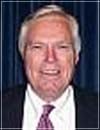
Winston Pannell was born in 1937 in rural Alabama. At the age of fifteen he became interested in religion and was baptized in the Armenian faith, as was Patricia, his wife to be and subsequently their three daughters. In 1985 the Lord confronted him with the true gospel and brought him to faith in God and true repentance from dead works and idolatry. It has been his passion to learn more of a Just God and Savior and his propitiatory work on behalf of his people given him by the Father in the Everlasting Covenant of Grace. The pulpit of Eager Avenue Grace Church in Albany Georgia has afforded him the opportunity to deliver this gospel of God’s free and sovereign grace in Christ, based on his righteousness imputed and received by faith as the whole of the sinner’s salvation. His desire is to deliver this gospel to the hearing of as many as the Lord shall save.
Pristine Grace functions as a digital library of preaching and teaching from many different men and ministries. I maintain a broad collection for research, study, and listening, and the presence of any preacher or message here should not be taken as a blanket endorsement of every doctrinal position expressed.
I publish my own convictions openly and without hesitation throughout this site and in my own preaching and writing. This archive is not a denominational clearinghouse. My aim in maintaining it is to preserve historic and contemporary preaching, encourage careful study, and above all direct readers and listeners to the person and work of Christ.
Brandan Kraft
Pristine Grace Research Assistant
Pristine Grace Research Assistant
Ask me about articles, sermons, or theology from our library. I can also help you navigate the site.
Bible Verse Lookup
Loading today's devotional...
Unable to load devotional.
Select a devotional to begin reading.
Bible Reading Plans
Choose from multiple reading plans, track your daily progress, and receive reminders to stay on track — all with a free account.
Multiple plan options Daily progress tracking Email reminders
Comments
Your comment has been submitted and is awaiting moderation. Once approved, it will appear on this page.
Be the first to comment!