Bootstrap
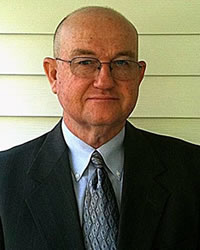
Gary Shepard

The Life Laid Down

John 10:11-18
Gary Shepard July, 26 2014 Video & Audio
0 Comments
2014 Bible Conference

Sermon Transcript

Auto-generated transcript • May contain errors

100%
Our next speaker is Brother Gary
Shepard, and he's from Jacksonville, North Carolina. We're so thankful,
Brother Gary, you could be with us again this year. We were greatly
blessed by the message last evening. We ask that God would enable
you to deliver His Word again tonight that will magnify His
name and bless His people. You come preach to us. Not many people know where Jacksonville,
North Carolina is. But I expect that a lot more
know where the Camp Lejeune Marine Base is. If you get to the Camp
Lejeune Marine Base, you'll be at Jacksonville, North Carolina. I'm thankful for this privilege. I do not come and stand in this
pulpit lightheartedly at all. Turn with me tonight in the gospel
of John, chapter 10. Sometimes I think if I could
get any or every person in the world to read one chapter of
Scripture. I would get them to read John
chapter 10. I want to read some words of
our Lord Jesus beginning in verse 11. He says, I am the good shepherd. The good shepherd giveth his
life for the sheep. But he that is in hireland, and
not the shepherd, whose own the sheep are not, seeth the wolf
coming, and leaveth the sheep, and fleeth, and the wolf catcheth
them, and scattereth the sheep. The hireling fleeth, because
he is an hireling, and careth not for the sheep. I am the good shepherd, and know
my sheep, and am known of mine. As the Father knoweth me, even
so know I the Father. and I lay down my life for the
sheep. And of the sheep I have which
are not of this foal, them also I must bring, and they shall
hear my voice, and there shall be one foal and one shepherd. Therefore doth my Father love
me, because I lay down my life that I might take it again. No man taketh it from me, but
I lay it down of myself. I have power to lay it down,
and I have power to take it again. This commandment have I received
of my Father. The Lord Jesus Christ identifies
himself here as the Good Shepherd, and he is the one that is responsible
for the sheep. If you would hear modern religionists
speak in our day, it would seem that they believe that the sheep
are responsible for the shepherd. And he shows us here three things
that characterize the good shepherd's sacrifice. It was perfect. It was voluntary. It was particular. And every other, by virtue of
Christ's own repeated words in these verses, every other so-called
shepherd is a thief and a robber. He is a false shepherd, and he
is what the Apostle Paul describes as another Jesus. These words are undoubtedly the
words of everlasting love. They are the words of the Son
of God, the words of the Mediator, of the Priest forever, the words
of that great shepherd of the sheep. And so I would have to say that
this is the atonement according to Christ. The psalmist said, Thou art fairer
than the children of men. Grace is poured into thy lips,
therefore God hath blessed thee forever." This is grace being poured from
the lips of the only Shepherd and Savior. And so if we listen
to what he says, as I said earlier, it will surely show three essential
things concerning the sacrifice of Christ. And as I said also,
the first thing essential about the sacrifice and offering and
death of Christ is that it was perfect. You see, it says here, he says
here, that he gives and he lays down what? His life. His perfect, spotless, sinless
life. And by virtue of his life being
a spotless, sinless, perfect life, it is that unique life. It is the life that was laid
down as the one sacrifice for sins forever, and the Apostle
tells us that that life, that death, that death that Christ
died, He died according to the scriptures. Let me read you just
one of the scriptures, the Old Testament scriptures that He
was referring to in the book of Leviticus. He says, And whosoever offereth
a sacrifice of peace offerings unto the Lord to accomplish his
vow, or a freewill offering in thieves or sheep, it shall be
perfect to be accepted. There shall be no blemish therein. And so when you look at all those
descriptions of those Old Testament sacrifices, whatever they were,
they all had one thing in common. They were to be without spot
and without blemish. They had to be perfect to be
accepted. And so our Lord Jesus describes
himself in two or at least two of these verses as this. He says, I am the good shepherd. I am the good shepherd. And what that actually says,
it seems that there is a double article there. I am the good
shepherd. And so in that very word and
statement and description and name that he gives of himself,
he shows himself as that perfect sacrifice. That is exactly what
all the prophets and all the apostles, long year after year
after year, that's what they all said about the Messiah, and
that's what they all said about the Messiah when he came in human
flesh. Listen in Isaiah 53. Isaiah says, and he made his
grave with the wicked and with the rich in his death, because
he had done no violence, neither was any deceit in his mouth. You could not say that, I could
not say that, and it could not be said of any other person that
has ever lived on this earth. When you get to the book of Luke,
the angel in the description given, it says, ìThe angel answered
and said unto her, The Holy Ghost shall come upon thee, and the
power of the highest shall overshadow thee, Therefore also that holy thing which shall be
born of thee shall be called the Son of God." One of the apostles
preaching in the book of Acts, he says this, speaking of He, seeing this before spake
of the resurrection of Christ, that his soul was not left in
hell, neither his flesh did see corruption. So that everywhere
you look, evidently, The Spirit of God has made a repeated effort
to show the perfection of the Lord Jesus Christ as this sacrifice. When you come to the book of
Hebrews, in Hebrews the Apostle says in chapter four, For we
have not a high priest which cannot be touched with the feeling
of our infirmities. But he was in all points tempted
like as we are, yet without sin. Is that plain? If it is not,
you can go to Hebrews chapter 7 And hear him say there, for
such a high priest became us, or suited us, or fitted us, since
we all are sinners. Such a high priest became us
who is holy, harmless, undefiled, separate from sinners, and made
higher than the heavens. And then a little later, the
Apostle Peter, he takes up this message and he, connecting the
Lord Jesus Christ and his sacrifice to that Passover lamb and to
the other Old Testament sacrifices that pictured Christ. And he
says this, he says, for as much as you know, that you were not
redeemed with corruptible things as silver and gold from your
vain conversation received by tradition from your fathers,
but with the precious, the precious. And the apostle says, unto you
who believe, he is precious. You are not redeemed by those
things, those tokens of the Old Testament, he says, but you were
redeemed by the precious blood of Christ as of a lamb without
blemish and without spot. And then Peter goes on and he
describes him in this way, and you would think after such repeated
descriptions, after such definite statements, after assuring us
again and again these things concerning Christ that we would
believe in. But he says this in 1 Peter 2,
speaking of Christ, he says, who did no sin, neither was guile found in his
mouth. who when he was reviled, reviled
not again. When he suffered, he threatened
not, but he committed himself to him that judgeth righteously." And even when Pilate looked him
square in the eye, examined him, had every natural reason and
every natural inclination in him to try to pin something on
the Lord Jesus in order to justify what he was about to do in turning
him over to the Jews. He said, I find no fault in him. I find no fault in him. And then when you read in Hebrews
chapter 9, this really seals the deal kind of for me. It says
that he offered himself. That was not that he made himself
available or that he offered himself to men. But speaking
of himself and giving himself as an offering and a sacrifice,
he offered himself without spot to God. And so that is absolutely
essential. That is absolutely vital. That is absolutely the truth
as it comes from his own lips and the lips of the prophets,
he said, and the lips of the apostles. And every true preacher
of the gospel, his sacrifice, the life that he laid down, was
until that moment that the instrument of death inflicted that death
upon him when he yielded up the ghost, absolutely perfect. No matter how you describe him,
no matter what degrees you speak of him, a sinner can never die
and therefore save a sinner. He had to be perfect. But then not only was his laying
down of his life perfect, the life he laid down was perfect,
but also it was voluntary. You see, there are a lot of folks
that think in some way when the Lord Jesus Christ died on that
cross, when he was crucified at the hands of wicked men, that
they took him and did with him against his will. Absolutely not. You see, if he had sinned, or
was in any way a personal sinner, he could not have done that. If you break the law, you can't
just do what you will before the law is coming after you. You can't say, that you're going
to do something willingly and voluntarily when the laws got
hold of you, taking you. But he gave his life voluntarily. You see, God would have taken
it. Had he not laid it down, because
the soul that sinneth it shall die, because the wages of sin
is death, he would have taken hold of him. There would be nothing
voluntarily about it, because when he hung on the cross, it
says he yielded up the ghost. And I'll tell you this, the greatest
act of a man in this world demonstrating
a free will was when the shepherd laid down his life for the sheep. As a matter of fact, he did this
so freely and voluntarily in the two times he makes mention
of it. One time he says, I give my life
for the sheep. The next time he says, I lay
down my life for the sheep. And Isaiah had recorded, he was
oppressed and he was afflicted, yet he opened not his mouth.
He is brought as a lamb to the slaughter and as a sheep before
her shearers is done, so he opened not his mouth. You and I, if we think we're
being wronged in any way, We'll mouth it off. We'll let somebody
know about it, won't we? And yet, no matter what somebody
does to us in this world, no matter how badly we might be
treated, and I'm not justifying anybody doing so, but no matter
how badly we might be treated, it still would not be what we
really deserve. He said, I lay down my life for
the sheep. Has to be voluntary. And if you
turn over to John, chapter 18, look over in John, chapter 18,
beginning in verse three and listen to what it says here. Before he ever was actually hanged
on the cross, he had to be taken to the cross. John 18, verse 3, it says, Judas
then, having received a band of men and officers from the
chief priests and Pharisee, cometh thither with lanterns and torches
and weapons. Jesus, therefore, knowing all
things that should come upon him, he ran and got away from
there as fast as he could. He went forth, and he said unto
them, Whom seek ye? They answered him, Jesus of Nazareth. Jesus saith unto him, I am." That's what it says there. Why
did he say, I am? He was not only saying that he
was the one they were looking for, but he was the I Am. And Judas also, which betrayed
him, stood with them. As soon then as he had said unto
them, I am he, they went backward and fell to the ground. Why? Because that's all you can
do before the I Am. One of the first gospel preachers
I ever had to preach for me when I was still hanging on by the
threads in a false religion and denomination. And this preacher was preaching
for John 18. And he knew the gospel and he
preached the gospel. But these folks hadn't heard
much of the gospel. And when he came to that point
where the Lord Jesus Christ said, I am, and it says they all fell
backwards, I was sitting on the front view, and I believe I could
feel everyone in there just lean back to the back of their seats. Because here is God manifest
in the flesh, freely and willingly doing what he did. bringing himself
into this world as a voluntary sacrifice. Then asked them again,
Whom seek ye? And they said, Jesus of Nazareth. Jesus answered, I have told you
that I am he, if therefore you seek me. Let these go their way. You take me. But you can't have
them. You've got to let them go. Turn
over to John chapter 19. Look over in John 19 in verse
9. And when he went again, Pilate,
talking about the time when Christ is here before Pilate, He went
again into the judgment hall and saith unto Jesus, Whence
art thou? But Jesus gave him no answer. And then saith Pilate unto him,
Speakest thou not unto me? knowest thou not that I have
power to crucify thee, and I have power to release thee? Don't
you know I'm the one controlling all this? Don't you know I'm
the one who holds your fate in my hand to live or to die?" Jesus answered, Thou couldst
have no power at all against me. You could exercise your so-called
free will all you wanted to, and it would have no power over
me, except it were given thee from above. Therefore he that
delivered me unto thee hath the greater sin." When you look back in John chapter
10, look at the 15th verse of what Christ says here. He says,
As the Father knoweth me, even so know I the Father, and I lay
down my life for the sheep. You see, the death of our Savior
is an act of divine love. It is an act of premeditated
love. And we can talk about the love
of God all we want to until we are blue in the face, but until
we see the dying of Jesus Christ as an act of love, as an act
of his will, as an act of his purpose, as a freely and voluntarily
given sacrifice. We don't know anything about
love. Look in verse 17. Therefore doth
my Father love me, because I lay down my life, that I might take
it again. No man taketh it from me, but
I lay it down of myself. I have power to lay it down,
and I have power to take it again. This commandment have I received
of my Father." Do you understand that? He said, I have power to lay
it down. Nobody takes my life. They took and with wicked hands
they crucified Him and they slew Him, but it was all because of
what God had before determined to be done. When Pilate and the
Jews and the priests, when they all gathered, the Romans, everyone
together, they came together though they despised one another,
they came to do what they wanted to do, but what they were really
doing was what He wanted to be done. Look back in John chapter 19.
I've already quoted it, but if you look in verse 30, it says,
When Jesus therefore had received the vinegar, he said, It is finished. And he bowed his head and gave
up the ghost. This is an amazing thing here. Because we're always hearing
people talking about some who take their own life. But there's
something we seem to forget. And that is, how many more tried
to take their own life? But it didn't work for them. Because there's just one man
who has ever taken his own life. He laid it down. He yielded up
the ghost. And to show how absolutely, totally
in control he was, even just moments before, even in that
afflicted state, wounded, it says, he cried with a loud voice. I'm going to let you know something. I've still got life. I've still
got power. I still am able to do with you
and my own self as I will." And he cried out, and then he gave
up the ghost. Luke says, And when Jesus had
cried with a loud voice, he said, Father, into thy hand I commend
my spirit. And having said thus, he gave
up the ghost. Paul writing to the Galatians
in chapter 1, speaking of Christ, he says, "...who gave himself
for our sins, that he might deliver us from this present evil world
according to the will of God and our Father." He goes on in chapter 2 of Galatians,
I am crucified with Christ, nevertheless I live, yet not I, but Christ
liveth in me, and the life which I now live in the flesh I live
by the faith of the Son of God who loved me and gave himself
for me. He's the one who gave Himself
a ransom for all to be testified in due time. He's the one who
gave Himself for us that He might redeem us from all iniquity and
purify unto Himself a peculiar people zealous of good works.
It had to be voluntary. Well, somebody says, I don't
really have a problem with that. Well, you might with this one.
That's the third thing. And the third thing was it had
to be definite. It had to be particular. He says,
I give my life for the sheep. Now, let me just try to explain
something here to myself. Not everybody is a sheep of God. When he saves a sinner, he does
not take a goat and make him into a sheep. He looked at those Pharisees
and he said to them, you believe not because you are not of my
sheep. You see, his is a vicarious sacrifice. You ever hear somebody referring
to the Pope as the vicar of Christ? What he's saying is he's the
substitute for Christ. That's what that means. Because
the death of Christ is vicarious. He dies for, in the place of,
instead of, the sheep. I'm going to tell you something. Tomorrow morning, every preacher
in the whole world may stand up and say, God loves you and
Christ died for every one of you. And all the people may say a
hearty amen. They may even take a vote and
say, this is our doctrine. This is what's really true. We
believe that Christ died for every person without exception. But you know what Jesus is still
going to be saying? You think about this. I lay down
my life for the sheep. Then somebody comes along and
they come up with what they call the sufficiency-efficiency view
of the atonement. Fullerism. Never a bigger lie
perpetuated upon men in this world than that lie, to try to
say that the death of Christ is sufficient for all, but it's
only going to be efficient for those who believe. Well, let me ask you something.
Who does that really put the salvation of sinners? Whose hand
does that really put it in? Those who believe. What really makes effectual the
death of Christ? You know what makes it effectual?
The death of Christ. I don't know how to explain it
anymore. It's not anything that is done after his death that
makes it effectual or ineffectual, that makes it successful or not
successful. The fact that he lays down his
life for the sheep, that's the atonement according to Christ. And my friends, I've been there.
I'm telling you what, I used to have an old red Bible. When
I was in religion, if you didn't have a red Bible, you weren't
really anything anyway. I meant the blood. How stupid. But I take these
passages, give me one that said all, or all men, or every one,
and I just make me a little note to assure myself that it didn't
really say what it said elsewhere. But in the context of most every
one of those passages, our Lord, by the Spirit of God, is showing
us that salvation was not just to Jew, but it was to the salvation
of a remnant according to the election of grace out of Jew
and Gentile. Not just paupers, but kings and
paupers and male and female and young and old. and learned it
and unlearned it. Here, he's broken down all the
barriers. He's the Savior of the world.
In other words, he's the only Savior there is for anyone in
the world. And usually, the death of the
shepherd would be the death of the sheep. But in this case,
the death of the shepherd is the life for the sheep. I give
my life for the sheep. Oh, David, he said it so long
ago, and it's probably the first few verses of Scripture I was
ever introduced to in some old Bible school or something like
that. And David said, The Lord is my shepherd. Do you know what follows that?
I shall not walk. I shall not be in need of anything
and most especially of anything in the matter of my soul's salvation
because he's my shepherd. And I'll not be in want because
he laid down his perfect life voluntarily for me in my place. In Matthew 20 it says, even as
the Son of Man came not to be ministered unto, but to minister
and to give his life a ransom instead of or in exchange for
many. It could have been any, but it wasn't. That is that many sheep. I lay down my life for the sheep. Greater love hath no man than
this, that a man lay down his life for his friends. Somebody said, well, we were
enemies when Christ died for us. Wait, no, wait just a minute. The sheep were never Christ's
enemies. They're his friends. Doesn't
Paul say that while we were yet enemies, Christ died for us?
He goes and he tells us exactly what he means by that. In Colossians,
he said, you were enemies in your minds by wicked works. God was in Christ reconciling
us to himself. He didn't have to be reconciled. He has not been mad at His people.
He loved them with an everlasting love. If God loves you tonight,
He has always loved you. Do you know that? He loves His
people with an everlasting love. Before you even had a clue about
God, before you had a breath of life in this world, before
you ever existed, before the world was, He loved you with an everlasting
love. How do you know? Because he said
so. And because he laid down his
life for the sheep. Isaiah, wrote in Isaiah 53, 8,
speaking for God, God says, for the transgression of my people
was he stricken. You can say what you want to,
he died for. It won't change that. For the transgression of
my people was he stricken. But one of the most powerful
of all to me, if you could ever just get hold of one verse, if
you could ever believe what God says, is when the angel tells Joseph
the reason why he should be called Jesus. Thou shalt call his name Jesus,
for because he shall save his people from their sins." All
their sins. He'll do it by himself. He'll
do it by giving himself a sacrifice. And whenever you read in Ephesians
5, I read this every time I marry a couple. where Paul said, Husbands, love
your wives, even as Christ also loved the church and gave himself
for it. Well, I'm telling you, that either
teaches particular redemption or free love. How would you like to apply the
notion of universal redemption to your husband and his relationship
with other women? That'd be like the 60s. If you
can't love the one you love, love the one you're with. Is
that the way it goes? Husbands, love your wives as
Christ loved the church and gave himself for it. The church for
his bride. He chose his bride. He loves
his bride. He died for his bride. He gave himself to satisfy divine
justice in their place. And if one of them goes to hell,
for whatever reason it might be, he won't be just. He stood in my stead. If he died
in my place, if he satisfied justice, paid it all on my behalf,
and God sends me to hell, what kind of God is that? Absolutely unjust. Paul, when he is giving instruction
to those Ephesian elders in Acts 20, he says, Take heed therefore
unto yourselves and to all the flock over the which the Holy
Ghost hath made you overseers, to feed the church of God which
he purchased with his own blood. That is powerful. Who did he purchase with his
own blood? The church. I'm not talking about
an organization. I'm talking about the church,
which is His body, over which He is the head. He did so to
obtain their eternal redemption, to gain forgiveness for them
in the matter of their sins. And so, in Zechariah, the prophet
said, Awake, O sword, against my shepherd, and against the
man that is my fellow, saith the Lord of hosts, smite the
shepherd, and the sheep shall be scattered, and I will turn
my hand upon the little ones. What Tim read in Ezekiel 34,
he said, these lying, sleeping, self-promoting so-called shepherds
of the sheep. They eat the fat. They wear the
wool. They scatter the sheep. But he said, I'll gather them
out. You read in Luke chapter 15,
there's that shepherd going after the lost sheep. He's not out
on a goat hunt. He gathers the lost sheep, He
lays those lambs in His bosom and He rejoices and He invites
us to rejoice with Him. Oh, I love it when He makes manifest
one of His sheep. And when you look over in Matthew
25, I'm going to hush and hurry, but look in Matthew chapter 25
at verse 32. Now this is when the Son of Man
shall come in His glory, and all the holy angels with Him.
Then shall He sit upon the throne of His glory." Somebody said, well, that will
be decision time. Oh, no, it won't. It will just
be separating, division time. gathered all nations, and he
shall separate them one from another, as a shepherd divides
his sheep from the goats, and he shall set the sheep on
his right hand, but the goats on his left." At that hour, he
won't make either one of them the other. He'll just divide
them. He is going to make manifest
who the sheep are and the goats are. Then shall the King say
unto them on his right hand, The sheep, come ye blessed of
my Father, inherit the kingdom prepared for you from the foundation
of the world. You can have a Johnny come lately
Jesus if you want to. But I will take the eternal Son
of God. Look at verse 41. Then shall
he say also unto them on the left hand, the goats, depart
from me ye cursed into everlasting fire prepared for the devil and
his angels. You see what Christ says about
his own death and sacrifice shows it was a total success. And the
reason why he has to be the finisher and the accomplisher of it, why
he has to lay down his life and therefore save the sheep, is
because whoever makes it a success is the one that gets all the
glory. But how does he say that the
sheep are distinguished. They don't become sheep by doing
this. But look at what he says back
in John chapter 10, verse 16, and of the sheep I have which
are not of this fold, them also I must bring, and they shall
hear my voice." Look at verse 24. Then came the
Jews round about him, and said unto him, How long dost thou
make us doubt? If thou be the Christ, tell us
plainly. Jesus answered them, I told you,
and you believe not. The works that I do in my Father's
name, they bear witness, but you believe not. Because you're
not of my sheep, as I said unto you. My sheep hear my voice,
and I know them, and they follow me." They don't just follow a particular
doctrine or a denomination or a theology. No, he said, they
follow me. They don't follow a preacher.
except, as Paul said, as long as he was a follower of Christ. The sheep hear what the shepherd
says, most particularly about his death and sacrifice, and
they follow him. There are some marvelous things
going on. Sometimes where I'm at, small
groups, I kind of lose perspective of things. But I'm telling you what, every
once in a while I get an email. I get a call from somebody in
the north of England, from a lovely couple in the south of England,
from somebody in Pennsylvania, somebody in Washington State,
somebody in this place and that place and the other. I never
heard of them before. They say, I've been listening to your messages
and some of Brother James or Brother Bird or whoever. I've
been listening to some of the messages you got on Sermon Audio. I just wanted to call and thank
you for that message. That's what I believe. They heard the shepherd's voice. in that Word that gives him all
the glory. And they follow him. They follow him. God help us
to hear his voice and follow him. Thank you.
Gary Shepard
About Gary Shepard
Gary Shepard is teacher and pastor of Sovereign Grace Baptist Church in Jacksonville, North Carolina.
Broadcaster:

Comments

0 / 2000 characters
Comments are moderated before appearing.

Be the first to comment!

Joshua

Joshua

Shall we play a game? Ask me about articles, sermons, or theology from our library. I can also help you navigate the site.