Bootstrap
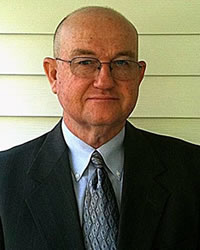
Gary Shepard

The Sure Mercies of David

Hebrews 13
Gary Shepard July, 28 2013 Video & Audio
0 Comments
2013 Bible Conference

Sermon Transcript

Auto-generated transcript • May contain errors

100%
I want to join Brother Tim in
thanking everybody. Thank you on behalf of myself
and my family for your kindness to us and your generosity to
us and your faithfulness to pray for us. And please don't stop. I'm thankful
for these who provided the music. I appreciate songs and hymns
that glorify God. I can't sing. If I were a sewing
machine, I wouldn't be a singer, but I like to hear it. praise rendered to God. I want you to turn this morning
to Hebrews chapter 13, the last chapter of the book of Hebrews. You know, sometimes preaching and preachers, they kind of get exalted above
the place that God has put us. I hate that. Because as was said once, all
that a preacher is, a gospel preacher, is just one beggar
telling another beggar where he got bread. We are just beggars
telling beggars where we got bread, where the bread is, where
the free bread is, where the free grace is. I spoke to you last evening on
the God of David. This morning I want to talk to
you about the sure mercies of David. When the Apostle Paul was preaching
at Antioch in Acts 13, he made reference to a promise of God
that is found in the book of Isaiah. It says, He said concerning that he raised
him up from the dead, he is talking about the resurrection of Christ, now no more to return to corruption,
he said on this wise, I will give you the sure mercies of
David. You need mercy? A man told me one time, he said,
a preacher, he said, I want to show mercy because I need mercy. I need mercy. And actually, the verse and statement
from God in Isaiah 55 and verse 3 is this, incline your ear and come unto me, and your soul
shall live, and I will make an everlasting covenant with you,
even the sure mercies of David." How in the world Could the mercies
that are spoken of in those verses and promises be sure? Certain? Guaranteed? Counted on? Relied on? Trusted in? Well, David is one of those Old
Testament figures who is a type of every sinner that God saves
by grace, and at the same time, he's a type of the Messiah. He's a type of the Lord Jesus
Christ. So in that promise, we find out
who the promise is made to, these sinners like David, and how they
are sure in that one who is described as both David's son and David's
Lord. If God ever shows you how this
man, Christ Jesus, could be David's son and David's Lord, you'll
be somewhere close to finding out the gospel. The sure mercies
of David. And they are sure because of
a covenant. A covenant, as was said in Isaiah
55-3, described as an everlasting covenant. Most people in religion
today who think about a covenant, they think it's a covenant. They
enter into a contract with God that if they do something, he'll
bless them for it. That's not this covenant. This
is the everlasting covenant. And as the writer of Hebrews,
and please excuse me if I attribute that to Paul the Apostle, I know
there's some bit of controversy of who actually wrote it, but
it is so Pauline as we say. But as he writes in this book
of Hebrews and is led by the Spirit of God to close out this
epistle, he asks those he writes to, to pray for him and for others
who minister the gospel And he prays for them in this closing
benediction. In verse 20 he says, Now the God of peace, that brought
again from the dead our Lord Jesus, that great Shepherd of
the sheep, through the blood of the everlasting covenant, make you perfect in every good
work to do His will, working in you that which is well-pleasing
in His sight through Jesus Christ, to whom be glory forever and
ever. Who is it that Paul is praying
to? There can be no doubt, he says,
the God of peace. Elsewhere in scripture we find
that same description of God Almighty. Now the God of peace,
Paul says in Romans 15, be with you all. To the Corinthians he says, finally
brethren, farewell, be perfect, be of good comfort, be of one
mind, live in peace, and the God of love and peace shall be
with you. He said to the Philippians, those
things which ye have both learned and received and heard and seen
and may do, and the God of peace, he'll be with you. To the Thessalonians, He wrote,
And the very God of peace sanctify you wholly, and I pray God your
whole spirit and soul and body be preserved blameless unto the
coming of our Lord Jesus Christ, the very God of peace. And our first thought ought to
be, if we know anything about the God of the Bible, and if
we know anything about our own selves as rebel sinners, our
first thought in question ought to be, how can God be the God
of peace to David? You hadn't forgot last night?
How can he be the God of peace to me, the sinner? How can he
be the God of peace to you as sinners? Well, he says, because
he's the God who brought again our Lord Jesus from the dead. You see, he's the God of peace
only in Christ. Outside of Christ, the apostle
tells us that God is a consuming fire. And furthermore, he is a God
of peace in Christ only in the everlasting covenant. Do you know anything about the
everlasting or eternal covenant? Well, a covenant involves two
or more parties. And not only must it involve
two or more parties, these parties who are involved in this covenant,
they must be able to fulfill the provisions of the covenant. A covenant is only as good as
those who are participating in this covenant. That's why our
covenant with God or our covenant with anybody else is no good,
because we're no good. We can't deliver. We can't fulfill
the pledge. And this everlasting covenant,
since it is an everlasting covenant, it can only have been between
God the Father, God the Son, and God the Holy Spirit. This
is a covenant that rises up out of an agreement within the Godhead. What does that mean? It means
that there can be no possibility of failure. We use language like this sometimes. We say that salvation is conditioned
on Christ. Well, let's make sure we understand
that. When you use the word condition,
it implies a possibility of failure. You see, salvation has really
always been in Christ. There is no possibility of failure. God speaks of everything accomplished,
and His Word goes out in that divine fiat as a proclamation
of that which is, because God wills it to be, this covenant. is the everlasting covenant. And while it is only between
these persons of the Godhead, only it depends on them, there
are yet some other beneficiaries to it. Who are they? They are called sheep. Even in this brief statement
about the everlasting covenant, those recipients of the benefits
and blessings of this covenant, they are singled out and pointed
out with a name used by God to distinguish His people throughout
the Old Testament, especially in John 10. It says here in this covenant,
it says that Christ stood as the great shepherd of the sheep. In other words, these sheep were
in this covenant as the recipients and beneficiaries by virtue of
their being put in union with the shepherd. You see, in John
10, our Lord calls his people, my sheep. But wait a minute now. They hadn't believed on him.
They hadn't made a decision for Him. They hadn't decided whether
or not they were going to follow Jesus or not. He said right then,
they're My sheep. And then He says this also. He
said, they are given to Me by the Father. How can they be said
to be His sheep? Well, He created them. They're His by right of creation. They're His by right of possession. They're His by right of donation. They were given to Him by the
Father. And therefore He says, all that
the Father gives, all these sheep that the Father giveth to the
great shepherd, the good shepherd, He said, they'll follow Me. All that the Father giveth Me
will come to Me. He says, these sheep, they'll
never perish. They'll never perish. That doesn't
mean that they'll just simply live forever. Everybody's going
to exist forever. But to perish is to be banished
out of God's presence for all eternity. to suffer the wrath
of God in hell for all eternity, worlds without end." They'll
never perish, these sheep won't. And those that were given to
him, it says of these sheep that he gave his life for them. And in case we didn't understand
that, he goes a few more verses down and he says, I give my life
for him, I lay down my life for him. Nobody can take my life
away from me. But the shepherd laid down his
life for the sheep. If you want to get straight on
the atonement, if you want to get straight on who Christ died
for, If you want to know the truth and reality of particular
redemption, there it is right there, two times stated. I give
my life for the sheep. I lay down my life for the sheep. And they are described in this
way. There are those who will hear his voice. My sheep hear
my voice. And those who are brought by
his Spirit and his gospel to know him, and those who follow
him and believe on him, he said to those Pharisees, you believe
not because you are not of my sheep. Somebody said, well, the only
reason a person will go to hell is unbelief. Now, wait just a
minute. That just isn't right. That makes
them the cause of their eternal destiny. And on the other side
of that coin, it shows that people believe that the reason that
these others will go to heaven is because they believe. That's
not right. God is the first cause. His grace precedes everything
and is the cause of everything. Oh, they'll believe. They'll
hear his voice because he'll speak to them with that life-giving,
faith-giving voice and power, and because of what he did, they'll
believe. Their believing won't be the
cause of any of it. In Ezekiel 34, this verse says
it all. He says, And I will set up one
shepherd over them, and he shall feed them, even my servant David. He shall feed them, and he shall
be their shepherd. He uses David to describe Christ. And yet it was David who said,
the Lord is my shepherd. So here is this covenant, and
in this covenant, the covenant head, the messenger, the angel
of the covenant, he's described in these verses as that great
shepherd of the sheep. And those covenant people, they're
described as sheep. Don't get to flying too high
on that name sheep. Sheep are stupid. Sheep are dumb. Sheep get lost. Sheep can't find
their own way. That's why they have a shepherd. And their salvation depends entirely
on this covenant and that covenant head on this David who is the
Savior of these other Davids. David said, This is all my salvation. Is this all your salvation? If you
are saved by the God of David, it is. He said, This is all my
salvation. And this covenant is contrasted
to that covenant with Israel. That is what we find often in
Scripture and especially in the book of Hebrews. We find these
things that picture and typified these spiritual things. They
are compared in the one hand, but they are also contrasted
in the other and shown to be how far superior. Better promises, better priest,
better blood, better covenant. Hebrews 8. It says, he obtained
a more excellent ministry by how much also he is the mediator
of a better covenant, which is established upon better
promises. You see, the everlasting covenant
is not only a better covenant, it is the best covenant. He says,
"...neither by the blood of goats and calves, but by his own blood
he entered in once into the holy place, having obtained eternal
redemption for us." not temporary redemption. As a matter of fact,
let me just throw this in, that word obtained there can also
be translated as manifested. In other words, when Christ came
into this world, when he went and hung on that cross, and died
that death of the cross and shed that blood, that was the manifestation
of this eternal redemption. He is the Lamb slain from the
foundation of the world. Hebrews 9. And for this cause,
he's the mediator of the New Testament. The New Covenant. That's what that word testament
means. Covenant. And it means that it is new simply
in the process of manifestation and revelation. You see, the
New Covenant is really the oldest covenant. That's like the last
Adam is really the first Adam. It's the everlasting covenant. For this cause, he is the mediator
of the New Testament, the new covenant, that by means of death,
for the redemption of the transgressions that were under the First Testament,
they which are called might receive the promise of eternal inheritance. I like the sound of that, eternal
inheritance. Hebrews 12, and to Jesus, this
ought to be pretty plain, and to Jesus, the mediator of the
new covenant, and the blood of sprinkling that speaketh better
things than that of Abel. Who is the mediator of this covenant? Christ is the mediator. And not
only that, this covenant between the God of peace and the great
shepherd of the sheep, that covenant was that the shepherd would become
flesh, that he would come into this world because the basis
of this covenant rests on this. It rests on something that God
absolutely considered as God cannot do. He says anything God cannot do,
can't die. This covenant is based on a death. Have you ever heard of a last
will and covenant or last will and testament? What's necessary
to put that will and testament into force and power? It is the
death of the testator. And so he says, the shepherd
would come in human flesh that he might die, and he would go
to the cross of God's justice in the place of the sheep. Give his life for the sheep. And there, by bearing their sins
in his own body on that tree, bearing the penalty of their
sins, on that tree, dying the death that was necessary to put
away their sins and by satisfying every claim of divine justice. Every claim. God would bless every one of
them with these covenant blessings. What are they? They are all spiritual
blessings. God has blessed us in Christ,
in this covenant, with all spiritual blessings before the world began. And he would justify them, sanctify
them, Forgive them, accept them, receive them as His children,
all because of Christ and His death according to the covenant
terms." What did he say? I came to do
the will of Him that sent me. The preacher is always talking about,
you need to do the will of God. Well, you doing the will of God
is not salvation. Christ coming into this world
and doing all the will of God, all the will of Him that sent
me, that's salvation. And not only that, it says that
the God of peace here is said to have brought up. That's actually
what it is here. Not just brought again, but brought
up. He's talking about resurrection
here. Because here is that connection
between the sacrifice of the priest and the intercession of
the priest, something had to happen. What was that? God had to raise him from the
dead. You see, he's both the priest and the sacrifice. hanging
on that cross, dying that death. That's the sacrifice, the one
sacrifice for sins forever. And then as the risen Lord, He
ever lives to make intercession for us, so something had to happen
between the sacrifice and the intercession. What was that?
God had to raise Him up from the dead. That's all in this
covenant. The greatest act of faith that
has ever been on this earth was that act of faith when Christ
laid down his life, depending upon God the Father raising him
from the dead. Because he died as a man. Now,
you talk about faith. That's why I believe it says
so often times, it talks about the faith of Christ. You say, well, I thought it was
talking about our faith. Any faith we have is because
of the faith of Christ. His faithfulness. It says, "...the
God of peace, here, he brought up, or brought again from the
dead, our Lord Jesus in the blood of the everlasting covenant."
In the blood. That means in agreement to and
in accordance with the terms of the covenant. You see, Christ had entered into
this covenant on behalf of his people, pledging to do what would
be required to save all of them by his death and satisfying God
for their sins. And the Father, in agreement
to that, fulfilled his pledge and raised him up or brought
him up from the dead in recognition of those same covenant terms,
and in doing so, showed they were fulfilled. I am afraid that we as preachers
make too little of the resurrection. When that priest entered into
that Holy of Holies, sprinkling that blood unseen by the eyes
of all those worshippers, when he offered that up to God, sprinkled
that blood on that mercy seat, which, by the way, was the Ark
of the Covenant. How did they know whether or
not God accepted that sacrifice. If the priest came out alive, if something wasn't right, Dave,
if something wasn't just exactly right, perfect in every way according
to what God had commanded, if he didn't come out, that means
God didn't accept it and killed him right on the spot. Just like
when Uzzah reached out his hand to just study the ark of the
covenant, and God killed him there. Why? No blood. No sacrifice. He wasn't a recognized
priest of God. But when Christ entered into
that holy place, not made with hands, and shed His blood, and
died the death of the cross, that death in His obedience unto
death, even the death of the cross. We know that God accepted
that sacrifice, that Word, His person, His Word. He accepted
every bit of that. We know that the covenant terms
were fulfilled in every way by Christ. And in that, God raised
Him up. The resurrection of Christ simply
cries out from God, ratified. Covenant in force. Covenant satisfied. Covenant accomplished. So that
Paul writes to Timothy and he says this. He speaks in this
way. He speaks of Christ. He says,
who has saved us. That's what I was talking about
in that verse. I remember the first time I heard
that verse really preached on like thirty-five years ago by
Brother T. Because it says, God who has
saved us and called us with a holy calling, not according to our
works, but according to his own purpose and grace which was given
us in Christ Jesus before the world began. Somebody said, well, Paul kind
of slipped up there. He got that order wrong. He should have said, if he calls
us and we answer or we agree or we decide, then he'll save
us. No. Did you not hear what he
said? He said, he hath saved us. And He has called us. There would
be no need for me to stand here or any of these other brethren
to speak to you to say we had a gospel or good news or glad
tidings if the truth wasn't that in His doing and dying, He saved
us. It's a pitiful message to try
to tell blind, dead sinners how to save themselves. You see,
we preach a covenant salvation. In that covenant, in the fact
that Christ died according to the terms of that covenant, representing
all those sheep that He was in union with before God, as those
old preachers used to say, in that grace union with Christ. He raised Him from the dead. He raised Him from the dead.
because his death ratified this covenant. His bloodshed was the
very basis of it. His life, given that perfect
sinless life, laid down in the place of a sinner. That was the
fulfillment of it. And the Father looked in favor
upon all the sheep in that covenant, being confident that the Son
would fulfill all things he pledged himself to do and to be as their
surety. And likewise, the Son was obedient
unto death, even the death of the cross, being confident that
the Father would fulfill all in raising Him from the dead." You see, this is all in one thing.
This is all in one work. This is all in one act. Paul
says he was delivered for our offenses. And what it actually
says was, following that immediately, it says, and he was raised because
of our justification. God justified his people in Christ. He declared them righteous. through
the Lord Jesus Christ, not in some abstract way, but because
in his death he put away all their sin. He says all the way through those
New Testament, those gospel accounts, Christ moving in that short period
of life that he lived on this earth, he kept telling them.
He kept telling them how that these things would happen. He'd
be betrayed by the priests. He'd be taken by the leaders.
That he'd be crucified. That he'd die the death of the
cross. But that he'd be raised. He brought him again through
the blood or in the blood of the everlasting covenant. And
for that reason, since God accepted his sacrifice, the gospel is
good news because it declares a covenant salvation, that is,
a full and free salvation, a complete and eternal salvation to all
who are in that covenant who will be brought to love to Christ,
the Christ of the covenant. Hebrews 5 says, and being made
perfect. Do you understand what that means?
He's already perfect. He's perfect when He went to
that cross. There was no reason in Him that
could be found by God or anybody else for Him to suffer the death
of the cross for anything of Himself. But he is made perfect. That is, he fulfills the complete
role of this covenant head and mediator as this substitute of
his people, as the shepherd of the sheep. And in doing so, it
says, he became the author of eternal salvation. A friend of mine one time, she
said, I'm tired of hearing about eternal salvation. There is no
other kind. There is no other Christ. There
is no other hope but that eternal salvation in this covenant of
Christ. Turn over to Zechariah chapter
9. I say good news. Now listen to
what is said by God through the prophet Zechariah to Zion. Do you know who Zion is? Zion
is the church. Zion is the bride of Christ.
Zion is the people of God. Zion is these sheep. Listen to
what it says in verse 9 of Zechariah 9. Rejoice greatly, O daughter
of Zion. Shout, O daughter of Jerusalem,
because thy King cometh unto thee. He is just in having salvation."
He must be God, who is a just God and a Savior then. He cannot
save you or me without being just. He is just in having salvation. I like that. He's got it. Your King is coming to you. He
is going to come to you in power by His Spirit, by His gospel. And then at that appointed time,
He is coming for you. Your King is coming. Riding upon an ass and upon a
colt the foal of an ass. There He is coming into Jerusalem.
They are saying, Hosanna. Have you ever said Hosanna to
Christ? Have you ever seen Him for who
He is? Hosanna means, Lord, save us. That is what I say. Lord, save
me. I say like old Peter, Lord, save me or I perish. Save me
by grace or there is no hope for me. I am a goner. And I will cut off the chariot
from Ephraim and the horse from Jerusalem, and the battle bow
shall be cut off. That just simply means that God
is going to conquer all his enemies. But he's also, in the salvation
of his people, he's going to conquer that enemy attitude in
them. It's just like Brother Tim said,
God's people have never been his enemies. They're his friends,
his brethren. But the Apostle Paul said that
we have become enemies in our minds by wicked works. What's a wicked work? Any work
except the work of Christ. That's a wicked work. Any work
except the work of righteousness, the Lord Jesus Christ. And he
shall speak peace unto the heathen. That's what I am. Gentile, most particular. But heathen in every other sense,
godless, ungodly. He'll speak peace to them. And
his dominion shall be from sea even to sea, and from the river
even to the ends of the earth. And as for thee also, by the
blood of thy covenant, I have sent forth thy prisoners
out of the pit wherein is no water." By the blood of the covenant,
by the blood of that King's covenant, God says, I have sent forth thy
prisoners. What kind of prisoners are they?
Turn you to the stronghold, you prisoners of hope. Bound by the captivity bringing
hand of Satan. Bound by tradition. Bound by
sin. Bound by sinful nature. Bound
up. Prisoners. Prisoners of hope. Why? Because of this covenant.
This King. Even today do I declare that
I shall render double unto thee. I'm going to put away your sin,
and I'm going to make you righteous. You see, he is on the one hand,
in verse 20, our Lord Jesus. That's his person. That's his
sacrificial character. But in verse 21, he's Christ. That's his offices. Prophet,
priest, king. He's the Christ. He's the covenant
head. And the salvation is sure because
the God of peace and the shepherd of the sheep have fulfilled every
covenant obligation, and God's promise of salvation is a covenant
promise to all who believe God. How do you know whether or not
they are going to believe God or not? The sheep will hear His voice. Faith is one of those covenant
gifts. Repentance is one of those covenant
gifts. In other words, this covenant
is so sure, so ordered, That it includes every possible problem
in our salvation. I don't have faith, it gives
it. I'm unable to repent, it gives the gift of repentance.
It gives the gift of salvation. I'm naked, it gives me the robe
of righteousness. I'm lost, it finds me. You name
it. Everything is in this covenant. The Bible says Abraham believed
God. He didn't just believe in God.
The devil believes in God, trembles, but he believed God. Why did Abraham believe God and
his father, who was an idol maker, didn't? Why did Jacob believe
God? Esau didn't. Why did Isaac believe
God? Israel didn't. Somebody says, well, salvation
is conditioned on faith. Oh, no, it's not. Salvation is the cause of faith because everything necessary
to save a sinner is in that covenant fulfilled by Christ. It says
of Abraham, and therefore it was imputed to him for righteousness. Now, it was not written for his
sake alone that it was imputed to him, but for us also to whom
it shall be imputed or to whom it shall have been imputed if
we believe on him that raised up Jesus our Lord from the dead,
who was delivered for our offenses and was raised again for our
justification. We believe because God imputed
righteousness to us, not the opposite. When the God of peace brought
the shepherd forth from the dead, the shepherd brought all the
sheep from the dead. Now that is as plain. I know
so often times Ephesians 2, those first verses, They are so often
times applied to the truth of regeneration. But what that actually says is
that when God raised up or quickened our Lord Jesus Christ, that He
quickened or raised us up together with Him and seated us in the heavenly Somebody says, well, I'm as sure
of heaven as if I was already there. That's not it. I am already
there. If my head is in heaven, then
I'm in heaven in my head. I'm in an inseparable grace union
with my head, Christ Jesus. And one day I'm going to be fully
and completely in there with Him. If you're out in the water and
you're up to your neck and water up to your chin, are you okay? Yeah. Why? Because your head's
above water. We're trying to keep our heads
above water. But the truth is, God's people,
their head's always above water. Their head's in the heavenlies. Isaiah wrote of this risen shepherd,
he said, Behold, the Lord will come with strong hand, and his
arms shall roll for him. Behold, his reward is with him,
and his work before him. He shall feed his flock like
a shepherd. He shall gather the lambs with
his arms, and carry them in his bosom, and gently lead those
that are with young, gently lead his suckling lambs. They're in the shepherd's arms. I know people like that picture.
Somebody looks like Wild Bill Hickok, standing there holding
a little lamb in his hands. That's not where it's at. This
is the Lord of Glory. This is the God who says, Thou
shalt not make unto me any graven image. Why? The only way you'll know Me is
by revelation, if I reveal Myself to you. And here's the revelation
of God in the man Christ Jesus. And He, as the great Shepherd
of the sheep, the good Shepherd of the sheep, that Shepherd and
Bishop of our souls, He said, you are now, Peter said, you
are now returned! And He holds us in His arms. That's not a bad place to be.
Don't pick on me if I'm in the arms of the shepherd. He doesn't
drag us along. He doesn't jerk us around. He
carries us gently like a lamb. Like a lamb. And what did the
shepherd do in his work? If you listen to Paul, listen
to Colossians 1. I'd ask you to turn there, but
just listen to what it says. Paul says, And he is the head
of the body, the church, who is the beginning, the firstborn
from the dead, that in all things he might have the preeminence.
For it pleased the Father that in him should all fullness dwell,
and having made peace by the blood of his cross. That cross is the covenant cross. I used to ride down the road
when I was a little boy, get up in the mountains on a vacation
near where Tim lives, and there would be these old granite, solid
granite crosses. On the side of the road, somebody
would put up and say, make peace with God. You better make your
peace with God. This fellow died, but it was
all right. He made his peace with God before he died. Well,
it wasn't all right then, because peace is made by the
covenant head through the blood of His cross. He doesn't offer
a peace. He made peace for everyone in
that covenant, which will prove to be everyone that he calls,
everyone that he brings, whatever it takes, the gospel to them
and them to the gospel, everyone he gives faith and repentance
to, and they acknowledge him and are separated from this world
by their confession of the true Christ. That's the covenant people. And this everlasting covenant
is not only the basis of God's work and gifts for his sheep,
but it's also the basis for his work in the sheep. The Lord hath appeared of old
unto me, saying, Jeremiah said, Yea, I have loved thee with an
everlasting love. Therefore, with loving kindness, Have I
drawn thee? I've loved you with an everlasting
love." Men say, God loves you, so you ought to let Him save
you. He said, I've loved you with
an everlasting love. And I figure if the Lord has
loved me with an everlasting love, He's known a whole lot
longer than I've ever known. how impossible it would be to
save me or to bring me had he not in almighty grace and power
drawn me. Hebrews 8, for this is the covenant
that I will make with the house of Israel after those days, saith
the Lord. I will put my laws into their
minds, and write them in their hearts, and I will be to them
a God, and they shall be to me a people, and they shall not
teach everyone his neighbor, and every man his brother, saying,
You know the Lord, for all these shall know me from the least
to the greatest, for I'll be merciful to their unrighteousness
and their sins and their iniquities." I'll remember no more. I won't remember. Right now, God does not see any
sin in His people. That doesn't mean they don't
sin. That doesn't mean they don't get chastened for them. But even old Balaam was forced
to admit, the Lord has not seen, the Lord has not counted, the
Lord has not beheld the iniquities of his spiritual Israel. And this is the assurance and
the confidence and the hope of all gospel believers, our Lord
Jesus. All depended on Him, and all
was accomplished by Him, and all was accepted by God, even for a sinner like David. to think about and to listen
to. Because it says, now these be the last words of David. In other words, David says these
on his deathbed. I'm kind of interested in what
a fellow has to say on his deathbed. All the mask is off then. Eternity is in his face. His sins come flooding into his
mind. David, the son of Jesse, The
man who was raised up on high, the anointed of the God of Jacob,
and the sweet psalmist of Israel said, the Spirit of the Lord
spake by me." You see, David was not just a king, he was a
prophet too. And no person ever held all three offices. That
alone belongs to Christ, prophet, priest, and king. And his word
was in my tongue. The God of Israel said, the Rock
of Israel spake to me, He that ruleth over men must be just,
ruling in the fear of God, and he shall be as the light of the
morning when the sun rises, even a morning without clouds, as
the tender grass springing out of the earth by clear shining
after rain." He said that's God's standard. It don't ever change. What he was saying is here, he
said, God showed me exactly what He required. He made me a king,
called me His king, and He showed me exactly what He required of
a king. Why? Because it was representing
Him. But notice the next words. Although my house be not so with
God." David said, I haven't been that
king. My house is not that way with
God. His children proved to be the
chastening hand of God against David. Brother killing brother. Just
awful. Almost like reading the daily
paper. Awful. God hasn't saved all my kids. I have a daughter who has an
interest in the gospel. I have a son who has no interest,
sees no need. He's heard the gospel. Lots of
times. He's heard you. He's heard you.
May have even heard you. I don't know. David said, although my house
is not so with God. Yet! That's one of those grace
words. Yet! He! have made with me." This is something
that He did for me. He hath made with me an everlasting
covenant. Thank you, Lord, for making with
me, in Christ Jesus the Lord, an everlasting covenant. I want
my son to be saved. I want my brothers and my sister
and my family and my friends, I want them to be saved. My heart
and desire and prayer to God for my family is that they might
be saved. Most of them are religious. But they are going about trying
to establish their own righteousness. But He is made with me. an everlasting
covenant, ordered in all things, every detail, necessary to glorify
himself for all eternity and save me to the uttermost. Every
detail. And sure. The sure mercies of David. I'm
not a gambler, I'll tell you that. That Cherokee casino would close
down if everybody was like me. I'm not a gambler. I like a sure
thing. The only sure thing is the promises
of God that are yea and amen in Christ. This covenant. For this is all my salvation and all my desire. Although He make it not to grow.
Although He may not save anybody else in my family but me. I'm not going to curse Him for
eternity for not doing it. Why? I'll be praising Him for
all eternity that He had mercy on me. When we gather around the Lord's
table, we do so to remember that covenant
Christ. He said, for this is my blood
of the New Testament, or the New Covenant, which is shed for
many, not all. But thank God, not a handful,
one of God's many, for the remission of sin. I'll close this meeting, and
most especially my part of trying to preach to you feeble as it
is, with our text. Now, the God of peace that brought
again from the dead our Lord Jesus, that great shepherd of
the sheep through the blood of the everlasting covenant, make
you perfect in every good work to do His will, working in you
that which is well-pleasing in His sight through Jesus Christ,
to whom be glory forever and ever. Amen. Is that what you say? To Jesus Christ be glory forever
and ever. Amen. Thank you. Let's stand and sing hymn number 62.
Gary Shepard
About Gary Shepard
Gary Shepard is teacher and pastor of Sovereign Grace Baptist Church in Jacksonville, North Carolina.
Broadcaster:

Comments

0 / 2000 characters
Comments are moderated before appearing.

Be the first to comment!

Joshua

Joshua

Shall we play a game? Ask me about articles, sermons, or theology from our library. I can also help you navigate the site.