Bootstrap
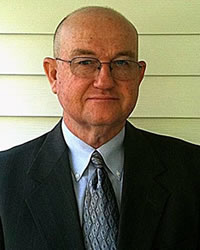
Gary Shepard

The Sure Mercies of David

Isaiah 55:3
Gary Shepard February, 26 2017 Audio
0 Comments
Gary Shepard
Gary Shepard February, 26 2017

Sermon Transcript

Auto-generated transcript • May contain errors

100%
I want us to begin by looking at two verses. One of them is in Isaiah 53,
55. Isaiah 55. And that is the third verse. where God says, incline your
ear, come unto me, here and your soul shall live, and I will make
an everlasting covenant with you, even the sure mercies of
David. The sure mercies of David. And again in Acts chapter 13. Acts chapter 13. Beginning in verse 32. Where
Paul says, And we declare unto you glad tidings. The gospel is glad tidings to
sinners. How that the promise which was
made unto the fathers, God hath fulfilled the same unto us, their
children, in that he hath raised up Jesus again. As it is also
written in the second Psalm, thou art my son, this day have
I begotten thee. And as concerning that he raised
him up from the dead, now no more to return to corruption,
he said on this wise, I will give you the sure mercies of
David. The sure mercies of David. If we know anything about God,
and anything about David, We might wonder how such a thing
could be. Mercy from God for David. David is called in the Bible
to man after God's own heart. But the Bible also says a lot
of other things about David. He committed murder. He had Uriah sent to the front
of the battle so that he would be killed. And he also was an adulterer. He stole, took that man's wife, Bathsheba. He's described also by those
who knew him as a bloody man. He's found on occasion disobeying
God by numbering the people, which God forbid him to do. Just
a host of X's on David's character. But it speaks here of the sure
mercies of David. And the reason that they can
be called the sure mercies of David is because of something
else he mentions here, especially in Isaiah 55. When he speaks of the everlasting
covenant, in order for them to be sure mercies, they have to
be covenant mercies. So in order for David to live
the life that he lived, to fail so many times as he did, to be
the sinner that he was. How can he go and on his dying bed have any comfort? How can he have any hope in the
matter of his soul. We'll turn back in II Samuel
to chapter 23 because we have exactly that. We have God giving us the record
of his dying days. Maybe we ought to listen. This man was no ordinary man. He was a king, not a president, not a political
figure like we know in our day, but he was in his day a sovereign
king. He could speak. and say die or
live. He could rule with authority
like we have forgotten all about. But he did all these things. He showed himself for the sinner
that he was. And in verse 23, I mean in verse
1 of chapter 23, it says, now these be the last words of David. What in the world will he say? David, the son of Jesse, said,
the man who was raised up on high, the anointed of the God
of Jacob, And the sweet psalmist of Israel said, the spirit of the Lord spake
by me, and his word was in my tongue. The God of Israel said,
the rock of Israel spake to me. that ruleth over men, he that
ruleth over men must be just ruling in the fear of God. And he shall be as the light
of the morning when the sun rises, even as a morning without clouds,
as a tender grass springing out of the earth by clear shining
after rain. Although my house be not so with
God, yet he hath made with me an everlasting covenant, ordered
in all things and sure. For this is all my salvation
and all my desire, although he make it not to grow. David is fully aware of what
God requires. He's not like people in our day
who are ignorant of God, who don't know what He requires,
who don't even believe He exists. But I want to tell you something
this morning. The fact that you do not believe
that God exists does not change the fact that he does. You can say, I don't believe
in electricity, if you want to, but touch that naked wire and
you'll find out. David knew something about God. He knew what God required. He
knew something about the character of God. He didn't just look out and see
the creation like we all do. how men can stand and see the
creation and draw the conclusion in their wicked hearts that God
does not exist or that somehow this just happened and evolved. You wouldn't pick up a watch
and say, well, this just evolved, would it? No, there's an intricate design
to it. There's an intricate ability
in it to make and to fashion and to form and to sustain. But David knew more than that.
He knew something about the holiness of God. He knew something about
the grace of God. He knew something about the goodness
of God. And so he is contemplating these
things on his dying bed and he comes down to the end of his
life and he says, although he knows what God required, he said,
that's not the way my house was. A king that rules must be just
and good and right and true, and he'll be like this. Oh, but
that's not like my house was. His own family, many of his children
were godless and graceless. Absalom and Amnon and Adonijah
and just graceless children and personal sins. So God said to him, now therefore
the sword shall never depart from thine house because thou
hast despised me and has taken the wife of Uriah the Hittite
to be thy wife. The sword will never depart from
your house. Sin has a consequence, a natural
consequence, and you'll bear the guilt and the responsibility
for that natural consequence all your days. And surely he
did. His own son tried to kill him. And he can heaven in this hour. no peace in his conduct, no peace
in his works, no peace in his accomplishments, and as a father,
as a king, where will he find any hope? You see, when you get down to
this hour, all the stupid stuff just doesn't do you any good.
When you face death, all your bravado sort of fades away and
all your foolish notions are shined on with the bright light
of reality and you don't realize, until then I'm afraid, the brevity
of this life. God says it's swifter than a
weaver's shuttle. It passes faster than a post. You're young today, but tomorrow
you're like me, almost 70 years old. Talk about the good old days. But that fifth verse begins with
although. Although, even though, my house
is not so with God. And the only reason that he can
have hope in this hour is the only reason why you and I can
have hope. Not simply at the point of death,
but in this life. with all its troubles, with all
its trials, with all our falls and failures and weaknesses and
sins. And, and he says, although there
is all these things that have gone on, this is my hope. And it's every safe center's
hope. Not in the church. Not in belonging
to some organization, not in identifying with some creed or
some confession, not in what you do or anything like this. This is the sinner's only hope. And it has something to do with
what the eternal God has done. If you ever have hope, it'll
be in something that God has done. It won't be in something
you do. Men are always telling men, especially
preachers, that they are to do something to have hope, but all
that they do never gives lasting hope. We've not done anything but sin,
but God has done marvelous things. Is this where your hope is? The psalmist says in another
place, he says, hope thou in God. How can we have hope in
God? He speaks of a good hope through
grace. The grace of God. And what God
had done, what God had done to make him have hope in this hour
as a sinner. He says, he has made with me
an everlasting covenant. I don't find many people that
know anything in our day about the everlasting covenant. He's
made with me an everlasting covenant. The dictionary defines covenant. It says, usually a formal, solemn,
binding agreement. Compact, a written agreement
or promise usually under seal between two or more parties,
especially for the performance of some action. A covenant is between two or
more parties wherein they agree to do something, to give something. But let me tell you about a covenant. It's only as good as the parties
involved. It's only that good. But this is no ordinary
covenant. This is the everlasting covenant. And though he says that God has
made with me or God has made with him an everlasting covenant,
how could it be an everlasting or eternal covenant that has
been made with one who hadn't even been born? You see, we're creatures of time.
This is an everlasting covenant. So if we can see how that God
can enter into a covenant with us, an everlasting, eternal covenant
with us, we might have some hope. You see, God entered into this
covenant on David's behalf in his son, the Lord Jesus Christ. This covenant It's between the
Godhead. And for this reason, and this
reason only, it's sure. Isn't that wonderful? I'm telling
you, I'd never make a gambler. Because I only bet on sure things. I want something that God says
is sure, lasting, real, true. And only if God does it, is it
there. You see, this covenant all depended
on Christ. It all depended on him doing
what was necessary to assure that David and all the others
in that covenant would receive its blessings and benefits. It all hinged on him. Don't you like that? I need to
be saved. I don't need to be told how to
save myself. I failed at that too many times. I need to be told how to be saved. Christ is the Savior. And a covenant, another word
for covenant, is testimony. And a covenant is also a testament. We have the old covenant, the
new covenant. And this covenant is a covenant
of grace. Gotta be. If it does me any good,
it's gotta be of grace. It can't be anything dependent
on me. Can't be anything done by me. Can't hinge on anything but free,
pure grace in Christ. And God made Christ what he called
the messenger of the covenant. Let me read you a verse. Behold,
I will send my messenger, and he shall prepare the way before
me, and the Lord whom you seek shall suddenly come to his temple,
Even the messenger of the covenant, whom you delight in, behold,
he shall come, saith the Lord of hosts." The prophecy says the messenger
of the covenant, or as he is, the angel of the covenant. He
shall come. He has come. That's what it says. He has come and this covenant
is one that is born out of everlasting love. That's everything about it is
everlasting, eternal. I have loved you with an everlasting
love and it gives everlasting life. It is one in which Christ
is given a people, a children, and in this covenant so that
he himself is called the everlasting father. You ever hear of that name for
Christ, the everlasting father? This is because he has given
the children of the covenant. Turn over to Hebrews chapter
7 and look in Hebrews chapter 7 at what it says, because in
Hebrews we find what we see in the Old Testament shown for what
it really is, and that is pertaining to Christ. Hebrews 7 and verse
19, for the law made nothing perfect. All that the law was
in the Old Testament was types and pictures and shadows. It
made nobody perfect. But the bringing in of a better
hope did, by which we draw nigh to God. And inasmuch as not without an
oath, he was made a priest. There is only one priest. I'll just look at your book. There is one priest. In the Old
Testament, there were many priests, but when Christ came, there is
only one priest because they were just types and pictures
of what He would be, a priest forever after the order of Melchizedek. A priest is somebody that represents
people before God. And there's only one of them
now. And that's the Lord Jesus Christ. The only one. He's a priest. So it says here,
For those priests were made without an oath, but this with an oath
by him that said unto him, The Lord swear, and will not repent,
thou art a priest for ever after the order of Melchizedek. Christ. is said by the Father
to be the only priest. All right? By so much was Jesus
a surety of a better testament, covenant. He is the surety of the better
covenant, of the new covenant, of the everlasting covenant,
the covenant of grace, and He is the surety for it. In other
words, He is the guarantee that it'll be good, that it'll
be fulfilled. You see, Christ stood as the
surety of that people that God chose in the everlasting covenant
and blessed with all spiritual blessings in Him before the world
began. You can just read that in Ephesians
1, chapter 3. And I like what David's words
say. It's ordered in all things. You know, when a document is
made out by an earthly lawyer in our day that there's always
a possibility that he can leave something out or that he can
misjudge or make an error making something into that agreement. That's not so with this one.
David says it's ordered in all things, all things pertaining
to God. Don't you want something that
is ordered in all things, that there's no way that nothing can
be left out? Ordered in all things pertaining
to God, ordered in all things concerning our sins, past, present,
future. Every detail of this covenant
salvation is committed into the hands of their surety. It always
depended on Him. It has to do with Him bringing
in what is called an everlasting righteousness. Everlasting righteousness. Daniel
said, 70 weeks are determined upon thy people and upon thy
holy city to finish the transgression and to make an end of sins and
to make reconciliation for iniquity and to bring in everlasting righteousness. There's only one righteousness.
There's only one righteousness for man, only one righteousness
for sinful man. That's the righteousness of Christ. And it depended especially on
him coming into this world to die for this covenant people
and in his death to ratify that covenant. You see, there has
to be a death in a covenant or a testament. In other words,
as long as the testator lives, there cannot be a ratifying of
the covenant. It cannot be put into extent. Turn over to Hebrews 13. Look at verse 20. Hebrews 13
and verse 20. Now the God of peace that brought
again from the dead our Lord Jesus, that great shepherd of
the sheep through the blood of the everlasting covenant. Make
you perfect in every good work to do his will, working in you
that which is well-pleasing in his sight through Jesus Christ,
to whom be glory forever and ever. Amen. There it is again, the everlasting
covenant. And Paul identifies the one who
has made this covenant as the God of peace. I sure want to know God is the
God of peace because he's also a God of wrath. He's a God of
wrath against sin, but he uses this term quite a bit. In Romans
16, he says, the God of peace shall brew Satan under your feet
shortly. The grace of our Lord Jesus Christ
be with you. He said the God of peace, he's
going to deal with the devil. No question about it. He's going
to bruise him under your feet. He raises his head oftentimes
in the lives of believers, in the life of the church, but God
is going to bruise him under the feet of his people. He says this to the Corinthians.
Finally, brethren, farewell. Be perfect. Be of good comfort. Be of one mind. Live in peace. And the God of love and peace
shall be with you. God of peace. To the Philippians
he said, those things which ye have both learned and received
and heard and seen in me do and the God of peace shall be with
you. I want God to be the God of peace
with me. I don't want him to be the God
of wrath against me. I want him to be the God of peace
for me. And our first thought ought to be, if we know anything
about the God of the Bible and anything about ourselves as rebel
sinners, how can God be to us the God of peace? Oh, there's
no big deal in our day. Because we don't know anything
about God and we don't know anything about ourselves. But if we knew
something about God and something about ourselves, what we really
are and who God really is, we'd be wondering, how can God be
the God of peace to us? But Paul says, because He is
the God who brought again our Lord Jesus Christ from the dead. He brought again. Our God is
only the God of peace in Christ. And He's only the God of peace
to us in Christ in the everlasting covenant. Now I said that a covenant is
only as good as the parties involved. But this is one covenant you
don't have to worry about. Because it is made in the Godhead,
and those who are involved in this covenant must be able to
fulfill the provisions of that covenant, and that everlasting
covenant is between the father and the son. And there can be no possibility
of either failing. There can be no possibility of
either one of them being found untrue or unfaithful. Everything depends on them. And while it is only between
them, there are some other folks that are the beneficiaries of
it. Who are they? It says, now the
God of peace that brought again from the dead our Lord Jesus
Christ, that great shepherd of the sheep. He is the great shepherd of the
sheep. When you go, and you do this
when you go home, you go and read John 10 and listen to Christ
who calls his people over and again, my sheep. They are said to be given to
him by the Father. They are said to be those who
will never perish. It is said that he gave his life,
he laid down his life for the sheep. They are referred to in
that text as those who will hear His voice, who are brought by
the Spirit and the Gospel to know Him, and who follow Him,
who believe on Him. What do you say? Isn't that everybody,
preacher? Christ said in that very context
to some people, some very religious people, you believe not because
you are not my sheep. He will divide at the final judgment
the sheep from the goats. But the sheep are in this covenant,
and they all shall be saved. They shall hear his voice. They shall receive everlasting
life. They shall be kept by the power
of God all because of him, what he does. Their salvation depends entirely
on this covenant. Now the first covenant said,
you do this and you will live. People say, well, I just won't
live by the Ten Commandments. Well, go ahead. I don't because
I can't. He said, if you fail in the one
of these commandments, somehow you're guilty of them all. Bear false witness? Have you
ever lied? You lie every day. You walk into
some place, or your place of business, and the person that
you can't hardly stand, you look at them and say, well, you're
looking good today. That's a lie. And that's just the start. He
said if you hate somebody in your heart, you're guilty of
murder. If you lust after somebody, you're guilty of adultery. But this is called a better covenant.
Listen. He obtained a more excellent
ministry by how much also he is the mediator of a better covenant
which is established upon better promises. What's a better promise? One that I don't have to keep. One that somebody else keeps.
One that Christ keeps. He keeps all His promises. I
don't keep any of mine. Neither by the blood of goats
and calves, but by His own blood, He entered in once into the holy
place, having attained eternal redemption for us. Eternal redemption? That means if he obtained it
for me, I don't have to obtain it. I can obtain it. For this
cause, he is the mediator of the New Testament, New Covenant,
that by means of death, for the redemption of the transgressions
which were under the First Testament, or First Covenant, they which
are called might receive the promise of eternal inheritance. In other words, The same basis for David under
the Old Testament is the same basis for me under the New. People seem to think that God
saved sinners somehow different in the old days than they do
today, but it's always when it was in Christ. It was in the
one that all those types and shadows pictured, which is Christ
Jesus. He that despised Moses' law died
without mercy under two or three witnesses. Of how much sore of
punishment, suppose ye, shall he be thought worthy who hath
trodden underfoot the Son of God, and hath counted the blood
of the covenant wherewith he was sanctified an unholy thing,
and hath done despite of the Spirit of grace. This is the blood of the everlasting
covenant. Shun it at your own risk. Neglect it at your own detriment. But he says to Jesus, the mediator
of the new covenant, to the blood of sprinkling that speaketh better
things than that of Abel. He's better blood than Abel's
blood. Abel offered up to God the sacrifice
of a lamb which God appointed and God accepted on his behalf. But as he sacrificed that lamb,
he was looking to the one that God promised. The covenant between the God
of priests and that great shepherd of the sheep was that the shepherd
would come in flesh and go to the cross of God's justice in
the place of the sheep and thereby bearing his sins in his body
on the tree and dying the death necessary to put away their sins
and satisfying every claim against them of divine justice, God would
bless them with every covenant blessing. That's why you don't have more
than I can have. That's why you're no better in
the sight of God than I am. Because all our salvation depended
on the Lord Jesus Christ. He fulfilled all the terms of
the covenant. He is the one whose blood shed
ratified that covenant. And as Paul tells us here, if
he's a writer of Hebrew, as he tells us here, the reason and
the hope that we can have that it is done is the fact that God
raised him from the dead. That's wonderful. We don't have a dead Jesus. The
Jesus of the covenant is a living, all this depiction and idolatry
of Christ hanging on the cross and Christ laying dead and all
these various things, they're not true to the Bible. Christ
is alive and seated at the right hand of the majesty on high. How did they know whether or
not that the priest who offered their sacrifice before God, how
did they know that God had accepted their sacrifice? Here's a priest
went in once a year before God in the Holy of Holies there in
the tabernacle, he offered up his blood, he sprinkled the blood
on the mercy seat, how did they know that God had accepted it?
if he came out alive, if he came out alive. And our
Lord came out alive. He raised him up. Now the God
of peace that brought again from the dead our Lord Jesus Christ,
that great shepherd of the sheep, through the blood of the everlasting
covenant, through the blood, his satisfying of that covenant, he raised him from the dead. We know it was accepted. We know
it's good. We know it's accomplished because
God raised him from the dead. And we look to him now. We look
to him for what he has done. We look to him where he is now,
what he is doing, and we look to him for all those covenants.
Those covenant promises go on for eternity. It's wonderful. You see, that's how the gospel
is glad tidings. Good news, because it declares
a covenant salvation, a full and free salvation, a complete
and eternal salvation to all who look to Christ, to the Christ
of the covenant. And these are the sure mercies
of David. When the God of peace brought
forth the shepherd from the dead, he brought forth all the sheep. Isaiah said, Behold, the Lord
will come with a strong hand and with his arm shall rule for
him. Behold, his reward is with him
and his work before them. He shall feed the flock like
a shepherd. He shall gather them in the lambs
with his arm and carry them in his bosom and shall gently lead
those that are with young. He's pictured as the shepherds
bringing the sheep. every one of them. And this covenant not only involves his work and
all the promises for his sheep, but his work also guarantees
the work in his sheep. That every one of them will be
born again. that every one of them will be
given faith, that every one of them will come to Christ, that
every one of them will believe the gospel. It is a covenant
pledge and covenant guarantee. Well, what if they don't believe? they weren't in the covenant. What do you say? Are you saying
that people are less? Yes, they definitely are. He
will have mercy on whom he will have mercy. And sure mercy is
sovereign mercy. It's the mercy of God. He will
have mercy on whom he will have mercy. But here's the good thing. He will have it. He will have
it on the children of the covenant. He will have it to those in Christ. He will have it and He will see
to it that every one of them believes. For this is the covenant that
I will make with the house of Israel after those days, saith
the Lord. I will put my laws into their
mind and write them into their hearts. And I will be to them
a God, and they shall be to me a people. And they shall not
teach everyone his neighbor and everyone his brother, saying,
know the Lord. For all shall know me from the
least to the greatest. For I will be merciful to hear
to their unrighteousness and their sins and their iniquities,
will I remember no more." Where are their sins? God says,
I don't remember. You can't remember sins that
are put away. You can't remember a debt that
is paid. And that's wonderful. You see, we might not have done exactly
the same things as David in actual acts, but we're just as guilty
of his sins in one way or another. May God give us the sure mercies of David. Sure mercies, because they all
depended on Christ. The Bible speaks of rest, but
you can't rest while you're working to save yourself. You only rest
when you rest in what Christ has done. He has made sure. He has fulfilled
the covenant ordered in all things. And this is, as David said, all
my salvation and all my desire. He might not make my children
see it. I pray that He will. My friends,
I pray that He will. But that isn't going to change
anything with me. That He hath made with me. I
pray that He would seal to your heart today that He's made that
covenant with you in Christ. Our Father, we thank You this
day. for such glad tidings, for a covenant salvation, for the
angel and messenger of the covenant, the Lord Jesus Christ. Be pleased
to reveal this truth to the hearts of your people, that they might
glorify, that they might rest in Christ. We pray in his name
and for his sake, Amen. Amen.
Gary Shepard
About Gary Shepard
Gary Shepard is teacher and pastor of Sovereign Grace Baptist Church in Jacksonville, North Carolina.

Comments

0 / 2000 characters
Comments are moderated before appearing.

Be the first to comment!

Joshua

Joshua

Shall we play a game? Ask me about articles, sermons, or theology from our library. I can also help you navigate the site.