Bootstrap
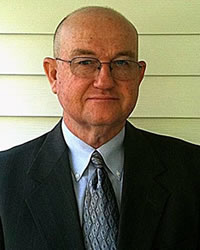
Gary Shepard

Not Without Blood #1

Hebrews 9:6; Hebrews 9:7
Gary Shepard November, 13 2016 Audio
0 Comments
Gary Shepard
Gary Shepard November, 13 2016

Sermon Transcript

Auto-generated transcript • May contain errors

100%
Turn back in your Bibles to Hebrews
9. I sometimes feel like I need
to remind you. When we read a passage like we
read this morning in Hebrews 9, where there is so many references
to the things of the Old Testament, so many
things concerning the service and worship in the nation of
Israel, that the Lord led the apostle
to tell us this. He said, these things were written for our admonition, our instruction, those of us upon whom the end
of the age shall come. They were written about these
Old Testament figures but they were written for us. And here in this ninth chapter, the apostle is led to draw back
to our minds the things that were necessary under that old
economy concerning how God was worshipped. You notice the term
here is the service of God. And of course, what's being described
here in the midst of the tabernacle, and sometimes with all we've
heard in our day about tabernacles, we lose sight of what the tabernacle
actually was. It was a tent with a tent inside. It was a tent in which the priests offered up offerings and sacrifices. And it was a tent inside of that
tent called the holiest of all that none of them ever went into
except the high priest once a year. And so that is what is being
described here. And here we not only see the
difference between the priests and the high priest and their
various services, but what the Lord is doing here is showing
us the superiority of Christ who is called the High Priest
forever after the order of Melchizedek. Look back in chapter 8. He says, Now of the things which
we have spoken, this is the sum. We have such a High Priest who
is set on the right hand of the throne of the majesty in the
heavens. In other words, in all the tabernacle,
with all that it had in the outer court and in the inner court
and in the holy of holies, The one thing that was always missing
was a chair, because their work was never
finished. But of this priest, it says,
he is set down on the throne of the majesty in the heavens
a minister of the sanctuary and of the true tabernacle, not on
earth but in heaven, which the Lord pitched and not man. For every high priest is ordained
to offer gifts and sacrifices Wherefore, it is of necessity
that this man have somewhat also to offer. For if he were on earth, he should
not be a priest, seeing that there are priests that offer
gifts according to the law, who serve unto the example and shadow
of heavenly things. In other words, the things that
God gave to Moses and that people in the Old Testament, they were
just figures and types and shadows of heavenly things. As Moses was admonished of God
when he was about to make the tabernacle, for see, saith he,
that thou make all things according to the pattern showed to thee
in the mount. But now hath he obtained a more
excellent ministry, by how much also he is the mediator of a
better covenant which was established upon better promises. He is not simply comparing Christ
as a priest to these priests, but he's showing us how far greater
and how much better his priesthood, his sacrifice, and this covenant
and its promises, they all are over the first. For if that first
covenant had been faultless, then should no place have been
sought for the second. For finding fault with them,
he saith, Behold, the days come, saith the Lord, when I will make
a new covenant with the house of Israel and with the house
of Judah. not according to the covenant
that I made with their fathers in the day when I took them by
the hand to lead them out of the land of Egypt, because they
continued not in my covenant, and I regarded them not, saith
the Lord." That covenant was not the end all. That covenant
was in no way the way by which God saves his people. But those things were given in
order to show and to picture the one and the way that he does
save sinners. These priests represented men
before God And they were established by God to show us that we cannot
approach Him on our own. We must have a priest. There must be a mediator. And this priesthood did not come
from man. And neither could any man appoint
himself a priest before God, and others couldn't do it. God alone established who these
priests would be. But what I want you to notice
most of all, is something that he reminds us of in that seventh
verse. Concerning all those priests,
concerning that earthly high priest, and therefore concerning
God's great and one and only high priest forever. Look at what it says. But into
the second went the high priest alone once every year, not without
blood, which he offered for himself
and for the errors of the people. In other words, that high priest,
especially, who went in once a year and performed what is
called in these verses the service of God, he never, once, ever
entered in to that service and that holy place without blood. Now, I want you to think about
that this morning. He did not go without blood. And from the first type that
we see pictured concerning how God accepts and forgives and
receives sinners, since that first picture in the garden,
when God himself took those animals and slew them in order to provide
coats or coverings for fallen Adam and Eve. Since that time,
every one of those sacrifices and pictures showed that it cannot
be without blood. Blood was always shed. And from the garden fall all
the way to the cross of the Lord Jesus Christ, it seems there
is a stream that flows constantly from animals time after time
after time after time, a stream of blood all the way to the cross. And dare we not, in our self-righteousness
and in our ignorance and in our inability to value things, dare
we not imagine for one second that the blood or the life of
any of those animals was wasted? They were used for the highest
service of all until Christ's coming, and that was to picture
the doing and the dying and the bloodshedding of the Lord Jesus
Christ. And so what the apostle is telling
us that if this was true of these priests, and especially of that
high priest who went into the Holy of Holies once a year, if
this was true of them, It must also be true of the priest that
he has appointed to represent his people before him. It will not be a service. It will not be a coming before
God on their behalf without blood. There must be blood. And what we have need of seeking
to understand, what we need to find out is what is the significance
of this blood. Well, hold your place here and
turn back to the book of Leviticus. Because God, in the book of Leviticus,
in Leviticus 17, He early on, and especially with these people
who would represent His spiritual people, He told them and therefore
shows us what that significance is. Down in verse 11. We read where
he says to Moses and to that people, and now to us, he says,
for the life of the flesh is in the blood. He had just given
them this instruction, of all that you may eat, of those animals
that are provided for you, for your nutrition, to sustain your
life. And by the way, I don't know
if you've noticed, but every one of us can only be sustained
by death. If you live, something's got
to die. You can become a vegetarian if
you want to, but some living plant, some living organism has
got to die in order for you to live. That's the purpose of God. That's the principle He's laid
down for us. We have life through death because
spiritual life is given to His people through the dying of the
Lord Jesus Christ. So He told those people, Eat
the parts, but do not eat the blood. Do not drink the blood
for this reason. For the life of the flesh is
in the blood, and I have given it to you upon the altar to make
an atonement for your sins. For it is the blood that maketh
an atonement for the soul. In other words, associated with
the soul and associated with atonement for sins is the blood,
again and again and again, shed and sprinkled on the mercy seat
of God. The life is in the blood. And
so God, in order to show us in this plain and simple type and
picture the necessity of a life being laid down in consequence
of sin in order for atonement, He showed it again, again, and
again. Because the sacrifice of blood
had to do with the satisfaction of God. Now, you and I, in the
modern religious vocabulary, don't know much about satisfaction. But it is like so many other
legal terms in the Bible. It signifies that that which
required has been paid and the one to whom the debt is owed
is now satisfied. What he required has been met
and paid. He has received it and he's satisfied. So this is what's necessary in
order to satisfy God as he is, not as men think he is, but satisfy
God as he is, as a just God, as a holy God, as a God who must
do right. But all that blood that was shed, All those sacrifices that were
offered, all that service to God under that old covenant,
it never did in any way to any degree put away even one sin. It just showed what was required
and the way God would do it. It never satisfied God in the
matter of the sins of those that he purposed to save. Look back in the book of Hebrews
again in chapter 10. Because here in chapter 10, the
apostle reminds us of this very thing. He says, for the law,
having a shadow of good things to come, and not the very image
of the things, can never, with those sacrifices which they offered
year by year continually, make the comers thereunto perfect. Never could make one of them
perfect. Never could make one of them
acceptable before God. Never could atone in reality
for not one of their sins. For then, would they not have
ceased to be offered? Because that the worshippers
once purged should have had no more conscience of sins? If God
had been satisfied through those Old Testament offerings and sacrifices,
wouldn't the offerer have no more to go and had peace in his
conscience? He says, but in those sacrifices,
there is a remembrance again made of sins every year. We're reminded in them what sinners
we are. We're reminded of them in verse
4 that it is not possible that the blood of bulls and of goats
should take away sins. We're reminded again of what
sinners we are. We're reminded again that no
animal blood could ever take away our sin. We're reminded
again that God requires this in the matter of our sin. When you look in Hebrews 9 and
verse 8, He says, the Holy Ghost signifying
in all these and their continuance that the way into the holiest
of all was not yet made manifest while as the first tabernacle
was yet standing. It was just a type. It was just
a picture. It was what God required in order
to show us that which was necessary to put away sins. But it never actually put away
a single sin. You see, God, in all these sacrifices
offered by His priests, is showing us that the sin is only forgiven
through a sacrificial death which is acceptable to Him, and that
death is the death of His Son. That's what all of this business
of blood is about. That's why we talk about the
blood of Jesus Christ. That's why he talks by the apostles
of the shedding of the blood of Christ. And apart from this
blood shedding of the Lord Jesus Christ, apart from this one sacrifice
for sins forever, If He has not by that sacrifice put away your
sins and washed you from your sins, they are still upon you
and you will go out to face God with them. And people hear that and they
say, well, that's just so old-fashioned. It's more old-fashioned than
you think. Because this is the way it has been in the mind and
purpose of God since before the world ever began. It's older
than me, it's older than you, it's older than Methuselah, it's
older than everybody because Christ is the Lamb slain from
the foundation of the world. Men mock the blood of Christ.
They mock a notion of salvation being through the death of another.
But the truth is, God requires what you and I cannot give on
our best day. You see, His death in our place. His death for the sins which
God imputed to Him. When the scripture says by the
prophet Isaiah, the Lord has laid on him the iniquity of us
all. Isaiah is talking as one of God's
people. Where are their sins? They've
been imputed or charged to the Lord Jesus Christ. As their surety,
he assumed the responsibility of them before the world ever
was. And so he comes into this world
in order to pay the debt, which is the shedding of his blood,
which is the pouring out of his life for our sins. You see, people sometimes speak
of imputation as if it was some just mere legal term by which
theologians express things. But I'll remind you that imputation
is a Bible word. It is the word of God's spirit
by which he speaks to us and makes us to know that the Lord
has taken the sins of those who look to him and him alone. He
has taken their sins and laid them or made responsible Christ
Jesus in their place. So if you want to find out whether
or not imputation is real, you just look at that one dying on
that cross. You just listen to what he says. You just remember who it is that's
hanging there. You just remember what it is
that he's suffering there. Listen to him when he says, my
God, my God, why hast thou forsaken me? you'll find just how real
it is to be charged and dealt with by divine justice in the
matter of our sins. You see, the only reason he can
die there in our place is the fact that he dies there as a
sinless man. You remember how all those descriptions,
if you've ever read anything at all in the Old Testament about
those sacrifices and the Passover lamb and all that, there's one
thing that always keeps popping up in the description of them. They had to be perfect. Don't you bring your culls, don't
you bring the lame critters, don't you bring the one-eyed
ones, the blind ones, don't you bring anything but the absolute
best. It has to be a lamb without spot
and without blemish. Why? Because it has to be a sinless
man who dies. That's why it has to be sinless
blood that shed in the payment of sin. That's why God himself
had to take on human flesh in order, as that perfect one, to
die in the room instead of his people. You see, we're not to simply
trust Christ as some historical or mystical person, but we're
to trust the one who died on the cross in the debt payment
of sin. I was thinking about this this
week. Why didn't these priests, as many heathen priests tried
to do with themselves and others, why didn't they use their blood? If the blood of animals, bulls
and goats and lambs and whatever, if that won't put away sin, why
didn't God say, well, you just slit your wrist and pour out
your blood in the payment of sin? I'm going to tell you why. Because
man is such a fallen, sinful creature. that God Almighty would
not even use him and his blood as a type of redemption. Better to use a bull or a goat
or a ram, some creature that has not rebelled against God,
who does not have a natural heart against God, for the type. There was not one son of Adam
on this earth whose blood could ever even typify
salvation by blood. It had to be the blood of God. You see, that's what this is
all about. Only God can satisfy God. When Paul was speaking concerning
the charge that was given to those Ephesian elders in Acts
chapter 20, I believe it was, he says, look, he says, you feed
the Church of God, which He purchased with His own
blood. This is the Son of God. Look
back in Hebrews chapter 10 again. And verse 11, he's all back and
forth talking about these priests and what they did and what they
represented and how Christ's work is so far superior. He says
in Hebrews 10 and verse 11, he says, and every priest standeth
daily ministering and offering oftentimes the same sacrifices
which can never take away sins. But look at that next word, but,
you see that? But this man, after he had offered
one sacrifice for sins forever, sat down on the right hand of
God. from henceforth expecting till
his enemies be made his footstool, for by one offering he hath perfected
forever them that are sanctified." Don't make something really Unbelievable
about that word sanctified, it means set apart. Those set apart
by God in Him, to be saved in Him, to be saved by Him, to be
redeemed by Him. He by one offering, the offering
of Himself, His life laid down, has perfected He didn't say here, if they believe
and if they do this and that and the other, they'll get to
be better people. If all Christ's work did was
improve us a little bit, we'd still go to hell. He perfected You see, that's why I'm so sure
that men and women in our day do not really know much about
the character of God. And they don't know much about
what man is as a sinner. They think God is going to drop
His standard. They think man can come up to
His standard. But it just is not going to happen. It's not going to be without
blood. It's not your living your life
the best you can that's going to save you. I've been preaching
to people for almost 40 years, the gospel, and there are people
that have heard me many a time, and in their heart of heart,
in their minds, they still do not realize God will not accept your best
works. You say, I'm just doing the best
I can. You better. But it won't save you. Man at his best state is altogether
vanity. You say, well, I'm as good as
you are, probably better. But it won't save you. He says, Wherefore the Holy Ghost
also is a witness to us. For after that he had said before,
this is the covenant that I will make with them after those days,
saith the Lord, I'll put my laws into their hearts and into their
minds. I will write them and their sins
and iniquities will I remember no more. Sometimes I don't think it's
a day that passes by that somebody doesn't in some way point out
my sins. My sins are easy to remember, but God doesn't remember them.
Why? Because that which was necessary,
that which was appointed by Him, that which was provided by Him,
that priest that He ordained from eternity and that sacrifice
of Himself and His blood that He came and offered up to God
in my behalf, that erased the judgment of them because it fell on Him. And you look on my account book. And in the lost column, you'll
find nothing. Nothing. He says, because where the remission
of these is, there's no more offering for sin. In other words,
those sacrifices were offered to the coming of Christ. They
never put away sin. But when he came and died on
that cross, that was the end of all sacrifices. What does that mean? That means
he put somebody's sin away. That's right. He paid somebody's
sin debt. His bloodshed actually accomplished
the salvation of somebody. Why not a sinner like me? The reason men and women have
no joy in life, the reason why do what they will, experience
what they will, see what they will, know what they will, they
live in absolute misery because in their heart of hearts, in
their conscience, they know that they're going out to meet God. They know to meet God as a sinner
is the most awful thing. You see, we preach Christ, and
I get so tired of hearing people talk about, I'm not saved by
doctrine, I'm saved by a person. You say the name Jesus in this
world and you'll get a thousand hallelujahs before you can get
away from anybody. Oh, hallelujah. Jesus. We believe
in Jesus. My friend, he's identified by
the work he did. The reason people say that is
they don't want to have to preach what Paul called the offense
of the cross. And because people don't want
to hear about their sinfulness, which is so awful that it required
the death of God's Son. Let's talk about His life and
what a wonderful example. You'll die in your sin. Because no priest ever entered
into that sacrifice offering, no high priest ever entered into
that holy place without blood. Paul said, I determined not to
know anything among you save Jesus Christ and Him crucified. Turn over to Romans chapter 3
and listen to what the Apostle Paul says here. Just lest we somehow imagine
that a long time ago we heard about somebody named Jesus, but
we didn't have a clue of what he actually accomplished. Listen to what Paul says. Romans
chapter 3. And verse 25, he speaks of Christ. He says, whom God has set forth
to be a propitiation through faith in His blood. Faith in His blood. That's what
it says, isn't it? What does that mean? That means
we not only believe in this person, we identify him by the work he
actually accomplished. And we rest also in his work. He did something. He was the
eternal son before he came to this earth. Had he not, you would
have perished. He was a sinless man born in
this world without an earthly father's blood to pollute him. He lived a sinless life all his
days on the earth, but you still would have perished
had that been all he did because no priest ever entered in. on
behalf of a people to receive the favor of God without blood. That's what the gospel's about,
His blood. We say His blood and righteousness,
but in truth, they're one and the same. God's righteousness in salvation
is through the shedding of His Son's blood in the matter of
sin to save us. Faith in His blood. Let me read
you two other verses. One of them is found in Isaiah
32. I'll give it to you later if you need it. But in Isaiah
32 and verse 17, listen to what this says. And the work of righteousness
shall be peace. Well, isn't Jesus the Prince
of Peace? He certainly is. But the work of righteousness.
That's what he did. Hanging on that cross. Shedding
that blood. Which is the price of our sins.
That's the work of. And the work of righteousness
shall be peace. And the effect of righteousness,
quietness and assurance forever. You can believe in some mystical
Jesus as long as you want to. But you'll never know the peace
of God. It's all through His cross. It's
all through His death. Let me read you another verse.
What's the gospel? What is the gospel? Zion, which
is the church of God, which is said to be the center and the
proclaimer of the gospel of God, the gospel of Jesus Christ. Let
me read this word. Jeremiah 51. The Lord hath brought
forth our righteousness. Come, let us declare in Zion
the work of the Lord our God. Declare what? Oh, somebody says,
what we need to do is just preach Jesus. Zion says, the Lord. The Lord hath brought forth our
righteousness. He came into this world. He brought
in that everlasting righteousness. He went to that cross and He
suffered and died to show God righteous and just to save these
people and show mercy to them that He died for. Let's declare
the work of the Lord our God. You see, we can't preach the
gospel without declaring His work. We preach Christ crucified. The only way God could set apart
a people unto His holy self and honor His holy law and justice
and bless them with all spiritual blessings is by an acceptable
sacrifice being made for their sins. And so in chapter 13 in Hebrews,
he says, Wherefore Jesus also, that he might sanctify the people
with his own blood, suffered without the gate. You see, the reason that men
and women see no need for Christ as a savior from sin is because
they don't see sin as God does, and the reason is because they've
never known anything but sin. And the only way you can see
sin is if God if God the Spirit enables you
to see who's dying and what He's doing in His death on the cross. Now here's a man dying on the
cross that the Scriptures have gone to some length to show us
that He's perfect and sinless without spot and without blemish.
And He's dying on this cross under the hand of God's justice.
Either he is bearing somebody's sin or God is unjust. Why is he dying there? Why is
God putting him to death? Because he's accountable for
the sins of a people given to him in a covenant before the
world began. That nation of Israel represented
them. Those priests represented him
as the true priest. Those sacrifices, they all pointed
to his sacrificial death and blood shedding. And the blessing
that was always promised to them, which they never got by their
obedience to that covenant, is really the blessing that God
promises as the eternal inheritance of every one of those for whom
Christ dies. But they never get it without
blood. Every day we have this same example
before us. Every day. Here are children
or people And they go into a lawyer's office,
and the lawyer reads the will. Why are they reading a will and
saying, Joe gets this, and John gets that, and Sally gets that?
What's happened? The testator of that will has
died. The testator is only the one
who's bound to this covenant. A testament is simply a covenant. If he dies, they get it all. That's why the preaching of the
gospel is like the reading of a will. We ought to have our ears plucked
up and our minds emptied of all else and listen to see if in
the reading of Christ's will there's something in it for me, something for sinners. He has to bring us, though, to
see and to understand what He's doing on that cross. We have
to be brought to some knowledge of why His death was necessary
to save us. And we must have a priest and
a sacrifice that God will accept if we're to be saved. And God
has appointed for those He saves both. Why do we say salvations
of the Lord? Well, He provided the priest
and He provided the sacrifice. He's the priest and He's the
sacrifice of all His people. And they rest in what He did. They rest in the fact that through
the shedding of His blood, they have remission of sins. Why didn't He die again? Why
don't we celebrate that transubstantiation and say that the body and that
the bread and the wine actually become the body and blood of
Christ? Because over and over, especially in Hebrews, it says
He did it once. He accomplished it. He saved us, but not without
blood. We sing that old song, what can wash away my sin? Nothing but the blood of Jesus.
What can make me whole again? Nothing but the blood of Jesus.
Oh, precious is the flow that makes me white as snow. No other
fount I know. Nothing but Jesus. I thought
about that. That's not exactly right. It's not really what can do it.
That implies that it can do it if I apply it or if I do something. We ought to sing it like this.
The Believer's Hymn is really, What has washed away my sin? Nothing but the blood of Jesus. What has made me whole again?
Nothing but the blood of Jesus. That is because of His finished
and accomplished work. Oh, precious was that flow that
made me white as snow. No other fount I know. Nothing
but the blood of Jesus. He did something. When that priest
went into that Holy of Holies with that blood, that blood of
that appointed sacrifice applied in that appointed way and he
sprinkled that blood on the mercy seat before God who dwelt between
the cherubims. It was just a box, the Ark of
the Covenant, overlaid with gold, two golden cherubs, one on each
end of that lid that was on it. And that priest would take that
little shrub and sprinkle that blood on the mercy seat. How in the world would the people
know whether or not God accepted it? If the priest came out alive,
he did. Some say he had a cord tied around
his ankle. If he didn't come out, they'd
have to drag him out because they couldn't go in there. But when he came out, That priest wearing that garment,
you know, had those little golden bells in the shape of pomegranates.
And he'd be moving, shaking that shrub. You could hear it on the
outside. That's the gospel. He came out. And our priest,
he came out. He went in. He shed his blood. God accepted it before the very
throne of heaven. And he rose from the dead. He
came out. And that's all my hope. And it's all I need. You can't come to God. You can't
be accepted by God. You can't be saved from your
sins. Not without blood. The glorious thing that John
writes to the people of God in that epistle of 1 John. He said, if you say you don't
sin, you're a liar, and you make God out to be a liar. You say, well, I'm a sinner then. That's right. But he said, the blood of Jesus
Christ, the righteous, cleanses us from all sins. All sins. Can you sing that this morning
in your heart? What has washed away my sins?
Oh, nothing but the blood. All my imagined good works could
never erase the error of my sin before God. All my trying, all
my reformations, all my this, that, and the other, all my foolish
bravado wherein I talk about I'm going to do this, that, and
the other, and I'm this, that, and the other. None of that.
Nothing but the blood. A life laid down. A sinless,
perfect life laid down. And me and Him. And Him raised
up. That's our life. Can't go without blood. And the
only one God would accept, He's already gone with His blood. You can believe it. He saved
you. That's your only hope. He has
saved you. God help us to look to Him. Father,
we thank you this day. So unworthy we are to speak of such a wonderful
Savior and His salvation. Strip us of all our efforts and
give us faith to trust the blood of Jesus Christ. Help us this day. Leave us not
to ourselves. Save us. by bringing us to know
Your Son, to trust His blood. For we pray in His name. Amen.
Gary Shepard
About Gary Shepard
Gary Shepard is teacher and pastor of Sovereign Grace Baptist Church in Jacksonville, North Carolina.

Comments

0 / 2000 characters
Comments are moderated before appearing.

Be the first to comment!

Joshua

Joshua

Shall we play a game? Ask me about articles, sermons, or theology from our library. I can also help you navigate the site.