Bootstrap
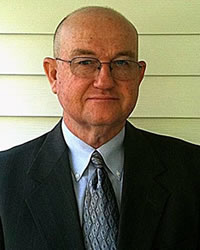
Gary Shepard

In Him Is No Sin

1 John 3:5
Gary Shepard December, 13 2015 Audio
0 Comments
Gary Shepard
Gary Shepard December, 13 2015

Sermon Transcript

Auto-generated transcript • May contain errors

100%
1 John chapter 3. I always have a fear that we will
come into this place, and as a matter of mere habit and practice,
gather together and then leave without having
heard from the Lord, without having been really conscious
of what we're doing, and without truly worshipping Him. I pray that He will not leave
us to ourselves. 1 John chapter 3. Behold what manner of love the
Father hath bestowed upon us, that we should be called the
sons of God. Therefore the world knoweth us
not, because it knew him not. Beloved, now are we the sons
of God, and it doth not yet appear what we shall be, but we know
that, when He shall appear, we shall be like Him, for we shall
see Him as He is. And every man that hath this
hope in him purifieth himself, even as He is pure. Whosoever committeth sin transgresseth
also the law, for sin is the transgression of the law. And ye know that He was manifested
to take away our sins, and in Him is no Sin. Now, all throughout these
epistles of John, John makes an appeal to some knowledge that
those he writes to have. And that is not natural knowledge. But his appeal to the knowledge
that he's speaking of is an appeal to their gospel knowledge. And he writes to these as believers who, he says, know some things. God's people are brought to know
some things. In 1 John chapter 2 and verse
20, he says this, "...but ye have an unction from the Holy
One, and ye know all things." He continues in verse 21, he
says, "...I have not written unto you, because ye know not
the truth, but because ye know it." and that no lie is of the
truth." Over in chapter 4, he says in
verse 2, "'Hereby know ye the Spirit of God. Every spirit that
confesseth that Jesus Christ is come in the flesh is of God. In chapter 4 and verse 16, he
says this, And we know, we have known and believed the love that
God hath to us. God is love, and he that dwelleth
in love dwelleth in God, and God in him. In chapter 5, he continues in
verse 15, he says, "...and if we know that He hear us whatsoever
we speak, we know that we have the petitions that we have desired
of Him." And then he closes out this letter. In verse 18, saying,
We know that whosoever is born of God sinneth not, but he that
is begotten of God keepeth himself, and that wicked one toucheth
him not. And we know that we are of God,
and the whole world lieth in wickedness, And we know that
the Son of God is come, and hath given us an understanding, that
we may know Him that is true, and we are in Him that is true,
even in His Son Jesus Christ. This is the true God and eternal,
life. And he is saying the same thing
when he writes in the fifth verse of chapter 3. He says, and you
know. And this is not merely A knowledge
that simply is held in the head as we do other facts. For this is knowledge that is
brought to us by the Spirit of God through the gospel, so that
to know these things we know and are assured of them and assured
by them. He says, "...and ye know." You
know why Christ came. You know why He died on the cross. John says, "...it was to take
away our sins." Not in some general sense, Not take away every person's
sins, but to those in Christ, He says, He took away our sins. This is why He came, and this
is what He did for His people. And that's why His name is called
Jesus. And these to whom the gospel
is sent, they are brought to know these things, they are brought
to believe what God says concerning His Son, they are brought to
hear them, and as He said in that last chapter, to have some
understanding so as to know Him that is true. And to know Him
that is true. to know the true and living God,
John says, that is eternal life. But I want you to notice this
morning, that last phrase, that last part of this statement,
wherein he says, and in Him, is no sin. In Him is no sin. And this is a most glorious truth
that is to be believed, that is to be rejoiced in, and the
fullness of it is found all throughout the Scriptures. in him is no
sin." And I want us to think about that very fact, that very
statement, and I want to try in four different ways to set
forth from this book how true that is, and how wonderful that
is. And I want to do it by four different
ways, I believe all of which are biblical and all of which
are essential if we are to receive what He says in that thought. And the first thing that I want
to say this morning is this. Restate maybe this morning is
this. In Him is no sin personally. In Christ there is no sin personally. And there is not a truth in all
of Holy Scripture that is set forth any more often And any
more clearly than this, in him is no sin. And first of all, in that matter,
it is that in him is no sin in this sense, no original sin. That is, he was not born a son
of Adam, He is none less than the Son of God. He had no earthly, natural Father. He was not, as David said, that
he was born in sin and shapen in iniquity. He was not born
conceived of a sinner. in him is no sin. And that alone separates him
from all of Adam's race. All who became sinners in Adam,
and all who from Adam received a nature of sin, and all who
as Adam's children sin, while they're here in this world. Hold your place here and look
back in a text that I'm sure will be read many times in the
next few weeks. But it's found in Luke's Gospel
in that first chapter. Luke chapter 1 and verse 35. when the angel visits Mary and
gives to her the news of what has happened to her. In verse
35, it says, And the angel answered and said unto her, the Holy Ghost
shall come upon thee, and the power of the highest shall overshadow
thee. Therefore also that holy thing
which shall be born of thee shall be called the Son of God." In other words, here was a virgin
woman who had never known a man, and she finds in her womb a child. She has no earthly husband who
fathers that child. And therefore, he is described,
Christ Himself, even as that babe in her womb, as that holy
thing. He was not conceived in a natural
manner. He did not have a nature of sin. He was not born in sin as others. He did not commit sin. And we know that for various
reasons, plainly stated in Scripture, the first of which is this, he
is none less than the Son of God. He is, as Paul writes and
tells us, nothing less than God manifest in the flesh, And He
is God manifest in the flesh, never ceasing to be God who is
immutable. He cannot change. He cannot be
anything else than what He is, which is perfectly holy. And the glory of this and the
reason why we ought to rejoice in it and maintain it as the
most sacred and glorious of all Bible truths is that this is
what He had to be in order to be the sacrifice for our sins. This is what he had to be if
he fulfills all those pictures and types and foreshadowings
that we see that are spoken of in the Old Testament Scriptures
which are clearly about him. One of which we read in the book
of Leviticus. Because all those Old Testament
sacrifices, they were typical of Christ who is that one sacrifice
for sins forever. And so, the Spirit of God leads
Moses to write in describing just one of those sacrifices. He says, "...and whosoever offereth
a sacrifice of peace-offerings unto the Lord to accomplish his
vow, or a freewill offering in beeves or sheep, it shall be
perfect to be accepted. There shall be no blemish therein."
In other words, what was said of all those offerings and sacrifices,
the thing that was central to each and every one of them, whether
they were a different animal, whether it was a different sacrifice
or a different offering, one thing always stood forth, and
that was it had to be perfect to be accepted. And that certainly
is true of maybe the greatest Old Testament type and picture
of Christ, the greatest one of all, which was the Passover Lamb. You remember the Passover Lamb,
the Lamb that was to be slain, the blood sprinkled on the lintels
and doorposts of those houses there in the house of the Hebrews
there in Egypt, when God said, when I see the blood. I will
pass over you." And so when Moses is given those instructions and
therefore gives them to the people, it says in Exodus 12, "...your
lamb shall be without blemish, a male of the first year, ye
shall take it out from the sheep and from the goat." You will
look it over entirely and watch it closely to make sure that
it is without blemish." You say, what does it matter? You're going
to take it out and slay it. Well, the thing that matters
is the one of whom it is a type and a picture, the one sacrifice
most essential and important to every sinner who is saved
by God. And it isn't just like God leaves
us to decide whether or not we're going to take those types and
those shadows and pictures, whether or not we're going to actually
apply them to Christ. He applies them to Christ. Look
over in 1 Peter, in that first chapter, where the Apostle Peter
is talking about redemption. He's talking about salvation
from our sins. And he's doing just exactly like
John does. He's writing this letter to believers
who have some knowledge and realize some things, have been given
understanding by God, and he simply reminds them of it. And so he writes in 1 Peter 1,
in that 18th verse, and what does he say? He says, "...for
as much as you know." You know this. This is elementary in one
sense of speaking, though the most profound thing that we can
know. It is still basic and essential
to what we call the Christian faith. You know this. that you
were not redeemed with corruptible things as silver and gold, from
your vain conversation received by tradition from your fathers,
but with the precious blood of Christ." the precious blood of
Christ as of a lamb, without blemish and without spot, who
barely was foreordained before the foundation of the world,
but was manifest in these last times for years." In other words,
when Christ died for our sins, He died for our sins in this
character, in this glorious perfection. And Paul goes on writing in 2
Corinthians 5, and he reminds us of that again in the clearest
of ways when he says, "...for He hath made Him to be sin for
us who knew no." Sin. You see, the wages of sin is
death. Sin can never be undone. Sin can never be dealt with in
a way as to say that it can be unwound or undone in some way
all that is left. When one sins, if they be saved
from their sins, it's for somebody to die. I don't know how many times,
once years ago I went through the New Testament and I looked
at every place where I could find the word righteousness or
righteous mentioned in Scripture, in the New Testament especially.
And everywhere I looked, and at that time I wrote them all
down, everywhere I looked where righteousness was mentioned in
some way or alluded to, Even most of the time in the same
verse, but definitely in the same context, was this death. Death and righteousness in the
New Testament and in the gospel are inseparable. The wages of
sin is death. And Christ in no way could be
everything that I am, first of all, because He is God, and secondly
of all, because He could not suffer what was due me. But this is the good news. In Him is no sin. Personally, individually, in
Him is no sin. What He did in His life and what
He did in His death, He did as a perfectly sinless individually. And the only way then that sin
could anyway be found as a part of Him is if it be imputed to
Him. charged to Him. Made a sin offering. An offering for sin. Because in Him is no sin. But that's exactly what God says. That's exactly what the Word
of God says concerning Abraham and all who believe God like
Abraham. And that is that their sins have
been charged to, or imputed to, and Christ held accountable for
their sins in the one way that that could take place. And that's
to die for them. Paul says, Christ died for our
sins according to the Scriptures. And if He died for our sins according
to the Scriptures, He had to die for our sins according to
those Old Testament Scriptures, all of which said in every type
and shadow that He had to die as the sinless substitute. And so we find Isaiah the prophet,
led of God's Spirit, to give this description. In Isaiah 53,
he says, "...all we like sheep have gone astray, we have turned
every one to his own way, and the Lord hath laid on him the
iniquity of us all." What does he mean by that? I think that there is an allusion
there to that picture we have of that sacrifice called the
scapegoat. And the priest would come as
a representative of the people, and the Bible says that he would
lay his hand on the head of the Lord's goat and confess the sins of the people. And that goat would be taken
and slain, and the goat of the people would be set free into
the wilderness. That's what a picture of imputation
is. It's God laying on him, holding
him accountable for. putting on Him, if you will,
all the iniquity, all the responsibility of all the sins of all His people
for all time. And how could we ever be led? How could we ever fall to be
guilty of in any way in light of what some call the preponderance
of Scripture, to think that Christ ever was or ever became anything
other than absolute sinless perfection. You see, Him being a sinner in
any way, and being the Son of God at the same time, is utterly
unthinkable and unbiblical. When we say the preponderance
of Scripture, we mean the total sum, weight, or speaking of the
Scriptures. Verses like this, when the thief
is recorded as saying to the other thief, And we indeed justly,
for we receive the due reward of our deeds. But this man has
done nothing amiss. He's done nothing to be taken
and crucified or judged against in himself. He has done nothing
amiss. Not only that, But before that,
Pilate, who had examined Him in every way and listened to
all the evidence and watched and heard and seen all about
Him, he said, I find no fault in Him at all. None. That was the testimony of his
enemy. Christ Himself in John 8 said
to those Pharisees, Which of you convinces me of sin? And if I say the truth, why do
you not believe me?" They said, well, you make yourself to be
God. No. He was. Hebrews 4. Paul writing to give us a comfort
and an assurance, he says, "'For we have not a high priest which
cannot be touched with the feeling of our infirmities, but was in
all points tempted like as we are, yet without sin.'" Hebrews
7. For such an high priest became
us, or suited us, or fitted us, who is holy, harmless, undefiled,
separate from sinners, and made higher than the heavens." Or
maybe this, which Peter says again, he says, who did no sin,
Neither was guile found in his mouth. For Christ also hath once
suffered four sins, the just for the unjust, that he might
bring us to God, being put to death in the flesh, but quickened
by the Spirit. For this, having offered himself
without spot to God." In other words, if in some way Christ
could have become sin in any way, He would have thus ceased
to be God, and He would have not been able to save sinners. Men who defended this point in
years, centuries past, they spoke of what they called the impeccability
of Christ. What does that mean? It means
that he not only did not sin, but he could not have any way
sinned or become sin in that way. Because he's God, and he
cannot change. And when He speaks in places
such as the Psalms, as the Messiah, and He speaks of mine iniquities,
He means they are His in this way, by way of responsibility
and by way of accountability. Because they became His when
God determined not to impute sin to His people. And the psalmist
and the apostle both say that's a blessed thing. Well, what went with those sins?
They became the responsibility of the surety. And the only way
that he could take upon himself voluntarily, as he did, the responsibility
and the accountability of the sins of his people, was if in
him is no sin. So in him is no sin personally. Don't ever listen to, don't ever
fall for, don't ever waver from that. Go back to all these places,
all these evidence, all these types that assure us that ours
was a sinless sacrifice. Died as a sinless substitute,
bore in His body the penalty of our sins through His death. made an end of our sins. Alright? It's to be looked at
in a second way. In Him is no sin positionally. You see, the Bible speaks of
the Lord's people being in Christ as far as a position is concerned. And what it means by that is
that all His people were chosen in Him, and put in Him, and stood
before God in Him, and God has never looked at them or dealt
with them at any time in any other way without seeing them
in Christ and in Him. is no sin." Am I in Him? Are you in Him? In Him is no
sin. Does that mean that you and I
do not sin? No, it does not. It means that
in Christ, in Christ and in Him alone, it says, in Him all are
made alive. Are we safe? Are we saved? Are we righteous? Are we acceptable
to God if we're in Him? And in Him is no sin. Turn over to 2 Corinthians. 2
Corinthians chapter 5. Paul says, when he talks here
about not regeneration, but reconciliation. 2 Corinthians chapter 5, notice
how that statement begins, in Christ. Or if any person in
Christ, he is a new creature, or a new
creation, as so many translations have it, all things are passed
away, and behold, all things are become new. Now let me say
two things here. Not only does the text, the context
of these verses, tell us that God is here speaking through
the Apostle about reconciliation. God was in Christ reconciling
us unto Himself. Not only that, but had He been
talking about regeneration, had He been talking about the new
birth here, I'll just bring it close to home. I don't know of
any of you, and me certainly, that are born again. You say, well, what do you mean
by that? I don't know of any of you, and I certainly do not
know of me, that in that sense every old thing has passed away
and everything has become new. Do I still have old habits of
sin? Yes. Do I still have an old nature
of sin? Yes. Do I still sin? Yes. Well, how could we ever
apply that to regeneration and imagine that in the new birth,
that's what takes place in us? No. Where is there no sin? In Him. That's what Paul is talking
about. In another place, he talks about
knowing a man in Christ. He's talking about himself. He's
not talking about anybody here in any other sense, except as
they are viewed by God in Christ. In Him is no sin. In Him, all
old things, all our sins. And not only that, all our connections
to the first Adam have passed away. All that old creation that
we have a natural connection to, he says all of that has passed
away and all things are new to those who are in Christ Jesus and in Him. is no sin. As a matter of fact, he goes
on in that last verse of chapter 5 in 2 Corinthians. He says,
"...for He hath made Him to be sin for us, who knew no sin,
that we might be made the righteousness of God in Him." You see, there's
a view of that verse and a view of the Scriptures as a whole. whereby men say and imagine that
in the new birth they are made righteous, and they become more
righteous and grow more holy with every passing day." How
utterly blind to the reality. Especially when Paul is crying
out in Romans 7, not only as a believer, but also as an apostle,
O wretched man that I am. But in Christ, God hath made
us accepted in the Beloved, and in Him is no sin. May still have sin in me, but
don't have any sin on me, because in Him is no sin. But I believe we also have to
look at that statement in a third way, and I'll say just simply
this, and that is, in him is no sin particularly. Because I do believe in this
third chapter there is a particular sin that is here in view. Look at verse 9. He says, "...whosoever is born
of God doth not commit sin, for his seed remaineth in him, and
he cannot sin, because he is born of God." What in the world
does that mean? Well, if you run up to something
in Scripture that you don't understand, or that seems to be contradictory,
there's one thing you have to Always remember. I read an old
preacher many, many, many years ago who said something that has
helped me a lot along the way. He said, never let what you don't
know become the enemy of what you do know. We do know that
believers still commit sin, do we not? Sad as it is to say we
do know, that when John says to believers, when any man sins,
he has an advocate with the Father Jesus Christ the righteous. All believers have a potential
to do any sin, commit any sin according to the flesh, but they
will not fully and finally commit once in." What is that? They will not cease to believe
in and trust in and plead the blood and the righteousness of
the Lord Jesus Christ. Because He is not here talking
about a seed that's left in them. He's talking about believers,
God's elect, as being the seed of Christ who are in Him. And in Him there is no sin. God's elect will everyone be
brought to trust Christ, to believe the truth. They will each and
every one do what is described in these verses as doing righteousness,
which is to trust, which is to rest in Christ and Him alone. He is the Lord our righteousness. Doing righteousness is simply
looking to the One that God looks to And that's Christ. And in Him is no sin. You read the passages we find
in the Old Testament and the New Testament, you find the Lord's
people described in all their failures. All in the Old Testament about
Abraham and Isaac and Samson and a host of others, and God,
as somebody said, paints some warts and all. But when you come
to places like Hebrews 11, it says, by faith, Abraham. By faith,
Samson. By faith, all these different
ones. Never mentions their failures
once. Why? They all are kept believing,
trusting, relying on, hoping in Jesus Christ and Him crucified. His seed remain in Him. The word seed here is often translated
as children, family. And in Him, there's no sin. And we know this because of the
illustration he gives here. You see, if you take it in any
other light, what's being said here, this illustration that
the Spirit of God gives makes no sense, because it uses Cain and Abel.
Verse 11 says, "...not as Cain, who was of that wicked one, and
slew his brother, whereof slew he him, because his own works
were evil, and his brother's were righteous." What do you
know about Cain and Abel? I mean, truthfully, what do we
know about Cain and Abel? You can't say that Cain was this
or that or the other, or Abel did this or that or the other,
because the Bible does not tell us anything about them except
concerning one particular issue. And that's how one comes before
God, to worship God and be accepted. offered up to God the fruit of
his own doing, the works of his own hands, and God rejected it,
and called his works, his doings, wicked, evil. And it so aggravated him, and
he so hated what his brother did, and God accepting him, that
he rose up and slew him. Why? Because his brother's works
were righteous. Well, what did he do? He offered
that lamb. He offered that God-appointed,
God-provided, God-ordained sacrifice of blood before God. God said his works are righteous. So in him is no sin. Particularly that sin. And then
I'll just close with this. In him is no sin practically. You see, in this way, John is
saying in the context of this chapter, writing to believers, those whose sins Christ has taken
away, How can they continue any longer in sin? In other words,
and this is so unnatural to us, it's unnatural to us, false religion
knows this and keys on it, plays on it, uses us in it, but the
only motivation to live godly in this world to the honor and
glory of God is this blessed truth, that in Him we have no
sin." Paul said, shall we continue in sin that grace might abound? We who have been saved by God's
grace, we whose sins have been taken away, we whose sins have
been put away by the sacrifice of the Son of God, by this sinless
perfect being, can we take sin lightly? Can we just go on in
this world as if grace is a license to sin? Can we just go on and
act as though we are not the children of God? You see, what
he is saying here in one sense is this, sin is so contradictory
to sonship. It would be so unlike the sinless
Son of God to sin. Now, how are we, who he begins
this chapter by describing as the children of God, how can
we just go on sinning carelessly and recklessly? You remember this same John in
chapter 2, he said, I write unto you little children that you
sin not. Sin not. It's not, I can't remember the word I want
to use, but it's not like, it shouldn't be like the children
of God to sin. That doesn't mean we won't. That
doesn't mean we haven't. That doesn't mean we're not sin
of ourselves, but it's so like, so uncharacteristic it should
be of those who are the children of God to sin. You see, this is our desire if
we're born of God. Having seen what sin is to God,
and what was done when it was charged to Christ, In the face
of such mercy and such grace, how could we just continue without
regard and sin? How could we ever excuse sin? How could we not pray that God
would give us grace to restrain our sinning? When as John says, what manner of love the Father
hath bestowed upon us, that we should be called the sons of
God." Me and you, I mean sinners, vile in ourselves. In our flesh
dwells no good thing, and yet God calls us His children. I
know I can't live in this world and in this body without sinning,
but I wish I could. I wish I could. Verse 3 says, And
every man that hath this hope in him purifieth himself even
as he is pure. Where do we look to? One another? Say, well, I'm just as good I
don't say any more than Dave does, or I don't say any more
than Joe does, or so and so. No. Even as He is pure. And even as we are pure in Him. Because in Him, there's no sin. I just want to say that over
and over. And you know He was manifested to take away our sins. That's why He came. That's what
He did. And in Him is no sin personally,
positionally, particularly, and practically. You say, well, which
one is it? All of them. All of them. Father,
this day we give You thanks for that superabounding grace we
have in Christ. We thank You for our sinless
substitute. We thank You for what You have
made us to be in Him. We thank You that You give us
faith and keep us from falling away. And we pray for grace,
restraint, that you might keep us from a continued life of sinning. Help us never to make light of
our sins or to excuse them in any way if your son had to come
and take upon himself a body and die for our sins. Teach us. Give us an understanding. and
cause us to know these things, to be assured of them, to rest
in them, and to be motivated by them, to love you and to serve
you in all things at all times. Receive now our thanks, our praise,
for all that you made yourself to be to us. We thank you, and
we pray in Christ's name. Amen.
Gary Shepard
About Gary Shepard
Gary Shepard is teacher and pastor of Sovereign Grace Baptist Church in Jacksonville, North Carolina.

Comments

0 / 2000 characters
Comments are moderated before appearing.

Be the first to comment!

Joshua

Joshua

Shall we play a game? Ask me about articles, sermons, or theology from our library. I can also help you navigate the site.