Bootstrap
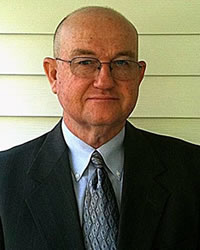
Gary Shepard

Vessels of Mercy

Romans 9:1-24
Gary Shepard November, 22 2015 Audio
0 Comments
Gary Shepard
Gary Shepard November, 22 2015

Sermon Transcript

Auto-generated transcript • May contain errors

100%
Recently, after the terrorists attacked
in France, the leader of that country said
that they would be hunted down and they would be dealt with
without pity and without mercy. And they did just exactly that. You see, that's all that law
can do. That's all that justice in itself
can do. And it was the very same way
under that law that God gave through Moses. There is no mercy. in the holy, inflexible law of
God. As a matter of fact, Paul reminds
us in Hebrews 10, he that despised Moses' law died
without mercy under two or three witnesses. They died without
mercy. The law requires total obedience,
and without it, it requires death. But hold your place here and
for a moment turn back to Psalm 86, where we find a man by the name of David. And he needed mercy, just like every
awakened sinner. We find him crying out for mercy. In verse 3 he says, "'Be merciful
unto me, O Lord, For I cry unto thee daily." And he cried out
to the Lord for mercy on the basis and with the understanding
that God does show mercy. If you look in verse 5, he says,
"...for thou, Lord, art good, and ready to forgive, and plenteous,
in mercy unto all them that call upon Thee." Now, you have to
appreciate what that last statement means in the light of Scripture. All those that called upon God
in the Old Testament They are described as those who, with
a God-appointed altar and sacrifice, sought to come before Him only
on that basis. Abraham built an altar, he offered
that God-appointed sacrifice, and it says, he called upon the
name of the Lord. And then if you look down in
verse 13, he says, "'For great is thy mercy toward me, and thou
hast delivered my soul from the lowest hell.'" Delivered my soul
from the lowest hell. And then if you look in verse
15, he says, But thou, O Lord, art a God full of compassion
and gracious, longsuffering, and plenteous in mercy and truth. O turn unto me, and have mercy
upon me, give thy strength unto thy servant, and save the son
of thine handmaid." You see, we read in this book that God
does show mercy. But I really don't believe that
there are very many people who think they need it, who desire
it, or who understand how it is that God shows mercy. They don't even know what mercy
is. But it is defined with definitions
like this, it is compassion for the miserable. And it is compassionate treatment
for those who act as your enemy. Mercy has to do with compassion
for one's enemy. And we find it stated in this
book many times, but in Exodus 34, When Moses was desiring to
see God's greatest glory after having seen all that he had seen,
it says, and the Lord passed by before him and proclaimed, merciful and gracious, long-suffering
and abundant in goodness and truth." Now, I do know that there
is a sense in which it can be said that God is merciful to
all. As a matter of fact, in Psalm
145, he tells us, the Lord is good to all, and His tender mercies
are over all His works. But it also says that He is sovereign
in mercy, and that defined as sovereign mercy we find in our
text in Romans chapter 9, when he makes reference to Moses in
verse 15, and he says this, for he, that is God, said to Moses, I will have mercy on whom I will
have mercy, and I will have compassion on whom I will have compassion."
Then, as if to make sure we don't misunderstand, the mercy of God,
He says also in verse 18, "...therefore hath He mercy on whom He will
have mercy, and whom He will, He hardeneth." He will have mercy
on whom He will have mercy. And the mercy of God that I want
us to note in these moments, this morning, is not in any way
a general mercy, but it is the particular mercy that He shows
to these who are described in this text as the vessels of mercy. That's what I call this this
morning, the vessels of mercy. And it would do us well if we
have any concern for our souls, any concern for ourselves in
the light of eternity and in our standing before God to try
and find out Who are these vessels of mercy? You see, this is the
saving mercy of God. And He demonstrates it in so
many ways. In one way, He speaks of this
mercy as being shown to a man by the name of Jacob. You go
home and you re-read these verses, and you will find out that this
man Jacob was one of a set of twins, born of the same parents
at the same time and in the same place and environment. And yet
what we read is that God showed mercy to Jacob." And right along
beside that, we read and find out, and it's stated in the Old
Testament first, that while God showed mercy to Jacob, He withheld
that mercy from Esau. But the truth of the matter is,
neither one of them deserved it. And so we read all through
this that before either of these children were born, before they
ever breathed the first breath of air, it was said by God to
their parents, what we read in verse 13, it was said unto her,
the elder shall serve the younger. And that was exactly the opposite
of how it was to be in that Old Testament time, because the elder,
or the firstborn, was to be the heir. But before they were ever
born, God said, the elder shall serve the younger. And what we find is that there
is in no way that mercy can ever be deserved. In verse 14 he says,
What shall we say then? Is there unrighteousness with
God? Did God do wrong in some way
by showing mercy to Jacob and withholding mercy from Esau? Dare we to charge God with doing
wrong in what He does in the matter of mercy especially? Paul says, led by the Spirit
of God. God forbid. And our misunderstandings in
matters like this, our misunderstanding lies in a problem with us, not
with a problem in God. In other words, what we naturally
think is right, is most likely wrong, and what we naturally
think is wrong is most likely right. He says, my ways are not
your ways. And so in the matter of mercy,
the first thing we have to realize is not only that neither deserve
mercy, but God has this sovereign right to show it or to not. Show it. And all our rebellion
against that unchangeable truth, all our defiance and refusal
to believe that which God says, it lies in the fact that we naturally
think we deserve something from God. We do deserve something in ourselves
from God, but it is that hell that David said the Lord had
delivered him from. The lowest hell. And so what we find in these
verses, what follows is God's evidence of His sovereign mercy. We have the evidence given in
these two men, these two twins, born of the same parents, and
not only that, we have an illustration of His sovereign mercy. He says, for he saith to Moses,
verse 15, I will have mercy on whom I will have mercy, and I
will have compassion on whom I will have compassion. So then
it is not of him that willeth, nor of him that runneth. It is not in who you are or what
you do, but of God that showeth mercy." For the Scripture saith,
the Scripture had already said, God in His Word unto Pharaoh,
even for this same purpose have I raised thee up, that I might
show my power in thee, and that my name might be declared throughout
all the earth." He was not the object of God's mercy. He was,
like all of God's creation, the object of God's use, the means
by which He would get glory for Himself. He says, for this purpose
I raised you up. Then it says, therefore hath
He mercy on whom He will have mercy, and whom He will He hardens. Thou wilt say then unto me, why
doth he yet find fault? For who hath resisted his will?"
In other words, to try and blame what God does on him as being
wrong by creatures like us. You see, man doesn't really know
who he is because he doesn't by nature know who God is. And so he continues here, and
he not only has given us the evidence, but now he gives us
an illustration. This was the illustration in
the Old Testament in the book of Jeremiah, and this is the
same illustration he uses in the New Testament, and it has
to do with the potter. Do you know what a potter is?
A potter is the one who takes the clay and turns it and shapes
it and molds it, makes various vessels or whatever out of it,
and he uses this potter as an illustration of his sovereign
mercy. He says, hath not the potter
power over the clay? In other words, the potter controls
the clay, makes something of the clay. It isn't the clay that
determines what the potter will make. We don't have any problem
understanding that or realizing it if we look at this illustration. The potter is sovereign in this
sense that he takes this clay and he makes with it what he
will. And then he says this, "...of
the same lump." And there's a reason why God uses this illustration
of clay, because that is exactly what He describes all of Adam's
race as being, just the dust of the earth. And before they
are anything, And if we don't realize this, we lose the whole
illustration. I read so many commentaries and
I hear so many preachers trying to water this down, trying to
make it say less than it says, saying that God doesn't actually
do this or that, but if we go down that path, we lose the whole
illustration of the potter's power over the clay. You see, He makes it of the same
lump. The vessels of mercy are of the
same lump as the vessels of wrath. He takes and He does with His
own what He will. And if we live in continual rebellion
against this, and we're unable to receive the glorious truth
of this, we'll be found among those vessels of wrath, showing
ourselves to be just exactly what we are, sinners and defiants
against God. And so Paul asked this question.
He didn't ask it just to me. He didn't just ask it to those
at Rome or to those in his day. This is a question always of
the ages. Hath not the potter power over
the clay of the same lump to make one vessel unto honor and
another unto dishonor? If you can imagine a potter sitting
there at his wheel, He has either gone out and dug or he's purchased
a big lump of clay. He has it on his wheel. And he
takes it and he makes one thing, he turns and he makes another
thing. Somebody comes along and says,
you can't do that. But he says, the clay is mine.
That's why the Scriptures God tells us in His Son, can I not
do with my own what I will? This is the God who says that
He owns everything, that He made everything. He even says this,
all souls are mine. Everything belongs to God. You're
not your own. We never were, we never have
been. And any imagination that we might
have been was surely lost when we all, our whole race, fell
in Adam? That's not the partner. have
power or authority over the clay of the same lump. You see, there's
no doubt about it, there is nothing good or better in one vessel
than the other in themselves, just as it was with Jacob and
Esau. Jacob wasn't a better man than
Esau. As a matter of fact, when you
read about Jacob, it almost seems like that he was not as much
so a man as Esau was. But because He would. And that's
always where it comes back to. Because God would. Because He
as the Sovereign, like the potter of the same lump, would make
Jacob a vessel of mercy. And leave Esau a vessel of wrath. When both deserved the wrath
of God. Both were sinners. Both were
natural rebels. But God, because He would. made
Jacob a vessel of honor, a vessel of mercy. And so he continues
in verse 22, What if God, willing to show His wrath? Now that's
a concept that's totally lost in our day, that God would ever
be anything but love. But God is and has always been
willing to show His wrath against sin. He showed His wrath against whole
nations of sinners. He showed His wrath against the
whole world when He sent the flood to execute His judgment
and His wrath upon our world, and to make His power known. And in the midst of it, endured
with much longsuffering the vessels of wrath fitted to destruction."
And I wonder how many commentaries and how many preachers in some
way to try to make God be less than He is, or make Him do less
than He's done. They try to take words, they
try to define these words in such a way as to make them fitting
themselves to such which they are in one sense. But you lose
the whole illustration of the potter then. But he said, God endured with much longsuffering
as He has through all the ages of this earth, and all the doings
of sinners, and all the defiance that He's had from this multitude
of people who have perished. He has endured with much longsuffering
all of these vessels of wrath fitted to destruction for a reason. What is it? that He might make
known the riches of His glory on the vessels of mercy." Why
has He endured all that has taken place on this earth? Why has
He endured all this defiance and rebellion and unbelief and
hatred all these ages from all these multitude of sinners? It's in order that He might show
mercy. to these vessels of mercy." And
that's basically the same thing that Peter is talking about when
he talks about God not being willing that any of these, He's
longsuffering to usward. He's talking about the vessels
of mercy. He's longsuffering to usward,
not willing that any should perish, but that all should come to repentance. And guess what he has been talking
about before that? He's been talking about how God
who sent the flood the first time, and men totally put it
out of their minds, and who has promised a judgment by fire on
this earth the next time, and they try to put that out of their
mind, and they defy Him, and they deny Him, and deny what
He said, and deny what He's already done. But he said, God endures
it. that he might show mercy to these
vessels of mercy which he had aforeprepared unto glory." And
they're not one natural race of people on this earth. They
are not just the Jews. They are not just the Gentiles.
He says, "...even us whom he hath called or named, not of
the Jews only, but also of the Gentiles." In other words, these
vessels of mercy that the potter has determined and made to be
the objects of his mercy, they are a people from among men that
he redeems. They are a people called out
from among each and every kindred and tribe and tongue on the earth. They are redeemed by the Lamb,
by the blood of the Lamb. The very first mention of mercy. You might remember when Abraham
was told by God that he was going to destroy all the cities of
the plain. Well, that concerned Abraham
greatly because his nephew Lot lived in one of those cities.
And Abraham's words to God, he said, shall not the judge of
all the earth do right? He said, if there were 50, or
if there were 40, or 30, or 20, or 10, or even one righteous
soul in any of those cities, would you destroy them also? Well, I know. Well, I know. And so God led Lot. Then those
angels down to Sodom led Lot out of there. He delivered him.
And so we read in Genesis 19, Lot confessing this very thing,
he says, Behold now, thy servant hath found grace in thy sight,
and thou hast magnified thy mercy which thou showed unto me in
saving my life. You've magnified your mercy to
me. Well, you say, wasn't Lot just
a wicked man just like everybody else? In himself he was. But when the apostle describes
him in the New Testament, he describes him as righteous Lot. He was righteous Lot. As a matter
of fact, the mercy of God is demonstrated in this, just like
it was with Jacob. He, in that mercy, made him righteous
in the Lord Jesus Christ. You see, mercy is not God giving
us what we deserve in ourselves, but neither is it mercy at the
expense of His justice. Just stop and think about it.
How could God have mercy on David? David says, "'Lord, You in mercy
have delivered me from the lowest hell.'" On his deathbed, he said,
"'Although it be not so with my house, yet You've made with
me an everlasting covenant, ordered in all things, and sure, and
this is all my salvation.'" You see, the mercies of God is in
a covenant. It's in a covenant. And what
we find is that Scripture never speaks of God's mercy as being
at the expense of His justice. That's what men want. They want
mercy at the expense of God's justice. But there is no mercy
from God at the expense of His justice. As a matter of fact,
it's just the opposite. You see, God in His mercy, according
to what we read in Psalm 85, He says, mercy and truth are
met together, and righteousness and peace have kissed each other. Mercy and truth? The truth about
God and the truth about David and mercy, they kiss each other? That signifies an agreement in
relationship. Or he says this, righteousness
and peace have kissed each other. How can that be? Because God's
mercy is in the Lord Jesus Christ. It's in the mercy that he shows
in Christ. You see, the wisdom of God is
that His mercy, the mercy that He shows to sinners like Jacob,
and David, and me, and Lot, and a whole lot more, it is the only
way that He can be just and holy at the same time, and merciful
to sinners like us. I'm telling you, the mercy of
God is glorious. It is the wisdom of all eternity. It is the most wonderful thing,
the most wonderful news that could ever fall upon the ears
of a sinner, ever enter into our minds for consideration,
that God could give us understanding of how it is that He can show
mercy to us. You see, mercy cannot be earned. And mercy cannot be deserved. Any idea of deserving in any
way whatsoever is absolutely excluded in the matter of mercy. And I'm going to tell you this
too. To seek mercy is a confession of guilt. You know, we have that
expression that when somebody goes into the court accused of
the crime, and it says that they throw themselves on the mercy
of the court. What is that? That's an admission
of guilt. That's an admission of guilt
to the degree that one is saying, do with me what you will, I'm
guilty. But the truth is, law, and justice
in and of themselves, if they be exhibited, can only punish. That's it. Because sin before
God, whether we consider it great or little, must be punished. Must be punished. But God does have mercy. But
He has no mercy apart from Jesus Christ and Him crucified. If you ever see the mercy of
God, you'll behold it in Christ and Him crucified. It won't be
just some theological term. It won't just be some concept
in your mind. It'll be in the bleeding Son
of God. Turn over to Luke's Gospel. There was a man by the name of
Zacharias, and he and his wife Elizabeth, they were to be the
parents of the forerunner of Christ. They were to be the parents
of John the Baptist. And they bore this son in their
old age, Zacharias heard the news, he
laughed, he thought, this is such foolishness, and God sealed
his tongue. He couldn't talk. And finally one day, that boy
was born. And all the in-laws, just about
like it is today, all the in-laws said, well, he ought to be named
Zacharias after his father. His mother said, no, we're going
to name him John. And so, she didn't really have
the authority to determine what the name would be, so they asked
Zacharias. They said, well now, what is
he to be named? We know you want your boy named
after you. And they handed him something to write on. And he
wrote down the name John, because that's God's will. And when he
wrote down the name of John, The Lord loosed His tongue, and
He began to praise God, and He began to speak things that God
put in His heart, in His mind, in His mouth to say. And so in
Luke chapter 1, in the midst of all that He says, He says
in verse 68, "'Blessed be the Lord God of Israel, for He hath
visited and redeemed His people, and hath raised up an horn of
salvation for us in the house of His servant David, as He spake
by the mouth of His holy prophets, which have been since the world
began, that we should be saved from our enemies and from the
hand of all that hate us, and to perform the mercy." You see,
John the Baptist would be the forerunner, the herald of the
Messiah. He'd be the one that would see
the Lord Jesus Christ and the Spirit of God would reveal to
him who he was, and he would say, Behold the Lamb of God who
takes away the sin of the world. meaning the sin of both Jew and
Gentile. And he said, when this Messiah
has come, it will be to perform the mercy promised to our fathers
and to remember His holy covenant. That covenant is a covenant of
mercy. That covenant is the everlasting
covenant. And that covenant is sealed by
the blood of Christ, which is the blood of the everlasting
covenant. And by that atoning sacrifice,
God exercises mercy towards His people, to these vessels of mercy,
and He does so in harmony with the demands of truth and righteousness. And that's always the way it
was. God never in any way showed mercy
to anyone apart from Christ crucified. And even before Christ came,
even before they had knowledge of the actual real One who'd
be that sacrifice for sins, God was pointing it out in all those
Old Testament types. And he said, Moses put together
this tent, special design, have an outer and an inner place.
But in that holy of holies, in the middle, the center of that
tent, that tabernacle, you'll build this box, overlay it with
gold, it'll have golden cherubs on each end looking at each other
and hovering over that plate, that lid of it. And he said,
that'll be the mercy seat. That's what it was called. And
once a year, the high priest would go in there, and Paul says,
but not without blood. He would go in with that God-appointed
sacrifice, that sin offering. And he'd take and he'd sprinkle
that blood on the mercy seat. God says, that's where I'll dwell.
That's where the sinner can meet me. It is Christ whose blood
is the reconciliation or the atonement for sins, for all He
represents. He's the priest. It's His blood. But He's also the mercy seat. You've got to have a mercy seat.
You've got a mercy seat? All the vessels of mercy have
a mercy seat. And all the vessels of wrath
Just ask them, are you interested in the mercy seat? Are you interested
in Christ? Are you interested in the mercy
He performed? No. We don't have time for that
foolishness. The preaching of the cross is
to them that are perishing foolishness. We don't have time for a salvation
that is all of grace. You mean we have nothing to do
with it? If we did, it wouldn't be mercy. It just wouldn't be
mercy. You see, that's what the mercy
seat was picturing. It's also called the propitiatory,
that which turns away wrath and restores one to a state that
he had not yet been in. And that's why Christ Himself
is called the propitiation. Romans 3, he says, God has set
him forth to be a propitiation, a mercy seat through faith in
His blood, to declare His righteousness, God's righteousness for the remission
or forgiveness of sins that are passed through the forbearance
of God. Christ made reconciliation. They
went in those priesthood year after year. Why? Because it was
just a picture and a type. But the Scripture says that Christ,
read Hebrews, that Christ entered in once, and by the sacrifice
of His own blood, He actually put away those separating sins.
That's how God has mercy. John is a Jew, he said, and he
is the propitiation for our sins, and not only for ours only, but
also for the sins of the whole world. Jew and Gentile. Not every
person, but these vessels of mercy. There's a lot I can't
explain, but if I believe God's Word, I have to believe it. That
God, just like this potter of the same lump, for a reason known
only to himself, and for a reason in himself, and on a basis accomplished
by himself, he makes this vessel of mercy." I don't want to fight against
him and say, well, why didn't you make everybody a vessel of
mercy? Why didn't you choose everybody out of Adam's race?
I want to remember he didn't have to choose anybody. He didn't
have to save anybody. He dwelled as self-sufficient
in and of Himself. And to say He has need of things,
that the Lord needs you, no He doesn't. But if He saves you, if He sent
His Son in your place, if He made you a vessel of mercy...
You know, a vessel is kind of a strange thing in a way. Because
a vessel is in itself empty. And all it can do is receive.
But proud sinners don't want to receive. They want to create. They want to do it. But the vessels
of mercy, they want to receive everything to the brim. And it's all Christ. What is that little song? Fill
my cup, Lord. I lift it up, Lord. That's the
way the vessels of mercy are. Lord, I'm empty. I have nothing. I can do nothing. Fill me. Here in His love, John said,
not that we love God, but that He loved us and sent His Son
to be the propitiation for our sins. That cross, with the Lord
Jesus Christ hanging on it, that's the mercy seat. But do we want mercy? Do we need
mercy? You see, nobody ever knows they
need mercy until the Lord is pleased to reveal it to them. David said, I need mercy. Somebody
said, well, he sure did. He was an adulterer and a murderer.
But you see, we can misunderstand what even that law says. Because Christ, when He came,
He said, to look upon another with lust in your heart, that's
adultery. To hate one another in your heart,
that's murder. You see, David didn't need mercy
any more than we need mercy. You see, the work of Christ flows
from the mercy of God. And it's not the cause of it.
It's the consequence of it. Mercy is not God accepting our
sinful works, but rather His accepting Christ's sinless work
on our behalf. Paul said, But God, who is rich
in mercy, for His great love wherewith He loved us, even when
we were dead in sins, hath quickened us together with Christ. By grace
ye are saved. When he writes to Titus, he said,
it's not by works of righteousness which we've done, but by His
mercy He saved us. And then, of these vessels of
mercy, they find out what is true in the Scriptures, such
as was said in Lamentations. When that weeping prophet said,
it's the Lord's mercies, that we're not consumed. It was His
mercy to us before the world began, when He chose us in Christ,
determined to show mercy to us. It's His mercy to us when Christ
hangs on that cross in our place and dies and suffers for our
sins. It's His mercy when He calls
us and delivers us out of darkness into His light. And it's His
mercies that sustain us every day. That's what Jeremiah says. It's
the Lord's mercies and they're new every day. They're mercies,
in the plural, and they're new every day. Why? Because that's what all of the
Lord's vessels of mercy are calling out. Have mercy on me. Every day of my life. Have mercy on me." One day, two
men went down to the temple to pray. One a Pharisee, and he
prayed thus with himself, Lord, I'm thankful that I'm not like
all these other men are. He didn't need mercy, and he
didn't get it. He didn't want mercy, and he
didn't get it. Are we going to blame God for
that? He didn't want it. He didn't
need it. And so he showed himself a vessel
of wrath. But there was another fellow.
He wasn't a religious man like this Pharisee, but he smote himself
upon his breast and he said, God, be merciful to me, thee
sinner. And that word there, mercy, means
propitious. In other words, God, be merciful
to me in the only way you can be merciful to me, in the only
way I can have mercy, and that's through the perpetuatory sacrifice
of the Lord Jesus Christ. Be merciful to me. And the Bible says, that man went
down to his house justified, counted, declared righteous in
the Lord Jesus Christ. One day a blind man, who because
of his blindness had nothing, sat by the wayside begging. And
one day he heard that Jesus was passing by. And he cried out,
Jesus, Thou Son of David, have mercy upon me. They said, be
quiet. He can't. He's a vessel of mercy.
God has showed him his need. God has showed him he doesn't
deserve anything. And he calls upon Christ for
mercy. So he cried out again, Jesus,
Thou Son of David, have mercy upon me. You know what happened
to him? The Lord had mercy on him. He
has mercy, as David said, on all them that call upon Him,
who seek that mercy in Christ. That's the cry of every heart
at some point or another that these are the vessels of mercy.
Have mercy upon me. He has to His people, and He
will. Now, if you need mercy, here
He is. And there's no mercy apart from
Him. How can you even imagine if I was a part of that lump
of clay laying there on the potter's wheel? And just because He would,
He made me a vessel of mercy. I think I'll be shaking my head
for all eternity. I don't know why except to say
it's for His glory. And the glory of His saving mercy
as it is in His Son, the Lord Jesus Christ. I hope that's the
last words that go from my lips. And may they be the expression
of my heart. Have mercy on me. Have mercy
on me. I'm guilty. I can't deserve it. I can't merit it. There's no
reason in me for you to do it. But because you can have mercy
on whom you will, have mercy on me. Father of all mercy, we
thank you. This is our only hope. We thank
you for your mercy and the blessed Lord Jesus Christ, have mercy
upon us, we pray, asking it all in Him. Amen.
Gary Shepard
About Gary Shepard
Gary Shepard is teacher and pastor of Sovereign Grace Baptist Church in Jacksonville, North Carolina.

Comments

0 / 2000 characters
Comments are moderated before appearing.

Be the first to comment!

Joshua

Joshua

Shall we play a game? Ask me about articles, sermons, or theology from our library. I can also help you navigate the site.