Bootstrap
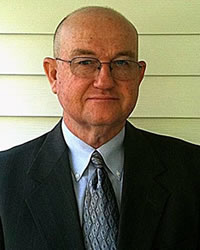
Gary Shepard

Good News From Prison

2 Timothy 1
Gary Shepard November, 1 2015 Audio
0 Comments
Gary Shepard
Gary Shepard November, 1 2015

Sermon Transcript

Auto-generated transcript • May contain errors

100%
Be opening your Bibles, if you
would, to 2 Timothy. 2 Timothy and the first chapter. And I want to read some verses
here in the beginning. Beginning at the first verse,
2 Timothy chapter 1. Paul, an apostle of Jesus Christ,
by the will of God, according to the promise of life which
is in Christ Jesus, to Timothy, my dearly beloved son, grace,
mercy and peace from God the Father and Christ Jesus our Lord. I thank God whom I serve from
my forefathers with pure conscience that without ceasing I have remembrance
of thee in my prayers night and day. Greatly desiring to see
thee, being mindful of thy tears, that I may be filled with joy. when I call to remembrance the
unfeigned faith that is in thee, which dwelt first in thy grandmother
Lois, and thy mother Eunice, and I am persuaded that in thee
also. Wherefore I put thee in remembrance,
that thou stir up the gift of God, which is in thee by the
putting on of my hands. For God hath not given us the
spirit of fear, but of power, and of love, and of a sound mind. Be not thou therefore ashamed
of the testimony of our Lord, nor of me his prisoner, but be
thou partaker of the afflictions of the gospel according to the
power of God, who has saved us and called us with an holy calling,
not according to our works, but according to his own purpose
and grace which was given us in Christ Jesus before the world
began, but is now made manifest by the appearing of our Savior
Jesus Christ, who hath abolished death, and hath brought life
and immortality to light, through the gospel, whereunto I am appointed
a preacher, and an apostle, and a teacher of the Gentiles. For the which cause I also suffer
these things, nevertheless I am not ashamed For I know whom I
have believed, and am persuaded that he is able to keep that
which I have committed unto him against that day. Hold fast the
form of sound words which thou hast heard of me in faith and
love which is in Christ Jesus. Now the title of my message this
morning is Good News from a Prison Cell. The man who wrote this
epistle, and an epistle is simply a letter. But this is no ordinary
letter. This is a letter that was inspired
of the Spirit of God in which God would speak to his people,
not just in that day, but also in the ages that would follow. And they are written by this
man who, as we find out in the first verse, is not only named
Paul, but he is also an apostle. And that word, apostle, simply
means one sent forth. And he is one who has been sent
forth by God, and he says he is an apostle of Jesus Christ,
by the will of God. He did not take this unto Himself. He is such by the will of God. And He is an example. He is a pattern in many things. He is, in one sense, a pattern
of all them that believe. He says that in another place. But He is also a pattern of the
true preacher of the Gospel. He is sent forth of God to proclaim
the Gospel. But being such, he was not like
most of the preachers in our day. He would have never taken
to himself the title of reverend. He knew that the scriptures say
that holy and reverend is God's name. And not only that, he sought
not to live any kind of a lavish lifestyle, and he sought not
to be a burden to those that he preached As a matter of fact,
he even supported himself by the making of tents, we read
in the book of Acts. And he did this mainly so that
he would be free, that he would have liberty. and not be entwined
with anybody or in bondage to anybody or responsible to anybody
and so he would buy that liberty be able to preach the truth to
me as a matter of fact if you would read back in the Old Testament
when God was speaking through Moses and giving instruction
to the judges that were appointed in Israel. He reminded them that
they should not receive a lot of gifts from those that they
were to judge, lest their judgment would be tainted and be in error. And his goal was not, as is in
our day, to see how many people he could get in, or to see how
many buildings that he could build, or to see what various
kinds of entertainment that he could provide. As a matter of
fact, he was not an administrator, nor was he a counselor in the
sense that we know it in our day. But he was, as every true
preacher of the gospel is, simply a proclaimer of the truth of
God's Word. In the Old Testament, we are
told this. God says, to the law and to the
testimony. In other words, to the Word of
God that is our only objective standard. As a matter of fact,
our only standard. He says, to the law and to the
testimony, if they speak not according to this Word, It is
because there is no light in thee. And his desire, and as
his record proves, his goal was to preach the Gospel, the true
Gospel, which ascribes all glory to God, which ascribes all of
salvation to the grace of God alone, and that grace being in
Christ alone, and Him crucified. He is a faithful preacher of
the truth. He has done what he has done
at the bidding of God himself. He is an apostle of God. But where is he when he writes
this letter? He is, as we find in every case
that we read about these epistles, he is in prison. As a matter of fact, he is in
prison because he's been preaching the gospel. He's being cast into
prison because a lot of various religious folks, they've not
liked what God has told him to say, and they have had the authorities
to cast him into prison. If you look over in chapter 2,
in verse 8, he tells this young man, Remember that Jesus Christ
of the seed of David was raised from the dead according to my
gospel. And when he mentions the gospel
that he preaches, he says, wherein I suffer trouble as an evildoer,
even unto bombs. In other words, the preaching
of this gospel is what got me cast into prison, and I am here
for the glory of God. And not only that, he says, in
another place, for the elect's sake. It is no accident that
he's here. And then he says, but the Word
of God is not bound. Though I be in bonds, the Word
of God, the Gospel of the Lord Jesus Christ, is not bound. Therefore I endure all things
for the elect's sakes, that they may also obtain the salvation
which is in Christ Jesus with eternal glory. In other words,
it was the will of God that he be cast into prison, and it would
be from that prison not only that he would write this epistle
to be used by God's people throughout the ages, but God, even amongst
those prisoners, had some people that he was to preach the gospel
to. And one was a man by the name
of Onesimus. And when he preached the gospel
there in that prison, God brought that man to believe, and it turns
out that he was a runaway slave from a man that Paul already
knew, by the name of Philemon. So Paul wrote that letter, which
we have as a book also, which is the book of Philemon. But
he is there, by his own admission, as a willing bondservant of the
Lord Jesus Christ. And he now writes this letter
to this young preacher by the name of Timothy, and he encourages
him not to be afraid, but also himself to clearly and courageously
preach the same gospel. It's a bit ironic that Paul is
encouraging this young preacher to preach the same message, the
same gospel that got him cast into A gospel that was rejected
by the most in his day. And so when he is called before
a man by the name of Felix, and given an opportunity to defend
himself against the charges that are brought against him, he says
in Acts 24, they cannot prove the things whereof they now accused
me. They accused him of being a troublemaker. They accused him of being a divider
and a separator and a setter forth of false doctrine. He said they cannot prove that,
neither by witness, true witness, nor by the Word of God. But listen to what he says. But
this I confess unto thee, that after the way which they call
After the way that they call heresy, so worship I, the God
of my fathers. believing all things which are
written in the law and in the prophets, and have hope toward
God, which they themselves also allow, that there should be a
resurrection of the dead, both of the just and the unjust. And hereby do I exercise myself
to have always a conscience void of offense toward God, and toward
me. So he writes this letter. And
he writes it on the one hand to encourage this young preacher. But in the midst of what he is
saying to Timothy, he gives also, as he does on many occasions,
a kind of a brief summary and nutshell of the Gospel itself. He knows the Gospel. He is the
Apostle of God. And he has been sent to preach
the gospel, even being cast into prison for preaching the truth. And so now he reminds this young
preacher of what that gospel is. The word gospel means Good
news. In another place it is defined
by the words glad tidings. Good news and glad tidings. And this means that it is not
a message in which men and women are told things to do for God. You will not find that in the
gospel that Paul preached. Because God does not send forth
his gospel not knowing exactly who those he purposes to save,
he knows exactly how and what they are. So if it's good news
to them, It has to be a message. It has to be a declaration that
recognizes them and deals with them in the state and condition
that they are in. You see, it is not a message
wherein men and women are told what to do for God. Rather, it
is exactly the opposite. It is a message of telling them
what God has done for them through Jesus Christ and Him crucified. And he tells us in this message,
he reminds Timothy and he reminds us that it has something to do
with God saving us. There are lots of people who
are talking about somebody named Jesus. They say they love Jesus. They say they believe on Jesus. They say that they preach Jesus. But the very name Jesus means
Jehovah the Savior or Jehoshua. It has to do with this person
in his saving character. That's why whenever Mary is instructed
by the angel as to exactly what his name is to be. What he is
to be called, it is this name Jesus. And so it says in Matthew
121, Thou shalt call his name Jesus, for he shall save. If he doesn't do that, then he'll
have to take another Thou shalt call his name Jesus for or because
he shall save his people from their sin. And so one of the
things that distinguishes the false from the true is the fact
that false preachers are always telling someone something to
do. They say things like this, you
need to make your decision. They say things like this, you
need to come forward to be saved. Or they say you need to be baptized
in order to be saved. Or you need to give money. Or
you need to accept Jesus as your personal savior. You will not
find that often repeated statement anywhere in this book. As a matter
of fact, what you find in this book is exactly the opposite,
and that is this. He's the one who has to do the
exam. And the Gospel has to do with
this fact, where we read in Ephesians 1, When Paul is writing to those
believers at Ephesus, and this is what he says to them, he says,
God has made us accepted in the beloved. And so here are all
these men, standing and in various ways, different, though they
be in some points, always the same in this. If you want to
be saved, do this, or do that, or give this, or stop doing something. You want to be saved, stop drinking,
stop smoking, stop doing this, stop doing one thing and the
others. But the gospel, the true gospel
is a message that has to do with something that's already accomplished. The true gospel has to do with
something that God has already done and has already done in
the Lord Jesus Christ. What is the last thing that the
Lord Jesus Christ says from the cross? Does it mean anything
at all that here is the truth, here is God manifest in the flesh,
he's hanging on the cross, and at the very end, before he yields
himself up to death, what he says. He says the best thing. He speaks the best news that
any sinner could ever hear. He says it is finished. Finished. That means complete. And I've often thought how would
an artist respond if after he brings forth a masterpiece that
he's worked on for a long time and he presents it to someone
and they look at it and they say well that is so beautiful
but let me take my brush and let me just add just a little
few strokes of color here and there He's saying it's not really
finished. But this is what the Gospel is
about. It's about something, and that
something being a salvation that Jesus Christ finished by Himself. And on the cross, Christ is not
offering something. He's not making salvation available. He's not just doing God's part. And there's a part to yet remain. He's doing every part. You remember when Jonah was there
in the bottom of the sea. And he's shut in by God. He's
there in the fish's belly. And it says that he turned his
eyes toward Jerusalem, and he said this statement. He said,
Salvation is of That's the message. Salvation is of the Lord. And the gospel of grace is for
sinners who've been brought by God to see and to know that they
can't save themselves. He has to bring us to the knowledge,
to the conviction, that there is nothing we can do to save
ourselves. And we read this all throughout
the New Testament. It says that Christ came to seek
and to save that which is lost. It says in due time Christ died
for the ungodly He came into this world to save sinners, and
all of these that he brings to an end of themselves, they're
described in scripture as those who labor and are heavy laden. And he says, come unto me, I'll
give you rest. See, that's the big difference
in the false gospel and the true gospel. The false gospel is always
calling upon men and women to do, to work, But the true gospel
is Christ saying, Come unto me, all ye that labor and are heavy
laden, burdened down with your sin, burdened down and worn out
with all the attempts to try to please God and work for your
salvation and do the things that men always prescribe. Come unto me, all ye that labor
and are heavy laden, I'll give you rest. What's that? A Sabbath. That's what that word Sabbath
means. Rest. And that's why in creation
it says God created this world, created man, and on that seventh
day he rested. Do you think he was tired? No.
That means he finished it. And rather than looking at a
day of the week, After the Apostle says in another place, let no
man judge you in these things. And making a day that is simply
the Sabbath as it was under the law. That Sabbath day under the
law was just a picture and a type of Christ. He's the rest of his
people. He's our Sabbath. In other words,
we rest in Him as those who cannot save themselves, who cannot do
in themselves and by themselves that which is necessary to please
God. But rather, we rest in Him. We
worship Him. Some people think that this day
is the Sabbath. This day is not the Sabbath.
The Sabbath was the seventh day of the week. This is the first
day of the week. Called in some places in the
New Testament, the Lord's Day. And so, those who are under the
law, trying to preach what we're to do, they always want us to
stop doing something. The Lord's people rest. I mean,
they rest in Christ. If I were to go home this afternoon
and start my lawnmower and mow my grass, I'd still be resting. We worship God. We worship Christ
as our rest. We come at the appointed times
to worship Him, to hear what He says, to read about Him, to
learn more about Christ because He's our rest. Instead of being
put under a guilt trip all the time, listen to what Paul writes
to Timothy. Verse 7, he says, For God hath
not given us the spirit of fear. You know, most preachers, I know
they're trying to make somebody afraid. If you'll pardon my saying
it, they're trying to scare the hell out of everybody. Scare
them out of hell and scare them into heaven. If all I do is scare
you, somebody else could come along and scare you worse. Last
night, a lot of folks play trick-or-treat. Today, more will play trick-or-treat. We're going to trick you into
getting a treat. That's what it amounts to. We're
going to get you under this guise. We're going to bring you in under
this thing or that thing or whatever it is, just if we can get you
in. We're going to get you to make
a decision. We're going to get you to be baptized or something
like that. We're going to get you to grow
with us. Nobody grows except those who have life. But he said,
but of power and of love and of a sound mind. That's what
a believer has because that's the work of God's spirit in us.
He brings us to peace with God in Christ Jesus. But notice what
he continues on here in what he says. He says, be not thou
therefore ashamed of the testimony of our Lord. What is the testimony
of our Lord? This book. this gospel. Paul said, I'm not ashamed of
the gospel of Christ because it is the power of God and the
salvation to everyone that believeth to the Jew first and also to
the Gentile for therein is the righteousness of God. But when
he speaks of God, when he speaks of that testimony of God, don't
be ashamed to preach what God says. I've been ashamed of a
lot of things over the years. I've been ashamed of my conduct
at times, my thoughts at times, my public profession at times. I've been ashamed of a lot of
things. but not the gospel of God. Because when he talks about
the love of God here, the love of God is always joined inseparably
to the purpose of God. The purpose of God. He doesn't
say here that God loves everybody. That's the most ridiculous notion,
if we have any eyes to see the reality before us, would we say
that God loved every one of those people that was destroyed in
the flood? Would we dare say that he loves
every one of those who were destroyed in the cities of the plain with
fire and brimstone? Would we dare say that he loves
everyone that he will cast into hell? If that's the love of God,
we don't need any part of that. If he loves a people and yet
he would let that people go to hell, then what in the world
does the love of God have to do with salvation? No, God's
love Paul says, first of all, is in Christ Jesus. Outside of
Christ Jesus, God is a consuming fire. The love of God is in Christ
Jesus. And he says this of them, Romans
8, 28. You may have heard part of that verse. And we know that
all things work together for good. I heard that growing up.
I hear it every day almost. Somewhere, somebody says, well,
you know, The Bible says all things work together for good.
No, it doesn't. No, it doesn't. It says this,
and we know that all things work together for good to them that
love God. And then he defines that to them
that are the called according to his purpose, the love of God. is connected to his purpose. And that word purpose in the
Greek is something like prosthesis and it means a setting forth
and it's akin to that word that we get in our language prosthesis
which has to do with a limb or an arm that extends out Well,
God's purpose is His arm. It's an extension of Himself. It's an extension of His will. It's an extension of His desire. How many times do people hear
this? Well, God would save you if you let him. Is he that weak
and pathetic? Well, God will do this for you
if you just let him. That is a pathetic God. An absolutely
pathetic God. Or they say this, His desire
is to save everybody, but there will only be a few saved. Listen
to what we read in Job. Speaking of God, it says, He
is in one mind. And who can turn him, and what
his soul desireth, even that he does? For he performs the
thing that is appointed for me, and many such things are with
him. People say, well, God has a plan.
Preachers say, well, God has a wonderful plan for your life
if you'll just let Him. No, God doesn't have a plan.
God has a purpose. Everything He does, and everything
that's done, is done on purpose. He has a purpose which He carries
out in every detail. And we read this again and again
and again in Scripture. Why don't we believe it? In Isaiah,
the Lord of hosts has sworn, saying, Surely as I have fought,
so shall it come to pass, as I have purposed, so shall it
stand." Again in Isaiah. This is the purpose that is purposed
upon the whole earth, and this is the hand that is stretched
out upon all the nations. Whatever's going on, there's
no such thing as an accident, or fate, or chance. You see,
those are just simply man's way of denying this truth that God
is in charge. Whenever Eli's sons were slain
in the battle, And they brought the news back to him. Eli said,
it's the Lord. Let him do what seems him good.
When all of Job's family was destroyed, and all of his goods
taken away, and his body stricken with disease, he said, the Lord
hath given, and the Lord hath taken away. Blessed be the name
of the Lord. Everybody's always looking for
something to blame things on. They're looking for all these
second causes, and they worry themselves to death. It's the
Lord. It's the Lord. He calls who he
will to do what he will. He says, calling a ravenous bird
from the east, the man that executed my counsel from a far country,
yea, I have spoken, I will also bring it to pass, I have purposed
it, I will also do it. He says when he brings judgment,
for this shall the earth mourn and the heavens above be black
because I have spoken it, I have purposed it, and I will not repent,
neither will I turn back from it. That's everything. Turn over
to Ephesians Chapter 1. Now this is just God's Word. Ephesians Chapter 1 and look,
look down at verse 9. He says, Having made known unto
us the mystery of his will according to his good pleasure which he
hath purposed in himself, that in the dispensation of the fullness
of times he might gather together in one all things Did you read
that last statement? It's a very easy thing to say,
well that's primitive doctrine, or that's
Baptist doctrine, that's this, that. No, this is the Word of
God. He works all things after the
counsel of His own. So people say, well, what about
man's free will? Think about it, folks. There
can only be one free will in the universe. Just one. Can't
be two. And our wills are not free anyway. They're bound to us. They will
according to what we will, and we as sinners can never will
anything but what a sinner will will. God's will is free, not
bound. In other words, God is the author
of it, it is His purpose alone, and it is a revealed purpose. Now He doesn't reveal to us all
the details, but He did tell us this, that whatever it is,
He works all things after the counsel of His will. It's His
purpose. And it's a two-fold purpose.
The first thing being this, it is to glorify Himself in everything
that's done. And not only that, it's for the
spiritual and eternal good of all His people. He works them
together for good to them that love God. To these that are the
called according to his purpose. And Paul says here, having made
known. And he's made it known to his
people. Now not all the world Not everyone
in the world is his people because they don't know this purpose.
He reveals it to them through this book. Having made known
unto them, unto us, that which the eye does not see, which the
mind cannot naturally comprehend, but God reveals to us that he
does it. He does it. It has to be good.
It has to be wise. It has to be right. And he tells
us this purpose is in Christ. In whom? In whom everything's
in Christ. In whom we have an eternal inheritance. Would you like to have an inheritance? Would you like to have an inheritance
from God? Well, the whole principle of
inheritance is this. You don't get it because of what
you do. You get it because of who you
are and your relationship to the one who gives. I've often
told you how people regard a family like too many a man and a woman
who run a store. They rake and scrape, and they
work hard, and they save, and they accumulate a little bit,
they buy some land, they build a house, they do all these things,
and they die. They have one son. He's a worthless
trifling. As we say in the South, he's
a sorry thing. And everybody thinks, well, he's
gonna get all that inheritance. He doesn't deserve it. Inheritance
doesn't have anything to whether or not you deserve it or not.
It's all based on relationship. It's all based on the will of
the one who gives it. It all has to do with being an
heir. And that's why the Bible says that God's people are joint
heirs with Christ. Grace is God giving us what He
gives us, which is everything in Christ. His will includes
all things, all things. His will includes all men. He
said of Pharaoh, for this purpose I raised you up, that I may show
my glory, the glory of my judgment. You ever stop and think about
what happened at the Red Sea? God showed his miraculous, saving,
delivering grace. He brought Israel through that
Red Sea, which was just a type of the blood of Christ. But not
only that, he drowned Pharaoh and his army in that Red Sea.
He'll have mercy on whom he'll have mercy, and he'll be gracious
to whom he'll be gracious. What do we say to that? I'll
tell you what I say. Have mercy on me. I don't deserve
it. Have mercy on me. And all events,
just like we read in Ecclesiastes, that's why I read that. There's
a time to do this, a time for this, a time for that, but it's
all in his time. Catch that? His time. But what
I want us to make sure we know is this, that God's purpose to
his people is a purpose of grace. He says in one place, I know
the thoughts that I think of you, thoughts of peace. God's
not angry with his people. And not only that, His people
are going to get everything. So that's why it makes such an
utter error and a mess for preachers to do like they do, and they
try to govern and dictate to people using two things. Threat
of punishment. If you don't do this, God will
get you. If you don't do this, God's going to He's going to
punish you. He'll take one of your children. He'll take your
business. He'll take your home. He'll do something. If you don't
give, God will get it back one way or another. No. And the other
is promise of reward. If you do this, God will bless
you. If you give this money or if
you'll start doing this, God will bless you. If you'll quit
doing that, God will bless you. That's not the gospel of grace. That's a bunch of works mongers,
fear mongers. You see, God's purpose is one
of grace to his people. It's to them that love him. even
though their love for Him is not the cause of His love for
them. We love Him because He first
loved us. Herein is love, not that we love
God, John says, but that He loved us and sent His Son, the propitiation
for our sins. He calls us according to His
purpose. That word called there also means
named. You remember when Jesus stood
under the tree? Zacchaeus was up in the tree,
he called him by his name. Not simply by omniscience, he
knew and knows everything, but because that's one of his sheep.
Come down, I'm coming to your house today because you're a
son of Abraham. You're one of God's children.
But this is the good news if you're looking in our text this
morning. Verse 9, he says of God, who
hath saved us. You see that? Who hath saved
us. He alone is the Savior. He is a just God and a Savior
and He must be just and at the same time is the justifier and
He does all of that Himself. In other words, our sin dead
must be paid. And so he takes on himself human
flesh and comes to this world and dies the death that's necessary
to pay it. He's just. He doesn't let our
sins go. He punishes them. But He punishes
them in Christ. He bears our sins in His own
body on the tree. He has saved us. Not tried to. Not made salvation possible.
But He saved us. He saved us from all our sins. He saved us from Satan. He saved
us from this present evil world. He saved us from His wrath. He
saves us from ourselves. And if He saved us, We are eternally,
unchangeably saved. I know this. If Christ died on
that cross for my sins, if he paid that debt, I don't have
any. And the next thing somebody says is, well, what about if
I go out and sin tonight or tomorrow? There's no what about it. I will
do it. I know me. In thought or word
or deed, some way, I'm a sinner. That's all I can do. They were
all future when he died. He saved us from our sins. He's
the author of eternal salvation. And it says he called us. That's
what he does. He calls his people. He not only
names them, but he calls them effectually and mightily through
the gospel. But we're bound to give thanks,
Paul says, to those in Thessalonica. to give thanks always to God
for you, brethren beloved of the Lord, because God hath from
the beginning chosen you to salvation through sanctification of the
Spirit and belief of the truth, whereunto he called you by our
gospel to the obtaining of the Lord. Call like he called Lazarus
dead in that tomb. He said, Lazarus, come forth.
Well, Lazarus can't do that, can he? The power is in the one
who spoke that call. But notice that next statement,
not according to our work. You say, why do you always preach
that preacher? Because there's nothing that
is so unnatural to us as sinners than that. We just always, even
sometimes unconsciously, if not trying to save ourselves, at
least trying to better our salvation. You can't better something that's
finished. And that's why all the notions
of rewards in heaven and this and that and the other. Somebody's
going to live in a big house and somebody's going to live
in a small one. Someone's going to live near the throne. Someone's
going to live on the outskirts of town. Not if it's all of grace,
because grace means totally unmerited, undeserved, and even at the first
unwanted favor. Not according to our merit, or
our righteousness, or our decisions, or our feelings, or our experiences,
or our baptisms, or our professions. Salvation is not at the front
of this building, and it's not in that pool of water in the
back. It's not in shaking my hand. It's not in praying a sinner's
prayer. It's in Christ. Not according
to our works, but according to His own purpose and grace, which
was given us. Given. What do we not understand
about free? We live in such a skeptical society
because we've been told again and again that something was
free when it wasn't really free. And yet we still fall sucker
to that. But here is God who saves his
people, who justifies them freely. through that redemption that
is in Christ Jesus. Given them. And look at what
it says. Given us in Christ Jesus before
the world began. Before we could mess it up. As
a gift. Given in Christ. Paul says in
Ephesians 1, he chose us in Christ before the foundation of the
world. He gave it to us in the head
and representative of his people. And he did it deliberately. He
did it individually. He did it personally. He did
it all by himself. And that's why he gets all the
glory. That's why I don't tell you what to do. God has done
anything for you. I won't have to browbeat you
about coming to the service. I don't have to beg you to give.
I don't have to do all those things. I just spend my time
telling you what Christ has done. And he said, my sheep hear my
voice and they follow me. But all this is made manifest.
How? by the appearing of our Savior.
That eternal purpose of salvation is made manifest now because
the Savior has appeared now once in the end of the world. Hath
He appeared to put away sin by the sacrifice of Himself? He came to lay down His life
for the sheep, bring in everlasting righteous, and abolish death.
Who have abolished death. Now here we have an inheritance,
we have life, We have peace, we have the abolishment of death,
we have everything God has to give. And it's been brought to
life and immortality, brought to light through the gospel. Why be ashamed or fearful to
preach the gospel? Why hold back telling men and
women what God does for sinners. What Christ accomplished on that
cross. Showing how God can be just and
yet justified. Talking about a salvation freely
given in Christ. Why hold back and be fearful
to preach that? Only if my goals are not what
God's goals are. God's goal is His purpose. And His ways are not our ways.
We'd stand a man up in Madison Square Garden wherever and have
him to preach to a multiplied thousands. God sent his truth
from a prison cell by a man who's incarcerated for telling that
truth. Paul did get out and you know
what he did? He preached the same gospel that
got him thrown into prison to start with because that's the
only truth that God's people will hear. Oh they'll hear a
lot But he says, my sheep will hear my voice and they'll follow
me. Father, we pray this day that
you would get glory unto yourself, that you would bless your word,
your glorious gospel of free salvation in Christ crucified
to the hearts of your people. Lord, we know that you alone
can cause us to hear, know ourselves as sinners, and therefore, in
our hearts and mind, leave every other hope and come unto you
for rest. We thank you for that rest in
the Lord Jesus Christ. We pray in His name, Amen.
Gary Shepard
About Gary Shepard
Gary Shepard is teacher and pastor of Sovereign Grace Baptist Church in Jacksonville, North Carolina.

Comments

0 / 2000 characters
Comments are moderated before appearing.

Be the first to comment!

Joshua

Joshua

Shall we play a game? Ask me about articles, sermons, or theology from our library. I can also help you navigate the site.