Bootstrap
Gary Shepard

Preaching and the Repentance Preached

2 Timothy 2:14-25
Gary Shepard May, 20 2015 Audio
0 Comments

Sermon Transcript

Auto-generated transcript • May contain errors

100%
I want you to turn in your Bibles to 2 Timothy. 2 Timothy chapter 2. I feel the greatest weakness this morning. in every way so inadequate and so helpless, especially to
speak on anything that has to do with
preaching. And yet I've entitled this message,
Preaching, and the repentance preached." The apostle Paul in
this letter is led by the Spirit of God to give instructions to
a young preacher by the name of Timothy. And if you look with me beginning
in verse 14, He says to him, as well as to
us all, of these things, put them in
remembrance, charging them before the Lord, that they strive not
about words to no profit, but to the subverting of the hearers."
God saved preacher, and hearer alike from this strife about
words to no profit. Study to show thyself approved
unto God, a workman that needeth not to be ashamed, rightly dividing
the word of truth." but shun profane and vain babblings,
for they will increase unto more ungodliness. And their word will
eat, as doth a canker, of whom is Hymenaeus and Philetus." They
were all ready in Paul's day amongst the people of God in
that great professing church, those he describes as their words
like a cancer or a sore, and he calls them by name. He says, "...who concerning the
truth have erred, saying that the resurrection is past already,
and overthrow the faith of some." There was error being preached
in that day, even amongst the Lord's people, and there were
some who believed that error. But that did not hinder God's
purpose and His church. He says in verse 19, "...Nevertheless,
the foundation of God standeth sure, having this seal, the Lord
knows them that are His." The preacher may not know it.
Multitudes of people may not know it. Some who appear to be
may not be, and some who may not appear to be are. But count
on this, the Lord knows them that are His. They are already
His. They've been His since old eternity. And note this, He says to them,
And let every one that nameth the name of Christ depart from
iniquity. Now that doesn't simply mean
depart from acts of immorality, though we certainly must. and
all the things that might be associated with that term, though
we must also, but particularly in this context and in the light
of what has just been said, let every true believer depart from
this iniquity or this inequity. What is it? Well, he says to
some in Matthew 7, who have called on Him and called His name saying,
Lord, Lord, who have said, we've preached in Your name, and we've
done many wonderful works in Your name. And we have cast out
devils in your name." And the Lord Jesus says that He'll say
to them in that great last day, Depart from Me, ye that work
iniquity. I never knew you. So especially iniquity, which
is inequity, means everything that is not equal to God as He
is, everything that is not equal to what He says in His Word,
everything that is not equal to what He requires and gives. in the Lord Jesus Christ. So he says to every one of his
people, depart from everything, every doctrine, every notion,
every hope, every idea that is not equal to what I give and
require, which is Christ alone. Depart from everything that is
not Christ alone. But he says, but in a great house,
and most likely that is a reference to this professing church, to
this professing Christianity. There are not only vessels of
gold and silver, but also of wood and of earth, and some to
honor and some to dishonor." He uses that same word, vessels,
in Romans 9 when he talks about the potter creating out of the
same lump vessels of mercy and vessels of wrath. He says, "...if
a man therefore purge himself from these, these vessels of
dishonor, these vessels of wood and earth, He shall be a vessel unto honor."
In other words, this is how God will distinguish His people. He will bring them out from these
that dishonor, and they'll be counted among those who are honored
of God. He says in another place, Him
that honors me, I will honor." He says, "...sanctified, and
meet for the Master's use, and prepared unto every good work. Flee also youthful lusts, but
follow righteousness." faith, charity, peace with them that
call on the Lord out of a pure heart. How is the heart of a
sinner said in Scripture to be purified? He says that we purify
our hearts in obeying or believing The truth. We believe the truth. We forsake all that is not of
God. Every other hope. And we trust
in the Lord Jesus Christ and His righteousness alone. And
in that, there is this purifying of the heart. Not a sinlessly
pure. but this heart of believing whereby
we trust Christ alone. He says, "...but foolish and
unlearned questions avoid, knowing that they do gender strifes. And the servant of the Lord must
not strive but be gentle unto all, apt to teach, and patient."
That doesn't describe what most look for in our day in a preacher. He must not strive. He must not
be given to strive, but be gentle unto all, apt to teach, In meekness, instructing those
that oppose themselves. That's what a sinner outside
of Christ does by nature. And he's to do that, he says,
if God, peradventure, will give them repentance. He preaches. He doesn't strive. He teaches what God says in His
Word. He patiently waits on the Spirit
of God to do whatever with that Word He will. And in meekness,
in a quiet strength, He is to instruct those that oppose themselves. if God, peradventure, will give
to them repentance to the acknowledging of the truth." Now, this is the instruction
that Paul gave to this young man, Timothy. and that through
him he gives to all who would preach the gospel, and in doing
so, he follows Christ's example. In Mark chapter 6, when our Lord
sent them out two by two, Because in the mouths of two or three
witnesses, every word was to be established. He sent them
out, and it says that they preached that men should repent. In this same spirit, in this
same attitude, and having this same message, A gospel that has
to do with repentance. And this is what Paul, not only
in his instruction, but if you look back in the book of Acts,
in Acts chapter 20, what you'll find is that this is exactly
what Paul and the other apostles themselves preached. Look back
in Acts 20 at verse 17. And from Miletus he sent to Ephesus,
and called the elders of the church. And when they were come
to him, he said unto them, You know from the first day that
I came into Asia, after what manner I have been with you at
all seasons, serving the Lord with all humility of mind, and
with many tears and temptations which befell me by the lying
in wait of the Jews, and how I kept back nothing that was
profitable unto you, but have showed you and have taught you
publicly and from house to house, testifying both to the Jews and
also to the Greeks, repentance toward God and faith toward our
Lord Jesus Christ." Repentance toward God and faith
toward our Lord Jesus Christ." You see, we read in Acts chapter
17 that it says, "...and the times of this ignorance God winked
at, but now commandeth all men everywhere to repent." Again
in Acts 26. He showed first unto them at
Damascus, and at Jerusalem, and throughout all the coast of Judea,
and then to the Gentiles, that they should repent and turn to
God, and do works meet for repentance." Works consistent with this true
repentance. And as you read this book, there's
one thing that becomes very obvious. And that is that repentance is
essential to salvation. As a matter of fact, when our
Lord was hearing some of the latest gossip and news about
some who had died horrible deaths, And it was being told to him
by those who imagined that the reason they died this horrible
death was because they were horrible sinners, and that they were not
because they had not suffered that. And he says to them, except you
repent, ye shall likewise perish. But when you come to this matter
of preaching and declaring that men and women are commanded of
God to repent, there are so many things that pass for repentance. It's like you first have to begin
to tear down and clean up in order to declare the truth. But it is as we found in what
is said here, repentance toward God. Not just a God, but the
God. And that means that any teaching,
or any work, or any act about repentance that is apart from
Christ and His gospel, that's not a real repentance. That's not a real work of God. All that is, is simple, a mere
legal repentance. Because in Luke chapter 24, Those early apostles, they found
out themselves, and they stated this, that repentance and remission
of sins should be preached in His name among all nations beginning
at Jerusalem. They were to preach it in Christ's
name. So, this business of repentance,
just like every other doctrine in all the Bible, if you separate
it from Christ, it's just a deadly, damning doctrine. This repentance
is to be preached in His name. Not only by His authority, but
also associated with the Lord Jesus Christ. And any repentance
that is not inseparably joined to faith in Christ, it can't
be repentance. It says repentance toward God
and faith toward the Lord Jesus Christ. You can't separate the
two. And not only that, but repentance, as we find it in Scripture, It
cannot be just a mere sorrow over sin which arises out of
a fear of punishment or the experience of its consequences. Cain killed Abel, and when he
heard of his punishment, he cried out, My punishment is greater
than I can bear." But he didn't repent. He didn't repent. He was sorry
about what sin had brought him. He was sorry about what God had
just said about him. But he didn't repent. So that
means that all the preaching that these preachers do singling in on hell all that
the scary, flesh-exciting films and such that they show, all
the sad stories that they tell, all the threats of judgment that
they declare, though it may cause people to make religious decisions,
It doesn't produce repentance. When you read in Luke chapter
16 concerning that rich man that we know according to Christ was
already in hell, remember what he said? Oh, he said, send Lazarus. Send Lazarus to warn my brothers
lest they come to this awful place. He saw Abraham. He saw Lazarus. But he said, Father Abraham,
if one went to them from the dead, send Lazarus back, because
if one went to them from the dead, they will repent. And he said unto him, if they
hear not Moses in the prophets, Neither will they be persuaded,
though they won't repent, even though one rose from the dead.
So if somebody rose from the dead, came back from hell, and
told of its awfulness, it still wouldn't produce repentance. And not only that, but also,
and this is very often the mistake, repentance, is not a reformation
of life which comes after some great misfortune, or sickness,
or sorrow, or judgment. Think about what Pharaoh saw.
Think about what Pharaoh experienced. Death of his firstborn son. All
the plagues of Egypt. and then destruction of his army
in the Red Sea. But he didn't repent. Somebody said years ago, any
repentance that is born in the storm, it will die in the calm. Men will make promises to God. They'll feel fear, natural fear
in their hearts. They'll make promises to God. They'll bargain with God. They'll
tell God what they'll do, if He'll just do this or that or
the other. But they won't repent, no matter
how bad it is. I walked one day into an ICU
unit. to a man who was laying there
dying. And he looked up at his son,
and he said something to him about going to hear the gospel. And his son told him, don't worry
about that now, Daddy. You just get better. They won't
repent. As a matter of fact, if you turn
over to Revelation chapter 16, Revelation chapter 16, and look
at verse 7, John says, And I heard another out of the altar say,
Even so, Lord God Almighty, true and righteous are thy judgments. Can we say that? And the fourth angel poured out
his vial upon the son, and power was given unto him to scorch
men with fire. And men were scorched with great
heat, and they blasphemed the name of God, which hath power
over these plagues, and they repented not to give him Glory. Now, fire in this book is so
very often symbolic of judgment. And some would have us to say
that this has to do with some time in the great future, some
time of great tribulation or end times. But this book is actually
a picture like a panoramic view of that hole that goes on on
the earth. And so the judgments are not
simply the scorching of men with heat, but all the judgments that
come. And when I look around right
now in this world, there looks like a lot of judgments. judgments of war, judgments of
death, judgments of the most awful diseases, judgments on
every hand coming to men and women, but they don't repent to give
God the glory. And neither is repentance a mere
ceasing from some outward sins. Well, if I'll quit doing this,
if I'll quit drinking, if I'll quit drugs, if I'll quit doing
these things, it'll be repentance. Or to look at somebody who's
done those things and say, well, he repented. No, he didn't. And oftentimes the case is that
a man or a woman or a young person leaves some of these blatant,
outrightly immoral sins to go to what is worse. You say, what
can be worse than that? A religion without God. The unclean
spirit, Christ said, goes out of a man But there returns back
seven more worse than that one was. He's blinded. Self-righteous. That's why he
looked at the Pharisees and said, you cross land and sea to make
one proselyte. to your way of thinking, to your
religion. And when you do, you make him
two-fold more the child of hell than he was before. That's not repentance. And it's
foolish, as some imagine, to simply confess outwardly some
sins and call that repentance. False religion is full of a lot
of, I used to be people. These evangelists, so called,
they gather into their meetings these, I used to be people. I was once a hell's angel, or
I was once a drug addict, or a drug pusher. I was once a prostitute. I was once this, that, or the
other. How can repentance from sin be
the repentant or active outward confession of a few sins when
you and I don't even know all our sins. That he's repentant
of his sins. You don't even know all your
sins. That's the scary part. We don't know all our sins. We
may know a few that are actual, outward, blatant commissions
of sin, but what about all the omissions? And certainly, repentance is
not that sadness that's felled over the thought of lost blessings
and lost benefits. Oh, when Esau found out what
he had done, He was so sad when that rich man in hell found out
where he was. He was so sad that there weren't
either one of them repentant. And I know this, repentance,
true biblical repentance, though it certainly does bring a sinner
off his high horse, it does not lead to utter despair And such things as suicide. Judas
had some kind of sadness. The Bible says he went out and
hung himself. That wasn't repentance, was it? Somebody said trials make bad
men worse. Believers better. Let me just
say this. Trials make manifest believers. Won't make us any better. Because you can't get any better
than one is in Christ. And the flesh is not going to
get any better. But those trials they do, it
seems like make men worse. Men wax worse and worse. Afflictions harden rebels. And
they teach the children of God. And all these various things,
I mention them, I list them, because they all are regarded
by religion in our day as repentance. Not so. Not so. So if we look and try to actually
find out what this is, How is it associated with preaching?
Because we preach, and as we preach, we declare God to be
who He is. And that's the first aspect of
repentance. It is toward God. Do you hear that? They went out and they preached. Repentance toward God. It has something to do with acknowledging
the truth about God. You hear all these people and
they're talking about how their God is. My God wouldn't do this. My God wouldn't do that. My God's
not like this. And they're telling the truth.
But the problem is, the natural man's God is not God. The God of false religion is
not God. And it really does not take very
much to distinguish God from all these gods. You see, when
we repent, when God brings us to repent, We acknowledge the
truth about God. It is repentance toward God. And not only that, if you notice
how it was phrased there in Revelation 16, it says, they repented not
to give God the glory. In repentance, we acknowledge
God for who He is and we ascribe to Him all the glory and none
to ourselves. It's not God does His part and
we do our part. No. It's all God. And it has to do with God as
He is and His glory. It has to do with one's attitude
and acknowledgement of God. God as He declares Himself to
be in His Word. In our day, you could pick up
this book, And you could hide it and make it look like a textbook
or something, and read in modern English some of the things that
are stated about God in the Holy Scriptures, and it would shock
you how many people would say, I don't believe that. You see,
in repentance, we find out who God is. And I'll tell you what
I found out. I found out He wasn't who I thought
He was. Now that's just the only way
I know to express it. Here I am a person raised up
in a religious family, a moral family. Here I am thinking that
I'm telling the truth about God as a preacher and a pastor. And
one day, I just find out God's not who I
thought He was. He just isn't. He wasn't. You
see, He is only and just as He says He is in His Word. I'm not talking about simply
in John 3.16. I'm talking about from Genesis
to Revelation, God again and again declaring Himself to be
as He is. And He's not going to change.
He's not going to change for you, not going to change for
me, not going to change for my children. He's not going to change. He doesn't need to change. Not
only is He unchangeable, but there's no need for Him to change. He's glorious in all His perfections. In Isaiah 55 it says, "...let
the wicked forsake his way, and the unrighteous man his thoughts,
and let him return unto the Lord, and he will have mercy upon him,
and to our God, for he will abundantly pardon. For my thoughts are not
your thoughts, neither are your ways my ways, saith the Lord.
For as the heavens are higher than the earth, so are my ways
higher than your ways, and my thoughts than your thoughts. God's bigger than us. He doesn't
need us. He won't be less without us.
His hands are not tied. His coffers are not empty. Just
waiting for you and I to plunk in a little coin in it. He's absolutely perfect. He inhabits
eternity. He's self-sufficient, having
need of nothing. And everything that He is will
never be changed by what we are or what we do. If He don't save me, He'll be none
the worse for it. If He shows mercy on me, It'll
be just exactly that. It'll be free, sovereign mercy
and grace. And the truth is, true repentance, though it certainly
does have an outward effect, it really takes place in the
presence of God. It has to do, though it will
surely be demonstrated outward, it has to do with you and I as
we stand alone before God as He is, and we as we are. It's not between us. It's not between you and me.
It's between me and Him. And it goes far beyond sorrow
for having done wrong, or shame, or just some mere work of the
natural conscience. We are brought by His grace.
The soul is brought by His grace and revealed to itself into God's
presence. And all is then judged according
to Him. It's without opinion. Mine or
yours. Doesn't have anything to do with
your opinion of me or my opinion of you. Doesn't have anything
to do with what men say here or there or the other. This is
before God. It's when He shuts us up to Himself
so that there is nothing else but you and Him, and He reveals
to us. who He is. You say, what do you
mean reveals to us who He is? In other words, He takes the
Word of God and He shows us, causes us to see, and causes
us to believe that He is what He says He is in this glorious,
almighty, perfect, God. And when He does that, we begin to judge things about
ourselves, as well as about Him, based on His Word and not what
we think. You see, we not only find out
that God is not who we thought He was, But we find out that
we're not what we thought we are. I mean, we're not who we
thought we are. Absolutely we are not. And it
is, as the Scripture says, in His light, in His sight, which
is in the light of His Word, by the way, that we see light. That's a shocking thing at the
first. Because immediately after we
find out who God is, in His light we see light, we find out who
we are, and we're a long way apart. That's
when we begin to cry out like old Job, oh that I had a daisman,
a mediator, a go-between, between me and God. Everything in all matters as
to who God is, as to what we are, as to how He saves sinners,
is then in His light, judged in His sight or in His Word,
and we no longer excuse ourselves nor desire to. And we are made to take sides
with God. against ourselves. We are, as
the Bible says, then found justifying God concerning all things that especially
pertain to us. One of the first things I learned
was this. that rather than complaining
about all the bad things that have happened to me or whatever, the worst things that have ever
happened to me in this life as a sinner were not nearly as bad
as I deserve. I had a dear friend. And when
you greeted him, you asked him, how are you doing? His name was J.D. How are you
doing, J.D.? He had one patent answer. He'd
always say, better than I deserve. Whatever happens, whatever God
brings, whatever He does, better than I deserve. And what might be said is that
we not only justify Him In all that he does, that means we declare,
we say that he's right in whatever he does. If he casts me into
hell, he's right. Because that's what a sinner
deserves. But if he saves me, he's right. Because he can save me in Christ
Jesus the Lord. So, repentance in one sense is
the effect of the revelation of God to the soul. Find out
who God is. And it is an acknowledgement
of God as He is, though it be contrary to what someone else
said He was, or to what we always thought He was. One day there was a man who was
quite a prominent man. And he had a disease called leprosy. And he had given up all hope
of ever being cured of that leprosy. All the doctors and all in his
day, they'd all failed. Still a leper. And one day, this
captain of the Syrian host, who had conquered for his king and
had gotten slaves from amongst the people of Israel, there was
a little Hebrew girl who worked as a slave in his house. And one day she said, knowing
his plight, seeing his despair, She said, you really need to
see the prophet of the living God. He lives over in such and
such a place. Well, he saddles up his men. They all go riding out this great,
glorious company up to the prophet's house. And the prophet doesn't
even come outside. He doesn't even come outside.
sends a messenger by his servant out to this man Naaman, and he
tells him, the only cure for your leprosy is for you to go
and dip yourself in the muddy river Jordan seven times. Oh,
you're kidding me. And I always remember what Naaman
said. He got mad. And he was about
to ride away. And he said, I thought I thought. You see, God says, my thoughts
are not your thoughts. He said, I thought. I thought
that the prophet of God would surely come out and do a little
hocus pocus over me, wave his hand over me, or anoint me with
something like that, speak some words over me and all that. That's
what the flesh always wants. That's the wrong thinking of
all flesh as to how God saves sinners. I thought. And some of his soldier men,
they said, well, Master, if the prophet had told you to do some
great thing, you'd have done it, wouldn't he? If he'd have said, give me 50
shekels of gold, or I'm going to mix up a magic potion of some
kind, if he'd have told you something like that, you'd have done it.
But he's told you to go and dip in that River Jordan. You see,
Naaman found out that day that his way was not God's way. That his thoughts were not God's
thoughts. And so he goes and he dips himself
in that river Jordan seven times. And when he comes up that last
time, his flesh is like a newborn babe's. You see, God has to bring us
to this repentance toward God. if He saves us. I thought, Saul of Tarsus, he's
riding that horse on his way to Damascus, zealous for God,
knows the Scriptures, taught by the greatest teacher, undoubtedly
touching the law, a moral man, but he's lost. He doesn't know
God. He doesn't know the true and
the living God. So if he's to be saved, God must
give him repentance. And that repentance is first
of all toward God. And when God in the person of
Christ smites him on that road and blinds him, and as some say,
knocks him in the dirt, When he lifts up his head again, he
says, Who are you, Lord? Whoever you are, you're God. He has to bring us to that point.
Whoever the Bible says is God, that's who God is. And you know,
as hard as it is almost at the first, when we begin to experience
this repentance from God which is toward God, it's a wonderful
thing. when we are unable to see God
for who He is. He rules and He reigns. And I
suppose that's one thing we'll have to look at the next time.
But this is the first characteristic of it. It is toward God. It doesn't have anything to do,
first of all, with your morality. It's first toward God. Who God
is. how God is, and how He is as
Jesus Christ who is God manifest in the flesh. If we are to preach, if we are
to believe, it will be as Paul has said there in these verses,
if we ever repent, it will be to the acknowledging of the truth,
and most especially, the truth as it is in Christ Jesus. Father, we pray this morning that you would grant to us this glorious gift of repentance,
that we might repent that we might always be repenting toward
you, as every thought about you comes under the light of your
word. May we say with the man of old,
let God be true and every man a liar. Teach us who you are. Bring us and save us from who
we think you are in our fallen natures. Cause us to know who
you truly are. To see of your glory. Especially as it is in the face
of the Lord Jesus Christ. Settle in our hearts that you
are as you say you are. Regardless of what anybody thinks. that you are who you say you
are in these precious Scriptures, and as you are in Christ, who
is the truth. Bless these that we mention this
morning, Lord, as you've laid them on our hearts, and many
more. Bless the young preacher that we spoke to recently. Help him. Lord, we know where
He's at. Please deliver Him out of that
bondage, of that falsehood. Cause Him to not only see who
you are, but acknowledge you for who you are. Bring Him, Lord,
to follow you at any cost, all cost, that He might be gathered
among your people to the praise and glory of your grace. We pray
and we ask all things in Christ's name. Amen.
Gary Shepard
About Gary Shepard
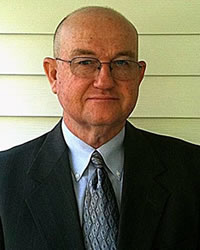
Gary Shepard is teacher and pastor of Sovereign Grace Baptist Church in Jacksonville, North Carolina.

Comments

0 / 2000 characters
Comments are moderated before appearing.

Be the first to comment!

Joshua

Joshua

Shall we play a game? Ask me about articles, sermons, or theology from our library. I can also help you navigate the site.