Bootstrap
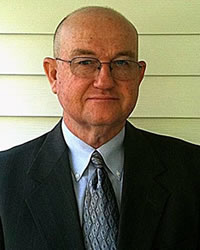
Gary Shepard

The Good Shepherd Gives His Life

John 10:11
Gary Shepard May, 13 2015 Audio
0 Comments

Sermon Transcript

Auto-generated transcript • May contain errors

100%
John chapter 10. I know of no other single chapter in all of the Word of God that you can learn more about the Lord Jesus Christ, His person,
and His work than in this tenth chapter of John. And the amazing
thing is that He condescends to reveal this about Himself
and about His work using this most elementary picture. Christ pictures and reveals Himself
as the Shepherd. And likewise, He pictures all
of His people, actually distinguishes all of His people by calling
them His sheep." We can just keep that always in our minds. Christ is the Shepherd, and His
people are His sheep. And what we find is that in this
chapter, Not only we see this relationship,
but we see especially what the shepherd does for the sheep. We brought that first message
last Wednesday evening, and therein we found that this shepherd has
a flock. He could hardly be called a shepherd
if he didn't have some sheep. But if you look down a little
bit farther tonight into that 11th verse, listen to what the
shepherd has to say about himself and the sheep. Now we know he
has this flock. But it says in verse 11, I am
the good shepherd, the good shepherd giveth his life for the sheep. Now you would think that it would
be almost impossible to misunderstand what he says there. And yet set
in contrast, and so contrary to what he says there, are most
all the doctrines of modern day religion. He says here as the
shepherd that he does something. Here set against that are all
the Gospels that we hear about in this day wherein men and women
are for the most part told themselves to do something. But the true
Gospel, if you never remember anything else that I say, Even
if I turn away and prove a failure myself, this will still be true. The true gospel is about what
the shepherd has done. Always remember that. And we would just simply know
if we thought about it by this picture, we know who the one
is that is responsible. Who is responsible for who? Are the sheep responsible for
the shepherd? No. We know. that the shepherd,
even a shepherd, is always responsible for the sheep. And the two things
that I want us to note out of this, and we'll go farther as
the weeks go on, but I want to take this a bit at the time because
there are two things about this shepherd and what he does for
the sheep that I want us to notice clearly. And the one thing, first
of all, is that He is the Good Shepherd. And the second thing
is that as this Good Shepherd, it says He gives something. You see, that is actually what
grace is all about. It is about a gift. So he says, I am the Good Shepherd. The Good Shepherd gives His life
for the sheep. Before it was possible, For him
to be the shepherd of men, he had first of all to become a
man. And that is why the Scriptures
describe him, the Apostle Paul describes him as the man Christ
Jesus. There's one verse of Scripture
that would solve a multitude of error if it were preached
and if it were believed. And that is where Paul says,
there is one, only one, mediator, go-between, representative, There
is one mediator between God and men, the man Christ Jesus. He is the man Christ Jesus. And He is the man Christ Jesus
in order to be the sacrifice for our sins, the substitute
who died in our place, and this One that the Bible sets forth
as the eternal Son of God, the One who John says was in the
beginning as the Word, the One who he says was with God and
who also was God, John says, "...the Word was made flesh and
dwelt among us." He came into this world and He came as this
man, this human being, but He is much more than that. He is
the God-man. You see, He calls Himself here
The Good Shepherd. And there were some in that day
of the Pharisees and such, in a very condescending way, they
called him Good Master. But this was his response, Why
callest thou me good? There is none good but God." You see, he's saying that term,
good man, is very misused to speak of all of Adam's race. It says there are none good. No, not one. So in order for
this shepherd to be the good shepherd, in order for him to
be a good man, he had to be the God-man. And this is what we find in the
book of Hebrews, especially in chapter 10. It says, Wherefore,
when he cometh into the world, he saith, Sacrifice and offering
thou wouldest not, but a body hast thou prepared me. And then later in that same chapter,
speaking of him, it says, "...by the which will we are sanctified
through the offering of the body of Jesus Christ once for all." How in the world? after all those
sacrifices having been offered, and yet none of them ever put
away one sin. And how, with God up to this
point and since this point, never requiring of any man that he
be a sacrifice for sin, how in the world could this one man
by the offering of this one body, put away sin forever." Well,
it's because he's the good shepherd. It's because he's the good man.
And Paul says, "...for what the law could not do, in that it
was weak through the flesh, God sending His own Son in the likeness
of sinful flesh. And for sin, condemned sin in
the flesh. So what we have in this man Christ
Jesus is this union of the divine nature as God and this human
nature Sin excluded. Absolutely sin excluded. And this is why he can be called,
and is called with no stretch or hesitation, the Good Shepherd. You see, only the good, perfect,
sinless Shepherd could ever give His life for the sheep. That's why we have all of these
examples in the Old Testament types. When they were first beginning
at God's command to offer up all these various sacrifices,
Which would be a picture and type of Christ and Him crucified. That's why one of the very first
instructions that were given was this instruction. It must
be perfect to be accepted. And that's why that Passover
lamb and every lamb or goat or whatever the sacrifice was, it
was to be watched, it was to be graded, it was to be scrutinized
for any birth imperfection, and as near as perfect could be,
the very best of the flock, that was what was to be offered. Because it was a picture of this
fact, as well as this one, that it had to be perfect to be accepted. And the reason why men and women
don't see any need for Christ, the reason why they don't see
the value of His perfect sacrifice, is because, number one, they
imagine themselves better than they are. How could we ever imagine
ourselves better than we are? Because we imagine God to be
less than He is. Somebody said a long time ago,
and you can mark it down as absolutely true, all error, all religious
error stems out of a high view of man and a low view of God. But He's the Good Shepherd. So we read about Him in Hebrews
7, described as the High Priest, where it says, for such a High
Priest became us, or suited us, not only suited us in our condition
and state as sinners, but suited God. in what he requires. Paul says, "...became us who
is holy, harmless, undefiled, separate from sinners, and made
higher than the heavens." He is that Lamb without a doubt. But He is that Lamb without blemish
and without spot. He is the Good Shepherd. And so Paul again in Hebrews
says this concerning Him. He says, "'For we have not a
high priest which cannot be touched with the feeling of our infirmities,
but was in all points tempted like as we are, yet without sin. I've told you this so many times,
and God being my helper, I'm going to tell you one more time
that a sinner cannot die for a sinner. Ten sinners or ten
million sinners cannot die in order to save another sinner. Because it has to be perfect
to be accepted. The life that the shepherd will
give has to be that perfect, sinless life in order for him
to be the good shepherd. Now most people read that and
they think of mere benevolence. And he is the benevolent shepherd.
But in that truest sense of the word, He is that One without
spot and without blemish. He is that perfect One, that
holy thing. And He had to be, if He was to be
the sacrifice for sins. He is the Good Shepherd. But the other side of that is
also in this verse is this. Not only should we think about
this, had he at any time sinned, or been a sinner in any sense,
and become before God in any way a sinner, he could not have
been the Savior. Because it says here, he gives
his life. And no sinner No sinner ever
gives his life. Sinners are taken by justice,
by law, and they are dealt with accordingly in themselves. They
can't give their life for anything. And if he in any way was anything
or anyone less than absolute perfection to be accepted by
the thrice holy God, God would simply take him and deal with
him just like any other sinner. But not this shepherd. He gives
his life. And had it not been that he was
the perfect, and there are so many So many pictures and titles
in Scripture of the Lord Jesus Christ, of the Savior. He's set
forth as the priest, and He's set forth as the sacrifice, and
He's set forth as the altar. And He's set forth as the Good
Shepherd. And what an amazing thing it
is. to think that this good, perfect, gloriously
holy, sinless, perfectly righteous being, that he would voluntarily, of
his own will, give his life for the sheep. Now, men are always
talking about so-called free will. There has never been in this
universe but one man that had totally a free will. And he was the God-man. You say,
well, I believe in free will. It doesn't matter. The will of
man is inseparably joined to the nature of man. Pictures and those old scenes
of convicts in days past where they would hold the prisoner
by a shackle around his leg and a long heavy chain and a big
ball of heavy metal on the end of it. That's about as good a
picture of man as you can get. A man that has this ball and chain
on his leg, he can get up. He can stand up. He can walk
here. He can walk there. He can demonstrate
what appears outwardly to be some kind of liberty and freedom.
But everything he does is really dictated and bound by that ball
and chain. And that's why man, as a sinner,
with the nature of sin, with a mind, the natural mind that
the apostles said is enmity against God. There are none that seeketh
after God as He is. I can't remember what it was
used for. I think it was a part of some
advertising slogan for women's hair products or something like
that. But the expression was, free
to be me. And that's all a sinner can do.
He's only free, she's only free to be what they are by nature. And that nature, though God restrained
it in various degrees in men and women on this earth, that
nature is all the same. It's the nature of sin. But here's the perfect one. Here is the Good Shepherd, and He freely Yes. When you look in the book of
Hosea, when God, in using that woman Gomer, that harlot, as
Hosea's wife, gives us a picture of redemption, a picture of Christ
and His church, And the prophet is led to say
things all through that book to let us know that it's God
talking about this people, the bride of Christ. And he says this, I will love
them freely. You see, you and I are such,
we've never been anything lovable to God in ourselves. We've never
loved the true and living God of ourselves, because sinners
simply love themselves. I always hear people talking
about the remedies that Men are often promoting and coming up
with ideas to improve the situation and make our world a better place
to live and all this kind of political hogwash. And I say
that because no matter how many years you've lived in this world,
You cannot look out in this world in the activities of men and
the actions of men and say that there has ever been one bit of
improvement. In the garden, I mean after the
garden fall, and Adam and Eve had this first son by the name
of Cain, and then another son by the name of Abel, immediately
these two individuals born into this world, what happened? One
of them killed the other one. Now have things gotten better
from then on? Used to, you know, when a thousand
men were killed, a war with ten thousand deaths or whatever it
is, people would just cringe at that. But as time passed,
it was just as God said it would be. Men wax worse and worse. The more men, the more people
living in this world, the more sin there is in this world. Thank God there's one with a
free will. He dwelt in the bosom of the
Father before this world ever was. And in that place, the Eternal
Son, in that state before the world ever was, it says, this
one called Wisdom that was there in the beginning, He willed. to take on a human
body, and in that perfect human body, live all these thirty some
years in this world, and show himself in every circumstance,
in every situation, the perfect man. So perfect that even when
the one who gave command to have him crucified, when he looked
at him, he had to say, I find no fault in him. And what did
he do? He went to that cross freely, willingly. When it was said of him by himself,
they hated me without a cause, that word that is translated
in the Greek there, without a cause, it's in another place in Scripture. But it's not translated that
way. It means the same thing, but it's translated as freely. Being justified freely by His
grace through the redemption that is in Christ Jesus. That
is, being justified without any cause in us. Freely. He voluntarily gives His life. Now that word, gives, is here G-I-V-E-T-H. And in the King James English,
is translated with that E-T-H, which means a continual action. He giveth His life voluntarily,
freely, without price, without cause. It cannot be Earned or
merited, he gives himself, his life, willingly. He offered himself without spot
to God. Now there he is. It would seem,
and men are doing this all the time, that we ought to blame
the Jews for his death. And then some over on the other
side, they say we ought to blame Pilate for his death, or the
Pharisees for his death, or the Roman soldiers for his death. But the Apostle Peter, When he
stands there in those early days of the church at Pentecost and
after, there's one thing he makes sure, the Spirit of God makes
sure that he declares. And that is, he says, by the
determinate counsel and foreknowledge or foreordination of God, you've
taken and by your wicked hands slain the Lord of glory. What's the first cause? The determined,
counseled, willed, ordained decree of God. There never has been
a time in this world, now listen, never a time in this world that
God Almighty was in any more control of everything going on
on this earth as it was when the Lord Jesus Christ hung on
that cross. As a matter of fact, He acted
as the Sovereign from the cross. With both hands and His feet
nailed to a cross, blood poured out of Him, beaten
to a pulp almost unrecognizable, and yet He's still alive. So the Bible says that he lifts
up his voice and he cries out, it is finished. He wasn't finished, but that
work of redemption, that work of the Good Shepherd for his
people, for sinners like you and I, that's what he was there
for. He'll say, no man takes my life
from me. I lay it down. I give. The Good Shepherd gives His life. So there He is hanging there. In the Scriptures, Matthew says,
Jesus, when He had cried again with a loud voice, yielded up
the ghost. In truth, he's the only person,
the only human being who has ever given his life. He yielded up the ghost. Luke says it like this, And when
Jesus had cried with a loud voice, he said, Father, into thy hands
I commend my spirit. And having said thus, he gave
up the ghost. What an amazing thing. What an amazing thing. But this
is the truth. He's the shepherd of these sheep.
And as the good shepherd, more than just good-natured and benevolent,
the good shepherd. He gives voluntarily, willingly,
freely. gives His life for the sheep. Matthew says, even as the Son
of Man came not to be ministered unto, but to minister and to
give His life a ransom for many. Paul says, who gave Himself for
our sins that He might deliver us from this present evil world
according to the will of God and our Father. To the Ephesians
he said, "...and walk in love as Christ also has loved us and
has given Himself for us, an offering and a sacrifice to God
for a sweet-smelling savor." The Good Shepherd gives. He gave His life. He didn't owe it to you. He didn't
owe it to me. If there was any owing, He owed
it to Himself. Because He had pledged Himself,
the Shepherd, the Head of the sheep. All our salvation
from old eternity was entrusted to Him. And the way He was to
save, was as this Good Shepherd who gives His life. Next time, and so I won't be
quite so long tonight, next time we'll see who He gives His life
for. Our glorious and gracious and
merciful God, we thank You for this blessed Savior, this Shepherd
Savior, We thank you for His goodness in every way, His goodness
in Himself, His essential goodness, and His goodness and grace to
us. We thank you for the gift of
Himself, His perfect Holy Self, as that one sacrifice for our
sins, because it was perfect. It was accepted. And we as His
people are accepted in the Beloved. We thank You for so many things
we have to be thankful for, more than we could ever name. And
we thank You for the food that we're about to partake of in
the back in just a moment. Thank You for that bountiful
goodness that You give us in our Lord Jesus Christ. We thank
You and pray in His name, Amen.
Gary Shepard
About Gary Shepard
Gary Shepard is teacher and pastor of Sovereign Grace Baptist Church in Jacksonville, North Carolina.

Comments

0 / 2000 characters
Comments are moderated before appearing.

Be the first to comment!

Joshua

Joshua

Shall we play a game? Ask me about articles, sermons, or theology from our library. I can also help you navigate the site.