1 Peter 1, and I'll read again those few verses
that we've been looking at. And I suppose that I would have
to call this message, The Redeemer and His Redemption, Part 3. Part 3. Notice again Peter's words beginning
in verse 18. 18. For as much as you know that
you are not redeemed with corruptible things, as silver and gold from
your vain conversation received by tradition from your fathers,
but with the precious blood of Christ as of a lamb without blemish
and without spot, who verily was foreordained before the foundation
of the world but was manifest in these last times for you,
who by Him do believe in God, that raised Him up from the dead
and gave Him glory, that your faith and hope might be in God." As I've already said, Believers, and that is who these
words were written to, those who had already believed the
gospel, and those who would in time, in God's purpose, believe
the gospel. But believers, according to Peter,
know some things Because the Holy Spirit has revealed them
to them, revealed them to them, and taught them through the gospel,
and has assured them of these things. This morning, I want us to notice
a little more closely that 19th verse. Peter says, we know what redemption
is. We know that we are redeemed. We know we are not redeemed by
the foolish traditions of men. And then he begins that next
statement with the word, but. We not only know what we are
not redeemed by, but by God's grace we have been brought to
know and be assured that we are redeemed with the precious blood
of Christ as of a lamb without blemish and without spot. One thing that we notice, and
this is something that we are assured of in the Gospel if we
believe it, as Peter says, we know that we were redeemed. I thought about it this morning
as I passed a church sign that talked about what God can do. Men are always talking about
what God can do and what He will do. But the gospel is always
about what He has done. Peter says, we know that we were
redeemed. That is in the past tense. And it is a work that is finished,
successfully accomplished by the Lord Jesus Christ through
something that He did. And it is obviously what He did
by His death. He says, we were redeemed with the precious blood of Christ. And it is often the question
of men and women as to how one man, and especially one man through
his death, could possibly redeem a multitude of sinners. Well, Peter calls the blood of
Jesus Christ that precious blood. And that always draws us back
to the remembrance of actually who our Redeemer is. It is always because of who He
is. He is that unique man, that one-of-a-kind
man. And He is the one who by Himself
purged our sins. The word precious here, and it
is used also elsewhere, it means valuable. This is the precious
blood of Christ. It is valuable. But why is it
that Peter and all the writers of Scripture, when speaking of
the blood, or of the life and death of the Lord Jesus Christ,
why is it that they describe it in words like this, it is
the precious blood of Christ? Well, the first thing has to
be because it is nothing less than the blood of God. You see, what so many seem to
fail to understand and get in their heads and their hearts
is this, only God can satisfy God. Only God can satisfy God. Hold your place here and turn
back to the book of Acts. I quote this often, but I want
you to see it again this morning in the context, Acts chapter
20 and verse 28, where Paul, in speaking to those elders that
have come from Ephesus. He says to them, first of all,
in verse 27, he says, "'For I have not shunned to declare unto you
all the counsel of God.'" all the counsel, all the wisdom of
God. And this is the same man who
in a number of other places speaks of this great and singular resolve
that he has resolved among all he preached to, Resolved, that
is stated like this, I determined to know nothing among you save
Jesus Christ and Him crucified. Or as he does in another place,
we preach Christ crucified. Or another place, we are those
who preach the cross. So evidently, being resolved
to preach nothing but Christ and Him crucified, that can be
summed up in those words, all the counsel of God. All He has for poor sinners like
you and me. All the wisdom of God bound up
in this one person and work. And then he makes this statement
in verse 28. He says, "...take heed therefore
unto yourselves and to all the flock over the which the Holy
Ghost hath made you overseers." You're under shepherds. Your
responsibility is to feed the flock of God. He says, "...to
feed the church of God, which He," that is God Himself, "...which
He, in that God-man Jesus Christ, purchased with His own blood."
It is the precious blood of Christ simply and first of all because
it is the blood of God. It is that blood He shed in the
person of Jesus Christ in purchasing or redeeming His church and people. But notice a little bit more
as Peter goes on in our text. He says, "...the precious blood
of Christ as of a lamb. Now lest anybody at any time
would ever forget What the dying of Jesus Christ, what the sacrifice
and suffering of Christ was on that cross, He reminds us again
that the shedding of His blood is as of a lamb. That means that Christ's death
was a sacrifice offered to God. God offered this sacrifice in
the person of His Son to Himself on the behalf of this people
that He chose in Christ before the world began. And when He
talks of the death of Christ, the precious blood of Christ
and says that it is as a lamb. He is calling to our remembrance
and using for us all those Old Testament sacrifices, all those
Old Testament pictures that pictured the death of Christ as a sacrifice. Think about all those lambs that
were slain. All those sacrifices that were
offered. From the very first part of Scripture
there in the garden, all the way down through Abel's lamb,
and the ram that Abraham offered up, which was simply a picture
of salvation through a substitutionary sacrifice. Not just a sacrifice, but a God-provided
sacrifice, and also a substitutionary sacrifice. If you remember when
Abraham took Isaac up in Mount Moriah, and there he was to offer
him up as a sacrifice to God. But something happened. And just
as he was about to sacrifice Isaac in obedience to God, God
stopped him and stayed his hand and pointed out to him, showed
him that ram who was caught by his horns in the thicket And
he was told to take that ram in the place of Isaac his son,
and offer him as that substitutionary sacrifice in the place of Isaac. And so whenever we read, as Peter
says, that Christ's blood was shed as a lamb, it reminds us
of all those Old Testament pictures and types and sacrifices which
pointed to Christ. As a matter of fact, when you
stop and think about it, there in the midst of all the worship,
I mean all the worship that took place in the camp of Israel,
there in the midst of everything that was done by the patriarchs
before there was a camp of Israel. All worship. All pictures of redemption. They all centered around the
sacrifice of blood, no matter where they were, no matter how
many they were. And even as Abraham and his own
family traveled from place to place and set up tents to dwell
in a particular place, the first thing they did was worship God. But he could only be worshipped
one way. As a matter of fact, in Genesis
26, when they had traveled to this particular place, and they
began to set up their tents, and they began to gather up their
flocks that had traveled with them, it says of Abraham that
he built an altar there. and he called upon the name of
the Lord and pitched his tent there." Now how or why was it
necessary to build an altar? It was because the only way that
God can be worshipped And that is exactly what it is when he
says, called upon the name of the Lord. He called upon God
and he worshipped God in the only way that God can and will
be worshipped, and that is through sacrifice. Through a substitutionary
sacrifice. And so he built an altar. And
on that altar, which was really in no way a man-made thing at
all. He was commanded to just gather
up stones that were already there and build that altar and offer
on that altar the sacrifice of blood. To call upon the name
of the Lord through that sacrifice of blood. So when he talks about
the precious blood of Christ as of a lamb, we're drawn back
to know and to remember that we are redeemed by a precious
sacrifice of the blood of Christ, and that sacrifice was that one
sacrifice for sins forever. Turn back over to Hebrews chapter
9. Hebrews chapter 9, and look at
what it says in verse 22. In other words, the apostle here
reminds us of this necessity to worship God, this necessity
that was pictured in all that Old Testament under the Law. And he says this, he says, "...and
almost all things are by the Law purged with blood." And without
shedding of blood is no remission." There is no remission of sin
without the shedding of blood. That word remission is very close
akin to forgiveness. So what does this mean? It simply
means that without shedding of blood, There is no forgiveness
of sin. All through those Old Testament
types and pictures, lambs and goats and whatever was taken
and slain as a sacrifice was this reminder that there is no
forgiveness of sin without the shedding of blood. And so he
continues, verse 23, "...it was therefore necessary that the
patterns of things in the heavens should be purified with these,
but the heavenly things themselves with better sacrifices than these." That lamb slain in the garden
pictured Christ. Those lambs that Abel slew pictured
Christ. That ram pictured Christ. And that sacrifice was a picture
of a work that's accomplished in the heavens. But he said,
that blood is not good enough. Not good enough. He said, it
is necessary that the heavenly things be purified with better
sacrifices than these. And then he shows us this. He
says, for Christ is not entered into the holy places made with
hands, which are the figures of the true. Those earthly things
were the figures, or the types, or the pictures of the true,
he says, but into heaven itself now to appear in the presence
of God for us. Isn't that what the priest did?
Did he not go? with that blood into the Holy
of Holies there in the midst of that tabernacle and sprinkle
that blood on the mercy seat representing the people? That
was just a picture. of Christ entering into the presence
of God the Father in that holy of holies in heaven, presenting,
it says, nor yet that he should offer himself often as the high
priest entereth into the holy place every year with the blood
of others. For then must he often have suffered
since the foundation of the world." But now, wonderful words, but
now, once, once, why just once? Why did all these sacrifices
have to be offered and they yet never did put away one sin? Why did these priests have to
go year after year and day after day into the holy place and offer
up these sacrifices for sin? Why? It says, but now once in the end
of the world hath He appeared to put away sin by the sacrifice
of Himself. Because it required a precious
sacrifice. Because it required the blood
of God manifest in the flesh. The reason why the Lord Jesus
Christ could suffer and bleed and shed His blood and redeem
this great company of sinners that were given to Him by the
Father is because His blood, His life is precious blood. Hebrews 10, let me read this
to you. It says, but this man, after he had offered one sacrifice
for sins forever, that's why we don't have the Mass. The priests in Catholicism, they
offer the elements, the blood, the wine, They offer the wine and they
offer the wafer, and they say that because they pray over it,
it actually becomes to you the blood and the body of Christ. Have they not ever read this?
Have they not ever read what it says in that 26th verse. But now, once in the end of the
world, hath He appeared to do what? Not to make us redeemable. Not to give us a chance. Not
to make something available to us if we'll follow up on it. But it says he appeared once
to put away sin by the sacrifice of himself. By the sacrifice
of himself. Not by the example of himself. Not even by the teaching of himself. But by the sacrifice of himself. And as it is appointed unto men
once to die, but after this the judgment, so Christ was once
offered to bear the sins of many. And unto them that look for Him
shall He appear the second time without sin unto salvation."
Why? Because He's put it away. because
he's made an end of sin. And so Paul says in Colossians
1, speaking of Christ, he says, "...in whom we have redemption
through His blood, even the forgiveness of sin." And all the way through
this book, all the way to the book of Revelation, in such places
as Revelation 1, we're still reading this same thing. It says,
"...and from Jesus Christ, who is the faithful witness, and
the first begotten of the dead, and the Prince of the kings of
the earth, unto Him that loved us, and washed us from our sins
in His own blood." I wonder how many people have
grown up in religion and they'll stand and they'll sing this song. What can wash away my sin? Nothing but the blood of Jesus. What can make me whole again?
Nothing but the blood of Jesus. And you know, in one sense, there
is an aspect of that which is true. But that's not the real
story. The real story of faith is this. What has washed away my sins? What has made me whole again? Nothing. but the blood of Jesus
Christ. When He hung on that cross and
shed His precious blood, it was for the accomplishment of the
salvation of all His people. And so when they are all gathered
in His presence, as is pictured in Revelation 5, it says, "...and
they sung a new song, saying to Him, Thou art worthy to take
the book, and to open the seals thereof, for Thou wast slain." and thou hast redeemed us to
God by thy blood out of every kindred and tongue and people
and nation." It is the precious blood of Christ. And it is the
precious blood of Christ that life laid down as that one sacrifice
for sins forever. But there's something else. If
you look here in that 19th verse of 1 Peter chapter 1, notice
how it continues. He says, "...you are redeemed
with the precious blood of Christ as of a lamb, without blemish
and without spot." Not only just as a lamb, as a sacrifice, but
as a lamb without blemish and without spot. Now I can tell
you this, there is a great emphasis all
the way through this book that shows that Christ suffered and
died in the place of His people as the sacrifice for their sins,
as this Lamb without blemish and without spot. You see, this
is something else that the Lord's people know. This is something
else that we're taught time and time again in Holy Scripture. And that is, we were redeemed,
not simply by the blood, and not simply by the blood as a
lamb, but we were redeemed by precious sinless blood. Sinless blood. You see, If you go back and you
read those Old Testament Scriptures wherein God gives all the details
concerning the sacrifices that were to be offered, and there
were various ones to be offered on various occasions, but there's
something that was to characterize every single one of them. And that was they were to be
perfect. Turn back in Leviticus chapter
22. repeated time and time again,
all through the books of the Law especially, concerning other
sacrifices, all the sacrifices, but just look down at what is
said in verse 21, a sacrifice of peace offerings
unto the Lord, to accomplish His vow, or a freewill offering
in thieves or sheep, it shall be perfect to be accepted. There shall be no blemish therein." Now, if it was a lamb, If it
was an offering of the beef, cattle, whatever it was, whatever
the occasion, whatever the sacrifice, one thing, it shall be perfect
to be accepted. Can't be any blemish in the sacrifice. That Passover lamb, if you remember,
he was to be a male, Firstling of the flock, and he had to be
shut up for a certain number of days and examined carefully
all through that time to make sure that maybe he didn't have
a bad eye, or a twisted limb, or some disease. Why? Because he was a picture of the
sacrifice. He was a picture of the Lord
Jesus Christ. In Exodus 12, he says, "...your
lamb shall be without blemish, a male of the first year. Ye
shall take it out from the sheep or from the goats without blemish."
Deuteronomy, thou shalt not sacrifice unto the Lord thy God any bullock
or sheep wherein is blemish or any evil favoredness, for that
is an abomination unto the Lord thy God." You can't offer to
God anything less than perfection. And that's why we never could
save ourselves. That's why all of our blood together,
if it was shed, all of our lives laid down as a sacrifice, wouldn't
put away one sin. That's why all of Adam's race
put together, if all our blood, if all it was shed, or let's
just say all the best of Adam's race, it wouldn't put away one
sin. It wouldn't satisfy the just
and holy God of heaven in the matter of one sin. But Christ did, because He was. And as far back as when Isaiah
and others were giving the prophecies that God gave them concerning
him, Isaiah says in chapter 53, "...and he made his grave with
the wicked and with the rich in his death, because he had
done no violence, neither was any deceit in his mouth." He is talking about the sinless
One who is coming. 1 John 3, John says, and you
know that He was manifested to take away our sins, and in Him
is no sin. No sin. You see, His was the only sinless
blood, the only human blood that was, because Adam was not His
father. Joseph. was not his father. That's right. As a matter of
fact, when the angel described to Joseph that one that was in
the womb of his soon-to-be wife, who'd never known a man, he was
described as that holy thing. Holy thing. Holy blood. Look back in 1 Peter 2. 1 Peter 2 and verse 22. Listen at this description of
Christ, who did no sin, neither was guile found in His mouth. He did no sin. Thought no sin. Felt no sin. Look over in chapter 3 of 1 Peter
and the 18th verse. I'm just showing you what we
find again and again, not only in these pictures and types,
not only as this lamb without blemish and without spot, but
just plain declarations in Scripture describing Christ. Verse 18,
1 Peter 3, "...for Christ also once suffered for sins the righteous
for the unjust, that he might bring us to God, being put to
death in the flesh, but quickened by the Spirit." He brings his
people to God. Reconciles them to God. by his
death, but he dies as the just for the unjust." That's pretty
clear to me. He suffered the just for the
unjust to bring us to God. Whenever he was betrayed by Judas, Judas in Matthew chapter 27,
is bound to confess, he says, I have sinned in that I have
betrayed innocent blood. You see, that's the whole principle
of salvation in Christ. That's pictured all through the
Old Testament, stated clearly in the New Testament, and shown
in the cross death of Christ. And that is, an innocent, sinless,
substitutionary victim has to die in our place if we're redeemed. Judas. Judas who went to hell. had to confess. God would not
allow him to view it any other way. But he said, I've betrayed
innocent blood. Pilate, who turned him over to
the Jews to be crucified, he said, I'm innocent of the blood
of this just, this righteous man. He said, I find no fault
in Him. This is His enemies talking.
I find no fault in Him. That thief that hung on the cross
in Luke 23, it says, when he cried out against Christ, the
other thief, But the other answering rebuked
him, saying, Dost thou not fear God, seeing thou art in the same
condemnation? And we justly, we indeed justly,
for we receive the due reward of our deeds." But this man,
he's done nothing amiss. He's done nothing amiss. The
demons. that possessed the man in Luke
chapter 4, when Christ confronted him and therefore confronted
them. They said, let us alone. What
have we to do with thee, thou Jesus of Nazareth? Art thou come
to destroy us? I know thee who thou art, the
Holy One of God. Those demons knew who He was.
And they called Him by the only name He could be called. The
Holy One of God. But Christ's testimony of Himself. We say we believe on Christ.
Well, if we believe on Christ, we believe Him. Do we not? It says, "...and He that sent
me is with me. The Father has not left me alone. For I do always those things
that please Him." Always all the things that please God. In Acts chapter 3, Peter, he
says, but you denied the Holy One and the just and desired
a murderer. to be granted unto you. You've
denied the Holy One, the only Righteous One. And then in Hebrews,
oftentimes in this book of Hebrews, where we find those Old Testament
types that pictured Christ being shown, not only compared to Christ,
but also contrasted to Christ, the Apostle says this in Hebrews
4, For we have not a high priest
which cannot be touched with the feeling of our infirmities,
but was in all points tempted like as we are, yet without sin."
Tempted in all points. We can never say that we've had
any temptation that Christ the Redeemer was not faced with,
yet without. Sin. Again in Hebrews, in chapter
7, he says, For such an high priest became us, or was necessary,
or suited us, who is holy, harmless, undefiled,
separate from sinners, and made higher than the heavens. There's
a verse in Hebrews that describes the high priest under the Old
Testament as he went into the work to accomplish the work appointed
to him. And it says that he must first
offer for himself a sacrifice and then for the sins of the
people. You know, people use that verse to say that Christ
had to offer a sacrifice for his own sins? That's right. Use that verse, which simply
was used of God to show us how that earthly priest was a sinner
just like the rest. But not Christ. Holy, harmless,
undefiled, separate from sinners, and made higher than the heavens. But now listen to this in Hebrews
9. Hebrews 9.14. He says, "...how
much more shall the blood of Christ, who through the eternal
Spirit offered Himself without spot to God, purge your conscience
from dead works to serve the living God?" Now how did he offer
himself to God? He offered himself without spot,
without blemish, without sin, absolutely holy, perfect. It could be no other way. It
is said, and rightly so, that he is as much man as if he wasn't
God, and as much God as if he wasn't man. But you can't separate
the two. He is the God-man, and therefore He is holy. But I'm sad to say there are
some who use a kind of misguided logic. They say things like this,
God would not be just in putting Christ to death if He was not
in some way a sinner. Now, I say misguided because
I believe it comes from not really understanding what imputation
is. I wish that we would learn that
word. It is right at the heart of the
gospel, and it means something like this. And I don't know why
people would try to steer away from this. I don't know why people
would view the work of Christ, His suffering on the cross, in
such a way that would make them diminish the legal aspects of
it. They say, well, Christ's death
is a legal sacrifice, but it's more than that. Well, it may
be more than that, but I'll guarantee this, your finite mind and my
finite mind will never enter into it. So what we have to go
on, what we base what we believe on, what we base what we say
on, is what we find stated in the Scripture. He offered himself
without spot to God. You say, well, how did God put
him to death? because of something that the
Bible teaches from the very book of Genesis all the way through,
by something the Bible calls imputation. What does it mean
to impute something to another? It means to charge it to their
account. And everywhere you look, by the
words such as redemption." We're talking about a matter of divine
justice. We're using, as the Bible does,
these terms of the court. Justified. What does that mean? To be declared righteous. Imputation. That means to charge
to the account of another. And the imputation that we first
see is there whenever Adam fell, and Adam's sin was imputed to
his race. When he fell, all fell. All in him. He's a representative
man. But the second imputation we
read about is the Lord made to meet on the head of Christ all
the sins of His people. God imputed to or charged to
the account of the Lord Jesus Christ as the substitute all
the sins of all His elect. But He didn't sin. And He wasn't
a sinner in Himself. Though God treated him as one.
Why? Because he had charged to him
all the sins of his people. Alright? The third imputation
we read in the Bible is that God also, by this same act, charged
the righteousness of Christ to the accounts of all his people. He counted them in Christ, because
of Christ, through Christ, through the suffering of Christ. He counted
them as righteous in Christ. But this I know. Actual sin cannot
be transferred. Responsibility for sin can be. As a matter of fact, When the
Scripture describes the state of man, the whole world, in ourselves,
He describes us with that word guilty. Let me ask you this. Can a man or a woman be guilty
of something if they don't feel guilty of it? You better believe
they can be. You could stand in the court,
as pitiful as they are in our day, and say, Judge, I don't
feel like I'm guilty. But you're still guilty. Why?
Because you're responsible. I was asked once if I believed
in imputed guilt. And I started to answer and I
thought, well, wait just a minute, maybe I ought to go and look
in the Bible, check that word as it is translated guilty in
the New Testament. Maybe I ought to go and look
and see what it actually means. That's what I found. It means
responsible. It's kind of sunk in its meaning
in our day to mean something about feeling. Do you feel guilt?
No, it means to be responsible. And that's what Christ did. He
took willingly and voluntarily the responsibility of bearing
in His own body on that tree the sins of His people. I think it comes out of a failure
to understand what suretyship is. Assurity, indifference to
a guarantor, assurity from the beginning takes the full responsibility
of the debt. That's what Christ did. Blessed
is the man to whom the Lord will not impute sin. Why? How could He as a just God
not impute my sin to me? Because He imputed them to Christ.
Christ in old eternity, in the everlasting covenant, stood as
my surety, stood as the one who would pay the full debt of my
sin, took the responsibility of it. And it surely seems not to understand
what a substitute is. A substitute is one who takes the
place of another. Christ bears in His body what
I should have borne. He dies on that cross in my place. Because the only one who can
take the responsibility of another in the matter of sin, the only
one who can bear the sins of another in His own body is a
sinless man. A lamb without blemish and without
spot. And oftentimes, men take a verse
that, in my mind, means just the exact opposite of what they
sometimes say. And that's in 2 Corinthians 5.
Look over at 2 Corinthians 5, that last verse. There's a wealth of gospel here. There's a wealth of imputation
bound up in this. There's a wealth of suretyship
bound up in this. There's a wealth of substitution
bound up in this. And this is what it says, For
he, that means God Himself, have made Him, the Lord Jesus Christ,
to be sin for us. But notice that next statement. Who knew no sin. He hath made Him to be sin for
us who knew no sin, that we might be made the righteousness of
God Him. And it kind of all boils down
to what He means by, made Him to be sin for us. Made sin for us. Made Him sin for us. That to
be is added. And we could just play around
with words, try to make them say what we want to and all these
things. But the test, the only test for
what that statement means in this verse, is what he says in
all those other verses. And it says, if there might be
in our fallen minds a tendency to make this something different
than it is, he follows that immediately with those words, who knew no
sin. So what happened to all those
lambs without blemish and without spot? What happened to them? These that had been set apart
and checked close and scrutinized to make sure that they were perfect
in every way. What happened to them? Well, if the type were as some
say it would be, They would have had to then take him out, that
perfect, spotless lamb without blemish and without spot, and
take something like tar or something and tar him all over, and then
kill him. Do you see that anywhere? Do
you see when that priest laid his hand on the head of that
scapegoat? Do you see where he took anything
and did anything to Him to make Him other than what He was, a
spotless, perfect Lamb of God? You won't find it. So what does
it mean that He made Him sin for us? What happened to them? They all died. They all died
at the hand of justice. The way they could be a picture
of the sin bearer is for themselves to be perfect and sinless. Because
that's the penalty of sin. Is what? Death. The soul that
sinneth shall surely die. The wages of sin is death. And so, Scripture says, when
we begin to receive the gospel, not in type and picture and shadow,
but in plain statements, it is Christ that died. When Paul says, I'm bringing
to you, writing to you, preaching to you the same thing that I
did when I first spoke to you. What was that? He says, how that
Christ died according to the Scriptures. Had to be those Old
Testament Scriptures, didn't it then? How did Christ die according
to those Scriptures? As a spotless, blemishless, perfect,
Sacrifice that was simply taken and slain, and that death was
the death for sin. One sacrifice for sins forever
because he's the Lamb of God. He's the Redeemer. And to redeem
means to buy back, to get a release, by the paying of a price. As a matter of fact, in some
of the other translations, I'm talking about some pretty good
translations, in this verse, instead of redemption, the word
is ransomed. They're so close. Ransom. He ransomed us. Christ tells us in Matthew 20,
He said, the Son of Man, He didn't come to be ministered to. He
didn't come to be served, but to serve. And to give His life,
that perfect sinless life, a ransom for many. He redeemed us by dying
in our place dying and paying the price and penalty for our
sins forever. But only a perfect, sinless one
could die. He made his soul an offering
for sin. And so the Apostle tells us,
not merely that we're those who believe on Christ, But He said,
we are those who have faith in His blood. We trust the person and we know
the person because of the work that He accomplished. He's the
Redeemer because He redeemed us. And this blood is the legal
payment to a just God, to satisfy His justice, and to turn away
His wrath for certain sinners that He dies for. And every sacrifice
pictured Christ's death as particular and successful. And so one of
the reasons it's precious is because of its great success.
Hebrews 10, "'For by one offering He hath perfected forever them
that are sanctified.'" This precious blood is such because God will
recognize it, because God has already received it, because
God has already raised Him from the dead, and the redeemed will
praise Him forever. Isaiah says, I have blotted out
as a thick cloud thy transgressions, and as a cloud thy sins. Return unto Me, for I have redeemed
you. It was a little cartoon character
who walked around and there was always a cloud over his head.
The gospel tells sinners who see a cloud over their head,
I blotted out your transgressions just like a cloud I've blown
away. Return unto me because I've redeemed
you. I'll give you two examples. One of them is a man by the name
of Boaz. Now we find him in a book that
bears a woman's name, the book of Ruth. But Boaz is a picture of Christ
as the kinsman redeemer. In other words, if one in Israel
fell into bondage or slavery or lost what they had, the kinsman
redeemer, could go and redeem them. He had to be of near kin. Aren't
we glad Christ is described as our elder brother? He had to
be able. Aren't we glad Christ is able?
Able to pay the price. And he had to be willing. And
he actually had to do it. And so when Boaz went down to
where it had to take place, he had to go down to the city gate,
and he had to find out if there was anybody who had a claim,
a just claim against the one he was going to redeem. He went
down to redeem Ruth, and she had a claim against her. There
was one who was near her kin, had this claim, but he couldn't
redeem her because he said, it will mar my inheritance. I don't
want to redeem this Moabitess woman. So when it was known that
he couldn't redeem her, he's a picture of the law by the way,
he couldn't redeem her. Boaz redeemed her. That has to
be the love story of all love stories. Boaz went down to that
city gate and he did everything necessary. Ruth was there far
away from the situation. But Naomi said, don't worry about
it. The man will take care of it
all. That's what he did. He redeemed her to be his bride,
his wife forever. Just like Christ redeemed His
bride, His Gentile bride, from all her sins forever. The other
picture is a man by the name of Hosea. God told him to marry
a woman who was of a slack character. And as the situation often happens,
she went from bad to worse. She played the harlot, had her
lovers, He still in all of it took care of her. Would go to
her door and leave food and everything to sustain her. And she attributed
it to her lovers. Until that day when she was fallen
so bad that she fell into slavery. And God sent him down to the
slave market. She was a wretched creature by
then, I'm sure. But he paid the price. and redeemed
her. And he said, so I bought her
to myself. That's redemption. By the paying
of the price. And the price is a sinless, perfect,
substitutionary victim to die in the place of a sinner. Sinner
can't die for a sinner. But it pleased the Lord to bruise
him. He hath may put him to grief when thou shalt make his soul
an offering for sin. He shall see his seed, he shall
prolong his days, and the pleasure of the Lord shall prosper in
his hand. You listen to him on that cross.
Every statement he makes, Every statement he makes till he gives
up the ghost is a declaration of his holiness and his perfection
and his sinlessness. And then he dies. The just for
the unjust. And he brings us to God. We know we're not redeemed by
those corruptible things, material things, traditions, but by the
precious blood of Christ as of a lamb without blemish and without
spot. That's all I can find in me is
blemish and spot. But God views me in my Redeemer.
And he who took my sins upon him died the death for him."
It says that the Lord raised him from the dead, which meant
that God honored and received His sacrifice on the behalf of
His people. And so when He returns again
the second time, it will be without sin until full and complete salvation. Our Father, this day we give
You thanks and praise and glory because You've done marvelous
things. Oh, perfect redemption, the purchase
of blood. Grant that we might be able to
begin that psalm that You have by Your blood redeemed us to
God from among men people from every nation and kindred and
tribe and tongue. They will be called and are called
the redeemed, because Christ hath redeemed us by His blood
from all our sins, from all our condemnation, because He was
made a curse for us, and cursed is every one dies the death of
the cross. Only one, your well-beloved and
perfect Son. We pray and thank you and ask
all things in His precious name. Amen.
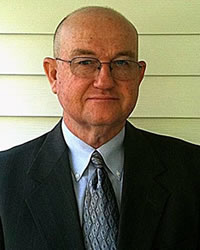
About Gary Shepard
Gary Shepard is teacher and pastor of Sovereign Grace Baptist Church in Jacksonville, North Carolina.
Comments
Your comment has been submitted and is awaiting moderation. Once approved, it will appear on this page.
Be the first to comment!