I would invite you to turn back
in your Bibles with me this morning to the same passage that we were
at last Sunday morning. And that is in 1 Peter chapter
1. And what I'll have to say to
you this morning, I'll just say, is part two of what I've called
the Redeemer and His redemption. Look with me again in verse 18,
where the Apostle Peter is not only encouraging those he writes
to, but also reminding them and instructing them to their conduct
of life. He says that they are to be motivated to obedience because they know
something. They know something that not
everyone knows. They love something that not
everyone loves. They've been the objects of something
Not everyone is the object of. And that is the redeeming grace
of the Lord Jesus Christ. And He says, "...forasmuch as
ye know that ye were not redeemed with corruptible things as silver
and gold from your vain conversation received by tradition from your
fathers." but with the precious blood of Christ, as of a Lamb
without blemish and without spot, who verily was foreordained before
the foundation of the world, but was manifest in these last
times for you, who by Him do believe in God, that raised him
up from the dead and gave him glory, that your faith and hope
might be in God." Those who are believers, I'm
not talking about those who call themselves believers, but those
who are truly believers. As Peter says, they know something
about the Redeemer and His redemption. You see, not many people really
want to find themselves among the redeemed. Because redemption presupposes
a state of slavery and bondage. If you've been redeemed, you
are once in this slavery, captivity, and bondage. And that had to
be our case if we've been redeemed. If we've been delivered, if we've
been purchased off this slave market of sin. And we know this,
we know that redemption has to do with individuals. He didn't just redeem something
for us, He redeemed us. He redeemed us that we might
enjoy all the things that He says are freely given to us. And we know that we are redeemed
because we believe the Word of God. That's what Peter is saying
here. We're redeemed and the way we
know we're redeemed is because we simply believe God. Our believing is not the cause
of our redemption. But our redemption is the cause
of our believing. We believe God. And believing God, we believe
His Word, as I said, and therefore, as I said last week, we know
something about what we were redeemed from. Redeemed from
the curse of the law. Redeemed from all our sins. But we know something else. And
that is, we know what we're not. redeemed by. As a matter of fact,
that is what is central in that 18th verse where he says, for
as much as you know that you were not redeemed. Somebody always says, I don't
like a negative message. But there is a negative as well
as a positive aspect to the gospel. If we know we are redeemed, we
know also what we're not redeemed by. For as much as you know,
that you were not redeemed with corruptible things as silver
and gold from your vain conversation received by tradition from your
fathers." Now, one thing that we need always to remember is
that most of these early New Testament believers, they were
from among the Jews. And they were in themselves,
in their upbringing, as well as in their nature, all very
religious. But they had a false religion. And they had, by their traditions,
caused their religion simply to degenerate into blatant idolatry. Their traditions had become nothing
less than pure idolatry. And when I think about that,
I think about how that is just exactly how it is in our day
among most of what passes for religion. You cannot hardly find
anybody that has not been marked, has not been influenced, by the
traditions of false religion. It is everywhere and among all
people. And the spiritual message of
Christ, which was in those types of the law, they had simply been
reduced down to physical outward things. And so Peter says, to
these who had been delivered by the grace and power and gospel
of Christ, he says, you know that you were not redeemed by
these things, not by material things or outward things such
as silver and gold. And one thing I believe that
he is talking about here and reminding them of here is that
redemption that was pictured by these things under the Old
Testament law. If you'll hold your place, turn
back over to the book of Exodus in chapter 30, and listen to
what was commanded to Moses and those people under the Old Testament
law. Exodus chapter 30, beginning
in verse 11. And the Lord spake unto Moses,
saying, When thou takest the sum of the children of Israel
after their number, then shall they give every man a ransom
for his soul unto the Lord, when thou numberest them, that there
be no plague among them when thou numberest them." In other
words, there was to be an act that identified them as part
of that number to remind them that redemption, that atonement,
is always through the paying of a price. This they shall give,
every one that passeth among them that are numbered, half
a shekel after the shekel of the sanctuary, a shekel is twenty
giras, and half shekel shall be the offering of the Lord."
Every one. that passeth among them that
are numbered, from twenty years old and above, shall give an
offering unto the Lord. The rich shall not give more,
and the poor shall not give less than half a shekel, when they
give an offering unto the Lord to make an atonement for your
souls." In other words, this price, or this half shekel, which
showed the necessity of redemption and ransom and atonement by a
particular price, always the same for everyone that would
be numbered amongst the people. The rich did not give more, and
the poor did not give less. Because the ransom that is pictured
there, the redemption that's pictured there, is the redemption
of sinners by the grace of God in Christ, not more for one or
less for one. The price being the same for
all who are saved. And so he reminds them, lest
that had been in their minds at one time, and probably was,
he reminds them that you are not redeemed by these things,
by that half shekel, whether it be silver or gold or any of
these things. These things were just types
of that redemption that is in the Lord Jesus Christ. Not only did they have these
things, not only were they inclined to trust in and rest in those
things that were given under the law, but they had added to
that. They were never ever saved by
those things. Those things were pictures of
Christ and His redemption until He came. And though they were
never saved by any of those ceremonies or rituals, even though ordained
of God, they had added to that. Tradition after tradition after
tradition. They had added what came to be
called the oral traditions. In other words, on top of the
Word that God had given, and even on top of the Law that God
had given, they passed on from one generation to the other their
little additions, their oral traditions, until they came to
trust not in God, and not in the Word of God, and certainly
not in the type that was there in those things, but they put
above all those things their tradition." That is an awful
word. That is a snare. That is the
trap of the ages. That is the superstition that
blinds the multitudes everywhere in this world. It is the traditions. If you remember when the apostle
Paul was there at Mars Hill, and he looked around him and
he saw all these statues to all these various gods, He looked
around and he said to those people, he said, I perceive that you
are too superstitious, too religious. And they were resting in and
trusting in all of these man-made traditions, he says, from your
vain conversation or your vain conduct or manner of life. Now there's an amazing thing
in this book. And that is, when you find this
word vain, And it is applied to one's conduct. It means something
like empty and fruitless. They were religious. They had
many traditions that they respected, that they honored, that they
maintained, and especially that they passed on. But they were
all empty, hollow, worthless, godless, vain traditions. And that word is often applied
to the worship of idols as being nothing and worthless and unable
to help. So a vain tradition would simply
be an idolatrous tradition. It would involve man-made gods
and man-made saviors. And they would, as the Scripture
says, pray to a God that cannot save. Now wouldn't that be something?
To have those things that in your heart of heart, in mind
of minds, you would hold so fast to, so securely to, trust so
wholly in, and be so sure that they were right. Only to find out that they were
vain traditions. They were empty, worthless, And
they were, as God has already told us, so highly esteemed among
men. But as he says, that which is
highly esteemed of men is an abomination in the sight of God. And so here were all these people.
All these Jews, all those who followed their religion, and
all those who had their own, but outside of the Lord Jesus
Christ, they were all nothing but vain traditions. Empty, worthless, hollow traditions. And on one occasion when Paul
and Barnabas were preaching, or rather when they had done
a miracle by the enablement of the Spirit of God, the people
fell down immediately and began to worship them. And Acts 14 records that they
said, "'Sirs, why do you these things? We also are men of like
passions with you, and preach unto you that you should turn
from these vanities unto the living God.'" which
made heaven and earth and the sea and all things that are therein."
He said, we don't preach that you carry on in these religions
like you do. We didn't come here to add on
to what you have. We didn't come here to justify
your traditions. He said, we came preaching that
you are to turn from these vanities unto the living God. In another
place in 1 Kings 16, it says, "...for all the sins of Baazshah,
and the sins of Eli his son, by which they sinned, and by
which they made Israel to sin, in provoking the Lord God of
Israel to anger with their vanities." Lying. vanities, idolatrous traditions. Again, in 2 Kings, it says, "...and
they rejected his statues and his covenant that he made with
their fathers, and his testimonies which he testified against them. And they followed vanity, and
became vain, and went after the heathen that
were round about them, concerning whom the Lord had charged them
that they should not do like them." Peter says to these believers,
he writes too, he says, that all that religion you grew
up in, all that false tradition that you grew in, all that unbiblical
ceremony and ritual and things that you trust in, He said, you
know now that you are not redeemed by those things. Jeremiah chapter
2, it says, "...Thus saith the Lord, What iniquity have your
fathers found in me, that they are gone far from me, and have
walked after vanity, and are become vain?" You see, if you are vain, then
you follow after vanity. And if you are following after
vanity, that which is empty and useless and hollow and totally
without God and contrary to God," he says, then you are vain. As
a matter of fact, he says this, he says, man at his best state,
man at his best state is altogether vanity. Nothing. empty, hollow,
and therefore everything that is produced by Him, invented
by Him, naturally believed by Him, naturally taught by Him,
nothing but vanity. And the chief of these that we
find pictured in the New Testament, do you know who they were? They
were the most religious. They were the Pharisees. Matthew 15, it says, "...he answered
and said unto them, Why do you transgress the commandment of
God by your tradition?" Turn over to Matthew chapter 15. Matthew chapter 15, and let's
begin reading in verse 1. It says, "...then came to Jesus
scribes and Pharisees, which were of Jerusalem, saying..."
Now I want you to notice what their concern is. You think they're
interested in anybody's soul? You think they're interested
in God's glory? You think they're interested
in His Word, His truth as a standard? They say to Him, why do Thy disciples
transgress the tradition of the elders? For they wash not their
hands when they eat bread. That's their issue. That is so
like it is in our day. Well, they don't wash hands. We practice this tradition of
washing hands in the ceremonial washings when we eat bread. Why do your disciples transgress
the tradition of the elders? I want you to notice our Lord's
words. But he answered and said unto them, Why do you also transgress
the commandment of God by your tradition?" That's the question. Oh, you love those traditions.
You hallow those traditions. You revere those ones that taught
them to you. You think that since they taught
them, since you so long have believed them, that they have
to be true. He said, but why? Why do you
transgress the commandment of God by your tradition? For God commanded, saying, Honor
thy father and mother, and he that curses father and mother,
let him die the death. But you say, Whosoever shall
say to his father or his mother, It is a gift, by whatsoever thou
mightest be profited by me, and honor not his father or his mother,
he shall be free." They had a way around. They had
an interpretation of that plain commandment to get around. They
said, if you say it's a gift, it's all right. Let your mom,
your dad starve to death, and you say, I've dedicated all my
money to God. Thus have you made the commandment
of God of none effect by your tradition. Oh, we've got a law. We've got
a rule that will deal with that little problem. We've got every
kind of explanation, translation, rule, whatever that's necessary
to get by what is plainly taught in the Word of God. He said, you hypocrites, do you
know what that is? That's a play actor. That's a
play actor. Well did Isaiah prophesy of you,
saying, This people draweth nigh unto me with their mouth, and
honoureth me with their lips, but their heart is far from me. But in vain," there it is, "'do
they worship me, teaching for doctrines the commandments of
me.'" He said, you know you are not
saved by that. You know that God has delivered you from that
bondage of being bound by that tradition and that vanity. You
know that you are not redeemed by these things, these vain conversations
and traditions. Turn over to Galatians chapter
1. Galatians chapter 1. Now listen
to what Paul says. Now he is the apostle, and yet
he was thoroughly wrapped up in and involved in all the religious
traditions of the Jews, even more so than most. Look at what he says in verse
11. He says, but I certify you, brethren,
that the gospel which was preached of me is not after man. I didn't get it from man. It's
not pleasing to the natural man. It doesn't glorify man. I didn't get it from man. For I neither received it of
man, neither was I taught it, but by the revelation of Jesus
Christ. For you have heard of my conversation
in time past in the Jews' religion, how that beyond measure I persecuted
the church of God and wasted it." That's what goes on in our day. I know, having experienced this
for over 30 years, that the vain, idolatrous, religious world,
no matter what flavor, no matter what distinction they have among
themselves, they all unite on one thing. That is, they hate
the truth. Oh, they pick them out a few
true things, and they make up their traditions, But they hate
the truth that salvation is from 100% to 100% all of God's free,
sovereign grace. They hate that all of salvation
is accomplished and thoroughly in one outside of themselves,
the Lord Jesus Christ. They hate the thought that nothing
that they do or say or decide or anything like that is the
cause of their salvation, and they hate the fact that all that
they do in no way enhances their salvation or perpetuates their
salvation. He said, "'For you have heard
of my conversation in time past in the Jews' religion, how that
beyond measure I persecuted the church of God and wasted it,
and profited in the Jews' religion above many my equals in my own
nation, being exceedingly zealous of the traditions of my Father.'" That's what we believe. I know
what we believe. We know old brother so-and-so
believed that. He preached that for 50 years. We know that thus writer and
thus writer believed this. We know this, that, and the other
and all, all based on something men say. He said, but when it pleased
God, who separated me from my mother's womb and called me by
His grace, when it pleased God, to reveal His Son in me, that
I might preach Him among the heathen, immediately I conferred
not with flesh and blood." I conferred not. I didn't ask
anybody's opinion. He didn't even go to the other
apostles. and ask their opinion. He didn't
go around asking, is it alright to preach this? Is it alright
to believe this? If you have to get a second opinion
on something, then you don't really believe it. I see that
all the time. I see it to the sadness of my
heart. I see these young military couples,
a lot of times they come in, And they come and they listen,
they hear what I read, they hear what I preach, and you can see
it in the face. They listen. They look. They
listen some more. They look. They say, well, that
is what the Bible is saying, isn't it? And they'll come a
few weeks, and then all of a sudden, one Sunday morning, there'll
be four of them come in. An older couple. And mom and
dad from somewhere, some place, they'll sit and listen, and they
say to them, that's not according to the traditions. You'll never
see any of them again. They got a second opinion. Those
who truly believe God, they don't need a second opinion. A second
opinion cannot change what they believe. They know something. They know that they are not redeemed
by any of these foolish, unbiblical, man-made traditions. Paul said,
I didn't have to confer with flesh and blood. God taught him. God revealed Christ through the
Scriptures. Mark 7 says, for laying aside
the commandment of God Christ to these same people, you hold
the tradition of men as the washing of pots and cups and many other
such like things you do. And he said to them, full well,
you reject the commandment of God that you may keep your own
tradition. A dear lady from another state
had been in contact with me recently, and she said she's looking for
a place to worship. So she found online a group near
her, and she thought about going to visit it, but they had posted
on their website the church constitution. She wanted me to go read it.
She said something just didn't feel right about it. So I went
and read it. And it was obvious that the priority
among them was how to discipline somebody. It wasn't first doctrine,
it was first discipline. But the thing that stood out
to me like a sore thumb was their declared goal to preach the perfect
law of God and the glorious gospel of God. Now you open this book
and you show me where there is any command in the New Testament
that a preacher is to preach the law of God. Paul said, preach
the gospel. And James in his reference in
the first chapter when he refers to the perfect law of liberty,
he's talking about the gospel. Obedience comes through one looking
at, believing in the perfect law of liberty. You see, the
law only binds us. The law only condemns us. It's
the gospel that's the perfect law of liberty. I don't tell people what to do,
especially people that I don't know personally and can't speak
to face to face. But I'll tell you what I'm afraid.
That if we can swallow things like that, then we don't know
God. I don't believe God will let
His people, at least not for any length of time, follow such
legalistic, works-oriented, man-centered laws, rules, regulations as that. Maybe I'm just weird, but I've
noticed over the years some of the old confessions of faith
They begin most all of them with the same thing. We believe that
the Scriptures shall be our only rule of faith and practice. Well, that's what I believe.
And if we truly believe that, why go any farther? Here's our
Constitution. Here's our Gospel. We don't rest
in man's traditions or we don't fear the rules of man. If grace
in Christ does not motivate you to obedience, you don't know
anything about grace. You've got to have the law. In the light of such plain, obvious
commands of Scripture, not to look to it. Don't look to it
for salvation. Don't look to it for sanctification. It's all in Christ. Turn over to Colossians chapter
2. Colossians chapter 2. Now I want
you to listen as carefully as you can. Not to me, yes. an individual, but to God's Word,
to what the Spirit of God has directed the Apostle to say. In Colossians 2 and verse 8,
he says, Beware. If you see a sign that says,
Beware of dog, do you understand what that means? My daddy did. He didn't even have to see a
sign. He'd speak to a lady on the phone he was going to give
an estimate to. He said, have you got any dogs? Beware. That means watch out for, be
warned. Beware lest any man spoil you
through philosophy and vain deceit after the tradition of men, after
the rudiments of the world, and not after Christ. Now Paul writes
this here, and he writes in Galatians, the plainest instruction, that
you cannot mix the rules of men, you cannot even mix the law with
the gospel, and it still be gospel. He says it in verse 9, For in
him dwells all the fullness of the Godhead bodily, Oh, and what
a wonderful verse that follows. And ye are complete in Him. Is that true? Is it Christ plus? Is it Christ plus our obedience?
Is it Christ plus this, that, and the other? No. That's the
reason why we seek to be obedient. Because we're already complete
in Christ. I know this. When I was a young
teenage boy, sprouting my wings, I reached that age, you can whip
me all you want to. Not going to change me. You know
something about that. I mean, I'm a man. Whip me all you want to. Punish
me all you want to. Not going to affect me. So I'd
get out as a young person, be in the crowd that was questionable
or something like that. It was never fear of punishment
or fear of threats that kept me from being what I would be.
The only thing that ever kept me was this. I love my mom and
dad. How can I do this or that or
the other? Knowing that they love me so
good and have done so much for me and that it would bring shame
to them, how could I ever do that? I'll tell you that kept
me and motivated me far, far more than any threat. Paul says, and you're completing
him. That's what I'm preaching. I don't care. God being my helper,
if I die tomorrow, this is my message. This is my hope. And you are complete in Him,
which is the Head of all principality and power, in whom also ye are
circumcised with the circumcision made without hands, in putting
off the body of the sins of the flesh by the circumcision of
Christ. My sins were all separated from
me in Christ." buried with Him in baptism, wherein
also you are risen with Him through the faith of the operation of
God, who hath raised Him from the dead. And you being dead
in your sins, and the uncircumcision of your flesh, hath He quickened
together with Him, having forgiven you all trespasses." God has
forgiven His people. All trespasses. Somebody said,
well, why do we pray? Lord, forgive us of our sins.
Well, there are two aspects of forgiveness. One is the forgiveness
accomplished in the Lord Jesus Christ through His death. But the other aspect of forgiveness
is our experience of it. We have to experience it. We
have to be reminded of it. When our failures and our sins
overwhelm us, when we come to the reality of how that this
is so much against God, so much against what He tells us to do
and how we're to be and all that, oh, we have to experience that
forgiveness again. Lord, forgive me. Forgive me,
forgive me. He says, "...blotting out the
handwriting of ordinances that was against us, which was contrary
to us, and took it out of the way, nailing it to His cross,
having spoiled principalities and powers, He made a show of
them openly, triumphing over them in it. So let no man therefore
judge you in meat, or in drink, or in respect of an holy day,
or of the new moon, or of the Sabbath days. I'm sure just over the last couple
of weeks, we've been condemned because we didn't have maybe
a manger scene in the yard, or whatever it was, and carry on
a bunch of stuff that's unbiblical and anti-biblical. But he said,
don't let anybody judge you. in meat, or in drink, or in respect
to a holy day, or the new moon, or of the Sabbath days, which
are a shadow of things to come, but the body is Christ. Let no man beguile you of your
reward in a voluntary humility and worshiping of angels, intruding
into those things which he has not seen, vainly puffed up in
his fleshly mind." There's that word again, vainly, empty. His head may be big, his head
might be full, but it's really empty. and not holding the head,
the head, from which all the body, by joints and bands having
nourishment, ministered, and knit together, increaseth with
the increase of God. Wherefore, if you be dead with
Christ." If you be dead with Christ. You say, I don't want
to be dead with Christ. I do. Because if I'm dead with
Christ, I'm in a union with Him so that I'm also alive in Christ. Therefore, if you be dead with
Christ from the rudiments of the world, why, as though living
in the world, are you subject to ordinances? Now look at that
next verse. Touch not, taste not, handle
not. If there are three words, that
describe the vain traditions and false religions of every
age, it boils down to this. Touch not, taste not, handle
not. All of which are externals. Well,
we don't do this, and we don't do that, and we don't do the
other thing. We never touch this, we never
touch that. All these various things. But
now you notice now what it says. And these people oftentimes use
this verse and say this, well, the Bible says, touch not, taste
not, handle not. And then you go ahead and apply
it to whatever little thing you don't like to do. Which all are to perish with
the using after the commandments and doctrines of men. If that's your religion, if that's
your tradition, you're going to perish. You may be the strictest
of the strict. You may be the most zealous.
You may be the great guardian of every aspect of morality. But that's your hope. If it's
touch not, taste not, handle not, then you're going to perish. You're going to perish. which
things have indeed a show of wisdom in will-worship, and a
show of wisdom in humility and neglecting of the body, not in
any honor to the satisfying of the flesh." All this is very
impressive, the traditions of men. But all it does is satisfy the
flesh. Men perish. Paul writes to the
Galatians, precious book. He says, "...knowing that a man
is not justified by the works of the law, but by the faith
of Jesus Christ, even we have believed in Jesus Christ, that
we might be justified by the faith of Christ, and not by the
works of the law. For by the works of the law shall
no flesh be justified." No flesh. No flesh is going to be declared
righteous based on anyone's obedience to the law of Moses or to any
other principle of obedience in order to attain righteousness. You're just not going to be counted
righteous by God. Romans 3. Therefore, by the deeds
of the law, there shall no flesh be justified in his sight. Therefore, we conclude that a
man is justified by faith without the deeds of the law. Traditions
always have to do with what we say and what we do and who we
are and what we pay and what we don't do. That's not the gospel. False religion and its traditions
always say, do to redeem yourselves. But true believers, they actually
repent of their doing. Turn over to Philippians chapter
3. Philippians chapter 3. Here's
Saul of Tarsus, who now, by God's grace, is Paul the Apostle. He says in verse 1 of Philippians
3, "'Finally, my brethren, rejoice in the Lord, to write the same
things to you. To me, indeed, is not grievous,
but for you it is safe.'" Why do I keep saying these same things? He said, it's not grievous to
me. But he said, I do it because it's the safest thing for you. Beware of dogs, beware of evil
workers, beware of the concision. The concision has to do with
anything that involves work in the flesh. The Pharisees were
the concision. All who trust in man's work,
they're the concision. He says, for we are the circumcision
which worship God in spirit and rejoice in Christ Jesus and have
no confidence in the flesh. We're to guard our flesh. We're
to live in a way that honors God. We're to obey the plain
teachings of the New Testament. But we don't have any confidence
in the flesh. Though I might also have confidence
in the flesh," and actually what he's saying here, really, if
anybody could have confidence in the flesh, I could have. If any man, any other man thinketh
that he hath whereof he might trust in the flesh, I more. I'll
circumcise the eighth day. of the stock of Israel, of the
tribe of Benjamin, and of the Hebrews, as touching the law
of Pharisee." Isn't that something Paul had to be saved from the
very thing that most folks by nature are trusting in? Concerning zeal, persecuting
the church, touching the righteousness which is in the law, blameless,
but what things were gained to me? Those are counted lost for
Christ. He's repenting of anything He
is, anything He's done, anything He's been recognized as, any
of His tradition. He's repenting of those things. and has Christ as his only hope. But what things were gained to
me, those I count as loss for Christ. Yea, doubtless, and I
count all things but loss for the excellency of the knowledge
of Christ Jesus my Lord, for whom I have suffered the loss
of all things, and do count them but done, that I may win Christ
and be found in Him, not having mine own righteousness, which
is of the law, but that which is through the faith of Christ,
the righteousness which is of God by faith." He said we repent of that stuff.
That we might have Christ. That we might be redeemed by
His blood. We know how we are redeemed.
He says in Romans 3, being justified freely by His grace through the
redemption that is in Christ Jesus. A particular accomplished
and successful redemption that's accomplished by the Redeemer.
He says, by the precious blood of Christ. He says, Paul does
writing to the Ephesians, speaking of Christ, he says, "...in whom
we have redemption through His blood, even the forgiveness of
sin." We know what we were not redeemed
by. We were redeemed by who? And
we were redeemed by that whose work? Christ. and His cross. He is our redemption. He's made
unto us wisdom, righteousness, sanctification, and redemption. All of redemption. If He's not
all our redemption, then He can't be the Redeemer. He can't be
the Redeemer. God help us to know and forsake
and confess what we're not redeemed by. Not by these vain traditions. Father, today we give you thanks
and praise for your dear Son, our Redeemer. Give us faith to look to Him
and to Him alone. Give us faith to rest in that
redeeming work He accomplished by the shedding of His blood.
Help us, Lord, to turn away, forsake all these vain traditions. Cause Your Word to truly be in
our hearts, the only rule for faith and practice, the only
standard by which we determine what to believe and what to do. We thank You and we pray in the
precious name of Him whose precious blood redeemed us, Amen.
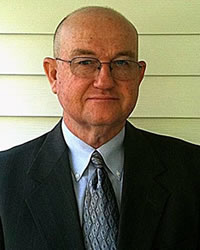
About Gary Shepard
Gary Shepard is teacher and pastor of Sovereign Grace Baptist Church in Jacksonville, North Carolina.
Comments
Your comment has been submitted and is awaiting moderation. Once approved, it will appear on this page.
Be the first to comment!