Please turn back to where we
read in this first epistle of Peter. We read those admonitions and
instructions that the apostle gives to the Lord's people there
in verses 13 through 17. And Peter, just as Paul and all
the writers of Scripture, he uses as the thing that is to
motivate us, to stir us, encourage us to these things, is something that has already
been done for us. We don't do these things in order
to get. We do them because we've already
been given all things in Christ. Paul said concerning the Lord
Jesus Christ, that He is of God, made unto
us all wisdom, all righteousness, all sanctification, and all redemption. So if we preach the gospel, if
we preach Christ, We have to preach Him as the Redeemer. The Redeemer. That's what I really
want to talk to you about this morning and maybe later too. I'm not sure yet, but I want
us to think about the Redeemer and His redemption. Because as
the motivation and the reason for all these things, Peter says
in verse 18, "...for as much as you know." Or it could be
like this, "...do these things because you know." And I know
this. To know something means more
than just to have information about something, although that
is absolutely essential. But to know in this sense, and
as it's often spoken of in Scripture, to know means to be assured of. to delight in, to be convinced
of, to have understanding about. He says, for as much as you know. And he says that because he knew
that all believers know some things. I don't know why it is
in our day So much in religion seems to be placing a kind of
bounty on ignorance. You don't need to know this.
You don't need to know that. We don't need to get involved
in doctrine. But the truth of the matter is,
God's people are brought to know something, some things of doctrine. Because the way we know Him,
the Redeemer, is to know something about His redemption. In other words, if the Redeemer
we believe in and trust in, if His redemption is not like the
redemption spoken of as being by Him in Scripture, we have
a false Redeemer. Our hope is false. And for this
reason, Peter says that all believers know some things and they all
come to know them the same way. One description of God's people
in the Old Testament and in the New Testament is this, they shall
be all taught of God. They're going to be taught some
things. They're going to be brought to
understand some things. Not everything, but they'll be
brought to understand some things whereby they're able to distinguish
the Redeemer. As a matter of fact, it is as
it was said to the early disciples. Christ says, you understand them
because it is given unto you to know the mysteries of the
kingdom, but unto them it is not given. In other words, obviously
it's not given to everyone to understand the mysteries of the
kingdom of God, Not all men are in this sense taught of God,
but the Lord's people are. He sees to it that every one
of them are taught of himself, and they are taught by the word
of the gospels. of the gospel. They're taught
by the messengers that He sends, and these things are revealed
to them and in them by the Spirit of God. Look back in verse 10. He says of this salvation of
your souls, he says, of which salvation the prophets have inquired
and searched diligently who prophesied of the grace that should come
unto you. The Old Testament prophets Speaking
of the Messiah, speaking of God's salvation, they were testifying,
he says, of that salvation which would come to you. Searching
what, or what manner of time, the Spirit of Christ which was
in them did signify. They wrote about Christ. They
had in them the Spirit of Christ. Christ said in all the Old Testament
prophets and in all the Old Testament books of the Law, those writers
were writing things concerning Him and that salvation that's
in Him. When it testified beforehand
the sufferings of Christ, What were they talking about? They
were talking oftentimes about the sufferings of Christ. And not only the sufferings of
Christ, but the glory that should follow. Some people look at the
sufferings of Christ and they see nothing but death naturally,
suffering physical, and really nothing accomplished about it.
But they testified the sufferings of the coming Messiah and the
glory that should follow. He said, "...unto whom it was
revealed that not unto themselves, but unto us they did minister
the things which are now reported unto you by them that have preached
the gospel unto you." They preach the gospel unto you
with the Holy Ghost sent down from heaven, which things the
angels desire to look into." The gospel of Christ, the gospel
of redemption, he says, the angels have an interest in, desire to
look into. And it is by these means that
Peter speaks of here, and as everywhere in Scripture it shows
us, it is by these means that he speaks to his people, that
he teaches his people, and that he reveals to them the true Redeemer. We know the true Redeemer by
His redemptive work. The glory which was given Him
by the Father before the world began, and would be displayed
by Him in His coming, in His humanity, and most especially
in His death, is His redemptive glory. He is the Redeemer. And the message of blood redemption
It is not a mere myth or a fairy tale or a tradition, and it is
certainly not self-redemption. Every once in a while now in
conversations and in news and TV, you hear people talk about
redemption, but they're talking about self-redemption. They're not talking about divine
redemption. But the truth of God's Word is
a message from start to finish about a blood redemption. Not just a redemption, but a
redemption that is by somebody's blood. Which simply means a redemption
of a people through somebody's death. And whoever it is that
accomplishes that, he's the redeemer. That's the true redemption. And so Peter joins a group of
people that we hear speaking and who we hear spoken of all
throughout the Scripture. These people who are brought
to know something. One of them is Job. Let me read
you his words in Job 19. He says, "'Oh, that my words
were now written, Oh, that they were printed in a book, that
they were graven with an iron pen and laid in the rock forever. For I know, for I know that my Redeemer lives."
Now Job is supposedly one of the oldest books in the Bible. And yet here is one who at that
time, with all his faults and his failures, with his lingering
self-righteousness, all that might be ascribed to him and
is obvious about him in that book, there was something he
knew, or rather someone he knew, that
even at that time, His Redeemer lived. Even before He came to
this world and was made flesh and dwelt among us, even before
He died on that cross, even before He was manifested to man, He
lived. He is the eternal Son of God.
And so Job could say, for I know that my Redeemer liveth, and
that He shall stand at the latter day upon the earth. He already exists, but He's coming,
and He's coming in humanity, and He's going to stand on the
earth. And though after my skin worms
destroy this body, Yet in my flesh shall I see God." You see,
that knowledge, that knowledge of this Redeemer, though the
obvious was taking place and would take place, he still had
hope. And his hope was in his Redeemer.
He said, though I die, though my body goes back to the dust,
Yet in my flesh shall I see God, whom I shall see for myself. And mine eyes shall behold, and
not another, though my reins be consumed within me." He says,
I know my Redeemer lives. And not only that, Just something
like the Apostle Paul himself said. He said, I know. I know something. I know whom I have believed and
I'm persuaded. That knowledge brought a confidence
and a persuasion to him He said, I know whom I have believed,
and I am persuaded that he is able to keep that which I have
committed unto him against that day. How did he know that? Because
God taught him. When God teaches us something,
we are convinced of it. When He teaches us from His Word,
His promises in truth that are yea and amen in Christ, not anybody
can come around and unconvince us of this. I know whom I have
believed. And then John, he said this,
and he joined himself together with the Lord's people in every
age. He said, that we have passed from death
unto life. We know that. When do you know
that you passed from death unto life? When you know that you
were dead. Paul said, before I was a blasphemer. How did he know that? He knew
it in the after. when he had been brought to spiritual
life. You see, we don't ever know that
we were dead until we are brought to life. We think we live. But we don't know that we were
dead until He brings us to life. We don't know that we were dead
in trespasses and sin. We don't know that we are currently
spiritually dead in ourselves. We don't know that we died in
Adam. We don't know all these things
until we're alive. He said, we know. that we passed
from death unto life. And then there's that blind man
in John 9, who gives us the essence of this thing. He said, one thing
I know, they were questioning him, these Pharisees, and he
couldn't give them the answers at that point, though he surely
could a little bit later. He said, one thing I know, And
that is, I was blind, but now I see. I know that. I may not know everything, I
may not have the answer to your question, but I know this, I
was blind and now I see. So this has to bring us to this
question, what do we know about redemption? Now I could say,
what do we know about the Redeemer? And that would kind of leave
us to add to that whatever we wanted to offer. But the truth
is, as I said, we only know the Redeemer by His redemption. So it comes down to this, what
do we know about redemption? Well, I know a few things. And
I know this, and that is redemption in Scripture has to do with persons,
individuals. And it has to do with everything
that pertains to these individuals. They're called the redeemed. They confess. that God has redeemed
them. And when you look to try to find
out what redemption means, the word redeem itself means this. It means to buy back by the paying
of a price. It means to clear something. by making a payment that clears
that something. So it's showing us that there
is something to be owed, that we as sinners have fallen into
such a state that it requires if we're to be saved, we must
be redeemed. And everywhere you look in this
book, is a picture of redemption. Redemption involves a price paid
for a people. The redeemed are those who are
redeemed by this payment of this price, this price being paid
by the Redeemer. The words are simple. They are
redeemed through a redemption that was accomplished altogether
by Him who is called the Redeemer. And that's just one Redeemer.
That's why it can't be self-redemption. If we are redeemed, and it says
that redemption is being redeemed from something and also being
redeemed to God. And that's exactly what is being
pictured when you find God Almighty Himself, the Lord Jehovah, redeeming
that people and nation called Israel, which is a picture and
a type of His redemption of spiritual Israel. They had to be redeemed
by blood, and they had to be redeemed by power. So when we
read as we do in Scripture, and sing as we do a hymn, Such as
we've sung when He says, when I see the blood, I'll pass over
you. I'll pass over you. I'll clear
you. I'll forgive you. I'll save your
soul when I see the blood. Not when you see it, although
that's a glorious time. But salvation has to do and redemption
has to do with something that God sees that satisfies Him in
the matter of my sin. It doesn't have anything to do
with possibilities. Redemption doesn't have anything
to do with you and I in some way being made redeemable. We're either redeemed Or we're
not. Christ either redeemed us, or
we'll never be redeemed. And so Peter says, we know. Those who have been brought,
not only to see, to hear, to understand the truth of the gospel
of our Lord Jesus Christ and Him crucified, These, the elect
of God, we know. Now, let me say first of all,
that we know to some measure what we're redeemed from. Now,
like I said, redemption involves being redeemed from something
and being redeemed to something. We are redeemed from these things,
and we are at the same time redeemed to God. We know this. We are redeemed from our sins. You see, this is the salvation
of the soul Peter is talking about. And it's in light of what
has already been said so long ago. concerning our souls that
this redemption is so vital, because this is what God says.
He said, "...the soul that sinneth." Could that be you and me? That
is me. You see, we think in terms more
of our bodies, but we are truly living souls who have a body. He breathed into that body made
of clay, and we became living souls." He said, "...the soul
that sinneth shall surely die." That's all that we can do. Die
in our sins. If left to ourselves, Though
we can spend all our time here in this world making our sins
to be less than somebody else's sin, justifying what we do as
being that which would offset our sins, but He just said, the
soul that sins shall surely die. So if we're to be redeemed, if
our souls are to be redeemed, We have to be redeemed from sins. Let me read you something out
of Isaiah chapter 44. Isaiah chapter 44 and verse 22.
God says, "...I have blotted out as a thick cloud thy transgressions. And as a
cloud thy sins, I blotted them out." Now you think about that
just a minute. Because this isn't me talking,
it isn't somebody else who's a sinner like you talking. This
is the living God saying to somebody, He said it to Israel, and we
know it was not to national Israel that He was talking about, He's
talking about that spiritual people. He says, I blotted out
your sins. Just like a cloud, I've made
them to go away. I blotted out your sins." He
says, "...I have blotted out as a thick cloud thy transgressions,
and as a cloud thy sins. Return unto Me, for I have redeemed
you." Redemption has got something
to do with our sins. How would you ever, before God,
before His justice, how would you ever redeem a soul from their
sins? When the soul that sinned shall
surely die. How would you redeem them? There's
only one way, and that would be to die in their place. That
would be to pay the price that divine justice requires. That
would be to satisfy the law and the justice of God in the matter
of their sins. That's why the gospel is good
news. That's why redemption is the
theme of this book. That's why Christ is the Redeemer. He says, I have blotted out your
transgressions and sins, for I've redeemed you. We know that
redemption is when Christ, by His death, redeems us from all
our sins. I know that men and women have
been told for so long that there are big sins and little sins. But do you know how we arrived
at this notion of there being big sins and little sins? It
is because of our ignorance as to who it is that we've sinned
against. You see, the least sin before
our thrice holy God brings for us His wrath and the execution
of His justice surely on us if it not be on the Redeemer. He
said, we know. So what? We are redeemed from
all our sins. If I could have had one opportunity,
this is a bit of a fantasy I know, if I could have had one opportunity
to preach for 30 minutes from one verse of the Bible in every
pulpit in this land, I know what my text would have been. It would
be Matthew 1.21. For thou shalt call his name
Jesus, for he shall save his people from their sins." Redemption
is redemption of the individual from their sins. And that has taken place because
God has imputed all the sins of His people to the Lord Jesus
Christ, to the Redeemer. He has made Him to be sin for
us who knew no sin, that we might be made the righteousness of
God in Him. Blessed is the man to whom the
Lord will not impute sin. How can He not impute sin to
me if I'm a sinner and He's just? Because He laid my sins on the
Redeemer who bore them, that is the consequence of them, the
penalty of them, in His own body on the tree. And that's what
He's doing on that cross. He's redeeming His people from
their sins. So if we are to have any interest,
the very first thing that we have to be taught is this, that
we're sinners. Because He only redeems sinners.
Are you a sinner? We know we are. I know I am. You don't have to tell me. You
don't have to point out all my flaws. I know I am. I know it because God says I
am. I know it because I see my own
failures and shortcomings. I feel my own weaknesses. But
the Redeemer has redeemed all His people from their sins. And we know this also. We know
that He has redeemed us from the curse of the law. Did you know that this whole
world came under a curse? And it is so broad, having taken
place when the one who first represented us, our father Adam,
fell in the garden, what took place next? God pronounced the
curse. The whole world is under a curse.
Cursed because of our disobedience to God's command. It took place
when the one who represented us disobeyed God's command. As soon as you and I are born
into this world, it says, we come forth speaking lies which
is disobedience to His command. And that's the course of our
lives. That's all flesh can do. You and I could never do anything
to bring ourselves out from under the curse, the curse of God's
law. But turn over to Galatians 3. What is the Redeemer? The long
announced, the long prophesied Redeemer? The now come Redeemer? The Lord Jesus Christ? What is
the Lord doing? in his life and death. What was
his mission? Well, look in Galatians 3 and
verse 13. He says, Christ hath redeemed
us from the curse of the law. Now, that's a statement. That's
a fact. And you can go back to all these
epistles and see who it is that these epistles are written to. At that time, they were written
to various groups of believers, churches throughout all the world. But always he describes those
they're written to. Not just those people at that
time, but the saints of God, believers at this place and that
place, those who believe the gospel in every age. He says,
Christ hath. Now, I'm not a real learned scholar in grammar, but
I know that means past tense, doesn't it? Now, think about
this. Religion in our day is always
telling you what to do, giving you some formula. But the true
gospel is always setting forth before you something that has
already been done. Christ hath. redeemed us from
the curse of the law." How did He do it? When did He do it? Is it when you believe? No. You see, that's what faith does.
Faith rests in what He's already done. Listen, being made a curse
for us. bearing our curse in our place
as our substitute, for it is written, Cursed is every one
that hangeth on a tree." He is talking about the cross. You
see, Christ had no sin of His own. But he's there before the
justice of God, the law of God, suffering as one cursed of God
because he's dying in the place of his people. He's redeeming
them. He's paying that price. He's
satisfying that law and that justice that we might know him
to be a just God and a Savior. Not only that, but we are redeemed
from the wrath of God. Now, all of this is essentially
the same. The one redemption. But if you'll
turn over to Romans chapter 5, look in Romans chapter 5, in
the 9th verse, he says, Being now justified by His blood. Now Paul, if you would just hold
your place right there and glance back to chapter 3 and look at
that 24th verse. Being justified freely. That means being declared righteous
by God Freely. That word in another place is
translated, without a cause. And that is when they hated the
Lord Jesus Christ. And it says that they hated Him
without a cause. Same word. And that means that
they were hating Him because of nothing He had done and nothing
of Himself. They hated Him freely. Well,
this is what it says is the basis for our justification. Being
declared righteous, being justified freely by His grace through the
redemption, that is in Christ Jesus. It's through the redemption
that is in Christ Jesus. So he says in verse 9 of chapter
5, much more than being now justified by His blood, we shall be saved
from wrath through Him. Now, I know something about human
nature. When you get past all the bravado
and all the boasts and the claims of those who, as they say, ain't
afraid of nothing, and yet they lay down on their beds at night
and they fear to die. They know because it is in their
conscience put there by God. that it is appointed unto man
once to die, and after this, the judgment. They know they're
going to stand before God. They know that God is angry against
the sins of men all the time. The wicked, He's angry every
day. And I can tell you this, you'll never
have any peace in your conscience until God teaches you and brings
you to know of that redemption by which Christ made peace on
your behalf by the blood of His cross. And when He brings you to believe,
you can lay your head down on a rock, and it becomes a pillar
at the very thought of this. We shall be saved from wrath
through Him." Talk about hell all you want to. It's very real. Talk about punishments for sin
forever. Talk about God's wrath. Those
who are in Christ find no fear of that because they know in
His redemptive work He bore all the wrath of God in their behalf. How do you know that? How do
you know that Christ died for your sin? How do you know that
God really imputed your sin to Christ? Reckoned it to His account. Took it off yours. Can you hear
Him there? when He says, My God, My God,
why hast Thou forsaken Me? When it came to that hour where
He is burying in His body the consequences of that mass of
sin that was the sins of all His people, the thrice holy God
can only look away and execute His judgment, can only say, Arise,
awake, O sword, and smite the shepherd, that the sheep might go free."
He's redeemed us from the wrath of God. And He's redeemed us
from the bondage, the slavery, which is the slavery of Satan,
which is demonstrated by false religion and tradition. Now you and I, we don't find
ourselves like in chains or shackles or something like that. We think
ourselves to be free. We're free people. Not really. We're not free. Because the Scripture
says, Satan has taken us captive at his will. And the only way that we can
truly be free is in Christ and made free by Christ. But you
see, as I said, we can't see these chains or shackles, but
take my word for it, they're there. I see it all the time. People are chained to traditions. They're chained to relationships. They're chained to religious
organizations. They're chained to old experiences
in religion. And they're held tight there.
And only the Redeemer, through His redeeming work, and set them
free. That was the picture in Egypt,
was it not? Pharaoh is simply a type and
a picture of the devil himself. He would not let them go. He
made them have taskmasters that made them labor and labor and
labor. They never accomplished anything. They never knew any freedom.
They never received any wage. So only God could redeem them
and bring them out and set them free. I know something about that.
I was a slave to a lifetime being raised up in religion. I was
a slave to things I thought I knew about God, most of which amounted
to like half verse Beliefs. I used to hear it over and again. They would say, God said, him
that comes to him, he'll never cast out. Did you ever hear that? Is that true? Not by itself it's
not. What that verse really says is
this. Christ says, "...all that the
Father giveth Me shall come to Me, and him that comes to Me
I will in no wise cast out." He saves us. Let me read you
a verse. In 2 Samuel chapter 7, And what one nation in the earth
is like thy people, even like Israel, whom God went to redeem
for a people to Himself, and to make Him a name? Redemption
is for God's glory. and to do for you great things
and terrible for thy land before thy people, which thou redeemest
thee from Egypt from the nations and their gods." The redeemed cannot be held by
individuals nor by their gods if they are redeemed. I don't
care who they are. I don't care what the pressure
is, because they've been redeemed. If the Son makes you free, you're
free indeed. And we're redeemed from the cursed
earth. Turn over to Revelation 14. I
know I have to hurry. Revelation 14 and verse 3. Hear all the redeemed." In the
Revelation, John sees them as a great, complete company. He
says, "...and they sung as it were a new song before the throne
and before the four beasts and the elders, and no man could
learn that song but the hundred and forty and four thousand."
That's all God's people are, is 144,000? Well, that's what
the Jehovah Witnesses said. until their number got a little
bit bigger than that, and they had to kind of revise it a little
bit. What does that mean? That is simply a definite number
given for a particular people. The Lord knows them that are
His. That is a number representative
of those twelve tribes which represent spiritual Israel. which were redeemed from the
earth." From its curse, from its judgment,
they were redeemed from the earth. That's why our Lord said, you're
not of this world. The world knoweth you not, they
knew me not. If any man loved the world, the
love of the Father is not in him. We're redeemed from the
earth. And we're redeemed from among
fallen men. Now this is one point right here
where you find out whether or not you really know the Redeemer
or not. Because I can tell you, if you
think that when Christ died on the cross that He died there
to redeem everybody, you don't know the Redeemer. If you think
it was His goal to die and make redemption possible for everybody,
you don't know the Redeemer. Verse 4 of Revelation 14, "...these
are they which were not defiled with women." What that means
is that false religion is likened to a harlot. Book of Proverbs, you read the
Revelation, you read everywhere almost. False religion is likened
to this harlot seducing the multitudes. She offers them beauty. She offers
them external things. She offers them feelings. She
offers them things that meet sensual need. But these, it says, are they which were
not defiled with women, for they are virgins. These are they which
follow the Lamb whithersoever He goeth. These were redeemed
from among men, being the firstfruits unto God and to the Lamb. They were redeemed from among
Adam's fallen race. They were a part of that church
which he purchased with his own blood. Theirs was a substitutionary
redemption. He died for each of them in their
place. And he accomplished their redemption. Then Paul tells us when he writes
to Titus, he tells us that he redeemed
us from all iniquity. Turn back over to Titus chapter
2. is a word that God uses to express
simply this, everything that is not equal to Him. Everything that is not equal
to what He requires. Everything that is not equal
to His righteousness. And when those folks we read
about in Matthew 7, who are like so many in our day, so proud
of what they have done and are doing for God, they say, so proud
of what they've built, so proud of what they have felt, so proud
of these things that the Scripture says are an abomination to God. Now, there's just no other way
of calling it but that. Listen, that which is highly
esteemed of men is an abomination to God. What do men highly esteem? What they do. Who they are. And so when they stand before
Christ, Christ said in that hour, they'll say this, Lord, Lord,
have we not Prophesied in your name? Haven't we preached in
your name? Have we not done many wonderful
works in your name? Have we not cast out devils in
your name? And he says to them, Depart from
me, ye that work iniquity. I never knew you. I never knew
you. That means, I never knew you
in this intimate bond and relationship of love and covenant redemption. But listen to Titus in Titus
chapter 2 and verse 14. It says, "...who gave Himself
for us," speaking of Christ, "...that He might redeem us from
all iniquity, and purify unto himself a peculiar people, zealous
of good works." Somebody says, well, if I believed in salvation,
all of grace, sovereign grace like you do, I'd just go out
and sin, do all I wanted to do. That's what you're already doing.
But he says, because these people have been redeemed. Oh, they
have their failures. They have their sins. They have
sin in them, but not on them. And they are, because of His
mercy to them, zealous of good works. They want to help their
brothers. They want to pray for the Lord's
people. They want to be kind and gracious,
generous. They are. But they never do any
of those works to be saved. They do them from this motivation
as Peter has shown us, that they have been redeemed by the precious
blood of the Lord Jesus Christ. He has redeemed us from all iniquity. The hymn writer a long time ago
wrote some hymns, and one of them was this, redeemed, how
I love to proclaim it, redeemed by the blood of the Lamb, redeemed
through His infinite mercy, His child, and forever I am." Paul said to the Corinthian believers,
he said, you were bought with a price. You are not your own. Therefore glorify God in every
way, in every part of your being. That's the Redeemer and His redemption. Blood redemption. Maybe we'll
look at this, Father, a bit next week. Father, this day we give
You thanks and praise for the One who You have appointed, made
to be our Redeemer, redeemed us from all that was against
us, redeemed us unto Yourself and for Your glory. We thank
you that it is no fantasy nor mere feeling that we trust in,
but in the finished work of our Redeemer, who by His blood shed
on that cross, redeemed us unto yourself. Teach us, give us faith,
cause us to know Him and what He has done. May everything bring
honor and glory to your own self. For we pray in His name. Amen.
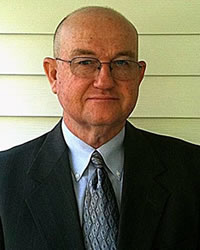
About Gary Shepard
Gary Shepard is teacher and pastor of Sovereign Grace Baptist Church in Jacksonville, North Carolina.
Comments
Your comment has been submitted and is awaiting moderation. Once approved, it will appear on this page.
Be the first to comment!