Bootstrap
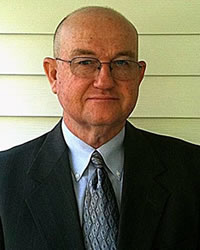
Gary Shepard

Not Having Mine Own Righteousness

Philippians 3:1-9
Gary Shepard November, 3 2013 Audio
0 Comments
Gary Shepard
Gary Shepard November, 3 2013

Sermon Transcript

Auto-generated transcript • May contain errors

100%
Turn in your Bibles this morning,
if you would, to the book of Philippians. Philippians chapter
3. The most subtle and the most
deceitful work of Satan, who, if you remember, the Scripture
says is transformed into an angel of light. not a creature in a
red suit with a pitchfork and horns, but transformed into an
angel of light, an angel of appearing truth. But the most subtle and
deceitful thing he does is to get a sinner to believe that
they are in some way personally righteous. So when I hear someone
say that the only way that God could justly deal with Christ
in the matter of our sins, that is, punish our sins in Him, was
for him to be made sin personally more so than in the sense of
imputation. When I hear that, I get concerned. And I'm fearful for all or any
who might believe this, and for the ramifications that must surely
follow. And I say that because what follows
in that kind of logic is the notion that in order for us to
be righteous before God, we have to be personally righteous. In other words, He has to deal
with us in the same way he would deal with Christ. And if the
only way he could deal with Christ is for him personally to be a
sinner in our place, then the only way he could deal with us
is for us to be personally righteous. And so, men come up with terms
like imparted righteousness. or like the era of Catholicism
which is dangerously close to that which is infused righteousness. An old writer said of that very
doctrine that is the staple of Rome, you might say, he said,
when they are required to show what the righteousness is whereby
a Christian man is justified. That word justified is used many
times in the Bible, and it has to do with God declaring a man
or a woman righteous. So he says, they say that the
ground upon which a man is declared to be justified, he says, they
answer that it is a divine spiritual quality, which quality received
into the soul does first make it to be one of them who are
born of God, and secondly, endue it with power to bring forth
such works as they do that are born of Him." In other words,
they say that infused in this being, this man or woman, is
this righteousness that is imparted to them and in them, whereby
that is the evidence they are justified, and which enables
them to do justifying works. But this is exactly what the
Apostle Paul is constantly denying himself and what he is constantly
warning all who hear him against. Look at what he says in verses
1 and 2, "...Finally, my brethren, rejoice in the Lord, to write
the same things to you, to me indeed is not grievous." He says,
I never tire of telling you the truth. I never tire of warning
you against error. I never tire of repeating the
same things because he says, for you, It is safe. It is necessary. We are so easily
deceived. We are so prone to self-righteousness. We are so easily disturbed and
deceived by almost any kind of system of doing in order to please
God. Paul said, it's necessary that
I stand again and again and warn you against this. and show you
the only way that any son of Adam is ever righteous before
God." In other words, he says there are none that are ever
righteous before God based upon anything that they are or do. We can pat ourselves on the back
all we want to. Others can brag on us and say
what outstanding citizens we are. But all the things that
will satisfy men, they will not altogether ever satisfy God. And so the apostle says in verse
2, beware of dogs, beware of evil workers, beware of the concision. And he uses that name to refer
to those who promote in any degree salvation by human works, salvation
by a personal righteousness. Isn't it amazing that he uses,
as our Lord did, the strongest kind of language and condemnation,
calling these dogs and evil workers, Just as Christ referred to the
Pharisees who believed the same thing and taught the same thing,
He called them empty sepulchres. On the outside quieted, but on
the inside they were full of dead men's bones. So he begins
in this chapter by warning them and by talking about that which
he often repeated. Because in chapter 3 of the book
of Romans, he took up the very same thing we find in the Old
Testament and he makes this statement. He says, "...for there are none
righteous, no, not one." That means in ourselves and by ourselves,
not even in that part we sometimes imagine is the best part of us,
our heart. He says, there is none righteous,
no, not one. And not only is there none righteous
in themselves, no, not one, but he says also, writing to Titus,
the very thing that we base salvation on, he says, it is not by works
of righteousness which we have done. Not only are we not righteous
in ourselves, But salvation, or gaining the favor of God,
it is not in any way by works of righteousness which we have
done. As a matter of fact, being unrighteous
in ourselves, we cannot do righteous works before God. And so, as
Saul of Tarsus, that's who the Apostle Paul was before, Christ
revealed himself to him. But as Saul of Tarsus, Paul was
lost, as he says he was, before a blasphemer, and now that which
he once trusted in, he is here in this chapter renouncing and
repenting of. Now if you had the character,
And if you had the works, and if you had the zeal of this man
Saul of Tarsus, if you had what he had and did what he did as
a lost religious man, you would be received with open arms in
almost any religious group in our day. You would be received
and welcomed. They'd have you doing some job
in the church, teaching, whatever it is. But the Apostle Paul,
when Christ revealed the truth to him, he said, I was before
a blasphemer, an injurious person. And what I did, I did it in the
ignorance of unbelief. And now he repents of that. He renounces that. He identifies
himself for what he was. He was a Jew of Jews. He was one of those who was of
the Jewish nation naturally in the flesh, born a Jew naturally. But the true Israel of God is
not an earthly people such as Israel the nation, but that nation
is a picture of a spiritual people, that he identifies himself even
here, one who is a Jew naturally. Look down in verse 3. He says,
for we are the circumcision, that is, the true Israel, true
believers. You say, how do you know that?
Because he says in another place, circumcision is not that which
is of the flesh. He is not a Jew who is one outwardly,
but he who is one inwardly, and circumcision is of the heart,
not of the flesh. And so he says, for we are the
circumcision, identifying himself with these Philippian believers
and the Lord's believers in all days, for we are the true Israel
of God who worship God in the Spirit. We worship God spiritually. We don't have to have all the
religious paraphernalia We don't have to have all the trinkets
of religion. We worship God in the Spirit
and also by the enablement of the Holy Spirit. And then he
says, we rejoice in Christ Jesus. We find every reason to rejoice
in Him and we find all are rejoicing in Christ Jesus. And then notice
the last thing he says about the true Israel. "...and have
no confidence in the flesh." We have no confidence. He didn't say, we don't have
much confidence in the flesh. He said, we have no confidence
in the flesh. And he's not only talking about
what he was before as a blasphemer, he's talking about even what
he is now in himself. That is, not only then, but now
even though the Lord has revealed the truth to him, and I should
say especially as the Lord has revealed the truth to him, he
assuredly now has no confidence in the flesh. Not in the past
flesh, not in the present flesh, not in the future flesh. God's
people are brought to have no confidence in the flesh. You say, well, doesn't the Bible
teach us about good works? Absolutely. But the Bible clearly,
again and again, Paul especially, reminds us that our confidence
and our hope of acceptance before God can never at any time be
based on anything we've done. As a matter of fact, when he
talks about works, he talks about our works. And we're never justified
by God in any way at any time based on our works. He says we have no confidence
in the flesh, not even in that work that the Spirit of God does
in the Lord's people. At no time do we ever or are
we ever to have any confidence in anything but Christ. Now you look at what he says
in verse 4. He says, "...though I might also
have confidence in the flesh." And that's something like this.
He's saying, if anybody could have confidence in the flesh,
surely I could have. Well, why? Well, he says, "...if
any of the man thinketh that he hath whereof he might trust
in the flesh, I more circumcise the eighth day of the stock of
Israel." A man born an Israelite, a Jew in the flesh, he says,
of the tribe of Benjamin, That name Benjamin means something
like, son of my right hand. This respected tribe, Benjamin,
a Hebrew of the Hebrews, as touching the law, a Pharisee. He was of a good nation. He was of a people that God had
identified Himself with as an earthly people. He was of a noted
tribe. He was a man who, according to
the law, sat at the feet of a man by the name of Gamaliel, the
greatest teacher of the Jewish law of his day. He was a Pharisee,
a separated person, a moral person. Concerning zeal, he was so zealous
that he even persecuted, thinking he was doing God a favor, he
persecuted the church of the Lord Jesus. And touching the
righteousness which is of the law, blameless. Blameless. Cleaner than a houndstooth,
as we say. as touching all outward regulations. He was blameless. And yet now,
writing to these people at Philippi, he not only is renouncing all
of that, he's calling it what it is before God, and he is repenting
of it. You see, we don't have much problem
imagining that we ought to repent of our outward wickedness, our
lying, drunkenness, whatever it might be. But what we have
a problem with, what we don't understand, is that the things
that we turn to by nature and count as good, They are as much
to be repented of as what we call bad, as far as our standing
and acceptance before God. Paul's not talking about repenting
of being an adulterer, or a drunkard, or a liar, or a thief. He wasn't any of those things
in the flesh. But what he was, was a self-righteous,
moral man who had the respect of his contemporaries. They imagined
him a zealous man, a man of God, when in truth he was a rebel
who rested in his own self-righteousness. And he repents of it. And I want
you to notice this, what does he count all his best? He didn't name his worst here,
did he? He named his best. What does he count all his best,
all his works, all his personal righteousness, all his own zeal,
all his own pedigree? What does he now count them as? Look at verse 7. But what things
were gained to me, and they were gained to him. A sinner by nature,
especially one who is full of self-righteousness that is the
product of natural religion. He carries all his deeds in his
mind, in his heart, like a man carries pieces of gold in a bag. You ask him, what's your reason
of having any hope of going to heaven? Why do you think God
will accept you? Why do you believe God will forgive
you and receive you unto Himself? And he starts counting out his
gold. Well, I've worked hard all my life. I've treated my
wife or husband well. I've given to the poor people
around me. I'm not a liar. I'm not stole
anything. I go to church regularly, or
I read my Bible, or I do this, or I do that. He starts counting
out all these pieces of his little gold treasure that not only is
not worth anything, but it's sin. The best prayer that I ever
prayed was so polluted with sin because I prayed it for God to
cast me into hell. You see, we sin because we are
by nature sinners. We don't sin in order to become
sinners. We sin because we are sinners. And that's not only the display
of all these outward actions that we imagine, we think, and
we know for sure God is not pleased with that, but even the things
we offer up to Him and imagine He is pleased with. That's sin. Why? Because we did it. It's
personal. Listen to what Isaiah records
in Isaiah 64. I wish we could get a hold of
this. He said, but we are all as an unclean thing. That's us. That's you. It surely is me. As we are in
ourselves, no matter how much we try to refrain from evil or
improve ourselves, man at his best state is altogether Vanity. On your best day. You say, Preacher,
that's so hard. Why would you want to... You'll
never have a big crowd telling people that. No, but I will tell
them exactly what God says. He says, man, at his best state,
well, I'd say his best state would be saved by grace, wouldn't
you? But even at his best state, he himself, is altogether vanity,
sin. Somebody said, I used to be a
sinner. No, you didn't. You still are a sinner. And why
would we want to show you our blindness and our ignorance and
how we're deceived? Why would you want to remove
yourself from the one standing in place whereby God shows mercy? You're trying to get good enough
for God to save you and accept you, and you'll never do that
when the Scripture says, this is the good news, Christ Jesus
came into the world to save sinners. The Apostle Paul said that. You
know what he says next? As an apostle, he said, of whom
I am chief. A sinner. Look at verse 7 at
what he says again, "...but what things were gained to me, those
I counted loss for Christ." yea, doubtless, and I count all things
but loss, for the excellency of the knowledge of Christ Jesus
my Lord, for whom I've suffered the loss of all things, and do
count them but dung, that I may win Christ." You mean to tell
me, Paul, Did you not count all those years you sat under Gamaliel
for anything? You mean that all those times
you stood and taught in the synagogues, all those times that you abstained
from eating this or drinking this, or you abstained from something
else, you mean to tell me all that zeal and sincerity that
you had, zealous you thought for Jehovah God, you mean to
tell me that that counts for nothing? Actually less than nothing. He said, I count it all but done. Filth, rubbish, waste, sin. And I'll tell you what, we're
such proud, self-righteous creatures, that until God Almighty comes
in power to us and reveals this truth in our hearts and our minds,
we'll be strutting like peacocks all the way to hell, thinking
we are somebody. I am somebody. You're special. You're something special. We tell the kids this. Religion tells people that. The
business world uses this psychology on us because they know we want
to hear it. Positive reinforcement. Yeah. Lies. He said, I count it all
loss that I might know Christ. And look at that ninth verse.
and be found in Him," what is that next line? Not having mine
own righteousness, which is of the law, which would be based
on a principle of my doing or my obedience. but that which
is through the faith of Christ, the righteousness which is of
God by faith." Do you see that? Here is the Apostle Paul, and
I'm sure he was a far better man than me. I'm sure as far
as the human flesh is concerned, the way men and women count righteousness,
I'm sure he was a far better man than me. And he's having
to confess this, not having my own righteousness. He said, I don't want that anymore.
I once in my mind counted it again. I once in my mind let
people brag on me for it. I don't want my own righteousness.
But we are as an unclean thing, and all our righteousnesses are
as filthy rags. I've always, no, I hadn't always,
but I see now that the Lord has pictured us like we might be
in that fairy tale. Do you remember the fairy tale
called the Emperor's New Clothes? When these crooked lying men
told the king, sold him a bill of goods as to them providing
him this most excellent garment, so fine, so better than any other,
that people could not even see it unless they were especially
gifted and able to see it. He paid a lot of money for it,
and he went strutting out on the street. And all the lords
and ladies of the court, they didn't want to be seen as being
different, or be seen as being, as saying, otherwise they said,
oh, it's just such a beautiful robe, such a beautiful garment. And here we are, just like the
king, strutting in this world, naked. Is that not what the hymn
writer said? Naked, come I to thee for dress? There was a little boy in the
crowd. His mama was holding on to him, she was trying to keep
him quiet. But you know how a child is,
he calls it like he sees it. He said, the emperor is naked. And naked he was. And so is every sinner clothed
in their own righteousness. Going to go out and meet the
thrice holy God. The judge of all the earth who
will do right. He will call you what He's already
told you in His Word, that you are outside of Christ. He said, "...not having mine
own righteousness which is of the law." As a matter of fact,
we don't want any law righteousness. You see, not even Christ's obedience
to the law, though it showed Him to be the perfect sacrifice,
that's not our righteousness. You see, his obedience was the
obedience unto death. Because the soul that sins... Have you sinned? Well, I've not
sinned as much as... That's not what I asked you.
Have you sinned? He said, the soul that sins shall
surely die. So if God saves me, and I have
sinned, If He saves me, and He does so on the basis of doing
so justly, somebody's got to die. But Paul says in Romans
3, but now the righteousness of God without the law is manifested. Oh, being witnessed by the law
and the prophets. It's apart from the law, and
yet the law and the prophets witness to it. What is that? It's the dying of the Lord Jesus
Christ. Turn back over to Romans chapter
5. Romans chapter 5. And listen to the apostle. He's
writing here and he's telling us about the only way that God
has ever dealt with anybody in our race. Two men. One of them is called the first
Adam. One of them is called the last Adam. We know who the first
Adam was, don't we? Adam and Eve. But Adam was not
just a man to himself. He was what we call a representative
man. He was the head of a people,
the whole human race. And what he did in that garden,
in disobedience to God, had an amazing, awful effect on all
his posterity. That's why it says, in Adam all
died. When he died, his whole race
died in him. Not physically, but spiritually
died to God. any understanding of what has
taken place on this earth or what salvation is until we are
brought by God to find out what happened in that garden. He told
Adam, in the day you eat of that tree, you will surely die. And
now Paul in this Romans chapter 5 tells us that all in Adam,
they not only died, but they sinned. There are a lot of people
grumbling about the president of our country. Why? He's just a man by himself. You
say, but what he does affects me. That's exactly right. But not to the degree, not anything
close to what Adam did affected you. That's why we're born in
sin and shaping in iniquity. That's why we come forth from
the womb speaking lies. That's why you don't have to
teach a child to cry or cuss or anything else. They come forth
sinners. And look at what Paul says in
Romans chapter 5 and verse 19. For as by one man's disobedience
many were made sinners. In the original it says something
like this, for by the one man's disobedient act, the many, the
many he represented were made sinners. So, by the obedience
or the one obedient act of one shall thee many be made righteous."
Who is that? That's the Lord Jesus Christ,
the last Adam, who is the head of a spiritual people. What Adam
did in the garden had great outreaching ramifications to his race. But
to this people given to Christ by the Father before the world
began, it says that by His one act of obedience, they are made
righteous. That one act of obedience is
His death on the cross, which is a death for the sins of His
people. By that one death, That life
laid down, the life of the God-man Himself, the many in Him were
made righteousness. And then look at verse 21. Paul
continues, "...that as sin hath reigned unto death, even so might
grace." See, grace is not an offer. Grace is not something
made available. Grace is God in Christ doing
something for His people, and as He does it, showing Himself
just and righteous in the doing of it. Even so might grace reign
through righteousness unto eternal life by Jesus Christ our Lord. You see, what Paul is saying
here is that it was not that he had lost anything of value,
but that he had gained everything of value in Christ. And this
was now his only desire, which was to be viewed by God and accepted
by God in Christ Jesus. That's what he says in verse
9 of Philippians 3, "...and be found in him, not having mine
own righteousness, which is of the law, but that which is through
the faith of Christ, the righteousness which is of God by faith." And
what he's actually saying is that in light of the coming judgment,
God bears a witness to every man that there is a coming judgment,
and he does so by the fact that he raised the judge from the
dead in light of the coming judgment. and as a safe refuge in the sight
of the righteous God." I want to be found in Him. I don't want to meet God on the
basis of one-on-one. There was a man in the Old Testament,
God said he would dwell between the cherubims over the Ark of
the Covenant. They put that Ark of the Covenant
on a cart one day, which they shouldn't have done, but they
put it on a cart one day, and it was being carried along by
oxen on this cart, and the oxen stumbled, and a man reached out
to steady the ark. And God killed him, because he's
holy. He won't be defiled by you and
me. He won't accept anything less than absolute perfect righteousness. God alone is righteous in Himself. And Christ, the God-man, is the
only personally righteous one. He's the only one who's done
righteousness in Himself. All righteousness is in Him. And God's gift of Christ to His
people, to those who look to Him and Him alone, is called
The gift of righteousness. And it is by virtue of God putting
us in this union with Christ. Viewing us in Christ. Looking
upon us as we are in Christ. Because it says that He put us
in Christ in that everlasting covenant. You know anything about
that covenant? It says that He chose us in Christ before the
foundation of the world. It says He put us in Christ as
our surety, and as our head, and as our representative, and
He put us in Christ in His death. We're in Him like Noah was put
in the ark. You say, well, God saved Noah.
He didn't have to go through any judgment. Oh yes, He did.
He went through the same judgment that all those people in the
flood went through. Same water, same wind, same storm,
same rage, all came against Him in the ark. The ark is Christ. It's a picture
of Christ. You see, God's going to judge
all our sins. The good news of the gospel is
He's already judged His people's sins in Christ. That's what's
happening on the cross. The cross is not a down payment
or a price paid to make something available if you want it or not.
The cross is a price paid to the justice of God in the place
of and on the behalf of every one of that people in Christ
Jesus. It's paid. And we are, if we're
the Lord's people, if we're believers, we're commanded to do things,
live godly in this present world, soberly, righteously in this
world. That's not the basis of salvation. That's not the righteousness
of the gospel. That's not the righteousness
that Paul says that is revealed in the gospel. That righteousness
is Jesus Christ and Him crucified. You see, we were in Him when
He came under the judgment of God because God had imputed our
sins to Him. You ought to be scared of that
word. It's not a deep theological term.
It's a Bible term. The Lord hath laid on Him the
iniquity of His people, charged to His account. This is what
Paul says. 2 Corinthians 5. Speaking of God, he says, "...for
He hath made Him, Christ, to be sin for us, who knew no sin,
that we might be made the righteousness of God in Him." You miss that
whole verse. what is being said in the last
two words. He has made us the righteousness
of God. He didn't say He has made us
righteousness by Christ. He said He's made us the very
righteousness of God in Christ. That's why Paul says, I'm done
with all this other. I'm done with all this phony
charade of self-righteousness, all this religion without God. I only want to be found in Christ
Jesus, not having mine own righteousness. God, look at me in your Son. In grace, God counts us righteous
in one outside of ourself. Let me read you a verse in Romans
3. You don't have to turn there,
I know I'm taking too long, but listen to this verse. Verse 22 in Romans 3, Paul says,
speaking of the righteousness of God without the law manifested,
even the righteousness of God which is by faith of Jesus Christ. In other words, as far as us
appropriating it, as far as us enjoying it, as far as us seeing
it and being able to be confident in it, is when God gives us faith. But listen, even the righteousness
of God which is by faith of Jesus Christ unto all and upon all,
upon all, them that believe. It's unto all and it's upon all,
them that believe. Faith, we know, is the gift of
God. And when God gives a sinner faith,
when He brings that sinner under the sound of the truth, I went
so many years thinking, you know, this being a Christian, that's
a tough job. I mean, I got to live right, I got to do right,
I got to quit this and I got to quit that. But the funny thing
was, the more I quit and the more I did, the worse I felt.
No peace in my heart. Dread judgment to come? Why? Because I knew that my sins were
coming up before God. But when somebody was sent of
God to tell me the truth, and I found out that He had already
dealt righteously with my sins in my substitute, I looked back. Count all that but done. My early
preaching, all them Sunday school pins I used to wear, It looks
like Omar Gaddafi or something with all the medals. That's self-righteousness. You call it what you want to.
It's a parade of the flesh. Look at me. No, I don't want
that stuff. I want to know Christ and be
found in Him, not having my own righteousness, but the righteousness
I see through the Gospel that God has enabled us to believe
on, which is Christ. You say, well, if you believe
that preacher, you'll do anything. That's what I was doing before.
I want to obey the Scriptures. I want to do right. I want to
glorify God, but not to be saved, because I am saved. Paul said,
I'm not ashamed of the gospel of Christ, the true gospel, for
it is the power of God unto salvation to every one that believeth,
to the Jew first and also to the Gentile, for therein is the
righteousness of God revealed. You say, Paul, why do you keep
preaching this again and again? He said, because it's needful
to you. Therefore we conclude that a
man is justified. Declared righteous by God, by
faith without the deeds of the law. Because true faith has one
hand, and it never pats us on the back. It reaches out, as
Paul says, to lay hold on Christ. True faith has one eye, like
the cyclops you remember in mythology, one eye right in the middle,
because the third eye And that's one eye that looks to Christ.
Not by works of righteousness that we have done, but according
to His mercy He saves us. Paul said, but of Him are ye
in Christ Jesus, who of God is made unto us wisdom and righteousness
and sanctification and redemption. There's a coming judgment. You
know it and I know it. Everybody knows it. Try to disprove
it more and more of the ones that are really bothered with
it most. But let me be found in Christ. Let me as Paul, even
now, renounce and repent any imagined personal righteousness. My righteousness is all outside
of myself. I'm only righteous in Christ
Jesus. And that's what the prophet Jeremiah
said would be the case. In one chapter, chapter 23, it
says, "...in His days Judah shall be saved, and Israel shall dwell
safely." Those two names given to show the Lord's true spiritual
people. And this is His name whereby
He shall be called the Lord, our righteousness. He goes on
a little bit farther. He says again, "...in those days
shall Judah be saved, and Jerusalem shall dwell safely, and this
is the name whereby she shall be called, the Lord our righteousness."
He said, "...the Lord hath brought forth our righteousness. Come,
and let us declare in Zion the work of the Lord our God." The
work of the Lord our God in the Lord Jesus Christ, that's our
righteousness. It not only puts away all our
sins by His blood, but it also makes us the very righteousness
of God in Him. In Him. You must have a righteousness
to be accepted by God. Is Christ your righteousness?
Really, He's the only one there is. Not having mine unrighteousness. You can phrase it, you can teach
it any way you want to, but it still comes down at some point
to being my righteousness personally. No. In Christ, the solid rock,
I stand. On Him. In Him. All other ground
is sinking sand. I thought about it when we sang
that song, Rock of Ages, this morning. How long have you been
hearing that song? It may well be one of the first
songs I ever remember. Somebody's talking about or singing
rock of ages. The man that wrote that hymn
would not even be allowed to preach in most pulpits today.
Augustus Toplady. Do you hear those lines? Nothing
in my hand I bring. simply to Thy cross, I claim.
God, help us to trust Christ alone. God, enable us to look
to Him as the Lord our righteousness. Our Father, this day we give
You thanks for the good news of the Gospel. We thank You for
that Word that the Spirit of God wrought in the Apostle Paul
that caused him to write this epistle. Enable us to hear Him. as though we heard from your
mouth directly. We thank you for your mercy.
We thank you for that work of righteousness which you accomplished
in your sufferings and death. We pray and thank you for all
things we have by your grace in Christ. Amen.
Gary Shepard
About Gary Shepard
Gary Shepard is teacher and pastor of Sovereign Grace Baptist Church in Jacksonville, North Carolina.

Comments

0 / 2000 characters
Comments are moderated before appearing.

Be the first to comment!

Joshua

Joshua

Shall we play a game? Ask me about articles, sermons, or theology from our library. I can also help you navigate the site.