Bootstrap
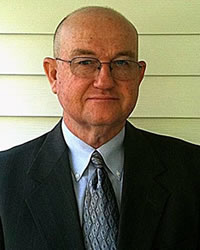
Gary Shepard

Good News For Mothers & Their Children

Hebrews 9:24-28
Gary Shepard May, 12 2013 Audio
0 Comments

Sermon Transcript

Auto-generated transcript • May contain errors

100%
Turn back in your Bibles to our
reading there in Hebrews chapter 9. Hebrews 9 where we read verses
24 through 28. Today is a day recognized in
our country as Mother's Day. I'm very thankful for mothers. Maybe more so this Mother's Day
because it will be the first one experienced in my 65 years
on this earth without my living mother. I'm thankful that in
the church, the Lord has given what might be called mothers
in Israel. I'm thankful for all godly mothers. And I believe that our Lord honored
motherhood in a very, very special way. Not only when He promised
Eve that by her the seed of woman would come. And our Lord Jesus
Christ was that one born of woman. But since the fall of our first
mother, all mothers have given birth to sinners. You see, the Bible says that
like begets like. And we are, as the psalmist said,
born in sin, shapen in iniquity, every mother's child. It tells us that we come forth
from the womb, speaking lies. It says that all children born
of women are all those that have sinned and come short of the
glory of God. If you listen to the psalmist
in Psalm 51, he says, Behold, I was shapen in iniquity And
in sin did my mother conceive me." He says again, "...the wicked
are estranged from the womb, they go astray as soon as they
are born, speaking lies." Job, he speaks and he says, who can
bring a clean thing out of an unclean, not one. We look at
these babies as we hold them in our arms, we think that they're
almost perfect, but they're not, because they came from us. In Job 15, he says, what is man
that he should be clean, and he which is born of a woman that
he should be righteous. Behold, God puts no trust in
his saints, yea, the heavens are not clean in his sight. How much more abominable and
filthy is man who drinks iniquity like water. But this morning
I have some good news for mothers and their children. That's what
I call this, good news for mothers and their children. And if you
stop and think about it, that will include all who might be
gathered here today. If you're not a mother, I'll
guarantee you're the child of a mother. And that good news
is that Christ Jesus came into the world to save sinners. And that is the message of the
gospel. The gospel is not a message concerning
what God will do for you if you believe, or of what Christ made
possible for you if you will accept it. You see, that would
make salvation contingent upon the works or wills of fallen
sinners. That would steal the glory from
the God of all grace, and it would make man ultimately his
own Savior, And he would want and could really get at least
part of the glory. No, the gospel is news. It is a report. of something
that Christ alone has done and finished and accomplished. And it is as we find it in the
Scriptures, set forth in such a way as being good news that
is set against the daily news of these mothers and their children. If you look back at the first
mother, when that first child was born, she exclaimed, I've
gotten the man from the Lord. She thought she had given birth
to that promised seed. But she'd given birth to a murderer,
to a liar. to one we're warned not to be
like, not to go in his way. Beware of the way of Cain." And
that is the case with every other one. And so, if you could listen
to the daily news today, And if you could hear that there
were no problems, that the children of mothers were all getting along
so well, and nobody killed anybody, and nobody bombed anybody, and
nobody stole from anybody, or raped anybody, or did any of
these things, if there was no news of any of these things,
which would be wonderful to a degree. But if this were to be real,
if that were to take place, we'd still have the greatest, most
serious problem of all. We would still have sin. We would still be sinners accountable
to the just and holy God who is God over all." I wonder if
we really understand that. If you didn't lie today, if you
make it through the day without killing anybody, or stealing
from anybody, or breaking any other law, you will still be
a sinner, still be sinners. And we would still be in the
most desperate need of this Savior of sinners, which this book is
about. Some think it's a book of moral
lessons. Some think it's a book of family
guidance. Some think it's a book of one
thing and the other, sacrifice, martyrdom, But this book is about
salvation. The salvation of men's souls. The salvation that is of the
Lord. The salvation that is in Jesus
Christ. And in our text there in Hebrews
chapter 9, the apostle is contrasting the priesthood of those Old Testament
priests to that of Christ who is the great High Priest. Look back in Hebrews 9, 24. He says, "...for Christ is not
entered into the holy places made with hands, they were figures
or types of the true, but into heaven itself now to appear in
the presence of God for us. Nor yet that he should offer
himself often as the high priest entereth into the holy place
every year with blood of others." In other words, their work and
sacrifices were on earth. And they only pictured Christ's
work in the holy place of heaven in the presence of God. They
did their work many times. But the Lord Jesus Christ, He
did His work one time. He did this work once. And what he did do, what he did
that was in some ways like what they did, yet it was very different. Verse 26, "...for then must he
often have suffered since the foundation of the world." If
in their work, his work was like theirs in that sense, he would
have had to have suffered and died again and again since the
foundation of the world. But now listen. But now once,
in the end of the world, in the end of the age, and here are
all these preachers trying to point somebody down to what they
call the end times. I read where somebody was so
happy their preacher was going to preach on the book of Revelation
and give them a chart on the end times. My friend, when Jesus
Christ came into this world, He ushered in the end times. That time between His first coming
and His second coming is the end of the age. He appeared once
in the end of the world, and hath He appeared to put away
sin by the sacrifice of Himself." Now, just like all of their work,
all these many priests in the Old Testament, Christ's priestly
work had to do with sin. Nobody wants to talk about sin
in our day. Nobody wants to confess themselves
in some way irrelevant to the time being sinners. But Christ's priestly work had
to do with sin. And the very first mention of
a priest we find in the book of Genesis actually. Before there
were any other, there is one mentioned who is, if not Christ
Himself, the closest type to Him. It says that Melchizedek,
king of Salem, brought forth bread and wine, and he was the
priest of the Most High God. He met Abraham when Abraham was
coming from a great victory, and rather giving to him, this
priest gave to Abraham. And the Scriptures use this to
show the superiority of his priesthood over all these other priests,
and yet, not completely, the priesthood of Christ Himself.
And the first priests after that, they were the heads of households
like Adam and Abraham and Isaac and Jacob. And then, under the
law, there came those priests of that Arianic order. God commands
Moses. He says, "...and take thou unto
thee thy brother Aaron, and his sons with him from among the
children of Israel, that he may minister unto me in the priest's
office, even Aaron, Nadab, and Abihu, Eleazar, and Ithamar."
Aaron's sons, priests, always a priest. Because a priest is
necessary. And the only way we know what
a priest is and who a priest is, is in this book. But a priest is the one necessary
to represent us before God. And the problem in our day, the
reason that they can have so many various priests is that
men don't know what sin is and how God must deal with sin. They do not know because they
do not know the God that we've sinned against. They do not know
the Scriptures that describe who the priest really is. And because preachers have showed
that they don't know what sin is, by all the remedies they
prescribe for it. You go to the doctor tomorrow,
And you know you have something severely wrong with you. You know you have a problem with
your heart, and yet you go to a doctor, and he so glibly tells
you to go out and run five miles, and then eat a bunch of barbecue,
and then do some other ridiculous things, you're going to conclude
immediately He doesn't really know what heart problems are.
He doesn't really know what a heart problem is. And these preachers
in our day, because of what they recommend, what they prescribe,
they give evidence that they don't know what sin really is. They tell people they can walk
down an aisle and deal with the matter of sin. Or that they can
be sprinkled from water from a font, or be dipped in a pool
of water in baptism, follow a certain prescription, or walk down a
Roman road, or follow some rules, or do some things like that,
reform their lives, or give this in sacrifice to God. They don't
know what sin is. Sin is the transgression of God's
holy law. And not simply just in a part,
but he said, to fail to be obedient in one part is to be guilty of
all the law. Do we understand that? Before
you take the commandments, the Ten Commandments, and decide
you're going to live by the Ten Commandments as your rule of
life, Let me remind you that James said, if we offend in one
point, we're guilty of the whole. That's what sin is. It permeates
everything. Sin is any lack of conformity
to God's will. Sin is all thoughts and all motives
not to the glory of God. Think about that one. He said,
do all that you do for the glory of God. When we don't do all
that we do, and we don't to the glory of God, we sin. He said, all that is not in faith
is sin. Which means really, that everything
we might trust or hope in or rest in, if we do not receive
it through faith in Christ, It's sin. Sin. And sin is what we
are as well as what we do. It's a nature. It's a ruling
principle. It's our natural attitude toward
the true God. We got a lot of folks who love
God, they say. Just start talking to them about
what the God of the Bible says about Himself. Oh no. Not that God. In 1 Samuel it
says, "...if one man sin against another, the judge shall judge
him. But if a man sin against the
Lord, who shall entreat for him?" You got a man sins against you,
you go down to the courtroom, there's a trial, you get your
lawyer to plead your case. But when you sin against God,
Who's going to entreat for you? Paul in Romans describes us. He says, the carnal mind, the
natural mind, the one we're born with, the one apart from God's
grace that is the only one we know, the carnal mind is enmity. What's enmity? Animosity, malice,
hatred against God. for it is not subject to the
law of God, neither indeed can be." In other words, we are so
much by nature against what God is by nature, we come to His
law, try as we might, we can't be subject to it. It just stirs
up that animosity in us. You see, sin and depravity characterizes
us in our entirety. We're like God describes us in
Isaiah 1 when He likens sin as leprosy. He says, from the head
to the toe, we're nothing but wounds and bruises and putrefying
soil. He said, we every one have sinned
and come short of the glory of God. He concluded Jew or Gentile,
all under sin. And that's why we have the failures
of all the ideals and the plans and the remedies prescribed by
and tried by men for generations. Because they fail, the reason
is they fail to admit the real problem, the real problem. Everywhere
I go right now, I hear people who, if you'll excuse the expression,
they've had a belly full of politicians. But if you want to find out maybe
just a little bit about your own self and what you are by
nature, just look at these individuals because it's very likely if you
were in their place, given that much power, given access to that
much money, you'd be the same way. I know that's offensive,
but it's the truth. Because I've known so many that
were like that. They could be so sensible managing
their households, dealing with their own businesses and accounts
and such as that, be charitable and fair and honest and all that.
When they get to Washington, D.C., they say power corrupts,
and absolute power corrupts absolutely. No, it just reveals the corruption
that is in us. You see, everything is based
on this false presupposition that all people are essentially
good, when the Scriptures say that they are all totally depraved
sinners. dead spiritually. And they are
born such, and they remain such in themselves all the days of
their lives. Being, as Paul says in Romans
5, and you can read it, sinners even before they were born. What? Sinners before we were
born. Because Paul says there in Romans
5, sin entered in by that one man, and in that one man who
was our representative, our federal head, when he sinned, we all
sinned. And the many were made sinners. That's the truth. That's the
truth. And God must punish sin. God must deal with sin in a just
manner. He says the wages of sin is death,
eternal death, punishment, and separation from God. And wrath awaits every sinner
outside of Christ. It doesn't await every sinner
who's not a Baptist. It doesn't await every sinner
who's not a moral person. It doesn't await every sinner
who's not this or that or all the other Heinz 57 varieties
upon which men and women base their eternal hope. It's every
sinner outside of Christ. And the general belief, and I
really ought to express it like it is, the general unbelief of
men is seen in what they say when somebody dies. No matter
who he was, where he was, what he was, what he did, what he
believed, what he didn't believe, he's in a better place. He's
not in Christ, he's not in a better place. No, sir. And not only
is that what we are and what we do and everything about us,
What we find in this book is that sin, real and true as it
is, joined to every one of us as it is, sin is the most difficult
thing to put away. I'm telling you. Sin is a hard
thing to put away. There are no big sins and little
sins. There are no little sins because
there is no little God to sin against. And when we are brought
to the knowledge of our sin, one thing we're going to have
to confess, we will confess that our sin is against God. And God is just and righteous
and holy. And He will not just do like
we do when somebody comes and take everything that's strewn
around and gather it up and go throw it in a closet and shut
the door somewhere. That's not how God deals with
sin. He will not just gloss over it. He will not just disregard
it. Our sin must be put away or we
face God with it. And all those Old Testament sacrifices,
though God prescribed, He said they never could put away one
sin. Not one sin. Thousands of lambs. Thousands of goats, thousands
of heifers, thousands of birds, maybe millions of them, slain
on those Jewish altars, and not one of those sacrifices ever
did put away sin. Look over in Hebrews chapter
10. In Hebrews 10, in this first verse, he goes on to say this,
"...for the law, having a shadow of good things to come, and not
the very image of the things, can never, with those sacrifices
which they offered year by year continually, make the comers
thereunto perfect. For then would they not have
ceased to be offered, If there had been real satisfaction before
God, if there had been real peace brought to the offerer's conscience,
would those sacrifices then not have ceased? Because that the
worshipers once purged should have had no more conscience of
sin. But in those sacrifices, there
is a remembrance again, really again and again, made of sins
every year. For it is not possible that the
blood of bulls and of goats should take away sin." And then he quotes
the Messiah. from one of the Psalms. "...Wherefore,
when he cometh into the world, he saith, Sacrifice and offering
thou wouldest not, but a body hast thou prepared me." That's
the Lord talking, the Lord Jesus. "...In burnt offerings and sacrifices
for sin thou hast had no pleasure." They never put away one sin. They never satisfied the justice
of God in any degree. Then said I, he says, lo, I come
in the volume of the book it is written of me to do thy will,
O God. Year after year, many priests,
many ceremonies, many rituals, many washings, many fastings,
and on that, such as the Pharisees added a whole lot more, never
put away one thing. You and I could not be forgiven
of even telling the first lie we remembered, our mom and daddy,
on the basis of any of those things. You and I could not be
forgiven of what we might consider the least sin in anything we
have ever done or in anything we've ever stopped doing. Not
one. All the religious promises from
denominations and preachers and priests with their absolutions
and their penances, they can't. All their prescriptions for work
and for giving and such, that can't put away sin. Repentance
can't put away sin. Suffering can't put away sin.
There are a lot of people who feel like, since they think they've
had to suffer a lot in this world, God's going to forgive their
sin on that basis. Sorry. Faith can't put away sin. You know that. Self-denial can't. Abstinence can't undo sin. The
practice of morality won't. Even death can't. That man in
Luke 16, he died. What happened to him? He's in
hell. He's still in torment. He's still under the wrath of
God for all eternity. And even hell can't. Because
it makes no satisfaction to the offended God. It satisfies Him
not in His justice. And therefore, sinners remain
in eternal punishment forever, because they can never satisfy
God in the matter of their sin. They can never pay the debt.
That's why he says, I have no pleasure in the death of the
wicked. My friends, this is the black background upon which God
sets forth the diamonds, the gold of His redeeming love, of
His grace. You see, this is the good news
of the gospel. which is that Christ came and
put away sin. The Apostle says here, He appeared. Isaiah said that the child that
was born, He's the Son that was given. He appeared. The Son appeared,
not just another sinner like as we are, but one outside of
ourselves, one who was sent, one who was given of God by His
grace, one who is in himself without sin so as to be acceptable
to God. He put away sin by appearing
only once. He appeared once. He accomplished
His work. He went back to glory. Before
He came, those earthly parents, that woman, that mother to whom
He would be born, though she had not ever known a man, what
she was conceived of was of the Holy Spirit overshadowing her,
as the expression was. He says, She shall bring forth
a Son, and thou shalt call His name Jesus. You know what Jesus
means? Jehovah the Savior. Jehoshua
the Savior. Thou shalt call His name Jesus,
for He shall save His people from their sin. He will. That's
what they said then. But what's the good news? He
did. He saved His people from their
sin. As the shepherd of His sheep,
He laid down His life for them, And it says here in our text
that he put away sin. What does that mean, put away
sin? Well, how do you put away a debt? You pay it. You pay it. You pay
it by paying it in full. And it says here that He put
away sin, which is in the singular, and that is that one great mass
of the sins of His people for all times, forever and ever,
He paid that debt. He put it away. Now how did he
do it? I want you to notice this. He
put away sin by the sacrifice of himself. Why the sacrifice
of himself? Because that's what sin requires. The death. of a perfect substitute. He put away sin by the sacrifice
of Himself, by His death in the place of these sinners. Which means, if Christ died for
me, my sin is put away. Not by virtue of anything I do.
Not by virtue of me doing something to make that effectual. Not by
making me better to deal with my sins, not even to make me
savable. He put away the sins of those
He died for. Are you still trying to put your
sins away? The Scripture says of God's people
that the blood of Jesus Christ cleanseth us from all sin. Now, the blood of Christ, which
is simply this death, that blood satisfies in two courts. The blood of Christ satisfies
in the matter of the sins of God's people in the court of
heaven. When He had by Himself purged
our sins, He sat down at the right hand of the Majesty on
high. But there's another court, and that is the court of our
consciences. I sin every day. I don't want to sin, but I am
sinning in myself. Let me know how to express it.
I don't do anything that's not tainted with sin. I realize there
are lots of folks who think they've reached a moral plateau of Christian
living. They're so out of touch with
reality. I'm a Christian man. I'm a Christian
woman. You're a sinner. And you can
only be thankful to the God of all grace if you're a sinner
saved by His grace. But when that sin, that thought
of sin, how it condemns my conscience, how it It brings me down low. And the devil whispers in my
ear and says, you call yourself a child of God. And you thought
that. You said that. You did that. The blood of Jesus Christ, applied
by His Spirit to my conscience, cleanseth me of all sin. I sin,
but Christ has already put away my sin. That's not a reason for
me to go out and sin the more. That's a reason to be thankful
for His grace to me. He says here that He hath. This is in the past tense. One
of the greatest errors in our day, maybe the most deceitful
error is the idea, sometimes a very subtle idea, is they say
things like this, salvation has only one condition. What is that? Faith. Salvation has no conditions. Faith is not a condition of salvation. Faith is a consequence of being
saved. In other words, what Christ did
on that cross was not the procuring cause, of our salvation, and
we have to add a few essential things or acts to it, Paul wrote
to Titus and he said, He has saved us. Do you understand that?
He says, He saved us and calls us. He saved us and here is the
good news, here is the call, here is the message, here is
the phone call, the text, the telegraph, whatever you want
to call it, here is the message from God that He saved us. You say, well, what is there
to do? Thank Him for it. Praise Him for it. Seek to live
for His glory. Seek to obey His Word, not in
order to be saved, but because He saved us. You mothers, and
you children of mothers, if you ever find that out, it will be
the best news you ever heard. He did it all, past tense, by
the sacrifice of Himself. So Paul says, "...who shall lay
anything to the charge of God's elect? It is God that justifies. Who is He that condemns? It is
Christ that died, yea, rather, that is risen again, who is even
at the right hand of God, who also maketh intercession for
us." He did it by Himself. He doesn't need your help. He
won't have your help. By Himself. As the Lamb of God,
He came and made an end of our sins. He washed us from our sins
in His own blood. He's the priest, He's the sacrifice. He's the one who gave Himself
for our sins that He might deliver us from this present evil world
according to the will of God and our Father. He's the one
in whom we have redemption through His blood, the forgiveness of
sins according to the riches of His grace. He's the one who
in His own self bare our sins in His own body on the tree that
we being dead to sins should live unto righteousness by whose
stripes you were healed. I could go on. He did it first
of all for His own glory. He did it for a people that He
chose out of Adam's race, because He would. He did it all. And
He hung there on that cross. And He said, it is finished. And everything that pertained
to that Old Testament priesthood, right down to the separating
veil in that temple, it says, God rented in twain, because
it's finished. I'll tell you, That had never
been used to you. You've never heard it. Some people
think that you can raise your children up into Christianity.
You're going to raise up sinners and you better be prepared for
it. Some people think you can guide them in moral training,
which you ought to, and you better. That won't save them. And the
thing you have to fear most, and secretly, I think, is the
thing we fear most about our children. When they start to
school, when they get the keys to that first time driving, why
are you so scared? Because deep down, you know they're
just like you. That's right. Like begets like. A man born of woman's but few
days and full of trouble. Oh, it says here. Christ was
once offered to bear the sins of many, He didn't say all, many,
of people out of every kindred, nation, tribe, and tongue. Of
people that He redeemed from among men. as many as are born
of God, as many therefore as receive Him, as many as confess
themselves to be sinners in need of His sacrifice, and who trust
His blood and His righteousness alone, as many as look to God
in Christ as the one way that God can be just and justify them. And it says, "...and unto them
that look for him shall he appear the second time without sin unto
salvation." The one who bore the sins of his people, he's
coming back. But it says here that he's coming back without
sin. What happened to those sins?
that Isaiah says were laid on Him. What happened to those sins
that He bore in His own body on that tree? He bore them away.
They are no more because of just God. When the dead is paid, they
are no more. God will not remember those sins
anymore. Christ looks at His bride and
He says, Behold, thou art all fair, my beloved. Though when
He comes back, He'll come back the glorified Christ, King of
kings, Lord of lords, to receive His own. That's what it means
that second time without sin unto salvation. Those He died
for, He will yet save them in body. He redeemed us lock, stock,
and barrel, and He's going to redeem, deliver, and make new
their bodies. He's a full service Savior. All mothers have given birth
to children that were sinners. And one mother, she gave birth
to one child who was not a sinner. What was the difference? The
father. But here is this woman who knew
no earthly man at this point. But after she was delivered of
this child, do you not know? that the next child she had,
he was a sinner, and everyone afterward. But thank God, God
in grace has mercy upon us. And through her sin, the one
sinless one who is our Savior, who could be our sacrifice, who
is our priest, who by the sacrifice of himself put away our sins. As many as receive him. May God help you to look to this
Christ and be satisfied with none less, nothing less. Because
as you get older, especially, and you see the marks of sin
in you, and you realize that very likely you'll change. You
may reach a point, like my mother, who didn't really have a good,
clear mind, but she had a clear Savior. He never changed. That's
what we need. We need a Savior who's going
to save us all the way. Present us faultless before His
throne of glory. You're worthy of all thanks and
praise and honor and glory and help us not to seek to steal
the least of it. Grant that we might be found
among the redeemed, those who glorify such a Savior as Christ
is. Help us and leave us not to ourselves. Grant us faith that we might
look outside of ourselves and back to that cross of His saving
work. Bless us, we pray for Christ's
sake. Amen.
Gary Shepard
About Gary Shepard
Gary Shepard is teacher and pastor of Sovereign Grace Baptist Church in Jacksonville, North Carolina.

Comments

0 / 2000 characters
Comments are moderated before appearing.

Be the first to comment!

Joshua

Joshua

Shall we play a game? Ask me about articles, sermons, or theology from our library. I can also help you navigate the site.