Bootstrap
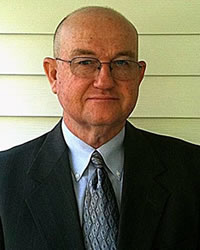
Gary Shepard

In Search of the Lost Sheep

Matthew 15:21-28
Gary Shepard April, 7 2013 Audio
0 Comments

Sermon Transcript

Auto-generated transcript • May contain errors

100%
Open your Bibles today to Matthew
chapter 15. Matthew 15, and I'll begin reading
in verse 21. Then Jesus went thence and departed
into the coast of Tyre and Sidon. And behold, a woman of Canaan
came out of the same coast and cried unto him, saying, Have
mercy on me, O Lord, thou Son of David! My daughter is grievously
vexed with the devil. But he answered her not a word. And his disciples came and besought
him, saying, Send her away, For she crieth after us. But he answered
and said, I am not sent, but unto the lost sheep of the house
of Israel. Then came she and worshipped
him, saying, Lord, help me. But he answered and said, It
is not me to take the children's bread and to cast it to dogs. And she said, Truth, Lord, yet
the dogs eat of the crumbs which fall from their master's table. Then Jesus answered and said
unto her, O woman, great is thy faith. Be it unto thee even as
thou wilt. And her daughter was made whole
from that very hour. Now, I'm sure that I'm thought
a fool by a lot of people. I sometimes think myself a fool,
my own self. But if I'm such, I hope that
it might be, as Paul said, a fool for Christ's sake. And I do believe
that here in this world, I'm not on a fool's errand. I'm in search of lost sheep. I'm under command to, in every
place, as God gives opportunity, to preach the gospel to every
creature. I also go with a promise that
His Word will not return unto him void, but will accomplish
that purpose whereunto He sends it. And that purpose is to call
out and to bring good news to His sheep. I'm in search of the
Lord's sheep. And I know of no other name or
no other picture in all of Scripture that sets forth the relationship
between Christ and His people as this. Christ is the Shepherd. and his people are the sheep. But in their natural stage, they
are lost sheep. And I know that all people, every
single one of us, as we are in Adam, as we are in our natural
birth, And as we are by nature, we are in the great sense lost. But not all people are sheep. Christ himself divided everyone
in the world into two groups, the sheep and the goats. And men may make fun of such
a notion or such an idea in our very liberal day in which we
live, but it won't change anything. Won't change one thing. And if you look over, hold your
place here and turn over to Matthew chapter 25 and listen to it. Matthew 25 and verse 31, he says,
"...when the Son of Man shall come in His glory, and all the
holy angels with Him, then shall He sit upon the throne of His
glory. And before Him shall be gathered
all nations, And he shall separate them one from another, as a shepherd
divideth his sheep from the goats. And he shall set the sheep on
his right hand, but the goats on the left." Then shall the
king say unto them on his right hand, Come, ye blessed of my
Father, inherit the kingdom prepared for you from the foundation of
the world." But look down in verse 41. Then shall he say also unto them
on the left hand, Depart from me ye cursed into everlasting
fire, prepared for the devil and his angels." When our Lord
speaks of these lost sheep, And as he says here, these lost sheep
of the house of Israel, he cannot be talking about the Jews in
general. He cannot be talking about these
Pharisees and scribes that rejected him because he said of them in
John 10, You believe not, because you are not of my sheep." You
see, this term, the lost sheep, or the lost sheep of the house
of Israel, belongs to God's elect, God's spiritual people in every
age. As a matter of fact, Paul faced
in his day the comments of men that what he preached was mostly
rejected by the Jews. It was for the most part rejected
by national Israel. But he says in Romans 9 that
it is not as though the Word of God hath taken none effect. It wasn't that the gospel had
failed. He says, for they are not all
Israel which are of Israel. Neither because they are the
seed of Abraham are they all children, but in Isaac shall
thy seed be called. That is, they which are the children
of the flesh, these are not the children of God, but the children
of the promise are counted for the seed." They are said to be
a flock. They are spoken of as that one
flock. Out of every tribe and kindred
and people, they are the objects of His everlasting love, of His
covenant choice, of His great salvation. when you see them
all in that vision in Revelation 5. It says, "...they sung a new
song, saying, Thou art worthy to take the book and to open
the seals thereof, for Thou was slain and has redeemed us to
God by Thy blood, out of every kindred and tongue and people
and nations." You see, God had long before that time, or even
this time in our text, He had used this same language in speaking
of His people. By the prophet Ezekiel, he says,
Thus shall they know that I, the Lord their God, am with them,
and that they, even the house of Israel, are my people, saith
the Lord God. And ye my flock, the flock of
my pasture, are men, and I am your God, saith the Lord God."
They are his flock, his sheep. The psalmist saying, I have gone
astray like a lost sheep. Seek thy servant. And then they confess in the
writing of Isaiah in chapter 53, they confess this, "...all
we, like sheep, have gone astray, we have turned every one to his
own way, and the Lord hath laid on him," that is, on Christ,
"...imputed to him, the iniquity of us all. And then he says this
by the prophet Jeremiah, he says, my people have been lost sheep. Their shepherds have caused them
to go astray. They have turned them away on
the mountains. They have gone from mountain
to hill. They have forgotten their resting
place. And then in this same gospel
in chapter 18, listen to what our Lord says here. He says,
"...for the Son of Man is come to save that which was lost."
As a matter of fact, what you find in this book, is that these
are the only ones who are saved or who are said that will be
saved, the lost, these lost sheep. And he follows that immediately.
He says, "...how think ye, if a man have a hundred sheep, and
one of them be gone astray, doth he not leave the ninety and nine,
and goeth into the mountains, and seeketh that which is gone
astray?" And if so be that he find it, verily I say unto you,
he rejoices more of that sheep than of the ninety and nine which
went not astray. Even so, it is not the will of
your Father which is in heaven that one of these little ones
should perish. And then he says this also in
Luke's Gospel. He says, "...what man of you,
having an hundred sheep, if he lose one of them, doth not leave
the ninety and nine in the wilderness, and go after that which is lost,
until he finds it?" And so our Lord says here in
Matthew 15, He says, I am not sent but or except to the lost
sheep of the house of Israel. In other words, Christ is sent
to and He is sent for these lost sheep. They were given to Him
by the Father in that everlasting covenant, and so He calls them. If you notice, He calls them,
My sheep. They're My sheep. And they have
been entrusted to His care like natural sheep would be to the
shepherd, and He has come to seek them, to redeem them, to
preserve them, and to provide for them. He says, I'm sent to
the lost sheep. And he does not say that. His
words are not so as to exclude, but they are rather to draw out
these sheep. Because if he does not succeed,
then he cannot be the true shepherd. He is called the good shepherd,
the great shepherd, and the chief shepherd. And they are described,
every one of them, as being lost. So the shepherd, if they be saved,
he must seek them and he must bring them. Because the Bible
says of them and every other person, that there is none that
seeketh after God. And yet he says to these people,
he says, in one day, in this day, he says, "'Of the sheep
have I that are not of this foal, them also I must bring.'" I must
bring. You see, we have to stop and
think about it. Because it is often set forth
in our day in religion and in natural thinking just the opposite. We have to stop and think, who
is the Savior? In other words, who must save
who? Because that is the picture that
is set here in this text and everywhere in Scripture. And
what we need to find out is what is required for Him to do this. Well, the very first thing the
Bible says about this. The greatest thing that it says
about this very matter is that He, in order to save them, He
must give His life for them. Nothing less than that will ever
accomplish their salvation. As a matter of fact, in John
10, two times he expressly states this fact. He says, I am the
good shepherd. The good shepherd gives his life
for the sheep. And then as if they might not
have heard that, or we might not understand it in some way,
he says just a few verses later, "'I am the good shepherd, and
know my sheep, and am known of mine, as the Father knoweth me,
even so know I the Father, and I lay down my life for the sheep.'" In other words, he must give
his life as a ransom price for their redemption. He has to give
his life in order to pay the debt of their sin. In other words,
the chief thing that the shepherd must do in order to save the
sheep is to die for the sheep. He must as the surety stand in
their place. He has from old eternity guaranteed
to pay and to do everything that's necessary in order to save them. And since the wages of sin is
death, Since that is the price necessary to save them and to
release them, then that is what he has to do. He has to give
his life. He has to lay down his life before
the law and the justice of God in their place. In other words,
if he is accounted for what they are as sinners, the sinner, the
one who sins, shall surely die, and that's an unchanging principle
with God. He said, I laid down my life
for the sheep. No man takes my life from me. I willingly, I freely, I lovingly
lay down my life for the sheep, and in doing so, he must satisfy
the holy God in their behalf. And He must conquer every enemy
of their soul. He has to establish righteousness
on their behalf. He has to, in doing so, enable
God to be just and justify them. And He, by one sacrifice, must
make them, perfect them forever and ever and ever. He must give them in His death
the gift of righteousness. He must give to these dead sinners,
these lost sheep, that life which is eternal. He must save them
every bit by Himself. And not only must He do this
in laying down His life for them, but He has to seek them. You see, one thing that is clear
as well as the fact that He must lay down His life for them, the
other thing equally clear is that He must seek them. And He's doing so personally
in our text. But even though he does it personally
here, many, many more times, he does so by seeking them out
and finding them with his gospel through those that he sends to
proclaim it. Hold your place and look over
in Matthew chapter 28. Matthew 28. at the last two verses that close
out this gospel account. In verse 19, he gives this divine
commandment and commission. He says, "...Go ye therefore
and teach all nations, baptizing them in the name of the Father,
and of the Son, and of the Holy Ghost, When you read that, can
we not see that preceding this baptizing, there is first a teaching
or a proclamation that is made to these people? He says, "...teaching
them to observe all things whatsoever I have commanded you, and lo,
I am with you always." wherever he sends his gospel, whoever
he sends his gospel by, no matter how weak or ignorant or whatever
they are, that they might be counted fools by men, but he
sends his gospel and he promises his presence with that gospel. Why? Because he is seeking the
sheep. He says, "...and lo, I am with
you always, even unto the end of the world." As it is, even
unto the end of the age. In other words, the shepherd
will, by his presence, attend this message, these messengers
who bear this gospel all the way to the end, and when that
last sheep is called, then will the end be. He said to some in
one place, to you is this word of salvation sent. The name and title of apostle
simply means one who is sent forth. That is sent to take the
gospel of the crucified Christ and by that gospel to seek the
lost sheep. He said, my sheep. hear my voice,
and they follow me." And he not only sends his gospel, he not
only sends his messenger, but he works every detail of his
providence to accomplish this. I remember reading years ago,
and an old preacher said this, he said, That's just simply God
ordering all the affairs of this world. He said, Providence is
the handmaid of salvation. And you and I, we just shake
our heads in this day and time especially that we live. We can't
figure out why this, and why that, and why the other thing,
and why this is getting so bad, and why God's allowing this to
take place. God's not allowing anything. He's working all things together
for the good of His sheep, even before He calls them. even before
they acknowledge Him at all in any sense as God their Savior. He is in all His detail working
to accomplish their being sought and found. When you look in the
Bible, the Scriptures are full of this. He sends a man by the
name of Paul to prison. And he's there in the prison,
which seems to be the end of any possibility of him seeking
the sheep. But the thing is, that's where
one of the sheep is, a runaway slave by the name of Onesimus,
or a Philippian jailer and his household. He shuts him up from
going in another direction later, and another direction, and he
leads him down to this one place, and there is a woman by the name
of Lydia who happens to be in that city selling her goods. He takes Philip from what appeared
to be a great revival, if you would, in one place, and sends
him out by himself to a desert place. Philip didn't even know
what he was doing there. But I'll tell you what he was
doing. He was seeking after the Lord's lost sheep. There was an Ethiopian eunuch
who had been to Jerusalem, who was riding back in his chariot
to Ethiopia, had the Gospel as we find it in Isaiah, in a scroll,
he's reading it. And guess who just happens to
be near." Philip, he joined himself up to the chariot, he asked the
man, do you understand what you're reading? He said, how can I,
except some man showed me. And the scripture says that from
that scripture he preached unto him Jesus. He's one of the sheep. Got to hear the message. And
many times His preachers in all of time have been sent one way
or another to a people to bear this gospel to, but at the same
time, they are everyone being sent to Him. And they're on what
you would call maybe a collision course, because the Lord is going
to get His sheep. And what appears to be very general,
To us it just looks kind of helter-skelter, you know. Here's one, there's
one, there's the other place, and there's the other preacher,
and there's the other group, and all that. They're just small,
they're just not accomplishing much. Oh yes, they are. Because the Lord knows them that
are His. And He sends them to His sheep,
and He sends His sheep to them. Oh, who in the world would establish
a gospel work in Jacksonville, North Carolina? I told somebody
once, nobody's ever just passing through here. If you get here,
you're coming on purpose. And I've seen over the years
where some would be here because the Marine Corps sent them here.
Some would be here because they had a family member stationed
here. Just a host of things, but God is bringing His people
wherever they are to hear this gospel. He is after the lost
sheep. I'm not interested in a ministry
with my name on it. I'm not interested in building
a big congregation. I'm not interested in saving
the world. But I sure am interested in the
lost sheep. And every time I come, I come
this morning, in my heart of hearts, I sat there at home,
I'm thinking, maybe, maybe this is the day that the Lord in His
providence and in His purpose will call one of His lost sheep
unto Himself. I'm not trying to get somebody
to join the church. I'm not trying to get somebody
to be baptized. I'm not trying to get somebody
to give money or any of these things. I'm interested in these
lost sheep coming to know the shepherd. It appears very general,
but it is actually very particular. And He must seek them by sending
His Spirit to give them spiritual life. They have not faith, so
He has to create faith in them. He has to bring them to repentance
and to reveal the truth of the gospel to them and in them, and
to give them a new spiritual birthing from above. And it is
all His work. When you read John 4, There's
a woman there. She's going to be found there
by a well in Samaria. But you know what it says? Here
He is, God, manifest in the flesh. Here He is, the Lord of glory,
King of kings, Creator. But it says, He must needs go
through Samaria. Was somebody making Him? No. He's constrained by His own purpose. He's constrained by His own pledge
and promise. He's constrained by everlasting
love toward these sinners who will be found there. There's
a lost sheep that will be there, a woman that He's to meet at
a well. Another place, he went into the
city of Jericho, which was described as the cursed city. Why? Because
there's one that lost sheep there by the name of Zacchaeus. And
here's this little fellow. He just gets up in a tree. He's
moved by curiosity. Curiosity. Climbs up in a tree. He's a man of small stature.
He climbs up in a tree so he can get a glimpse of this fellow
he's been hearing about. Jesus of Nazareth. And the Lord
Jesus walks down that road and He stops dead still under that
tree. I'm going to tell you something.
If you're one of His sheep, He knows what tree you're hiding
into. That's the glory of our Shepherd. He goes where we are
in our desperate, blind, dead state. But he stopped right under
that tree, and not only that, he called him by his name. He
didn't give some kind of a general invitation. He said, Zacchaeus,
make haste and come down, for today I must abide at thy house. Well, what if Zacchaeus doesn't
want to? I'll tell you this, the wont
of Christ to save him far exceeds and excels his wont not to be
saved. He has the promise of the Father,
thy people shall be willing in the day of thy power. And it
says, "...and he made haste, and he came down and received
Him joyfully." I'm not wanting anybody to do anything against
their will, because I know when Christ meets them, He'll make
them willingly, He'll open their eyes to see the beauty of the
King, He'll break their hearts and humble them, He'll give them
faith to believe, and they will receive Him joyfully. And when they saw it, all these
religious people, when they saw it, they all murmured, saying
that He was gone to be guests with a man that is a sinner. Hallelujah! And he said, this
day is salvation come to this house forasmuch as he also is
a son of Abraham. For the Son of Man is come to
seek and to save that which was lost." He's a lost sheep. And when you look at this case
that's before us, this woman here in Matthew chapter 15, Here
he is, and before him is a Canaanite woman, a Gentile, a woman who
these Jews must surely have thought, she's going to hell. Isn't it
amazing how self-righteous religionists can put somebody in hell as if
they have the power to do so? I know old so-and-so, he's going
to hell. I know this one, they've done
this, I know they're going to hell. I'm sure that guy hanging
up there on that cross, being a criminal and everything, that's
talking to this man on the middle cross now, I'm sure he's going
to hell. Oh no, he's not, because he's
one of the sheep. You say, well he deserves to.
That doesn't have anything to do with him. Because God looking
at him in Christ, putting him in Christ, joining him with Christ,
made him a righteous deserver of heaven. She is the object
of God's sovereign grace and favor and mercy. Here is this
woman on this occasion that we don't even Find Him giving us
Her name. And yet He knew her. He loved
her with an everlasting love. She was one of His bride. He's
a shepherd. He's the lost sheep. You can't
stop Him. Thank God you can't stop Him. If He comes seeking you, He'll
find you. He'll seek you till He finds
you. He has to run you down to you
so weary you can't crawl an inch. Here she is before Him and He's
just said to her, I'm not sent but to the lost sheep of the
house of Israel. Well, she's not a Jew. She's
not an Israelite. I'm sure she would just turn
and leave on that. Well, if He's so nationalistic,
I just don't believe I'll have any interest in Him. No, she
will not be turned away. She will not speak as one who
deserves anything, and she'll take her place at His feet as
one in need of mercy. She acknowledges His Lordship. She says, O Lord. She confesses
Him to be the Messiah. He says, Thou Son of David. She
begs Him for mercy. She says, Have mercy on me, Lord,
help me. And she agrees with His sovereign
right to give it or to withhold it. His words will not drive
her away because it was His seeking Spirit that brought her to Christ. Christ's words will never drive
the sheep away, but it will often send the goats to blatin' and
kickin' and runnin' away." You see, God is not trying to sugarcoat
this thing. Paul said, the gospel we preach
is a savor. It's a certain fragrance. He said, it is a savor of death
unto death. But to others, it's a savor of
life unto life. He said it's a savor of death
unto death to those that are perishing. But to those that
are being saved, it's a savor of life unto life. To the sheep,
it's a fragrance of life. There are some smells that are
just naturally repulsive. But if you put a loaf of yeast
bread in the oven, and I'm anywhere nearby, you're going to have
my attention. If there's anything that smells
better than that on earth, I don't hardly know what it is. Just
baking bread. I tell you, that's a smell that's
well-received by the hungry. But if you're full, any smell
of food is not for you. But you know what Paul said?
He says, that the preaching of the gospel goes up to God in
those that are being saved and in those that are perishing as
a sweet savor, and He makes us to triumph in every place. Peter says to the believers he
wrote to, he says, for you were as sheep going astray, but are
now returned. You didn't just return, you are
returned unto the shepherd and bishop of your souls. You see, this woman will not
leave because she's one of those sheep. And Christ had already
said, my sheep, hear my voice, and they follow me. And if you
notice this, it says, she worshipped Him saying, Lord, help me. The word that's translated there
in the Greek has some kind of strange meanings to us. It means to kiss, like a dog
licking his master's hand. It means to fawn or to crouch
to. It means to prostrate oneself
in homage, to do reverence to, to adore. It means to say what
He says. In other words, when our Lord
begins to talk to her, He talks down to her as if she was a dog. Lord, help me," she says. Old
Bradbury said, in these three words, she confessed, Lord, I
am a lost sheep, a wandering sheep, a silly sheep, a miserable
sheep. I'm one of the very characters
Thou hast described. Have mercy on me. And it's real
grace. when God brings a sinner to bow
down before Him and to say of all that God has said of them,
that's right. She's saying, I'm a lost sheep.
I'm like a lost sheep falling into a pit, entangled in the
briar, caught in a snare, and in such a condition that I cannot
save myself or rescue myself. And if you don't save me and
deliver me, I'll perish." What's going to happen to you? God doesn't
save you, you'll perish. All we have to do to perish eternally
is keep doing what we are doing. Following that way that seems
right to us, that He says is a way of death. And if God does
not intercept us, If He does not interfere with our lives
and our plans, we'll perish. We'll perish. And this is the
place that the Spirit of God brings every sinner that's saved. He humbles us and makes us to
feel our need and our lostness and our depravity. And though
we cannot entertain any notion of being a part of this house
of Israel, Yet we cannot help but believe that when He speaks
of lost sheep, He is talking to us and about us. Lost sheep. The sheep are brought
to an end of themselves. And all their imagined righteousnesses
and goodness are made to feel like the filthy, dirty rags that
they are. And He brings us by His Spirit
to repentance, and we repent of all those false notions about
God, and all our efforts, whether they're moral or religious, to
please God. Lord, help me. Help me. But wait a minute. What does Christ say next? He
said, it's not meat to take the children's bread and to cast
it to the dogs. Surely, surely she'll be repulsed
by such language. You know she will. I mean, the
human heart just cannot stand. It's so proud and so arrogant
and so self-righteous. Surely, she's going to Just turn
her face and go, huh! Will she be offended at what
Christ says that she is? Not if she's one of the lost
sheep. Oh, she may be at the first, but the truth of God's
Spirit will speak to her heart and she'll have that witness
in her that that is exactly the truth. What do you say? And we're not what we think we
are or what others say we are, but we are what God says that
we are. And this is the only way that
we ever find out what we are. What does she say? Truth, Lord. Truth, Lord. Whatever God says
about me in His Word, it's true. You see, the lost sheep are brought,
and they take sides with God against themselves. When David
sent and fetched old Mephibosheth from the land of Lodabar, the
land of no pastor, he brought him to his own palace, set him
at his own table. It says that Mephibosheth bowed
himself and said, What is thy servant that thou shouldest look
upon such a dead dog as I am? Here's this woman, and the Spirit
of God had so worked in her heart that she would not be turned
away from the only One who could help her by anything or anyone. Why do we preach what Paul called
the offense of the cross? Somebody sent me an article of
a preacher who was involved in a discussion or debate as to
whether or not the Bible actually condemn such immorality as homosexuality
and such. And this preacher said that if
Jesus were here today, he would change his views on that. Now
what kind of an idiot sets himself above the Lord of glory, the
Word of God, and in his blind arrogance says, If the Son of
God was here, He'd change His views on that. No, He's the same
yesterday, today, and forever. And He is the God with whom we'll
all have to do. He changes not. Why do we preach the hard things
that the Scriptures say of man? The gospel which gives all the
glory to God, and the message which is so offensive to the
natural man, because it's the Word He sent, because it's the
message that alone can save, and because it's the only one
His sheep will hear and believe. I don't want to hurt anybody's
feelings. I don't want to say anything
that's not true about you. But this is the only message
that God has given that He will use to call out His sheep. He said, it's not meat to give
the children's bread to dogs. She said, truth Lord, yet the
dogs eat the crumbs which fall from their master's table. I
don't deserve anything but just a few crumbs, if you would be
so pleased to let a few crumbs fall from your table. I can tell
you this, a few crumbs from the Master's table beats anything
and everything this world has to offer. But the truth is, God
doesn't give His people, He doesn't give His sheep a few crumbs. He does like old Mephibosheth
was done. He brings them to His banqueting
table. He treats them as His sons. He
makes them heirs of all things. What she's saying is, Lord, I'm
a dog in my polluted nature, and I deserve to be labeled as
such and called such, but if only I can be Your dog. You see, a starving man doesn't
mind being called a dog if he can just be fed. A man dying
of thirst on a desert, somebody walks up to him and said, this
water bottle here is for dogs. I'll take some of that. We hear
Christ say we're sinners, but we also hear Him say that He
came into the world to save sinners. We hear Christ charge us with
being ungodly, but we also hear Him say that He died for the
ungodly. We hear Christ say that we're
lost, but we also hear Him say that He came to seek and save
that which was lost. What's He going to say now? He's
going to say the only thing the shepherd can say to one of His
sheep. One that He knew was His sheep, and one now who has just,
by His grace, demonstrated the characteristics of His sheep.
He says, O woman, great is thy faith. Be it unto thee even as
thou wilt." And her daughter was made whole from that very
hour. Now, her daughter's deliverance
is the secondary miracle here. The real story is Christ seeking
and saving this lost sheep. He said, O woman, great is thy
faith, because the faith that God had given her as a gift The
faith of God's elect brings them to bow down and believe on and
seek everything from the Lord Jesus Christ. Are you one of
these lost sheep? If the Spirit of God brings you
to bow and to beg at the feet of Christ, the one who is revealed
in this gospel, and made you look to Him in your heart, and
to Him alone, to plead His death, to plead His righteousness, and
to follow the Shepherd. You can say with old David, David
had a lot of problems, but he begins that 23rd Psalm by saying,
The Lord is my Shepherd, I shall not want. I'll never be in need
of righteousness, of salvation, of heaven, of reconciliation,
of peace. I shall not want, because He
is my shepherd. That's who I'm looking for. I'm looking for a lost sheep.
What was it old Newton said? I once was lost, but now am found."
What amazing grace. Father, we pray this day that
You would enable all who hear, all Your sheep, to hear Your
voice and Your Word. which is a declaration of what
you have done in Jesus Christ our Lord. May they look to you,
trust you alone, forsake every other hope, and follow you. We know that you are the real
seeker. And may it have pleased you this
day, through this word, to seek out one of your sheep. That would
mean that all the glory would have to be to you alone. We thank you and we give praise
to your worthy name. Amen.
Gary Shepard
About Gary Shepard
Gary Shepard is teacher and pastor of Sovereign Grace Baptist Church in Jacksonville, North Carolina.

Comments

0 / 2000 characters
Comments are moderated before appearing.

Be the first to comment!

Joshua

Joshua

Shall we play a game? Ask me about articles, sermons, or theology from our library. I can also help you navigate the site.