Bootstrap
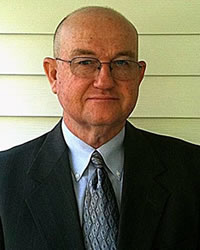
Gary Shepard

Is Your Jesus...the Christ

Acts 17:2-6
Gary Shepard February, 24 2013 Audio
0 Comments
Gary Shepard
Gary Shepard February, 24 2013

Sermon Transcript

Auto-generated transcript • May contain errors

100%
Turn with me, if you would, in
your Bibles to the book of Acts this morning. The book of Acts,
meaning the Acts of the Apostles. Chapter 17, Acts 17, and I'll begin reading
at the second verse. And Paul, Paul being an apostle,
being that one who was born Saul of Tarsus, and by nature the
very enemy of God and most especially of the Lord Jesus, being saved
by God's grace and appointed to this task and role as an apostle. That means one who is sent forth
of God. And Paul, as his manner was,
went in unto them, and three Sabbath days reasoned with them
out of the Scriptures, opening and alleging that Christ must
needs have suffered and risen again from the dead, and that
this Jesus, whom I preach unto you is Christ. And some of them believed, and
consorted with Paul and Silas, and of the devout Greeks a great
multitude, and of the chief women not a few. But the Jews which
believed not, moved with envy, took unto them certain lewd fellows
of the baser sort, and gathered a company, and set all the city
on an uproar, and assaulted the house of Jason, and sought to
bring them out to the people. And when they found them not,
they drew Jason and certain brethren unto the rulers of the city,
crying, These that have turned the world upside down are come
hither also." Now, the title of my message this morning is
simply a question. Is your Jesus the Christ? I hear a lot of folks using the
name of Jesus They put it on their bumper stickers, they wear
it on their pins, they have it very casually upon their lips. But is your Jesus the Christ? The Spirit of God tells us that
this man Paul is a pattern. He is a pattern of a sinner saved
by God's grace, but he is also a pattern of a preacher and preaching. Some mistakenly have called Mr. Spurgeon the Prince of Preachers. When in truth, the word prince
and the word preacher in the Bible sense, they are not really
to be used together. The true preacher is a servant. And if you are going to use this
word, I suppose, You'd almost, next to Christ Himself, have
to apply it to this man, Paul. He is a preacher. He is led by the Spirit of God. But he might not have been the
preacher that we would naturally think him to be. Hold your place
here and turn to 1 Corinthians. 1 Corinthians. And look down in the first chapter
to what he says to the church at Corinth. 1 Corinthians 1 and
verse 17. He says, "...for Christ sent
me not to baptize, but to preach the gospel, not with wisdom of
words." lest the cross of Christ should be made of none effect,
not with wisdom of word, not with words and eloquence that
would draw the thoughts of his hearers to the way he was speaking,
but rather with the Word of Christ, lest the cross of Christ, lest
this preaching of the cross should be made of none effect." But
look also in the second chapter where he expresses this even
more fully. He says, "...and I, brethren,
when I came to you, came not with excellency of speech or
of wisdom, declaring unto you the testimony of God. For I determined not to know
anything among you save Jesus Christ and Him crucified." And
I was with you in weakness, and in fear, and in much trembling. And my speech and my preaching
was not with enticing words of man's wisdom, but in demonstration
of the Spirit and of power, that your faith should not stand in
the wisdom of men, but in the power of God." And then, let
me read this to you in Galatians chapter 4. Paul writing to the
churches in Galatia. He says in verse 13 of Galatians
4, you know how through infirmity of the flesh, weakness of the
flesh, I preach the gospel unto you at the first. and my temptation
which was in my flesh." Now, some believe that Paul had some
sort of an eye disorder, wherein when you looked at him, he appeared
as disfigured or something. And this may be true in light
of what is said here. And my temptation, which was
in my flesh, you despised not, nor rejected, but received me
as an angel of God, even as Christ Jesus. Where is then the blessedness
you spake of?" They're now being tried. They're now being brought
under the influence of those who are mixing law and grace. men who claim to be greater preachers
than Paul. He said, now, where is that blessedness
that you first spoke of? For I bear you record that if
it had been possible, you would have plucked out your own eyes
and have given them to me. Am I therefore become your enemy
because I tell you the truth. Without fanfare, without wisdom
of words, without oratory, without excellent gesture or story, He
preached unto them the gospel. And what we find is an instance
of that in Acts 17, and his preaching is characterized by several things. The very first being this, his
appeal was to nothing and to no one but the Scriptures. He did not go back to an old
writer, He did not go back to an old creed or confession. His one basis of authority and
appeal was the Scriptures. Listen to what he writes to the
Corinthians. He said, "...for I delivered
unto you first of all that which I also received." how that Christ
died for our sins according to the Scriptures, and that He was
buried, and that He rose again the third day according to the
Scriptures. In other words, the only basis
upon which we are to reason, the only thing that we are to
believe, is the Scriptures. And so, the very first thing
that God seems to do when He saves His people is He convinces
them that the Bible is the only standard of His truth, that the
Bible does not simply contain His Word, but the Bible is the
Word of God. Not what you say. It's not what
I say. It's what God says. And it is
by the Scriptures that He distinguishes His Son. It's by His Word that
He sets forth the message of the Gospel. And the Jews, in
contrast to that, they appeal to natural reasoning. They appealed to their traditions,
they appealed to the flesh of men, which denied that Jesus
could be the Christ for the very reason that He suffered and died. They looked for an earthly king. They looked for someone to help
them in their flesh. relieve them of that Roman bondage
and such. And that is the same in our day,
and that's why men and women, they love what I call the health
and the wealth and prosperity gospel. They love a word that
makes them feel good in the flesh. It doesn't matter if it's really
true or not. And Luke records here the way
and manner of Paul's preaching. It says that he reasoned with
them. In other words, he proved their
arguments wrong from the Old Testament Scriptures which they
claimed, by the way, to believe. And then he tells us that he
opened the Scriptures, that is, he explained the Scriptures,
and reminded them, and showed them how that they spoke about
the Lord Jesus. And then it says, he alleged,
or he put alongside, he proved from various passages in Isaiah
and Daniel and the Psalms, that what happened to the Lord Jesus,
what happened to Jesus of Nazareth, was just what these Scriptures
were talking about. In other words, he took all of
those Old Testament prophecies which amounted to something like
a Cinderella slipper, and showed how that they all fitted and
would fit no other one but the Lord Jesus Himself. And the central thing, Luke says,
of his preaching, was Jesus as the Christ. Jesus as the Christ. You see, the word or the name
or the title of Christ, which is Christos in the Greek, means
simply the anointed. And it is essentially the same
thing, has the same meaning as the word Messiah in the Old Testament. It means the promised one, or
God's anointed one. So the Apostle Paul, in his preaching,
set forth as central to what he had to say to men this fact,
this message, that Jesus is the Christ. He writes to the Corinthians
again. He says, but we preach Christ
crucified. unto the Jews a stumbling block,
and unto the Greeks foolishness. But we preach Christ crucified."
And then he says to them again, writing in 2 Corinthians, he
says, "...for we preach not ourselves, but Christ Jesus the Lord, and
ourselves your servants, for Jesus' sake." If you remember
in our reading, when Jesus asked those disciples who that they
said that He was, after finding out that men were saying, some
said He's Isaiah, some said He's John the Baptist, some said He's
Jeremiah. But He said, who do you say that
I am? And then Peter. according to
what Christ said, being blessed of God. He said, Thou art the
Christ, the Son of the living God. If you remember, they asked
John the Baptist, Are you the Christ? And the priest even asked
Jesus Himself, Are you the Christ? Because being the Christ meant
more than just having a title. It had so many things, so many
prophecies, so many promises bound up in this One who is the
Messiah, who is the Christ of God. In John chapter 1, it says,
"...one of the two which heard John speak, and followed him
was Andrew, Simon Peter's brother. What does it say of him? He first
findeth his own brother Simon, and saith unto him, We have found
the Messiah, which is being interpreted the Christ. He said, We found
the Christ. I know in reality it was the
Christ that had found them. But they said, we found the Messiah
which being interpreted is the Christ. And when that woman at
the well, you remember her when the Lord Jesus came to the well
where she was at. And he began to make known himself
to her, reveal himself to her for who he really was. It says
that she came to the men of the city and said, Come see a man
which told me all things that ever I did. Is not this the Christ? He had to be the omniscient one. He knew everything about her
down to the finest and most sorted details. She said, come see a
man who told me everything that ever I did. Is not this the Christ? Then when the men of the city
came out there, it says in that same chapter, that many more
believed because of His own Word. They not only believed her, but
they believed Him because of His Word. And they said to the
woman, Now we believe not because of thy saying, for we have heard
Him ourselves, and know that this is indeed the Christ. the Savior of the world. When we read in John's Gospel
again in chapter 10, it says that the Jews came round about
him and said unto him, How long will you make us doubt? If thou
be the Christ, tell us plainly. And Jesus answered them, I told
you, and you believe not the works that I do in my Father's
name. They bear witness of me, but
you believe not, because you are not of my sheep, as I said
unto you." He says, my sheep hear my voice. My sheep will
know that I'm the Shepherd, my sheep will know that I'm the
Christ, but you don't believe me, you don't believe the witnesses
before you, you don't believe the works and the miracles, because
you're not of my sheep." And then Mary and Martha, if you
remember them, Martha, who was always cumbered with so much
serving. But it says in John 11 that Jesus
said unto her, I am the resurrection and the life. He that believeth
in me, though he were dead, yet shall he live. And whosoever
liveth and believeth in me shall never die. Believest thou this? She said unto him, Yes, Lord. I believe that thou art the Christ,
the Son of God, which should come into the world." It doesn't
say just born into the world. She said that should come into
the world. And then, of course, in John
chapter 20 where we read about that man that we've so flippantly
named Doubting Thomas, And it says that Jesus saith unto him,
Thomas, because thou hast seen me, thou hast believed. But blessed
are they that have not seen, and yet have believed. And many
other signs truly did Jesus in the presence of His disciples,
which are not written in this book. But these are written that
you might believe that Jesus is the Christ, the Son of God. and that believing you might
have life through His name. But Paul did not simply, though
it was a fact, though it was an unchangeable truth, he did
not simply go around saying, Jesus is the Christ, Jesus is
the Christ. If you look back at our text
here in Acts chapter 17, it shows us that his emphasis was in that
third verse that Christ must needs have suffered and risen
again from the dead. He said, this Jesus whom I preach
unto you is Christ. And the thing that distinguishes
him as the Christ is the fact that all of Scripture said that
the Christ must suffer and die and then raise from the dead
the third day. In other words, he did not simply
preach, as is said, the person of Christ. But rather, he joined
with that person those facts, those things, those descriptions
that distinguish him from Antichrist, from what Paul called another
Jesus. Because he said, the Christ must
suffer and die and rise again from the dead. A little later
in this same chapter, the apostle is preaching, and then in the
midst of his preaching, or as a foundation for his preaching,
he says, thus it is written. What's he talking about? He's
talking about those Old Testament Scriptures. And he says, thus
it is written, and therefore thus it behooved Christ to suffer
and to rise again from the dead. To suffer peculiar, particular
sufferings, and to die a real and genuine death, and to be
raised from that dead showing something, demonstrating something. Why is it that the Christ had
to suffer? In one place He says Himself
that the Christ should suffer and then enter into His glory. It isn't simply that He suffered,
it isn't simply that He died. But what did he actually accomplish
so that he could therefore enter into a particular and peculiar
glory that the Father had given him as the Redeemer and Mediator
and Savior of his people before the world began? Well, he must
needs have suffered for us, because He could not in any other way
have purchased redemption for us. And He also had to rise again
from the dead because He could not in any other way apply that
redemption to us. You see, the Lord Jesus Christ
was something unique and special and designed and purposed by
God to His people before the world began. And He was also
those same things to those people when He came into this world
as the Christ and suffered them and died on that cross. But he
also has a purpose and a role and a work as the risen Christ
ascended on high and seated at the right hand of the majesty
on high to intercede on the behalf of his people. You see, his success
And that's what always distinguishes the suffering of the Christ from
every other sufferer and from every antichrist. The suffering
of the true Christ is always distinguished by the success
of His suffering. Now, you and I, We don't think
of suffering in any way as accomplishing anything. Matter of fact, we
groan and gripe and whatever it is we do, under the hand of
it. But the measure of what was accomplished
by the Lord Jesus Christ in His suffering and death was a work
that He was appointed to accomplish by God as the Christ. What was that? In short, it was
to save His people from their sins. The Christ would come as
the one anointed and appointed of God on the behalf of His people,
and He would come in human flesh, perfect human flesh, and He would
accomplish everything that was necessary to actually save them. Save them. And the success of
His suffering. The success of that mission,
as he's come into the world as the Christ, his success is witnessed
in the fact that God raised him from the dead. Had he not raised
from the dead, Had He not been seated at the right hand of the
Majesty on high as the risen Savior, then that would be the
clearest evidence that whatever He came into this world to do,
whatever He went to that cross to do, He failed in it. God did not accept it, but when
He was raised from the dead. Just like when that priest who
went into the holy place to offer up that sacrifice of blood, he
could go in there with that appointed sacrifice, with that appointed
blood, and sprinkle it on the mercy seat. He'd go there on
the behalf of the people representing them before God with this sacrifice. How did they know if God had
accepted it? How did they know if God approved
of it? How did they know if He made
reconciliation? How did they know if God accepted
the atoning work? By virtue of the fact, if the
priest came out alive, God accepted it. And so it says that God not
only accepted him and his sacrifice, but that He highly exalted him. He highly exalted Him and gave
Him a name that's above every name. And so wherever you go
in this book, Old Testament or New Testament, what you find
is that the suffering of Jesus Christ is that which is pictured
and clearly stated and emphasized and proven and prophesied and
shown to us in types and pictures, Repeatedly, again and again,
that's the message of this book. He didn't simply say, well I
just preach Jesus, although he did, and although he says it
often times, but he says that I preach Christ and Him crucified. Now what does that mean? I'll
tell you one thing it means. If the Christ had to come into
this world, and die the death of the cross in order to save
us from our sins, how awful sin must be to God. How awful we
must be in ourselves as sinners. If the Christ, the anointed of
God, had to go in our place and die as our substitute what absolutely
helpless, awful sinners we must be. They said, we don't want
to hear about a Christ like this. Tell us about one who will take
over the authority from the Roman government. Tell us about a Christ
that'll come along into this world and we'll be special because
we follow along after Him. He'll be our King and He'll conquer
all our enemies. He'll give us plenty to eat and
plenty to drink and we'll live in comfort and ease the rest
of our days. But here's the Christ and He
came to die. And you can read in Psalm 22
vivid descriptions of the sufferings of the Lord Jesus, the sufferings
of the Christ. But when you get down to the
end of that chapter, it says something about the result or
the consequences of His suffering. It says, "...a seed shall serve
Him, and it shall be accounted to the Lord for a generation. They shall come and shall declare
His righteousness unto a people that shall be born, that He hath
done this." He said there's going to be a people that will serve
Him. There will be those who will
be sent out and they'll declare His righteousness. That's what
the gospel is called. The gospel wherein the righteousness
of God is revealed. They'll declare His righteousness
unto a people that shall be born. And they will declare that He
has done this. He has done this. You see, the gospel of Christ
is about what He has done. Listen to what Daniel said in
his prophecy. Seventy weeks are determined
upon thy people and upon thy holy city to finish the transgression,
and to make an end of sins, and to make reconciliation for iniquity,
and to bring in everlasting righteousness, and to seal up the vision and
prophecy, and to anoint the Most Holy." And after three score
and two weeks, that's a definite, time period that's used to describe
another definite time period. "...shall Messiah, the Christ,
be cut off, but not for Himself, and the people of the prince
shall come and shall destroy the city and the sanctuary, and
the end thereof shall be with a flood, and unto the end of
the war desolations are determined." What's going to happen to Messiah?
How is he going to bring in this everlasting righteousness? He'll
be cut off. He'll die. He'll be cut off,
but not for his sin. He has none. Not for his self,
not because of any wrong he's done or anything about him that's
unholy or impure, but for the people. His cutting off will
accomplish all these things. And when the apostle comes in
Hebrews 9, he states the same thing. He says, "...for Christ
is not entered into the holy places made with hands, which
are the figures of the true, but into heaven itself, now to
appear in the presence of God for us, nor yet that he should
offer himself often as the high priest enters into the holy place
every year with blood of others. For then must he often have suffered
since the foundation of the world, but now once in the end of the
world hath he appeared to put away sin by the sacrifice of
himself." How? By his death, by his suffering. You see, the real issue is not
what Jesus can or will do for you. That's what I hear all the
time. If you'll do this, Jesus will
do this for you. That's not the issue at all.
The real issue and the thing that true faith looks to is what
Jesus Christ has already done for you. Turn back over to Luke's
Gospel. Luke chapter 24. You see, the
things that are cleared up in the Gospel, the things that are
set forth, is first of all, who it is that suffers, and then
secondly, who it is that he suffers for, and then why it is that
he suffers, and what his suffering actually accomplishes. Luke 24. In verse 25, it says, "...then
He," that is, Jesus of Nazareth, "...said unto them, O fools and
slow of heart, to believe all that the prophets have spoken,
Ought not Christ to have suffered these things and to enter into
His glory? And beginning at Moses and all
the prophets, He expounded unto them in all the Scriptures the
things concerning Himself." Look on down in verse 32. And they
said one to another, did not our heart burn within us while
He talked with us by the way, and while He opened to us the
Scriptures? They'd just been walking along,
crying, moaning, fretting over the fact that this Jesus that
they had such high hopes in, hopes that He was the Messiah,
He'd just been taken and crucified. And when He came to them on that
road, they didn't even know who He was. But they said, here,
did not our hearts burn within us while He talked with us by
the way, and while He opened to us the Scriptures? Look down in verse 44. And he
said unto them, These are the words which I spake unto you
while I was yet with you, that all things must be fulfilled
which were written in the law of Moses, and in the prophets,
and in the Psalms concerning me." Then opened he their understanding,
that they might understand the Scriptures, and said unto them,
Thus it is written, and thus it behooved Christ to suffer
and to rise from the dead the third day." Now listen to the
next verse, "...and that repentance and remission of sins should
be preached in His name among all nations, beginning at Jerusalem."
You see, there is no good news. There is nothing to preach. There
are no glad tidings, which is what the gospel is supposed to
be, unless we talk about how that Jesus of Nazareth, as the
Christ, came into this world, suffered in the place of His
people, died on that cross in the satisfaction of God's justice
against their sins, and then God raised Him from the dead. And it will amaze you how that
this book of life, this book of hope, This book of peace,
this book of joy, this book of righteousness, how the central
message is about the sufferings and the resurrection of the Lord
Jesus Christ. Let me read you some verses.
Peter, for Christ also hath once suffered for sins, The just for
the unjust, that he might bring us to God. That's the reason
he suffered. That's what he accomplished in
his sufferings. Peter says, to bring us to God. And you go back and you read
that first few verses of that first epistle to Peter, you see
who he's writing to. He's writing to those who believe. Again, He says, "...for even
hereunto were ye called, because Christ also suffered for us."
If He didn't suffer for me, if He didn't pay the sin debt that
I owe, then no need to call me, no need to tell me about any
good news. Peter again, "...who his own
self bear our sins in his own body on the tree, that we, being
dead to sins, should live unto righteousness, by whose stripes
you were healed. For as much then as Christ hath
suffered for us in the flesh, Arm yourselves likewise with
the same mind, for that He that suffered in the flesh hath ceased
from sin." What did He do? He suffered for us. Does that
mean He suffered for everybody? No. You see, these words are
written to the believing people of God. And yet at the same time,
we find in these descriptions our own selves, if we be those
sinners He died for. He suffered the just, that's
who He was, or the unjust, that's who I am. Unjust. Unjustifiable by myself. I cannot in any way, justify
anything about me or done by me and expect it to be acceptable
by God. I'm unjust. This is the good
news and a faithful saying that Christ Jesus came into the world
to save sinners. That's what I am. I didn't think
I was. Being raised up in Sunday school,
being told by Mama and Daddy and a whole lot of other folks
what a good boy I was? Had those long lists of Sunday
school pens look like Omar Gaddafi on his best-dressed day? But
I found out I was a sinner. They didn't want to acknowledge
that. But do you know when you Try
to separate yourselves. Take yourself away from that
ground of being a sinner. You take yourself away from the
only ground upon which God has grace and mercy in Christ. You say, well, preacher, I've
not done anything bad in my life. Truth is, you haven't done anything
good. Well, I've done this, and I've done that, and I've done
the other, and I've tried. Try. How does a sinner try to
do that which he knows nothing about? How does he try to please
God who he doesn't have a clue how He is? You see, we don't
really find out who we are. We don't really find out why
the Christ had to suffer to save us until we find out who God
is. And I can tell you by a million
terms in this book, I could say He's holy. I could say He's just. I could say He's a God of wrath
against sin. I could say all these things.
But the only place that you'll ever really find out how He is
and how He looks upon sin is when you see that the sins of
His people being imputed to Him and charged to Him. How does
God deal with Him on that cross? He turns His head from Him. And
the Christ cries out from that cross, My God, My God, why hast
Thou forsaken Me? Because He is of purer eyes than
to behold iniquity. And when sin is laid to His account,
when all the iniquities of God's elect are laid upon Him that
is made to rest on His head, charged to Him, He is made responsible
for them. He says, a Waco sword and smite
the shepherd. He brings death and justice to
the sin bearer. And that's why the Christ is
the Christ only if He suffers. And if He accomplishes by His
suffering the salvation of His people. That's what Isaiah said. He said, Surely he hath borne
our griefs, and carried our sorrows. Yet we did esteem him stricken,
smitten of God, and afflicted. But he was wounded for our transgressions,
he was bruised for our iniquities. The chastisement of our peace
was upon him, and by his stripes we are healed. Somebody said,
well, that means we all can claim a physical healing from it. No. That means that of that dread
and awful disease of Adam's race, which is the leprosy of sin that
blinds us, that kills us, that makes us lame and paralyzed and
helpless to save ourselves. He says, by His stripes we are
healed. Paul writing to the Romans said,
and when we were yet without strength in due time, Christ
died for the ungodly. But God commendeth His love toward
us in that while we were yet sinners, Christ died for us in
our place." Then he says to the Galatians, he gave himself for
our sins that he might deliver us from this present evil world
according to the will of God and our Father. He hath redeemed
us from the curse of the law, being made a curse for us. For
it is written, Cursed is every one that hangeth on the tree."
The Christ bore the curse that was upon all His people. Now there are a lot of folks
who talk about Jesus, but is our Jesus the Christ? There are
a lot of folks, if you'll turn over to John 6, clothes. There were a lot of people who
followed after the Lord Jesus, Jews and otherwise, because of
the miracles He did, because of the food He provided. They
were just happy to have a Jesus who's kind of like a spare tire,
you know, in case you have a flat. He's like a bottle of pop in
case you get thirsty. like a trip to McDonald's if
you get hungry. But when he began to talk to
them about his real purpose of coming, and how he is the Savior,
and the means by which he is appropriated by those that he
saves, he said, except you eat my flesh and drink my blood,
you have no part in me. Wait a minute. They said, how
can this man? Is he teaching cannibalism or
something? How can we eat this man's flesh
and drink his blood?" And so they turned. They said, this
is a hard saying. Who can hear it? But if you look
down in verse 66 of John 6, and it says, from that time, many
of his disciples went back and walked no more with him. They'd
been learners up to this point. And then said Jesus unto the
twelve, will you also go away? And Simon Peter answered Him,
Lord, to whom shall we go? Thou hast the words of eternal
life. And we believe and are sure that
Thou art that Christ, the Christ, the Son of the living God. Is Jesus the Christ? Is our Jesus the Christ? Did He, by His suffering in our
place, in our room instead, in that work that He said, it is
finished, did He bring us to God in what He did? Were we healed spiritually by
what He did? Were we washed clean before God
in the blood He shed. Did He, as a particular person,
die a particular death to save a particular people? Sinners. Ungodly. Unrighteous. That's who the Christ came to
save. And you know what? That's what
the Christ did. That's what He did. That's why
there are good tidings, glad tidings, good news. But it's
always in what He did, not in what I tell you to do. John the
Baptist, he's also a preacher. He was kind of that intermediate
man, that last of the prophets, Old Testament prophets. The Law
and the Prophets were until John. But the thing that really revealed
him as a preacher, as a prophet, as the forerunner of the Christ,
was that when the Christ came, when he came in human flesh,
this man Jesus, the Christ, He came walking down that hill
to where John was baptized immediately. John said, Behold the Lamb of
God. Then the next day, seeing Jesus,
he had the same message after, Behold the Lamb of God. The sacrifice that takes away
sin. And then it says that those who
were listening to John, who heard John, they left John and followed
Christ. That's where all true preaching
leaves us, at Christ and His cross. It leaves us looking to
His sufferings, His death, His resurrection on our behalf and
no other. May the Lord help us to look
to the true Christ. Father, this morning we give
you thanks for the Christ. We pray that you might make the
Lord Jesus known to our souls as the Christ, the anointed,
The anointed prophet, the anointed priest, the anointed king, the
anointed savior calls us to look to him and to what he's done
and his successful work and to nothing else. For we ask it and
pray in his name. Amen.
Gary Shepard
About Gary Shepard
Gary Shepard is teacher and pastor of Sovereign Grace Baptist Church in Jacksonville, North Carolina.

Comments

0 / 2000 characters
Comments are moderated before appearing.

Be the first to comment!

Joshua

Joshua

Shall we play a game? Ask me about articles, sermons, or theology from our library. I can also help you navigate the site.