Bootstrap
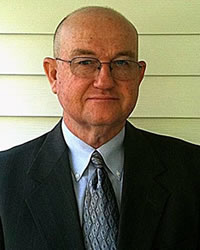
Gary Shepard

O Israel Return

Hosea 14:1-4
Gary Shepard March, 18 2012 Audio
0 Comments
Gary Shepard
Gary Shepard March, 18 2012

Sermon Transcript

Auto-generated transcript • May contain errors

100%
I want you to turn this morning
to the book of Hosea, to the last chapter of Hosea, chapter
14. I want to read the first four
verses. "'O Israel, return unto the Lord
thy God, for thou hast fallen by thine iniquity, Take with
you words, and turn to the Lord. Say unto Him, Take away all iniquity,
and receive us graciously. So will we render the calves
of our lips. Asher shall not save us, we will
not ride upon horses, Neither will we say any more to the work
of our hands, ye are our gods, for in thee the fatherless find
mercy. I will heal their backsliding,
I will love them freely, for mine anger is turned away from
him. If you remember this man Hosea,
the prophet of God, is told by God to marry a harlot. And she played the fool. She went her way and left him
for her suitors and lovers. She thought all the time that
they were the ones who loved her and who provided all the
things for her. But amazingly, she is brought
by Hosea back to himself. She is redeemed off the slave
market where her sins had brought her, and she is a picture of
those that the Lord saves. As a matter of fact, she is a
picture of the nation Israel in a sort. But the words that
we find the Spirit of God directing Hosea to write in the verses
we read are the words of God concerning Israel, His spiritual
Israel. Those who are the children of
Abraham by faith. Those who will experience that
circumcision of the heart. Those that are distinguished
in the words of the apostle when he says, they are not all Israel
that are of Israel. They are words to his church. Words to his bride. Words to his sheep that are described
in this book as being lost sheep. And he calls upon them to hear. They will hear. He says, my sheep,
hear my voice, and they follow me. He says in another place,
"...he that hath an ear, let him hear." And most especially,
those words of our Lord wherein He says, "...he that is of God,
chosen of God, loved of God, redeemed of God, called of God,
The people of God, he that is of God, hears God's Word. And they may well be words of
mercy and words of grace to us. I know this, they are spiritual
words to someone. And in that first verse, the
command is for this Israel to return. Why return? It is because we left God in
our father Adam. We left him as was pictured by
Adam who went and hid himself in the trees in the midst of
the garden. We left him in Adam and were
cast out of that garden, and we became in that hour even his
people lost sheep." He tells us in Isaiah, through Isaiah,
"...all we like sheep have gone astray, we have turned every
one to his own way." His call and His command is for us to
return. And then not only that, but notice
what he says in the second verse. He says, take with you words. Take with you words. And we have need to be sure we
understand this. He's not saying we're to take
with us our words, but we are to take with us His words, His
promises. An old preacher said this, and
it is so true. He said, we cannot come to the
Lord after our fall until the Lord first comes to us. We cannot say anything to the
Lord but what the Lord hath first said to us. In other words, it
is always this, if we love Him, it is because He first loved
us. But what is obvious, not only
in this text, but in this book, is that He does come to this
Israel. He does speak to this spiritual
people. He does come to His lost sheep,
and He does so with His words. He does so with His gospel. He does so by His Spirit. And some of those words come
forth as he expressed them in Matthew 11, when he said, Come
unto me, all ye that labor and are heavy laden in every call. In every command, in every promise
in this book, there is a description of those called and blessed and
promised. He says, "...come unto me, all
ye that labor and are heavy laden, and I will give you rest." And
He tells us in this that we are to turn, or we are to be converted. We are to turn and return, and
in doing so, He says that this is the means by which it is made
manifest that He has turned us. That He has turned us. He says,
if you notice, "...turn thou us unto thee, O Lord, and we
shall be turned, and renew our days as of old." That's what
he says in Lamentations. If you turn us, we'll be turned. If you renew us, we'll be renewed. If you leave us to ourselves
and to our own means and to our own ways, we'll perish. We'll
never of ourselves turn. And notice what that word is
when He turns us. They say, take away all iniquity. Men and women quit asking for
things and what they call blessings. They quit asking for things to
gratify the flesh, and this becomes their chief desire from God,
take away from us all our iniquities. Because if you regard iniquities,
which we know that you do and will, who can stand? And then
look at what he says here. He says, this is what you're
to say, take away all iniquity and receive us graciously. Deal with us in grace. Deal with
us in mercy. Take away those separating sins. Deal with us by your righteous
grace. That's what Paul talks about
in that last verse of Romans 5. that grace that reigns through
righteousness. Deal with us in grace, and not
only that, he says, and then we'll render the calves of our
lips. What are the calves of our lips? Well, that's simply the sacrifices
of our lips. What we read in the New Testament
that is called, we're to render unto God the sacrifice of our
lips, the praise and the thanksgiving to God for His grace. And then
as He turns us and returns us unto Himself, we renounce all
other hope. That's when we know that the
Lord has turned us, that He has made us to hear His voice, that
He's spoken unto us by His Word and power when we are brought
to cast off every other hope. Look at what He says in verse
3, "...Asher shall not save us." Israel was always turning to
somebody, some king, some nation, some army to save them from their
enemies. That's just the way we are. And
when we're turned and brought back to God, He says that we
will renounce every other hope. We'll renounce the arm of the
flesh. We'll renounce all of our works
and all false gods. He says, we will not ride upon
horses, neither will we say any more to the work of our hands. You see that? We won't say any
more to the work of our hands, no matter whether we chiseled
it out in stone or cast it in gold, or whether it's simply
the figment of our fallen imagination. We won't say any more to the
works of our hands, you are our gods. And my friend, God Almighty,
is the only one that could bring us to confess this. As a matter
of fact, if we have any understanding as to what repentance is, We
have a picture of it in Philippians 3, where Paul is not only talking
there about all that he once trusted in, the fact that he
was a Jew, the fact that he was a Pharisee, the fact that he
followed the law, all these things. He's now brought to leave these
things and not only look at them as not having any part of God's
salvation, but to actually repent of these things. He said, I count
it all but loss. What I once valued. What I once
thought was good, what I once thought brought me to acceptance
before God, what I once thought God loved and blessed, He says,
I now see it for what it is, and I count it as nothing but
done. that I may win Christ and be
found in Him. He'll say no more to the works
of His hands, ye are our God." Why? He says, for in thee the
fatherless, the orphans, And the Lord's people are often described
as that, so far as this world is concerned. He said, these
things take place, and in thee the fatherless find mercy. Now, it was almost as if when
he says this, that there is devil or demon or somebody that's standing
out there and in response to what God says in this merciful
and gracious call to His Israel. You can't do that. You said if
they do this or that and the other, it would bring this judgment. You said, the soul that sinned
shall surely die. You said that sin must be paid
for, that you can in no wise cover up sin, and look here,
here's all these people, this Israel you're talking to, and
that's all that they are, and that's all that they have done.
So what does he say? You can have whatever kind of
grace you want, but I love this sovereign grace of God. I love God who does what He will,
to whom He will, whenever He will, And He does so and can do so
in a way that only has to be right and acceptable in His sight. But the truth is, He's a just
God. He's a holy God. But listen to
what he says here in this fourth verse. It's almost as if he's
responding to what natural men would say, devils would say,
those who would cry out against him, you can't do that. Look
at what they've done. You can't treat them mercifully. You can't deal with them graciously. Look at, they're so contrary
to you. They're so unlike you. They're
so offensive against your person and your justice. But look at
what he says in verse 4. He says, I will heal their backsliding. You see, every one of God's elect
is in himself or herself the true backslider. Because in Adam,
because in our birth, because in our nature, we slid way back. He didn't go anywhere. He didn't
change anything. He doesn't have to be reconciled
to His people. He never has loved us any less,
having chosen us and loved us in Christ. But we went. He says, I'll heal their backsliding,
and I will love them freely. Somebody says, God can't do that. He says, I will love them freely. He does not say, as most would
have Him say, I will love every son and daughter of Adam. I will love them all freely. But to this Israel, to these
people, He said, I'll love them freely. Now that's an amazing
thing. That word freely. Because the
nature of ourselves as sinners, we're so duped by everything
in the flesh, but when it comes especially to spiritual things,
we become this people, this nation of skeptics. And I might add
with some justification. You see, I don't think that there's
a day goes by that either on TV, or in somebody I run into,
or in a letter, or the newspaper, somewhere, somebody's offering
me something that's free. Free. But what we find out is
that's not actually the case, is it? We have reason to be skeptical. We've heard from the mouths of
liars. And we learned that maybe there
is nothing that's really free. We've come to say, you know,
there's no free lunch, really. Or we've come to this conclusion.
We might say, well, if it's free, it can't be worth anything. Or
maybe we say something like this, if it's given to us, there's
got to be a catch to it. Isn't that right? Or, as I usually
conclude, if they say it's free, it's going to wind up costing
me something later. And we've learned to kind of
turn this deaf ear to all these high-pressure salespeople and
hucksters and such as that. But the trouble is that religion
has taken the very principles, the very words, the very schemes
and the very lies that high-pressure salespeople have And they've
used it in religion. They've adopted it. But my friend,
when God, who cannot lie, when He says, free, that's just exactly
it. Free. And it has to be that way
for two reasons. If we just get a hold of it,
for two reasons. Number one, it has to be free
to sinners, to this Israel, in order for Him to get all the
glory. Somebody offers me a 50 million
dollar gift. They say, We're going to pay
$49 million worth of that gift. All you've got to do is come
up with the $1 million. It'll be free to you. No, it
won't to me, because I'll never have it. And if I do somehow
scrape up the million, you can bet on it, I'm going to toot
my horn as to how I worked and saved and slaved to come up with
that million, even though you paid 49 million. It has to be
this way for God to get all the glory. It's salvation that's
to the praise of the glory of His grace. And then the second
thing is this, it has to be free if such beggars as we are are
ever to receive it. We don't even have the hand of
faith to reach out and receive it lest He give it. We don't
have the eye to even see it unless He gives us that eye. We don't
have a heart to desire it unless He gives us that heart. You see,
The justification of a sinner, which is God declaring a sinner
righteous in His sight. That justification from the very
beginning to the very end and everything in between is all
of the free grace of God. It is all through and by the
life and the death, that one sacrifice, that one redemption,
that one righteousness of the Lord Jesus Christ, apart from
any work or any will or any warrant in any that He saves. He said,
I love them freely. Freely. Turn over to Romans chapter
3. Romans chapter 3, and listen
to what the Apostle Paul says in that 24th verse. He says, "...being, or having
been, justified freely by, or as it is, through, the redemption
through His grace, through the redemption that is in Christ
Jesus. And when He says free, He's talking
about it being without any cost to us, but He's not talking about
it being without any cost. You understand that? Because
it costs God everything. That's right. Being justified
freely. And you know what the amazing
thing is here? That same word, freely, is also found in John
chapter 15 and verse 25, where they're talking there about men
hating Christ. They hated Christ. He says, they hated Me without
a cause. There was no cause in the Lord
Jesus Christ, that perfect sinless man. That God-man in the flesh. There was no cause for anyone
hating Him. So what's He saying? He said, He
justified us without a cause in ourselves. And he did so through
the redeeming work of Christ. What is the redeeming work of
Christ all about? We know that Paul says, therefore
we conclude that a man is justified by faith without or apart from
the deeds of the law. He says, therefore, having been
justified by faith, we have peace with God through our Lord Jesus
Christ. Why must our being justified? Why must our being loved freely
by the thrice holy God? Why must it involve? And what
was accomplished in the death of the Lord Jesus? Well, do you
remember what happened to Hosea's wife? I told you that she went,
and by her deeds and all, she finally fell to such a depth
that she was enslaved, no doubt, by her very same so-called lovers. And there she is, this ugly,
tattered, worn prostitute, down on the slave market, So utterly
worthless, I'm sure that no one would value her for anything. So Hosea, he went down there,
and in love for her, he paid the price necessary to redeem
her or deliver her from her enslavement, and he took her again unto himself. That's what this redemption is
about. If you look back in Hosea 14, in that fourth verse, that
latter part, he says, all these things return. He says, say these
things, speak these words, do these things. He says, for mine
anger is turned away from Him. Do you know what propitiation
is? Some days I just get kind of,
maybe a little bit ornery, and I just want to Walk up to all
these people that I know are very religious. I want to ask
them that one question. Could you define propitiation
for me? You know, it's amazing what sinners
can know about every subject almost known to man. They don't
know anything about propitiation. Yet, when that man went into
the temple to pray, here's a Pharisee over here who's praying, thanking
God that he's not like other men, and especially not this
publican, and yet this publican, it says, he smote himself upon
the breast, and he wouldn't even look up toward heaven, and he
said, God, be merciful or be propitiated toward me, the sinner. He must have known something
about what it was. What is propitiation? Well, to be propitiated means
to have the wrath or the anger of one toward one turned away,
and not only that, for them to be restored to a position of
favor. You see, that publican knew himself
to be a sinner. He knew that sin was an affront
to God. He knew that sin had to be dealt
with. He knew that he could not stand
in himself as a sinner. God would mark and had marked
his iniquities. He couldn't stand. He said, God,
be propitiated toward me the sinner. Well, how was propitiation? Where did that word come from?
Well, that word came from that very thing that was there on
the top of the Ark of the Covenant, that gold lid that was on the
top of the Ark of the Covenant, where there was a golden cherubim
on each end. And the priest, the high priest,
once a year, went into that place, into the Holy of Holies, representing
the people, and with that blood, Sprinkle it on the mercy seat.
That mercy seat was literally the perpetuatory. And that sacrifice
that was offered, that blood that was sprinkled on it, was
the perpetuatory sacrifice. Turn over to 1 John. 1 John chapter 4. Look at that tenth verse. John
has a lot to say about love, but he doesn't talk like preachers
in our day. He says, herein is love, not that we love God, but
that He loved us, and sent His Son, the propitiation for our
sins. Those words, to be, are there
added in the King James, and not in the original, so that
John is saying by the Spirit of God that he sent his Son,
the propitiation for our sins. He was always the propitiation
of our sins. From as far back as God chose
that people in Christ, and Christ stood that people, stood before
God on their behalf as their surety, as their representative. And he took on himself all the
responsibility of all the sins of all his people, of all this
Israel, of all times. And David said, now you want
to talk about a blessing? Blessed is that person to whom
the Lord will not impute sin. Now that man is blessed. And he's been blessed from all
eternity. And so, in redemption, the Lord
Jesus, this surety, this propitiation for our sins, the shedding of
His blood, which is the giving of life, that's what's necessary
to save us. That's what's necessary for us
to be set free. He said, mine anger is turned
away from Him. Tell him to do this. Hear this
call. It's good news. God's not angry
with His people. I don't know why people are going
around trying to scare the Lord's people to death. God's not angry
with His people. He's propitiated toward them.
The blood of Jesus Christ has put a smile on the face of the
Godhead. And the word goes out, this is
what it's all about. This is what the gospel is all
about. Return, O Israel! You remember
that prodigal son? He's down there and he's played
the devil. He's squandered his living. He's
lived and spent all his money on harlots and drunkenness and
such as that. He's down to the lowest point. He's laying there in the swine
pen eating the husk of the corn. He said, look at me. Here I am
in this state and yet there's bread enough and to spare in
my father's house. He said, I'm going to rise and
go to my father's house, and this is what I'm going to tell
him. This is a sinner. He's going to bargain somehow.
He's going to say, Daddy, don't even treat me as your son. If you just give me a job and
let me work for you. The Bible says that when he was
yet a far way off, the father looked and saw him coming. Why
was he looking in that direction? Because that's what God does.
He looks and He expects His lost sheep to come because the Shepherd
is going to bring every one of them. They're going to return.
I just started looking into the scriptures this week and I thought,
gosh, I bet as long-winded as you are anyway, you don't need
to get involved in all these scriptures, all these texts where
this Israel, this people, they're coming to Zion with their faces
thitherward as we read in our reading this morning. He said
they're coming. Because Christ has died for them,
and God is going to, by His Spirit, mightily and effectually call
them and bring them, and cause them to know that it is the Father's
desire for them to come. Christ said, come unto me all
you that labor and are heavy laden. There's somebody over
here, they're working this and they're working that, they're
trying to do this and all, things they're trying to do in order
to be saved. They have the favor of God, and
they're over here, and they're walking tall and straight, and
they're finding satisfaction with their own works. But over
here's a few people, they're all broke down. God showed them
they can't bear their sins. He said, come unto me, all you
that labor and are heavy laden. I tell you, religion without
God is a hard work. That's exactly, it's a hard work. Trying to work your way to heaven
is an impossible job. You think you've got a bad job.
It's the worst job, the impossible job. You say, there's no future
in my job. Well, there's no future in that,
I tell you. He says, return, Israel, return. Why? Because Christ has made
peace with God through the blood of His cross. God was in Christ
reconciling. God not only has said it's alright
to come, He's commanded you. Somebody said God gave an invitation,
except you. You know, an invitation just
really depends on who invites, doesn't it? If you're living
in a kingdom, as it was in old days, and the king sends a messenger
out there and invites you to come, do you think you're going
to be coming? The king, it says, sent out messengers
concerning a feast and a banquet that he'd made for his son. What was the news? All things
are made ready. This is not a cupboard dish feast,
or what some people call a potluck supper. This is the wedding feast
of the Lamb. And all things are provided right
down to that wedding garment. Man came into that feast without
that garment, bind him, hand him, foot him, cast him out.
Because that garment represented the very imputed righteousness
of Christ. That He, it says, hath put on
us. And that is the basis, that is
the invitation, if you would, to this wedding feast. When Paul writes to the Corinthians,
He says it's not entered into the hearts of man, the minds
of man, nothing, the things that God has for them that love Him.
He says, but we have received not the Spirit of the world,
but the Spirit which is of God. That... We might know the things that
are, there's that word again, freely given unto us of God. Christ told us that. He said,
when He's come, He'll take the things of mine and show them
to you. See, God doesn't want anything
we have. He doesn't want us to get on
a way that is kind of stumbling back and forth in hopes that
somehow we'll find the way to God. No. He said, return, O Israel,
and Christ is the way. It's the way of righteousness.
He's the way of peace. He's the way of God. And He's
that way that's evil spoken of. by religious men who don't know
Him. Look over in 1 Peter. 1 Peter in that second chapter. Peter writes to these strangers. Look at verse 1 of chapter 1.
When he begins, he said, Peter, an apostle of Jesus Christ, to
the stranger. Somebody said, he's just writing
that particularly to the Jews. No. He's writing them to this
Israel. The strangers scattered throughout
Pontus, Galatias, Cappadocia, Asia, and Bithynia, elect according
to the foreknowledge of God the Father through sanctification
of the Spirit and to obedience and sprinkling of the blood of
Christ. That's what he's talking about. Okay, look over in chapter
2, in verse 25. Listen to what he says. Maybe look at verse 24. "...who
his own self," speaking of Christ, "...bear our sins in his own
body on the tree, that we, being dead to sins, should live under
righteousness, by whose stripes you were healed." He's talking
about a finished, accomplished work. He said, "...for you were
as sheep going astray." but are now returned unto the shepherd
and bishop of your souls." You were like sheep going astray,
but now you're returned. He doesn't say, now you found
the way back. No, you're returned. Because the shepherd looks after
the sheep, sheep don't look after the shepherd. But now you're
returned unto the shepherd and bishop of your souls. Return, O Israel. Christ said,
I'm Alpha and Omega, the beginning and the end, and I will give
unto him that is a thirst, those who hunger and thirst after righteousness. I will give to him that is a
thirst of the fountain of the water of life freely. Isaiah
55, "'Ho, everyone that thirsteth.'" Maybe we ought to look there.
Just turn over quickly to Isaiah 55. He begins with, "'Ho, everyone
that thirsteth, come ye to the waters. And he that hath no money,
come ye, buy and eat. Yea, come and buy wine and milk
without money and without price. Wherefore do you spend money
for that which is not bread, and your labor for that which
satisfieth not? Hearken diligently unto me, and
eat that which is good, and let your soul delight itself in fatness,
in abundance. Incline your ear, and come unto
me." There was a thief hanging on a cross beside the Lord Jesus
Christ. He had neither time to be baptized
or engage in full-time Christian service. He had no time to follow
anybody's prescription for religion and acceptance with God. And
his feet and his hands were nailed to a cross, so he couldn't walk
down anybody's aisle. He couldn't shake any preacher's
hand. But he came to Christ. As some
old preacher said, without moving a muscle, he came to Christ. Why? Because our Lord said, all
that the Father giveth me shall come to me. And him that cometh
to me, I will in no wise, I will never cast him out. Look at verse
6. Seek ye the Lord while he may
be found, call ye upon him while he is near. Let the wicked forsake
his way, and the unrighteous man his thoughts." Now we all
often think that it means quit your this and quit your that
and quit the other. These wicked people you know. No. That may
be wickedness, but the wickedness he's speaking of here mostly
is your way. of salvation. Forsake your way. Because it's one of those ways
that seems right, but the end thereof is the way of death.
And let him return unto the Lord. Let him return unto the Lord.
And He'll have mercy on him. And to our God, for He will abundantly
pardon. Forsake your way. As a matter
of fact, that's about true in every sense. Your way for your
life, your way for this one you love, that one you love, you'll
forsake all these ways, and especially this way that you naturally think
is the way God will accept us in returning to the Lord. And
He'll have mercy on you, because He said, I love them freely.
I love them freely. And Ezekiel, he says, saying
to them, as I live, saith the Lord, I have no pleasure in the
death of the wicked, but that the wicked turn from his way
and live. Turn ye, turn ye from your evil
ways. Oh, why will you die, O house
of Israel? Return. Take with you words what
these gospel promises that are yes and amen in him. Take with you words, turn from
all this trust in everything else, experience whatever it
is, say to the work of your hands, you're not our gods anymore.
He said, and the Lord will have mercy on you. He said, I'm not
angry anymore. When that old prodigal boy got
home to the father's house, he was brought down low. He was
willing to be a servant in his father's house. But as soon as
he said that, the next thing that came out of his daddy's
mouth was to a servant, said, you bring him the best robe. And you put the ring of sonship
on his finger, because we're about to have a big time. They
didn't cook a pig, but they cooked a goat. They said, we're going
to have a feast. Of course, that old elder brother,
he's standing off there. Rotten, vile, sinner, wretch
he is. Caused daddy all that pain. Here
I am. I never did all that stuff. He
never made a party for me. He said, we have reason to make
a feast. Because this, my son was dead.
But now he's alive. He's lost, but he's now been
found. And Christ tells us that there
is likewise rejoicing in heaven over one sinner that repents.
And if he repents, that means God gave him the gift of repentance.
That means God called him and brought him back to himself.
He says, return, O Israel. You know, in truth, That kind
of becomes the experience of a believer's life, doesn't it? Wish it wasn't like that. That
shepherd, unless we stray too far, he takes that old shepherd's
hook He reaches down to where we've fallen, we're entangled
ourselves in the briars, and He hooks us and He brings us
back to Himself, because we're His sheep. That's what we're
often found experiencing. That old hymn said, Prone to
wander, Lord, I feel it. But this is always His words
to His people, Return, O Israel. Return, O Israel. Father, this
morning we pray that You would take these words, Your words,
these Scriptures that we've read and quoted, and that You would
use them to bring Your sheep unto Yourself, to bring this
Israel to return unto You, to be received as the Father did
that prodigal. We know that You love each one
of your own freely. You love them in Christ Jesus. You bless them with all spiritual
blessings in Him. Made Him to us wisdom and righteousness,
sanctification and redemption. And we thank you. Bind our wandering
hearts to Thee. Draw us always unto Yourself. Never leave us to our own way
and our own selves, but keep us in your love, in your Son,
and we'll offer up to you by your grace the calves of our
lips, these praises, this sacrifice of thanksgiving, to You for all
Your grace and mercy to us. We pray in the name of Your only
begotten Son, Your well-beloved Son. Amen.
Gary Shepard
About Gary Shepard
Gary Shepard is teacher and pastor of Sovereign Grace Baptist Church in Jacksonville, North Carolina.

Comments

0 / 2000 characters
Comments are moderated before appearing.

Be the first to comment!

Joshua

Joshua

Shall we play a game? Ask me about articles, sermons, or theology from our library. I can also help you navigate the site.