Bootstrap
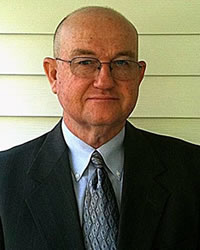
Gary Shepard

Everlasting Love

Jeremiah 31:3
Gary Shepard February, 19 2012 Audio
0 Comments
Gary Shepard
Gary Shepard February, 19 2012

Sermon Transcript

Auto-generated transcript • May contain errors

100%
Turn, if you would, this morning
to the book of Jeremiah, to the weeping prophet. Jeremiah chapter
31. If you'll look down at the third
verse, "...the Lord hath appeared of old unto me, saying, Yea,
I have loved thee, with an everlasting love, therefore with lovingkindness
have I drawn thee." Sad to say that we in this day have such
a low view of God that we are not filled with awe at just the
thought of this almighty, holy, Creator God condescending to
speak to such a sinner as this man was. And yet the truth is,
that is exactly what the gospel is. It is this same glorious
God speaking wonderful things to undeserving sinners. I have loved you with an everlasting
love." With the old love, he says, I loved you. With a long-standing love, I've
loved you. And one old writer said that
the word everlasting has as a part of it both antiquity and futurity. It goes all the way forward,
but it goes all the way back. And this love of God toward His
elect was in His mind and heart before He ever broke the silence
of eternity past to manifest it. I loved you with an everlasting
love." You see, the Scriptures say that God is love. But contrary to what men preach
most of the time, And contrary to what men want to believe by
nature, God's love is not universal. He says, Jacob have I loved,
but Esau have I hated. But while it is not universal,
it is everlasting. Everlasting. And it is just by
virtue of what we read in this verse, it is also particular
and very distinguishing just as he reveals it here in our
text. He says of this man Jeremiah,
I have loved you. And when he says it to Jeremiah,
says it to an earthly people like the nation of Israel, he
is saying it to every one of his elect people. I have loved you. I have loved Jacob. And not only that, but he says,
if you notice, I have loved you. In other words, He didn't start
loving them then. He certainly did not start loving
them in time at all. Not at all. He loved them before
time. He loved them before their fall
in Adam. He loved them before they were
ever born. He loved them before they ever
were given faith in Him. He loved them before they ever
knew of His love, and certainly before they ever loved Him. You see, the more you find out
about the love of God, as it really is, the more it magnifies
and glorifies and exalts Him. It exalts the lover and not the
loved. How could God love a people that
did not exist? And more than that, how could
He have loved a people all of whom were sinners just like everybody
else? Well, we get a hint of it, we
get a picture of it in what He says to Israel. He says, the
Lord did not set His love upon you nor choose you because you
were more in number than any people, for you were the fewest
of all people." But here it is, "...but because the Lord loved
you." In other words, what he's saying is that he loved this
people simply because he loved this people. And there can be
no reason for his love outside of himself. He's saying to Israel,
I didn't love you because I saw you a great people. You were
the fewest of all people. I didn't love you because of
what I saw you would do. They never did anything but sin. I never loved you because there
was anything or any act that you would perform that would
draw out my love for you. I just loved you because I would
love you. And you can mark this down today. If God loved you, it was never
at any time, nor ever will it be at any time, because of something
in you or done by you, He just in His divine sovereignty loved
you. You're not lovable. And neither
do we ever do anything that would make Him love us. He says, "...but
because He would keep the oath which He had sworn unto your
fathers, hath the Lord brought you out with a mighty hand, and
redeemed you out of the house of bondmen from the hand of Pharaoh
king of Egypt." He loved you? And He did something because
He did love you. And what we find in this book
is that God loves all His people the way He can and the way He
did. He loved all His people in Christ. He being unchangeable, loved
them in Christ, and he loved them in Christ with this unchangeable
and everlasting love. Turn over to Romans chapter 8. Romans chapter 8, and listen
to the Apostle Paul in Romans chapter 8, as he begins to close
out that 8th chapter in verse 36. He says, and as it is written,
for thy sake we are killed all the day long, we are accounted
as sheep for the slaughter. Surely, no God could love this
people. And surely, if these are loved
of God, God sure has a funny way of showing His love. Look
at how they're treated in this world. He says, they're accounted
as sheep for the slaughter. But He doesn't stop there. He
continues in that 37th verse, He says, Nay, in all these things
we are more than conquerors through Him that loved us. He loved us with an everlasting
love. So it does not matter what happens
to us in time, how awful it might appear to our eyes or to the
eyes of man, we in all these things are more than conquerors
through Him that loved us. Well, I'm persuaded that neither
death nor life, nor angels, nor principalities, nor powers, nor
things present, nor things to come, nor height, nor depth,
nor any other creature shall be able to separate us from the
love of God, which is in Christ Jesus our Lord." That's why nothing
can separate the people of God from God, because the love of
God is in the Lord Jesus Christ. And what we have in this book,
we have three things, basically I'll say, about this everlasting
love. Now you can stick with gooey
affection all you want to. But give me what the Bible says
about the love of God and those He loves, and how His love is
in Christ Jesus. I'll take that any time over
this religious sentimentalism. What he does is he sets forth
in this book three things about this everlasting love. And the
first one is this, this everlasting love has acted in a purpose. This is the purpose of everlasting
love, which is simply this, it is love before us. It is God
acting outside of us, acting before us. And John writes it
down so concisely and states it so plainly. Writing to these
believers in his first epistle, he says this, he says, we love
Him because He first loved us. He's the first cause. He's the
first lover. And John also, in that same epistle,
states it like this, calls us to admire and think about this
love. He says, Behold what manner of
love the Father hath bestowed upon us. This is love not earned
or merited. This is love that was bestowed
upon us, given to us as a gift. Behold what manner of love the
Father hath bestowed upon us, that we should be called the
sons of God." God has a purpose in His love. And God in love
acted and moved and purposed and determined and decreed. He did all these things more
than just simply look with a benevolent attitude and glance at sinners
such as we are, but He acted and moved and He purposed. And you can mark this down. If
there is no demonstration of love, there is no love. We can mark that down in all
our relationships, whether it is family, parents to children,
children to parents, husbands to wives, wives to husbands,
all these things. If there is no demonstration
of love, you can say, I love you all you want to. But there
is no love. And whether it is between individuals
or toward brethren, and most especially toward God, if there
is no action of love, there is just not any love. Turn over
to Ephesians chapter 1. Ephesians chapter 1, and listen
to the Apostle Paul writing in Ephesians 1 here. Ephesians 1
and verse 4. He says to these believers, here
at a place called Ephesus, according as He, that is the Father, hath
chosen us in Christ, in Him, before the foundation of the
world, that we should be holy and without blame before Him. Period. Why? Why do you say period? Because
most scholars in the Greek agree that those next two words, they
make up a part of that next sentence and statement. So it comes out
like this, in love, in love, having predestinated us unto
the adoption of children by Jesus Christ to Himself according to
the good pleasure of His will." In our day, people are always
saying things like this. Well, let's don't get into predestination. Let's don't talk about things
that people disagree about. Let's just talk about the love
of God. But the truth is, if we're going
to talk about the love of God, we're going to have to talk about
predestination, which means to mark off beforehand, to determine,
to predetermine, to decree, to do all these things. It is God
in love acting and predestinating all these individuals to be conformed
to the Lord Jesus Christ. It says, "...in love, having
predestinated us unto the adoption of children by Jesus Christ unto
Himself, according to the good pleasure of man's free will."
No. His will. God's will. Look over in Ephesians 2. Ephesians
2. Here we are, Paul having described
us in our nature and fall in sin, and then Adam in the first
three verses, and then look at what it says. It says, "...but
God, who is rich in mercy, for His great love wherewith He loved
us." even when we were dead in sins, hath quickened us together
with Christ, by grace you are saved, and raised us up together,
and made us sit together in heavenly places in Christ Jesus, that
in the ages to come He might show the exceeding riches of
His grace in His kindness toward us through Christ Jesus." All
of grace is because of love. all that He does in Christ, and
I do believe that this has a reference to more than Him just raising
us in the new birth. He quickened us, these dead sinners,
when He put us in Christ in that everlasting covenant. He brought
us to life when He raised up the Lord Jesus Christ from the
death, and He raises us again to life spiritually in the new
birth, all because of His love. That's what he does. Turn over
to John chapter 17. This is our Lord Jesus Christ
praying and talking about this love in such a way to the Father,
and we who are eavesdropping on that prayer, we can certainly
learn a lot. John 17, look down at verse 23. He says, "...Father, I in them,
and Thou in me, that they may be made perfect in one, and that
the world may know that Thou hast sent me, and hast loved
them as Thou hast loved me." You see, that's what the world
is going to find out one of these days. They're going to find out
the truth about what Christ is saying here. He says that the
world may know that you have loved them as you have loved
Me. Alright, look at the next verse. Father, I will that they also
whom Thou hast given Me be with Me where I am, and that they
may behold My glory which Thou hast given Me, for Thou lovest
Me before the foundation of the world." What's he saying there?
He's saying, Father, you loved this people that you have given
me out of the world. You loved this people in me before
the world began. Because you loved me before the
world began. When Paul writes to the Thessalonians,
he says to them, he says, but we are bound to give thanks always
to God for you, brethren, beloved of the Lord. Because God hath
from the beginning chosen you to salvation. You see, God in
love chose, God in love predestinated, God in love blessed with all
spiritual blessings His people in Christ before the world ever
began. This is not an accidental salvation. This is not a contingency plan
that He had to come up with when they crucified the Son. That
is the plan. The psalmist says, He shall choose
our inheritance for us. The excellency of Jacob whom
He loved. God acted, God decreed, God determined,
God purposed, God loved whom He would in a sovereign, electing,
predestinating love, and He having loved them as He did, nobody
could stop it. Nobody could alter His purpose.
Nobody could hinder it. Nobody could slow it down. He
said, whom I loved, I love. That's the purpose of everlasting
love. But not only that, but what we
find, as we've already alluded to here, is that we have also
this person of everlasting love. That means not only love before
us, but also love outside of us. You remember he said there
that the love of God is in Christ Jesus. In Christ Jesus. And the thought ought to always
enter into our mind, and we ought to seek to understand, why is
God's love in Christ? If we are, as so many seem to
think we are, such wonderful citizens of the earth, that God
would be thrilled to take on any terms, why is the love of
God in Christ? Because a holy and a just God. He says, look at me, look unto
me, I am a just God and a Savior. And here these things are oftentimes
set one against the other. And our need in this day is not
simply to know that God is just and not simply know that He is
a Savior, but our need is to find out how He can be both at
the same time, because His love is in Christ Jesus. You see,
God, being who He is, could not and cannot love us then or now
without any consideration of our sin. Somebody described sin
one time as too much appetite and too little digestion. Is
that all sin is? Sin boiled down, I suppose, to
its essence is this. It is everything against God. And so our Lord tells us, through
the Apostle John again, He says, "...and this was manifested."
Somebody's always wanting God to show me you love me. He says,
in this was manifested the love of God toward us. I'm not a rocket
scientist, but I can tell you this, I got a feeling that what
comes next in this verse is going to be the telling of just this.
In this was manifested the love of God toward us, because that
God sent His only begotten Son into the world, that we might
live through Him. Because as we are in ourselves,
and as we are in Adam, and as we are in everything we do, we're
nothing but death. If He sent His Son into this
world that everybody might live, He's a total failure. But if
it is, as John says, writing to these, he describes as the
little children of God, if it is this way, he says He sent
His Son, His only begotten Son, into the world that we might
live through Him. And I can't help but believe
that this is why you will not find in this book the most often
stated phrase by men in our day. God loves you. God loves you. You know what they say? Some
things you want to know. God loves you and has a wonderful
plan for your life. God loves you and He's trying
to save you. God loves you and He'll do anything
He can to save you if you'll just let Him. You won't find
God loves you in this book. It's in the past tense. It's
always God loved. He loved us, sent His Son into
the world that we might live through Him. He loved us, and
since He is unchangeable, immutable, He loves me right now. He always loved me. And that
is just the half of it. He'll always love me. His love
is in Christ. And he loves his people in Christ. And outside of Christ, he's not
a God of love, he's a God of consuming fire, and he never
loves those in Christ apart from the sacrifice of Christ. And
if you would know something about the love of God, and I'm telling
you this, If you would know something about the love of God, if you
would learn something in your heart of hearts about what real
love, or this prostituted expression in our day, true love, if you'd
ever find out about what real love is, look at the cross. That's the greatest act of love. that will ever have been committed
or demonstrated in either time or eternity. And here are people
wanting to talk about the love of God, but they don't want to
know anything about the cross. They don't want to hear that
offensiveness of the cross. They don't want to hear about
this crucified one. Or they might just kind of say
Christ crucified or things like that. But they don't want to
know who really it is that's hanging on the cross. Why? Because we don't want to own
up to the fact that we are such wretched creatures, such helpless
sinners. such despicable beings that the
only way that we could ever be saved from our sins was for God
Almighty to become flesh and dwell among us so that He might
do the one thing necessary, which was to die in our place. We don't
want to admit that. We like, I'm okay and you're
okay. We like, all we need is a little change. No, what we
need is an act of sovereign love and mercy. God had to come if
He was to save His people. If He was to demonstrate His
love toward them, which it wouldn't have mattered what He had given
them or how He had blessed them, had He not done what was necessary
in coming in human sinless flesh and dying in our place for our
sins, it wouldn't have mattered what He did. We'd still perish. That's why I'm telling you, parents,
I'm going to tell you this for sure. You can educate your children,
you can make sure that they have all the social exposure and activities
and recreations and all that. You can leave them a big inheritance
seat of their health, do all these things, and they'll still
die in their sins. What we need is to give them
that one thing needful, and that is to cause them to be exposed
to the gospel of the Lord Jesus Christ. As a matter of fact,
this is what Christ said. He said, greater love hath no
man than this, that a man lay down his life for his friends. Somebody says, well, I don't
care what you say, preacher, I believe God loves everybody. How can this be love? If these
that Christ dies on the cross for, those who believe that God
loves everybody, they certainly believe that Christ died for
everybody. If that is the case, how can
this be an act of love? If He allows those He loves to
perish in hell forever. How can that be love? You say,
well, he's done all he can. He's God. Nobody can stay His
hand. Nobody can challenge successfully
His authority. He does, as He says, according
to His own will. So what in the world does the
love of God have to do with the cross death of Christ if those
He dies for actually perish? I know many a parent has reached
out in one way or another to save their children. But they've
not been able to. Why? Because they don't have
the ability. On one situation or another,
they don't have the ability to. But if they did have the ability,
you think they'd save them? Absolutely. Absolutely. Here's the person of everlasting
love, the Lord Jesus Christ. Paul said, for scarcely for a
righteous man will one die, yet peradventure for a good man some
would even dare to die. But God commended His love toward
us in that while we were yet sinners, Christ died for us. You know what that tells me?
One thing. It tells me that before I was ever born, before I ever
told my first lie snitched my first pencil or whatever it was
before that, I was already a sinner. While we were yet sinners, Christ
died for us. That's what we were in ourselves.
That's what we were in Adam. He says by the Apostle John,
herein is love, not that we love God, but that He loved us. Period. No. And sent His Son
The propitiation for our sins. You say, God's people, are they
lovable? They are in Christ, but they're not in themselves.
But everything that would require the wrath of God be against them
in His bloody sacrifice, that sacrifice was a perpetuatory
sacrifice wherein the wrath of God, because of any disfavor
He might have for them as a holy God, turned away. They are now
favored. Paul writes to the Ephesians,
he says, "...and walk in love, as Christ also hath loved us,
and hath given himself for us an offering and a sacrifice to
God for a sweet-smelling savour." Love always acts. and accomplishes according to
the ability of the one who loves." He's a little God. He better
not love much. He certainly better not love
sinners in such a state as weary, who require us to be snatched
as brams from the fire, out of the hands of the devil, out of
the jaws of the law. Here's this person of love. All
the way down to the Revelation. John speaks of Jesus Christ who
is the faithful witness and the first begotten of the dead and
the Prince of the kings of the earth unto Him that loved us
and washed us from our sins in His own blood. What does that
mean to be washed from your sins? Actually, the word is purged.
What is forgiveness? It's remission of sin. How is
sin remitted? Without the shedding of blood,
there's no remission of sin, because the soul that sins shall
surely die. And that blood represents a life
poured out. a sacrifice ordained of God,
a sacrifice provided and appointed by God, a sacrifice accepted
by God on the behalf of sinners that He loved and gave Himself
for. And He went to that cross, it
was not things run amuck, It was not things that had to be
altered or changed to fit the circumstance and situation. It was one come in love to perform
the greatest act of everlasting love that ever could be. The Lamb slain from the foundation
of the world. And then here's the third thing,
and that is the power of everlasting love. And that has to do with
love that is wrought in us. We have love before us, we have
love outside of us, and then He brings love to be in us. You see, the power of God's love
will be manifested in those He loves by His Spirit. Turn over to Romans chapter 5. Romans chapter 5. Now, Romans 5 and verse 1, I'll read
this the way I believe it is. The way it is in the Young's
Literal and some other translations. Paul is saying, Therefore, being
justified by faith, we have peace with God through our Lord Jesus
Christ. by whom also we have access by
faith into this grace wherein we stand and rejoice in hope
of the glory of God. And not only so, but we glory
in tribulations also, knowing that tribulation worketh patience,
and patience experience, and experience hope, and hope maketh
not ashamed." In other words, we'll never be disappointed in
this hope. Our hope is in Christ. We're
never going to be disappointed in this hope. How can you be
so sure of it? Well, because the love of God
is shed abroad in our hearts by the Holy Ghost which is given
unto us. Now, there are lots of folks
in this world who say that God loves them. but they don't really
believe it. Why? Because nobody can in their
heart of hearts really believe that God loves them apart from
this witness of God's Spirit in them, Him taking these words
of promise and convincing them. Now, I'm not going to stand up
before you or anybody else and say, God loves you. I'm just
not going to do it. I could convince you maybe that
God loves you today, somebody else could come along tomorrow,
probably the devil or your conscience, and convince you otherwise. But
when the Holy Spirit of God comes to us and makes us to have this
broken heart, this contrite spirit, and convinces us of this mercy
that God has given us in Christ and sheds the love of God abroad
in our hearts. That's when we're convinced.
We're convinced. Paul said, "...and because you
are sons, God has sent forth the Spirit of His Son into your
hearts, crying, Abba, Father." How are we going to pray except
it be just utter repetition? Our Father who art in heaven. How could we ever say that? Well,
he says, God. has sent forth the Spirit of
His Son into our hearts, whereby on the basis of Christ and Him
crucified, and all the promises of God being yea and amen in
Him, we cry out in a reaction of love to Him, Abba, Father."
That means something like, Papa, Papa. When that little granddaughter
of mine wants my special and undivided attention. He gets
a certain tone of voice and she says, my papa, my papa will you
do this, my papa listen to this, my papa read me this book, my
papa. The spirit of God comes in power to the hearts of his
children and he causes them to cry out to God in a relationship
of love, my papa. our Father who art in heaven. As a matter of fact, if you notice
here in this verse in Jeremiah 31.3, he says just something
of this very power. He says, Yea, I have loved thee
with an everlasting love, therefore with loving kindness have I drawn
thee. He said in Hosea, I drew thee
with cords of a man, with bands of love. Thy people shall be
willing in the day of thy power. Therefore, with lovingkindness
have I drawn thee. Now you look over in John 6 for
just a minute. John chapter 6. Look down at
verse 44. If it wasn't for the power of
everlasting love, there wouldn't be one sinner ever believed,
come to Christ, knew of this love. Verse 44, No man can come
to me except the Father which hath sent me draw him. I wanted to make sure that there
was not a difference between the thought in the word draw
here and the word draw in verse 3 of Jeremiah 31. That same word
draw or drawn there is the same word that's used when it tells
about Joseph being drawn up out of the pit, lifted up, brought
out of the pit. And the word draw here and elsewhere
in the New Testament is the same word that's used concerning when
they would draw in the nets, when Peter drew out the sword,
cut off the ear of the high priest's servant. Joseph couldn't get
out of that pit. I've never seen a net yet full
of fish that drew itself to shore. And I certainly cannot imagine
that that sword just jumped out of Peter's scabbard and into
his hand. It takes a power. It takes the
Spirit of God. He says, "'And no man can come
to Me except the Father which hath sent Me draw him, and I'll
raise him up at the last day, as it is written in the prophets,
and they shall be all taught of God. And every man therefore
that hath heard and hath learned of the Father comes unto Me.'"
You've been drawn. A lot of people have been drawn
to religion. They've been drawn to a different theological position. They've been drawn to a church
organization. They've been drawn down to the
front of the church building. They've been drawn to a preacher
or to a baptismal pool. But we're drawn by the Spirit
of God. when we are drawn to Jesus Christ
alone. He said, everyone that is drawn
and taught and hath learned of the Father, they come to Me. That means they leave everything
else, which is what repentance is. They leave it behind and
they come to Christ. They quit trusting in all these
things and they rest in the manifestation of this everlasting love to them
in the Lord Jesus Christ. I love what John says. And we
have known and believed the love that God hath to us. Now you know, if you're honest,
that there's not really anything lovable about you. You get up
every day and you put on that facade. You get your hair all
combed, if you got any. You get your face made up, shaved,
whatever. You get your clothes on. You
can even talk in these sweet tones sometimes. But you know
who you are. That's the scary thing to me. I know who I am to a degree.
And as bad as that seems to me on any given day, I'm far worse
than that before God, standing in myself. How could I ever know
that God loved me? John says, and we have known
and believed the love that God hath to us. God is love. And he that dwelleth in love
dwelleth in God, and God in him." This love will be manifested
in a power. Christ said, "...of the sheep
have I that are not of this foe, them also I must bring." He hath
saved us, Paul said, and called us with a holy calling. Beloved
of the Lord, He's chosen you to salvation through sanctification
of the Spirit and belief of the truth, whereunto He called you
by our gospel. Our gospel came not to you in
word only, but in power and demonstration of the Spirit of God. When he
writes to the Thessalonians, Paul says, Now our Lord Jesus
Christ Himself, and God even our Father, who hath loved us,
and hath given us everlasting consolation and good hope through
grace." You see, everlasting love has to do with the love
of the Father actively, the love of the Son actively, and the
love of the Spirit actively. Everlasting love had a divine
purpose. Everlasting love was rooted and
grounded that purpose and all things in this divine person
who came in human flesh and died on that cross. And everlasting
love is inseparably joined to the divine power of God the Spirit,
loved us, and who keeps us. And my friends, what was said
to Jeremiah, through the gospel of this crucified Christ, God
speaks through all His sheep. And He said, they hear My voice
and they follow Me. Everlasting love. The Lord hath appeared of old
unto me, saying, Yea, I have loved thee with an everlasting
love. Therefore, with lovingkindness
have I drawn thee." Would to God He'd speak it to the heart
of every person here this morning. That it would come into your
soul just like He opened up the very portals of heaven. And you
could see the Lord Jesus sitting on that throne and hear Him speaking
that Word to you right now. So unmistakably, powerfully,
that you could rejoice in His love. It's not like this love
we hear about. And I'm so thankful it's not.
Father, we thank You for such a love which is totally like
Yourself, consistent to Yourself, and glorifying to Yourself alone. We thank You. We praise You. In the Lord Jesus Christ, Amen.
Gary Shepard
About Gary Shepard
Gary Shepard is teacher and pastor of Sovereign Grace Baptist Church in Jacksonville, North Carolina.

Comments

0 / 2000 characters
Comments are moderated before appearing.

Be the first to comment!

Joshua

Joshua

Shall we play a game? Ask me about articles, sermons, or theology from our library. I can also help you navigate the site.