Bootstrap
Gary Shepard

Not Ashamed of the Gospel

Romans 1:16; Romans 1:17
Gary Shepard January, 15 2012 Audio
0 Comments
Gary Shepard
Gary Shepard January, 15 2012

Sermon Transcript

Auto-generated transcript • May contain errors

100%
Alright, open your Bibles once
again to that first chapter of the book of Romans. Why would a man such as this
man Paul be drawn to say that he was not ashamed of the gospel? Well, I'm sure it is like in
that day, just like it is in every age, that false religion
stands ever ready to mock not only those who preach the gospel
and believe the gospel, but the gospel itself. And one of the
reasons or one of the standards by which they base their mocking
is for what they deem to be a lack of results. If you remember,
when David went down to where the so-called battle was being
staged there in Goliath, had stood and withstood the people
of Israel. And David went down there, said
of his father, and when he saw what was going on, he just simply
said the obvious, and in a sense declared the gospel. He said,
who is this uncircumcised Philistine that he should defy the armies
of the living God. And the response of his own brothers
after the flesh, especially his older brother, was simply to
speak to him with scorn and to say, who have you left in charge
of tending to those few sheep. That's what men regard the church
of the Lord Jesus as, just a few. But they are a few sheep. Turn back over to Isaiah chapter
45 and listen in verse 16, at what God says through the
prophet concerning all idolaters. And that is simply what every
person, whether it be my friend, or my family, or anybody else
that does not believe on the true Christ, they are simply
and plainly idolaters. And he says of them in verse
16, "...and they shall be ashamed, disappointed, and also confounded,
all of them, they shall go to confusion together that are makers,
or fabricators, of idols. Not so much makes them with their
hand, but makes them in their fallen minds. Then he says this
in verse 17, this is the results. Paul will never have to be ashamed,
not only of his gospel, but also he'll never have to be ashamed
of the results of that gospel. He says, but Israel, this being
the true Israel of God, those who worship God in spirit, who
rejoice in the Lord Jesus Christ and who have no confidence in
the flesh. But Israel shall be saved in
the Lord with an everlasting salvation." There being an everlasting
covenant, and the blood of Christ being the blood of the everlasting
covenant, and therefore the everlasting gospel, all Israel shall be saved
in the Lord with an everlasting salvation. Ye shall not be ashamed
nor confounded, world without end. So Paul, in the face of that,
and in the midst of his circumstances, he says, I am not ashamed of
the gospel of Christ. Verse 16, I am not ashamed of
the gospel. And the way that this is actually
borne out in the experiences of men and women is, first of
all, preachers preach what they really believe. If they do not
believe it, They will not preach it. They'll hide it with cunning
words. They'll deal with it in ways
to make it a non-issue. They'll do whatever is necessary. But if they believe it, if they
believe that it is essential to salvation and essential to
the glory of God, they cannot help but preach it. Paul said,
Woe is me. if I preach not the gospel."
And not only that, but men and women also, they confess before
men, families, friends, whoever they are, they confess before
men and defend what they really believe. And both, especially
preachers. They not only preach what they
believe, but they also, in their methodology, they practice what
they really believe. And so this man Paul, as well
as every one of God's elect, every true believer, he was not
ashamed of the gospel. But we know by what he's led
to write in another place, we're led to know and taught that the
natural man, that is, everyone by nature and by birth in themselves,
the natural man receives not the things of God. And the reason
that they do not is because the true gospel is naturally offensive
to us. As we come into this world and
as we are in ourselves, in our flesh, this gospel is naturally
offensive to us. And so Paul writes in Galatians,
He said, and I, brethren, if I preach circumcision, if I,
like these who have come in amongst you, if I preach salvation by
works, or a mixture of salvation by grace and works, He said,
if I preach what they're preaching, why do I yet suffer persecution? He says, if I preach that, then
is the offense of the cross ceased. All I would have to do is to
preach a mixture of works and grace, and I would be in the
same position that they are, not being persecuted, and that
because there would be no offense of the cross. in my message."
In other words, it's naturally offensive for several reasons,
one of which, it is contrary to man's rebellious love for
independence. That is, when we talk about free
will, all we're talking about is that rebellious will that
always desires to rebel against the will of God. Salvation, though,
is of the will of God, not of the will of man. And it's offensive
because it addresses every one of us, whoever we are, as sinners. Not just people who need a little
fixing up or help, but as absolute helpless and hopeless sinners. And not only that, it strips
us. The gospel strips us of every
ground of boasting in any way. And Paul says of this boasting,
he said it is absolutely excluded. Not allowed in part. He says
it is absolutely excluded. And not only that, but the gospel
demands our total submission to Christ as our King and our
God. It isn't a matter of a joint
partnership, it requires a total submission to Him altogether
as our King and our God and our Savior. And in every part, God's
gospel, as we know it to be in the Scriptures, is to this carnal
mind, naturally, not received and rebelled against because
our carnal mind, he says, is enmity. Enmity against and toward
God. And not only that, but it has
a natural offensiveness about it because it is against all
that we want to think that we're able to comprehend and understanding. It is not known by man's wisdom,
but must be known only by God's revelation. No man by searching
can find out God. Whatever we know about God, and
especially His salvation, has to be revealed to us by God. And then it surely strikes a
death blow to our pride. Because it declares a finished
and complete work that cannot be improved upon or added to,
and a work that is wholly given by grace in Jesus Christ, and
we cannot add to it or improve it in any way. And you know the
amazing thing is that even the most faithful believer, Even
the Lord's regenerated people, they need to be reminded and
warned concerning this very thing. Listen to the words of the Lord
Jesus. Whosoever therefore shall be
ashamed of me and my words, don't you ever think, that you can,
in some way, isolate and separate Christ from His gospel. You can no more separate Christ
from His gospel than you can separate, somehow, Christ in
His person from His work. He said, "...whosoever shall
be ashamed of Me and My words in this adulterous and sinful
generation of him also, shall the Son of Man be ashamed when
He comes in the glory of His Father with the holy angels."
You see, the pressure is always on. And so Paul himself would
write to Timothy and he'd say this, be not ashamed of the testimony
of our Lord. Don't be ashamed of the testimony
of God Almighty. He says that this preaching of
the cross will be naturally foolishness to some and to others a stumbling
block. And the matter that we find always
before us is that this is a great testimony and a proof that this
gospel is of God. Because no man would ever naturally
invent a gospel. which so stirs the natural prejudices
of men, and is so hated by the world." When men invent, and
they often do, it is in pleasing men, and in removing this offensiveness
of the cross. You want a crowd? You have to
invent a gospel. If you want the results that
men want openly and numerically, you have to invent a gospel. But if it is your goal to preach
or to believe the gospel that gives to God all the glory and
that is used of God to save all Israel, there is only one. One gospel. And rather than being
ashamed of it, rather than being ashamed of the results of it,
rather than being ashamed of how it is received in this world,
Paul gloried in it. And it came to his mind, I'm
sure as it does to mine on many occasions, the words of Christ
when he said, "...all that the Father giveth me shall come to
me, and him that cometh to me I will in no wise cast out."
And so rather than being ashamed of this gospel, rather than being
ashamed of this preaching of a crucified Christ, Paul says,
but God forbid that I should glory save in the cross of our
Lord Jesus Christ, by whom the world is crucified unto me and
I unto you. Be ashamed of it? He says, I
glory in it. I delight in it. I find not only
all my hope and all my salvation, But I stand before my generation,
I stand before this world, I stand before both Jew and Gentile,
I stand before this world that has degenerated to this degree
He talks about in the rest of this chapter, I stand in the
face of all the needs of humanity, and I know that I preach the
one thing that they need above everything else. I preach the
gospel." Well, why, Paul? What is it about the gospel? And he often referred to it as,
my gospel. What is it about your gospel,
Paul, that keeps you from being ashamed of it, keeps you from
being ashamed of the outward results of it, or ashamed of
declaring it before men of every kind? What is it about it that
makes it the gospel? Here's the first thing. He says,
"...for I am not ashamed, of the gospel of Christ. It is the gospel of Christ. And it is at the same time, if
you look back in that first verse, he describes it also as the gospel
of God. That's what I'm interested in.
I'm interested in the gospel of God. In other words, the word
gospel means good news, it is often referred to Old Testament
and new as glad tidings. and we being in the shape we
are, and in our standing before God, if we're going to get any
good news, it has to come from God. He's the offended one, He's
the one we've sinned against, and He describes it, first of
all, as the gospel of God, the gospel of the eternal and almighty
and thrice holy God. As a matter of fact, He promised
it. He promised it. And He foretold
it. And He pictured it. And all His
Word is about it. And when you look at verse 2,
He says, "...which He had promised before by His prophets in the
holy Scriptures." This is the gospel of Christ. That's why
I really don't care much for positions theologically as they
get names such as Calvinism or this-ism or that-ism, when men
can face what they call Calvinism or something like that, and they
can listen to a man's name being called and reject it on that
basis. Well, this is what Calvin said,
or this is what Gil said, or this is what that one said, or
the other. This is the gospel of God. This is simply saying
and re-saying what God has said, and if you look in verse 3, it
is the gospel concerning His Son, Jesus Christ the Lord. I hear often times in what I
read and what I hear talked about, I hear people always standing
on their little soapbox talking about sending the gospel. We're
going to send missionaries with the gospel. Well, who goes? Well, they send women, they send
doctors, they send dentists, they send everything. They send
people who don't even know the gospel. But he says this is the
gospel concerning his son, the Lord Jesus Christ. He's both
the author of this gospel and he's the subject of it. I had
a preacher friend live down south one time and somebody came to him after a
while And they stood before him and they said, look, we're tired
of hearing all the time about nothing but Christ, Christ, Christ.
What an indictment. What a blessed indictment. I
remember another occasion, somebody had to say this about Brother
Mahan. They said, he's made a God out
of Jesus Christ. My land. You see, this is the
gospel of God. This is the gospel concerning
His Son. This is the gospel, according
to verse 3, concerning Christ who was made flesh. If you look
down in verse 4, not only is He made flesh, this man Christ
Jesus, but He's declared to be the Son of God. And in verse
5, He's said to be preached among all nations. In other words,
there's one gospel for all ages, for all times, for all levels
of society. There's just one gospel. You
think maybe there's a special gospel for you? He said, my sheep,
hear my voice. This is about Jesus Christ. It isn't the gospel that tells
us what to do, it is the gospel that tells us what Christ has
already done. It isn't a gospel that brings
us to a formula, it's a gospel that brings before us the person
and work of the Lord Jesus Christ. And it's the gospel by which
He calls. Look down in verse 6 and 7. He
says, "...among whom are ye also the called of Jesus Christ." And when you see that word, call,
in the Scriptures, on the one hand, it has to do with named. The people of God are described
as the call, they are the name, they are named of God in that
everlasting covenant, but they are also said to be called in
this sense, effectually and mightily called by the Spirit of God through
this gospel to Christ. It's the gospel. You see, he
says here in verse 7, "...to all these that be in Rome, beloved
of God, call, and that to be is not in the original, call
the saints." In other words, God calls His people or separates
His people unto Himself and to His mercy. It's about what He's
done. It's about His will. It's about
His purpose. It's about His predestinating
work, power. It's the gospel of Christ. And it is the gospel of Christ
in this sense. He preached this gospel. As good
as I like to read sometimes Mr. Spurgeon, but somehow, mistakenly,
some foolish idolater along the way somewhere decided to label
him as the Prince of Preachers. No, he's not the Prince of Preachers. Christ was. He preached this
gospel. He declared this message. He
didn't have a gospel for himself and then send somebody in the
year of 2012 with another gospel. This is the gospel of the Lord
Jesus Christ. And then he says this about it.
He said, I'm not ashamed of the gospel of Christ, for it is the
power of God. Oh, I hear people always talking
about, ah, you should have been in that service. It's the best
service I ever saw. You could just feel the power
of God. You could just feel the power
of the Spirit of God. Could you? Here we have a religious
service. that makes men and women feel
like they want to feel, that produces the results outwardly
like these false preachers want, but there is no gospel preached. And Christ said, when I send
the Comforter, when I send the Spirit of truth, He'll take the
things of mine and reveal them or show them to you. He will
not speak of Himself. The power of God. That word in
the original, I think, is dunamis. And somebody, you know, it's
the word that we get, our word from transliterated, I believe,
to make the word dynamite. It's the gospel dynamite, like
it's going to blow somebody up. But I think it's more of a dynamo. In other words, the gospel, being
the power of God, is used of the Spirit of God to produce
a revelation of not only who God is, but how He has saved
His people from their sins. That is, it's the effectual means
by which God saves men from sin and from eternal misery and gives
to them eternal life in Christ. It is the means by which He conquers
our hearts. How many times do you read in
the New Testament? Here's Paul or Silas or someone
coming from one town to the other town, and they're total strangers
and they have no influence, they have no earthly credentials or
anything like that. They don't try any tricks or
hocus-pocus or anything like that. They just stand somewhere
as God opens the door and preach the gospel. And all of a sudden,
here is a man or a woman who in total ignorance before, and
absolute rebellion before, and in a false religion before, and
full of self-righteousness before, trusting in their own selves,
here they are brought humble before Christ, the one preached
in this gospel, and they are mightily and effectually saved
by this message by the Spirit of God. It's the means by which
he destroys the dominion of Satan over his people. It's that means
that's described as sharper than a two-edged sword. It's that
means, that instrument by which the Spirit of God brings a person
to be born again to spiritual life of his own will. James says, "...beget he us,
brought us forth." with the Word of Truth. I'm going to tell you
something. God Almighty, who is described
as the God of Truth, whose Son, the only Savior there is, is
described as the Truth Himself, He does not save His people with
lies, half-truths. I hear these people over the
years, I went to hear so-and-so. Well, he's got some good things
to say. You think the devil didn't have some good things to say
to Eve? He's got some good things to say. My friend, if he didn't
say the whole truth as it is in Christ. You see, the gospel
is not called the gospel of some true things. It's the gospel
of truth. Truth is a body. It's not a few
things that could be said to be true, all of which usually
are not offensive to men and women, but it is the truth, the
whole truth, and nothing but the truth. And when the gospel
is preached, as it pleases God, the Spirit of God takes that
word and reveals Christ. Peter said, being born again,
not of corruptible seed, but of incorruptible by the Word
of God, which liveth and abideth forever. For all flesh is as
grass, and all the glory of man as the flower of grass. The grass
withereth, and the flower thereof falleth away, but the Word of
the Lord endureth forever. And this is the Word. which by
the gospel is preached unto you." Somebody says, well, he's talking
about Christ there. He's the Word. I don't fight
that one bit. But when he gets down to that
latter part of his statement, he says, but the Word of the
Lord endures forever, and this is the Word which by the gospel
is preached unto you. It's the means by which he declares
the object of that faith that he gives. Somebody said, we don't
have to hear the gospel, let's just believe. Believe what? He said, the devils believe and
tremble. But the object of true faith
that he gives to his people by his grace, that object which
is Christ as he really is, he sets forth in the gospel. Well,
we don't need to worry about all these details. We just believe
in Jesus. All right? I'm going to send
you maybe to JFK Airport in New York, and I'm going to say, I
want you to go up there and just pick up John Smith. He'll be
a man. He'll be about in his fifties. You just go up there and pick
him up. You say, have you lost your mind? How many men on any
given day coming through that terminal or terminals at JFK
Airport might be named John Smith and might be middle-aged? I said,
well, you should be able to find. No, you shouldn't. But if I send
you there and I tell you to pick up John Smith, and he'll be seven
feet tall, he'll be a black man, he'll be wearing a green suit
and white shoes or whatever it is, if I give you a description
in detail, it will distinguish him from those who aren't John
Smith. And that's what the gospel does.
And maybe just one verse will do it sometimes. Thou shalt call
His name Jesus. Well, I believe in Jesus. Do
you really? Thou shalt call His name Jesus,
for He shall save His people from their sins." Well, you believe
this Jesus who makes salvation possible to everybody or gives,
as they say, everybody a chance? No. He saves His people from
their sins. It's the power of God. The power,
the revelation of God is so likened, this gospel, as to being the
power of God, that it's likened to a creation work. When God
revealed this natural creation, He reveals in the gospel by His
Spirit, His glory in the face of Christ. And then he says this,
he says it's the power of God unto salvation. Well, we obey
the command of God, and as He gives us opportunity, we witness
to and we preach the gospel to all men. We don't pick, we don't
choose, But we preach the gospel that, he says, is the power of
God unto salvation. Not a gospel that makes salvation
possible to all, and certainly not just some moral code, or
some comfort in life, or some historical record. We preach
the gospel of Christ. Who's He? He's the Savior. Either
He saves all His people from their sins, or He's not the Savior. His very name means Savior. And if He doesn't save everyone
that He purposed to save, then He's not Jesus. Somehow, Satan
has sown this lie in the minds and hearts of men and women for
so many years. This notion that in order for
Jesus to be a great Savior, He has to save everybody. No, He doesn't. All Jesus has
to do to be a successful Savior, and to be the one described in
this book, all He has to do is to save everyone He purposed
to save. Now, if He doesn't save everyone
He purposed to save, If He doesn't save everyone that was given
to Him by the Father, if He doesn't save all His sheep, if He doesn't
save all His friends, if He doesn't save the church, then He's a
failure. But if He saves all His people
from their sins, He's an absolute total success. I just imagined
that men and women looked at Noah in his day. Noah was a preacher
of righteousness, by the way. Preached a long time. He didn't
have many in his Sunday school. He built an ark at the command
of God. And here he is preaching, and
preaching to everybody that he had opportunity to preach to,
warned of a coming judgment, warning of the consequence of
sin, and pointing men to the one way of salvation that God
had ordained and established, somebody could look at that and
say, well, that thing won't hold a hundred people. It will hold
everyone that God purposed to save. And it will, just like
it did, save every one of them. through the judgment and wrath
of God. Salvation, not salvation from
pain or problems or difficulties or poverty or anything like that,
not instructions in how a man can save himself, but salvation
from sin, from the penalty of sin, from the power of sin. And then finally one day from
the very presence of sin. This salvation that's of the
Lord and for the Lord and unto the Lord and for the glory of
God. And then he says this, I'm not
ashamed of the gospel of Christ for it is the power of God unto
salvation to everyone that believeth. Well, I remember when I believed.
You know, the King James Version has its difficulties sometimes,
but I love that E-T-H on the end of these words, which shows
a continuing thing. Because believing on Christ is
not a one-time thing, although there is not anybody in this
world who has always believed on Christ. Like the lady asked
the preacher, or told the preacher, she said, I've always been a
Christian. He said, that's a little too
long. Paul said, I was before a blasphemer until Christ revealed
Himself in His Gospel. I was before a blasphemer, certainly
not a believer. And so he says, this is to everyone
that believeth. Meaning that we have one gospel
that crosses all barriers, Jew or Gentile, young or old, rich
or poor, Adam in that garden or us today, and it is to be
preached to everyone. We have one gospel, one size
fits all, as we are all sinners. It embraces the promises of God
and everyone who believes it rests and trusts in the merits
of Christ and the satisfaction of His blood to every claim of
divine justice against us. What is it to believe? It means
to lean wholly on, to lean wholly on. And believers are at such
an angle with Christ. that they've rested and trusted
everything. Everything. Now you lean on me
all your weight. What's going to happen if I jump
back out of the way? You're going down. My friend,
believers, have so leaned everything and every hope in every hour
and for all eternity on Christ that if he were to pull away,
They'd be gone. But when we believe, we know
He will not pull away. He will never leave us or forsake
us. He's that sure foundation. He's the rock. He's the refuge
to everyone that believeth. Continues to believe. And this
is important. To everyone that believe it,
to the Jew first and also to the Greek, he says, for therein,
now think about this, for therein, that is, in the gospel, is the
righteousness of God revealed. Therein, in this gospel, the
righteousness of God is revealed or made manifest or
displayed. You say, why is that so important?
Well, righteousness has to do with doing right or doing justly. And if God in saving us does
not in Christ do right or do justly, then we don't really
have any good news, do we? If God does wrong this day in
saving you without doing justly or doing righteously, what is
to keep Him at a later date from damning you? You see, only in
the Gospel is the righteousness of God revealed. His righteous character is revealed. If you ever find out how God
really is, now listen, if you're ever taught by the Spirit of
God how God really is, it will be through this gospel of Christ
crucified. Won't be looking out here in
nature, won't be out here in the sunset or a baby's face or
anything like that. If you find out how God really
is as the righteous God, it'll be through beholding the cross
death of Christ. Herein is the righteousness of
God revealed, that righteousness that He purposed and is now revealed
in Christ, that righteousness that He promised after the fall,
that righteousness that He gives as a gift. Did you know that's
what it's called? You just go to Romans 5 and Paul
describes it as the gift of righteousness. What is the righteousness that
he gives as a gift? We'll turn just a few pages over
to Romans 4. I often times hear people in
a kind of dispute or trying to say in some way that that an
imputed righteousness is not really a righteousness, or we're
not really righteous in an imputed righteousness. You know what
that tells me? That tells me that they don't
really understand what righteousness is. They are confusing somehow
personal holiness or personal morality, if you will, they are
confusing that with what righteousness is in this book. Listen now,
because all through this fourth chapter, we are just going to
read about eleven verses or so, but all through this chapter
is a word used And it is translated about three or four different
times by other words. I'll tell you what, there's a
reason old Bunyan had a message or wrote a booklet, I can't remember
which one it was, but he referred to it, he titled it rather as
this, he says, The Glory of an Imputed Righteousness. Now listen. Paul says, "...what shall we
say then that Abraham our father, as pertaining to the flesh, hath
found?" Here's this man Abraham that God uses again and again
as an illustration of faith, as an illustration of His elect
people. He says, now, what is it that
God is showing us and saying that Abraham, our father, pertaining
to the flesh, hath found? For if Abraham were justified,
which is to be declared righteous by God, if he were justified
by works, he hath whereof to glory. He can toot his horn,
but not before God. For what saith the Scripture,
Abraham believed God, and it was counted." That's that word,
counted. It means put to his account. And I read just this very morning,
one more time, that that word deals only with facts, not suppositions. It doesn't mean he's just simply
He just thinks he's got $25 in his bank account. No, it means
he's actually got it in there. "...counted unto him for righteousness. Now to him that worketh is the
reward not reckoned." There's that word again. Same word in
the original. To those who work to please God,
work for salvation, to him that worketh is the reward not reckoned
of grace, but of debt. But to him that worketh not,"
and he's talking here about working in order to be justified before
God, or working to establish a ground upon which he can be
accepted by God. "...but to him that worketh not,
but believeth on him that justifieth the ungodly, his faith is counted."
There's that word again. for righteousness, even as David
also describes the blessedness of the man unto whom God imputeth."
There it is again, same word. imputeth righteousness without
works." The only righteousness, the only standing of acceptance
before God, the only ground upon which God can declare us as righteous
is in one that He's appointed. It's by His grace. and not in
any part of our work, saying, Blessed are they whose iniquities
are forgiven and whose sins are covered. Blessed is the man to
whom the Lord will not impute count, charge, sin." I wonder
how many times this week alone, I've seen somebody somewhere,
a restaurant, or bought something, or had some kind of transaction,
and as I leave they say, have a blessed day. Have a blessed
day. Or hear somebody say, well, the
Lord's really blessed me. I've got good health and nice
family and all that. That's not what blessing's about.
He said blessed is that person that the Lord will not impute
or charge their sins to. Well, how can He do that in a
right and just way? By imputing them to Christ. Well,
He says also, blessed is that man to whom the Lord imputes
righteousness without works. How can He do that? He imputes
the very righteousness of God in Christ to us. Holds that to
our account. Charges that to our account.
Blesses us on that basis. He says, come at this blessedness
then on the circumcision only or upon the uncircumcision also,
for we say that faith was reckoned. There's that word again. to Abraham
for righteousness. How was it then reckoned, there
it is again, when he was in circumcision or in uncircumcision, not in
circumcision but in uncircumcision before the law was ever given,
to show us that obedience to the law can never be a basis
of righteousness before God by a sinner. Before that was ever
done, and in despite of everything that Abraham did, God blessed
him and imputed to him righteousness. Open the book of heaven. Here
it is on the ledger of God. Abraham. Abraham who lied about
his wife. Abraham who did all these things. Abraham who was a sinner. Oh,
what we're going to find there on his account. Going to be bad.
There's going to be perfection. There's going to be nothing there.
Because God has imputed righteousness to him. And let me tell you something,
imputed righteousness is not only the only righteousness that
you'll ever have, but it is a real righteousness. It's the righteousness
of God in Christ. God is right. to justify and
count righteous every sinner that he chooses to do so in Christ. And they, in return by His grace,
believing on Christ, they are right to look to Christ as the
basis of all their salvation and find in Him God as a just
God and a Savior, just and the justifier of all that believe. And here's a glorious thing.
He said, this gospel is received by faith. Where does anybody
get faith from? The gift of God. I'm pretty convinced
of this. If God hadn't given you faith,
you can't believe. If God has given you faith, you
can't do anything but believe. You know, I've got so low sometimes
in my life as a believer, kind of scraping down the floor of
pity or falling into sin and all these kind of things. And
it's like I'm sitting there trying to convince myself that there's
no way, that I don't really believe on Christ. If I really believed
on Christ, I wouldn't feel like I feel. I wouldn't think some
of the things I think. I wouldn't do some of the things
I do. I certainly wouldn't say some of the things I say. And
I'll struggle with that a while. And then I'll say, Lord, I do
believe. I do believe. Help Thou my unbelief,
but I do believe. I do believe that You are all
You say You are. I do believe that You've done
all You said You've done. I do believe that Christ is my
only hope, my only salvation, my only righteousness. I do believe. And I'll turn back to the Psalms
sometime and I'll start reading and there's old David, he's in
the same boat. And when he gets down to the
end of the Psalm, he's back believing again. Faith is basically used,
that word, two ways in Scripture. Number one, the faith, that is
the Gospel. Earnestly contend for the faith,
the Gospel, the faith of the Gospel. And then also faith,
that faith that's the gift of God by which we believe. The gospel is revealed from the
faith to faith. It is reported from one believer
to those who now have newly been enabled to believe. And those
who have this righteousness, which is by faith, they shall
live. It's always been that way. Turn
over and I'll read you one verse more. In Romans 10. Romans 10 and verse 11. Paul says, For the Scripture
saith, the Scriptures, whosoever believeth on him shall not be
ashamed. Why should I be ashamed of the
gospel when it's the gospel of God? Why should I be ashamed
of the gospel when it presents God as He really is? When it
is the gospel of the Lord Jesus Christ? When it's the only gospel
that will do a sinner any good whatsoever? When it is used of
God to save all His people, from their sins. Not my ability to
preach it, not my charisma, I don't have any, but it's His gospel. And somebody somewhere, might
be in this group, might be someone listening on the CD, might be
somebody who's hearing through the sermon audios, somebody is
going to hear this message And it's going to come to them like
a cool drink of water in the desert. It's going to be glad
tidings, good news. And when God enables them to
believe it, they'll always believe it. And when they stand before
Him in eternity, they won't be ashamed and they won't be disappointed. There's a lot of preachers who
are going to preach a lot of messages. And those who hear
and believe what they say, one day, they're going to stand before
God and they're going to be disappointed on one hand, but they're going
to be thoroughly ashamed. He said, ashamed and confounded. But His people, they'll neither
be ashamed nor confounded, world without end. Father, this day
we give You glory. for Your good news. We know that
we fail so miserably in preaching that. But by Your Spirit, we
pray that You'd take Your Word and make this to be good news
to one of Your people. We pray that You'd get all the
glory in all that might be said and all that You would be pleased
to do. And we thank You and we pray
in Christ's name, Amen.
Gary Shepard
About Gary Shepard
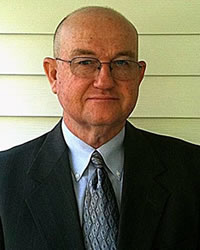
Gary Shepard is teacher and pastor of Sovereign Grace Baptist Church in Jacksonville, North Carolina.

Comments

0 / 2000 characters
Comments are moderated before appearing.

Be the first to comment!

Joshua

Joshua

Shall we play a game? Ask me about articles, sermons, or theology from our library. I can also help you navigate the site.