Bootstrap
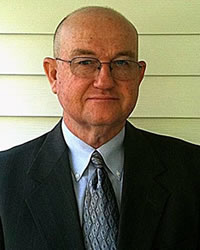
Gary Shepard

God's Greatest Glory

Psalm 130
Gary Shepard January, 8 2012 Audio
0 Comments
Gary Shepard
Gary Shepard January, 8 2012

Sermon Transcript

Auto-generated transcript • May contain errors

100%
I want you to open your Bibles
this morning once again to Psalm 130. Psalm 130, which is described
as a song of degrees, as I understand it, that as the groups appointed
would move closer up and closer up toward the place of worship
they would sing these verses, each as they went. The psalmist begins, Out of the
depths have I cried unto thee, O Lord. Lord, hear my voice. Let thine ears be attentive to
the voice of my supplications. If thou, Lord, shouldst mark
iniquities, O Lord, who shalt stand? But there is forgiveness
with thee, that thou mayest be feared. I wait for the Lord,
my soul doth wait, and in his word do I hope. My soul waiteth
for the Lord more than they that watch for the morning. I say,
more than they that watch for the morning. Let Israel hope
in the Lord, for with the Lord there is mercy, and with Him
is plenteous redemption. And He shall redeem Israel from
all his iniquities. I'll call this message this morning,
God's Greatest Glory. And it really begins with this
glory simply by the fact that the psalmist begins what he says
with a cry. A cry. We read where a broken
and a contrite heart is what the Lord looks to in those He
saves, and He finds it always because He's the one that puts
it there. The Spirit of God can only take
that dead sinner and give them life which is evidenced by this
cry unto the Lord. We know when a baby cries, it's
not in order that they might get life, but it's because they
have life. And when a spiritually dead sinner
is found crying out to the Lord, it is because God has quickened
them and given them spiritual life. And in that light, they
are brought to know something about and be aware of the great
and unchanging character of Almighty God. They know something about
his hatred of sin. They find out something about
his holiness. And they find out something about
his inflexible justice. Look down at verse 3 at what
he says. If thou, Lord, or since thou,
Lord, shouldest mark iniquities, O Lord, who shall stand? In ourselves, not one of us,
surely not this psalmist. And the fact is that God will
and does bring into account all sin, every sin, and especially
the sins of those He saves. And the reason why he is brought
to know these things, he tells us here in verse 5, he says it's
in his word that he has hope. He doesn't see any reason in
himself to have hope as a sinner. He doesn't find in anything he's
ever done, or thought, or accomplished, or abstained from doing, he doesn't
find anything in any of these things to give him hope, but
he says that in the Word of God, in what God says he finds hope,
and that is because the Spirit of hope has quickened him and
enabled him to see something about what God is saying in His
Word. He says all of these things,
and then in verse 4, there is a wonderful but. But. Lord, you will mark iniquities,
and surely not one sinner can in themselves stand and be accepted
by you on any basis in themselves, but, and that's the word of grace,
That's what Paul says in Ephesians 2 when he talks about those Ephesian
sinners who were in the state that they were in, dead in trespasses
and sins, and then he says, but God, but God who is rich in mercy,
For His great love wherewith He loved us, even when we were
dead in sins, hath quickened us together with Christ. By grace you are saved." And
as great as His holiness is in itself, as great as His power
is in itself, even as great as His justice is in itself, or
His love is in itself, we are brought in this book to know
something about and to remember His greatest glory. What is God's greatest glory? Well, I know this, I know that
there is a man that we read about in Scripture who knew the living
God and who inquired of Him that He might show him His glory. And that man was Moses. And it
is amazing to this man Moses, who is himself a picture of the
law, The law came, was given by Moses, but here is this man
who is a picture of the law, and when God reveals His glory
to him, it's not His law, but it's His grace. He says to Moses
in Exodus 33, "...and I will make all my goodness pass before
thee, and I will proclaim the name of the Lord before thee,
and will be gracious to whom I will be gracious, and will
show mercy on whom I will show mercy." This is God's greatest
glory. It is the glory of His sovereign
grace, His sovereign mercy in the Lord Jesus Christ. And the fact that we are in ourselves
spiritually blind, dead to the things of God, without understanding
and knowledge of God, is represented in how we view such a statement
by God of this very thing that glorifies Him. He says here,
I'll have mercy, I'll be gracious, to whom I'll be gracious. That means that there is not
one of us, not one son or daughter of Adam that is any way due or
worthy of or can do anything to deserve the mercy of God. God acts as the sovereign He
is and He shows mercy and grace to whoever He will. It's not
our free will by which we are saved, it is the will of God. It's not by our decision, but
it is by His decision. And the way we find ourselves
as dead rebel sinners is that we view this, which is the only
way any of us would ever be saved, we view this in a negative instead
of a positive. You and I are not deserving of
salvation. The devil himself does not want
us to have salvation. There is nothing in all of Adam's
race that anybody could do to cause us to have salvation. And so when there is no reason
in us, never could be anything done by us, never could it be
wrought by anybody else outside of us as far as our race is concerned,
and certainly not desired by the enemy of our soul, God still
says this, I will, I will. And men throw in the face of
God, such things as they call the free will of man, as if the
will of man somehow can overwrite or overpower the will of Almighty
God. The truth is, every sinner by
nature says, I won't, but God says, I will. I will. And some would say, well, that's
in Exodus. That's in the book of Exodus.
That's God talking to Moses. But isn't it amazing that in
the New Testament, Paul, writing to the Romans, he makes reference
to this very thing. In chapter 9 and verse 15, He
says, "...for he saith to Moses, I will have mercy, and I will
have compassion, on whom I will have compassion." Now listen
to the next statement, "...so then it is not of him that willeth."
Do you see that? Verse 16, Romans 9, "...so then
it is not of him that willeth." You can't will yourself to be
saved, you can't decide to be saved, you can't do anything.
It is not of him that willeth, nor of him that runneth. Somebody
says, well, I'll tell you what I believe. I believe just do
your best and do this or don't do that. No, he says, it is not
of him that willeth, it is not of him that runneth, but of God
that showeth mercy. If we could just learn that one
verse. that it is not of any one of
us willing anything, deciding anything, determining anything,
nor is it by any of us doing anything of ourselves, but it
is of God who has mercy, on whom He'll have mercy, and thanks
be to His name, He will have mercy. You see, the grace of
God, the sovereign free grace and mercy of God is His greatest
glory because there, all His attributes, all that He is, They
are not only together in the accomplishment of our salvation,
but they are all in harmony with each other in that salvation,
and they all glorify God in our salvation. His greatest glory
is His glory of grace in Christ, the whole triune Godhead. You go to Ephesians 1, and there
in that first chapter, about the first 14 verses, the apostle
Paul distinguishes the persons of the Godhead, the Father and
the Son and the Holy Spirit, and three times he says, it is
to the praise of the glory of His grace. All that the Father
does. He says, Bless me the God and
Father of our Lord Jesus Christ, who's blessed us with all spiritual
blessings in Christ, according as He has chosen us in Him before
the foundation of the world. It's all to the praise of His
grace. Then He says, He's made us accepted
in the Beloved, the One in whom we have redemption and the forgiveness
of sin. All to the praise of the glory
of His grace. And then He's come and quickened
us and revealed this blessed good news to us. He's done it
all by His Spirit, all to the praise and glory of His grace. You see, His grace, according
to the Apostle, reigns in righteousness. It's not grace like we show our
children, we think, whenever in the matter of their wrongs
and their misdoings, we just simply forget it and pass over
it, don't do anything about it. God, as a just God in this salvation,
shows Himself to be just, And at the same time, the Justifier. He says in Isaiah, He says, "...look
unto Me, and be ye saved, all the ends of the earth. There
is no other God beside Me, there is no other God like Me, a just
God and a Savior." And that's what the psalmist is saying here
in that fourth verse. He says, But there is forgiveness
with thee." And God, in such amazing mercy, has never to this
day retracted that statement, that declaration that he makes
by the psalmist, so that right now in this 1st of 2012, right
now here in this place, wherever this gospel preached, it remains
the same. There is forgiveness with God. You see, that's why the gospel,
now I'm not talking about man's gospel, but I'm talking about
God's gospel. That's why God's gospel in this
book is said to be good news. That means that all of us who
by nature, just like our father Adam, we think we can do something,
cover ourselves with an apron of self-made fig leaves, do something
to please God or be accepted by God, we who have heard that
all our days, also taught most likely by our parents, taught
surely by false religion, that we can do something, this gospel
comes to us as news. He describes it as glad tidings. And one thing a sinner finds
out when they are taught of God is this, there is no good news,
there is no glad tidings in any message, in any doctrine, in
any religion that tells a sinner like we are to do something to
please the thrice holy God. He says in that third verse,
there is forgiveness. He says in that 7th verse, there
is mercy. He says again in that 7th verse,
there is plenteous redemption. And the question that we have
need of asking ourselves this morning is this, do I fit the
character of those who would fit in this situation that he
described? Do I need to be forgiven? Am
I one of these who needs mercy? Am I one of these who needs a
plenteous redemption? Do I fit this character? And
if I am brought to see that I fit this character, there is a reason
and a ground for hope and for joy and for peace and for salvation. But that hope and reason is not
in ourselves. Just not. Let me read you a verse
out of Ezekiel. Chapter 33, I believe it is,
if I can find it. Verse 11, God says to His prophet,
He says, "...say unto them, As I live, saith the Lord God, I
have no pleasure in the death of the wicked." Now what does
that mean? Well, first of all, God's pleasure
has to do with His will and His own satisfaction as God, not
like ours. And what he is saying is this,
God Himself, He has no satisfaction, He finds no satisfaction in the
matter of dealing with men as wicked men outside of Christ. If He casts them into hell for
all eternity, His justice against their sin is never satisfied. The debt of their sin is never
paid. He says, but that the wicked.
Oh, we're sure he's talking about the most blatant rebel sinners
in the world, the wicked. The wicked, surely, he said,
but that the wicked turn from His way and live, turn ye, turn
ye from your evil ways, for why will you die, O house of Israel? Somebody says, well, I've turned
from my wicked ways. I've reformed. I've reformed. That's why I don't like the word
reform. What we need is regeneration. We will reform. You see, all
our ways are simply the ways of death, and what he's talking
about here is all our ways of saving ourselves. I don't know
too many people who believe that they'll be saved because they've
stayed drunk all their lives, or because they've been adulterers,
or fornicators, or whatever it is. Most of these folks who think
that they're going to be saved on the basis of something they
do are religious. And they've got all these ways.
But he says, I have no pleasure in the death of the wicked, but
that the wicked would turn from their ways to the way which is
Christ and Him crucified. Some people have an idea that
God just gets real happy to cast somebody into hell. That's not
true. And it's not true especially
in what he says plainly. He will and He has done it. But His glory is in His grace. It's in His forgiveness. It's
in His plenteous redemption. It's in His mercy. He says in
verse 5 here, "...I wait for the Lord, my soul doth wait,
and in His Word do I hope." We find the reason and ground for
hope set forth in the Word of God, in the Gospel which is described
as the Word of Truth. He says He has mercy. You know what mercy is? Mercy
is God in kindness dealing with us even as we have made ourselves
to be sinners and enemies to Him. Now, first of all, let me
tell you this, God has never been the enemy of His people.
Do you understand that? That's the truth. He loved them
with an everlasting love. He loved them, blessed them,
chose them in Christ before the world began. But they, sinners
as they are, they have, as Paul says, been enemies in their own
minds toward God. That's why we had to be reconciled
to God. You don't reconcile friends.
That's why he says that God was in Christ reconciling us to Him. And those wicked works. What is a wicked work? Enemies
in your minds by wicked works. By all that natural reasoning
and feeling and teaching that comes to a sinner and is naturally
in a sinner by which they think they can stand before God accepted. Well, I don't do that. You ask somebody, have you got
hope of heaven? Well, yes, I quit drinking years
ago, I quit lying, I don't steal anymore. But worse than those
things, Worse than those things are the things that we hold up
to God by which we expect to get His favor. Wicked works in
your minds. You see, we have hope, we have
grace, we have mercy because of what he says in verse 7. He says, "...and with Him is
plenteous redemption." Men call Christ the Redeemer, and they
don't have a clue as to what redemption is about. The word
redeem, or ransom, means to buy back by the paying of a price,
pictured over and over again in this book. And the price,
that was required before the justice of God to redeem sinners
such as we are, was nothing less than the precious blood of the
Lord Jesus Christ." But you look at what he says in verse 8, "...and
he shall redeem Israel from all his iniquities." Israel. You mean that nation of people
that he delivered out of Egypt? No. Everyone in that generation,
with the exception of two men, died in the wilderness. The Scriptures
say they died in unbelief and they perished, except Joshua
and Caleb. Well, who's this Israel? They're
the people that this Israel, this national Israel, was a picture
and a type of. Israel was that name that was
given, you remember, to Jacob after he was there by the brook
Jabok, and he said, you're no longer Jacob, but you're Israel,
prince with God. This is God's elect. This is
everyone that He chose in that covenant, which is called the
everlasting covenant. He chose them in Christ before
the world began. You say, I don't believe that.
You don't have to believe. You can die in your unbelief
if God lets you. That's what He says. that He,
according to His own will, having mercy on whom He will, saving
who He will, being gracious to whom He will, He chose this Israel
of God before the world began. And that's who the Lord Jesus
Christ came into this world to die for. Paul tells those Ephesian
elders in Acts 20, he said, you feed the church of God which
He purchased with His own blood. Christ said, I'm the good shepherd. I lay down my life for the sheep. And then He turns to these Pharisees
and He said, you believe not because you're not of My sheep.
But you notice every word in that 8th verse. He. Do you see that? He, not me,
not be. He shall, without any possibility
of doubt, when it says God shall do something, it's already a
done thing. He shall redeem. That is, by the paying of this
price required, the death of Jesus Christ, His perfect Son,
He shall redeem Israel. from all his iniquities." You
say, well, he's talking about Jacob there. Well, so what? Jacob
is a picture and a description of God's elect. He says, I am
the Lord, I change not, therefore you sons of Jacob are not consumed. And He'll redeem him. He'll redeem
this people. from all their iniquities, past,
present. You say, well, what about if
we sin tomorrow? What about if you will sin tomorrow? And the next day, and every day
you live on this earth, as a matter of fact, in yourself, that's
all you are, sin. Your only hope is to be made
the righteousness of God in Christ. through Christ, by grace, Him
doing everything. He's described in this way when
a verse came to be announced to His own earthly parents. It says in Matthew 1.21, "...and
she shall bring forth a Son, and thou shalt call His name
Jesus." I see Jesus, I saw Jesus on a sweatshirt yesterday, I
saw Jesus on a bumper sticker, and Jesus on a banner, and Jesus
this, and Jesus that. But the one they're talking about,
whoever he is, he's not like this one. Jesus means Jehovah
the Savior. Thou shalt call His name Jesus,
for He shall save His people from their sins." This plenteous
redemption is because of God's purpose and will, because of
God's covenant, because all things are considered by Him and included
in this covenant, every sin, all that's required. It is plenteous
because of the person who is the Redeemer, of whom it is said,
He shall not fail, and who said himself, It is finished. Does that mean anything to us?
To hear the Lord of glory hanging there made sin for His people,
saying, It is finished. It is plenteous because of the
sacrifice of His blood. John said, the blood of Jesus
Christ cleanseth us from all sin. As I understand that ETH,
it is the linear text which means a continual thing. For the blood
of Jesus Christ cleanseth us from all sins. When you look back in that Old
Testament economy, And when that priest went into that Holy of
Holies, he represented the people before God. And he took that
blood. of that lamb that was slain,
that Passover lamb, he went into the Holy of Holies and he sprinkled
that blood with a little shrub called hyssop. That's why David
is saying there in Psalm 51, purge me, cleanse me with hyssop,
that is with that way of blood. He sprinkled that blood where?
on the mercy seat. Mercy seat. You see, that's where
God meets sinners and has mercy on them, in Christ crucified,
which is what that mercy seat typifies. Paul said, "...in whom
we have redemption," speaking of Christ, "...through His blood,
the forgiveness of sins, according to the riches of His grace."
being justified freely by His grace through the redemption
that is in Christ Jesus. And therefore, hope is sure,
and grace is sure, and mercy is sure, because it has always
been sure through the merits of Christ's shed blood, His very
righteousness. And to doubt the mercy? And the
forgiveness of God is to doubt the redemptive work of Christ.
This book says His mercy endures forever. It says He will abundantly
pardon. It says He will freely give us
all things. It says, He delights to show
mercy. And there's only one reason why
you wouldn't want His mercy. Because you think you don't need
it. I'm telling you, this is one sinner that needs mercy.
This is one sinner that needs the grace of God in Jesus Christ. This is one sinner who delights
in the fact that God, in His own sovereign pleasure, determined
to show him mercy because, I'd have never had it any other way.
This is one sinner who delights in a salvation that is totally
outside of himself in another that God has appointed that's
full and free and final and eternal. Because I have nothing to give.
Let me read you. The prophet Micah is described
as one of the minor prophets. I don't think that's quite applicable.
But as he closes out, His prophecy, there in Micah chapter 7. He says in verse 18, Who is a
God like unto thee, that pardons iniquity, and passes by the transgression
of the remnant of his heritage? He retains not his anger forever,
because he delights in Mercy. He will turn again. He will have
compassion upon us. He will subdue our iniquities. And thou will cast all their
sins into the depths of the sea. You got a little baggage you'd
like to have cast into the depths of the sea? You ever done things
that just kind of haunt you all your life? I wish I hadn't said
that. I wish I hadn't done that. I've
got a long history of it. But amazingly, when Paul is repenting
there in Philippians 3, he's not repenting of things that
men would just absolutely know anyway are evil. He's repenting
of the things he thought once were good, that he was a Jew,
that he was a Roman citizen, that he was this, that he was
that, that he was a teacher, He said, I only want to be found
in Christ, possessing that righteousness that He gives as a gift, and
not any that I might try to establish by any principle of doing. Peter said, Blessed be the God
and Father of our Lord Jesus Christ, who according to His
abundant mercy hath begotten us again unto a living hope by
the resurrection of Jesus Christ from the dead." Our hope's alive.
He's seated at the right hand of the Father. John says, but
if we walk in the light as He is in the light, let me stop
right there. What is it to walk in the light?
Somebody said, well now, if you don't do this, that or the other,
you won't have fellowship with God. You can just fall out of
fellowship with God. Do you ever think about how stupid
that is? To imagine that at any point
in a sinner's life, he would have fellowship with or fall
out of fellowship with God based on something that they did. What
is it to walk in the light? It is to walk by faith in the
light of the gospel, in the light of Christ who is the light. And
in that light, we have fellowship. You see, you and I couldn't even
have fellowship outside the light. I guarantee you there'd come
a day when I'd say something you didn't like, or it would
sound like something you didn't like, or I'd do something you
didn't like, or I'd act real stupid or something, you'd just
say, I can't have anything to do with that guy. But if you
look at me in Christ, that's where fellowship is. He says,
if we walk in the light, even as He's in the light, He said,
we have fellowship one with another, and the blood of Jesus Christ
His Son cleanseth us from all sin. If we confess our sins,
He is faithful and just to forgive us our sins and to cleanse us
from all unrighteousness." And when Paul says all those glorious
things, the Spirit of God directs him to say in Romans 5, he sums
it all up like this. He said, but where sin abounded,
grace did much more abound. There are always those that say,
if we preach, if we believe in salvation, that's all of grace
and all in Christ, that will just simply minimize the awfulness
of sin and encourage men and women to sin. That's absolutely
a lie. It's the grace of God that motivates
the people of God who have been saved by grace to seek to glorify
God in their lives and hear His Word. Grace did much more abound. Someone said, like the widow's
oil and meal, it fails not. Like the water from the rock,
it's ever flowing. Like the manna from heaven, it's
new every morning. Like the garments of Israel,
it never wears out. Like the fishes and loaves, it's
multiplied. Like the prodigal son's house,
there's enough and to spare." And he says by the prophet Zechariah,
when all this church, when all this work of God, when all this
building, when that last stone goes in, that last living stone. He says, "...who art thou, O
great mountain before Zerubbabel? Thou shalt become a plain." And
he shall bring forth the headstone thereof with shoutings, crying,
Grace, grace, grace." One day two men went into the temple
to pray. And one man stood up and he could say, maybe truly
in one sense of speaking, he said, God, I thank you that I'm
not as other men, even as this publican. I tithe, I do this
and I do that and the other. And then it says that this publican,
he smote himself upon his breast in such an agony of spirit, that
broken and contrite heart before God, just kind of beat himself
on the chest. And he said, God, be merciful
to me, a sinner. The word merciful there means
be propitiated. be favorable to me through a
perpetuatory sacrifice." Christ is described as the propitiation
for our sins. And the article there is not
a, but it is the. God be merciful to me, the sinner,
the chief of sinners, the sinner of sinners. There is forgiveness. There is mercy. There is a plenteous
redemption, but it's all in Jesus Christ. And not Jesus Christ
in some kind of abstract, mystical sense, you know, we all believe
in Jesus. Not this one. It's in Christ
crucified. It's in who He is. It's in what
he accomplished. It's in that blood that he poured
out as the price of redemption. And that's why God gets all the
glory. He gets all the glory. And that's
why He's worthy of being worshipped. Someone says, well, we're saved
all by grace, what do we do? We just worship God and thank
Him and praise Him and give all the glory to Him and bear witness
to this truth as God gives us opportunity. Have mercy on me,
O Lord. I never stop saying that to tell
you the truth. He has had mercy on me, but I
still need it every day. I'll be saying it tomorrow. Have
mercy on me. Father, this day we pray that
You might bring this reality of Your Gospel, of Your grace,
to the heart of someone present, This is that appointed hour in
which you're pleased to reveal it to them. Cause them to have
faith to rest in that finished work of your Son, the Lord Jesus. Cause them to behold your greatest
glory in the face of that crucified Christ. Grant us forgiveness,
mercy, grace, as we seek it, as we receive it, through His
plenteous redemption. We know Your people are all freely
justified through that redemption which is in Christ Jesus. And
we pray and thank You and praise You in His name. Amen.
Gary Shepard
About Gary Shepard
Gary Shepard is teacher and pastor of Sovereign Grace Baptist Church in Jacksonville, North Carolina.

Comments

0 / 2000 characters
Comments are moderated before appearing.

Be the first to comment!

Joshua

Joshua

Shall we play a game? Ask me about articles, sermons, or theology from our library. I can also help you navigate the site.