Bootstrap
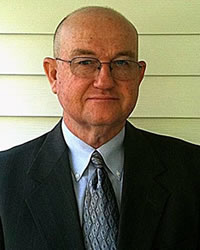
Gary Shepard

All Things New

2 Corinthians 5:17
Gary Shepard January, 1 2012 Audio
0 Comments
Gary Shepard
Gary Shepard January, 1 2012

Sermon Transcript

Auto-generated transcript • May contain errors

100%
Turn with me in your Bibles to
2 Corinthians chapter 5. I suppose we could say that the
old year has now passed, and since this is the first day of
the year, New Year's Day, I suppose we can say that the new year
has come. But you know, the truth is that
although the time of the old year has passed, there are many
of the old things that remain. Someone said, the thing about
the way that time changes is that it still stays the same. I know that God is still the
same. I know that sin is still the
same. I spoke to Billy on the phone
this morning. He had to work and he said that
he ushered out the old year and the new year picking up a body
of someone that had died. It changed, but it's still the
same. And all who stand in themselves
before Almighty God, their sins remain. Their old state in Adam
remains. Their old sinfulness remains. But here in verse 17 of 2 Corinthians
5, The man that the Spirit of God
used to write this epistle, he speaks of a real passing away
of the old, and of all things becoming new. He says, therefore,
if any man be in Christ, he is a new creature. Better translations say, a new
creation. Old things are passed away. Behold, all things are become
new. This is the case, this is the
state with all those, but only those in Did you see that? If any man be in Christ. Not all these other differences
and distinctions that men make, but if any person be in Christ. And furthermore, he says that
this is every bit all of God. all of His grace. Verse 18, he
says that, he says, "...and all things are of God, who hath reconciled
us to Himself by Jesus Christ, and hath given to us the ministry
of reconciliation." You see, this business of making things
new is something that God had prophesied long ago and promised
by the prophets. Listen to what He says through
Isaiah, "'Remember ye not the former things? Neither consider
the old things. Behold, I will do a new thing. Now it shall spring forth, shall
you not know it? This people have I formed for
myself, they shall show forth my praise." He said, I'll do
a new thing. And this is exactly what is declared
also by the apostles. Listen to what John says in the
Revelation. And I heard a great voice out
of heaven saying, Behold, the tabernacle of God is with men,
and he will dwell with them. and they shall be his people,
and God himself shall be with them, and be their God." And
I really like this next line. And God shall wipe away all tears
from their eyes, and there shall be no more death, neither sorrow,
nor crying, neither shall there be any more pain, for the former
things are passed away. And he that sat upon the throne
said, Behold, I make all things new." I make all things new."
He says, right, for these words are true and faithful. What are these new things and
how are they in the Lord Jesus Christ? How do they become the
possession the privilege, the blessing, the comfort, the encouragement,
and the rejoicing of this people that he's spoken of. These people
who are described as being in Christ. Well, the first thing that I
would say to you this morning is that when he talks about these
new things, one of these new things that he's talking about
is that new covenant. The new covenant. And when God speaks through the
apostles of this new covenant, He is talking really about that
everlasting covenant which is new only in the order of revelation. This is that newly revealed,
newly made manifest covenant, but it is the everlasting covenant. Paul writes to the church in
Galatia and He says, and this I say, that the covenant that
was confirmed to Abraham through his seed, singular, before of
God in Christ, the law, which goes also by that name of the
old covenant, The law which was four hundred and thirty years
after cannot disannul that it should make the promise of none
effect. God gave this covenant as a covenant
of promise to Abraham and not a covenant wherein the blessings
of that covenant would be gained by something that he did. It was a covenant of promise. In Jeremiah, he says this, "'Behold,
the days come,' saith the Lord, "'that I will make a new covenant
with the house of Israel and with the house of Judah.'" Those
two names are given to describe spiritual Israel. Israel meaning
prince and Judah meaning praise. And this covenant that he made
with Christ before the world began, and the recipients of
these covenant blessings are his elect people that he then
chose in Christ and gave to Christ. You remember the Song of Solomon. The bridegroom makes this expression,
which I love very dearly. Because there is a sense in which
Christ is given to His people, a sense in which they are also
given to Him. And so the bridegroom says, I
am my beloved's and He is mine. But that covenant, the Apostle
Paul describes in Ephesians 1 when he begins that letter by blessing
or praising or thanking God for this very covenant grace given
in Christ to his people. He says, "...Blessed be the God
and Father of our Lord Jesus Christ, who hath blessed us with
all spiritual blessings in heavenly places in Christ, according as
He hath chosen us in Him before the foundation of the world,
that we should be holy and without blame before Him, in love having
predestinated us unto the adoption of children by Jesus Christ to
Himself according to the good pleasure of His will, to the
praise of the glory of His grace. wherein He hath made us accepted
in the Beloved." You see, the Lord Jesus Christ was made to
His people their surety, and their mediator, and their great
high priest, and their covenant head. And so that's the language
that Paul takes there in that 17th verse. They are all said
to be in Christ Jesus. They were chosen in Christ. They were loved in Christ. They were predestinated in Christ. They were redeemed by and in
Christ. And they are in the gospel called
to Christ. and they are brought to have
faith in Christ. They are in Christ. And we know this because of what
we find in Hebrews 8 and 9 especially, where the apostle says that the
first covenant could not save because it promised life on the
basis of obedience to that covenant. Somebody's always saying, well,
the Bible says there in the Old Testament that if they did this
and they did that, or they do the other, or they refrain from
doing that, that God would bless them. But God never gave that
covenant as a basis of man ever thinking he could receive anything,
but that covenant is given to show us that the basis upon which
we receive all is the grace of God, the mercy of God. You see, it promised life and
blessing on the basis of an obedience which no sinner under it could
ever perform, though the problem was not with that covenant, but
it's with the sinner. Paul says this, I do not frustrate
the grace of God. For if righteousness," and I
mean any kind of righteousness, for if righteousness come by
the law, then Christ is dead in vain. You see, all that Old
Covenant could do, and that only by the Spirit of God revealing
it to a sinner, all it could do is show our inability to keep
it, our inability to establish righteousness before God, our
inability to obey God, or even to save or add to our salvation
in any way. whatsoever except by God's grace
in Christ." You see, it was given not only to do that, but given
also in its pictures and in its types to show the way that God
does say. by a sacrifice for a sin, by
a substitute for sinners, by a priest and a mediator, by blood. Turn over to Hebrews chapter
8. Hebrews chapter 8, and listen
as the Apostle gives us this clear revelation of what that
covenant and those things were really all about. Verse 1, he
says this, Now of the things which we have spoken, this is
the sum. We have such a high priest who
is set on the right hand of the throne of the majesty in the
heavens, a minister of the sanctuary and of the true sanctuary which
the Lord pitched, and not man. For every high priest is ordained
to offer gifts and sacrifices, whereof it is of necessity that
this man have somewhat also to offer." If Christ is truly a
high priest, then of necessity in the type and picture of those
Old Testament priests, He has to have something to offer. For
if He were on earth, He should not be a priest, seeing that
there are priests that offer gifts according to the law, who
serve unto the example and shadow of heavenly things, as Moses
was admonished of God when he was about to make the tabernacle. For see, saith he, that thou
make all things according to the pattern showed to thee in
the mount. But now hath he obtained a more
excellent ministry, by how much also he is the mediator of what? A better covenant. He, in comparison to those Old
Testament priests, has a far better, a far superior ministry
in that he himself is a priest forever after the order of Melchizedek. in that he is a perfect, holy,
and righteous priest himself that never dies, in that his
sacrifice is the sacrifice of his own blood, of his own self,
and therefore, he's the mediator of a better covenant. which was established upon better
promises. For if that first covenant had
been faultless, then should no place have been sought for the
second. For finding fault with them,
He says, Behold, the days come, saith the Lord, when I will make
a new covenant with the house of Israel and with the house
of Judah." Not according to the covenant that I made with their
fathers in the days when I took them by the hand to lead them
out of the land of Egypt, because they continue not in my covenant,
and I regarded them not, saith the Lord." Altogether different. Altogether better promises. A better priest. A better sacrifice. and therefore a better covenant. Turn over to Hebrews chapter
9. Let's pick back up in verse 13
of chapter 8. He says, "...in that he saith,
A new covenant he hath made the first old, now that which decayeth
and waxeth old is ready to vanish away." Then look down at verse
20 of chapter 9. He goes through all this description
of comparing That Old Testament priesthood, that Old Testament
covenant, those Old Testament sacrifices. And then he says
this in verse 20, saying this, this is the blood, not of all
those animal sacrifices, but this is the blood, the blood
of the Lord Jesus Christ. This is the blood of the testament
which God hath enjoined unto you." Now we know, if we know
anything, that the blood that is talked about here in contrast
and in comparison to that blood that those priests offered on
all those altars, That blood is the blood of the Lord Jesus
Christ, which He says is the blood of the everlasting covenant. So, it does not matter in what
day it is, it does not matter in what time of the year it is,
to everyone in Christ, they forever possess in Him The new covenant
with all its promises and with all its blessings. Always new. Alright? Here's the second thing.
And that is the new creation. If you look back at verse 17,
Paul says, Therefore if any man be in Christ, he is a new creature
or If any man be in Christ, he is, that's added, but it's in
Christ that there is this new creation. New creation. And my friend, that is exactly
what the new creation is about. It is about being in Christ. It is being brought from the
state in which we fell in Adam to the state in which we are
raised in Christ. Every person is either in the
old creation or the new creation. They're either in Adam or they're
in Christ. Paul says, "...for as in Adam
all die, even so in Christ shall all be made alive." And the reason
that we know that what is being talked about here is not really
this business of regeneration, but reconciliation. Just go back
and read this fifth chapter of 2 Corinthians. And when you read it, read it
without any preconceived ideas or notions or such as that, and
read it in the light of the context, not only of this chapter, but
of all the rest of the chapters in this book. Because what has
happened many, many times, and I don't... really fault anybody
for it, but I don't think it's the correct interpretation. This
text has been applied to regeneration. But it's not so much that he's
saying here that everyone in Christ is a new creature, but
rather that everyone in Christ is in this new creation. In other words, believers, those
in Christ, They no longer stand before God as those alienated
or far away or condemned with the old creation, but rather
reconciled to God and justified and declared righteous and at
peace with God, based on God having imputed to them the righteousness
of Christ. If you look down, at that 18th
verse, where he goes immediately to show us that the subject is
reconciliation rather than regeneration, he begins as everything must
begin with God. For God, He did. He did something. And it's not
our believing that reconciles us to God. is what God has already
done through the Lord Jesus Christ. And all we have to do is read
these words in this context of reconciliation being His subject,
and He says this, He says, "...and all things are of God who hath..."
You see that? I believe that means past tense,
doesn't it? This is something that God has
already done. This is not something He's waiting
for us to do, or help Him to do, or act in some way as for
it to be accomplished. This is, as all things in salvation,
something that God has done. Alright? It's done, it's accomplished. What has He done? He reconciled
us. He reconciled us to Himself. Now you think about this. God
is the offended party. He does not have to be reconciled
to us because He never changes for His people. He hasn't altered,
He hasn't acted in any way toward His people that He needs to be
reconciled to them, but they all need to be reconciled to
Him. There's just one problem. They
will not, they cannot, and they have not. done anything that
would ever be a basis of reconciling themselves to God. And you see,
God knows that. He entered into this business
of covenant salvation with His eyes open, knowing full well
just exactly what we are and what we wouldn't do and couldn't
do. So, in order to save us, He saves
us with that fully in His mind and purpose. He hath reconciled
us. Reconciled us. His law was broken. He was sinned against. His justice
requires and demands salvation. He's the one that has to be reconciled. But if we're to be reconciled,
He has to do it. And all things are of God who
hath reconciled us to Himself. By Jesus Christ. By Jesus Christ. Now, let me
ask you this. If we strictly apply that seventh
verse to regeneration, as to something that has taken place
as a result of God regenerating us. Could we ever for one minute
so deceive ourselves and so be so blind to ourselves and so
full of pride and self-righteousness that we could say that this has
altogether happened to us? You say, what do you mean? Well,
he says, for if any man be in Christ, he is a new creature.
Old things are passed away. Behold, all things are become
new. Now, I won't even ask you the
question, but I'll ask it of myself. Could I, since first
I heard the gospel and believed, since first God gave me faith
and understanding and repentance, since first all these things
happened to me, have I ever at that point been ever able to
say of myself and of my nature and of my flesh Well, all those
old things are passed away. Well, there's been a lot of change.
Well, I certainly hope so. Well, I do a lot of things now
that I never did or was interested in before. I certainly hope so. But could you ever, on your best
day, Honestly, before God and men and your own conscience say,
well, all those old things are passed away. Not a chance. You are utterly self-deceived,
sin-deceived, Satan-deceived, if you ever imagine that. And
even worse than that, could you ever say, based on looking that
as what takes place in regeneration, could you ever say that everything,
all things, are become new? You're walking around here in
that same old body. You're walking around here, lies
on your lips. You walk around here with lust
in your heart. hate in your heart that rises
up so quickly, that if God did not restrain it, you would be
a murderer in an instant? No. But can you say by the grace
of God, that God neither looks at you now in Adam, nor does
He look at you in your own self alone, but that He looks at you
and in Christ. Those old things, those old connections
to our father Adam, our connection with this old creation that will
come under the judgment of God, our old connections and associations
with that first Adam, that they are all passed away? Absolutely. And that in Jesus
Christ, being in Him, All things are made new. Made new. Well, somebody says, well, what
does that mean then? Where Paul tells us here just
a little bit later on, in verse 20, he says, after all these
other things he said, that he said, be ye reconciled to God. What are we to be reconciled
to? Well, if you go back and you start reading, In chapter
1, and come to this point, where Paul has talked to them about
all the persecutions they'll endure, all the problems in the
church that they were enduring, all the problems in their life
that they were all enduring, all of which came at the providential
hand of God. He said, you be reconciled to
these things. They're all God sent. They're
all God's work. They're all God's doing. You
be reconciled to God because He has already fully and totally
reconciled you unto Himself through the Lord Jesus Christ. You see,
that's the reason to be reconciled to all these things. They're
all of God. who has already, through the
doing and the dying of His Son, reconciled us unto Himself."
God was in Christ reconciling. Isn't that what it says? He's
the one doing, He was in Christ doing it, He's already done it,
and He was doing it when Christ suffered and died on that cross. And everyone in Christ. They were brought to an end of
all those things when they died in Christ. And they were brought
into an entrance and reception of all these things when they
were raised in Christ from the dead. All right? That said, here
is another new thing. The new birth. The new birth. You see, because of Christ's
reconciling death, God in grace gives to His people new birth,
new life, and this new life is the life of faith. Now let me
ask you this. I'm going to ask you this. You
just answer to yourself. Is there anything that a believing
sinner won't do in himself after he's born of God, after he believes
God. Is there anything he won't do?
Thank God he restrains us so that we don't. But is there anything?
You just start at the first of the Bible and look at God's people. And if it doesn't take that thought
out of your mind and off your lips, I don't know what it would
take. Somebody's always saying, A real
Christian won't do this. Give me a minute and I'll show
you where one did. You say, are we condoning this? Absolutely not. Are we encouraging
it by telling men and women that? Absolutely not. But it's the
reality that that which is born of the flesh is flesh. So what is the difference? in
a person who is unregenerate, on the one hand, and a person
who is regenerated, on the other hand. From the person who is
dead in trespasses and sins, and the person who has new birth. I see one thing. Faith. Faith. You see, when he talks
about, in that covenant, giving us a new heart, I've got the same physical heart
I've always had since birth, don't you? What is the new heart? Well, the new heart is simply the heart that believes, a heart
of faith. Isn't that what Paul says in
Romans 10? He says, with the heart, man
believeth unto righteousness." When Christ said to Nicodemus
what He did and showed the necessity of this new birth, this birth
from above, He said, you must be born again. Except you be
born again, you cannot see, you cannot enter the Kingdom of Heaven. And when Paul writes to the Ephesian
church, he says, And you hath he quickened who were dead in
trespasses and sins. And he goes on farther in the
same chapter. And he says this, "...for by
grace are ye saved through faith, and that not of yourselves, it
is the gift of God." God gives those that were reconciled to
Himself in Christ, He gives to them faith. They believe And
therefore, God enabling them to believe, they experience things,
they trust things, they do things that they did not before because
they believe. Because the Spirit of God. rather
than giving them a new nature, a new person has come to indwell
them. And the Spirit of God, the Spirit
of Christ as He's called, He comes and indwells us, the fruit
of the Spirit being that they believe. They're kind. Just read
Galatians 5 and about verse 22, I believe it is. They're new. They're newly born of God. And it says that God had commanded,
or God in that covenant had said, I'll put my laws into their minds
and write them in their hearts, and I will be to them a God,
and they shall be to me a people. He gives them new birth. And
they take by that life of faith now, they walk a new course of
their life. They walk by faith, not sight. They come to serve God in a new
way through the Lord Jesus Christ, and by His Spirit, and from principles
of grace. And they have received in Him
another and a better righteousness, and they have then by faith seek
out new companions." Why? They want to be with those in
Christ. Those are the things of the new
creation. And then finally he said, I'll
give them new heavens and a new earth. God will soon literally
make all things new. He promised it by Isaiah, for
behold, I create new heavens and a new earth, and the former
shall not be remembered. Hallelujah. Hallelujah. And the former shall not be remembered,
nor come into mind." There's so much foolishness, superstition. People say, well, when I get
to heaven, oh, so-and-so we're going to talk about that day
we played golf together. Oh, me. They'll not be remembered. They'll not be remembered. But
be ye glad and rejoice forever in that which I create, for behold,
I create Jerusalem a rejoicing and her people a joy. It seems
like we've had a lot of weeping lately. But God said, I create
Jerusalem a rejoicing and her people a joy. Peter, he says,
nevertheless we, according to His promise, look for new heavens
and a new earth wherein dwelleth righteousness. Wherefore, beloved,
seeing that ye look for such things, be diligent that ye may
be found of Him in peace without spot and blameless." He gives
us a new commandment, that you love one another. He gives us a new song. And so Paul writes to the Philippians
in the third chapter, and he says in verse 13, "'Brethren,
I count not myself to have apprehended. But this one thing that I do,
forgetting those things which are behind, and reaching forth
unto those things which are before, I press toward the mark for the
prize of the high calling of God in Christ Jesus. What's that? That's everything
that God has to give and has given us in Christ. Fully made manifest. And we being able to fully enjoy
it, with Him forever, then it will all be really new. But in the greatest and fullest
sense, it is already the possession of all His people, never to be
improved upon, added to, or taken away from, because it's all in
Christ, in Him. He hath made all things new. And all those old things, they're
passed away. How we ought to praise Him. Father,
this day we do give You thanks and praise. And while we do enjoy
in a great measure by faith all these new things, haste the day
in which we will know the full experience of all these old things
all passed away, never to be remembered again. And all these
new things in Christ to be ours in that full experience of grace
forever and ever and ever to worship you Thank you and praise
you forever. Father, we pray that in this
life you would help us, that you would be in all things God
our Savior, until you have fully and finally delivered us from
this present evil world. Thank you and we pray in Christ's
name. Amen.
Gary Shepard
About Gary Shepard
Gary Shepard is teacher and pastor of Sovereign Grace Baptist Church in Jacksonville, North Carolina.

Comments

0 / 2000 characters
Comments are moderated before appearing.

Be the first to comment!

Joshua

Joshua

Shall we play a game? Ask me about articles, sermons, or theology from our library. I can also help you navigate the site.