Bootstrap
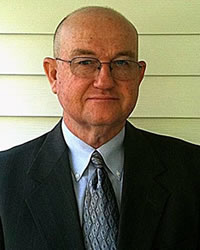
Gary Shepard

The Sins of the Saints

2 Samuel 12
Gary Shepard November, 13 2011 Audio
0 Comments
Gary Shepard
Gary Shepard November, 13 2011

Sermon Transcript

Auto-generated transcript • May contain errors

100%
Turn once again in your Bibles,
this time to 2 Samuel chapter 12. That 51st Psalm that we read, is said to be in a close connection
to what we'll read in this twelfth chapter of 2 Samuel. It says, And the Lord sent Nathan
unto David. And he came unto him, and said
unto him, There were two men in one city, the one rich, and
the other poor. The rich man had exceeding many
flocks and herds, but the poor man had nothing save one little
ewe lamb, which he had bought and nourished up, and it grew
up together with him and with his children. It did eat of his
own meat and drank of his own cup, and lay in his bosom and
was unto him as a daughter. And there came a traveler unto
the rich man, and he spared to take of his own flock and of
his own herd to dress for the wayfaring man that was come unto
him, but took the poor man's lamb and dressed it for the man
that was come to him. And David's anger was greatly
kindled against the man. And he said to Nathan, As the
Lord liveth, the man that hath done this thing shall surely
die. And he shall restore the Lamb
fourfold, because he did this and because he had no pity. And Nathan said to David, Thou
art the man. Thus saith the Lord God of Israel,
I anointed thee king over Israel, and I delivered thee out of the
hand of Saul. And I gave thee thy master's
house and thy master's wives into thy bosom, and gave thee
the house of Israel and of Judah. And if that had been too little,
I would moreover have given unto thee such and such things. Wherefore hast thou despised
the commandment of the Lord to do evil in his sight? Thou hast
killed Uriah the Hittite with a sword. and hast taken his wife
to be thy wife, and hast slain him with the sword of the children
of Ammon. Now therefore the sword shall
never depart from thine house, because thou hast despised me,
and hast taken the wife of Uriah the Hittite to be thy wife. Thus saith the Lord, Behold,
I will raise up evil against thee out of thine own house,
and I will take thy wives before thine eyes, and give them unto
thy neighbor, and he shall lie with thy wives in the sight of
this sun. For thou didst it secretly, but
I will do this thing before all Israel and before the sun. And David said unto Nathan, I
have sinned against the Lord. And Nathan said unto David, the
Lord also hath put away thy sin, thou shalt not die. Howbeit,
because by this deed thou hast given great occasion to the enemies
of the Lord to blaspheme, the child also that is born unto
thee shall surely die. And Nathan departed unto his
house, and the Lord struck the child that Uriah's wife bare
unto David, and it was very sick. David therefore besought God
for the child, and David fasted, and went in, and lay all night
upon the earth. And the elders of his house arose
and went to him to raise him up from the earth, but he would
not, neither did he eat bread with them. And it came to pass
on the seventh day that the child died, and the servants of David
feared to tell him that the child was dead. For they said, Behold,
while the child was yet alive, We spake unto him, and he would
not hearken unto our voice. How will he then vex himself
if we tell him that the child is dead? But when David saw that
his servants whispered, David perceived that the child was
dead. Therefore David said unto his
servants, Is the child dead? And they said, He is dead. Then
David arose from the earth, and washed, and anointed himself,
and changed his apparel, and came into the house of the Lord,
and worshiped. Then he came to his own house,
and when he required, they set bread before him, and he did
eat. Then said his servants unto him,
What thing is this that thou hast done? Thou didst fast and
weep for the child while it was alive, but when the child was
dead, thou didst rise and eat bread. And he said, while the
child was yet alive, I fasted and wept, for I said, who can
tell whether God will be gracious to me that the child may live? But now he is dead, wherefore
should I fast? Can I bring him back again? I
shall go to him, but he shall not return to me." This account is, of course, the record of God that comes
following David's sin with Bathsheba. It was not his only sin, but it is a representative sin. not only to be looked upon by
David and those in his day, but by every one of the Lord's people. I call this, this morning, the
sins of the saints. And it would seem to natural
thinking that you would not even use those two thoughts in the
same phrase. It would almost be like saying,
a rich man's poverty, the sins of the saints. But the saints
of God are not who and what men in religion in every age make
them to be, but the saints of God are the people of God, every
one of God's elect, every believer. Do the saints sin? Well, absolutely, there is no
question that they will and that they do. And such noted ones
who have been saved by the grace of God, like David or even like
Paul, they all confess themselves to be, even after their conversion,
sinners. If you remember in Romans chapter
7, Paul writes about this conflict and finally declares in this
statement just exactly what he is in the flesh. He says, O wretched
man that I am. Now, there is no doubt that this
man David was a righteous man, that he was saved by the grace
of God in the Lord Jesus Christ. He was a believer, a saint of
God. As a matter of fact, you can
look in Acts chapter 13 and hear this description by the Spirit
of God concerning David. That he was this man described
as the man after God's own heart. But David was, just like every
believer, just like us, David was a sinner. And so what we have need to know
and to understand in what we read here about David is how
does God deal with David's sin? How did God actually deal with
David's sin? Because if you look back at verse
13 here, it says that David hears this message from God's prophet,
whose name is Nathan, And if we know anything about how God
is in Himself, it seems to be a bit contradictory to God. Absolutely contradicted to David's
own sense of judgment. Because of that very man that
Nathan used to very wisely show David for what he was to his
own self, David pronounced upon that man the sentence of death. He said, bring that man to me,
a man who would do such a thing, bring that man to me and he will
surely die. But look at verse 13. And David said unto Nathan, I
have sinned against the Lord. And Nathan said unto David, the
Lord also hath put away thy sin, thou shalt not die. In other words, God who must
deal with all people, even those he saves, as the righteous judge. He must also deal with David
if he were to save him from his sins. He must deal with him in
righteous grace. And what we need to find out
is how did God, as this just God, as this righteous God, how
did He deal with David in the matter not only of this sin,
but of all his sin? How did He deal with him righteously
so that the sentence that is pronounced against him is this? You will not die. You will not have to die. Well, he deals with David just
like all of his people by taking all of David's sins, as he does
all the sins of his people, and imputing them or charging them
to Christ and holding him responsible for David's sin. Paul writes
in 2 Corinthians 5, this capsule of gospel truth, of imputation
and substitution. And he says, "...for He, that
is God, hath made Him, that is Christ, to be sin for us who
knew no sin, that we might be made the righteousness of God
in Him." When Isaiah is used by the Spirit
of God to declare the truth of how God righteously deals in
the sins of His people, he says of Christ, the Lord hath laid
on Him the sins or the iniquity of us all. It isn't that David's
sin goes unpunished, and it certainly is not that his sin goes unnoticed. But as David himself would write
in the Psalms, he says, God hath not dealt with us after our sins,
nor rewarded us according to our iniquities. Now you think about that statement.
And if there ever was a man who could read that or state that
or believe that to the joy of his soul, it was David. He says, God hath not dealt with
us after our sins. But that doesn't mean he has
not dealt with our sins. That does not mean he has not
dealt with our Savior in the matter of our sins. He says,
neither has he rewarded us according to our iniquities. But it is in David's case here,
and just like the case of every sinner he saves, as Abraham says
to God in the matter of dealing with Lot and Sodom, he said,
I know and I'm sure that the judge of all the earth will do
right. He'll do right, not only as He
condemns men in judgment for sin, but He has done right in
saving all His people from their sin. And David's sin did not
go unpunished. David's sin was dealt with by
God, but as he himself would say, blessed is he whose transgression
is forgiven, whose sin is covered, and blessed is the man unto whom
the Lord imputes not iniquity, and in whose spirit there is
no guile. In other words, the gospel blessing,
the gospel joy that it brings to all the Lord's people. Happy
is he whose transgression is forgiven. Now, when you go to
the New Testament and you find this word forgiven or forgiveness,
It means what it means in the light of Scripture because He
tells us that there is no forgiveness of sin, there is no remission
of sin without the shedding of blood. In other words, forgiveness
with God, the forgiveness of God in the matter of David's
sin in this matter and every other matter, was not simply
him sweeping the sins of David under a carpet any more than
the case would be with us. But forgiveness lies in this.
There is forgiveness because there is remission. There is
remission of sin because there is the shedding of Christ's blood. He was able as a just God and
as a Savior to deal with David and all his people in mercy and
grace because he dealt with his sins through Christ. through the Lord Jesus Christ. And the penalty and the payment
for all the sins of all God's people was exacted from Christ
to the full satisfaction of the law and the justice of God when
He was hanged there on that cross. Isaiah said, the chastisement
of our peace was upon him. and now being justified freely
by God's grace through that redemptive work in Christ. And since Christ
is the one that God has set forth as the perpetuatory sacrifice
to turn away His wrath against sin, God is not only saving David
from all his sin, but He is declaring Himself to be right and to be
just in the doing of it. Our sins, he says, are put away. Look down at that 13th verse
again. Nathan said unto David, The Lord
also hath put away thy sin. Now, if he hadn't, the natural
consequence of that would have been what? Death. He says, the
Lord hath put away thy sin. And we ought to see in that the
utter impossibility of that which we try to do by nature. David couldn't put away his sin. I can't put away my sin. You
can't put away your sin. And we try to put it out of our
minds, we try to put it off on somebody else, we try to put
it away as if it doesn't exist, but we cannot put away sin. Well, how was David's sin put
away? He said, the Lord has done it. hath put away thy sin." Now,
if you stop and think about it, Christ had not yet come into
this world. But the Lord Jesus, as the surety
of David and all of his people, the Lord Jesus as that one to
whom all of their sins are imputed, they've been in his responsibility. They've been his to pay. The
Lord hath made them to meet on his head as far as accountability
and responsibility since before the world. And so God's prophet
could announce to David, the Lord hath put away your sins. There is therefore now no condemnation
to those that are in Christ. That is, the believers' standing
and the believers' state, they are unalterable because Christ
has shed his blood for the full payment of the ransom price required
by divine justice. David was not in danger of being
lost. David would not suffer loss of
that inheritance reserved in heaven. David would not in any
way be looked upon with the frown of God, as far as that just God
is concerned. Why? Because Christ had stood
in His place. born all his sin, even this great
sin, in his own body, and would come into this world and shed
his blood. God had justified him, declared
him righteous in the Lord Jesus Christ. But, You see, some people have the
mistaken notion that in the way that God has dealt with our sin
in Christ outside of ourselves, that as He has, as the righteous
judge, already judged our sins in Christ through the shedding
of His blood, That's it with sin. And there's
a sense in which that's true. But how can we read this text? How can we hear what God has
reserved to tell us about David's situation and not see that there
is a consequence of sin? Now, David, like every believer, like all
of God's children, has received this plain instruction
from God. Now, that's without us offering
any of our excuses or anything else. What is that command of
God? He says, sin not. Isn't that what John said? I
write unto you, little children, that you sin not. You see, David, and we ought
always to remember this, David is not only the judge, or as
somebody said, the moral ruler, He is also the believer's holy,
heavenly Father. What did He teach us? He taught us to pray, Our Father,
which art in heaven. He said, I go to my Father and
your Father. He sends His Spirit into our
hearts whereby we cry, Abba, Father. So you can be sure God has already
dealt In the matter of the penal dealings with our sin, He's already
dealt with that and put it away in the Lord Jesus Christ. But
I can tell you this, when we actually sin, and we
will, and we do, He's going to deal with us as a Father. But He's not an ordinary Father.
If you remember, our Lord prayed in that great high priestly prayer,
and two times He added these adjectives to Father. He called Him, Holy Father. And He called Him, Righteous
Father. So God, who has already dealt
with David's sin as this just God, he's dealt with him in righteousness,
he's declared him righteous in his sight and standing before
God, he's also going to deal with him as a father. And you can be sure, that in
all his dealings with his children, he's going to deal with them
as a father. Let me read you some verses. Psalm 103, Like as a father pitieth
his children, so the Lord pitieth them that fear him. For he knoweth
our frame, he remembereth that we are dust." In other words, God's going to
love us like His children, and He's going to love us and treat
us as His children, and as the perfect Father He is, but He's
also going to be a Father to us. He said, I'll be a father to
Solomon. He said, I'll chasten him, I'll
be his father and he shall be my son. If he commit iniquity,
I will chasten him with the rod of men and with the stripes of
the children of men. That's the same way he said he'd
do with Israel. He said, when they shall go,
I'll spread my net upon them, I'll bring them down as the fowls
of the heaven, I will chastise them as their congregation hath
heard. He said, I'm going to deal with
them like a loving father. Now how could we ever imagine
as earthly parents that we do better than God by not chastening
our children? I'm not talking about being brutal
or cruel or anything like that. But God says, that foolishness
is bound up in a child, but the rod of chastisement will drive
it far from them. And he's not just giving that
as a lesson morally for parents, he's talking about his relationship
to us as his children. Does it sound like to you that
when David sinned this great sin, that it was a light matter
with God. Doesn't sound like it to me.
Did it sound like that since he had been forgiven in Christ,
his sins put away, Christ had taken him upon Him as His substitute,
did it sound like that there was no consequence at all of
sin? I don't think so. In Psalm 99, he says, O Lord
our God, Thou wast a God that forgavest them, though Thou tookest
vengeance on their inventions. My friend, this is exactly how
God dealt with David. He dealt with David's sins as
they are before his justice, as they are in the matter of
his salvation, but he also dealt with them as
a father. When you read verses 7, Down through verse 9, it says,
Nathan said to David, thou art the man. Thus saith the Lord God of Israel,
I anointed thee king over Israel, and I delivered thee out of the
hand of Saul, and I gave thee thy master's house and thy master's
wives into thy bosom, and I gave thee the house of Israel and
of Judah. And if that had been too little,
I would moreover have given unto thee such and such thing. What did God do? Number one,
He sent a messenger to David. He sent this man, Nathan, to
David. And He says to David that David's
sin was in part this, he had disobeyed the plain commands
of God. Verse 9. Why have you despised
the commandment of the Lord?" It wasn't a gray area, was it? No gray area. And that's the
way it is with all sin. You know, we've got this Great
unknown, this great undecided area here between things that
people will just all come into agreement with, surely that's
sin, and then over here, surely that's not sin, and we've got
this big gray area. No. No. I don't believe there's a
thing in any matter that is not covered and commanded and dictated
by the Word of God. I'm not just talking about the
Ten Commandments, I'm talking about the whole of God's Word.
That's why people want to cling to the Ten Commandments. It's
because there is a multitude of plain statements and commands,
especially in the New Testament, that they'd rather just not look
at. He said, why do you despise the
plain commands of God? Not only that, what David did,
This is always the thing that hangs in my mind, and I try to
ask God above all things, not let me to do this in any way
whatever, though I know I am in a measure, in every way. He says of Him in verse 14, "'Howbeit,
because by this deed you've given great occasion to the enemies
of the Lord, to blaspheme. Somebody said, well, it doesn't
really matter how you live. It's not going to have anything
to do with your salvation. That's exactly right. In that
sense, what I do or don't do, as David is obviously the proof
case of, whatever I do or don't do does not establish or take
away from the righteousness that God has imputed to me in Christ. But what I have in Christ and what
He's done for me, That greatly has an effect on what I do. We're to do what we do, not to
be saved, but because we are saved. And it is so easy, not simply
by adultery or something we consider a very heinous crime, if you
will, it's so easy to be a reproach to God before this world. You say, well, I've never committed
adultery. I'm thankful for that. But how can we, in this day in
which we live, when there's so much going on in the world and
so much political upheaval and so much economical turmoil, and
we're going along in our life and we're just murmuring and
complaining and all these things like that, what's that? That's
being a reproach to Christ. That's a denial of what we know
to be the truth of Scripture. If it's going on, He's bringing
it all. Whatever we have, it's what He's
given us. Whatever has been taken away,
it's because He took it away. You see that? He said, you gave
the enemies of God the opportunity to blaspheme. And David met the rod of God's
chastisement and correction. If you look down at verse 10, he says, Now therefore the sword
shall never depart from thine house, because thou hast despised
me, and hast taken the wife of Uriah the Hittite to be thy wife. He said, the sword will never depart from your house. You can just read about the family
and the situation in David's home amongst his children. Did
that come true? Absolutely. Verse 11, "...thus
saith the Lord, Behold, I will raise up evil against thee out
of thine own house, and I will take thy wives before thine eyes,
and give them unto thy neighbor, and he shall lie with thy wives
in the sight of this Son." Verse 14, "...and the child." The child will surely die. Surely die. Well, when you read this and
the Psalms, such as Psalm 51 and others, what we find is that
David, just as all chastened believers may be, He suffered a loss of God's felt
presence. I didn't say his presence, because
he said, I'll never leave you or forsake you. But he suffered
the loss of God's felt presence. He said in that psalm, cast me
not away from thy presence. And he suffered what was obviously
a defiled conscience. He said, wash me, purge me, clean
me. He suffered, as it were, a loss
of joy. He said, make me to hear joy
and gladness. Restore unto me the joy of salvation. He says again and again, I cried. to the Lord. He suffered a loss of usefulness,
service. He said, Lord, when you restore
me, then I'll teach transgressors your ways. But I can't either way. He suffered
a loss of testimony. He said, Lord, open my lips. I want you to turn to Hebrews
chapter 12, and look down in Hebrews 12 at what God says to
His children. He says in verse 5, and ye have
forgotten the exhortation which speaketh unto you as unto children."
This is what God says to His children. My son, despise not thou the
chastening of the Lord, nor faint when thou art rebuked of him. David knew who it was, David
knew what it was, why it was. And this is what God says, don't
despise my chastening hand and don't faint when I rebuke you. And if you look down all through
this text, it follows exactly what we read in the book of Proverbs,
when he says, My son, despise not the chastening of the Lord,
neither be weary of his correction. For whom the Lord loveth, he
correcteth. even as a father the son in whom
he delights." That's Proverbs 3, 11 and 12. So what we find here is that
chastisement is a mark of sonship and is an evidence and a demonstration
of love. Verse 6, "...for whom the Lord loveth,
he chasteneth and scourgeth every son whom he receiveth." If you
endure chastening, God deals with you as with sons. in any degree, punishment. He says it's the rod of correction
and chastisement. If you endure chastening, God
deals with you as with sons. For what son is he whom the Father
chasteneth not? But if you be without chastisement,
whereof all are partakers, then are you bastards and not sons."
Without the chastening hand of God, in David's case here, he
would have proven to be a spiritual illegitimate rather than a son
who's loved of God, pitied by his father, known for his frailty
and weakness. It's a mark of sonship. It's
the evidence of divine love. And notice his purpose in this,
verse 9, "...furthermore, we have had fathers of our flesh
which corrected us, and we gave them reverence. Shall we not
much rather be in subjection unto the Father of spirits and
live? For they barely for a few days
chastened us after their own pleasure, but He for our profit." he for our profit, that we might
be partakers of his holiness. Now no chastening for the present
seemeth to be joyous, but grievous. Nevertheless, afterward it yieldeth
the peaceable fruit of righteousness unto them which are exercised
thereby. Wherefore, lift up the hands
which hang down, and the feeble knees. and make straight paths
for your feet, lest that which is lame be turned out of the
way, but let it rather be healed. Follow peace with all men, and
holiness without which no man shall see the Lord. Looking diligently,
lest any man fail of the grace of God, lest any root of bitterness
springing up trouble you, and thereby many be defiled. It is a mark of love. It is the
evidence of being His child. It is for our profit. It is for
God's glory. It is to teach us. Oh, the psalmist said, the Lord
has chastened me so You know anything about that? But He's not given me over unto
death. He teaches us, because He says,
Blessed is the man whom thou chasteneth, O Lord, and teacheth
him out of thy law, that thou mayest give him rest from the
days of adversity until the pit be digged for the wicked." He sends us chastisement to drive us to pray. Isaiah says,
"...Lord, in trouble have they visited Thee? They poured out
a prayer when Thy chastening was upon them." When? There's a consequence for sin. He turns us by these chastenings to repentance. Jeremiah says, I have surely
heard Ephraim bemoaning himself thus, Thou hast chastised me, and I
was chastised, as a bullock unaccustomed to the yoke. Turn Thou me, and
I shall be turned, for Thou art the Lord my God. Surely after
I was turned, I repented, and after that I was instructed,
I smote upon my thigh. I was ashamed, yea, even confounded,
because I did bear the reproach of my youth. God's going to deal with His
people as a Father deals with His children. And that rod can be hard, and
it can be long. But if He didn't love us, He'd
just let us go. The Bible says the child left
to himself brings shame to his parents. And you can count on it, that's
exactly what we do. Turn over to 1 John. 1 John chapter 2. And that first verse where John,
referring to all of God's people, he says, My little children,
these things write I unto you that you sin not. That is never going to change
in this world. That standard is not ever going
to be lowered, especially as it pertains to God's people. And if it ended right there,
it would be sad for us. But he continues, he says, and
if any man sin, and that's actually when we sin, when you sin, we have an advocate with the
Father, Jesus Christ the righteous. Jesus Christ the righteous. May the Lord do whatever is necessary
to keep us. You know, it's a strange thing.
I don't think I've ever met a child
that when they grew up, if they had been rightly and
lovingly chastened, disciplined by their earthly parents. I'm
not talking about these brutal, godless people that are worse than devils. But everyone
that was lovingly chastened of their parents, They appreciated it, and they
saw later on very clearly that it was out of love, that it was
for their good, and they appreciated it. Our Father is the Holy Father,
the Righteous Father, our Father in heaven. And though He has dealt with
all our sins in Christ, He'll still chasten us when we
sin. He'll do so knowing exactly what
we are, knowing exactly what we need,
and He'll do every bit of it in love. Sometimes when it goes on, it's
hard to think of. But He will. Father, this day we give You
thanks and praise. And we do thank You as probably the most wayward of
Your children. We pray that you not leave us
to ourselves, to our own devices, to our own ways, but help us. Grant your chastening hand that
it might be received as the hand of love and the hand of blessing. May we in all things remember
that we will not surely die because you put away our sin. We thank you and we praise you. In Christ's name, amen.
Gary Shepard
About Gary Shepard
Gary Shepard is teacher and pastor of Sovereign Grace Baptist Church in Jacksonville, North Carolina.

Comments

0 / 2000 characters
Comments are moderated before appearing.

Be the first to comment!

Joshua

Joshua

Shall we play a game? Ask me about articles, sermons, or theology from our library. I can also help you navigate the site.