Bootstrap
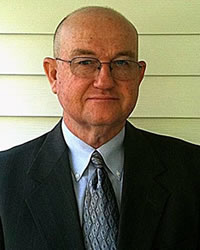
Gary Shepard

Happy Zion

Psalm 132
Gary Shepard November, 6 2011 Audio
0 Comments
Gary Shepard
Gary Shepard November, 6 2011

Sermon Transcript

Auto-generated transcript • May contain errors

100%
Turn back in your Bibles to Psalm
132. Psalm 132. And take your hymnal,
if you would, And turn to hymn number 275.
This is an old hymn written by a man
named Thomas Kelly in 1806. And this first verse says, Zion
stands by hills surrounded, Zion kept by power divine. All her foes shall be confounded,
though the world in arms combine. Happy Zion! What a favored lot is Thine." Happy Zion, what a favored lot
is Thine. I call this message this morning,
Happy Zion. And look back with me and We'll
read that 13th verse again. For the Lord hath chosen Zion,
he hath desired it for his habitation. This psalm brings back a remembrance of a promise that God made to
David. David here is making a promise
to God that he will not rest until he builds a house for the
Lord's habitation. But as he makes this pledge and
promise to God, God makes a pledge and promise to him concerning
another house and another kingdom, and God
promises David that the seed of David would rule and reign. Look back at verse 11. The Lord hath sworn in truth
unto David, he will not turn from it, of the fruit of thy
body will I set upon thy throne, If thy children will keep my
covenant and my testimony that I shall teach them, their children
shall also sit upon thy throne forever." Now, if you look at David and
his family after the flesh, There was no way that such a
promise could be fulfilled. But the truth is that this is
a promise of spiritual things that God had made to His people
in a spiritual seed, the Lord Jesus Christ. David here is a
type and picture of the Lord Jesus Christ. And what David
and his offspring never could do with regard to fulfilling
this promise, Christ did. An old preacher by the name of
Matthew Henry, said of Him, He did fulfill the condition of
the promise. He kept God's covenant and His
testimony. He did His Father's will and
in all things pleased Him. And therefore to Him and to His
spiritual seed The promise shall be made good. He and the children which God
hath given him, all believers, shall sit upon the throne for
evermore." Christ fulfilled every covenant pledge And when he did
so, all of those that the Father gave him, they in him fulfilled
every part. And this is something on the
order of what the Apostle Peter makes reference to at Pentecost. Speaking of David, he says, therefore
being a prophet, and knowing that God had sworn with an oath
to him that of the fruit of his loins, according to the flesh,
he would raise up Christ to sit on his throne." And this is very much exactly
what the angels seem to announce at the birth of Christ. In Luke 1, when they say, "...he
shall be great, and shall be called the Son of the Highest,
and the Lord God shall give unto him the throne of his father
David." God made a promise to that greater David, David's Lord,
concerning him and all his people individually, and corporately
being spoken of as the temple of God, the habitation of God. And David's greater son would
be this temple or dwelling place of God in his incarnation, and
each of his people in him No longer temporarily, but permanently
would be regarded as such. You remember the Apostle's words
when he said, "...in him dwelleth, or tabernacled, all the fullness
of the Godhead bodily." But as I said, this promise not only
concerned and pertained to Christ, it also involved all of God's
elect, all of His people, that whole body, which is the church
of the living God and which was signified many times by this
Zion. Zion. That's what the hymn writer
is writing about. He's writing about this Zion,
or Jerusalem, a city which is a spiritual city, which would
be the city of God. Not somewhere in the Middle East. but a people, a called-out assembly
that Paul describes in this manner, pointing us away from Sinai and
saying, but you are come unto Mount Zion, and unto the city of the living
God, the heavenly Jerusalem. And this people would be his
dwelling place. He would dwell in the midst of
his people forever and ever, and he would do so for a number
of reasons, several of which are stated right here in our
text. If you notice that 13th verse,
it says, "...for the Lord," that is Jehovah God, "...for the Lord
hath chosen Zion." He has desired it for His habitation, for His
dwelling place. And we cannot read texts like
these and many more in which it is stated in the same way
without seeing that these promises or these blessings are because
of this sovereign choice of God Almighty in grace. He doesn't talk about man's free
will. He does not lay everything as
dependent on man's decision or choice. But he goes back, as
he always does, to the fountainhead of all grace, and here is the
reason, the Lord, hath chosen Zion." The Lord hath chosen Zion. And I read some years ago about
what is necessary when someone is writing or reporting a news
story or writing about a particular subject. There are some questions
that the writer or the reporter is to ask and answer. The first one is who? The second one is when? The third one is what? The fourth one is why? And what we find all throughout
the Bible is, with regard to God and His grace, His salvation
in Christ, He always answers all those questions. He always tells us who it is
that has done this. He says, it's the Lord. It's not a cooperative effort
between you and God, it is the Lord. And He always defines and
distinguishes who, He says, Zion. And you know from this book that
Zion does not include every person in the world. Zion includes and
has to do with a particular people out of this world. And then he tells us what? He
says, the Lord hath chosen. And whenever I hear people speaking
about this in a negative way and refusing to believe it and
saying such foolish things as this, God cannot do that. Did you notice that this was
in the past tense? This was long before any of us
surely could ever have done anything about it, though we could not
have because it says, the Lord hath chosen Zion. What does that mean that the
Lord has chosen Zion? Well, that word chosen is the
word that we find elsewhere in Scripture wherein it is said
to be that they are elected. They are chosen according to
the Bible in what God calls an election of grace. You know and I know. that not
many days hence, that famous month that we're in, wherein
people all over the country in various elections, they go to
the polls and they do so to make a choice. And I know what everybody thinks.
Well, there's not much to choose from. But the truth of the matter is,
in grace, in those that God has chosen. They are all the same
as all of Adam's race. You might say there's nothing
to choose from. And yet it says, the Lord hath
chosen Zion. And this means that He has selected
or chosen out from among men whom He would without any regard
as to who they are in themselves, without any regard as to what
they had done, or what they hadn't done, or what they would do. He never qualifies this. Because His choice is never based,
it was never based on anything foreseen that they would do,
or anything that they had abstained from doing, or anything that
they pledged to do. It just says, the Lord has chosen
Zion. And it has to be this way in
order for it to be by grace. And when God chose out a national
people to be a picture and a type of this spiritual people, listen
to what He says Himself in Deuteronomy chapter 7 to that people. They are not his elect spiritually,
but they are a picture of his people. Listen in Deuteronomy
7 and verse 6. He said to them, for thou art
an holy people unto the Lord thy God, The Lord thy God hath
chosen thee to be a special people unto Himself above all people
that are upon the face of the earth." Can God do that? Here we have all the Old Testament
history, as well as the history of man, which shows us, obviously,
that that is exactly what he did. But listen to what he says. The Lord did not set his love
upon you, nor choose you, because you were more in number than
any people, for you were the fewest of all people." There
goes this idea that God is interested in great numbers. When Noah was
commissioned of God to build the ark, The apostle tells us
that by that ark, fewer than eight souls were saved. He said,
you are the fewest of all people. He did so because the Lord loved
you, and because He would keep the oath which He has sworn unto
your fathers, hath the Lord brought you out with a mighty hand, and
redeemed you out of the house of bondmen, from the hand of
Pharaoh king of Egypt. Know ye therefore, that the Lord
thy God, he is God, the faithful God, which keepeth covenant and
mercy with them that love him, and keep his commandments to
a thousand generations." He didn't see anything good in
those Israelites. He certainly did not see that
they would be able to accomplish anything in themselves. He gave
them a law by which both they and us can know of a certainty
that no man can be blessed of God based on what he does, but everything they got. Every
blessing they received, even naturally, it was by grace. It was by grace. The psalmist
in another place, he says this in Psalm 78, Moreover, he refused
the tabernacle of Joseph, and chose not the tribe of Ephraim,
but chose the tribe of Judah, the Mount Zion which he loved." The choice of his people did
not have to do with earthly tribes or lineage, not even among those
Israelites. But that choice was of a people
in the one who is the true Judah, the Lord Jesus Christ. And when Christ stood there before
His own disciples, He reminded them, He said, you have not chosen
Me, but I have chosen you. I've ordained
all things concerning you. I've chosen you. And there can never be any worship
and mindful reverence toward God and thanksgiving to Him for
His blessings in Christ until we are brought to view Him as
the fountainhead of every blessing. We sing that hymn really easy,
Come Thou Fount of Every Blessing. tune my heart to sing Thy grace." And when these very people, these
Israelites who are a type and picture of God's elect, this
Zion, when they were looked at and seen as they were when Christ
came, to be rejecters of Christ. Somebody was saying to themselves, That promise is not going to
be fulfilled. But I want you to turn to Romans
chapter 11. Romans chapter 11, and this is
something that we have always need to remember. But here in
Romans chapter 11, the Apostle, as he is enabled to anticipate
all of these questions of a natural man, of a natural religious person. He says in verse 1, I say then,
hath God cast away His people? Here were all these Israelites,
these Jews who despised Christ, who crucified Christ, rejected
His gospel. Hath God cast away His people? There's Paul's famous expression,
God forbid. God forbid. For I also am an
Israelite of the seed of Abraham, of the tribe of Benjamin. Paul says it's obvious, not so
totally, because that's what I am, according to the flesh. God hath not cast away his people
which he foreknew, which he foreloved, which he
foreordained, as the meaning is. And then he calls us back
to this remembrance. He says, "...what ye not what
the Scripture saith of Elias?" Or, don't you remember what the
Scripture tells us about Elijah? How he maketh intercession to
God against Israel as a whole people, saying, Lord, they have
killed thy prophets. They have digged down thine altars,
and I am left alone, and they seek my life." He said, I'm the
only one left. I'm afraid many a preacher on
a Monday morning has thought that very thing. Lord, I'm the
only one left. But what saith the answer of
God unto him? What did God say to Elijah when
Elijah, in that expression of his depression and sadness and
sorrow, made those comments to him? He says, I have reserved
to myself 7,000 men who have not bowed the knee to the image
of Baal. Elijah said, Lord, I'm the only
one. I'm the only one that believes
you. I'm the only one that believes the gospel. I'm the only one
that's interested in worshipping you in this Messiah that you're
going to sin. Everybody else is given over
totally to idolatry. And God says to Elijah, Oh no,
they're not. He said, I've got, and what's
that word? I have reserved to myself, chosen
to myself. I reserved to myself 7,000, and
I don't believe that that was the exact number. I believe that that number, as
is often the case in Scripture, is an exact number that is given
to represent an exact number of people that God has reserved
unto Himself that have not bowed their knee to Baal. But now listen to what Paul says
next. even so then at this present
time." And my friends, I believe that can be said at every age
and interval until the Lord Jesus comes back in glory. Even at
this present time, also, there is a remnant according to the
election of grace. There is a remnant. What is a
remnant? A remnant is a part of the whole. He says there is a remnant according,
what? To the election of grace. To
God's choice of grace. So that in each age, just as
it was in Elijah's day, God has reserved unto Himself a people,
and they will not be idolaters, at least not finally and fully. He's going to save them all by grace. Do you know that grace, I believe,
is the most easily tainted and polluted thing in the world?
If I were to come and bring before you one of these bottles of this
pure spring water from the Alps, or wherever they make it to be
100% pure, and if I were to hold it out to you, and I would just
drop one drop of poison in it, Would you drink it? Well, why
not? It's mostly water. But you see, it's polluted. It's
all poison. And that's the way it is with
grace. You mix one little part of man. You mix one little work. You mix one little dependent
upon yourself. You mix one little act of yours,
one little decision, one little choice on man's part, and it
is absolute poison. It is no more grace. That's what Paul says here. Look
at verse 6. He says, "...and if by grace..."
Do you understand anything about grace? He says, and if by grace,
then it is no more of works, otherwise grace is no more grace. You said, preacher, that's just
too good to be true. It's too good to be true to sinners
like us who are always wanting to depend on something about
us or done by us to commend us to God, when He says it's all
by grace. He says, but if it be of works,
then it is no more grace, otherwise work is no more work. How is it in a race of people
such as Adam's, which are all like him, all sin in him, all
receive a sinful nature from him, and all act toward God in
the same manner, all are helpless, hopeless sinners, unable to save
themselves, how is it that some of them are saved? Grace. The election of grace. And Paul, being himself the speaker,
he's also the example. Because when Christ met him on
the road to Damascus, he wasn't looking for God. But he sent him down from that
experience on that road to Damascus. He sent him on down into the
city of Damascus, and he told him to meet a particular man
by the name of Ananias. Ananias was not a big preacher. Ananias was not some kind of
a super personality. He was not a scholar or anything
special in that sense. He's just the man that God chose
also, not only to save, but to speak this word to Saul of Tarsus. You know what he told him? He's
scared to death. He'd heard about this man. He
heard about his wickedness as far as a religious person was
concerned, having men and women cast into prison and stoned and
such as that, because they even spoke the name of Jesus Christ. But since God had sent him, when
he saw this man Saul of Tarshish, he said to him, The God of our
fathers has chosen you. Now don't get me wrong. Brought
by the Spirit of God, made willing in the day of His power, Paul
did choose Christ. But it was because God had chosen
him. Somebody says, well, this is
not really important. Well, why then was that the first thing
this man is told? The God of our fathers hath chosen
thee, that thou shouldest know his will, and see that just one,
and shouldest hear the voice of his mouth. Why is this important? Because
this is really what determines who gets the glory and salvation. He said, God chose you. And so Paul, after he has long
preached and written all these epistles, he does all these things
and he says to the Ephesian elders, he says to them as he's about
to see them for the last time, he says to them, I've kept back
nothing profitable. Now you think about it. I kept
back nothing that would be profitable to you. And he said, I'm clear
of the blood of all men. And what about this? He said, and
I've not shunned to declare unto you all the counsel of God. This is the counsel of God. This
is something that glorifies God. This is something that began
with God. This is something profitable
to sinners, because had it not been for the choice of God to
save you, or me, or any of His people, we would never have chosen
Him. Paul said, I have not shunned
to declare unto you all the counsel of God. Well, we know that Christ
is the counsel of God, isn't He? Isn't He the counselor? Well, turn over to Ephesians
chapter 1 and listen to Paul as he begins writing this letter
to these believers at Ephesus, and as he does in so many places,
both he and Peter and others, he always carries us back to
this. This is the first chapter. These
are among the first verses. After he makes his greeting to
them in verse 3, he says, "'Blessed be the God and Father of our
Lord Jesus Christ.'" Now, he wouldn't like a lot of these
folks. He didn't just say, "'Blessed
God.'" or bless the God and Father of our Lord Jesus Christ." Because
so many claimed that, so that He even at this hour had to distinguish
who He is. That's the next word, who. Bless be the God and Father of
our Lord Jesus Christ, who hath blessed us with all spiritual
blessings in heavenly places," or as that is in the Greek, in
the heavenlies, in Christ. God's blessed His people. with
all spiritual blessings. We'll get to glory and say, well,
Joe got ten spiritual blessings and I only got two spiritual
blessings. He's just more spiritual. I remember a lady telling me
years ago about a so-called church in Jacksonville which she then
attended. She said, that's where all the
spiritual people go. All God's people are spiritual
people. All these chosen ones, they're
spiritual people. They have all spiritual blessing
because God blessed them before the world began with all spiritual
blessing in Christ. Now look at that fourth verse. according as He hath chosen us
in Him, the Father chose us in Christ, before the foundation
of the world, that we should be holy and without blame before
Him. That's actually where that verse
ends. So that the next two words are part of the next statement.
"...in love, having predestinated us unto the adoption of children
by Jesus Christ to Himself according to the good pleasure of His will." Why? to the praise of the glory of
His grace, wherein He hath made us accepted in the Beloved. He hath, as it is,
graced us in His well-beloved Son. So if there is no election, there
is no Christ. If there is no election, there
is no grace. And if there is no election,
not one sinner would ever choose God. But you see, he's giving this
as the very reason for his people praising him both
individually and altogether as his church, as this holy Zion. He says, the Lord hath chosen
Zion. If you look over in II Thessalonians, where we find that the apostle
writing this letter to the church at Thessalonica and pointing
out so many who have chosen, they think, their own selves
and their own way, which they have, and he said, God sent strong
delusion on them, that they should believe a lie rather than the
truth. But look at what he says in this second chapter of 2 Thessalonians,
beginning in verse 13. As he stops talking now about
those that are deluded and unbelieving, just like the idolaters in Elijah's
day, but listen to what he says to these believers and to all
believers. He says, but we are bound to
give thanks always to God for you, brethren beloved of the
Lord. because God hath from the beginning
chosen you to salvation through sanctification of the Spirit
and belief of the truth, whereunto he called you by our gospel to
the obtaining of the glory of our Lord Jesus Christ." It is obvious in that verse that
the choice of God flows out of the love of God. He describes them as brethren
beloved of the Lord. How could we ever talk about
the love of God especially as it is for sinners, without talking
about the choice of God. Brethren, we're giving thanks
to God for you, not because you and yourself are so different,
but because you are these brethren, these in relationship to God
by His love and choice. Brethren, beloved of the Lord. Don't you want to be that? I want to be loved of the Lord. I want to be able to pray to
the true and living God and refer to Him as my Father. I want to
be in relationship with the only begotten Son and be described
as the Apostle describes all of God's people as being joint
heirs with Him. But I would never have chosen
Him. I'd hold the Bible in my hand
and stand to preach and deny and defy God and what He says. Brethren, beloved of the Lord. He says, because God has from the beginning chosen
you. Not decided to give you a chance,
He chose you. And I tell you, if you ever find
out what you are in yourself, that will be the most amazing
miraculous thing that has ever taken place in this universe
that God Almighty, holy, infinitely just and pure, He chose you. You know the President doesn't
even know I exist. Just about, I'm sure, every big
person in this world, they don't even know I exist. And I dare
say they probably don't know that you exist. And they don't
care. But he said he's chosen you. Here is a mass of humanity so
great that no one has ever known how many? And yet he looked down before
the world began, and for a reason known only to himself, he set
his love upon you and said, I love you. Probably were devils, maybe angels
too that said, how could you love that person? How could you
love that man? How could you love that woman? And like I've told you many times,
though there is no reason in us, though there could be nothing
offered up as an excuse for doing so, God being God, just stands
in His infinite sovereignty and says, I'll be gracious to whom
I'll be gracious. I'll love whom I love. And I
love Him, or I love Her, because I will, and I love Her in my
Son. I love Him in my Son. I'm telling you this, friend,
if God really loves you, He's always loved you. Because
He says, I've loved them with an everlasting love and I never
change. They're loved just like Rebecca's
children. He says, for the children being
not yet born, neither having done any good or evil, that the
purpose of God, according to election, might stand not of
works, but of Him that called us. Chose them to salvation. But
then he says, through. He doesn't ever end it like so
many in our day do who claim to believe the grace of God.
Well, if I'm one of God's elect, I'll just be saved no matter
what I do, all this kind of stuff. You see that next word, through,
has to do with means. He says, through sanctification
of the Spirit and belief of the truth. God's electing grace in
Christ is tied to and inseparably joined to the sanctifying work
of the Spirit of God. What does that mean? That the
Spirit of God sets us apart in time and deals with us in time,
He says, through sanctification of the Holy Spirit and what?
Belief of the truth. Christ said, I'm the truth. And His gospel is called the
word of the truth. To say that Jesus Christ died
for all people alike, that's not the truth. And all you have
to do is open this book, which is the book of God, and hear
him say himself, I lay down my life for my sheep. And then look at those Pharisees
and say to them, you believe not because you're not of my
sheep. Belief of the truth. You see,
the truth gives all glory to God. The truth is salvation by grace,
start to finish, and everything between. The truth is salvation
according to the Scriptures. I'm not holding on to anybody's
denomination or tradition or confession or creed or whatever
it is. And the truth is, salvation is
only in Christ, and through Him crucified. Belief of the truth. Christ said, Sanctify them, Father,
through Thy truth, Thy Word is truth. And then he says, "...whereunto
he called you..." Did you know that the people
of God are described in that way, the called of Christ Jesus? He calls them mightily, effectually,
affectionately. I always remember hearing this
story about the mother who had this son that was a teenage boy. He was going through those rebel
years. He wanted to grow his hair a certain way. He wanted
to do this. He wanted to wear these certain
clothes. It made him look tacky as all get up. You know, most
everybody goes there. So she's sitting there having
coffee one mid-morning with her friend and all of a sudden here
comes that young lad down the stairs and his hair is cut, his
hair is combed, his clothes are cleaned and kneed and he's whistling
and he's not acting like a rebel at all. And her friend looked at him
and she said, what happened to him? He said, well, a blonde-headed,
blue-eyed little teenage girl has done in one look what I have
not been able to do myself. You see, that's what grace does.
It isn't God beating somebody up. He changes our heart and makes us fall in love with
the Lord Jesus Christ. He gives us understanding. He
calls us. He factually and mightily calls
us. And we're made to see that we've
been so stupid and blind and ignorant. And this is the truth. This is the only way any sinner
could ever be saved. This is exactly what the Bible
says. And the glorious thing is, He
loves me. He died for me. God Almighty took
on Himself a human body and lived in this world and was crucified
on that cross at the hands of His own justice in the payment
of my sin debt. He loves me. He called you by our gospel. to the obtaining of the glory
of our Lord Jesus Christ. I'll tell you, O. Kelly got it right. Happy
Zion. What a favored lot is thine. What a divinely favored lot. divinely chosen, divinely loved,
divinely redeemed, divinely called, divinely kept. So we cry out from that belly
of the whale like Jonah. Salvations of the Lord. And it's
by His grace. Why? The psalmist records that
the Lord hath chosen Zion, He hath desired it for His habitation. Now, I know how we look naturally.
You mean to tell me, I know God can do anything that He wants
to. But think about this, if He wanted me, if God Almighty wanted me and
desired me, to dwell in me and with me, and bless me with all
spiritual blessings, and save me from all my sins, that I'm a part of this Zion. Oh, that makes me happy. There's another hymn. I thought
of it last night. It's hymn number 96, written by old Josiah Condor
in 1886. He wrote some good ones. But
he says, "'Tis not that I did choose thee, for Lord, that could
not be. This heart would still refuse
thee, hast thou not chosen me? Thou from the sin that stained
me hath cleansed and set me free. Of old Thou hast ordained me
that I should live to Thee. T'was sovereign mercy called
me and taught my opening mind. The world had else enthralled
me to heavenly glories blind. My heart owns none before Thee,
for Thy rich grace I thirst. Tis knowing, if I love Thee,
Thou must have loved me first." Happy Zion, because the Lord
have loved and chosen and redeemed and blessed and kept that people
in Christ, because He desired to. And every one of them He desired
to do that to, He'll bring them to desire Him. You can read Haggai where we
have the prophecy of Christ who is described there as the desire
of the nation. And if you ever are brought to
desire Christ, I promise you, God will give you the desire
of your heart. Father, this morning it is beyond wonderful, beyond describable, that you would ever choose in
your love even one of Adam's race. And yet you chose a multitude
which no man can number, but a number that you've numbered,
a number that you know. The Lord knoweth them that are
His. Lord, grant that we might be
enabled to see this and believe it, and fall down before you
as thankful, graced sinners, that we might be truly happy.
in that happy Zion. Call out your loved ones and bring them to believe on
the Lord Jesus, because nothing would ever separate them from
the love of God which is in Christ Jesus. We thank you for these
you've gathered here this morning. We pray that you've gathered
them that they might know of your mercy. They might find out
of this everlasting choosing love. Watch over us, we pray. Keep
us. Go with us in this week. Bring
your blessed truths to our remembrance. Give us faith. But we ask it,
we pray it, we thank you in Christ Jesus our Lord. Amen.
Gary Shepard
About Gary Shepard
Gary Shepard is teacher and pastor of Sovereign Grace Baptist Church in Jacksonville, North Carolina.

Comments

0 / 2000 characters
Comments are moderated before appearing.

Be the first to comment!

Joshua

Joshua

Shall we play a game? Ask me about articles, sermons, or theology from our library. I can also help you navigate the site.