Bootstrap
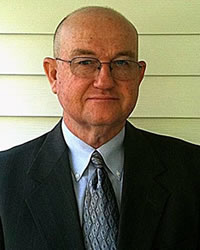
Gary Shepard

The God of Jacob

Psalm 146:5
Gary Shepard October, 23 2011 Audio
0 Comments
Gary Shepard
Gary Shepard October, 23 2011

Sermon Transcript

Auto-generated transcript • May contain errors

100%
Turn back in your Bibles to Psalm
146. I want to look back at that fifth verse. Happy is he that hath the God of Jacob for
his help, whose hope is in the Lord his God. The God of Jacob. Two times in Psalm 46, the psalmist says, the Lord of
hosts is with us. The God of Jacob is our refuge. The God of Jacob That is a distinguishing name. And of all the names by which
God has revealed himself, this name should encourage the
hearts of real sinners most. the God of Jacob. And what a name of mercy! What a name of grace! What a name of longsuffering! What a name of hope! And if we know anything about
them both, What a contrast! God infinitely holy, Jacob utterly
sinful. And the psalmist says here, by
the Spirit of God, happy And by the way, that's the same word
that we find translated so many times as blessed. Happy, blessed is that person
who knows and has this God as their only help. Such a person has been brought
to see by the grace of God that there is no help in themselves. And such as these are who are
described here, they are also set in contrast with those who
do seem to find some help in themselves. Jeremiah in chapter
17 and verse 5 says, Thus saith the Lord, Cursed be the man that
trusteth in man, and maketh flesh his arm, whose heart departeth
from the Lord. Here is a man who finds no hope
or help in himself, and God says, happy or blessed is that man. Here is one who does seem to,
and God says, cursed is that person. And David places their happiness
in this absolutely, that they are truly persuaded, they are
truly convinced of its being entirely by the grace of God
that they stand. Not only that they stand before
God, but that they stand at all. It is all of His grace. And so Jeremiah continues a few
verses later, and he says, Blessed is the man that trusteth in the
Lord, and whose hope the Lord is. The Lord is his hope. And such a man was this man that
God has taken his name in order to identify himself. He is the God of Jacob. And I dare say that had you known
Jacob, had you seen him in action, Had you known him in some familiarity,
you would most likely not even imagine that he had a God. But here is the God of Jacob. And in reality, Jacob is a picture
of all that God says. He is a picture and a type of
all God's elect. He is a picture and type of every
one of us in ourselves by nature. His name means Canaver. It has to do with a notion of
being a supplanter or a heel catcher. As a matter of fact,
being one of twins, when he was born and his brother began to
come out of the womb, it was as if Jacob grabbed hold of his
heel, even in that hour, and he gets that name, Jacob. One who trips up, conniver, and
supplanter. In other words, sinner. So when God identifies Himself
as the God of Jacob, He identifies Himself as the God of sinners
who are saved altogether by grace. Paul would write in his epistle
to Timothy, one of the most wonderful things that ever could be spoken
by God the Spirit to such as are sinners and have been brought
to know themselves to be such. He said, this is a faithful saying,
a true saying. A statement that is to be believed
and can be relied on. This is a faithful saying. And he's talking about the gospel. He said this is a faithful saying. And worthy of all acceptation. that Christ Jesus came into the
world to save sinners of whom I am chief. I don't have a for those who
rise up all the time and tell me when they find out I'm a preacher
just how good that they are and what they have done and what
they have given and what they have not done. I only have a
gospel for sinners and that is the gospel of the God of Jacob. Christ came into this world He
existed before He came into this world as God the Eternal Son. But He came into this world,
came into this world in human flesh for a purpose. And that
was not to offer something or make something available. It
says that He came into this world to save and to save these that
He describes as sinners. Somebody says, well, if you tell
people that, they will excuse their sin. Not real sinners. I remember, I think it was Mr.
Spurgeon, I read many years ago, he had this to say concerning
that. He said, a sinner, a real, genuine,
bona fide sinner, one who knows himself to be such, a sinner
is a sacred thing. The Lord hath made him such. Here are all these good people
in the world. They don't want to be identified
with this God of Jacob. They wouldn't be identified with
such a person as Jacob is if we read about him as we find
in Scripture. And yet, here is the God of Jacob. Who is this God of Jacob? And
how is this God of Jacob? Well, He is the God who came
to Jacob when he had nothing, and when he deserved nothing
but wrath, and He gave him everything. Are we getting anywhere close
maybe to your case and experience? This God came to Jacob when Jacob
was not looking for Him, and had absolutely nothing, and deserved
the wrath of this God, and this God gave him everything. gave
him everything, promised him everything, and he saves all
his elect just like this. If we can't find, in some measure
and degree, in our own case and experience, Jacob, I've often
thought this. We don't really know anything
about who we are, and we don't really know anything about who
God is. And I've read so many times about
Abraham and Isaac, and I've read about Paul, and I've read about
all these other figures in the Bible, God's people. I have a
problem identifying with them. Here's where I find myself, this
man Jacob, this wretched sinner Jacob. But the amazing thing
is that the God of Jacob, He loved Jacob before he was born. And He loved him though he was
unlovable in himself, and He loved him with a sovereign, everlasting,
and immutable love. That's what the Bible says. Turn
over to Romans chapter 9. Romans chapter 9. And look down
in Romans chapter 9 at that ninth verse where the apostle is led
by the Spirit, reminded by the Spirit of something that God
will use to illustrate the salvation of his people in Christ. He says in verse 9, for this
is the word of promise. Did you know salvation is by
promise? You look all through the New
Testament and it talks about promise. And these Old Testament
promises made to the patriarchs, they were general in some respects,
they were particular in some respects, but they pictured the
promise of God to His people. And those promises of God are
said to be yes and amen in Christ. And he says, for this is the
word of promise. At this time, God says, will
I come and Sarah shall have a son. And not only this, but when Rebecca,
also conceived by one, even by our father Isaac, for the children,
that is these two boys, these twins, Jacob and Esau, for the
children being not yet born, neither having done any good
or evil, that the purpose of God according to election or
according to his choice might stand not of works, but of him
that calleth. In other words, that is a parenthetical
statement in this text wherein God shows us the reason for everything. Not only the reason for what
was said in the promise, but the reason for which everything
was done by God. What was it? That before either
of these boys had ever been born, had ever done any good or evil,
that God's purpose which is according to election, or his choosing,
that it might stand not in their works, but everything in him that calleth."
Now listen to what it says. It was said unto her, the elder
shall serve the younger. Now that was exactly the opposite
of those Jewish traditions wherein that firstborn son, he was counted
the heir. and everything given accordingly
to him. And here it is being said by
God that this is exactly the reverse of what men traditionally
think. That's the way salvation is.
That's the way grace is. It is exactly the opposite of
what every one of us by nature and by birth think and desire
to do naturally in order to have a standing of acceptance before
God. He said, my ways are not your
ways. My thoughts are not your thoughts. And it is a happy day for a sinner
when they are brought by the Spirit of God in some measure
to see that and understand that, that God's not who we think He
is. And not only that, God does not save in the way we think
He does. And God is not saving those who
are saved in a way in which people like us say that he saved them. Then verse 13, as it is written. This isn't the first time. He's
pictured it. hundreds of times, all through
the Old Testament. He's stated it in different ways,
and here it is about as plain as it can be. This is what the
God of Jacob says. He says, as it is written, Jacob
have I loved, but Esau have I hated. That's the God of Jacob. And then he responds in the way
that he knows all natural men and women will question just
what has been said. Oh, God loved Jacob, but He hates
somebody? He hates Esau? Somebody says, that's not right. And the Apostle Paul, by the
Spirit, he anticipates that. Verse 14, What shall we say then? Is there unrighteousness with
God? You look at those next two words.
God forbid. Don't you for one minute. I don't
care what you think. I don't care what you've been
taught. God states this as it is, and don't you say for one
minute that God is not right in anything He does. God will
be. He says, for He saith to Moses. This didn't begin with Jacob
and Esau. He had already said, or already
says, also says to Moses, I will have mercy on whom I will have
mercy, and I will have compassion on whom I will have compassion. And little puny pygmy creatures
stand on the earth and say, God can't do this, and God's got
to do that, and God wouldn't dare resist anybody's so-called
free will, or God wouldn't do this, that, or the other. He
says, I will have mercy on whom I will have mercy, and I'll have
compassion on whom I'll have compassion. So then. You see those two words? So then. God has said it. God
has stated this. God has made it plain. So then. This is the conclusion of this
matter. So then it is not of him that
willeth. It's not man's choice. It's not man's will. He said,
So then it is not of him that willeth, nor of him that runneth."
It's not your words. It's not what you do. It's not
what you abstain from doing that has any part as the basis of
salvation, which he says is by his grace. Well, if it's not a man's will,
And if it's not of a man's works, what is it? It is of God that
showeth mercy. You know what mercy and grace
are? We find those two words used
together oftentimes in the Scripture, and then used separately many
more times in Scripture. What is mercy? Mercy, as we find
it in this book, is God kindly treating one who shows themselves
to be his enemy. In other words, mercy is God
not giving them or not dealing with them in the way that they
deserve to be dealt with. Well, what is grace then? Well,
grace is God giving them that which they do not deserve in
the positive sense. Grace is God giving them all
these spiritual blessings in the Lord Jesus Christ. And he
had set this principle down so far before this back in the book
of Malachi in the first chapter. He states it like this, I have
loved you, saith the Lord, yet you say wherein hast thou loved
us? Was not Esau Jacob's brother? And here are these two boys.
Born of the same mother and father. Born of that same egg that somehow
separates. Born twin, came from the womb
at the same time. Born of the same nature, from
the same fallen sinful parents. Born and raised in the same environment. born of the same nature and flesh,
and from all that we read of Jacob, we might have really liked
him less than he saw." So what's the difference? He says in Jeremiah 31, by the
prophet Jeremiah, he says, "...the Lord hath appeared of old unto
me, saying, I have loved thee with an everlasting love." In other words, God didn't stop
loving Esau at one point. After having loved him, he didn't
start loving Jacob at one point. After having not loved him, he said, I've loved you with
an everlasting love. That's what this book is about.
That's what the gospel is about. Everlasting love. And so often
times we forget what God has said in all these places. Again
in Malachi, He says it like this concerning these Jacobs that
are used of God to picture His elect. He says, For I am the
Lord, I change not. In other words, you couldn't
do enough in this world to make God fall in love with you. Nothing
you do in time could move or motivate God who only loves with
an everlasting love. And nothing that a sinner does
whose love by Christ can be done in order to make him fall out
of love for this. He said, I love you with an everlasting
love. And I changed it on. And you
know what follows after that? Therefore, you sons of Jacob
are not consumed. It's because of his everlasting
love. It's because of his everlasting
mercy and grace. It's because of that love which
is given to us again and again as being a particular and distinguishing
and saving love, not merely just an influence or mere benevolence,
but active love. And somebody, when they hear
that it says that God hated Esau. You know, that's not all it says
he hates. It says in Psalm 5, I believe it is, that he hates
all workers of iniquity. What is iniquity? Well, iniquity
is simply inequity. In other words, that which does
not meet and measure up to what a holy and a just God require. And those, though they have done
so much in religion and morality, Christ says to them in Matthew
7, He says, those of you who say now that you've prophesied
in My name, you've cast out devils in My name, you've done many
wonderful works in My name, He says, I'll say to you in that
hour, depart from Me You that work iniquity. I never loved you. I never knew you. Somebody always reads that and
they say, well, I just don't understand how God can make these
laws. And that arises from two things.
Like I said earlier, that arises out of two things. And the first
one is an ignorance of who God is and how He said He is in the
Bible. You can live your life and hear
somebody quoting, well, I believe that God is love. He is, but
you better find out that He's more than that. And the other thing is, it arises
out of an ignorance of who we really are. Because he hates sin. How many
times would he deal with this human race without us understanding
that God, as we have just sung, is holy, holy, holy, and he hates
sin. And you and I hear it described
as its awfulness and all these kinds of things, and men try
to convince sinners of how bad sin is by continually bombarding
them with the law, when we still, the Pharisees were not affected
by that. And we'll only know what sin
is when we are enabled to behold it as laid on the Son of God. on that cross. Do you want to know how awful
sin is? Do you want to know how bad God
hates sin? There are two things that are
so clearly demonstrated in the cross death of Christ. Number
one, how bad God hates sin. When sin was laid on His Son,
He killed But the other thing is how good
he loves his sinful people in Christ. That's right. You see, the question
that men and women ought to be asking is not, how could God
hate Esau? We ought to be concerned with
this question of question, how could God love such a scoundrel
and a rascal and a sinner as Jacob was. How can a holy God
love any sinner? How could a just God be just
and declare that Jacob was righteous? How could He not deal with Jacob
as He did with Esau? How did He love Jacob? The Scripture says, and you can
read as it closes out in that eighth chapter of Romans, the
Apostle Paul says, the love of God which is in Christ Jesus. My friends, outside of the Lord
Jesus Christ, God is a consuming fire. Jacob would have had to face
the wrath of God just like Esau, being no better, maybe not as
good in his own person, just as great a sinner. We've got
to find out how it is that God, as Job questioned in that question
of question when he says this, I know it is so of a truth, but
how should man be just with God? How can a person be right with
God? That's what it's all about. Somebody said, get right with
God. If you could, there'd be no need
for Christ to come. How are we ever to be right with
God? Job went on, he asked the little
father, he said, How then can man be justified with God? Or how can he be clean that is
born of a woman? Behold, even the moon, and it
shines not, yea, the stars are not pure in his sight. How much
less man that is a worm, and the son of man which is a worm. We live in a day when they rewrite
old hymns which say, for such a worm as I, they change it to
things like this, for such a one as I. Job's led by the spirit to identify
us as worms. Just worms in the dust. Slithering,
little greasy worms, wallowing in the dust of this earth. before
Almighty God. How could Jacob ever speak of
having a hope? That word hope means expectation. How could one such as you, and
more especially, how could one such as I am, how could we ever
before God have any expectation of any good, any forgiveness,
any acceptance, any blessing. Only in Christ. You see, Jacob's hope is in Christ
who redeemed him. His hope is a good hope, which
the apostle describes as the good hope of grace. If your hope
is not the good hope of grace in Christ crucified, you don't
really have any hope. You have a lot of wishes. Like
I was when I was growing up, and I would have what some people
call a hope when I'd wish for this or that or the other for
Christmas. Mine wasn't a hope, it was a
wish because most of the time it didn't come. That gold card
I wanted. I hoped I could get it. No, I
was just wishing for it. I didn't really have any expectation
that it would come. Turn over to Numbers 23. I want
to show you something in Numbers chapter 23 because here is that
name that name of Jacob, which is used again to describe the
people of God as it was, first of all, an earthly nation, but
also as a spiritual people. Here is a king who has been trying to get a
man by the name of Balaam. with enchantations and divinations
and such. He's been trying to get this
man to pronounce a curse, you might say, on the people of Israel. He's a little bit afraid of them.
He's a little afraid that they'll take over. He's a little afraid
of what he doesn't know about. Here they are. They come into
this land. There they are. They're a strange
bunch. They all line up around a camp
that has in the middle of it a tent. Bad-looking tent. And they act as if that's the
star attraction. That's just a picture of people
around the gospel of Christ crucified. So this king has been offering
to pay this greedy prophet, who's a false prophet, a prophet for
hire. He's been trying to pay him to put a curse on these people. And every time he goes out to
try to do so, the Lord meets him, puts words in his mouth. He can't speak but what God has
put in his mouth to speak. Not in his heart to speak it.
He'd like to speak something that the king would pay him well
for. But he has to speak what God
requires. Look down in verse 17. And when he came to him, behold,
he stood by his burnt offering, and the princes of Moab with
him. And Balak said unto him, What
hath the Lord spoken?" That's this king, Balak. And he took
up his parable and said, Rise up, Balak, and hear. Hearken
unto me, thou son of Zippor. God is not a man that he should
lie, neither the son of man that he should repent. He hath said,
and shall he not do it? or hath he spoken, and shall
he not make it good? Behold, I have received commandment
to bless. Now, you can try to curse God's
people until you're blue in the face. It won't work. As a matter of fact, He'll take
even your cursing and make a blessing to you. Behold, I have received
commandment to bless, and He hath blessed, and I cannot reverse
it. he hath not beheld iniquity in
Jacob." God hasn't seen any fault, any
failure, any blemish, any spot, any iniquity in Jacob, neither
hath he seen perverseness You do know that Jacob and Israel
are the same man, don't you? That's two names for the same
man. Jacob is that name which pictures
his people by nature. Israel is what pictures them
by grace. Jacob is what we are in Adam. Israel, Prince of God, is what
we are in Christ. The Lord his God is with him,
and the shout of a king is among them." God brought them out of
Egypt. He hath, as it were, the strength
of a unicorn. Surely there is no enchantment
against Jacob, neither is there any divination against Israel. According to this time, it shall
be said of Jacob and of Israel, What hath God wrought? For actually,
as it is, look, see what God has done. He saves the people. And He does
not behold perverseness in them. He does not behold iniquity in
them, because He has already laid all their sins and iniquities
on Christ, their substitute, who is described by the psalmist
as calling them mine iniquities. The sinless, perfect Son of God. As far as responsibility is concerned. Because God had already imputed
or accounted all their sins to Him. All their iniquities He
had laid on Christ. And so he doesn't see him in
his people anymore. Jacob. Here is a wretched man
in himself. A trickster, a conniver. When he went to deal with his
father-in-law, he made a deal with his father-in-law and And
he thought he was tricking him out of something. And all the
time it was God just blessing him. Who even after God had revealed
his promise to him, he was trying to make a deal with God. He said,
now if you'll bless me and give me food and bring me back in
peace to my father's house, you'll be my God. Isn't that just like
us? I dare say that numerous times
this week we made our little deals with God. Oh God, if you'll
bless this, and oh God, if you'll help us do this, and oh God,
if you'll what... You'll never get anything because you make
a deal with God. It's all of His grace. right
down to the last crumb of bread. You can't attribute it to your
hard work and to your smartness and your shrewdness because there
have been a lot of people worked harder and were a lot smarter
than you and I are and they started it. It's all grace. It's the gift of God. Whenever Jacob is with his son
Joseph and his grandson that he's nearing the hour of death,
and he's about to bless them. It says that he blessed Joseph. And he said, God, before whom
my fathers Abraham and Isaac did walk, The God which fed me
all my life long unto this day. The angel which redeemed me from
all evil. Bless the Lamb. What a legacy to leave your children.
Oh, even a wretched But a believer in the Lord Jesus Christ can
acknowledge these two things. God fed me all my days to this
day. And the angel, the angel of the
covenant, he redeemed me, this God, lest these last. That's what I pray for my children
and my grandchildren. That God, who in mercy and grace
saved me, saved them. I don't have any smart moves
to leave them. I don't have any big inheritance
to leave them. I don't have any good example
to leave them. I pray that the God who fed me
all my days and cries to redeem And He blessed
me. Peter calls Him the God of all
grace. And he says, the God of all grace
who hath called us unto His eternal glory by Jesus Christ. After you've suffered a while,
He'll make you perfect, establish, strengthen, settle you. You see,
God laid Jacob's sins on Christ, made him responsible for all
Jacob's sins, and then blessed Jacob based on Christ's righteousness. In love, Paul says in Ephesians
1, he predestinated in love, predestinated them to be conformed
to the image of his Son, predestinated them unto the adoption of children
wherein He hath made us accepted in the Lord." God will never accept any of
us in ourselves, in our persons, by our works, because of our
will. He makes His people to be accepted. And that's actually
grace there. He has graced us in the beloved. When you read that last part
of Psalm 146, verses 6 through 10, This is the God of Jacob. He's
the Creator God, He's the Sustainer God, He's the Almighty God, and
He's going to be that way forever. And His salvation is free. But some people mistake free.
They think of it as God holding out a gift. to be accepted or
rejected. But that's a very bad misrepresentation,
because God pictures those He gives this gift to as being dead,
lame, blind, deaf. What's the first thing, if you're
going to really give a gift to a dead man, that you've got to
do? You've got to give Him life. What do you have to do to a blind
man if you're going to give him a gift? You have to give him
sight. Or a deaf man, you have to give
him ears to hear. So the gift is not an offer,
it's a real gift which involves the total salvation for all eternity
of all God's people. All is Jacob's. All is Jacob's. He said, Not by works of righteousness
which we have done, but according to his mercy he saved us. A believing sinner has been saved. One day God not only came to
him in a place called Bethel, and He told Jacob as he slept
there and in that dream that he had, a ladder extending from
earth to heaven. There's angels ascending and
descending on it. What was that? That's a picture
of Christ. One ladder, one way to heaven.
The way. And he called that place Bethel.
He said the Lord was in this place and I didn't know it. Bethel
means house of God. But what he did there was before
Jacob woke up, he promised him everything. Before he ever woke up. And when
he woke up, what did he do? He started making deals with
God. Then he's about to meet Esau. He wasn't thinking things were
going to be too good. So he came that night with all
his family, his company, down to a place called the Brook Jaybox.
And he camped there before it went over. Jaybox, that brook,
that ford there at Jaybox was kind of a point of no return.
On the other side of that brook, with Esau. So he put all his family away
to one side there by that brook by himself. It says they wrestled
with him a man until the daybreak. And on one sense it sounds like
that Jacob had a hold of this man. When in truth, after you read
it a little bit and think about who it was and everything, the
truth was that man had a hold on Jacob. Finally, Jacob is brought to
an end himself. And he said, I'll not let you
go until you bless me. That's the way when sinners are
dealt with by the Spirit of God to know Christ. I am so without
hope. I am so in danger. I am in such
weakness and spiritual poverty. You're my only hope, my last
hope. I can't let you go till you bless
me." And that man, which is undoubtedly
the pre-incarnate Christ, he said, your name is no more Jacob,
but Israel. or like a prince you have power
with God. What's a prince? He's a son. He's the heir. And it says that that man touched
Jacob in the hollow of his thigh. And so here is Jacob from that
day forward. Proud, tall Jacob. Sufficient Jacob. All his life
he's walking through this world. He gets, by hook or crook, what
he can. And here, now he walks out to
meet Esau. He's got a bad limp. Because great blessing comes
in our being humbled by God, so as to look only to God. There he goes. Walking with a
man. Poor Jacob. Oh, not poor Jacob. Blessed Jacob. And you know,
God uses everything in his whole
life to be a blessing. He lives in
the light of that 28th verse of Romans. And we know that all
things work together for good to them that love God, to them
that are the called according to His purpose. One day things were so bad for
Jacob, after he got word that the baby
is now going to have to be taken into Egypt and put before this man that
is second only to the Pharaoh himself, just in order for them
to get a sacrifice. I can just see him, he's like
that believer, stymied in a moment of unbelief. And so he says to his other boys,
me, have you bereaved of my children? Joseph is not, Simeon is not,
and you've taken, you'll take Benjamin away. All these things are against
me. Have you ever felt like that?
As a believer, all these things are against me. I don't know
where my boy Joseph is. He was killed by a wild animal.
Then to get a bit of corn, I had to send Simeon down there, and
now this man's just to get enough corn to survive, rake and scrape
and beg, and now I've got to send Benjamin. See, all these
things are against me. No. They were all for it. had been used of God, raised
up second to the throne of Egypt, to preserve many people alive,
especially his own people and family. They did it for evil, but Joseph
said God meant it for good. And now this old man, done what he's
done, He's coming down to the end of his life, no way he can
make it. Well, yes, God has already had
a place of provision and preservation for him. He's about to be put
in a cart and ridden back to Egypt, and he'll dwell in the
house of Pharaoh's right-hand man, who happens to be his son. That's grace. That's grace. One day, David's laid down on
the death bed. He began to talk about the God
of Jacob. He hath made with me, he said,
an everlasting covenant, order in all things and sure, And this
is all my hope, this is all my salvation. It's what he did. It's his grace. It's his gift. You see, the psalmist says, happy
is he that hath the God of Jacob for his help, whose hope, whose
expectation is in the Lord his God. Is the God of Jacob your God? Is He your hope? Do you expect to be blessed only
and altogether by His grace, trusting only in Christ and His redeeming blood? Turn over for one last scripture
in the book of Isaiah. Isaiah chapter 2, I believe it
is. Isaiah chapter 2. Beginning in verse 1, it says,
"...the word that Isaiah the son of Amos saw concerning Judah
and Jerusalem." Judah being a type of Christ
and all those people who are in him. Jerusalem being a picture
of the church. And it shall come to pass in
the last days, that the mountain of the Lord's house shall be
established in the top of the mountains, and it shall be exalted
above the hills, and all nations shall flow unto it. Not every
person in every nation, but all nations of people, all kinds
of people. And many people shall go and
say, Come ye, and let us go up to the mountain of the Lord,
to the house of the God of Jacob. And He will teach us His way,
and we will walk in His path. For out of Zion shall go forth
the law and the word of the Lord from Jerusalem." Oh, if the God of Jacob is your
refuge. If He alone is your refuge, I'm
telling you, you're saved. But if you have any other refuge,
you're in great danger. The psalmist said, praise be
to the God of Jacob. And sinners that are saved by
His grace in Christ. Totally, 100% all of God has
our hope and expectation. praise Him they will. Thank God He's the God of Jacob. Father, we thank You this day
that You are what You are, and that You are especially what
You are to such sinners as we are in the Lord Jesus Christ
and Him crucified. We thank you that you are a just
God and a Savior in Him. We thank you and we confess ourselves,
Jacob, that we might be saved altogether by the God of Jacob. We pray in your name. Amen.
Gary Shepard
About Gary Shepard
Gary Shepard is teacher and pastor of Sovereign Grace Baptist Church in Jacksonville, North Carolina.

Comments

0 / 2000 characters
Comments are moderated before appearing.

Be the first to comment!

Joshua

Joshua

Shall we play a game? Ask me about articles, sermons, or theology from our library. I can also help you navigate the site.