Bootstrap
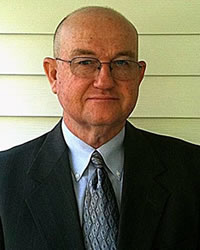
Gary Shepard

By One Offering Perfected

Hebrews 10:14
Gary Shepard July, 24 2011 Audio
0 Comments

Sermon Transcript

Auto-generated transcript • May contain errors

100%
If you would open your Bibles
this morning and turn to the book of Hebrews and the 10th
chapter. Hebrews chapter 10, and I want
to read a few verses beginning in verse 11. And every priest
standeth daily ministering and offering oftentimes the same
sacrifices which can never take away sins. But this man, after
he had offered one sacrifice for sins forever, sat down on
the right hand of God, from henceforth expecting till his enemies be
made his footstool. For by one offering he hath perfected
forever them that are sanctified." Now, the apostle Paul said so
very clearly, woe is unto me if I preach not the gospel. In another place, he says, that
he was not sent to do so many other things as others might
be called to do, but he says that he was sent to preach the
gospel. In the Bible, the gospel is called
a report. If you remember the words that
we read in Isaiah, in chapter 53 when he says, "...who hath
believed our report, and to whom is the arm of the Lord revealed."
It is a report. And in giving a report, especially
such as a news report, There is a rule of thumb that is supposed
to be followed, and in that report, there are some questions that
are to be answered. Who? What? When? How? Where? To whom? Why? You see, the gospel, if we follow
that same rule of thumb, does answer that very thing, or I
should say, these things. And the gospel is, in every way,
not just a report, but also news. If it's not come to you as news
that I'm afraid that you've never heard the gospel, not heard with
the ear of faith, it comes to sinners as good news. And I find myself more and more
feeling just like old Martin Luther, When talking about the
fact that the gospel is news, he said, the gospel is good news,
and in this world I know of no other good news. My aim this morning is to answer
these questions from this 10th chapter of Hebrews in virtually
one verse, and that is that 14th verse, where he says, "...for
by one offering he hath perfected forever them that are sanctified."
Now, here in this 10th chapter of Hebrews, we find a priest
that is very, very different from those Old Testament priests. As a matter of fact, if you look
back and read about those Old Testament priests, what we find
is that they were always busy, They were always at work. Their work was never finished. And even that high priest who
once a year went into the Holy of Holies, he went into a place
where there was no chair for him to sit down and signify in
that that his work was finished. But if you look in our text this
morning, what we find is one who is not only resting, but
he is waiting for his reward. Look back in that 11th verse
again. He contrasts these priests with
the priest. He says, "...and every priest
standeth daily." ministering or working and serving and offering
oftentimes the same sacrifices which can never take away sins. But this man, after he had offered
one sacrifice for sins forever, sat down on the right hand of
God from henceforth expecting till his enemies be made his
footstool. And he says all of these things
And he comes down to that 14th verse and gives us the reason
why it is such. He says, "...for," or as it might
be, "...because." That is, he sat down, that he is at the right
hand of God accepted, He has finished his work for, and we
come to that first question, who? It says in that 14th verse
that he is the one who has done something. In other words, the
he that is spoken of in that verse, being, of course, the
Lord Jesus Christ. He is the one who is contrasted
to all those Old Testament priests. And though they each one were
used of God as pictures and types and shadows of the priest of
God, this is the Lord Jesus Christ who is described as that great
high priest, the priest of all God's elect. And what the apostle
is doing here is not only making some comparisons between these
priests and this priest, between these priesthoods and this priesthood,
but he is always setting forth the superiority of Christ who
is the great high priest of his people. How is it that he is
shown to be, in these verses and in this book, so superior? Well, he begins, first of all,
in all of Scripture, showing that this priest is superior
to all others, first of all, because he is God, manifest in
the flesh. The reason why there were so
many other priests, the reason why they never accomplished this
work, the reason they could only be types and shadows, was that
this priesthood required that this priest who would represent
the people of God, he had to be God manifest in the flesh. I've told you so many times the
things, if you think about it, that God Almighty, as God could
have done from His throne, never left the portals of glory, He
could have done and He has done a multitude of things. But in order to be a priest for
His people, all of whom are men living on this earth, in order
to be a priest on the behalf of his people, to represent them
to God, he had to be a man. A man has to represent men before
God. But not simply a man, he had
to be the God-man, because in this priesthood, the thing necessary
for him to do in order to represent them is to die the death of the
cross. And so we find that this is none
other than Jesus Christ who is the God-man, God manifest in
the flesh, and being such, He ever lives to be this priest. It says that He has a continual
priesthood. He has a never-ending priesthood. He has a better sacrifice than
these priests. He stands alone as the one who
could accomplish this by virtue of who he is and by virtue of
what he did. And what we find sometimes to
our amazement is that this priesthood that he has, was a priesthood
that he had long before these other priests were ever initiated
under that old covenant. Look back over in Hebrews chapter
6. Hebrews chapter 6, and look down
at that last verse. where Christ is described as
the forerunner who is for us entered, and this entrance is
not in some way just into heaven, but into the very Holy of Holies
in heaven. He says, "...whither the forerunner
is for us entered, even Jesus made an high priest forever after
the order of Melchizedek." Not Aaron, not that priesthood under
the Mosaic economy. He did not even come from that
tribe. But if you look on into chapter
7, he shows us something like this, "...for this Melchizedek,
king of Salem, priest of the Most High God, who met Abraham
returning from the slaughter of the kings, and blessed him."
In other words, this priest was able and superior to Abraham
to the degree he was able to bless him. Look farther. He says, "...to whom also Abraham
gave a tenth part of all." Abraham paid tithes to this Melchizedek. He is, first being by interpretation,
King of Righteousness, and after that also King of Salem, which
is King of Peace. Now, there's a great debate always
amongst preachers. as to whether or not this was
really the pre-incarnate Christ or not, whether an actual literal
figure of some kind. But I'll just simply say this,
the names by which He is called and crowned as King, King of
Righteousness, King of Peace, I don't see how they can apply
to anybody else but the Lord Jesus Christ. And as we find
oftentimes in the Old Testament, in what the theologians call
theophanies, we find the pre-incarnate Lord Jesus Christ appearing as
a man, as He does to Abraham and others, over and over again. He's the King of righteousness
and King of peace. But look at that next verse.
It says, "...without father, without mother, without descent,
having neither beginning of days nor end of life, but made like
unto the Son of God, he abideth a priest continually." Now, there
can't be but one priest. There can only be one who can
represent the people of God before God. And it is this he that the
writer of Hebrews is talking about, and he says in verse 4,
"...now consider how great this man was, unto whom even the patriarch
Abraham gave the tenth of the spoils, and barely they that
are of the sons of Levi." Those who were actual participants
in that Old Testament priesthood, who received the office of the
priesthood, have commandment to take tithes of the people
according to the law that is of their brethren, though they
come out of the loins of Abraham. the promises. Now, what we've
got here is not only Abraham. Abraham paid tithes or tribute
to this Melchizedek. And not only did Melchizedek
receive those tributes and tithes from Abraham, but he says also
here that this priesthood, all these priests, all these sons
of Levi, since they came from Abraham, they paid tribute and
tithes to Melchizedek also, representatively. And he says all that to show
us this in that next verse. He says, "...and without all
contradiction, the less is blessed of the better." In other words,
here is the God-man, King, Priest, Jesus Christ the Lord. He is what this is all about. And then we'll come to the second
question. The second question being what? Look back in that 14th verse
of Hebrews chapter 10. It says, "...for by one offering
he hath perfected." You know, what I find is that men and women
Like a word like perfected in about every situation and relationship
that they have in this world except as it pertains to God. Now, this is about, at least
in my mind, as cut and dry and simple and to the point as it
ever could be. It says that this is what He
has done. He hath perfected someone." That
is, Christ in His priesthood and by His sacrifice has done
what those Old Testament priests and those Old Testament sacrifices
could never have done. Never have done. Look back at
the very first verse of Hebrews 10. It seems that the apostle
goes to some length again and again to state this. He says
in verse 1, "...for the law, having a shadow of good things
to come, and not the very image of those things can never, with
those sacrifices which they offered year by year continually, make
the comers thereunto perfect." Well, why, somebody says, did
God ordain and establish all these offerings and sacrifices,
a literal river of blood that flows throughout the course of
Israel's history in the worship of God, why did He require all
that? Because the sacrifice and the
Lamb was yet to come. And although those sacrifices
Even that Passover lamb so meticulously watched and offered at God's
command, they never could take away sin. They never could make
the offerer perfect. Turn back over to Hebrews 7 and
look at the 19th verse, where he had just got through saying
virtually the same thing. He says, "...for the law made
nothing perfect, but the bringing in of a better hope did, by which
we draw nigh unto God." What's that better hope? That better
hope is in a better priest and a better sacrifice. You see, the word perfected here
means something like completed or finished or fulfilled. In other words, He has done all
that was required for there being such and without any need of
any further offering. In other words, the reason that
those offerings and sacrifices went on and on and on was because
they had not put away sin. They simply were types and pictures
of how God puts away sin. And what he's talking about here
in this verse is more of an objective rather than subjective perfection. In other words, when we hear
that word perfect, we think in terms of perfect in our person
or our being perfect in ourselves. That's not what he's talking
about here. It's not how we'll be in heaven, but it has to do
with how we stand before God. How are we in His sight? And His people are both perfectly
justified and perfectly sanctified. That is, they have a complete
righteousness and a complete fitness to worship God not in
themselves, but in their priest, the Lord Jesus Christ." Now,
I hear people saying things like this. They say, Christians aren't
perfect. Christians aren't perfect. I'm
so tired of statements being just thrown out there. They fit
on a bumper sticker nice, or they make a nice slogan or something
like that. But the truth of the matter is,
we better be. God has already shown in all
those Old Testament sacrifices, such as He tells us in the book
of Leviticus, that in order for God to accept any offering or
sacrifice, it has to be perfect. God will accept us. We've got
to be perfect. Did you not hear in our reading
there in Psalm 146, where it says, the Lord loves who? the
righteous. So this perfection, this has
to do with their right to life and heaven and that eternal inheritance
which is founded solely and based solely on the righteousness of
Jesus Christ imputed to them. They're brought to be justified
in the sight of God. That means declared righteous
by God, not on the basis of their own person or their works, but
on the basis of this priesthood, this priest and his sacrifice. I like what old Arthur Pink,
some of you have read Arthur Pink, but he said of that word,
He says, the word perfected here is to be understood in a sacrificial
rather than in an experimental sense. What's he saying? I'm not talking about being perfect
in myself. You can just look at me in a
few minutes and you can see more flaws than I. would hope you
ever could be able to see. But how am I in the sight of
God? How can a sinner who fails every
moment, who has fits of unbelief and whose faithfulness wavers
and at its best day is never really good, how could we ever
have peace or hope of a standing of acceptance before God? He
says, "...because he hath perfected them. And it has reference to
the Christian's right to stand in the holy presence of God in
unclouded peace. Our title, so to do so, is as
valid now as it will be when we're glorified, for that title
rests alone on the sacrificial work of our substitute finished
on the cross. It rests on something altogether
external to ourselves, altogether a part of what God's sovereign
grace works in us or through us, either when we first believe
or afterwards. It's all in Him. Not just helped, not just made
something possible, not just done 99% of what's necessary to save us,
but He has perfected these people in God's sight. Now, men may
stand up and point at them and say, they don't look perfect
to me. They'd be right. The devil can stand up as he
does the accuser of the brethren and say, they don't look perfect
to me. But the only one that counts the thrice holy, just
God. They're perfect in my sight. They're righteous in my sight. I've accepted them in my Son. He has perfected them. He has made them righteousness. because they've been made the
righteousness of God in Him. Paul says it like this in Ephesians
1. He says, "...to the praise of
the glory of His grace wherein He hath made us, accepted in
the Beloved." That word accepted there literally means something
like this, He has graced us in His beloved Son. Paul had a great goal. He says in Colossians, He says,
"...of Christ, whom we preach, warning every man, and teaching
every man in all wisdom, that we may present every man perfect
in Christ Jesus." Then there's the third question. When? That's always a question, isn't
it? When were you saved? I warn you, don't head down that
path. It's a weaving, meandering, twisting
path. Because the question is answered
here in all reality. And the question has to do really
with who rather than when. But here's the question answer,
when. It says, "...for he hath..."
You see that? That's the past tense, he hath. There are a lot of people who
claim to be making a lot of progress toward being perfect. Seems like
the older I get, the more I regress than progress. But it says here
that the wind is answered in this way, he hath. When he came
into the world, when our priest took on this perfect humanity,
when he took on that body, and when he went to suffer the death
of the cross. Actually, in truth, long before
that. Because he went to that cross
as the surety of his people. Do you know what a surety is
in Scripture? Somebody defines it as, well,
that means he's the guarantor. Well, there's a little bit of
difference between a surety and a guarantor. In other words,
if you borrow money, and the bank is a little bit shaky on
your credit or something like that, they may ask somebody that
has better credit and better standing, they may ask them to
sign on your behalf as the guarantor, which means if you fail to pay
the debt. The guarantor becomes responsible
for it. No, Christ is a surety. And the
surety is the one who assumes the full responsibility for the
full amount of the debt at the very first. You remember in Proverbs,
the wise Solomon is advising his son, you be careful being
a surety because the one who becomes surety will surely smart. That means you're going to have
to pay, no question about it. In that everlasting covenant,
the Lord Jesus Christ being the head and representative of all
his elect, he stood and assumed voluntarily that surety ship,
the full responsibility of the debt of all their sins, all his
elect people, all at one time, and here as he hangs on this
cross in the world and bears their sins in his own body on
the tree. What did he say? Two thousand
plus years ago, before I was ever born, before I ever believed
the gospel, before he ever gave me spiritual life and faith and
understanding and the gift of repentance, before that, he hung
on that cross and he said, it is finished. I've always thought
Some of you might be artists, artisans, can paint beautiful
pictures or write beautiful poetry or whatever it is. What would
be about the highest insult that I could give to you? Suppose
you paint a beautiful landscape for me. You spend your time,
you paint it, and then you hand it to me and you give it to me
as a gift, I say, well, it's just, that's a beautiful picture. But there's just a few little
problems with it. I'll take my, I happen to have
my brush and my paint here with me, and I'll just take and I'll
just touch it up a little bit here and a little bit there.
You really didn't get it finished. That'd be the highest insult,
wouldn't it? You thank God. will accept anything
from a sinner's hand when his son has already finished the
whole of this glorious and eternal salvation. Path. Path. You see, the gospel, this news
is about something that is done, not something we're to do. This
gospel has to do with something that was accomplished. And things,
though they be commanded us again and again in Scripture that we
are to do, it is never that we are to do them to be saved. We do them because we are saved. I never did one thing to become
my father's child. Oh, he loved me. I know he loved
me. I couldn't even talk about him much this morning, thinking
about him. But I never did one thing to
make Him love me or to be His child. He hath. You see, these
things that we do according to the Word of God and in obedience
to Him, we do for His glory, and never to give us a better
standing before God or to make us righteous, because He's already,
He has perfected us. through His cross death. And
that brings us to the next question. How? Right there. By one offering. You know what that tells me right
away? That tells me not only do I not have anything to offer
God that He would accept, but there's no need to. By one offering. All those offerings in the Old
Testament, they were simply types of the one offering. Now, he's not saying an offer
here. Somewhere along the way, men
so polluted and tainted the gospel that they made the gospel to
be all about an offer. In other words, God's offering
you somebody, God's offering you Christ, or God's offering
you salvation. The gospel is not about an offer,
it's about this offering, one offering. Look back at verse
1 again. He says, "...for the law, having
a shadow of good things to come and not the very image of the
things, can never, with those sacrifices which they offered
year by year continually, make the comers thereunto perfect.
For then would they not have ceased to be offered, because
that the worshippers once purged should have had no more conscience
of sins? But in those sacrifices there
is a remembrance again made of sins every year, for it's not
possible that the blood of bulls and of goats should take away
sins. Wherefore, when he cometh into
the world, he saith, Sacrifice and offering thou wouldest not,
but a body hast thou prepared me." in burnt offerings and sacrifices
for sin, thou hast had no pleasure, no satisfaction. Then said I,
then said I, lo, I come in the volume of the book it is written
of me." You can go back to the Psalms and you can find the Christ.
Some people call them Messianic Psalms, but they're all Messianic
Psalms. They're all about the Messiah.
the Christ. But here he is saying it, lo
I come in the volume of the book, the book of God's decree and
purposes, it is written of me, to what? To do thy will, O God. He's talking about just praying
at this time or not eating this. No, he's talking about God's
will of salvation to His covenant people. In other words, Christ
doing the will of God, that's the salvation of His people.
Above, when He said, "...sacrifice and offering, and burnt offerings,
and offering for sin thou wouldest not, neither hath pleasure therein
which are offered by the law." Then said He, "...Lo, I come
to do thy will, O God." "...He taketh away the first." that
he may establish the second, by the which will we are sanctified
through the offering of the body of Jesus Christ once for all."
Go away, phony priests. Go away, man-made precepts. Go away, progress salvation,
work salvation of any kind. It has to do with the will of
God, Christ doing that will, performing perfectly that will
of God, which was to save his people through the sacrifice
of himself. By the witch will, we're sanctified
through the offering of the body of Jesus Christ once for all. Made his soul an offering for
sin. gave Himself for us an offering
and a sacrifice to God." How could we ever have looked, read
one verse of this book from Genesis 1, and not seen and known that
the only way that God puts away sin is by a substitute, by a
sacrifice of blood, perfect and without spot, offered directly
to His inflexible job. I've got to hurry. Whom? Whom? Who has He already perfected
by that one offering? Them that are sanctified. Somehow I get the feeling when
I just say that word, People get what I call the heebie-jeebies
sanctified. I mean, you've got your A team,
your B team, your C team, and then you've got that super team.
That's what religion has done. False religion in our day is
like a pyramid. It's like a hoax. It's like plateaus
of perfection. Not with God. You see, these
that are sanctified, that word means particularly set apart. And if you really want to know
what it means, If you want to get beyond all these foolish
notions about degrees of holiness or whatever men might try to
teach you, just think about it in this light. This book refers
to Jesus Christ being sanctified. Was He made better? Was He who
is none other than the Holy God Himself in human flesh, was He
improved upon? That's blasphemy to think that.
This means to set apart by God. And these that are sanctified
are those who were eternally set apart by God the Father in
divine election in that everlasting covenant by His free grace and
made heirs of If you're feeling poor one day, which we may feel
more and more in the coming days, by the way, just think about
what it means to be an heir of God, to be a joint heir with
Jesus Christ, to be described as it's described in this Hebrews
book as being His brethren, and all of that according to the
will of God. the will of God. Jude, in that
little epistle, begins with this very thought, saying, Jude, the
servant of Jesus Christ and brother of James, to them that are sanctified
by God the Father and preserved in Jesus Christ and call. One verse, the threefold work
of God in His triunity, sanctified by God the Father, preserved
in Jesus Christ, called, factually, mightily, by His Spirit. He chose them. He loved them. He predestinated all things concerning
them, especially as it pertained to their salvation. And there
He is. There He is. They all are, in
time, sanctified by His gospel. They're distinguished among men
by this gospel. You see, this gospel gives him
all the glory. This gospel is true to all the
Holy Scriptures. This gospel is the only hope
a real sinner could ever have. This gospel exalts the triune
God as the Father, Son, and Holy Spirit. Christ prayed concerning
this sanctification in John 17. He said, Father, these that you've
given me out of the world, sanctify them through thy truth. Thy word is truth. That's the
same thing Christ is saying in John 10. My sheep. They'll hear
my voice. They'll follow me. And all through
these verses, he emphasizes that by this sacrifice, he not only
did it once, but he did it forever. Forever. Someone asked the question,
well, what about if I fail or I fall? No, what about it at
all? You will. This is forever. What I do in time. will never
undo what He did, not only in eternity, but on that cross. He hath perfected forever them
that are sanctified. Well, what about that last one? Why? Why? Now, I could get extra biblical
here, and I can do like so many preachers have done. I could
give you all these reasons. None of which can be found in
the Bible. But I'll give you the one reason
that he gives, that he did this because he would. Just like he
said of Israel, I didn't choose you because you were any greater
or any more. No, you're the least of all people. But I loved you and I chose you
because I would. Moses asked God, he says, show
me your glory. Your glory? Well, Moses What
have you already seen, my man? You've seen rivers of blood and
staffs turn into snakes. You've seen the Red Sea Park. You've seen all these. Your glory. What is it? I'll have mercy on
whom I'll have mercy. I'll be gracious to whom I'll
be gracious. You see, if He hadn't, you never
would. I never would. He did it. Just
because he would. Just because he set his love
and affection on a bunch of sinners, chose them in Christ, gave them
to his Son. He voluntarily stood as their
surety, as their representative, so that when they fell in Adam
along with their whole race, they did not fall out of Christ.
They acted like enemies in their own minds, offering up to God
wicked works. But they were never His enemies.
He never made Himself their enemy. He loved them. He watched them
with a watchful eye for all of eternity and time, and He has
His eye upon them right now. Such a God, such a Gospel is
good news. May the Lord give us grace to
believe it and to trust Christ. and to rest only in Him, and
to cast off all of our religious idolatry and false hopes and
such, and look outside of ourselves to that finished work. For He
hath perfected by one offering, once perfected forever them that
are sanctified. Our Father, this day we give
You praise and glory. We praise your blessed Son, our
Redeemer, and your Spirit, the Spirit of truth. We know that
salvation is of the Lord, and that you fixed each and every
thing around the suffering, the substitutionary death, the satisfaction
which the Lord Jesus Christ rendered to you. Grant to us that we might
know that salvation that is all by your grace and all for your
glory. We have nothing better to say
than this glorious good news and report. Christ crucified. We pray that you bless your word
to each one here, for we pray in Christ's name. Amen.
Gary Shepard
About Gary Shepard
Gary Shepard is teacher and pastor of Sovereign Grace Baptist Church in Jacksonville, North Carolina.

Comments

0 / 2000 characters
Comments are moderated before appearing.

Be the first to comment!

Joshua

Joshua

Shall we play a game? Ask me about articles, sermons, or theology from our library. I can also help you navigate the site.