Bootstrap
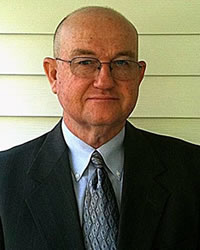
Gary Shepard

The Heir of the World

Romans 4:13-16
Gary Shepard February, 6 2011 Audio
0 Comments
Gary Shepard
Gary Shepard February, 6 2011

Sermon Transcript

Auto-generated transcript • May contain errors

100%
Turn with me to Romans chapter
4. Romans 4. I want to read three
verses, beginning in verse 13. For the promise that he should
be the heir of the world was not to Abraham or to his seed
through the law, but through the righteousness of faith. For if they which are of the
law be heirs, faith is made void, and the promise made of none
effect. Because the law worketh wrath,
for where no law is, there is no transgression. Therefore it
is of faith that it might be by grace, to the end the promise
might be sure to all the seed, not to that only which is of
the law, but to that also which is of the faith of Abraham, who
is the father of us all." Sometime back I was reading a little article
that a preacher had written, And he referred to Abraham as
a jerk. He said, Abraham was a jerk. And I imagine that my feelings
when I read that was a lot like the expressions on your face
today seem to reflect. How could he ever say that Abraham
was a jerk? But you know, the more I thought
about it, the more I began to realize that he was most likely
right. You see, this man Abraham that
is held in such high esteem is the same man who lied to a king. and told him that his beautiful
wife was his sister just to save his own skin. Not only that, but he was the
same man who took his wife's servant girl and fathered a child
by her, in a complete disobedience and in an evidential display
of unbelief from God. So if you look at this man who
came from Ur of the Chaldees, who was in himself naturally
an idolater, his father even a maker of idols, and follow
him all the events of his life that we find recorded in Scripture,
it might not be outside of the realm of possibility that he
really was a jerk. But if you notice here in this
13th verse, there is a phrase and a description wherein God
the Spirit directs the apostle Paul to refer to him in this
way. He says, "...for the promise
that he should be the heir of the world." He refers to Abraham. In this same way that we find
God referring to him in Genesis 17, here he is called the heir
of the world. And that means the same thing
that God says in Genesis 17 when He called him the Father of many
nations. I know that this cannot be the
world as it is commonly thought of which is in this same book
said to be under the curse, inhabited by fallen sinners, always in
turmoil, always in conflict, and surely perishing. People like to say the word world
in Scripture means just whirl, but that is not true. And I know of no place where
we can see that distinction any more than in our Lord's words
when He prays to the Father in John 17. Turn over to John chapter
17, and here we find that he prays for this people that the
Father has given him out of the world. He prays for them in distinction
from those he calls the world. Verse 9, or rather verse 6, I
have manifested thy name unto the men which thou gavest me
out of the world." Then if you listen as he continues in verse
9, he says, I pray for them, I pray not for the world. And then also in verse 14, he
says, "...I have given them thy word, and the world hath hated
them, because they are not of the world, even as I am not of
the world." And then again in verse 16 where
he says, "...they are not of the world, even as I am not of
the world." He's speaking and using the word world there to
refer to all of those outside of the Lord Jesus Christ. He speaks in the same way that
the Apostle John speaks in 1 John 2, when he says, Love not the
world, neither the things that are in the world, If any man
love the world, the love of the Father is not in him, for all
that is in the world, the lust of the flesh, the lust of the
eyes, and the pride of life, is not of the Father, but is
of the world." Christ says, I pray not for the world. He says of
His people, they are not of this world. But when He speaks as
He does and uses the word world here in Romans 4, He is likewise
talking to a family. That world that he was talking
about in John 17 is also viewed by God as a family, but they
are the family not of God, but of the devil. So he says here
in this text that Abraham is that one who is called the heir
of the world. And he is talking here about
the church of God. He's talking about this church
that is those in Christ that he calls the church of the firstborn. He's speaking here of God's elect,
of these who are His redeemed and believing people, and He
is speaking using the word, world, here, just like He does in John
3, 16. Men take that verse and try to
say that this means that God loves every person in the world
alike. But they do so denying what He
says elsewhere in Scripture, such as those places in Malachi
and Romans 9 and other places where He plainly says that though
He loved Jacob, that he hated Esau. They forget that he says
in the Psalms that he hates all workers of iniquity. They try to distinguish and say,
oh, he hates the sin, but he loves the sinner, when they are
inseparably the same. He says in the Proverbs, he hates
all those who sow discord among the brethren. And here in John
3.16, he says this, he says, for God so loved the world that
he gave his only begotten Son that whosoever believeth on him."
In other words, the world in that verse is distinguished by
these who believe on his Son. If the love of God, as is said
in Scripture in this same book, if the love of God is in Christ
Jesus, The world he's talking about there has to be that world
that is viewed by God as being in Christ Jesus. He says that
Christ was given of the Father for that world, and these who
believe on Christ, they will have everlasting life and they
will never perish. They will never ever perish. He speaks of these people in
the same way that he did in Matthew 5, and in the same way when he
said, "...blessed are the meek, for they shall inherit the earth."
They will inherit the land. He does so in the same way He
speaks in John 6, when He says in verse 33 of Himself, "...for
the bread of God is He which cometh down from heaven and gives
life unto the world." He's not giving life to that world that
he speaks of in John 17, but he's giving life to this world
that is in Christ. He said again in John 6, "...I
am the living bread which came down from heaven. If any man
eat of this bread, he shall live forever. For the bread that I
will give is my flesh, which I will give for the life of the
world." This world that he speaks of as these people that were
chosen of God before the world began and given to Christ, who
came into this world for that sole purpose of saving them to
the glory of God. They are described in our text
and in many places as Abraham's seed. Now, this cannot in any
way be his natural seed, because as we've seen, not only in the
past week, but many, many times over the course of history, that
his natural seeds are even in conflict with each other. They're in direct conflict, disagreement,
and trying to establish their possession in this natural world
for themselves and their place of power in this world. No, this is a spiritual seed. Abraham being described as being
one with them, and both Abraham and them being one in Christ. You see the word here. When he
speaks of this man being the heir of the world, that word
heir there means not only him, but this people who are in him,
or viewed in him, or in him as this type. And he's talking about
not only him and those in him, and Paul himself being a Jew
now. writes to this church, which
is probably made up of mostly Gentiles, and he says this very
thing, including both himself and them, with this man Abraham. Look down in verse 16. He says, therefore it is of faith,
that it might be by grace to the end. In other words, to accomplish
this goal that the promise might be sure to all the seed. God has determined the way to
make this inheritance that he has purposed to give to this
people in Jesus Christ, he has determined and established the
one way to make it sure. Why? Because whether they were
Jew or whether they were Gentile, whether they were Abraham or
David or any other sinner, the only way that he could ever make
their salvation sure is by grace through Jesus Christ. Listen to this verse in Hebrews
11, speaking of Abraham. "...By faith, He sojourned in
the land of promise, as in a strange country, dwelling in tabernacles
with Isaac and Jacob." No mention here of Ishmael or Esau, by the
way. dwelling in tabernacles with
Isaac and Jacob, the heirs with him of the same promise." Ishmael
was not an heir in this sense. Esau was not an heir in this
sense. But when we come to that great
chapter on faith, Hebrews 11, wherein so many of God's people
are described, and the one thing that's characteristic of them
all is this, by faith they did this. By faith, Abraham lived,
traveled, living in tents, it says, with Isaac and Jacob, the
heirs of the same promise. And what the Apostle Paul is
doing here is to say that the seed of Abraham is not simply
those who were set forth naturally as such, neither did they become
such by their obedience or keeping of the law. Here is just exactly
what is said of Abraham in Genesis 17. He is the father in this
sense of many nations. Not just those Israelites. Not in this sense. You see, the
people of God, the church of Jesus Christ, those who are described
in Scripture as the elect of God, they are a people, he says,
from every nation, from among men of every nation, kindred,
and tribe, and tongue, and none of them, neither the Jews either,
by their own doing, will be the recipients. of this inheritance
of grace. Because to be the heir of the
world here means to be heir of spiritual blessings. You see, it is to this people
that the apostle writes in other places and says this, he says,
God in Christ has freely given us all things. He refers to this as being the
promise of God, the promise of righteousness. This has to do
with the promise of acceptance before God. This has to do with
the promise of eternal life. God promised eternal life to
a people in Christ before the world ever was. When Paul writes
to Titus, he says it like this, he says, "...in hope of eternal
life, which God, that cannot lie, promised before the world
began." Were you there? I wasn't. Neither was Abraham
or David or anyone else. So how is it that He promised
eternal life to someone before the world began? He promised
eternal life to this people in Christ, to this seed that are
described here. He says like this in 1 Corinthians
3, He says, "...therefore let no man glory in men, They were
having a dispute between who was the better preacher, Paul
or Apollos or Cephas or whoever it was. He said, don't glory
in men, for all things are yours. You can't get anything any more
from one preacher of the gospel than you can get from another
preacher of the gospel. If they're preaching Christ,
they're preaching the One in whom, he says, all things are
already yours. The Apostle Peter describes the
people of God in this way. In 1 Peter 3, 7, he says, they
are the heirs of the grace of life. The heirs of the grace
of life. And even in Hebrews, when he's
talking about the very angels that didn't fall, that angelic
host, he said, that is, the angels, are they not all ministering
or serving spirits sent forth to minister for them who shall
be the heirs of salvation? They inherit salvation. And if there's one thing that
is sure about inheriting something, inheriting something is not based
on our doing something, it's based on a relationship and a
family relationship. These seed are one in Christ. And how is it, does Paul say,
that Abraham and the seed, how did they come to this blessing?
As I said, it was just plainly in this way, by the promise of
God. When he dwelt in that eternity
alone and self-sufficient and self-satisfied in himself, having
need of nothing or anyone, but just simply because he would,
Just simply because He would do this for His own glory, not
because anything that they deserve. He promised this people in Christ
eternal life. What Paul is doing here and what
he has to do again and again all through the New Testament
is to drive a stake, if you would, in the heart of the most wicked
thing that men and women have ever believed, which is that
they, in some way, because of something they do, they merit
this gift of God. You couldn't do enough in ten
lifetimes. You couldn't quit doing enough
things that are sinful in a million lifetimes to ever deserve or
merit this which God has given by promise. You see, promise
here is set in contrast to law and to works. Somebody said,
if you do this, God will bless you. That's a lie. If you want to go to heaven,
you better do this. Or if you want to get God's blessings
and acceptance, you better quit this thing, or that thing, or
you better live right, or do not. He's taking these very ones
who, just like we are, are failures in themselves. And he said God
gave it to them by promise. I like what old Robert Hawker
said on that verse. He said, and this promise given
to Abraham was not on any account of a personal nature because
of his righteousness, for at the time God called him to receive
it, he was an idolater. Well, somebody said, Abraham
must have been doing something right. No. He was born an idolater. He was raised up in the midst
of a people who were all idolaters, worshipers of a false god. His daddy even made little idols
for people to worship. That was his job, his business. And Abraham was not looking for
God. He goes on, he said, "...neither
could it be for any obedience to the law, for the law was not
given until 430 years after." That's what Paul is saying in
all this. Neither could it be because of
circumcision, for this promise was given to Abraham more than
13 years before that was commanded. What does he say? For the promise
that he should be the heir of the world was not to Abraham
or to his seed through the law, but through the righteousness
of faith. For if they which are of the
law, if they be heirs, faith is made void, and the promise
made of none effect." Not only these Israelites and their obedience
to the law, but you and me or anyone else, if it depended in
any part on anything that we do, that nullifies and makes
the promise of God's grace to be void. You see, he says that
this promise is sure. Now, I like a sure thing. I've
never been a gambler for that very reason, I'm sure, because
I like a sure thing. There's only one sure thing,
and that's the promise of God. The promise that is in the Lord
Jesus Christ, because this promise of God is in Christ. It's not
some promise that he makes out there and we can just say, well,
it's going to happen. If he promises it's going to
happen, there's no way of stopping it, which is true and all that.
No, he says, for the promises, for all the promises of God are
in Him, in Christ, yea, and in Him, amen, unto the glory of
God by us. In other words, our airship with
Abraham as he is expressed here, and our relationship to him,
our airship is with him in Christ. Hold your place here and turn
over to Romans chapter 8. Romans 8. And look down in verse 16. This same apostle, he's not forgotten
what he's written. He says in verse 16 of Romans
8, "...the Spirit itself beareth witness with our spirit that
we are the children of God." Somebody said, how can you know
if you're the child of God? Walk down the aisle and some
preacher will tell you you are. No. The Spirit of God. alone bears witness with the
spirit of men and women that they are the children of God. And I'll tell you this, the Spirit
of God never bears witness and gives us a confirmation that
we are the children of God contrary to what He says in His Word.
As a matter of fact, the Lord Jesus said, the Spirit, when
He's come, He'll take the things of Christ and show them to you,
reveal them to you. What will He do? He revealed
to us that the promise of salvation is given us in Christ. It was
always God and never us. It's all of His grace in Christ
and not our works. And for that reason, all we can
do is thank Him and praise Him for it. All right? Verse 17,
"...and if children, then heirs." What's the basis of this inheritance,
this heirship relationship? If children, then heirs. No,
somebody's going to get a big mansion in heaven, somebody's
going to get a scruffy log cabin in heaven. No, if children, then
heirs. Well, somebody, because they
were faithful, somebody, they're going to get more, they're going
to get rewards, they're going to be like a third world general
in heaven with all their medals, and somebody over here, not going
to have even a private stripe. No. If children, then heirs. Heirs of God and joint heirs
with Christ. That's where it's all at. How
in the world could a jerk like Abraham, or the other person
that's described and mentioned there in Romans 8, David, the
adulterer, the murderer, how in the world could they ever
be an heir of God by promise, by grace in Jesus Christ? You see, he says here, he says,
therefore, he said that we may be also glorified together if
we suffer with him, for I reckon that the sufferings of this present
time are not worthy to be compared with the glory which shall be
revealed in us. That's right. You say he's talking
about that glory that's going to be revealed to us. No, he
said the glory that's revealed in us. And I can tell you this,
the only relief for present sufferings in this world, the only deliverance
from the pain of all the circumstances of this life that's common to
us all, the only refuge there is, is that glory that's revealed
in us, which is that glory of the Lord Jesus Christ and all
that God has given us and made us to be in Him. Listen to what
Paul says to those Galatians. What was going on in Galatians?
Well, there were some who had come in and they were saying,
here is the way it is. We are saved by Christ, but we
don't leave the law of Moses. Or we're saved by Christ, we're
saved by grace, but we're also to be keeping the law also. And
they were spreading this mixture of law and grace, of works and
Christ. And Paul says this, he writes
them and he says, and if you be Christ, then are you Abraham's
seed and heirs according to the promise. If you be Christ, then
you're Abraham's seed. Not if you were born in Israel
or what some have described as the holy land. That land's not
holy. You just look what goes on in
that land. The only place that's holy is
where Christ is. The only thing that's holy is
that which has to do with the living God. He said, if you be
Christ. then are you Abraham's seed.
You ever read those Old Testament passages and just think, boy,
if I could have been born in the nation of Israel, I'd really
have it made. Just listen to what God's saying
there to people. Those promises he made to that
earthly people, they were just pictures and types of the true
promises and the true blessings that he gives to these that are
called Abraham's seed, that he gives to them in Christ, a spiritual
people. As a matter of fact, he's already
told us when he writes in Ephesians 1, he says, "...Blessed be the
God and Father of our Lord Jesus Christ, who hath blessed us."
with all spiritual blessings in heavenly places in Christ."
That sounds like past tense to me. You see, when we're always
wanting these blessings. It's only that glory that's revealed
in us by the Spirit of God when He shows us the gospel, and that
is that we've already been blessed with everything. If you look
back in the Old Testament where you find this nation and people
of Israel, and God talks to them and speaks of giving them the
land of promise, the land of Canaan, who's leading them? Moses. Moses is a type of the
law, and Moses cannot ever bring them into that promised land. He doesn't go himself, but the
man that follows him is Joshua. That's the Old Testament name. For Jesus, Jehovah's Savior,
that's the type of Christ. And it says that He failed not
in all the things that Moses gave, and He took them into that
land of promise. Christ is the only one in whom
all the promises are. It's not in Adam's seed, it's
in the woman's seed. the Lord Jesus Christ. And not
only is it in Christ, but it's through the righteousness of
faith. What is the righteousness of
faith? Well, as simply as I guess it
can be put, it's the righteousness of Christ. Look back in Romans
4 at verse 3. Paul does not have something
that's contrary to the Old Testament Scriptures. What he's saying
is exactly what the Old Testament Scriptures were talking about.
He says, for what saith the Scripture? That means the Old Testament
Scriptures. Abraham believed God, and it was counted unto
him for righteousness. Now, if ever words that were
contrary to our thinking, Contrary to the religions of this world,
contrary to what we by nature want to believe we can produce,
it's the words that follow. Now, to him that worketh is the
reward not reckoned of grace, but of debt. In other words,
if God blessed you based on what you do, then He would simply
be paying a debt to you. You could deserve that. He says,
but to him that worketh not. You want to know who's going
to be saved. There they are. To him that works not. He doesn't say to him that goes
and tries to live as ungodly as he can, just the opposite. He doesn't say that person who
just says, if I'm going to be saved, I'm going to be saved,
so to hell with everything else. He's not saying that. He says
to that person who does not work for their salvation, who does
not try to do something in order to gain the favor of God, That
person who knows that there is nothing in them or could ever
be done by them to gain the favor of God, to enter into this inheritance
he's talking about. But to him that worketh not,
but believes on him that justifieth, The ungodly. That's who God justifies. You know what the word justifies
means? It means, in the strictest biblical
sense, it means that God, based on a just principle, declares
somebody righteous. Well, how could God declare Abraham
righteous? The lying scoundrel? If you were
to see what Abraham did by Joe Smith, if you'd hear about it
in the news tomorrow morning, you'd say, that's a lowlife dog. He's willing to, you might as
well say, prostitute, sell off his own wife, save his hide. How did he justify? David, how
did old David, how did he do that? Noah, drunken thing. He's the God who justifies the
ungodly. His faith is counted for righteousness. Then he gives David as the example,
even as David also describes the blessedness of the man unto
whom God imputeth. You know what that word means? Well, impute means to charge
to somebody's account. And here's old David. He's going
to die. He's got all this sin, he's got
all this failure, he's got at least one murder hanging over
his head so far as God's justice is concerned. He's an adulterer. How is he righteous by God? How
did God put in that column, if you want to look at it like this?
Here is assets and liabilities. He writes in David's column of
assets before his holy books, perfect. And you look over in
that column that says liabilities and there's nothing in it. Why? Because his liabilities God imputed
to Christ. who came into this world and
died on that cross to pay those liabilities. And he imputes to
David in that asset column, if you want to look at it like that,
and I know that's far from perfect, but he puts there perfection,
the very righteousness of God in Christ, saying, blessed are
they whose iniquities are forgiven and whose sins are covered Blessed
is the man to whom the Lord will not impute sin." Every one of
these seeds, every one of God's elect, every one that He chose
and loved in Christ before the world began, He is not imputing
their sin to them. Why? Because their surety. before the world ever was, He
took to Himself the full responsibility of all their sin, and He came
into this world and paid that debt as a surety must, so that
their righteousness is the righteousness of faith, which they receive
in Christ. They receive it in Christ. This doesn't mean that their
righteousness is faith itself. No. It is the righteousness of
God in Christ, so that as these heirs, they all bear the same
name. And you can look back in Jeremiah,
in chapter 23 and verse 6, and it says, and this is the name
whereby He, the Christ, shall be called. The Lord our righteousness. Then you go a little bit farther
in chapter 33 and it says, "...and this is the name whereby she,"
that is His bride, the church, "...this is the name whereby
she shall be called," what's that? The Lord our righteousness. Paul writes to Titus and he says,
"...that being justified by His grace." We should be made heirs
according to the hope of eternal life. How are we heirs of eternal
life? Because we were justified freely
by the grace of God through that redemption, through that cross
death, through that shedding of His blood in the cross of
the Lord Jesus Christ. And this is received by God-given
faith. Can't even toot my horn about
faith. It's the gift of God. Preachers stand before people
and they say, believe, believe, and believe. Number one, they
don't tell them who and what they're to believe. But they
don't realize that there is not a sinner in this world who can
ever believe apart from a work of God's Spirit in their heart,
enabling them to believe what they never would or could believe
by nature. Why do men believe lies? Why
do all these preachers stand up and steal from people week
after week and promise people things that nobody has ever promised? How do they follow that and fall
deluded to that and continue it? How can they live and not
hear the gospel? Because they want to. God has to do something to our
wanderer. He has to make us willing in
the day of His power, and that's a willingness to believe what
we would not and could not believe otherwise, which is the promise
of God in the Lord Jesus Christ. He said it's by faith, though
it can be made sure. Faith is not working. Faith has nothing to do with
what men call merit. You know what, grace? Grace excludes
all human merit. And yet, grace, as it's viewed
by most in this world, is the same kind of grace that the Roman
Catholic Church has set forth for ages. That there is a worthiness
of spiritual reward which is acquired by righteous acts made
under the influence of grace. Grace isn't God enabling us to
do some things so we can be worthy of some things. No. He said it's
not by works of righteousness which we have done, but according
to His mercy and His purpose of grace which was given us in
Christ. You see, righteousness has to
do with justice. How could God justly to a sinner
like Abraham, or me, or David. How could He ever bless us, make
us His heir, only in one outside of ourselves, only accounting
us the seed? Everything, Paul says, is given
to the seed of Abraham. Abraham's seed, Paul says in
another place, it's not seeds, but seed. What's that? That's Christ. Christ. So we only have what we have
by grace through the promise of God in the Lord Jesus Christ. In Galatians, Paul keeps saying
this. Galatians 3, 7, "...know ye therefore
that they which are of faith, the same are the children of
Abraham." We say, that's all these Christians. No, it's not. Because God-given faith believes
what God has said. That's what it says Abraham did.
It said, Abraham believed God. It didn't say, Abraham believed
this confession of faith, or Abraham believed the Baptist
doctrine, or Abraham... No, it says, Abraham believed
God. And I'll tell you this, you don't believe God just based
on the fact that I said what God says. I might say what God
says. You might believe me, but you've
not believed God. Why? Because you don't really
know if God said it or not. You've taken my word for it.
But you can open this book, and you can do like those noble Bereans
that the Scriptures talk about, and it says that when they heard
Paul preach, they searched the Scriptures to see if those things
were true. And if you believe them because
God says them, then you believe God. You cast all your hope on
Him. on His truth, His faithfulness. You can never feel, oh, you feel
like you're right with God, you feel like you're going to heaven.
No. Feelings come and feelings go. But feelings are deceiving. I trust the Word of God alone. That's the only thing worth believing.
Galatians 3.9, So then they which be of faith are blessed with
faithful Abraham. Galatians 4, "...now we, brethren,
as Isaac was, are the children of promise." Galatians 3.22,
"...but the scripture hath concluded all under sin, Jew and Gentile,
that the promise by faith of Jesus Christ might be given to
them that believe." What does James say? He said, "...hearken,
my beloved brethren, hath not God chosen the poor of this world,
rich in faith, and heirs of the kingdom which he hath promised
to them that love him." Abraham probably was a jerk, but he believed
God. I am a jerk, but I believe God. David was a jerk. Every sinner
is a jerk. And the only difference in one
sinner and the other is the grace of God. Abraham believed God. The only way sinners like us
could ever be heirs of God and heirs of the world is by God's
promise. And the only way that God could
ever promise us anything in grace is in Christ. And the only way
we could ever receive the promise is if He gives us faith. And
that's how He assures our salvation, and that's how He gets all the
glory. All the glory. You see, in Genesis
17, he said, Abraham, I'm making this covenant with you, and this
is the mark of the covenant, circumcision in your flesh, every
male child. But when you get to the New Testament,
those who, when they heard the preaching of grace and Christ,
they said, but we're the circumcision. No. He said that was just simply
a picture and type of the true circumcision. If you look back
in Romans 2, in the last two verses of Romans 2, he says,
"...for he is not a Jew which is one outwardly, neither is
that circumcision which is outward in the flesh, but he is a Jew
which is one inwardly, and circumcision is that of the heart." in the
Spirit and not in the letter whose praise is not of men, but
of God. Circumcision or any other work
in the flesh, what do men brag on? Their flesh. But if the Spirit
of God has given us what He calls that circumcision of the heart,
we then have praise for God. It is the Lord. Like old Jonah,
salvation is of the Lord. It's all by His grace. It's a
gift. It's by promise. It's in Christ
and Him crucified. It's got to do with His righteousness
and not mine. That's the heir of the world. That's the heirs of the world. And they will literally be such
one day. Turn over to 2 Peter. in the
3rd chapter. 2 Peter 3, and listen to what
Peter says to these believers. He says in verse 10, "...but
the day of the Lord will come as a thief in the night, in the
which the heavens shall pass away with a great noise, and
the elements shall melt with fervent heat, the earth also,
and the works that are therein shall be burned up." this world
that people have clamored for to get a little piece of real
estate in it, the world that people seek to have power in
and rule over. He said it's all going up in
smoke. Seeing then that all these things
shall be dissolved, what manner of persons ought ye to be in
all holy conversation and godliness, looking for and hasting unto
the coming of the day of God, wherein the heavens being on
fire shall be dissolved, and the elements shall melt with
fervent heat? Nevertheless, we, according to
His promise, look for new heavens and a new earth wherein dwelleth
righteousness." God's people will literally be the heirs of
the world. And even now, though it does
not appear so, they might not even have a lot big enough to
build a little cabin on in this world, but they're the heirs
of this world. And they can sing with that old
hymn writer This is my Father's world. Oh, let me ne'er forget
that though the wrong seems oft so strong, God is the ruler yet. This is my Father's world. The battle is not done. Jesus
who died shall be satisfied in earth and heaven. God make us
to be amongst that people who look to Christ, who believe the
promise in Him, promise of righteousness, the promise of eternal life,
promise of salvation, all by His grace, the seed of Abraham. Father, this day we thank You
for Your Word. Your Word is true. Our eyes are
blind to everything that is true and good and right in Christ
unless you're pleased to open them, to give us that true hope,
to cause us to look outside of ourselves to Christ and what
He's already accomplished, to look not ever in any measure
to ourselves for any consolation or any peace, but to rest in
Christ alone. and believe in the promises that
are in Him. Make this known to your people
for your glory. Your sheep hear your voice, and
they follow Christ. We thank you for all your mercies
in Him, and we pray in His name. Amen.
Gary Shepard
About Gary Shepard
Gary Shepard is teacher and pastor of Sovereign Grace Baptist Church in Jacksonville, North Carolina.

Comments

0 / 2000 characters
Comments are moderated before appearing.

Be the first to comment!

Joshua

Joshua

Shall we play a game? Ask me about articles, sermons, or theology from our library. I can also help you navigate the site.