Bootstrap
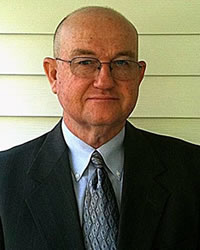
Gary Shepard

The Captain of the Lord's Host

Joshua 5:13-15
Gary Shepard December, 12 2010 Audio
0 Comments
Gary Shepard
Gary Shepard December, 12 2010

Sermon Transcript

Auto-generated transcript • May contain errors

100%
Turn to Joshua in the 5th chapter. Joshua chapter 5. And I want
to read a few verses, beginning in verse 13. And it came to pass, when Joshua
was by Jericho, that he lifted up his eyes and looked And behold,
there stood a man over against him with his sword drawn in his
hand. And Joshua went unto him and
said unto him, Art thou for us, or for our adversaries? And he said, Nay, but as the
captain of the host of the Lord am I now come. And Joshua fell
on his face to the earth, and did worship him, and said unto
him, What saith my Lord unto his servant? And the captain
of the Lord's hosts said unto Joshua, Loose thy shoe from off
thy foot, for the place whereon thou standest is holy." And Joshua
did so. Many times in this book, the
Lord, who is none other than Jehovah Jesus, is referred to
as the Lord of hosts. Some time ago I got really fascinated
with that phrase, the Lord of hosts." Strong defines that word
host as a mass of persons. A mass of persons. And this simply
shows that the Lord Jesus Christ will be the successful Savior
of many. And that is why he and his victorious
salvation is the subject of all Scripture." I used to like to
read comic books as a child, and my favorite ones were the
superhero ones. I liked to read about Superman. And one reason was because he
was always victorious. He was always successful. And that proved to be a fantasy,
not only in that story, but everywhere else in this life as well. But it is absolutely true concerning
the Lord Jesus Christ. He said, the Son of Man is come
not to be served, but to serve and to give His life a ransom
for many. He is the Lord of hosts. And on this occasion here in
Joshua, Joshua stands about to conquer Jericho. Now, Jericho became a symbol
of this world. being described as a cursed place. Cursed is that man that rebuildeth
Jericho. But not only that, Jericho was
a symbol also, being the first thing encountered opposing these
Israelites to possessing the land of Canaan. And if you remember
Moses, who is a type of the law, a type of works and doing, he
was not able to bring them into the land of promise. But this book begins with this
declaration, and that is that Joshua, would do and did that
which Moses was unable to do, and he in himself in the doing
of that is a type of Christ. They had just crossed the Jordan,
that symbol of death and blood. And they are now come into a
land, it says, that they would not eat any more of the manna
that they had lived on for 40 years, but that they would now
come into this land and eat the old corn of this land. In other words, they were about
to receive a land They would drink wine from the vineyards
that they had never planted. They would possess a land they
had never tilled or labored in. They would eat of the fruit of
the trees that they had never planted. And all of this was
simply a picture of salvation that is by grace. all of grace and not of works."
But if you notice here, Joshua, as he stands here, he sees a
man. There seems to be some emphasis
in the fact that this is not simply a shadow or a vision or
something. There stands there a man. Just like the same man that stood
before Abraham, and the same man that stood before Moses,
a unique man, and he is none other than this mighty man of
valor. Look back in verse 13, "...and
it came to pass, when Joshua was by Jericho, that he lifted
up his eyes and looked, and behold, there stood a man over against
him with his sword drawn in his hand. And Joshua went unto him
and said unto him, Are you for us? or are you for our enemies?"
You see, obviously, this man was such a striking personage
that Joshua knew that whoever's side he was on, they would be
the victory. As a matter of fact, he would
be the victory. And he is none other than the
one who describes himself as the captain of the Lord's host."
Now, I realize that we could say and be honest that if he
were talking about the angelic host, the Lord Jesus Christ would
be the same there. He would be that archangel, the
angel of the covenant, certainly the captain of that heavenly
host. But I think he's talking about
something else here. Because he appears here, this
one that Joshua sees, is none other than the pre-incarnate
Christ who is the captain, and one definition for that word
is head, He is the head of this body. He is the captain, the
savior, the leader, the commander of all God's elect, all His people. And it is said of him by Isaiah
in chapter 55, God says, Behold, I have given him for a witness
to the people, a leader and commander to the people. He's the keeper
of the people. He's the prince, as that word
sometimes means. And this has to be the Lord Jesus
Christ because Joshua fell down on his face and worshipped him. Now, we know that many times
men fell down before other men, such as they did for Peter and
Paul and John and others, but they refused to receive that
worship. This man didn't. Because he stands
here as the one worthy of it, and when Joshua beholds his glory,
he beholds him as the Redeemer with the sword drawn, and by
that showing Joshua as we have to see. Joshua had to see this,
and we have to see this, and that is that the victory will
not come by any strength or means that we possess, but by our captain. He's the captain of the Lord's
hosts. And the victory, not only in
their possessing the land, but especially in our salvation,
the victory comes by the grace and the power of God and is in
Christ who accomplished it. He's the One. In 1 Chronicles,
it says this, "...Thine, O Lord, is the greatness, and the power,
and the glory, and the victory, and the majesty. For all that
is in the heaven and in the earth is thine. Thine is the kingdom,
O Lord, and thou art exalted as head above all." In other
words, here is the church of the Lord Jesus. Here are all
of God's people that were given to Christ, and He has made head
over them. Everything is entrusted into
His hand. All of their salvation and their
victory depends on what He does. Listen to the psalmist. Oh, sing
unto the Lord a new song. And that's what every person
who's brought to believe does. They sing unto the Lord a new
song, a song they've never sung before. singing to the Lord a
new song, for He hath done marvelous things. His right hand and His
holy arm hath gotten Him the victory." Before that, it is
always, I, or me, or my, or something like this. But the new song of
praise when God reveals this salvation in Christ, it is that
He has by His hand gotten all the victory. As a matter of fact,
Paul expresses that about as clearly as it can be when he
writes to the Corinthians in 1 Corinthians 15 and he says,
but thanks be to God, thanks be to God who gives us the victory
through our Lord Jesus Christ. And he is victorious and gets
this victory, which is all of our salvation. He does this as
the God-man mediator. He does this as God manifests
in the flesh. Joshua, on that occasion, saw
a man. And he's no ordinary man because
he's told that the very ground upon which he is standing, because
it is occupied by this man, is holy. Holy. That's the only thing that makes
anything holy. And this is the same captain. This is the same glorious person
that we read about when we are brought into the New Testament,
like in Hebrews chapter 2. Look over in Hebrews chapter
2, and listen to what it is said of him in Hebrews chapter 2,
beginning in verse 10. He's talking about the Lord Jesus
here. Verse 10, it says, "...for it
became Him for whom are all things, and by whom are all things, in
bringing many sons unto glory, to make the captain of their
salvation, perfect through sufferings. Now, if you look back in that
ninth verse, the apostle has said that the Lord Jesus, because
of God's grace, He would taste death for His people. The every here in this verse
is the last of that verse, and it is used to describe every
son and all the children God hath given him, his brethren,
the seed of Abraham, these that are identified in this text of
Scripture. They, every one, would have the
Lord Jesus Christ as their captain, the captain of their salvation,
the salvation of their soul, their total salvation. He would taste death for them. Now, that sounds just the opposite
of our way of thinking. In other words, if we send a
man out in battle representing our country, the thought will
naturally be, if he dies, we lost. But if he lives, we won. That's right. That's our way
of thinking. But that's not the way of the
gospel. It says, first of all, that it
became him. It became Him. That is, it suited
and fitted God as He is. Now, I got early fashion lessons
when I first got married. My wife, being right out of 4-H
and homemaking and this and that and the other, she let me know
that there are some things you don't wear if you're a certain
size or a certain height or have a certain color hair or something
like that, because it doesn't become you. There are some things
that God were He to do it. They would not become Him. So
everything in the salvation of His people that the Lord Jesus
Christ, that the Captain does in saving them, it has to become
God. It has to fit Him. You see, the just judge cannot
and will not clear the guilty. It's not going to happen. The
Holy God that we read about in this book says that He must punish
sin. And the cross death of this Captain
of Salvation that we read about here is necessary to display
the character and the attributes of God as He is. Not as we think He is. His grace. As Paul says in Romans 5, must
reign in righteousness. His love cannot in any point
conflict with His justice. And His mercy has to be in harmony
with His holy nature. And our sin must be dealt with
and punished, and the debt paid, and the penalty endured, and
the law honored, or we cannot be saved. He said it became Him. I've said it a lot of times.
God's grace cannot be His disgrace. And what men are calling grace
for the most part in our day, in pulpits all over this land
and world, it is nothing more than a disgrace to God. And the Him that is spoken of
here is not like us in any way. He's described here, as He is
many times, as the One for whom are all things and by whom are
all things. You know it would just do us
well to just sit right here this day and in our mind repeat that
statement again and again until we had some idea of what's being
said. He said, for whom are all things. In other words, even though the
salvation of sinners is just that, the salvation of sinners,
it is not first of all, for them is for Him, for whom are all
things. That being the case, the second
part has to be, and by whom are all things. In other words, if
God is going to get all the glory in this salvation, God has to
do it all. If it is to be a success so as
to exalt Him in all that He is, then necessarily He has to do
it. He's the only one that can. God's
purpose, God's will, God's honor, God's glory are chief. And the means as well as the
end of salvation must first become Him, glorify Him. Paul says the same thing in Romans
11. He says, "...for of Him, and through Him, and to Him are
all things to whom be glory forever." Amen. He says it to the Corinthians. "...But to us there is but one
God, the Father, of whom are all things, and we are in Him,
and one Lord Jesus Christ, by whom are all things, and we by
Him." That sounds like to me that the Father and the Son are
in a perfect agreement on this. In other words, it is the Father's
will and purpose to save His people for His glory. It is the
Son's will and purpose to save His people for His glory. For by Him were all things created. that are in heaven and that are
in earth, visible and invisible, whether they be thrones, or dominions,
or principality, or power, all things were created by Him and
for Him." This is for Him. It has to become Him. He says,
"...for it became Him, for whom are all things, and by whom are
all things, in bringing I'll tell you what, if salvation,
you know they say, if you take the first step, God will take
the rest? It's that first step we have
the problem with. It's that first step that reveals
whether or not we have life or whether or not we are, as Scripture
says, dead in trespasses and sins. So in order for the captain
to be victorious, the way for him to be the captain of the
Lord's host, he has to carry them, he has to bring them, everyone. But what you find if you study
this a little bit, is that in the Greek, this bringing is in
the past tense. And what's being said here is
something like this, having brought as he did. It became Him, that is, it became
God, especially as He's manifest in Christ. It fitted Him, glorified
Him, suited Him, having brought as He did. Just suppose Tim was
a multi-millionaire. He said, that's a stretch, but
we'll just assume it. And he invites you out to lunch
today. And after you've fared sumptuously,
eaten all you could eat, all you wanted, best they had, and
the waitress comes out there and she looks at you as if to
say, now, is this going to be separate checks or is this going
to be one check? He says, separate checks. What
would you think of that? You think in yourself, that cheapskate,
he's got all this, he can do all these things, and here he
is trying to give me something supposedly, and I got to pay
for it myself? What a cheap scoundrel he is. That'll never be said about God.
He is the one who brings each and every one. The shepherd himself
said concerning all the sheep, he said, of the sheep have I,
they're not of this foal, that is of this Jewish foal, I have
all these sheep of the Gentiles also, them also I must bring,
I must bring. They're dead. They're helpless. They're hopeless. They're poverty-stricken,
weak, frail sinners. If they're ever saved, I'll have
to be the one that brings them. If they ever have this victorious
salvation, I'll have to get the victory. I'll have to bring them
to victory. And this is an eternal salvation
in which these sons were brought by God to Himself when He brought
them into that everlasting covenant in Christ. When He brought them
to salvation through the death and resurrection of Christ, and
when He brings them to salvation through the regenerating work
of the Holy Spirit to believe on Christ. That's how we know
they're sons. He brings them. He doesn't bring
them to make them sons. He brings them because He's already
made them sons. Paul said, "...and because you
are sons, God has sent forth the Spirit of His Son into your
hearts, crying, Abba, Father." He brings them. John said, "...He
came unto His own, and His own received Him not." But then he
follows that immediately, as if in a contradictory way, unless
God gives us understanding. He said, but as many as received
Him. I thought they didn't receive
Him. Nobody received Him. Not in themselves they didn't.
But as many as received Him, to them gave He power to become
the sons of God, even to them that believe on His name, which
were born, not of blood, nor of the will of the flesh, nor
of the will of man, but of God. Look back at that 10th verse
again. He says, "...in bringing many sons." Not all, not all
people, but all these sons. Not every person in the world,
but all these children. Not all the seed of Abraham according
to the flesh, but these who are described as the seed of Abraham
in that they believe God. and it's counted to them for
righteousness. There'll be many. There'll be
a sufficient amount to glorify and exalt the triune God. There'll be the church as they're
described in verse 12, and the brethren that they are in verse
12. And He'll bring them, this Captain
will bring them victoriously to glory. Nothing short of glory. In other words, in His work,
in that which He does for them, He won't make them savable. He won't give them a lot of opportunities. He won't take them halfway. He won't do all these things
that men say He does. He'll take everyone. He'll bring
them, as a matter of fact, He brought them to glory, each and
every one. And the glory that's spoken of
here is first and foremost the glory of His death in that it
put away their sin and satisfied God on their behalf and honored
every aspect of His character and saved every person He died
for. from their sin. Look over to
Hebrews 10. In verse 9, "...then said he,
Lo, I come to do thy will, O God. He taketh away the first, that
he may establish the second." Now, what did Christ come to
do? He came to do the will of God. Now, either He did it or
He didn't. But now look, verse 10, "...by
the which will," whose will? God's will. "...we are sanctified,
set apart unto God, accounted holy by God through the offering
of the body of Jesus Christ once." Once. that one sacrifice, that
one death, that one offering. He says, "...and every priest
standeth daily, ministering and offering often times the same
sacrifices, which can never take away sin." But this man, after
he had offered one sacrifice for sins forever, sat down on
the right hand of God from henceforth expecting till his enemies be
made his footstool." That sounds like total victory to me. "...for
by one offering he hath perfected forever them that are sanctified."
Total victory, total success, total accomplishment. That is,
He brings them to the glory from the shame that they had lived
in all their days, the shame that they fell in Adam, He brings
them from the shame of their filthy rags of self-righteousness
to the glory of His imputed righteousness. He brings them from the shame
of idolatry to the glory of worshiping the true and living God. He brings
them from the shame of sin to the glory of holiness. He brings
them from being accounted by all, the children of wrath by
nature, to being manifested for what they are, the children of
God. He brings them all the way. And
it says it became God in bringing all these sons to glory, to make
the captain of their salvation perfect through suffering. But now wait a minute. As the
Son of God, is He not already perfect? And was He not, as He
walked here in this world, as a man, perfect? He had to be in order to be the
spotless Lamb of God? But this word, perfect, here
means more like to finish. It means to consummate or to
bring to a consummated goal. He brings him to accomplish this
goal through suffering. The Apostle speaks about not
only the fact that Christ would die, he said, and then also the
glory that would follow. So if death is a failure, then
there can't be glory that follows. But this captain accomplishes
his goal through his sufferings, through his death, which is the
death of the cross. The mission that God gave him
as his appointed and anointed captain, the captain of the Lord's
host, was to save his people from their sins and bring them
to glory, which is to bring them to God. That's why Peter says,
"...for Christ hath once suffered for sins, the just for the unjust,
that He might bring us to God." That's what His sufferings did.
We are reconciled to God by His death. We're redeemed to God
by His death. Whenever that Joshua is confronted
by this man, this glorious man. What does Joshua do? In other
words, he obviously had favor in the sight of this man. If
not, that sword in his hand would have run through Joshua. If he had been for the enemies,
he would have certainly destroyed Joshua at that moment. Paul there
in Romans 8, he reminds us of this. He said, if God be for
us, who can be against us? He's for us. He's not a little Jesus boy laying
in a manger like he'll be portrayed so much in the next couple of
weeks. He's not a little Jesus boy walking
around a carpenter shop. He's not little Jesus hanging
on a cross. He's just like Joshua saw Him.
A mighty man of valor. He is the victorious one. And all through the writings
of the Apostle Paul, he's pictured as this one who goes before as
the conqueror. as the victor. Thanks be unto
God who gives us the victory through our Lord Jesus Christ.
Will we have victory over sin and death and hell and the grave? Will we have victory over our
corruptible flesh and our weakness? Will we have victory over our
enemies in this world? Will we have victory over the
devil? We already have it. You say,
what do we do then? just what Joshua did. He just
fell down on His face on that ground and worshipped Him. We're
not gathered together this day or any time we gather to get
God to do something He doesn't want to do. We delight in our
Captain who has given us the victory, who has already brought
us to glory when He rose from the dead and entered into the
place of victory. Put that down at the right hand
of the majesty on high. May the Lord help us to find
peace and joy, encouragement of heart and strength in the
captain of the Lord's host. That's the host I want to be
in. Not the host of the popular or the host of the rich or the
host of the beautiful or whatever it is, the Lord's host. Because if He's our captain,
we already have victory over the very enemies of our soul.
Death, hell, the grave, the devil. And if you read the book of Revelations
in a right light, that's what you see. For John sees Him as
this obvious captain sitting on a white horse. It says, on
his vesture and on his thigh, that vesture that's dipped in
blood, it says, the King of kings and the Lord of lords. Father,
we thank You this day for our head, our prince, our captain. May we find it in our hearts
not only to believe on Him, but to give Him glory. Ascribe to
Him all the victory. Give Him all the glory for all
our salvation. He did not fail, and He will
not fail to keep us and bring us finally and fully one day
into the heavenly glory. We pray that You bless Your Word
to the hearts of Your people, for we ask it in Christ's name.
Amen.
Gary Shepard
About Gary Shepard
Gary Shepard is teacher and pastor of Sovereign Grace Baptist Church in Jacksonville, North Carolina.

Comments

0 / 2000 characters
Comments are moderated before appearing.

Be the first to comment!

Joshua

Joshua

Shall we play a game? Ask me about articles, sermons, or theology from our library. I can also help you navigate the site.