Bootstrap
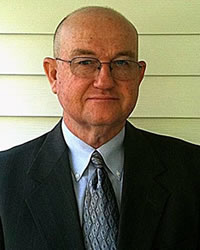
Gary Shepard

The Inheritance Ordained and Obtained

Ephesians 1:11
Gary Shepard November, 28 2010 Audio
0 Comments
Gary Shepard
Gary Shepard November, 28 2010

Sermon Transcript

Auto-generated transcript • May contain errors

100%
Please turn back to that first
chapter of Ephesians. I want us to look at one verse
in particular, and I want us to think about an inheritance
ordained and obtained. And that one verse is the eleventh
verse. where the Apostle Paul says,
"...in whom also we have obtained an inheritance, being predestinated
according to the purpose of him who works all things after the
counsel of his own will." Now, this epistle, which simply means
letter, was written as all Scripture is to God's people. If you look back at verse 1,
he begins with Paul, an apostle of Jesus Christ, by the will
of God, to the saints which are at Ephesus, and to the faithful
in Christ Jesus." That means it is written to those who believe
the gospel of Christ at Ephesus, and to those in every age who
would read this and who are believers in the Lord Jesus Christ." I
want to read that 11th verse to you out of the Amplified Bible. It says, "...in him, We also
were made God's heritage portion, and we obtained an inheritance,
for we had been foreordained, chosen, and appointed beforehand
in accordance with His purpose who works out everything in agreement
with the counsel and design of his own will. Now, it often amazes me how much
God the Spirit can state and declare and speak in summary
in one verse, one statement. And what we have in that one
verse is a kind of summary of the gospel. Because the gospel
is said to be glad tidings, good news, And it is the glad tidings
and the good news to God's people wherein He says that they have
obtained an inheritance. They have been given a lot or
a portion with God. And what this is, in part, is
an allusion to the nation of Israel. in that what God gave
them, He gave them also by His grace, dividing them up and giving
them each tribe a portion or a lot in this inheritance. And they went into that land
and possessed houses, crops, vineyards, fruits of all kinds,
they went in and simply possessed it without any effort or work
on their part as a picture of spiritual Israel, in that everything
that God's elect receive, they receive as the free gift of His
grace. Listen to what was said of Israel. He says, "...but the Lord hath
taken you, and brought you out of the iron furnace, even out
of Egypt, to be unto Him a people of inheritance, as ye are this
day." Then in another place, he states it like this. He says,
"...for the Lord's portion is his people, Jacob is the lot
of his inheritance." And so this people Israel, was in this way,
or in a two-fold way, I should say, they were spoken of as a
lot or portion or inheritance. On the one hand, they were the
Lord's portion. They were described as God's
elect, or spiritually, as the inheritance of the Lord. And also, and at the same time,
they were to receive a portion. They were to receive this inheritance
of the Lord. And it is said, as it is in this
next verse, verse 12, that all of this was for the glory of
the Lord. Everything that God does, especially
in the salvation of spiritual Israel, is for the glory and
is said here in Ephesians 1, it is to the praise of the glory
of His grace. And so the preaching of the gospel,
The preaching of the gospel and the work of the Spirit of God
in connection with the gospel is to make known this wonderful
news, this glorious truth to them and in them. Look back in verse 9. Paul says
to these believers in Ephesus and to believers in every age,
having made known unto us the mystery of his will according
to his good pleasure which he hath purposed in himself. God makes known to His people
His purpose. He makes known to them this glorious
inheritance. And so Paul preached and prayed. If you look in verse 18, he says
that the eyes of your understanding, This isn't a matter of simply
foolish faith or belief. He says, "...that the eyes of
your understanding be enlightened, that ye may know what is the
hope of His calling, and what the riches of the glory of His
inheritance in the saints." The gospel is the giving of this
word, or truth, or information. It is actually a reading of the
will, if you would. It is this testament of the Lord
Jesus Christ. And for that reason, it would
do us all well to listen as if we were listening to the reading
of a well to see if there is anything in this gospel for us. Let me read you what it says
in Acts 26. Paul says, set him apart, sent him where
he did to preach the gospel, he says, to open their eyes,
and to turn them from darkness to light, and from the power
of Satan unto God, that they may receive forgiveness of sins
and inheritance. among them which are sanctified
by faith that is in me." Paul said, Christ sent him for that
purpose, that they might know of this inheritance of grace
that is given to his people and received through faith in the
Lord Jesus Christ. And Christ goes on Himself to
say this, over in Matthew 25, when He speaks of that day when
His people are brought into the very full reception and glory
of this inheritance. He said in that day when there
is this division of the sheep from the goats, the division
of those on his right hand from those on his left hand? He says, "...then shall the king
say unto them on his right hand, these sheep, come ye blessed
of my Father." Come and inherit the kingdom prepared for you
from the foundation of the world." You see, this inheritance is
not an afterthought with God. It is not something that He,
at some point, just simply after He created this world, decided
He would do or offer or something like this. This inheritance is
all of His grace. And this inheritance, as all
inheritance does, this inheritance is based on a relationship that
He established with the people. Look back in verse 5. He says, "...having predestinated
us, unto the adoption of children." He brings every one of these
people into His family, makes them His children. He says, "...by
Jesus Christ to Himself, according to the pleasure, the good pleasure
of His will, to the praise of the glory of His grace, wherein
He hath made us accepted in the Beloved." Literally, what that
says is something like this. God, according to His own will,
according to His own good pleasure, He graced us, He accepted us
in Christ, and made us His children, His family. And so Paul writes
in Colossians 1, giving thanks, he says, unto the Father, which
hath made us meet. That's simply an old English
expression, which literally means we give thanks, this people does,
to the Father. We give thanks to Him in Jesus
Christ who made us fit. We were not fit in ourselves. And we are not fit in ourselves,
and we cannot do anything to make ourselves fit for this inheritance,
but He made us fit. to be partakers of the inheritance
of the saints in light." Now, what is this inheritance? It is an inheritance that is
distinguished from every other inheritance, all of which are
corrupt and passing and will fade away. Suppose you inherit
a million dollars. Either you will spend that million
dollars before you die, or when you die, it will be gone to someone
else, or at that time that God has appointed, when He consumes
this earth in fire, it will be burned up with everything else. This inheritance, rather than
having to do with all these externals, has to do with eternal life in
the Lord Jesus Christ. It has to do with the salvation
of our souls. And it includes, as Paul tells
us here in verse 3, every spiritual blessing. Now, you better remember
this. And I hope the Lord will somehow
teach us this, that the only true blessing that the only lasting
blessing are these that are described as spiritual blessings. Now what does he say in verse
3? Blessed be the God and Father of our Lord Jesus Christ, who
hath blessed us with all spiritual blessings in heavenly places,"
or in the heavenlies, in the spirituals, in Christ. Not most of them, not some of
them, There is no basis, as I said the other evening, for any big
eyes or little use in this kingdom. Those that God blesses with this
inheritance, He blesses with every spiritual blessing in Christ. If we have Christ, we have everything. He says He is made of God unto
us. Wisdom and righteousness and
sanctification and redemption, everything in this inheritance,
redemption, forgiveness, heaven, everything He gives us in Christ. Look at verse 7, "...in whom?" We have redemption through His
blood, the forgiveness of sins according to the riches of His
grace. We don't run to a priest or a
pope to get forgiveness. We don't labor and sweat and
do all the things that false religionists do in order to redeem
themselves. He says we have it in Christ
as an inheritance. He put us among the redeemed. He counts us in Christ as those
forgiven. There are two aspects of forgiveness. One, the actual forgiving, and
the other is our experience and remembrance of that forgiveness. And though God, in time, through
the gospel, and oftentimes many times after that, gives us the
experience of this forgiveness, and the remembrance that we've
been forgiven, we already have forgiveness in Christ. We have it. This inheritance. Peter describes it like this. He says, "...it is an inheritance
incorruptible, undefiled, Not only will it not rust and wither
away, it was not gotten for us in an illegal or unjust manner,
it is undefiled that fadeth not away reserved in heaven for you. Now let me ask you this, do you
think for one minute, that this aspect of this inheritance that
is described as being reserved by God in heaven for us, will
there be any way, any possibility that this inheritance that reserved
will fail to be entered into by any it was reserved for? Impossible,
because of who reserved it. He reserved it. He made it absolutely
sure. And the way that God, who is
holy and just and righteous, and all these things that you
and I are not, and just the opposite of what we are not, we are here
told that we've been made heirs to receive this inheritance,
But how could he do that? He says, in Christ. You notice
the first two words of verse 11? If we ever lose sight of
this, If we ever imagine for one minute that it's based on
anything in us or by us at any point, we have forgotten the
gospel. It becomes bad news to us. He says, in whom? In Christ. As a matter of fact,
all through this first chapter and all through all these letters
that Paul wrote to these believers in the various churches and to
God's people everywhere, over and over and over again, this
union with Christ is spoken of and mentioned and set forth as
the basis upon every blessing. He says, in Him, in Christ, in
whom we have it. We have it. Hold your place and
turn over to Hebrews chapter 9. You want to know how we have
it? We have it because this inheritance,
this testament, this covenant, call it whichever one you want,
we have it because it is based upon the dying of the mediator
of it. Hebrews 9. And verse 15, he says,
"...and for this cause he that is the Son of God, Christ, is
the mediator of the New Testament, that by means of death, for the
redemption of the transgressions that were under the first testament,
they which are called might receive the promise of eternal inheritance."
I love that expression, eternal inheritance. And the only way
that it could be an eternal inheritance is if God, the Eternal Son, as
the mediator of this covenant and inheritance and blessing,
takes upon Himself human flesh in order to die and ratify that
covenant. It's always about blood. It's
always about His sacrifice and death. It's always about His
work of righteousness that enabled this just God to count us as
righteous and bless us with all spiritual blessings. It's all
about this crucified Christ. It's all about us being chosen
in Him, and blessed in Him, brought into union with Him, and being
joined to Him as our covenant head and representative when
He went to that cross, when He died on that cross, when He was
buried in that tomb, and our being also risen with Him, being
heirs of this inheritance of God. Do you ever think about
that? You'd be all giddy-headed and
blubbery-mouthed if somebody died today and left you $50,000.
And you'd have it spent in a little while. You would. And everything
you had to show for it would be gone in a little bit. I don't
know if you keep up with the news. much at all with regard
to this financial thing that's going on around the world right
now, but she's in a nosedive. You can go to some of these nations
right now, you could have a wheelbarrow, a wagon load of currency and
cash, and you couldn't hardly buy a loaf of bread with it.
I remember going to Mexico one time and And I, like, changed
a $20 bill into Mexican pesos, and I had a pocket full of money.
Except every time you bought the least little thing, you had
to just peel off one note after the other. And here all the world
currencies, they're just going down and down. And every time
the Fed cranks up that printing press, they print more money
and it gets worse. Less, less, less. This is an eternal inheritance. This is an inheritance from God. You don't have to check the value
of his currency. It's the same yesterday, and
today, and forever. I'm the Lord. I change not. Look over in Romans chapter 8. Romans chapter 8, beginning in
verse 14. Paul writes, "...for as many
as are led by the Spirit of God, they are the sons of God." Where
does the Spirit of God lead a person? To Christ and only Christ, to
His blood, to His righteousness. For you have not received the
spirit of bondage again to fear, but you've received the spirit
of adoption, whereby we cry, Abba, Father." Abba. Abba. The Spirit itself beareth
witness with our spirit that we are the children of God. Sometimes I try to I'm pretty
much convinced myself I can't be. Not the way I think sometimes,
not the way I do sometimes, not the way I speak sometimes. I'm
just saying to myself, there's no way. Or maybe it's the devil
saying to me, there's no way you could be a child of God.
And I'm agreeing with him. But the Spirit of God in that
unchanging, sure witness, comes and convinces us again, that
by the grace of God, through the Lord Jesus Christ, I am. I am. And if children, who do
the very best that they can, don't make any mistakes, don't
flub up, don't disappoint God, abandon it, no. What's the basis
for this airship? If children. That's why it kind
of makes us mad sometimes if these two people who worked and
saved all their lives, and they've got this kind of wayward boy,
and he's as sorry as all get up, and they die, and he inherits
all their family fortune, and you say, he didn't deserve that
a bit. Hadn't got anything to do with
deserving it. He's the heir. He's the child. If children, then heirs, heirs
of God. and joint heirs with Christ. That's how we get it. He made
us joint heirs with Christ. Paul, writing to Galatians, says
in chapter 4, "...wherefore thou art no more a servant, but a
son, and if a son, then an heir of God through Christ." Now,
turn back to Ephesians 1, look at 11th verse. And notice what
Paul says. He says, in Christ, we've obtained
it. We've obtained it. He's already
got it for us. We've already received it in
Him. He said, you've obtained it. You say, well, there's so much
more. That's right. But we've already
obtained it. We're not waiting for it. We
have it. Not we will have it. We've obtained
it. How can we be sure of that? All
right? He said, because it's according
or in accordance with man's choice, man's will, man's decision. No. God's predestination. Predestination. That's a most wonderful word,
because it sets forth such a wonderful doctrine, because it's the doctrine
of such a wonderful God. Predestination, the word means
to mark off beforehand. It means having been foreordained."
And you just can't change that. You can kick it, you can beat
it, you can try to find you another translation, you can go to a
commentator and hear his watered-down version of it, and you're going
to come back to that verse and it's going to say the same thing.
But I don't believe God can do it. My friend, it says He's already
done it. He did this before the foundation
of this world, before there was either sinner or devil. He did
it. Being or having been predestinated. That's what he says in Romans
8. For whom he did foreknow, he also did predestinate. Somebody said, well, that means
the things that God does, it says for whom. He predestinated
somebody, some things concerning somebody. He also did predestinate
to be conformed to the image of His Son, that He might be
the firstborn among many brethren. Moreover, whom He did predestinate,
them He also called, and whom He called, them He also justified,
and whom He justified, them He also glorified." And He got the
order right there. He predestinated them, and the
word called there means to name. He named them. And whom He named,
He justified. He declared them righteous through
the suffering and the sacrifice and the blood of Jesus Christ,
their surety. And whom He justified, He glorified. Now, all that is in the past
tense. But the word glorify, Though it will definitely have
a future meaning, that word also means to make manifest that which
is. That's what God does with the
gospel. There's a sense in which in the
gospel, through the preaching of the gospel, He glorifies not
only God, makes Him manifest for what He is, but He glorifies
His people. He makes them manifest. How? They believe it. He brings them
to believe it. Paul uses the same word in 1
Corinthians 2 when he says, "...but we speak the wisdom of God in
a mystery, even the hidden wisdom, which God ordained," same word,
"...predestinated before the world under our glory." He did
it. The same word is used when he
speaks of the death of Christ. Think it was an accident? Peter
said, "...the kings of the earth stood up, and the rulers were
gathered together against the Lord and against His Christ. For of a truth against Thy holy
child Jesus, whom He hast anointed, both Herod and Pontius Pilate,
with the Gentiles and the people of Israel, were gathered together,
for to do whatsoever Thy hand and Thy counsel determined."
Proorizo, predestinated. before to be done." Somebody
said, well, you know, the problem with predestination, the reason
we've got to look at this thing just right is because we want
to make sure we don't charge God with evil. Let me ask you
this, was that a wicked act or not? The devil, the serpent,
the garden, the deceiver, it says that he was more subtle
than all the beasts of the field which the Lord hath made. I can't figure that out. Neither
can I. But I don't want to be like Paul
says, that those who defy God in all He says, that they are
like the potsherds of the earth striving with the potters saying,
why hast thou made me thus? This is an absolute sovereign. And he does everything according,
he said, we've obtained this inheritance being predestinated
according to the purpose. There are no accidents. How could you really, in all
honesty, live one moment without fear in this world? Believing
in accidents? Oh, if this happens or if that
happens. I mean, you may go home, you may get in your car today,
turn on your radio going home, and we may be at war with North
Korea, with the South Koreans. Is that not right? Well, the
idiot there in North Korea, he's subject to do anything. But I'll
tell you what he's really subject to do. Only that which God Almighty
beforehand has ordained or determined to be done. That's right. You look over in chapter 3 of
Ephesians, verse 11. He says, "...according to the
eternal purpose which he hath purposed in Christ Jesus our
Lord." And He's going to make manifest His wisdom in everything. Look back in verse 10, "...to
the intent that now unto the principalities and powers in
heavenly places might be made known by the church the manifold
wisdom of God." He says, and we know. Who's that? God's people. And we know. that all things
work together for a good to them that love God, to them who are
the called according to His purpose." Everything. Mr. Spurgeon said,
I believe that the dust that kicks up from the wagon wheel
when it goes down the road, every particle of that dust is set
by God in a particular orbit, just as all the sun and stars
He set in their orbit. If there is one thing out of
the control and purpose of God, it could alter any and everything
that has to do with our salvation. He has saved us, Paul says to
Timothy, and called us with a holy calling, not according to our
works, but according to His own purpose and grace which was given
us in Christ Jesus before the world began. That's it. But I especially want you to
notice how He described. Now this is God describing Himself. The Spirit of God directing the
Apostle Paul, His servant, what to write. This Word is verbally
inspired, God-breathed. So how does He describe Himself?
in whom we also have obtained an inheritance being predestinated
according to the purpose of Him who works all things after the
counsel of His own will." Now, that statement is basically said
a lot of different ways in Scripture, but that sums it up. All that
God has for His people, all that He's given them of this inheritance,
all that He's worked to assure and will assure that they receive
it and possess it, it's sure because He works all things after
the counsel of His own will. You just take every word of that
phrase. What kind of God is He? Is He
a pacifist that sits with His hands folded? No, it says He
works. He's active. Not He allows. Some people think
they do God a favor by talking about His permissive will or
God allowing this. It says He works. He's active. He works all these things after
the counsel. He doesn't just do it in some
blind, stupid way. He acts uninfluenced. He acts in himself and by himself
because there is nobody else for him to consult. There is
no other wisdom but his. He acts everything, does everything,
works it after the counsel of his own will. He not only knows
everything, He's all knowledge. His own will, which, by the way,
is the only will that's emphasized in this book, the sovereign,
almighty, only free will there is, the will of this absolute,
sovereign God. Now, what does He work? After
the counsel of His own will, according to His own purpose? All things. Really. All things. You say, but what about this?
All things. Whether or not you, as a little
finite speck of clay, can look at the potter and you say, well,
I just can't reconcile this. I don't suppose you can. All
things. Well, we want to be careful.
that we don't attribute any evil to God or anything like that.
The psalmist says, "...whatsoever the Lord pleased, that He did
in heaven and in earth, in the seas and all deep places." Did
it happen? He did it. Did it happen? He's pleased with it. He says
through Isaiah, "'Remember the former things of old, for I am
God, and there is none else. I am God, and there is none like
Me, declaring the end from the beginning, and from ancient times
the things that are not yet done, saying, My counsel shall stand,
and I will do all my pleasure, calling a ravenous bird from
the east, the man that executes my counsel from a far country,
yea, I have spoken it, I will also bring it to pass, I purposed
it, I'll also do it." Whatever God does, He purposed to do it. Isaiah again, chapter 45, he
said, I formed the light. and create darkness. I make peace
and create evil. I the Lord do all these things."
That's a little too much God for most people. He did it. He
does it. He said, all the inhabitants
of the earth are reputed as nothing, and He does according to His
will in the army of heaven and among the inhabitants of the
earth, and none can stay His hand or say unto Him, What doest
Thou? What do the heirs say? Every
God-hater by nature says just the opposite. But the heirs say
this, Our God, is in the heavens, and he hath done whatsoever he
hath pleased." I am so glad. They say with Paul in Romans
11, oh, the depth of the riches both of the wisdom and knowledge
of God, how unsearchable are his judgments and his ways past
finding out, for who hath known the mind of the Lord, or who
hath been his counselor, or who hath first given to him, and
it shall be recompensed unto him again. For of him, and through
him, and to him are all things to whom be glory forever." Amen. All these things. but especially
all things in this grace that brings to His people this inheritance,
because it's in whom? In Christ. Well, how is He? He's the same yesterday, today,
and forever. He's the one who said, you go
and preach the gospel. All power. is given unto me in
heaven and in earth." You go and tell the heirs what they've
been given, how they've been blessed, and how God, to the
praise and the glory of His grace, has singled them out, chosen
them, and blessed them with the whole bundle, everything. And
I can tell you this, this is not only all of our hope in salvation,
but it's also our very comfort in every circumstance of life. Well, I don't feel like I'm being
treated very much like a child of God. I don't feel like that
a child of God would be experiencing what I'm experiencing, trouble
and trial. sickness and sadness and sorrow
and all that. Oh, but it's our God working
all things after the wisdom of His own. He's at work. Yes, we have these signs all
up and down our road lately. Men at work, be careful. Well,
whatever happens, especially to His beloved children, just
put a sign right there. God at work. God at work. Somehow, He's doing a work that
will do us spiritual and eternal good, and He's glorifying Himself. He ordained that we should have
this inheritance, and He came, and in our head, He obtained
it. But we haven't. We haven't. And
this is our God. He works all things after the
counsel of His own will. You can lay your head there.
You can't anywhere else. Father, this day we cannot but
give You glory. If we had thousands of voices
and could sing so beautifully Your praise, it would not be
enough. We thank You that You are and
that you do what you say in your word. That's our hope and our
peace. And we praise you and we thank
you. In our Savior, in this one who
is God manifest in the flesh, who came and suffered in our
place, did all that was necessary. for
us to receive that inheritance in the full. We pray in His name
and thank you. Amen.
Gary Shepard
About Gary Shepard
Gary Shepard is teacher and pastor of Sovereign Grace Baptist Church in Jacksonville, North Carolina.

Comments

0 / 2000 characters
Comments are moderated before appearing.

Be the first to comment!

Joshua

Joshua

Shall we play a game? Ask me about articles, sermons, or theology from our library. I can also help you navigate the site.