Bootstrap
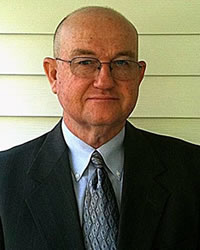
Gary Shepard

Covenant Comfort

2 Samuel 23:5; Hebrews 13:20
Gary Shepard November, 7 2010 Audio
0 Comments
Gary Shepard
Gary Shepard November, 7 2010

Sermon Transcript

Auto-generated transcript • May contain errors

100%
I want us to begin this morning
by reading two different texts of Scripture. The first one is
found in 2 Samuel, chapter 23, and I'll read the first five
verses here. Now these be the last words of
David, David, the son of Jesse, said, and the man who was raised
up on high, the anointed of the God of Jacob, and the sweet psalmist
of Israel, said, The Spirit of the Lord spake by me, and His
word was in my tongue. The God of Israel said, The Rock
of Israel spake to me, he that ruleth over men must be just,
ruling in the fear of God. And he shall be as the light
of the morning when the sun riseth, even a morning without clouds,
as the tender grass springing out of the earth by clear shining
after rain. Although my house be not so with
God, yet he hath made with me an everlasting covenant, ordered
in all things, and sure, for this is all my salvation and
all my desire, although he make it not to grow." And then the
second text is in Hebrews chapter 13. Hebrews chapter 13, beginning
in verse 20, where the apostle writes, "'Now the God of peace
that brought again from the dead our Lord Jesus, that great Shepherd
of the sheep, through the blood of the everlasting covenant,
make you perfect in every good work to do His will, working
in you that which is well-pleasing in His sight through Jesus Christ,
to whom be glory forever and ever. Amen. Now these two texts, and I might
add many, many others, speak of a covenant. A covenant. And I'm afraid in our day there
are not very many people who know anything about this covenant. They don't know very much about
what old Warburton called a covenant God. And yet God has very many
times showed Himself in Scripture to be just that, a covenant God. He made a covenant with Noah,
He made a covenant with Abraham, he made a covenant with Israel. But these covenants pictured
and were just simply types of another covenant. That writer in Hebrews is led
to speak by the Spirit of God and close out that letter that
he's written by asking those that he writes to to pray for
him, to pray for others who preach the gospel, and he prays for
them in that closing benediction. But if you notice, he prays to
this God that he describes as the God of peace. The God of peace. I call this,
this morning, covenant comfort. He calls him as he does quite
a few times in his epistles, The God of peace. In Romans 15, he closes by saying,
now the God of peace be with you all. In another place, he
says, the God of peace shall brew Satan under your feet shortly. To the Corinthians, he says,
Brethren, be perfect, be of good comfort, be of one mind, live
in peace, and the God of love and peace shall be with you."
He keeps saying in these letters, the God of peace shall be with
you. the very God of peace sanctify
you wholly. And I pray God your whole spirit
and soul and body be preserved unto the coming of our Lord Jesus
Christ. God is the God of peace. But you know, our first thought
ought to be, If we really have any knowledge of the God of the
Bible, who He is and how He says that He is, and if we know anything
about ourselves as those who are nothing but rebel, defiant
sinners, vile and corrupt and just the opposite of this God,
we ought to wonder, how can the God of peace be a God of peace
to us? As a matter of fact, when you
stop back and think of this man David there in 2 Samuel 23, who in many, many ways showed
himself for the sinner that he was, and even says there in the
preceding verse to that verse with the covenant, he said, although
my house be not so with God. Although my children have proved
themselves to be the same sinners that I am, Though I have surely
been the one who sent Uriah to the front to be murdered in battle,
took his wife in adultery, numbered the people of Israel, how in
the world can David or any of us refer to God and know Him
as the God It is because, as the Apostle
says there in Hebrews 13, because He is the God who brought again
our Lord Jesus from the dead. You see, He is a God of peace
to sinners like we are only in Jesus Christ. And furthermore, He is this God
of peace in Christ only through this everlasting covenant, this
eternal covenant. You see, it doesn't matter whether
it is David speaking in 2 Samuel 23, or the apostle writing in
the New Testament in Hebrews 13, it's the same covenant. One covenant which he calls the
everlasting covenant. Now, a covenant, involves two
or more parties, two or more different individuals. And those
who are involved and make their pledges in these covenants, they
have to be able to fulfill every provision in that covenant. In other words, if this covenant
is a covenant that has to do with God, it has to be in every
way suited to God. And if it in any way involves
man, it has to be in such a way that it is suitable or fitting
to man as he is and according to what he needs. But this everlasting covenant
By the very name that we find God giving it, everlasting, this
covenant was made within the triune Godhead. Now, I know that people in our
day have been told so many times that salvation depends on them,
depends on their decision, depends on their will, that this is something
foreign to them. But if it is an everlasting covenant,
made in what is called the councils of the Godhead, councils of peace
as it is said to be, before the world began, it has to be fully
and completely just within the Godhead. It has to do with God
determining to do. It has to do with God's will,
which is really the only free will, and it has to do with His
will and purpose to do if it is the everlasting covenant. And there's one thing sure about
the everlasting covenant. And it is that there is no possibility
of it ever failing because there is no possibility of God, neither
the Father or the Son or the Holy Spirit, no possibility of
the Godhead failing. There are no ifs or mights or
buts. There can be no possibility of
failure. And while it is only between
the persons in the Godhead, there are some others who are beneficiaries
to this covenant. And they are beneficiaries in
that they benefit by being a people that God has chosen in Christ
so that when He enters into this covenant with the Son, He enters
into this covenant with those He counts in the Son. the Lord Jesus Christ being a
representative man, being a covenant head, and being described, these
people are, in Hebrews 13, they're described, these who are in Christ,
in this covenant, as the sheep. Did you notice that? He brought
again the sheep. And that means that Christ stood
in this everlasting covenant as the great shepherd of the
sheep. Now let me ask you this. Do the
sheep care for, provide for, and watch out for the shepherd? Or does the shepherd take care
of and watch after the sheep? We don't have any problem Understanding
that, do we? And so the Lord Jesus is described
not only as the shepherd, good shepherd in one place, shepherd
and bishop of our souls in another place, but He's described there
as the great shepherd. Let me read you a verse in Isaiah
42. In Isaiah 42, he says, as we
often find this conversation in the Godhead between the Father
and the Son, he says, "...I the Lord have called thee in righteousness,
and will hold thine hand, and will keep thee, and will give
thee for a covenant of the people, for a light of the Gentiles. to open the blind eyes, to bring
out the prisoners from the prisoners, and them that sit in darkness
out of the prison house. I am the Lord, that is my name,
and my glory will I not give to another, neither my praise
to graven images." In other words, to assure the glory goes all
to Himself. He settled everything before
there was either man or devil. He settled everything in that
everlasting covenant. Covenant. As a matter of fact,
Christ is described in Malachi as the messenger of the covenant. This covenant is bound up in
the Lord Jesus Christ, and it has to do with the sheep that
the apostle speaks of. In John 10, he calls them, my
sheep. And they are said to be, in John
17 and other places, a people given to Him by the Father. They are described as those who
will never perish. Described in John 10 as those
He gave and laid down His life for. Those who will hear His
voice, who will be brought by His Spirit, will come to know
His gospel and will follow Him and believe on Him. And He said
of such like the Pharisees, you believe not, because you're not
of My sheep. And their salvation, Their salvation,
and that's one way we know whether or not we're one of His sheep,
their salvation is totally and entirely 100% dependent on the
Lord Jesus Christ. There's none of this me and Jesus
got a good thing going. There's none of this, you do
your part, He's already done His part. No, Christ in this
covenant is the surety, and the surety does not wait to see if
you're not able to meet whatever is required. The surety assumes
from the very beginning all the responsibility. It depends entirely
on the shepherd. And so that's why David here
now, on his deathbed, with all his failures, all his sinfulness,
all his problems of life, all his disappointments all around
him, he says, although my house be not so with God, yet he hath
made with me an everlasting covenant, ordered in all things, and sure,
For this is all my salvation and all my desire, although He
make it not to grow." And this covenant that he's talking about
is contrasted to that covenant with Israel, which is said to
have contained things that were simply a pattern of it in some
sense, but were contrasted to it in a lot of ways. Because when in Hebrews he begins
to talk about this messenger of the new covenant, a new covenant,
you say, well, does that mean that when Christ came, He just
began right then to make a new covenant with men? No, it's the
everlasting covenant. And when it speaks of the new
covenant, it simply means the newest by order of revelation,
the newest made manifest, the new in contrast with the old,
so he says concerning Christ. He obtained a more excellent
ministry by how much also He is the mediator of a better covenant,
which was established upon better promises. He goes on in this
book of Hebrews. He says, "...neither by the blood
of goats and calves, which were so characteristic of that old
covenant. But by His own blood, He entered
in once into the holy place, having obtained eternal redemption
for us. In other words, a part of that
everlasting covenant is the shepherd obtaining eternal redemption
for his sheep. Hebrews 9. For this cause, he
is the mediator of the New Testament. And by the way, that word testament
is simply covenant. Old covenant, new covenant. He
is the mediator of the New Testament that by means of death, for the
redemption of the transgressions that were under the First Testament
or covenant, they which are called might receive the promise of
eternal inheritance. In this everlasting covenant
is this eternal redemption. in this everlasting covenant
is an eternal inheritance from God. In Hebrews 10, he says,
"...he that despised Moses' law died without mercy under two
or three witnesses. Of how much sore punishment,
suppose ye, shall he be thought worthy who hath trodden underfoot
the Son of God, and hath counted the blood of the covenant wherewith
he was sanctified an unholy thing, and hath done despite unto the
Spirit of grace." He says it's the blood of Christ by which
he was sanctified or set apart in this everlasting covenant. And then again in Hebrews he
says, speaking of Jesus, he says, "...we are come to Jesus, the
Mediator of the new covenant, and to the blood of sprinkling,
that speaketh better things than that of Abel." Everything is
better, superior. Everything in this new covenant
is eternal and spiritual. And this covenant between the
God of peace and the great shepherd of the sheep was that the shepherd
would become flesh. He's the Son of God. He's the
Son that was always in the bosom of the Father. But in this covenant,
there is an agreement that the shepherd would become flesh and
that he would come into this world and live as a sinless man
in order to come to the cross, which is the cross of divine
justice, and hang there on that cross and die in the place of
these sheep. and bear their sins, every one
in his body on the tree, and dying that death which was necessary
to satisfy every claim of divine justice against them. In doing
so, God would bless them with every covenant blessing." Now,
how many blessings? are these covenant blessings? Well, when Paul writes in Ephesians
1, he speaks of the Father blessing each one of His people in Christ,
choosing them in Christ before the world began, and blessing
them with how many spiritual blessings? all spiritual blessings. Because you see, not only does
this covenant not allow for any of Adam's race and their works
entering in as contributors in this covenant, it also includes
every blessing, thus assuring that everyone God saves will
be blessed to the same degree as the other one. Why? Because Christ is the cause of
it all. This is a covenant of grace. And He purposed to bless them,
that is, to justify them, sanctify them, redeem them, forgive them,
accept them, receive them as children in His covenant, all
because Christ fulfills all the terms. We sing that song sometimes. I don't think we even think about
it. When we say, Jesus paid it all, all the debt I owe. But you see, the Apostle says
that the God of peace is said to have brought again from the
dead our Lord Jesus in the blood of the everlasting covenant. That is, in agreement to and
in accordance with the terms of this covenant. What was the
main term, blood. What is blood? Well, blood is
life. One of the very opening things
that we find in the Bible, in the Old Testament, is this command
under the law not to eat or drink the blood. Why? He said, because the life. is
in the blood. The blood was always shed for
God. The blood was always shed in
every sacrifice and offered to God, sprinkled on that mercy
seat there in the Holy of Holies, on that which was called what?
The Ark of the Covenant. And that simply meant that everything
in this everlasting covenant was accountable for and was ratified
through the shedding of the blood of the sacrifice, which was none
other than the Lord Jesus Christ. One old writer said, God the
Father, to whose justice the debt was due, by letting Christ
out of the prison of the grave, acknowledged Himself satisfied. The God of peace, to evidence
that peace was now perfectly made. It says He brought again
Christ from the dead. That means that the Father, He
looked in favor upon all the sheep, being fully confident
before the world ever was, before a man ever fell in sin, being
confident in the Son that the Son would fulfill all things
He pledged Himself to as the surety." He had faith in the
Son. That's what Paul says in Ephesians
1. Speaking of the Father, he said, who first trusted in Christ. But not only that. Not only did
the Father have confidence in the Son, unshaking and unwavering
confidence in His ability and the fact that He would not fail,
likewise the Son was obedient unto death, which, by the way,
is the death of the cross, and He was confident that the Father
would fulfill all in this covenant in raising Him from the dead.
Now, I'll be the first to say, that's way over my head. I don't
know all the details. I wasn't present when this covenant
was made. I don't know all the conversations
in the Godhead, but I do know what God has revealed, and that
is that a sinner, one such as David, who was no superstar,
but was rather a super sinner just like we all are, he could
lay down on his dying bed and rest in this everlasting covenant. You see, the gospel is good news
because it declares, it announces and proclaims a covenant salvation. That is a free and a full salvation,
a complete and eternal salvation for all the sheep, because God
has raised the shepherd from the dead. You say, who are the
sheep? He said, my sheep hear my voice and they follow me. Now, when you read John 10 and
a lot of other places, it's obvious that there are going to be lots
of voices. Do you remember Satan spoke through
the serpent of the field? What did he do? He told our forefather
a lie. And likewise, it says that his
servants, his ministers, shall be changed and appear as ministers
of light, and they likewise will be speaking a lie. They will be saying, according
to what God says in the Old Testament, through all their various rules
and regulations and prescriptions and formulas, things for people
to do, they will be saying in the doing of those things, peace,
peace, when there is no peace. The only way that God can say
peace, peace to me or you is through Christ crucified. Turn over to Zechariah. Just go to Matthew and start
turning backwards if you've not been to Zechariah 9 lately, and
turn to Zechariah 9, and look down in verse 9. Here's the word that is to go
out. Rejoice greatly, O daughter of
Zion! Shout, O daughter of Jerusalem! Now, Zion and Jerusalem are names
that are are given oftentimes to represent the church, the
people, the elect of God. "'O daughter of Jerusalem, behold,
thy King cometh unto thee. He is just and having salvation,
lowly and riding upon an ass, and upon the coat the foal of
an ass. And I will cut off the chariot
from Ephraim, and the horse from Jerusalem, and the battle bow
shall be cut off, and he shall speak peace unto the heathen,
the Gentiles, and his dominion shall be from sea even to sea,
and from the river even to the ends of the earth, as for thee
also by the blood of thy covenant." I have sent forth thy prisoners
out of the pit wherein is no water. Turn you to the stronghold,
ye prisoners of hope. Even today do I declare that
I will render double unto thee." Now, what is he saying there?
Well, he's basically saying the cry goes out to these daughters
of Jerusalem and Zionist people that by none of these outward
means or weaponry or any of these things, by none of these outward
things which represent our works, by none of these things will
anybody be saved. But there's a covenant. with
this king who appears lowly, who rode into Jerusalem riding
on a donkey. They said, Hosanna to him one
minute, they're crucifying him the next minute. But he's going
to discharge all of these God's elect who he describes, they're
prisoners of themselves and in Adam and in Satan's hand, but
they're prisoners of hope. Why? Because of the covenant. Christ. He says to them, go forth. He opens the door of their prison. He unlocks the shackles that
have bound them all their day, and He says, go forth, ye prisoners
of hope. This salvation is described as
sure because the God of peace and the shepherd of the sheep
have fulfilled every covenant obligation, and God's promise
of salvation is a covenant promise to all who believe God. It really boils down to this.
Is this true or is it not? You say, well, I believe it's
true, but no, you don't. You don't believe a bridge will
hold you until you walk across it. You don't have confidence
that someone has really paid that debt you owe at the bank
until you're able to rest and have peace in heart and conscience
that you don't owe it. Abraham believed God. And Paul says, "...and therefore
it was imputed to him for righteousness. Now it was not written for his
sake alone that it was imputed to him, but for us all, so to
whom it shall be imputed, if we believe on him that raised
up Jesus our Lord from the dead, who was delivered for our offenses
and was raised again for our justification." Now we've got
to make sure we get the cause and the effect in the right order
there. He is imputing to us, which means
charging to our account, He is imputing to us this work that
Christ in the covenant fulfilled. That is the cause of any sinner
believing. We don't believe and then therefore
it will be imputed to us. No. What Christ has already done
and finished, that is the basis upon which the Holy Spirit gives
us faith and enables us to believe. Because He died, the death of
the cross, the Holy Spirit comes to us in our deadness and makes
us live. And when the God of peace brought
the shepherd forth from the dead, the shepherd brought all the
sheep, from the dead. When He rose from the dead, all
this multitude of people that God viewed in Him, that died
in Him, that was buried in Him, when He raised Him from the dead,
He raised every one of us. So that Paul describes every
believer as already being seated in Christ in the heavenlies. Isaiah said, "'Behold, the Lord
will come with strong hand, and his arm shall rule for him. Behold,
his reward is with him, and his work before him. He shall feed
his flock like a shepherd. He shall gather the lambs with
his arm, and carry them in his bosom, and shall gently lead
those that are with young.'" These are young lambs. And so he now is described by
Paul in this way. And he is the head of the body,
the church, shepherd of the sheep, the foundation of the building,
who is the beginning, the firstborn from the dead, that in all things
he might have the preeminence. For it pleased the Father that
in him could all fullness dwell. having made peace." Now, did
you hear that? Having made peace through the
blood of His cross by Him to reconcile all things unto Himself. By Him, I say, whether they be
things in earth or things in heaven. and you that were sometime
alienated, and enemies in your mind by wicked works, yet now
hath he reconciled in the body of his flesh through death to
present you holy and unblameable and unreprovable in his sight."
Now, how was David on his deathbed in his sight? He was the same
way that I'll be if I have a deathbed, or if you're one of the Lord's
people and you have it. Nothing to find any competence
in, in yourself or your life. But how was he in God's sight? He was perfect, righteous, because
he was in Christ Jesus. The everlasting covenant is not
only the basis of God's work for His sheep, but also for His
work in His sheep. Jeremiah said, The Lord hath
appeared of old unto me, saying, Yea, I have loved thee with an
everlasting love. That's what's in this covenant,
everlasting love. Therefore, with loving kindness
have I drawn thee. He's going to draw all these
sheep because His everlasting covenant is a covenant of everlasting
love. He'll draw and bring every one
of them to hear the gospel, to believe on the Christ that is
set forth. And this is the assurance and
the confidence and hope of all gospel believers, our Lord Jesus. They all depend on Him. and what
was accomplished by him and accepted of God." Now just think about
David's words. Where do they begin? Where does
his peace begin, his consolation, his comfort? He, although my house be not
so with God, but he, he's done something. Is that where our
hope is in something that Christ has done? He hath made. This is past tense. You see,
if you're waiting right now to do something that will give you
assurance and comfort and consolation, you're wasting your time. And
if you do find it, you're in big trouble. He hath made with
me. He obviously didn't make it with
everyone in David's house, did he? He didn't make it with everyone
in this world. But every believing sinner can
say, but He made with me an everlasting covenant, bound up in His faithfulness. It's based on His Word, carried
out by His power, maintained by His eternal and perpetual
rule and authority as God. An everlasting covenant that's
ordered This isn't just offers and things. This is ordered in
all things. And the next thing a sinner in
his unbelief says, but what if? Did you not hear? All things. Sure. I'm not a gambler. I don't know how I got it. I
see people that can Plunk out money and stuff, make a bed.
I'm not a gambler. I've always liked a sure thing. This covenant, which is Christ
crucified, is ordered in all things and sure. And David said,
it's all my salvation. Christ's obedience to, performance
of, and ratifying this covenant, that's all my salvation. and
all my desire, all my desire, although He make it not to grow."
I like what old Robert Hawker said about this. He said it's
as if he had said, in Jesus, my felicity is so complete, my
redemption so perfect, and my desire so fully answered that
I find no room for anything more. It's all my salvation, because
it leaves no room for anything to be added. It's all my desire,
for I can want nothing beside. Here then I rest my soul with
all its capacious cravings for happiness. In Jesus I have all."
All God requires, all I need, and all I want. That's not only
what we believe. if we're believers. But what
we confess in baptism? What? This covenant. The death,
the burial, and the resurrection of Christ. And we in Him. This is what we do when we gather
around the Lord's table. Because he said when he initiated
it, for this is my blood of the new covenant. Represents it,
reminds us of it. Due in remembrance of me, which
was shed for many for the remission of sins. The apostle says, now
the God of peace that brought again from the dead our Lord
Jesus. If He hadn't brought him again
from the dead, if He left him in that grave, that simply would
have shown that what he had done in his death didn't amount to
anything, didn't satisfy God, didn't fulfill this covenant.
But He brought him again from the dead, our Lord Jesus Christ,
that great Shepherd of the sheep, through the blood, or in the
blood of the everlasting covenant, make you perfect in every good
work, to do His will, working in you that which is well-pleasing
in His sight, through Jesus Christ, to whom be glory forever and
ever. What do I say to that? Amen.
Somebody said, well, you've got all your eggs in one basket,
don't you? Absolutely. Absolutely. Christ plus nothing
minus nothing. Christ from eternity to eternity. That's the only way a sinner
like me can have any hope. Father, we thank you this day
for your great mercy, grace in Jesus Christ through this covenant
salvation. How blessed are every one who
looks to Him. This everlasting covenant, ordered
in all things insure, all of salvation, through Him who is
the messenger of the covenant, satisfier of the covenant, angel
of the covenant, whose blood is the blood of this covenant. We look to Him and we thank you
for Him. We pray that you'd bind us to
Him, to this blessed truth. Enable us to cast off every other
hope and rest in this covenant comfort. We pray in Christ. Amen.
Gary Shepard
About Gary Shepard
Gary Shepard is teacher and pastor of Sovereign Grace Baptist Church in Jacksonville, North Carolina.

Comments

0 / 2000 characters
Comments are moderated before appearing.

Be the first to comment!

Joshua

Joshua

Shall we play a game? Ask me about articles, sermons, or theology from our library. I can also help you navigate the site.