Bootstrap
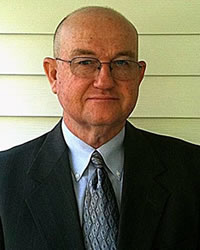
Gary Shepard

The Greatness of God's Grace

Deuteronomy 32:1-10
Gary Shepard August, 1 2010 Audio
0 Comments
Gary Shepard
Gary Shepard August, 1 2010

Sermon Transcript

Auto-generated transcript • May contain errors

100%
Turn in your Bibles this morning
to Deuteronomy and the 32nd chapter. Deuteronomy chapter 32. This
is part of what is called the Song of Moses. And I want you
to listen. I want to read a few verses,
beginning in verse 1. O ye heavens, and I will speak,
and hear, O earth, the words of my mouth. My doctrine shall
drop as the rain, my speech shall distill as the dew, as the small
rain upon the tender herb, and as the showers upon the grass. because I will publish the name
of the Lord. Ascribe ye greatness unto our
God. He is the Rock, His work is perfect,
for all His ways are judgment. A God of truth and without iniquity,
just and right, is he. And then I want you to look down
in verse 9. For the Lord's portion is his
people. Jacob is the lot of his inheritance. He found him in a desert land,
and in the waste howling wilderness he led him about, He instructed
him, He kept him as the apple of His eye. Now, in that third
verse, we are commanded to do something. It says, Ascribe ye
greatness unto our God. ascribe greatness to our God. I wonder, have you ever done
that? You know, that is the purpose
for which we were created. We are created to glorify God. But since we fell in Adam, no
sinner has ever ascribed greatness to God apart from the mercy and
grace of God in Christ. I'll tell you why. Because the
greatness of God is His grace. The greatness of God has to do
with His grace in Christ crucified. And when we preach the true gospel,
When we preach the gospel of His free and sovereign grace
in Christ crucified, we ascribe greatness to God. We proclaim the greatness of
God. If you look back at verse 3,
he says, I will publish. That's all we do. We didn't write
this book. We didn't come up with this gospel. Every word is, as it says, literally
God-breathed. We just publish it. And he says, not only will I
publish the name of the Lord, he says, we publish it, we publish
the doctrine. If you look in verse 2, my doctrine. He said, it will fall like the
rain. It will cover the ground like
the dew. It will come out of nowhere as
it appears, it seems, when it is proclaimed by My servants. And it has to do with God's glory
in grace. You remember what God told Moses. He said, I beseech thee, show
me thy glory. And this is what God responded
with. He said, I will make all my goodness
pass before thee, and I will proclaim the name of the Lord
before thee. That sounds like the same kind
of language. and will be gracious to whom
I will be gracious, and will show mercy to whom I will show
mercy." He says, this is my great glory. It is my grace that I
extend to sinners in Jehovah Jesus. He's talking here about
Christ. Let me read you another verse
in Jeremiah 51. He says, "...the Lord hath brought
forth our righteousness. Come, and let us declare in Zion
the work of the Lord our God." That's what we're publishing,
the work of the Lord our God, the work that is to be declared
that the Lord hath brought forth our righteousness. And the glory of God is the salvation
of His people in Christ, not just that He saves them, but
that He saves them in a way consistent with His own character and attributes. Look in verse 4. He is the Rock. Who's that? Christ. He's that
stone that the builder set it on. He's that one foundation
that God hath laid in Zion. His work is perfect. As a matter of fact, when He
hung on that cross, and at that time appointed by God, He, even
in that hour, made that statement, declaring just that when He said,
it is finished. That's one word in the original. And one of the definitions of
that one word in the Greek is this, perfect. His work is perfect. Yours isn't, and mine isn't. His is. For all His ways are
judgment or justice. His salvation not only saves
His people, but Christ dying on that cross is His satisfaction
of justice in the matter of their sin. A God of truth. He doesn't lie. He doesn't tell
you lies. He doesn't promise what He can't
do. He is the God of truth, and that
truth is in His Son who's called the truth, and without iniquity,
without inequity. He, as the judge of all the earth,
will do right. As a matter of fact, that's the
last phrase. Just and right is He. That's who He is. And that's
how He saves, and that's what He's done for His people through
Jesus Christ and Him hanging and dying on that cross. And those that God saves, now
listen, those that God saves, they all ascribe greatness to
Him alone. Somebody said one time, you don't
ever have anything good to say about me. Well, that's right.
Because if I preach the gospel, I have to declare what the Scriptures
say that you are in yourselves, because I'm the same thing, and
I have to ascribe all the greatness to God, all the greatness to
God in Christ for what He has done for us, and only those who
believe the truth. I don't care how loud they shout. I don't care how emotional they
get. I don't care how sincere they
appear. The only people on this earth
who ever ascribe greatness to God is that people who have been
saved by His grace alone, in Christ alone, and who believe
the true gospel. They're the only ones who ascribe
all greatness to God. You see, there is nothing great
about the God of today's religion. He is a pitiful thing. But there is greatness in God,
the true God, the God of the Bible. There is greatness in
God who has done all these things for us, and yet even the more,
because we who have been saved by grace, who have been brought
by the power of God's Spirit to Christ, we know that He not
only did all these things for us, but He's also done some other
things to us. You see, we ascribe greatness
to God. When we confess, when we know
in our hearts the reality of what it was to save us, and when
we see that in every part, He was great and is great in our
salvation. Here's the first thing that we
ascribe greatness to God for doing, for His choosing us. Look over in that 9th verse. He says, "...for the Lord's portion
is His people, Jacob is the lot of his inheritance." You see,
that name Jacob is not simply the name given to a man, but
it's the name that is given to all God's elect. And he gives us that name because
it is fitting and because it describes what we are by nature,
what we are in Adam, what we are in this flesh. You see, Jacob, that name means
conniver and supplanter and trickster. You say, how in the world? Does
that fit me? Well, if you remember, Jacob
was the one who, at his mother's bidding, put on a garment of
camel hair and went before his father seeking to get the blessing,
and in doing so, he disguised himself, you might as well say,
with that which appeared to be his older brother Esau. And that's
us. By nature, and if left to ourselves,
we'll spend all our days trying to trick God, if you will, with
a phony righteousness, which is nothing more, he says, than
filthy rags. We'll be going about trying to
establish a righteousness by which God will accept us when
He's already told us. that all our righteousnesses
are as filthy rags. It's like we're trying to trick
God. In a few things that we do, and
a few things that we stop doing, or a few things that we think
about ourselves, we're trying to trick God with this filthy
garment into thinking and into accepting us as those who are
gloriously clothed. That's why we're Jacob. We do
that to God. We do that to each other. We're
always as those Pharisees in the play acting. We're always
acting as Jacobs. We're always in ourselves nothing
but sinners. And the Scripture says, this
is the Lord's portion. He didn't get much, did He? This
is the... Lord's inheritance, and he describes
himself as that one God who is the God of Jacob. Now, I'll tell you this, in the
ways of advertising, that's bad advertising for God, isn't it?
I'm the God of Jacob. to identify himself, this thrice
holy God, to identify himself with those who are these Jacobs,
that isn't very good advertising for him, except in that what
he does for them. He said, I am the God of Jacob. And all of us Jacobs, Paul says,
we are by nature the children of wrath even as others, that
there is in us none that doeth good, none that seeketh after
God, none that understandeth, no, not one. There was nothing in us. There
was nothing God saw that we would do that made us His choice. It was simply His good pleasure
and sovereign will, and He tells us that. He said, you have not
chosen Me, but I've chosen you. Why would God? Now, I'm not talking
about the God of modern religion, but I'm talking about the High
and Holy One that inhabits eternity. I'm talking about the One who,
when a man reached out and touched the Ark of the Covenant, He slew
him for doing it. I'm talking about the God who
destroyed everybody in Noah's day, the whole world at that
time, except eight souls who rained also fire and brimstone
on the cities of the plain and destroyed everybody except Lot
and his two daughters. You tell me why He'd choose you,
why He'd choose me. And yet, that's exactly what
the Scripture says. He said in Malachi, and he said
in Romans chapter 9, Jacob have I loved, and Esau have I hated. Why would he love you? Why would
he love me? You see, His portion is that
they might be to the praise of the glory of His grace, who trust
in the Lord Jesus Christ. And He chose them, not for what
they were, but for what they would be made by Him in Christ. Turn over to 1 Peter. First Peter
and the second chapter, it says in that ninth verse, Peter writing
to the Lord's people in every age by the Spirit of God, he
says to them, but you are a chosen generation, a royal priesthood,
and holy nation, a peculiar people. that you should show forth the
praises of Him who hath called you out of darkness into His
marvelous light, which in time past were not a people, but are
now the people of God, which had not obtained mercy, but now
have obtained mercy." Why did He choose us? Why did He save
us? Why did He bless such a wretched
people as we are? That we might show forth His
praises. That we, as these Jacobs, who
have been chosen by Him unto salvation, that we should say,
as Paul, blessed be the God and Father of our Lord Jesus Christ,
who have blessed us with all spiritual blessings in Christ
Jesus, wherein He chose us in Him before the foundation of
the world." You see, this Jacob, this one that God chose, who
is representative of His people, He also gave him another name,
called him Israel. called him Israel." Now, that's
amazing, isn't it? Here he is, this is what he is
by nature. Conniver, trickster, supplanter,
crook. Here's what he is by grace in
Christ. Israel, Prince of God. Prince of God. He takes these
Jacobs in Christ. He chose them in Christ. He loved
them in Christ. He takes these Jacobs He makes
them Israel, the people of God. In Psalm 65, he says, "...blessed
is the man whom thou choosest, and causes to approach unto thee,
that he may dwell in thy courts. We shall be satisfied with the
goodness of thy house, even of thy holy temple." He blessed
us. In Psalm 33, he says, blessed
is the nation. That's not a nation as far as
the world is concerned, but this people, these Jacobs that he
chose for his inheritance, blessed is the nation whose God is the
Lord and the people whom he hath chosen for his own inheritance. And one of the most glorious
verses in all of the Bible, if the Lord teach it to us, is where
He says in Malachi 3, "'For I am the Lord, I change not.'" What
now? "'Therefore ye sons of Jacob
are not consumed.'" And when we ever see, if we ever do, All
of the Lord's people will, and the rest will not. But if we're
ever enabled to see that it is God who chose us, and that He
chose us for no reason in ourselves, He chose us not because of anything
we do, He chose us before the world began, we'll ascribe greatness
to our God. But there's more. Look down in
that 10th verse, and we find that the Lord's people ascribe
greatness to Him for finding them. What does it say? What
does it say about this old Jacob? He found him in a desert land
and in the waste, howling wilderness. He didn't find him in the temple.
He didn't find him on his knees in the place of prayer. He found
him in a desert land and in a waste howling wilderness. That's where he found me. As
a matter of fact, that's where he finds all that he says. We're all in that vast wilderness
of Adam's race. Our whole race fell. rebelled against the living God. As a matter of fact, you just
go read Romans chapter 5, and it says, in him, that is in Adam,
all die. In him, in Adam, all sinned. In him, Adam, all went astray
from God. And when God cast Adam and Eve
out of that garden place, out of His presence, out of fellowship,
He cast all of us out. Where did He find us? He found
us in that wilderness of Adam's race. He found us in that world
that is under the curse of God because of sin. He found us in
a people counted as the enemies of God. He found us in a race
of rebels and God-haters that are vile and corrupt and full
of unbelief. Where did he find old Mephibosheth?
Do you remember him? He found him in a place called
Lotavar. Old David, when David said, is
there not somebody in Saul's household that I can show a kindness
to for Jonathan's sake? They said, yes, there's one by
the name of Mephibosheth. His very name means destroy and
shame. Well, where does he live at?
He lives in Lotavar. What's that? A land of no pasture. When he found Abram, you remember
Abram, who became Abraham? Where was he at? He was in the
midst of the Ur of the Chaldees, in the midst of a very idolatrous
people. Even his own dad was a maker
of idols. Lost. Where did he find Rahab? He found her, the harlot, in
that city, Jericho, of which God said, cursed is the man that
rebuilds Jericho. Where did he find the man whose
name became Paul? He found him steeped in Pharisee-ism,
steeped in the law and the bondage of the law, zealous for everything
against God's Christ, on his way to cast men and women into
prison and have them beaten and slain for believing the gospel.
He's on his way to Damascus to do harm to the Lord's people.
And that's where he finds most of his people in our day. in
that waste, howling wilderness of false religions and self-righteousness
and refuges of lies. Who found who? Oh, I'm seeking the Lord. No,
you're not. There is none that seeketh after
God. Most men and women are seeking
a God of their own making. Now there, you'll hear, oh, I
found this wonderful church. They have the best singing. They
have the best this. They have the best that. They
have something for the children. They have something to entertain
you. That preacher, he's so charismatic. What are they doing? They're
trying to find a God of their own liking, which is a God of
their own making. And these preachers know exactly
what they're looking for, and they got it ready for them. He
said, I find my Jacobs. He found him. He found him in
this wilderness, in this desert place. He finds him in a pulpit
sometimes. He finds him at a seat of custom. He does all this. And this is
a description of this world and our own state and situation by
nature, what we are in ourselves. Where did Boaz find Ruth? He's
on our hands and knees, basically, groveling along behind the gleaners,
trying to see if they left any scraps behind. Where did Hosea
find Goldman? It's just us. It's our picture,
whatever. You know, it's like that old
TV program. The names have been changed,
but in our case, the names have been changed to protect the guilty.
That's where we are. We're in a world that is under
the curse of God. that He will unearth, that He
will destroy, purging it with fire, when He comes and brings
His severe judgment." Where did they find Israel? They were slaves
down in Egypt. Oh, they thought they were really
discontented with their slavery, but when they got out of it,
they looked back and they said, oh, I wish we were back in Egypt
now. And John Newton studied there in the only village in
his house, upstairs in that room, there was a verse of Scripture,
Deuteronomy 15, 15. He had it up there on the wall
to remind him of something. And that verse says, "...and
thou shalt remember that thou wast a bondman in the land of
Egypt, and the Lord thy God redeemed thee." That's the man that wrote
Amazing Grace. But he had another hymn too.
He had another hymn that's called, He Died for Me. Let me read you
a verse of that hymn. He said, "...in evil long I took
delight, unawed by shame or fear, till a new object struck my sight
and stopped my wild career." He was the captain of a slave
trading ship. Amazing grace, how sweet the
sound, that saved a wretch like me. I once was lost, but now am found. Not I found my way. Well, I was
lost, but now I am found. Was blind, but now I see. You go and read Luke 15 about
that shepherd. What does he do? He leaves the
99-9 and he goes after that one lost sheep until he finds it. That good Samaritan. The Bible
says that while the priest and the Levite passed him by on the
other side, it says that that Samaritan, who's a type of Christ
by the way, it said, he came where he was. And that's what
Christ did. He left the portals of glory
and became a man on this earth to come where we are. But not
only that, by virtue of what He did on that cross, the Spirit
of God comes where we are and finds us where we are. You can't
hide from it. We sing a hymn once in a while.
I sought the Lord. And afterward I knew, He moved
my soul to seek Him, seeking me. It was not I that found,
O Savior true, no, I was found of Thee." He finds His Jacob
in this waste, howling wilderness, this desert place. amongst the
people who have turned their back on God, who live in blindness
and ungodliness, and yet He loves His people, He died for His people,
and He'll find every one of them. And when they are found, they
will ascribe greatness to their God. Thank you, Lord, for not
leaving me to myself. Thank you for not leaving me
in the blindness of my phony religion. Thank you for not leaving
me in the traditions of my family and my friends. I cannot but
ascribe greatness to you for finding me." Well, they ascribe
him greatness for his leading them. What does it say? He led
him about. He led him about. You know, there
never has been a time when the Lord God was not leading His
people. As mysterious as that is to us,
He's always working all things after the counsel of His own
will. Well, you say, What about my
sins? What about when I did this? What
about when I went here? What about all these things? You say, I don't understand how
He could be leading me then. I don't either. But I know He
is. I know He is. I know He is because
it says He works all things together for good to them that love Him,
to them that are called according to His purpose. And when we are
enabled to look back and to see His providential hand in our
lives, we find out that all our days He's been leading us. And
He leads us in a very twisting and winding course, but He's
always leading us to the gospel and to the Lord Jesus Christ.
Oh, Lydia, I can just see her. She's a businesswoman, she's
a seller of cloth. And evidently where she was at,
maybe there was a little economic crunch going on, like maybe we
know something about a little bit, but she said, I don't have
any customers here, I'm going to have to go over here into
Macedonia, I'm going to have to go over here and see if anybody
He's going to buy anything from me over there." And Paul, he's
over here and he says, I'm going to go preach next to this people. And the Holy Spirit says, no,
you're not. And then he says, well, I'll
turn and I'll go over here and I'll preach in this direction.
No. I'll go over here and I'll preach. No. The Lord shows him
a vision of a man in the night. And that man is a man of Macedonia
saying, come over and help us. But there he goes. Here they
are, on a collision course. Paul with the gospel, Lydia with
the need of the gospel. Paul sent up God to search out
his sheep, though he doesn't know who they are. He's got a
message for them though, and here she is. And it says, the
Lord opened her heart, so that she attended unto the things
spoken by the Apostle Paul. Here is an Ethiopian, He's, in
his life, it seems like, undergone some dramatic things, but he's
now in a position where he's treasurer of the Queen of Ethiopia,
and he's gone to Jerusalem, and evidently returning rather unsatisfied. But the Lord has a man by the
name of Philip, and Philip is found there in the desert, He's
going along, he sees this Ethiopian eunuch riding his chariot, reading
a scroll from Isaiah. And he said, do you understand
what you read? He said, how can I, except some man showed me.
He joined himself to that man in the chariot, and as they rode
along, he preached from that very book, the Lord Jesus Christ. Christ crucified. He believed
on Him. You think it was an accident
they were both there? Whenever the Philippian jailer
was brought to believe the gospel, you know how he heard the gospel?
Because they had put Paul in prison for preaching the gospel.
Paul said, I want you to know something. The things that have
happened to me have fallen out to the furtherance of the gospel.
He leads his Jacobs. Oh, it's a strange course. Strange course. The Lord has
led some folks. to hear the gospel here, because
we've got a military base here. He's led some people who had
a transfer in their jobs to come and hear the gospel. Why? Because He's always leading His
Jacobs. He's always leading them. And
when we see, He asks. God was doing this all the time.
We'll ascribe greatness to Him. I thought I was bumbling around
here and doing all these things with no purpose and no goal and
no end and no vision and all the time while that was true
on my part. God was bringing me to His side.
Then what does it say? It says He instructed him. We'll ascribe greatness to God
when we find out what He's taught us. You see, it says of His people,
"...and they shall, every one, be taught of God." When we find
out we don't know it all. When we find out that what we
thought we knew concerning God, concerning ourselves, and concerning
Christ, when we find out, when He teaches us that what we thought
was right was wrong. He teaches every one of His Jacobs.
And I'll never be of some to say, you've got to know this,
you've got to know that, and you've got to know this, and all this kind
of stuff. I'll tell you how much I believe that one of God's elect
has to know what they have to learn, what they have to be taught
to be saved. And that's whatever He teaches
them in their life, their whole life. That thief that hung on
that cross, he didn't know a lot by way of volume. But Christ
distinguished to him that he was the Messiah. He was the Christ. And he confessed, Lord, remember
me when you come into your kingdom. He learned by the Spirit's work. How short a time, I don't know.
But he learned that this was the Christ, that He was a King,
He's coming into His kingdom, that He was in need of being
saved by Him, that He was unworthy, that if He did so, it'd just
be mercy. He said, Lord, remember me when
You come into Your kingdom. And when have we been taught
of God? When we leave, when we repent
of all else, and believe and trust the Lord Jesus Christ alone,
when we plead only His blood, His death, and when we rest only
in His righteousness imputed to Him, when we have peace of
conscience. Let me give you a verse. I've
given it to you a lot, I imagine. Isaiah 54, 13. And all thy children shall be
taught of the Lord, and great shall be the peace of thy children."
When the Spirit of God takes the Word of God and teaches us, not when we take some man's word
for it. Now, I want you to think about
this. We only really believe. what we know to be the truth
of God. Because the faith that God gives
only believes what God says, only believes His gospel, His
doctrine, only believes on His Christ. Now, if all you do is
take my word for it, you don't really believe. That's spooky,
isn't it? And that's why the apostle called
the Bereans, It says that they searched the Scriptures to see
if the things that Paul said. Now, this ain't a rinky-dinky
preacher like myself. This is the Apostle Paul. When
he preached, they checked out what he preached by the Scriptures. We've got too much preacher worship
in our day, I'm afraid. Well, if brother so-and-so said
it must be right. Or if he's right on this, he
must be right on everything. Not necessarily. If they speak
not according to this Word, it's because there's no light in it.
And if all I am is the one who teaches you something, somebody
else, more charismatic, more dramatic, whatever it is, they
can come along and they can un-teach you what I taught you and teach
you something else. But if God teaches you, There's
a few things that I believe the Lord's taught me, that you could
scream in my face till you're blue, hold a gun to my head,
threaten me with poverty, I don't care. This is what the Lord taught
me. His Spirit takes what He says,
in His Word, He teaches us. Oh, He uses the human instrument,
but don't you ever trust the human instrument alone. We have
this treasure in earthen vessels, and when He teaches us, we'll
ascribe greatness to Him. I got to hurry, briefly. What's
that last thing it says? He kept them as the apple of
His eye. Back there in the nursery, is
the apple of my eye. I just can't help it. And you've
got somebody like that, I'm sure. Can you imagine God feeling that
way toward you? That's beyond anything I could
ever... He kept him. This Jacob, that rascal, that
scoundrel, he kept him as the apple of his eye. That's what
Christ says of my sheep. He said, they'll never perish. They'll never perish. They're
never going to die. They're never going to hell.
They're saved from wrath by Him. They're never going to face judgment
for their sins. Their sins were already judged
by God in Christ on that cross. And he keeps them. Zechariah
says, For thus saith the Lord of hosts, After the glory hath
he sent me into the nations which spoiled you, for he that toucheth
you toucheth the apple of his eye. That's why we don't have
to defend ourselves from all kinds of character assassins
and such as that. I've never seen such as goes
on in our day. But I'll just tell them something.
The one that touches me touches the apple of God's eye. That's
why I'm not going to say anything about the Lord's people. He said,
it's better that a millstone be tied around your neck and
you cast into the depths of the sea than to offend one of these
my little ones. Peter describes us as this. He
says, who are kept by the power of God through faith. Kept. How many times we fall. how many times we fail, how many
times we're unfaithful, and yet He keeps us. And He doesn't just
keep us, He keeps us as the apple of His eye. He keeps us believing
on Christ. People say, well, I believe the
doctrines of grace, I believe that the saints of God will persevere
into the end. I do too. But they'll persevere
to the end only because He preserves them to the end. Make sure we
understand that. Because He preserves His people. Though they may do this or that
or the other, fail a million ways, He keeps them. And when you find out that it's
God who's keeping you, no man can pluck them out of My hand. When you find out He's the one
keeping you, not you keeping yourselves. You'll ascribe greatness
to Him. What a great God! What great
grace! What a great Savior! Not unto us, O Lord, not unto
us, but unto Thine own name, get glory forever and ever. God's grace in Christ is great. You see, the song of Moses is
essentially the song of the Gospel. It's that new song. He taught
you that new song. The old song was, I, me, mine. The new song is, may God be the
glory. Great things He hath done. Father, we thank You for that
so great salvation. Thank you that you are the great
God, that you have done great things, that you are doing great
things, that you will do great things. Great is your grace in
Christ. Great is that grace which gives
to us a full and free salvation. May all glory be yours. Help
us to ascribe greatness to our God, to attribute to Him, to
tell men and women everywhere about the great things that He
had done, that You've done for us in Your grace. We pray that
You'd bless Your Word to the comfort of Your people. Call them out as it pleases you. We know that you do all things
well. We thank you and we pray in Christ's
name. Amen.
Gary Shepard
About Gary Shepard
Gary Shepard is teacher and pastor of Sovereign Grace Baptist Church in Jacksonville, North Carolina.

Comments

0 / 2000 characters
Comments are moderated before appearing.

Be the first to comment!

Joshua

Joshua

Shall we play a game? Ask me about articles, sermons, or theology from our library. I can also help you navigate the site.