Bootstrap
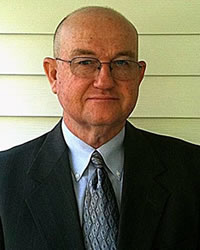
Gary Shepard

Health Care For Your Soul

Luke 5:27-32
Gary Shepard March, 21 2010 Audio
0 Comments
Gary Shepard
Gary Shepard March, 21 2010

Sermon Transcript

Auto-generated transcript • May contain errors

100%
Turn in your Bibles this morning
to the Gospel of Luke. Luke chapter 5. This week, this whole week especially, as well as for quite some time, has been filled with news and
debate over the issue of health care. And it has brought me to see
one more time just how foolish, how truly ignorant,
and how truly helpless we really are. Somebody is lying. And I'm inclined to believe more
and more that it is neither one side or the other, but both. It's a matter of power. And there is really no care in
it whatsoever. But my message this morning,
I've entitled, for your soul. Because if you know it or not, you can have perfect health care. And more than that, you can have
perfect health and yet still be very sick. very sick. You see, all of the nation, for
the most part, is all upset over that which involves the
care of this mortal body. Care over the body that very
soon every one of us will find going back to the dust from whence
it came. Because man by nature thinks
that this body is really all that we are. We go to such great
lengths to preserve its youthfulness, when in truth the Bible says
that this body is merely something like a house, a deteriorating,
crumbling house in which we really, the real us, really lives. It says that he created this
body, And he breathed into this body of clay, and man became
a living soul. We are not a body that has a
soul, but we are really a soul that simply has a body. And my desire for you and my
desire for everyone who might hear this is that I might be
able to say of you what John said of a man by the name of
Gaius. He says, Beloved, I wish above
all things that thou mayest prosper and be in health even as your
soul prospers." In other words, this man who may have had some
health difficulties himself, John says of him, I can only
wish and pray that you would be in body as you are healthy
in soul. I wish that could be said of
me. I pray that it might be said
of you. But the truth of the matter is
that the world, the whole world in which we live, is like those
porches of a place called Bethsaida in Scripture spiritually, of
which it was said that there lay a great multitude of impotent
folk, blind, halt, and withered. They lay there helpless, hoping
for a miracle. And the truth is, God's question
that He spoke through the prophet Jeremiah still asks this question. He said, is there no balm in
Gilead? Is there no physician there? Why then is not the help of the
daughter of my people recovered." Gilead was that place where there
was a tree in which an oil was extracted that was used for medicinal
purposes. The name Gilead, means mount
or will of testimony. And so what that says to me is
that God is saying through this question, which represents the
very testimony of God, which is the gospel, And it is the
gospel of Jesus Christ. He's saying to every sinner,
is there not a remedy? Is there not truly a physician
for the soul? And if there is, why are you
not healed? Why is the help of the daughter
of my people not recovered? And in reality, religion, for
the most part, has both physically and spiritually left folks like
the woman was left that we'll read about this week, maybe,
or next week in our study in Mark, of whom it was said that
she had an issue of blood. And this is what the Bible says
of her. She had suffered many things
of many physicians, and had spent all that she had, and was nothing
bettered, but rather grew worse. That's what religion, for the
most part in our day, has done for people. But here, Luke, who is himself,
according to what Paul writes in Colossians 4, described as
the beloved physician, he begins here to note something after
he says, after these things. Look down in verse 27. And after
these things, He, that is Christ, went forth
and saw a publican named Levi sitting at the receipt of custom,
and he said unto him, Follow me." After these things, Well,
what were these things? They were things that those who
were witness to them described as strange things. Look back in verse 26. It says,
And they were all amazed, and they glorified God, and were
filled with fear, saying, We have seen strange things today. What had they seen? They had
seen Christ cleanse a leper on the spot. They had seen Him heal
a man who all his days had been sick with a palsy, laying paralyzed. And now the Pharisees would see
something that seemed even more strange to them. because they
would now see Christ leave off healing physically, and he would
reveal himself among the spiritually sick as the one who is a physician
for the soul. He just stopped healing the lepers. He just stopped healing these
paralytics. He would just walk away from
that ministry of healing and go identify himself with a bunch
of tax collectors and sinners. Look back at verse 27. And after these things he went
forth, and saw a publican named Levi, that's what a publican
is, a tax collector, sitting at the receipt of custom, and
he said unto him, Follow me, or be following me. And he left all, rose up, and
followed him, And Levi made him a great feast in his own house,
and there was a great company of publicans and of others that
sat down with them. But their scribes and Pharisees
murmured against his disciples, saying Why do you eat and drink
with publicans and sinners? And Jesus answering said unto
them, They that are whole need not a physician, but they that
are sick. Now, it would seem like to them
that that had nothing whatsoever to do with what they asked him. But this was his response. They that are whole need not
a physician, but they that are sick. I came not to call the
righteous, but sinners to repentance." You see, the Lord Jesus Christ
is Himself both the Doctor and the Remedy. And all the way back
over in the Old Testament, we find him being pictured in that
very character. I'll give you two of them. First
of all, whenever those Israelites had sinned against God and he
had sent fiery serpents into the camp, And they were bitten
of this poisonous venom and were dying from that bite. And God
commanded Moses to make a serpent of brass, hold it up on a pole
in the midst of the camp which represented Christ and Him crucified,
and everyone that looked to that serpent," he says, Not only that, but he is also
described in the New Testament as the one who is himself the
tree of life. It says, and the leaves of that
tree were for the healing of the nations. He is both the physician
and the cure. But what I want to do this morning
is to give you about five things about him, five ways in which
he is the physician, five things that describe him as the one
who is truly help for our souls. Here's the first thing, and that
is that the Lord Jesus Christ is the physician by his own account
here of those that are sick. Sick. And I know how we are by nature. Most of us by nature are so hesitant
to admit or come to grip with the reality that in some way,
even physically, we might be sick. But if that's true physically,
it is far, far much more true about how we are spiritually. Because as you can see here in
our text, The physical healing of all our sicknesses is well
within the realm of Christ's ability. There never came anyone
to Him physically that He was not able to heal. He had the
ability, but that's not His specialty. That's not what He came into
this world to do. And according to what he says
here, these Pharisees in their religion, in their morality and
their works and their self-righteousness, they, just like every person
by nature, they did not think themselves sick in this sense. But he's the physician of them
that are sick. And the sickness that he's talking
about, and the sickness that this book is all about, the sickness,
the malady which is greatest in man is this sickness of sin. You ever notice how nobody wants
to talk about sin today? In light of the fact, even in
light of the fact that this book, the book that has stood longest
in this world and which has again and again had a witness that
it really is the testimony of God, this book that is about
the matter of sin and the very greatest figure of all of time
and eternity, The Lord Jesus Christ, whose whole mission and
work into this world was about sin, and nobody wants to talk
about that. Why? Because we don't want to
admit our problem. Well, like we do when we have
a pain in our chest, and we like to say to everybody, it's probably
just indigestion. Or when we see a mark on us and
we say, well, it's just an ordinary mold, can't be cancer or something
like that. That is multiplied a million
times how we are in the matter of our sin. But my friend, the
Lord Jesus Christ, who is this one that describes Himself as
the Physician, He is a Physician for those who are sick, about
the matter of sin. Now, it's an awful disease. And one of the characteristics
of sin, one of the dread things about sin is this, it is universal. You don't have to wonder if you've
got the problem or not. You don't have to go and be checked
out. You don't have to examine yourselves. You don't have to ask anybody
else about it. The One who knows made this declaration. He says that all have sinned
and come short of the glory of God. It is universal. And not only that, it is, in
a great sense, hereditary. We got this matter of sin, we
got this disease of sin from the one who is the head of our
race, the first man who is the first Adam also. And it says
in Romans 5 of him, by this one man, sin entered into the world,
and death by sin, and in him all sin." And I can't tell you, I couldn't
even begin to tell you how many different ways that this matter
of our sin And as it is in the sight of this holy and just God,
how many ways it is pictured. As a matter of fact, every disease
of the body is in itself a picture of sin. It's the consequence
of sin. And it is also in its spread
and in its contamination and in its infection absolutely total. It has affected us in every part. Whenever we speak of men and
women being totally depraved, And we look out amongst all of
our race and we see some who outwardly appear worse than others. We are not saying that all people
are as bad as they can be. We are simply saying that this
business of sin has so thoroughly permeated all our being, affected
all our senses, that there is no part of us not our will, not
our mind, not our body, not any part of us that is not affected
by sin. As a matter of fact, he says
this of us. He says that our natural mind
or our carnal mind, as the Apostle describes it, our carnal mind
is enmity toward God. Why would that be? God who is
infinitely wise and good and gracious and merciful, and yet
He says that our natural minds are enmity against God. Why is
that? Because sin has polluted our
minds. Every thought, every deed, every
word, every motive is tainted with sin. And so, every part
of us is fallen. Every part of us is polluted
by sin, so that when He gives a description of us, He uses
the picture of a leper that is from his head to his toe, totally
covered with his leprosy. He says in Isaiah 1, Why should
you be stricken any more? You will revolt more and more. The whole head is sick, and the
whole heart faints. from the sole of the foot, even
unto the head. There is no soundness in it but
wounds and bruises and putrefying sores. They have not been closed
up, neither bound up, neither mollified with ointment." In other words, he pictures us
as sinners, as just a big disease, sore, running with its infection
and corruption from our head to our toe, our heart, our mind,
our body, every part. He says the heart is deceitful
above all things and desperately wicked. He says in his description
that we are blind toward everything that is good and true and right. That in our affections, we love
sin, we love the world, and we hate God. In our will, we will
not come to Him that we might have life. And in our body, we
are dying daily. As a matter of fact, from the
very first hour we have what is called physical life, we begin
to die. Why? Because of sin. And because this is a terminal
problem. He says that the wages of sin
is death. He tells us so plainly And we
see every evidence of it all around us every day, and yet
we will not look at the matter and confess it to be true of
us that the soul that sinneth shall surely die. That this sin
always brings forth death, legal death, spiritual death, physical
death, And then finally, eternal death. And with this disease being what
it is, and all of us being stricken by it, all of us will find it
to be terminal. what foolishness it is to seek
a cure for ourselves of the sin problem, and how much more foolish
it is to rely on the home remedies of tradition or to take the advice
of religious quacks. Did you ever notice that if you
ever tell somebody you've got a problem, They got a cure. Well, my friend, if you ever
begin to talk to somebody about the matter of sin, about your
guilt, about your fear of facing God in yourself, of that coming
judgment which you know and they know is true, they've always
got a cure. But it won't ever be this true
position. You'll hear all things such as,
you need to just do the best that you can. or you need to
just simply come and join our church, or you need to get yourself
straightened out, or you need to be baptized, or you need to
raise your hand, or you need to sign a card and we'll visit
you, or repeat this prayer, or hold this candle, or walk this
aisle, or make this donation, or speak in a tongue, or live
by the golden rule, it's nothing but works, works, works. But my friend, salvation is all
of grace. And when you add any work, I
don't care what it is, when you add anything you do, or anything
you say, or anything you pray, or anything you think, when you
add anything to Christ's work, that makes it a prescription
for spiritual poison. Because man's remedies are like putting band-aids on
bullet wounds. He is a physician of them that
are sick. Are you sick? I don't know. No, I'm doing pretty good. I'm
doing the best I can. Well, he's not for you then.
That's the first thing about it. He's the physician of them
that are sick. And then here's the second time,
Christ as this physician. His health care is because He
is a one-of-a-kind physician. Just a one-of-a-kind. He has a unique qualification. He is the doctor of men's souls. He is the only one qualified
to deal with our great problem, because He's the only one can
meet the needs and claims of God, and also the needs and the
condition of men. He's the only one who's the God-man. He is the prophet who represents
God to men, and he is the priest who represents men before God. He is the wisdom of God, and
he has made the right diagnosis because he knows what is in the
heart. because He knows what our case
is, because He knows exactly what has happened to us. He knows
exactly what is necessary to heal us in every way. We don't know, but He knows. He knows our hearts. He knows
about our fall. He knows about our He always
has. And not only does He know, not
only is He qualified because of who He is, but the Scripture
sets Him forth in a character that almost everybody finds lacking
in an earthly doctor. Well, He's okay, I guess, but
He really doesn't have a very good bedside manner. Or, he's
okay, I guess, but he won't even take the time to talk to me. That's the big beef, isn't it?
You go in and give a guy $125, and he'll spend about two minutes
with you, and you're on your way. Well, I was going to ask
him about this. But this doctor has great compassion. He has great sympathy. And the Apostle says, For we
have not a high priest which cannot be touched with the feeling
of our infirmities, but was in all points tempted
like as we are, yet without sin. Come boldly unto the throne of
grace that we may obtain mercy and find grace to help in time
of need." Not only that, but he has the ability. He had the
ability to heal men physically simply to show us that he has
the ability to heal us and save us spiritually. The Apostle says that he's able.
He is able to save to the uttermost them that come to God by him. And he's not only able, but he's
ready and willing to. He said, all that the Father
gives me shall come to me, and him that comes to me I'll in
no wise cast out. The psalmist says, For thou,
Lord, art good, and ready to forgive, and plenteous in mercy
unto all them that call upon thee. And I tell you, this ought to
be something to turn our attention to him. And that is the fact
that he is always successful. If somebody advertises a drug
for the physical ailment you have and they advertise it, 99%
or 90% success in curing. That's pretty
good. A doctor, 75% of his patients,
he takes care of them at all. He's able to help every 75%. That's not the way it is with
Christ. He has saved to the uttermost everyone that comes to God by
Him. Because He never fails. Because
it's impossible for Him to fail. Because it's impossible for Him
to undo that saving work that it says He's already finished,
perfected, obtained. But here's the third thing. The third thing is his method
of treatment. Now we hear all these news items
about some kind of new radical technique or remedy or method
or something like that, and we get all excited. But here's his technique. His
technique is the doctor dies so the patient can live. That's a unique one, isn't it? He dies so that the patient can
live. His treatment involves his own
personal sacrifice. Now, we're all by nature just
like Naaman. Naaman was a leper. He was told
by a young woman of the Hebrews that if He'd go down to a certain
land where the prophet of God was, he could be healed. And
so he got down there, and the prophet of God didn't even go
out to see him. He just sent out his servant,
and the servant said, the prophet said, you go and you dip in the
River Jordan seven times. Happy? No, he's mad. He got mad. Because this is what
he said. He said, I thought, I surely
thought that the prophet would come out here and he'd kind of
wave his hands over my leprosy or do some kind of hocus pocus
like people want today in this so-called faith healing and such. He said, I thought that he'd
do that. That's the way we are. Or even worse, to be like the
man called Asia in 2 Chronicles. It says that this man, it says,
Asia in the thirty and ninth year of his reign was diseased
in his feet until his disease was exceeding great. Yet in his
disease he sought not the Lord but to the physicians. I'm afraid even in the physical
realm, we're a little bit inclined that way. We have a problem and we'll make
an appointment before we'll ever bow our knees and ask the Lord
to help us. You think about that. He had a disease. He died from
the disease, yet in his disease he sought not the Lord, but to
the physicians. And we naturally think that we
can do something to take care of this matter of sin. That we
can stop doing something and take care of this matter of sin. When the truth of the matter
is, it says that by His stripes we are healed. Only through the death of Jesus
Christ, only by His death as our substitute in our place on
that cross, only by the Lord imputing to Him our sins, and
him suffering for those sins in his own body on the tree. Can we be healed? You see, that's the good news
of the gospel, is that he has healed us. You are healed if you are in
Christ. Everyone who looks to Him. This is the good news. The very
fact that God has enabled you to believe on Him and to look
to Him is the proof and the evidence and the witness from God to you
that He has healed you by His death on that tree. He brings the disease of sin into biblical remission. Did you know that that word was
a biblical word long before it got its modern use? Well, how's
your disease? Well, it's in remission. Everybody's
so glad. I'm glad. This has to do with the remission
of sin. What is the remission of sin?
Well, in Hebrews he says, "...and almost all things are by the
law purged with blood, and without shedding of blood is no remission."
But now, once in the end of the world, hath He appeared to put
away sin by the sacrifice of Himself." It's only by His blood. Sin is never put away unless
the penalty of that sin, the price and the debt of that sin
is paid, and that debt is always death, and by his death he put away,
he paid for, he brought into remission all the sins of his
people. Paul says of Christ, in whom
we have redemption through His blood, the forgiveness of sins
according to the riches of His grace. And that is exactly what
God said that He would come to do. And that Old Testament prophet
Micah, He says, who is a God likened to thee that pardons
iniquity and passes by the transgression of the remnant of his heritage? He retains not His anger forever
because He delights in mercy. He will turn again. He will have
compassion upon us. He will subdue our iniquities.
And He will cast all our sins into the depths of the sea. Christ did that. That's the only technique, that's
the only trick, that's the only way that sin can ever be put
away before a holy and a just God, and that is for it to be
totally satisfied in the matter of His justice. Then here's the fourth thing.
This is what everybody's always interested in, in the natural
realm. I'm interested in it, I'll tell
you that. And that's his fee. What's his
price? Somebody says we're going to
save a lot of money. Somebody else said it's going
to cost a lot more money. The way I've always found the
government is, they'll save you five cents, they'll cost you
five dollars. What's his fee? I'll tell you
this, it's the hardest one for a sinner to ever come to grips
with. Now that's just the truth. Because it's free. You know what we think, if it's
free, there can't be anything to it. But that's it. As the Old Testament
prophet said, O everyone that thirsteth, come ye to the waters,
and he that hath no money, come ye, buy and eat, come, buy wine
and milk without money and without price. This is the gift of His grace. For by grace are you saved. You see, if you could pay, you
wouldn't need this, Doctor. But it's for His glory. And therefore,
it's of His grace. And He pays the price. He gave
Himself a ransom. That's a price. He came into
this world to redeem His people. That's by the paying of a price. And sinners will say, well, I'll
help them some. I'll give them something. You
know, like in the old days when the people were so poor they
couldn't pay a doctor. doctor a dollar for a visit or
something. So they give him a half a dozen
eggs or a head of cabbage or something. Nothing in my hand I bring, simply
to his cross I cling. And then here's the last thing.
And that is, what do his patients say? Well, there was a fellow by the
name of Saul of Tarsus. He was one of these very Pharisee
kind. And here's what he says. He said,
this is a faithful saying and worthy of all acceptation. I don't care what your case is.
Sin may have left a greater outward visible mark in your life than
it has in this one. I don't know. But whatever it
is, this is worthy of all acceptation that Christ Jesus came into the
world to save sinners of whom I am chief. This same apostle, he wrote concerning
some folks in a wicked place by the name of Corinth. And when he wrote his letter
to them in his first epistle, he said, Know ye not that the
unrighteous shall not inherit the kingdom of God? Be not deceived,
neither fornicators, nor idolaters, nor adulterers, nor effeminate,
nor abusers of themselves with mankind, nor thieves, nor covetous,
nor drunkards, nor revilers, nor extortioners shall inherit
the kingdom of God. And such were some of you. I like the way that rings with
the past tense. And such were some of you. But you're washed, but you're
sanctified, but you're justified in the name of the Lord Jesus
and by the Spirit of our God. What did that blind man say?
He said, I was once blind. But now I see." That's what old Newton was saying.
Amazing grace, how sweet the sound that saved a wretch like
me. I once was lost, but now am found. Was blind, but now I see. You see, he said, they that are
whole need not a physician, but they that are sick. I came not to call the righteous,
that is, those who think themselves such, but sinners,
to repent. I guess if I had to kind of,
in the light of what's being said here and in the light of
how Christ is being pictured here, I guess I'd have to sum
up repentance like this. And that is repentance is when
we quit going to every other doctor. and go only to Jesus Christ and
Him alone. When we trust His remedy, when
we rest our entire care into His hands, when we turn from every other,
from our own righteous works imagined, from our religious
whatevers, and rest in Christ. He alone has health care for your soul,
for your eternal soul. He's the physician of the sick. I don't know about you, but I'm
sick. I was born with a birth defect, born in sin and shaped in iniquity,
came forth from my mother's womb speaking lies. And there is not a natural disease that does not in some way picture
my spiritual disease. And for a long time, I tried
all the other doctors. I spent all I had, but never got better and only
got worse. And it wasn't until this physician,
like that Samaritan, came where I was, saw me in my condition, gathered me up, bound up my wounds,
and took me unto Himself that I was healed. I still bear
some of the evidences of sin still in me, but it don't have any sin on
me. He put it all away. God help you to look to Him this
morning. Father, this day we thank you
that though our condition, whether we feel it or not, but
simply because of the fact that the God of truth tells us what
we are. And part of our condition is
we are unable of ourselves to believe it or understand it or
feel it or know it or see it. The Lord help us that we might look outside of
ourselves to this one who is the physician
of those who are sick of sin and find in him find in his death
the remedy, the eternal cure for our souls. We pray that he might get all
the glory, and we thank you for it. In Christ's name, amen.
Gary Shepard
About Gary Shepard
Gary Shepard is teacher and pastor of Sovereign Grace Baptist Church in Jacksonville, North Carolina.

Comments

0 / 2000 characters
Comments are moderated before appearing.

Be the first to comment!

Joshua

Joshua

Shall we play a game? Ask me about articles, sermons, or theology from our library. I can also help you navigate the site.