Bootstrap
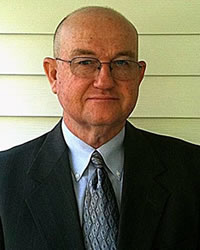
Gary Shepard

The Savior Seen In The Supper

Matthew 26:17-25
Gary Shepard January, 7 2007 Audio
0 Comments
Gary Shepard
Gary Shepard January, 7 2007

Sermon Transcript

Auto-generated transcript • May contain errors

100%
Matthew chapter 26. The table that we will come to this
morning, what we call the Lord's Supper, is only of benefit to us spiritually in what we see in the Lord Jesus
Christ. It's only beneficial to us in
what we see by faith in Him. If you look down with me in verse
17, It says, Now the first day of
the feast of unleavened bread, the disciples came to Jesus,
saying unto him, Where wilt thou that we prepare for thee to eat
the Passover? And he said, Go into the city
to such a man, and say unto him, The Master saith, My time is
at hand. I will keep the Passover at thy
house with my disciples." Now, just suppose that man was not
in agreement with that. He was undoubtedly going to be
in agreement simply because of the one who said it. And the
disciples did as Jesus had appointed them, and they made ready the
Passover. Now when the even was come, he
sat down with the twelve, and as they did eat, he said, Verily
I say unto you, that one of you shall betray me. And they were
exceeding sorrowful, and began every one of them to say unto
him, Lord, is it I? They knew no such assurance as
some seemed to claim, but they recognized in their own selves
the capacity the tendency to betray even the Lord Jesus
Christ. And he answered and said, He
that dippeth his hand with me in the dish, the same shall betray
me. The Son of Man goeth as it is
written of him, but woe unto that man by whom the Son of Man
is betrayed. It had been good for that man
if he had not been born. Then Judas, which betrayed him,
answered and said, Master, is it I? He said unto him, Thou
hast said. And as they were eating, Jesus
took bread, and blessed it, and break it, and gave it to the
disciples, and said, Take eat, this is my body. And he took
the cup, and gave thanks, and gave it to them, saying, Drink
ye all of it. For this is my blood of the New
Testament, which is shed for many for the remission of sins." It is an amazing thing to me
to see the grace and the mercy, the thoughtfulness the kindness
of the Lord Jesus Christ, especially in these last hours
and closing days before His death and departure. Once He says, I go away, but
I will not leave you comfortless. And when they took him in the
garden to crucify him, he said, if you take me, let these go. And before his departure, he
gives all these words of warning, instruction, encouragement, And even in his dying hours, with his hands nailed to that
cross, he reaches out in his power as the Savior and saves
that dying thief. He looks down to the Apostle
and he gives him instruction concerning Mary. He says, Behold
thy mother. Everything, everyone, in every
detail, he's showing grace and mercy. And it says in 1 Corinthians
11 that in the same night in which he was betrayed, all of this came to pass. And the supper that is here instituted
and of which we will partake today is said to be a remembrance, a memorial, if you will. And I know that not every remembrance
is a blessing. Not even every remembrance of
Christ. Because that will be the agony
of hell, I believe. The remembering. And the remembering
of Christ. And the remembering of all that
was to be had in Christ. And all that was lost because
of being without Christ. But there's one thing for sure, and that is that we cannot remember
what we don't know. We cannot remember what we really
don't believe. We have to have faith to believe
on the Lord Jesus Christ. And we cannot remember in this ceremony that which is
not clearly set forth also in the Gospel. And when we remember Him, we
do not remember Him in some mystical way, but we remember Him as he
is declared to be and revealed to be in his person and work
in the Scriptures. Hold your place and turn with
me to 1 Corinthians 11. Here the Apostle speaks of these
very things in 1 Corinthians 11 and verse 25. Go back up to verse 23. For I received of the Lord, Paul
says, that which also I delivered unto you, that the Lord Jesus,
the same night in which he was betrayed, took bread. And when he had given thanks
He break it and said, take eat, this is my body which is broken
for you, this do in remembrance of me. Now you can't remember
somebody you don't know. And you can't remember the Lord
Jesus Christ without knowing Him as He is in this book. After the same manner also, he
took the cup when he had supped, saying, This cup is the New Testament
in my blood. This do you as oft as ye drink
it in remembrance of me." Not to get a funny feeling, not
to just go through a ritual and ceremony. He says, You do it
in remembrance of me. For as often as you eat this
bread and drink this cup, you do show the Lord's death." Why
would anybody want to show the death of somebody? Remember the
death of somebody. Because life, spiritual life,
and all of God's salvation is through His death. You do show
the Lord's death. And He's coming. You show it
until He comes. Wherefore, whosoever shall eat
this bread, and drink this cup of the Lord unworthily, shall
be guilty of the body and blood of the Lord. What does that mean? Well, if we're looking for any
worthiness in ourselves, and we find it, and therefore take
of the Lord's table, we have eaten and drunk unworthily." Because this means simply to
do so in an unworthy manner, which is to do so without looking
to the Lord Jesus Christ. We take this table in remembrance
of Him, knowing that all worthiness is in Him. That's what we're
acknowledging. That we can only be saved by
His death. That we only have life in Him. That we only have salvation as
the gift of God's grace. He says, but let a man examine
himself. Where does it say? Somewhere
else in the Scripture for us to examine ourselves. Paul says
it in another place in the New Testament, and there he says
it like this, but let us examine ourselves whether we be in the
faith. Whether we believe on the Lord
Jesus Christ. not examine ourselves to find
some worthiness or moral purity or something like that. He says,
examine yourselves whether you be in the faith. And here he
says, let a man examine himself on the same basis, and so let
him eat of that bread and drink of that cup. He says, you do this in remembrance
of me. And when we come to this table,
we are confronted with the great holiness of God. We're confronted with the awfulness
of sin. We're confronted with the strict
justice of God. When a holy God finds sin, even
imputed sin, in His own Son, what does justice do? Put Him
to death. Put Him to death. And we also
see the amazing love and grace and mercy of God. And you see,
part of that is the fact that God has given this to remind
us. Does that say what kind of condition
we're often found in? Does that tell us something about
what we are in ourselves if we have to be given something from
God in light of what Christ has done for us to remind us of Him? We're given this to instruct
us and to bring us back from all our notions that might enter
into our minds as to how and what grounds upon which we're
saved. It's always and only in Christ. It's only in Him and His death. And it's given to include us
because we participate at this table. We eat of this bread. We drink of this wine. We take
on physically as we have and as we do spiritually the Lord
Jesus Christ. Now, when they were having this
instruction given to them, and to us about this supper, or this
feast as it is. He did it while they were partaking
of another feast, another ceremony, and that was the Passover. You see, there is nothing that
God does, and there was certainly nothing that Christ did while
he was here on this earth that was for just no reason or just
happenstance or something like that. No, he called them to prepare
that feast of the Passover, and it's in the midst of the Passover
that he initiates the Lord's table. You remember what the Passover
was? Well, the Passover was that time
in Egypt at the command of God when they took the lamb out of
every household, watched it, and checked it. A male, a firstling
of the flock that was without spot and without blemish. And
they took that lamb and slew the lamb and mocked the blood
on the lintels and the doorposts of each household in Israel in
the midst of Egypt. And when God brought that judgment
through the land, when He came in the power of His inflexible
justice on that land, that people, that night, and slew the firstborn
in every household. Every household had a death,
and in the household of all the Egyptians, the firstborn child
in that household died. But the death in those Hebrew
households was not one of the family, but that lamb. The death in those
households was the death of that God-provided and God-anointed
sacrifice and substitute that was a picture and a type of the
Lord Jesus Christ. And so, when that all took place,
God told that people that every day, every year after this, in
a perpetual commemorating of it in all the generations to
follow. You have this feast. You do this
again and again. And that's why they were doing it
this night. Why? Because the Lord passed over
the Hebrews that night. He passed over them. by demonstrating the execution
of his justice against that lamb that's blood was spread on the
doorposts of their house. Justice came, but it came to
the substitute. And so they're commemorating
that year after year, and every time they have this feast, and
every time a lamb is slain, and they gather together to eat this
feast of the Passover. They're doing it in remembrance. But there's just one thing. And that was, that lamb was not
the lamb that takes away sin. That lamb simply pictured the
one that would come and take away sin, the Lamb of God, the
Lord Jesus Christ. Let me read you a verse out of
I Corinthians 5. And the way Paul says this, it's
surely said as if every believer, and even in these midst of these
Corinthian believers, they certainly would understand and know this.
1 Corinthians 5 and verse 7, he says, Purge out therefore
the old leaven, that ye may be a new lump as you are unleavened. For even Christ our Passover. Do you see that? Christ, our
Passover, is sacrificed for us. And you see, we come to this
table which our Lord instituted, and we take the elements And
instead of being like those Passover feasts that look to Christ and
His coming, we in these elements look back to Christ who has already
come, and who has already died, and who left us this remembrance. You see, He's always drawing
us. to think on and remember and
look to the person and the sacrifice of the Lord Jesus Christ. Look down here especially this
morning for just a minute in verse 28. The Lord says on this occasion
as He institutes this supper, He says, For this is my blood
of the New Testament which is shed for many for the remission
of sins. Now, He was looking when He said
that at a cup or a glass or a goblet filled with wine. That's what he was looking at.
He may have probably held it up in a demonstration. And when he holds that wine up
in that cup, he says, this is my blood. My blood. He wasn't saying, Literally,
this is my blood. He was saying this symbolizes,
just like that Passover lamb, this symbolizes, this represents
my blood. Some call this the sacraments. They're not sacraments. A sacrament means a means of
grace. Grace does not come to us through
bread and wine. It's in Christ, not a sacrament. And neither does either of these
elements, when blessed or prayed upon or handled by some priest
or preacher, neither do they become the body and blood of
Christ. Some said, well, we won't be
that idolatrous. We'll tone that down. We'll just say this, that when
one eats of that bread and drinks of that wine, then in their body
it becomes the body and blood of Christ. Oh, no. This just represents His blood. This just pictures and symbolizes
His blood. And more especially, it represents
and it reminds us that Christ purchased the church with His
blood, with His death. Like I said, the two ordinances
that God has given us as His church or baptism and the Lord's
table, both of which symbolize His death. And not just His death, but our
death in Him. And our death in Him, and therefore
our life in Him. We have life by His death. The life was in the blood. Listen to what Peter says. forasmuch
as you know that you were not redeemed with corruptible things
as silver and gold." What he's saying is that under the Old
Testament there was a silver coin given in the matter of redemption
or anything could be redeemed under the law by the paying of
this price of silver or gold or whatever it is. He says, you
know that you were not redeemed that way from your vain conversation received
by tradition from your fathers, but with the precious blood of
Christ. as of a lamb without blemish
and without spot, who barely was foreordained before the foundation
of the world, but was manifest in these last times for you." You weren't redeemed by a lamb
or a coin. You weren't redeemed by the blood
of goats and calves. You're redeemed by the precious
blood of Christ. Christ says, this is my blood. That means it's the blood of
God. You say, how can? If the blood
of a goat, if the blood of a sacrifice, if the blood of a clean, innocent
lamb, if any other sacrifice, all this gold or all this silver,
if that won't redeem, why or how can the blood of one man
redeem a multitude of sinners? It's the blood of God. That's
what Paul was saying there in Acts. Feed the church of God
which He, God, purchased. with His own blood. Paul, writing to the Ephesians,
speaks of Christ this way. He says, "...in whom we have
redemption through His blood, the forgiveness of sins according
to the riches of His grace." Where is our forgiveness? It's
through His blood. And I love what Paul says, the
way he's led by the Spirit to say, in whom we have forgiveness. How? Through his blood, through
his death, through his sacrifice for sins. He says to the church
at Rome, he says that God has set forth Christ to be a propitiation
through faith in his blood. Faith in the dying. of the Lord
Jesus Christ to declare His righteousness for the remission of sins that
are passed through the forbearance of God. Then he goes on in Romans
5 and he says, much more than being now justified by His blood,
we shall be saved from wrath through Him. He said, this is my blood. That's
all this wine represents today. Won't do anything magical for
you, won't cleanse you from anything, won't do anything. It just is
a remembrance of the one way, the one sacrifice, the one suffering,
the one substitute, the one Savior and the way He accomplished that
salvation through His death. He had to have a body to die.
And it had to be a perfect, sinless body for God to accept it. It had to have blood in it because
its life is in the blood. And when He laid down His life,
when they pierced His body and His blood was shed, that's where
our salvation is at. Then He says this, this is my
blood of the New Testament. What's a testament? It's a covenant. I would have been so glad the
translators and the King James would have just used that word
more appropriately to keep people from thinking that somehow it's
two different things. This, he says, is the my blood
of the new covenant. What did he say, new covenant?
Well, new only as far as Revelation is concerned. We had that old
covenant. We had all those things, Passover
lambs, all those things that were given. But he says, as far
as revelation is concerned, this is the new covenant. Because
in all actuality, Christ is the Lamb slain from the foundation
of the world. And I really believe that we
could glorify God more and we could have greater understanding
ourselves if we were enabled to remember that with the eternal
God, all of this happens at once. And you and I, who are creatures
of time, we experience it in a progress of revelations. He said, This is my blood of
the new covenant. Turn over to Hebrews chapter
8 for a minute. Hebrews chapter 8 and look down
at verse 6. The apostle says, But now hath
he obtained a more excellent ministry. Who's that? The Lord Jesus Christ. You could just spend some of
the best and most worthwhile time if you would just go to
the book of Hebrews and read it and reread it and see how
time and time again the Apostle is led by the Spirit to show
the superiority of Christ over that Old Testament high priest.
The superiority of Christ over Moses. The superiority of Christ
over all those Old Testament sacrifices. The superiority of
Christ over everything and everyone, even though they all pointed
to Him. And now He's shown as a superior
mediator. of a superior covenant. But now hath he obtained a more
excellent ministry by how much also he is the mediator of a
better covenant which was established upon better promises, and therefore had to be made
sure by better blood. Look over in Hebrews 9 in verse
11. The apostle says, But Christ,
being come an high priest of good things to come, by a greater
and more perfect tabernacle, not made with hands, that is
to say, not of this building, neither by the blood of goats
and calves, but by his own blood he entered in once into the holy
place, having obtained eternal redemption for us. For if the
blood of bulls and of goats and the ashes of an heifer sprinkling
the unclean sanctify to the purifying of the flesh, how much more shall
the blood of Christ, who through the eternal Spirit offered himself
without spot to God, purge your conscience from dead works to
serve the living God? And for this cause, and for this
cause, he is the mediator of the new covenant. That by means of death, for the
redemption of the transgressions that were under the first testament,
they which are called might receive the promise of eternal inheritance. For where a testament is, There
must also of necessity be the death of the testator. For a testament is of force after
men are dead, otherwise it is of no strength at all while the
testator liveth. Whereupon neither the first testament
was dedicated without blood, for when Moses had spoken every
precept to all the people according to the law, he took the blood
of calves and of goats with water and scarlet wool, and hyssop,
and sprinkle both the book and all the people, saying, This
is the blood of the testament, the covenant, which God hath
enjoined unto you." And here's this other mediator.
Here is the one who is truly As Paul says, the one mediator
between God and men, the man Christ Jesus. And he institutes this supper
and he says, this is my blood of the new covenant. It is a better covenant. And it rests upon an accomplished
redemption. It rests upon the sacrifice of
Christ. It secures and gives eternal
and spiritual blessings. And it is absolutely unconditional,
since no responsibility in it was ever committed to any other
but the Lord Jesus Christ, and He made it final and irreversible is blood, is the blood of the
new covenant. As a matter of fact, about as
plainly as it can be said is in Hebrews 13 and verse 20 where
it's called the blood of the everlasting covenant. Then he says this, he says, which
is shed, which is shed. I remember some
years ago when somebody had a big kind of a debate, this has been
a long time ago, but they had a debate over one of the songs
the old hymns in which it says, there was the blood, there on
the cross or something like that, the blood of the lamb was spilt. And they made a big deal of it,
you know. Well, the shedding of the blood was no accident,
so we can't say it was spilt. I thought, what ignorance. The hymn writer, I'm sure, had
some understanding, and especially in the use of the old English
like that, that to spill blood was a purposed thing. This is my blood of the new covenant
which is shed. That means when the Lord Jesus
Christ hung on that cross, And he did just exactly what
men wanted to do to him. He had done to him just what
they wanted to do. You by wicked hands have taken
and slain the Lord of Glory. But when that happened, Peter says in his first message,
It's almost as if he's saying, God wants you to know something
right to start with here. And that is that which you've
done by your wickedness, by your so-called free wills and by your
own authority and human agency and stuff like that, what you've
done, he determined beforehand to be done. So in one sense, in one secondary
sense, you shed Christ's blood. But in the first sense, God shed
His blood. And the Lord Jesus Christ laid
down His life willingly, voluntarily, lovingly,
obediently, I dare say over the course of
this world and in extreme situations that have come and probably are
yet some more to come, when it came down to whether or not a
child or a parent dies, or a wife or a husband dies, that that parent has willingly,
without even having to think about it, suffered rather than
have that child suffer. That husband may have just went
out and given his own life to save the life of his wife, or
vice versa. This is a sacrifice of love.
This is a premeditation. Preordained suffering. Mine hour is not yet come. But it's coming. So when the
Lord Jesus Christ, when they took Him to lead Him
to that cross and nailed Him on it, He did so as freely, willingly, with the knowledge,
the clear knowledge and sight of everyone that he died for. When he went to that cross, then
he looked at that death, the horrors of it, and looked at you, and he did
it willingly, freely, gladly. He laid down his life for sheep. He died for the whole of his
church and for all of his sheep, but this is a reminder that he
died for each believer personally. He took my sins upon me. He stood before God's justice
in my place. The chastisement of my peace
was upon Him. Isn't that a reason to thank
Him? To trust Him and to remember
who He is? To be amazed? that he could love such as we
are. This is my blood of the new covenant
which is shed for many. Some say, well, if he didn't
shed it for all, we are not interested in it. Well, if he shed his blood
for all, then I'm not interested in it, because that means he
didn't save anybody. But He said it shed for many.
Is that good enough for you? That's good enough for me. And if He's made me one of the
many, that is amazing. In Matthew 20, it says, The Son
of Man came not to be ministered unto, but to minister and to
give His life a ransom for many. That's God's many now. That's
not ours. In Acts 13, verse 48, it says,
And when the Gentiles heard this, they heard the gospel preached,
they were glad and glorified the word of the Lord, and as
many as were ordained to eternal life believed. You know, I want the Lord to
save all my family members. I wanted to save all my children,
my friends. But it's His to do with what
He will. He doesn't owe anything to any
of us except judgment. But I'm thankful for every one
that he made a part of this many. He says in John 17, Father, glorify
your Son as thou hast given him power over all flesh, that he
should give eternal life to as many as thou hast given him. John 1, he came unto his own,
his own received him not. But as many as received him,
to them gave he power to become the sons of God, even to them
that believe on his name. It's not everybody, but it's
many. As many as are led by the Spirit
of God, they are the sons of God. Christ was once offered
to bear the sins of many, and unto them that look for Him shall
He appear the second time without sin and salvation. It became
Him for whom are all things, and by whom are all things, in
bringing many sons unto glory to make the captain of their
salvation perfect through sufferings." There's always many. Don't ever let anybody Try to
make you feel like just because we believe what the Bible says
that God saves His people, that He saves His elect, that He chose
a people from out of Adam's fallen race and all these other distinguishing
and discriminating things of His grace. Don't ever let anybody
diminish that. because he gave his life a ransom
for many. And I can guarantee you there
will be a sufficient number in glory to honor the person and
the work of the God-man Jesus Christ. This is my blood which was shed,
blood of the new covenant which was shed for many for the remission
of sin. Paul, or rather whoever wrote
Hebrews, he gave us this remembrance in Hebrews 9. He said, For almost
all things are by the law purged with blood. Just go look into
everything that was done under that Old Testament economy. Law
had to do with blood. Sprinkle of blood on the priest.
Sprinkle of blood on the altar. Sprinkle on the vessels. Everything. And without shedding
of blood is no remission. What does remission mean? Well, it's also translated elsewhere
as forgiveness. You see, in forgiveness, in man's
forgiveness, The only thing that has happened is the penalty just
forgotten. Joe, if I forgive you humanly,
you deserve something. But if I forgive you, we just
forget the penalty. Not with God. The forgiveness
of God involves the payment of the penalty. The suffering of
the penalty. But not by the one forgiven.
but by the Lord Jesus Christ in our place. You see, the word
remission means something like to send off or to send away. Remission or forgiveness means
to separate sin from the sinner. And if Christ's blood was shed,
the sins of all it was shed for are all gone, because he put
away sin by the sacrifice of himself. And that's why Paul
says, in whom we have, in whom we have the forgiveness of sin. The Lord's table reminds us that
there is no more sacrifice for sin. Let me show you one more
verse in Hebrews 10. You just stop and think. From
the time, well, even from the time of the garden fall to the
time the Lord Jesus Christ came into this world, you just stop
And think for a minute. Your mind will not even be able
to comprehend it. The number of sacrifices that
God himself ordained that took place in the nation of Israel
from that day to the day Christ came. It would absolutely stagger
you. But no more. That's why all this notion about
Christ coming back, coming back to Jerusalem and the sacrifices,
the temple being rebuilt and the sacrifices being reinstituted
again, that's utter foolishness. And not only foolishness, it's
blasphemy against Christ. He appeared once in the end of
the age to put away sin by the sacrifice of himself. All right,
look down here in Hebrews 10. Verse 18. Now where the remission
of these is, sins and iniquities, there is no more offering for
sin. No more offering. Anthony, we're not going to slay
a lamb today. We're going to look back at the
lamb slain. We're not going to pour out blood.
We're going to remember His blood. And we're not going to be shut
out like that priest who went in to sprinkle that blood. Because our priest has already
gone in and sprinkled the blood. Thus it says, having therefore,
brethren, boldness to enter into the holiest by the blood of Jesus,
by a new and living way which he hath consecrated for us through
the veil, that is to say, his flesh. This is my blood. of the new covenant which is
shed for many for the remission of sin. Oh, if it shed for me, and I
believe it was, what peace and what blessing,
what joy, what comfort, what rest, what eternal inheritance
is mine. That's not to say that I'm not
found often in fits of unbelief. That's not to say that I'm worthy
at any time. But He's worthy. That's what
we're saying with this. He's worthy. He died. He put away sin. He's our Savior. He's all our salvation. This
is the way He did it. He did it by His blood. He did
it by His broken body. And that's all our hope. May God help us to look to Him.
Our Father, we pray in this hour that You'd give us grace, give
us faith, understanding, discernment that we might look in these things
and see our perfect Savior and that perfect, finished, accomplished
salvation which he wrought in his life and in his death. May we see our sin put away.
May we see your Son glorified. May we find rest. Peace. and the fact that he made peace
by the blood of his cross. We pray in his name. Amen.
Gary Shepard
About Gary Shepard
Gary Shepard is teacher and pastor of Sovereign Grace Baptist Church in Jacksonville, North Carolina.

Comments

0 / 2000 characters
Comments are moderated before appearing.

Be the first to comment!

Joshua

Joshua

Shall we play a game? Ask me about articles, sermons, or theology from our library. I can also help you navigate the site.