Bootstrap
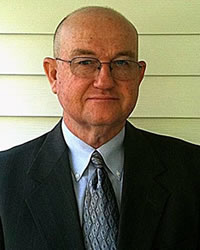
Gary Shepard

A Door Opened

Revelation 4:1
Gary Shepard October, 17 2006 Audio
0 Comments
Gary Shepard
Gary Shepard October, 17 2006
Revelation 4:1 After this I looked, and, behold, a door was opened in heaven: and the first voice which I heard was as it were of a trumpet talking with me; which said, Come up hither, and I will shew thee things which must be hereafter.

Sermon Transcript

Auto-generated transcript • May contain errors

100%
I am a brother in Christ who
is special to my heart. Like Rupert, he always teaches
me something. I always look forward to what
he has to say. You pray for him as he comes to minister the gospel
of God's grace to us. Brother Gary, you come up. Brother Rupert mentioned Brother Farrell Griswold. What he didn't tell you, but
what you found out before everything was over, is Farrell used to
call Rupert, singer boy. Singer boy. And I am his agent, by the way. I'd invite you to turn tonight
in your Bibles to the book of the Revelation and the fourth
chapter. Revelation chapter 4. And I want to read this first
verse. And behold, a door was opened
in heaven. And the first voice which I heard
was as it were of a trumpet talking with me, which said, Come up
hither, and I will show thee things which must be hereafter. When the Apostle John begins
to relate the heavenly vision that the Spirit of God has given
him, the first sight that he sees
is truly amazing, and is truly an evidence of God's
grace, he sees a door open. It doesn't say, as we can see
by the edition, that a door was opened. What this says actually
is he saw a door standing open. His looking didn't cause the
door to be opened. And what a contrast this is in
this last book of the Bible to what we find in the first book
of the Bible. Turn back with me, if you would,
to Genesis 3. Here in Genesis 3, it says in
verse 23, Therefore the Lord God sent him, that is, Adam, forth from the garden of Eden
to till the ground from whence he was taken. So he drove out the man and placed
at the east of the garden of Eden cherubims and a flaming
sword which turned every way to keep the way of the tree of
life." We go from a door closed to a
door opened. And when we read here in Genesis
3, it is obvious that the consequences of man's sin and his rebellion
were immediate, and they were far-reaching, reaching to you
and to me and to every descendant of Adam. The Spirit of God blesses
the Apostle Paul to state it so concisely. He says, Wherefore,
as by one man sin entered into the world, and death by sin,
and so death passed upon all men, for that all have sinned."
Or, all sin. You see, Adam was more than just
a man, and he was even more than the
first man. He was, as we say, a representative
man. He was a federal head, and by
that we mean that what he did All his race did in him. And what befell him, the consequences
of his actions fell on us also. Again, the Apostle Paul to the
Corinthians. In Adam all died. So when God drove Adam and Eve
out of the garden, out of his presence, out of his fellowship,
we all went out in him and with him. I'll never forget standing
on a street corner in Mérida, Mexico. And I looked out across
the street, and there was a big Catholic cathedral, or whatever
you like to call it. And there was a big wooden door
with those big iron latches and hinges on it. And before that
door, I saw a little old Mayan lady. And she went to that door
to open it, but it was locked. So she stood outside, looking
at that door, making her signs of the cross, and it struck me
that that is exactly where every sinner is in Adam. But rather than being outside
of a religious building, they are shut out from God. When this all takes place, man
is then shut out of God's presence and cannot go back and undo what
he has done. He cannot go back to that tree
of life now that was also in the midst of the garden. That tree was a pledge of that
immortal life which was the reward of obedience. And now man has lost it. So that when he fell, all his
claim to this tree is gone, and now to ensure that he does not
go back and eat of that tree, that he does not delude himself
with the idea that eating of it would restore what he has
now lost, God casts him out. It says that God sent him from
the garden to labor and to work and to till the ground that was
now cursed. And it struck me by what the
Spirit of God uses for words here in these two verses, one
that he was sent out and the other that he was driven out,
that evidently he did not go willingly. There goes so-called free will. If he had a free will, surely
he would have stayed in that garden. But it says that God
sent him out, that he was driven out of the presence of God. One old writer made this statement,
Thus he and all mankind by the fall forfeited and lost communion
with God. But where did he send him when
he turned him out of the garden? He might justly have chased him
out of the world, but he only chased him out of the garden. He might justly have cast him
down to hell as he did the angels that sinned when he shut them
out of the heavenly paradise. But man was only sent to till
the ground out of which he was taken. He was sent to a place
of toll and not a place of torment. He was sent to the ground and
not to the grave. Why? Why? Why did God not destroy
Adam and all his race that day? Because within Adam's race, there
was a covenant people who before the world was, and before the
fall ever took place, they were loved of God with an everlasting
love. And they were chosen in Christ
in an everlasting covenant. And they were blessed in him
with all grace and promised all glory. They are the children of God. They are those joint heirs of
Christ. They are those righteous in the
Lord their righteousness. And though they now stood in
need of redemption, and though they came to this need of reconciliation,
they did not stand now outside of a relationship with God in
Christ. That never changed. The fall, as awful as it was,
as ordained of God as it was, as making redemption as necessary
as it was, reconciliation as necessary as it was, it did not
change this relationship with God in Christ. In other words,
what they became in Adam did not change what God had made
them in Christ. He did not drive them out of
the covenant. He did not drive them out and
away from his love. They never left his sight, the
sight of his gracious omniscience and his great power. Look back here in verse 24. It says, So he drove out the
man. And he placed at the east of
the garden of Eden cherubims and a flaming sword which turned
every way to keep the way of the tree of life." Sometimes in my mind when I remember
this verse, I get some kind of a mental picture of Adam and
Eve leaving that garden place with their heads all hung down. And I think about as they leave
this garden place where this sword turns every way and guards
the entrance of God's presence. And these cherubims are said
to be there guarding that entrance. When they walked away, they had their backs turned,
not seeing the grace of God. But he didn't have his back turned.
He didn't have his back turned. God placed cherubims at the east
of the garden of Eden to keep the way of the tree of life. And man is cast out of this garden,
and God now guards the gate. And these cherubims, on the one
hand, they always seem to have something to do with judgment
and separation. when they made the veil that
was to be in the tabernacle and in the temple that separated
the people and every one of the priests except the great high
priest once a year, what did they do? He said, you embroider
on that curtain the cherubims. So there was never a time from
the day of the fall, that there was not some remembrance, that
there was not some symbol, that there was not some token, not
only of what had happened, but of the way it would be restored. You see, the first time that
you run up with the cherubims in the scripture is right here,
when they are cast out of the garden. And then you run up with them
again the next time when they're there on that curtain as a symbol
of being separated from God. But you know where you run up
with them the next time? When they're symbolized in gold.
And they're looking down at that perpetuatory, at that mercy seat. And there is no sword in their
hand. And they are saying, this is
the way. This is the way. You see, to exclude man, God
put a flaming sword there that turned every way. And the garden
was closed to all mankind, and these cherubims and this flaming
sword, which is always representative of his holy justice, guarded
the way. And it says it turned every way. And you know it still does. insofar as any way that Adam
would ever try to get back in that garden, there's that sword. And what that says is that God
is telling me and you, just like Brother Reibenbach just said,
that any way, any work of man, any will of man, any goodness
of man, That when one would seek to depend upon, to gain the favor
of God, and fellowship with God, and entrance into God's presence,
entrance into his heaven, that's what you're going to meet. That fiery sword turned every
way. and excludes every person who
comes on the basis of human merit or human work, and it shows us
that God is unapproachable by us as sinners in ourselves, that
he is inflexible in his justice, that he is pure and holy in his
being as God, and righteous in all that he does. So it doesn't matter over here
if one religion comes up with this way, you're going to meet
that fiery sword. Or if one comes up over here
with something more ingenious and they say, well this is going
to be the way you can please God, you're going to meet that
fiery sword. So that every way we look, every
way we turn, we're excluded from fellowship with God and the presence
of God and being accepted by God every way that we could ever,
ever come up with. And that's what you'll always
meet. That's the way that we'll always meet. And he showed that
salvation and life were not to be had unless the law and justice
of God were satisfied, and that was never expected to be accomplished
on the basis of anything that such as Adam would do. But when John looks He said, I saw a door standing
open in heaven. Just standing open. First thing
he sees. I thought about that, and that's
amazing in itself. After what we just see here,
that has taken place in Genesis, and man has had no improvement,
and that father's sword can still pierce and destroy each and every
one of us who tries to go in some other way. But he says, I saw a door standing
open in heaven. What happened to that flaming
sword? What happened to that flaming
sword? Did God just kind of blow it
out? I'll tell you what. I'm not a
Hebrew scholar by any stretch of the imagination. I'm certainly
not a singer. But I read someone who was saying
that there is something in the language here concerning that
flaming sword, that that flaming sword rolled out to protect anyone
from coming in, but that it rolled back on itself. Turn over to Zechariah chapter 13. I think it is something like
20 times in the book of Zechariah we run up with this phrase, in
that day. In that day. They are all expressions of the
same day. But look down in Zechariah chapter
13 at what it says in verse 7. This is what God says. Awake, O sword. Now you and I, for the most part,
as one of these brothers said last night, we don't really have
a clue God just condescends in mercy to speak in language to
us that maybe we can just get a little grip on. We don't know
very much about God's sword of justice, what his justice, what
it means, what it requires. But he says here that Jehovah
God gives this command. awake, O sword, against my shepherd,
and against the man that is my fellow, saith the Lord of hosts,
smite the shepherd, and the sheep shall be scattered, and I will
turn my hands upon the little one." Now, I know sometimes that preachers
get kind of carried away with types and shadows and all, and
bless his heart, if you read Brother Pink just a little bit,
he just got kind of carried away sometimes. We don't have to wonder
about this one. Hold your place right here in
Zechariah. Turn over to Matthew 26. Matthew chapter 26 and look down
in Matthew 26 and verse 31. Our Lord just institutes the
Lord's table. We're a strange group, the Lord's
people. Our whole worship, our ordinances,
they are all about death. Verse 31, it says, As they went
out into the Mount of Olives, then saith Jesus unto them, All
ye shall be offended because of me this night, for it is written,
I will smite the shepherd. And the sheep of the flock shall
be scattered abroad." Who's he talking about? He's talking about
his death. And he says here in Zechariah,
Awake, O sword! That sword is the sword of God's
justice, and it's been asleep for a long time. It has been for a long time,
but it has been asleep for a long time. It slept for the ages. It slept since Christ took upon
himself the sins of all his elect when he became their surety. When he became their surety. They were no longer responsible
for their sins, but he sure was. And time passed. And it kept passing. And it kept
passing. Until that hour that he said,
Awake, O sword. Why? Because there was one now. in whom that sword could pierce. There was one now,
that body that was prepared for him, there was one who could
die. And yet his sacrifice be of such
as to actually put away all the sins of his people and make an
end of them by the sacrifice of himself, so that it is now
time to pierce the surety. You see, God has buried the flaming
sword of his justice in the bosom of his Son. I don't really think that if
you and I meditated on the language of that, we'd ever comprehend
it to any measure. But I'll say this, and that is, if he poured out
his wrath on Christ in my place, If that flaming sword of his
justice, which was representative, I'm sure, of more than we could
ever imagine, the horror and the awfulness of being made sin
and suffering in the place of sinners. But if it was plunged
into his bosom, it will never be plunged into mine. Never. Never. You see, this flaming sword of
holy justice pierces the Lord Jesus Christ on this cross outside
of Jerusalem because God has imputed to Him or charged to
him, or whatever language of Scripture we want to use, laid
on him all the sins of these chosen sinners, and he dies there to the hill. There ain't nothing left. When you've stabbed a man, with
a sword or a dagger and it goes all the way to the hilt. Then
nothing left. Nothing left. I knew a man one time, he was
a policeman and he was a pretty strong fella. And a man tried to hurt him one
night And he just came across the table
and he hit that man square in the face. He said, you know what it feels
like when you hit a volleyball and your hand sinks into that
volleyball until there's just nothing left for you to expend? He said, that's what that felt
like. And when the Lord Jesus Christ
hung on that cross in the place of his people, that fiery sword
of justice, all it represents of the holiness and the law and
the justice of God Almighty that cast us out in our Father Adam,
That sword, that justice, that wrath, that cup, whatever we
find in Scripture it being called, was all expended on him. In him. There's nothing left. Nothing left. He met that sword, and he suffered
it, as it turned every way. Why? I should say how? Can one man suffer all that was
due all of God's people who were cast out of that garden in Adam? How can he ever make such a sacrifice,
die such a death, endure such wrath as to save every one of
us? The answer is right here. He
says, Awake, O sword, against my shepherd, against the man
that is my fellow. He didn't call the sword of justice
against all men, or God's elect, or several men. He said, smite
the shepherd, the man that is my fellow. Now we call each other
my fellow man. There's only one who can fit this bill. The only one who can be God's
fellow man is God himself. And God, as he is manifest in
the flesh, he said, smite the man which
is my equal. I told my folks a while back, If Jesus Christ is not God, then we ought to have obeyed
what one of the Al Qaeda terrorists said on a tape recently released,
especially to this country, when he said, every one of us ought
to convert to Islam. Because Mohammed himself taught
that to worship any mere creature as God is idolatry. And Mark, either we're worshiping
an idol, a created thing, or Jesus Christ is God. He is the man that is my fellow,
God says. And he said, if you smite the
shepherd, Oh, the sheep will be scattered. They were scattered
on the day of his death, and they are scattered to the four
corners of the earth. But he said, when you smite the
shepherd, when you smite this one who is my fellow, I'll turn
my hand upon the little ones. That simply means something like,
I'll turn my hand in favor. toward these little ones. And that's what he did. And that's
what he's still doing. That's what he's still doing.
I'll turn my hand upon the little ones. I'll interpose in favor
of my shepherd sheep. And I'll save every one of them. Every one of them. You see a door? I spent a good part of my life
trying to make a door. John said, I saw it. When did
he see a door? When God showed it to him. And that's when you
and I will see Christ. I mean see Him for who He is
and see Him for what He's done. See Him who says, I am the way. That is the way in which God
can be just and justify a sinner such as we are. I am the door,
the way of access and entrance and as Brother Rupert said, acceptance with God. The door is open because there
is reconciliation. The door is open because God
was in Christ reconciling us unto himself. Turn one more place, since we
have been all over this, to Hebrews chapter 10. Donny's read it, Rupert's preached
it, and I'll take this little appendage down here. This is the covenant that I will
make with them after those days, saith the Lord. I'll put my laws
into their hearts and in their minds will I write them, and
their sins and iniquities will I remember no more. Now where
remission of these is, there is no more offering for sin.
Having therefore, brethren, boldness to enter into the holiest by
the blood of Jesus. by a new and living way which
he hath consecrated for us through the veil, that is to say, his flesh." He hung there on that cross. And that transaction took place
between him and the Father. And that sword is plunged to
the unseeing eyes of men into the bosom of God's Son. God saw it. It says, And the
veil of the temple was rent unto you. was opened in heaven. Just like
every Old Testament priest, when that blood was shed, this is
one reason why I hate it when we try and take one aspect of
Christ's personal, one aspect of Christ's work, and make that
our gospel. Everything he is, everything
he did, That's our gospel. And so that priest, when that
blood was shed, when that sacrifice was offered, it wasn't over then. He had to take that blood. And
according to what we read here in Hebrews, it was a picture
of just what Christ did. He had to take that blood literally
into that Holy of Holies and sprinkle it on the mercy seat.
And I certainly do not know how that all took place in heaven. But it says here that it did. We come to this book in its beginning
with that awful sight. Our father Adam and our race
kicked out of the garden. kicked out of God's fellowship, but all his people not kicked
out of his covenant mercies. I may kick my son out of the
house when I get back, but I won't be kicking him out
of the family. And so when that day came, a Waco sword smite this shepherd,
the man that's my fellow. Let me read you one more verse,
just one more verse. Because this has been the hope
of Christ's church since that day. The psalmist
says in Psalm 80, Let thy hand be upon the man
of thy right hand, upon the Son of Man, who thou
madeest strong for thyself." Don't put that sword in me. Let your hand be upon your Benjamin
is what that actually means. Benjamin means the son of thy
right hand. Let your hand be on your Benjamin, your favored
son, your well beloved son. There is a door open in heaven.
Gary Shepard
About Gary Shepard
Gary Shepard is teacher and pastor of Sovereign Grace Baptist Church in Jacksonville, North Carolina.

Comments

0 / 2000 characters
Comments are moderated before appearing.

Be the first to comment!

Joshua

Joshua

Shall we play a game? Ask me about articles, sermons, or theology from our library. I can also help you navigate the site.