Bootstrap
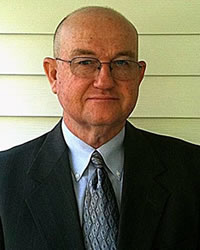
Gary Shepard

Himself

Hebrews 9:26
Gary Shepard October, 15 2006 Audio
0 Comments
Gary Shepard
Gary Shepard October, 15 2006
For then must he often have suffered since the foundation of the world: but now once in the end of the world hath he appeared to put away sin by the sacrifice of himself. Hebrews 9:26

Sermon Transcript

Auto-generated transcript • May contain errors

100%
Open your Bibles this morning
to Hebrews in the ninth chapter. Hebrews 9. And I'll begin reading in verse
24. For Christ is not entered into
the holy places made with hands." Now the apostle here is contrasting
and showing the far greater excellence of Christ, our priest, over all
the Old Testament priests. And not only that, but the superiority
of his sacrifice over all they offered. He says, which are the figures
of the true, but is the heaven itself now to appear in the presence
of God for us. Nor yet that he should offer
himself often as the high priest entereth into the holy place
every year with blood of others. For then must he often have suffered
since the foundation of the world. But now once in the end of the
world hath he appeared to put away sin by the sacrifice of
himself. That's the title of my message
this morning. Himself. Or the sacrifice of himself. You see, the death and the sacrifice
of the Lord Jesus Christ is central to all of God's purpose. And it is central especially
to his purpose of grace toward his people. We read in the Bible that it
was a predestined death. And it was a particular And it
was a death that was in an appointed time, and an appointed place,
and in an appointed manner. It is the death of the cross. But it is mainly the sacrificial
death of a particular person. A unique and an intricate person,
the apostle describes here by the pronoun himself. That's what it says in verse
26. That now once in the end of the
world, has he appeared to put away sin by the sacrifice of
himself. And if he in that one sacrifice,
if he actually did put away all the sins of all of his people
for all time, what a himself he must really be. Turn back in Galatians and the
very first chapter of Galatians and look down at what it says
beginning in verse 3. Galatians 1 and verse 3. Grace be to you and peace from
God the Father and from our Lord Jesus Christ, who gave himself
for our sins, that he might deliver us from this present evil world
according to the will of God and our Father, to whom be glory
forever and ever. Amen. who gave himself for our
sins. And then turn over, if you would,
to the next book, the book of Ephesians, and look with me in
Ephesians 5, and that first and second verse, Philippians 5,
Paul says, Be ye therefore followers of God as dear children, and
walk in love as Christ also hath loved us and hath given himself
for us, an offering and a sacrifice to God for a sweet smelling savor. And then let me show you one
more verse in that same chapter Down in verse 25, Paul continues. He says, Husbands, love your
wives even as Christ also loved the church and gave himself for
it. You see, as I mentioned to you,
I think it was last week, the Lord Jesus Christ, the man Jesus
Christ, is God and man in the same inseparable person. He is undividedly and forevermore
the God-man, Jesus Christ, the mystery of godliness, and God
manifests in the flesh. And there is a mystery in his
person, and a mystery in his death, but we never see in scripture
where his humanity is offered as separated from his deity. We know he had to be man to die. We know that God exclusively
considered cannot die. And yet nowhere in this book,
and I say this to the rebuke of my own self, nowhere in this
book Are those two things concerning the Lord Jesus Christ ever separated? Men say, and even I have said,
that he sacrificed his humanity on the altar of his divinity,
or his deity. And they may, in some ways, prove
helpful as far as our explaining this person and his work to us. But I'm afraid it only really
complicates the two, and it will, if carried out, rob this person,
and especially this work that he did, of its efficacy. himself. And whether I can explain
that, or whether I have human understanding that can comprehend
this amazing person, the Bible keeps saying again and again,
and is to be received and believed by faith, he gave himself as
the sacrifice for our sins. So that when he died on the cross,
and when he did put away the sins of his people, he did so
and he gave himself a sacrifice as that, as himself. And there's a reason for that.
And that is because there is no other person who could have
accomplished this work. There is no other person who
could have saved his people who were men and women sinners in
themselves. There is no other person who
could have satisfied God and no other person like. Men are always trying to reduce the
Lord Jesus Christ to nothing more than man. Or they are on
the other hand trying to make him as God exclusive of actually
being a man. But he is this unique person. And he died as this particular
person. And this unique and most complex
person dies there without any diminishing of or weakening of
himself because he had to give himself. He was giving himself as a sacrifice
for our sins. Paul said it again to Timothy. For there is one God and one
mediator between God and men, the man Christ Jesus, who gave
himself a ransom for all to be testified in due time. And when He hung there on that
cross, when that man hanging on that center cross outside
of Jerusalem died that death, He died on that cross as the
Lord of Glory. Is that right? Paul said of Him
which none of the princes of this world knew, For had they
known it, they would not have crucified the Lord of Glory. And His being God, not only the
fact that He is God manifests in the flesh, but His being God
was as essential in His work and in His sacrifice as His being
made. Why? Because that's what was
required for the purchase. And that is why the apostle tells
those brethren at Ephesus, take heed therefore unto yourselves
and to all the flock over the which the Holy Ghost hath made
you overseers to feed the church of God which he hath purchased
with his own blood. God purchased his church with
his own blood. So that the blood that cleanses
us from sin, the blood that puts away sin, the blood that is shed
for the remission of sin, is the blood of the Son of God. When John writes in the Revelation,
in the very beginning, he says, Jesus Christ, who is the faithful
witness, and the first begotten of the dead, and the prince of
the kings of the earth, unto him that loved us, and washed
us from our sins, is his own blood. That's the blood of God. And you see, when the Lord Jesus,
when this man Christ Jesus, when this God-man, when he died on
that cross, his humanity did not simply succumb or weaken
or ebb away until it was consumed by the holy wrath of God. The Lord Jesus Christ never reached
a point when he was unconscious. He never lost control of his
faculties, neither physical or mental, and though his suffering
was real suffering, both mental and physical, and most of all
spiritual, he remained in a total control of himself that He might
give Himself for our sins. Now one reason why I asked Joe
to read that 22nd Psalm this morning is because it's agreed
by almost everybody. That David's words there are
in the greater sense the words of the Messiah, the words of
the Lord Jesus Christ, most of whom are spoken there as he's
hanging there on the cross. Now I ask you this, is that a
man in a stupor? Is that a man that doesn't know
what's going on? Is that a man who is without
any sense or without any understanding of everything that is going on
about him? Is that a man in total helplessness
and hopelessness when he's standing there, or hanging there rather,
communing with God and expressing with all knowledge and all understanding
and all appreciation of everything that is going on? He has his full mind. He has his full faculties. And things are not out of control
by any stretch of the imagination, but because of who he is, he
is in still total control of all things. Turn over to John chapter 10. John chapter 10. And look with
me and listen as we read John chapter 10 and verse 11. The Lord Jesus Christ making
these statements. I am the good shepherd. The good shepherd gives his life
for the sheep. Suppose a bear or a lion comes
out to steal one of a shepherd's sheep. That shepherd knows full
well in his mind and fully appreciates that if he goes to rescue that
sheep, he knows what will be involved in it. So here is the
great shepherd, the shepherd and bishop of our souls. Here
is the good shepherd. And he says, I give my life for
the sheep. Well, in case we don't understand
that all together, look down at verse 15. As the Father knoweth
me, even so know I the Father, and I lay down my life for the
sheep. That is a conscious and a willing
laying down of his life, of himself, for not the ghost and the sheep,
but for the sheep. Look down at verse 17. Therefore
doth my Father love me, because I lay down my life, that I might
take it again. No man taketh it from me. But I lay it down of myself. I have power to lay it down and
I have power to take it again. This commandment have I received
of my Father. He's giving himself. Isaiah said he was oppressed
and he was afflicted. Yet he opened not his mouth. He is brought as a lamb to the
slaughter, and as a sheep before her shearer is dumped. So he
opened not his mouth. Just because he did not respond
or retaliate, to all the scoffing and all the mocking and all the
punishment and all the torture and everything that was brought
against him, that does not mean that he was not every second
of every moment of every hour consciously laying down and giving
himself. You see, the Bible says that
Christ died for us when we were without strength, but not when He was without strength. And what is in the eyes of so
many, His weakest, most vulnerable, most pitiful hour and time, is
actually the very zenith of His power and action as a man in
human flesh actually giving Himself as a sacrifice for our sins. You read Psalm 69 which is very
much like Psalm 22. And you hear the Christ expressing
the same things fully conscious of all that is going on fully
knowing and experiencing everything that was necessary to save his
people from their sins and fully knowing and viewing every one
of them. His knowledge of what he was
doing and who he was doing it for, and what it would accomplish
was clear. Why? Because Isaiah said, by
his knowledge, not by our knowledge of Eden, but by his knowledge
shall my righteous servant justify many, for he shall bear their
iniquity. He knew. He knew the reality. He knew the pain. He knew the
separation for each and every sin as he bore them in his own
body. And he suffered voluntarily with
the only truly free will that ever is or has been. And he did
so for those that he loved eternally and viewed every one of them
in that love when he gave himself. It says that he gave himself
for his people. But it is to our delight and
to our blessing and to the assurance of our hearts that even though
it is said that he died, that he gave himself for all of them
corporately, he had to do it for each of them individually
in order to do it for them together. He purchased the church with
his own blood. How was that? By redeeming every
one of those that the Father gave Him. When He gave Himself,
it was for each of their selves. Paul said, I am crucified with
Christ. Nevertheless I live, yet not
I, but Christ liveth in me, and the life which I now live in
the flesh I live by the faith of the Son of God who loved me and gave himself for me." He gave himself. And though it
was important and absolutely essential who suffered. Our salvation and His glory rested
and was sure in Him actually giving Himself. You see, if He
had come and lived and proven a sinless man all his days as
he was, proved the wisest man that had ever lived, proved the
greatest teacher and preacher that had ever lived, if he had
not actually at that time appointed, given himself. There'd be no salvation. No salvation. We know that this
is true. We know that this is what he
did and how he suffered and who he suffered as by how he spoke
from that cross. And by what he said. You see he actually made
something like seven statements. while he's hanging there on the cross. And I have all the verses
written down before me, and I want to read them to you, because
I want you to see, if you can see in them, the sense, the consciousness,
the awareness, that all he said reveals. Here's the first one. And about the ninth hour, Jesus
cried with a loud voice, saying, Eli, Eli, lala sabachthanah. That is to say, my God, my God,
why hast thou forsaken me? You see, he's fully conscious
that the sins that have been laid on him and imputed to him
have brought him as the man, the substitute, the redeemer
into this place before the eyes of this thrice holy God so as
to separate him from the rest. That's what your sin and my sin
would do for us if he didn't come in. If it wasn't for the
sacrifice of himself. Somebody said there's no little
sin because there's no little God to sin against. And all our
sins, the very least of them, if we could even think of them
in that respect, the very least of them would have to separate
us from God for all eternity. Were it not that he gave himself, his desecrated them. And then said Jesus, Father,
forgive them, for they know not what they do. And they parted
his reign in death. That's real conscience. That's the man, even in his death,
fulfilling in every respect all that God commands of us. Not
simply to love our brethren, but to love our enemies. I suspect these words were spoken
most clearly. concerning those that he would
die for. The Father forgives them, though
they know not what they did. Here's the third one. Jesus said
to that man on one of the crosses, Verily, verily, I say unto thee,
Today shalt thou be with me. Here's that scene. No different from the other one
in as far as his purpose, in as far as his state would act,
in as far as his action, in as far as his nature. But he's one
of those sheep that the Lord Jesus has come to give himself
for. And so, even in that dying hour,
the Spirit of God brings him out, brings him to call out,
Lord, remember me. When you come in, you'll see.
Is there a deaf man or a dumb man hanging on that milk office?
No, that's the Son of God. That's a man so in control of
his faculty, even in that hour, so much still God, so much still
man, even as he suffered, and he says today, You're going to be with me. And here's the fourth one. It says, Jesus cried with a loud
voice. He said, Father, into thy hands
I commend my spirit. I love the language of Scripture.
I love what the man Christ Jesus says. Into thy hands I commend
my spirit. There is only one man who ever
could, who ever has been able to make such an amazing statement
as that, so in control of himself and his life and his destiny
and everything. Into thy hands I commend my spirit. And having said thus, he gave
up the gun. Here's the fifth one. Then saith
he to the disciple, Behold thy mother. Here's his earthly mother in
that group around his cross. And I don't know all that's involved
in that, but I know it represents his conscious care of her and
of all earthly responsibilities. Never ever diminish not one degree. Behold thy mother. I'm making
her your mother so as for you to take care of her the rest
of your days. And it says from that day forward
that John took her to his house as his mother. in that day for you. There's another one,
and Jesus knowing, Jesus knowing that all things
were now accomplished, well that's a good one isn't it? He knew
it. He knew it. He knew what he was
doing. He knew what he was accomplishing. He knew that all things were
accomplished. So that the scripture might be
fulfilled, he said, accomplished. Wow. So that's what the prophets
had been led by the Spirit of God to say of the cross. And then here's the seventh thing.
When Jesus, therefore, had received the vinegar, he said, it is finished. And he bowed his head and gave
up the gospel. From start to finish. He died
the death of the cross, and he actually gave He had the capacity
to give himself as this unique and glorious person as a sacrifice
for our sins. And you know the amazing thing
is, if not only what he said, what he said in his dying, what
he said in his suffering, But it is evident in the language
of scripture that there was great life and authority and consciousness
by the way that he said it. It says he lifted up his
voice. Do you know what that is? That's what I try to do. so that
you can hear what I say. I don't talk like this when we're
having a conversation, one-on-one, but when I'm trying to speak
to all of you together in this place, I have to lift up my voice. It says that he muted up his
spirit. It says that he gave up his overdose,
his life. He knew what he was doing, whether
men today know it or not. He was laying down his life for
the sheep. He was dying in the place of
individual persons. He was shedding his blood for
the ransom purchase and redemption of his church from their sin.
His death was deliberate. in every sin. He was consciously, by himself, the scripture says,
purging our sins and with himself as a sacrifice for our sins,
satisfying the very justice of God in every way. Every way. One old writer said, the merits
of Christ consist in the work of his person drawn out in acts
of obedience unto death which he rendered as a public person
to the law and justice of God. It wasn't just that he was
a man, it wasn't just that he died. He's the one who gave himself. And as the dogma, he suffered
the punishment for the particular sins of his elect, and Christ's
suffering resulted from the sins of all God's elect being laid
on him, and they were, now listen, they were the legal equivalent
If I can say that, and I think I can by this book, they were
the legal equivalent to what they must have suffered in hell
forever were it not for him. You want to know what he gave
himself for? You want to know what he was
suffering when he was hanging on that cross? He was suffering
the very legal equivalent, the very same thing that God in his
inflexible justice would have required of each of his people
to expend in hell forever. That's why he suffered. You see that's the glory of it. Only
he could suffer this. He did not die. Now this is the
most subtle deception that I think probably there is. He did not
die in what men sometimes call a sufficient, efficient view
of the atonement. And they think to deceive me.
and to rob from the people of God the true joy of Christ's
sacrifice by saying that the death of Christ, the person of
Christ was of such worthiness that one drop of his blood would
do this work. A whole world of sinners and
all this kind of stuff. But it says he gave himself and
he laid down his life for the sheep. You see, his death is a definite
death as this most unique person and for this particular people. Paul keeps telling believably
for us. Gave himself for us. He gave
himself for us. He gave himself for our sins. He gave himself to redeem us
from this present evil world. It's not a universal thing. You
don't magnify God by saying that Christ died for everybody or
that God loves everybody or that God's trying to save everybody.
What peace and what hope What confidence can that give to any
individual? You see, there's no comfort in
such a doctrine to anybody who has any real conscience. And it simply makes salvation
to be nothing but human work. Because if Christ died for everybody,
the only difference between those that go to hell and those that
go to heaven would have to be something that they did. Is that
right? That's what this book says. If He didn't do it all, then
He didn't do enough to save us. And here it's said that He loves
everybody, that He died for everybody, and that He wants everybody to
be saved, which simply is to say He's done all He can, and
the difference will lie in your hands, and if it is, you get
the glory. That can't be. Because He's the
Savior. Because you and I don't have
anything to give. And because He gave Himself. He gave Himself. The issue of
the Gospel is not whether His sacrifice as God was infinite,
but whether it was definite. Whether or not it actually put
away my And besides, whatever God does,
that's what he intended to do. However many are in heaven, that's
however many he purposed to save, that's who he loved, that's who
he saved, that's who he gave himself for. And that's why they're there. Job said he is in one
mind. And who can turn it? And what
his soul desires, even that he doeth. Now you turn that around.
What he does, that's what his soul desires. God says through Isaiah, for
the transgression of my people was he stricken. The desire. and the worth and
the application of the atonement are set forth in all of scripture
as the same. As a perfect harmony in God. Every one that the Father chose. They are the same of that every
one that the Son laid down His life for. And they are the same
every one that the Holy Spirit shall call and bring to Christ
Jesus. Men like to play games with our
minds about the sacrifice of Christ. But our sins are the
sins of finite men and women who simply need to know, did
Jesus Christ die for me? Did he give himself for me? His death is a substitutionary
death, a particular death that accomplished the salvation of
all he dies for and puts away all their sins and that has to
be the only good news that a sinner can hear. And that has to be the only thing.
that truly glorifies the God of all grace. He just gave Himself. What does
that mean? It means He gave Himself for
our sins, in the place of our sins. This unique person suffered
with a suffering equal to that of all the sins that were imputed
to him. And if he suffered such in my
place and for my sins, I have none." Is that awful, forward
or brazen? No, it's not. Because I'm not
boasting in myself. My boast is in Christ. My boast
is in this One who gave Himself to me. It's not what I do or
will do or have done or am, it's that He gave Himself. Both Isaiah and Peter were led by the Spirit
of God to say something about Him and about His people. They both record this, with his
stripes. With stripes inflicted on him,
one by one, till the required number was reached. He says we're
healed. Now the Romans, they were very
strict, meticulous, with regards to Roman justice. And a man would be beaten with
stripes, up to a certain point, to a certain
number, for certain crimes. And if he was really bad, they
would beat him 39 stripes, but they'd save one. Because to have that 40th stripe
was to render you the worst, the most reprehensible, the most
awful, vile, criminal. Which is what we are. But it's by the stripes that
were laid on him. the stripes that we deserve.
Not 38, 39, but all 40 of them. He said we are Him. We are Him. The Lord has laid
on Him the iniquity or iniquities of us all. For the transgressions
of my people was He smitten The chastisement of our peace was
upon him, such punishment as must be endured to ensure our
peace with God. It says he died for our sins. He suffered for us in the flesh. He, Peter says, the just one,
died instead of the unjust one. He gave himself for our sins. He was delivered because of our
offenses and raised because of our justification. What do we deserve? Forty stripes, all the wrath, all the justice
of God. That's what's happening on that
cross. He's bearing those stripes. The responsibility of our sins,
the responsibility for us in our entirety as the Lord's people. They were all entrusted to Him
before the foundation of the world, and as our surety, He
took that responsibility, and God viewed us as righteous in
Him and blessed us accordingly, but in time He came to fulfill
the obligations of that suretyship. Because if you make yourself
surety for someone, he says you're surely smart for it. You see, we must believe that
God's impartial justice controlled every blow from God's
hand which fell upon our spotless shirt. In other words, Betty was telling
me something about, oh, she'd seen something that was supposedly
for lawyers, had the symbol of justice, you know, the scales
that they're always equal. I don't know about you, but I've
not seen much justice like that in this country, for the world.
That's the way God's justice is. Whatever is owed must be
paid. The soul that sins, surely dies. That's why he's doing it. I owed death,
he paid death. He ate himself. He didn't die in this glorious person. It can't be said that his death
is of such infinite this or that or the other that it was enough
to save ten worlds and stuff like that. No it wasn't. It was
just exactly what was due. to all his people
together. As a matter of fact, that's what
Isaiah actually says by the Spirit of God. That the Lord has made
the iniquities of his people to meet on his head. By his knowledge in him they
are justified. Somebody said, well, this is
a kind of a mercantile or a commercial view of the atonement. Well,
that's all right. I'll just join with Paul who
said, you were bought with a price. Therefore glorify God. Did he give himself for you? He gave himself for somebody. You know, only God can say. I can't be like those that the
scriptures warn about, who run about saying to everybody, peace,
peace, when there is no peace. Only God can speak that to your
heart. I probably would if I could.
I thank so much of everybody in this building this morning.
It was left up to me. But I'm not just. I'm just what
you are. But I can tell you this. God
will speak this word to the hearts of everyone that he gave himself
for. I'm not saying he'll come and
say to you, Christ died for you, he gave himself for your sins.
But I'm saying he'll take this gospel, this declaration of who
he is and what he did, and he'll use that, and he'll
speak peace to your heart through this one who gave himself. He brings us to the knowledge
of it, to the revelation of it, enables us to have a confidence
in it and to cast out everything else, every other hope. As the hymn writer said, it is
enough that Jesus died. and that he died for me." This wasn't just a man on the
cross. And this wasn't just God in some kind of phantom form. This is the Son of God, the Lord
of Glory, who so far superior to every other priest and every
other sacrifice. Gave Himself. If that ever stops being a mystery
to us, Joe, we're in trouble. Gave Himself. For our sins. That's what God required. That's
what He gave. And that's our salvation. And there are no buts after that.
There are no buts. You can rest in that. He's done something for you.
You can be at peace. I don't mean you won't have troubles.
We have troubles and trials and all that, but if He gave Himself
for me, if the Lord laid my iniquities, my sins on Him, And He went to
that cross and gave Himself for me? And in the same sense of
imputation gave Himself to me? Is the Lord my life? You just think about that when
you read. He loved us and He gave Himself
for us. Our dear Father, this day we
pray that we might know this, that we might know Him, that our hope might be in Him
and in the work He accomplished to justly and righteously make
an end of our sins. Lord, we thank you for Christ.
We thank you for your grace, the grace of God. We thank you for that sacrifice of himself. Help us, we do pray, in every
way. Most especially, give us life
and faith to be able to look to Him and believe on Him and
to rest in Him, to rejoice in Him, come whatever may come. Cause us in this to know ourselves to be your
people. And all I hope to be outside
of ourselves and in God our Savior. Lord, forgive our unbelief and
forgive our failures and weaknesses and our own natural sinfulness. Help us to rejoice in the Lord Jesus Christ. We
thank you and pray in His name. Amen. Amen.
Gary Shepard
About Gary Shepard
Gary Shepard is teacher and pastor of Sovereign Grace Baptist Church in Jacksonville, North Carolina.

Comments

0 / 2000 characters
Comments are moderated before appearing.

Be the first to comment!

Joshua

Joshua

Shall we play a game? Ask me about articles, sermons, or theology from our library. I can also help you navigate the site.