Bootstrap
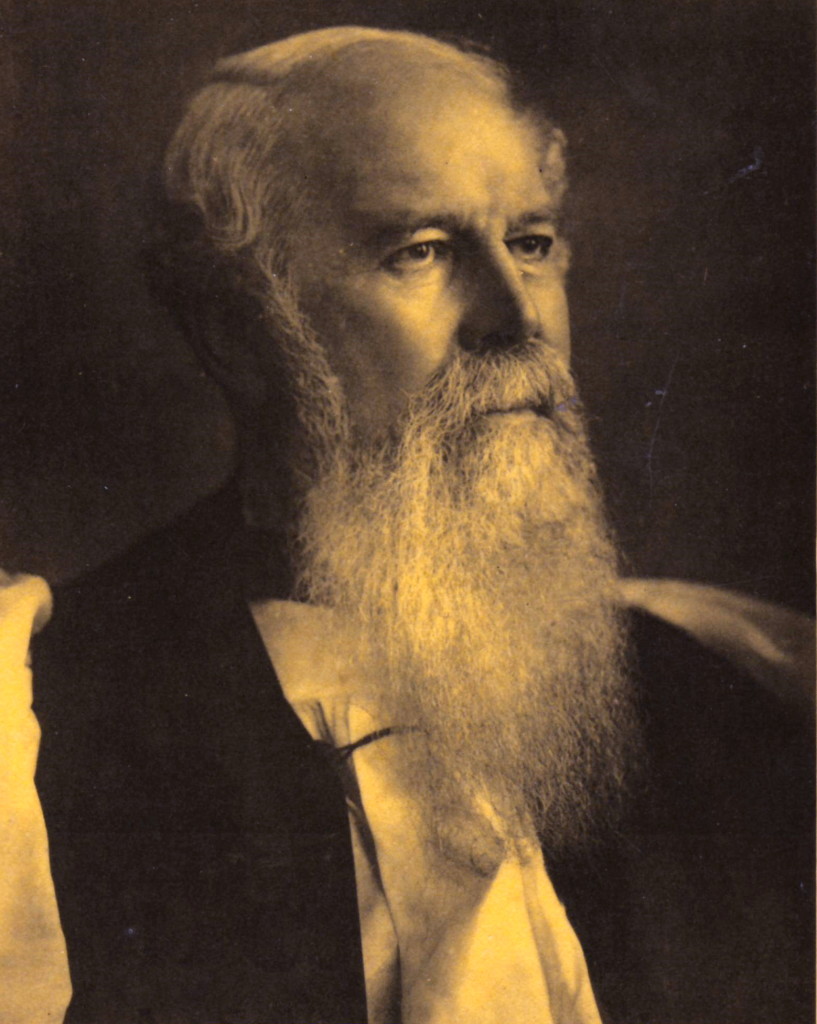
J.C. Ryle

John 13:31-38

John 13:31-38
J.C. Ryle November, 20 2022 Audio
0 Comments
You will find it helpful to READ the texts--as you LISTEN to the audios!
The TEXTS for the entire commentary can be bound here:
https://www.gracegems.org/Ryle/John.htm

Sermon Transcript

Auto-generated transcript • May contain errors

100%
Section 5 of Expository Thoughts on the Gospel of St. John Volume 3 by J. C. Ryle. CHAPTER XIII. Therefore, when he was gone out, Jesus said, Now is the Son of Man glorified, and God is glorified in him. If God be glorified in him, God shall also glorify him in himself, and shall straightway glorify him. Little children, yet a little while I am with you. Ye shall seek me, and as I said unto the Jews, Whither I go, ye cannot come. So now I say to you, A new commandment I give unto you, that ye love one another, as I have loved you, that ye also love one another. By this shall all men know that ye are my disciples, if ye love one to another."

Simon Peter said unto him, Lord, whither goest thou? Jesus answered him, Whither I go, thou canst not follow me now, but thou shalt follow me afterwards. Peter said unto him, Lord, why cannot I follow thee now? I will lay down my life for thy sake. Jesus answered him, Wilt thou lay down thy life for my sake? Verily, verily, I say unto thee, The cock shall not crow till thou hast denied me thrice.

In this passage we find the Lord Jesus, at last alone with his eleven faithful disciples, The traitor, Judas Iscariot, had left the room, and gone out to do his wicked deed of darkness. Freed from his painful company, our Lord opens His heart to His little flock more fully than He had ever done before. Speaking to them for the last time before His Passion, He begins a discourse which, for touching interest, surpasses any portion of Scripture.

These verses show us what glory the crucifixion brought both to God the Father and to God It seems impossible to avoid the conclusion that this was what our Lord had in mind when he said, Now is the Son of Man glorified, and God is glorified in him. It is as though he said, The time of my crucifixion is at hand. My work on earth is finished. An event is about to take place tomorrow which, however painful to you who love me, is in reality most glorifying both to me and my Father.

This was a dark and mysterious saying, and we may well believe that the Eleven did not understand it. And no wonder! In all the agony of the death on the cross, in all the ignominy and humiliation which they saw afar off, or heard of the next day, in hanging naked for six hours between two thieves, in all this there was no appearance of glory. On the contrary, it was an event calculated to fill the minds of the apostles with shame, disappointment, and dismay. And yet our Lord's saying was true.

The crucifixion brought glory to the Father. It glorified His wisdom, faithfulness, holiness, and love. It showed Him wise in providing a plan whereby He could be just, and yet the justifier of the ungodly. It showed Him faithful in keeping His promise that the seed of the woman should bruise the serpent's head. It showed Him holy in requiring His law's demands to be satisfied by our Great Substitute. It showed Him loving in providing such a Mediator, such a Redeemer, and such a Friend for sinful man as His co-eternal Son.

The Crucifixion brought glory to the Son. It glorified His compassion, His patience, and His power. It showed him most compassionate in dying for us, suffering in our stead, allowing himself to be counted sin and a curse for us, and buying our redemption with the price of his own blood. It showed him most patient in not dying the common death of most men, but in willingly submitting to such horrors and unknown agonies as no mind can conceive, when with a word he could have summoned his father's angels and been set free. It showed him most powerful in bearing the weight of all the world's transgressions and vanishing Satan and despoiling him of his prey.

Forever let us cling to these thoughts about the crucifixion. Let us remember that painting and sculpture can never tell a tenth part of what took place on the cross. Crucifixes and pictures at best can only show us a human being agonizing in a painful death. but of the length and breadth and depth and height of the work transaction on the cross, of God's law honored, man's sins born, sin punished in a substitute, free salvation bought for man. Of all this they can tell nothing. Yet all this lies hid under the crucifixion.

No wonder St. Paul cries, God forbid that I should glory save in the cross of our Lord Jesus Christ. Galatians chapter six, verse 14.

These verses show us, secondly, what great importance our Lord Jesus attaches to the grace of brotherly love. Almost as soon as the false apostle had left the faithful eleven, comes the injunction, love one another. Immediately after the sad announcement that he would leave them soon, the command is given, love one another. It is called a new commandment, not because it had never been given before, but because it was to be more honored, to occupy a higher position, to be backed by a higher example than it ever had been before. Above all, it was to be the test of Christianity before the world. By this shall all men know that ye are my disciples, if ye have love one to another.

Let us take heed that this well-known Christian grace is not merely a notion in our heads, but a practice in our lives. Of all the commands of our Master there is none which is so much talked about and so little obeyed as this. Yet, if we mean anything, when we profess to have charity and love toward all men, it ought to be seen in our tempers and our words, our bearing and our doing, our behavior at home and abroad, our conduct in every relation of life. Specially it ought to show itself forth in all our dealing with other Christians. We should regard them as brethren and sisters, and delight to do anything to promote their happiness. We should abhor the idea of envy, malice, and jealousy towards a member of Christ, and regard it as a downright sin. This is what our Lord meant when He told us to love one another.

Christ's cause in the earth would prosper far more than it does if this simple law were more honored. There is nothing that the world understands and values more than true charity. The very men who cannot comprehend doctrine, and know nothing of theology, can appreciate charity. It arrests their attention and makes them think. For the world's sake, if for no other cause, let us follow after charity more and more.

These verses show us, lastly, how much self-ignorance there may be in the heart of a true believer. We see Simon Peter declaring that he was ready to lay down his life for his master. We see his master telling him that in that very night he would deny him thrice and we all know how the matter ended. The master was right and Peter was wrong. Let it be a subtle principle in our religion that there is an amount of weakness in all our hearts of which we have no adequate conception and that we never know how far we might fall if we are tempted. We fancy sometimes, like Peter, that there are some things we could not possibly do. We look pitifully upon others who fall, and please ourselves in the thought that at any rate we should not have done so. We know nothing at all. The seeds of every sin are latent in our hearts, even when renewed, and they need only occasion, or carelessness and the withdrawal of God's grace for a season, to put forth an abundant crop.

Like Peter, we may think we can do wonders for Christ. And like Peter, we may learn by bitter experience that we have no power and might at all. The servant of Christ will do wisely to remember these things. Let him that thinketh he standeth, take heed lest he fall. 1 Corinthians 10, verse 12.

A humble sense of our own innate weakness, a constant dependence on the strong for strength, a daily prayer to be held up because we cannot hold up ourselves These are the true secrets of safety. The great apostle of the Gentiles said, when I am weak, then I am strong. Second Corinthians chapter 12 verse 10.

Notes John chapter 13 verses 31 to 38. Verse 31. Therefore, when gone out, Jesus said. The withdrawal of Judas from the company of the disciples at that point forms a distinct break in the narrative. At once, from this time, our Lord seems to speak as one relieved by the absence of an uncongenial mind. There is a manifest alteration in the tone of all he says. It seems pitched in a higher key. Bengal, at this point, interposes an entire interval of a night, and thinks that a new discourse begins here. It seems a needless view, and is very unnatural.

Now is the Son of Man glorified, etc., etc. This is a deep saying, and not least so because both the verbs are in the past tense. Literally rendered in each case, the verb should be, has been glorified. This is not an uncommon mode of speech. The glorification is so near, so certain, so complete, that it is spoken of as a thing accomplished, and even passed. It was accomplished in purpose, and in a few hours it would be accomplished in reality. So, John chapter 17 verse 4.

The meaning of our Lord may probably be paraphrased thus. Now has the time come that I, the Son of Man, should be glorified by actually dying as man's substitute, and shedding my blood for the sins of the world. Now has the time come that God the Father should receive the highest glory by my sacrifice on the cross. Let it be noted that the Lord regards His own atoning death on the cross as the most glorious part of His work on earth. and that nothing so tends to glorify the Father's attributes of justice, holiness, mercy, and faithfulness to His promises as the death of the Son.

Let it be noted that the Lord does not speak of His death as a punishment, or disgrace, or humiliation, but as an event most glorious, glorifying both to Himself and to the Father, so Christians should learn to glory in the cross. If we do not take this view, and adhere to a strict literal rendering of the verb glorified as past, as Hengstenberg does, we must suppose it to mean, Now at last, by my perfect righteousness in life and willingness to suffer in death, I, the son of man, have received glory, and my father, at the same time, has received glory through me.

But the other interpretation, taking the past tense for the present or future, is better. The sacrifice has begun, the last act of my redeeming specially glorifying myself and my father, has actually commenced or is commencing. Augustine and Ecolampadius hold that the expression, Now is the Son of Man glorified, has a special reference to the glory which surrounds our Lord when the wicked are all put away from Him and He is attended only by saints. This peculiar glory was on Him when Judas Iscariot went out and left Him and His faithful disciples alone.

V. 32. IF GOD BE GLORIFIED IN HIM, etc. This verse may be paraphrased as follows. If God the Father be specially glorified in all his attributes by my death, he shall proceed at once to place special glory on me for my personal work, and shall do it without delay, by raising me from the dead, and placing me at his right hand. It is like the famous passage in Philippians, wherefore God also hath highly exalted him It is the same idea that we have in the 17th chapter more fully. If the Son, on the one hand, specially glorifies the Father's attributes of holiness, justice, and mercy, by satisfying all his demands with his own precious blood on the cross, so, on the other hand, the Father specially glorifies the Son by exalting Him above all kings, raising Him from the dead, and giving Him a name above every name.

In Himself must refer to that special and peculiar glory which, in the counsels of the Blessed Trinity, is conferred on the second person on account of his incarnation, cross, and passion. It is hardly needful to remind Christians that, if, does not imply any doubtfulness, but is rather equivalent to, since, as in Colossians chapter 3 verse 1, if ye then be risen with Christ. If anyone wishes to adhere rigidly to the past tense in the first glorified of this verse, it undoubtedly makes excellent meaning. If God the Father has been glorified on the earth by my life and perfect obedience to his law, He will also glorify me in my own person by raising me from the dead and placing me at His own right hand, and that very soon. But I doubt this being the full meaning for the reasons given in the preceding verse.

The perfect harmony and cooperation of the persons in the Blessed Trinity shine out here. The Son shows the world by His death how holy and just is the Father, and how He hates sin. The Father shows the world by raising and exalting the Son to glory. he delights in the redemption for sinners which the Son has accomplished. Chrysostom thinks that, straightway glorify him, must refer to the special signs and wonders which appeared from the very time that our Lord was on the cross. So the sun was darkened, the rocks rent, the veil of the temple parted, many bodies of the saints arose, the tomb had its seal, the guards sat by, and, while a stone lay on the grave, the body rose. Muskullis remarks, that here you have the great principle asserted which is always true, those who glorify God shall be glorified by God.

Verse 33. Little Children. This is the only time that our Lord ever calls His disciples by this name. It was evidently a term of affection and compassion, like the language of a father speaking to children whom he is about to leave alone as orphans in the world. My believing followers, whom I love and regard as my children. Observe that the expression is not used until Judas has gone away. Unbelievers are not to be addressed as Christ's children. Yet a little while I am with you. This seems to mean I am only staying a very little longer with you. The time is short. The hour approaches when we must part. Give me your best attention while I talk to you for the last time before I go.

You shall seek me. It is not quite clear what this means. Of course it cannot refer to the time after the resurrection, when the disciples were fully convinced that the Lord had risen. Much less can it refer to the time after the ascension. I can only suppose it means, after my death he shall be perplexed, amazed and confounded for a little season, wanting me, seeking me, wishing for me, and wondering where I am gone. The very moment the little child is left alone by mother or nurse, it begins to cry after her and want her, so it will be with you.

as I have said unto the Jews, etc." This sentence can only mean, the words that I said to the Jews will soon apply to you also, though in a very different sense. Whether I am going you cannot follow me. You will follow me hereafter, but at present there is a gulf between us, and you will not see me. Of course, the words applied to the Jews meant that Jesus was going to a place where spiritually and morally the Jews were unfit to go, and in their impenitent state could not go. The words applied to the disciples only meant that Jesus was going into a world where they could not follow him till they died. They were remaining on earth and he was going to heaven.

Hengstenberg observes that this is the only place in which Jesus ever spoke to his disciples concerning the Jews. Elsewhere he uses the expression in speaking to the Samaritan woman, John chapter 4 verse 22, and before Caiaphas and Pilate.

Verse 34. A new commandment, etc. The immense importance of Christian love or charity cannot possibly be shown more strikingly than by the way in which it is urged on the disciples in this place. Here is our Lord leaving the world, speaking for the last time, and giving His last charge to His disciples. The very first subject He takes up, and presses on them, is the great duty of loving one another, and that with no common love, but after the same patient, tender, unwearied manner that He has loved them. Love must needs be a very rare and important grace to be so spoken of. The want of it must needs be a plain proof that a man is no true disciple of Christ.

How vast the extent of Christian love ought to be! The measure and standard of it is the love wherewith Christ loved us. He was a love even unto death. Melanethon points out our Lord's great desire to promote unity and concord among professing Christians by his dwelling so much on love before he left the world.

Why did our Lord call love a new commandment? This is a rather difficult question and has called forth a great variety of opinion. One thing only is very clear. Jesus did not mean to say that love was a grace peculiar to the gospel and was nowhere taught in the law of Moses. To say this is a mark of great ignorance. The point is set at rest by the words in Leviticus chapter 19 verse 18, Thou shalt love thy neighbor as thyself.

What then does this new word mean? Some think, as Chrysostom, that our Lord refers to the degree with which Christians should love, even as He had loved them. This was a new and higher standard than had yet been known. Hitherto, as Cyril says, men were to love others as themselves. Now they were to love them more than themselves.

Some think that our Lord refers to the great duty of Christians to love one another and to cling to one another with a special and peculiar love, over and above the love they had generally to all mankind. This was, in a sense, a novelty.

Some think that our Lord only meant that He renewed and recreated the great law of love, and raised it to so much higher a position than it had ever held among the Jews, that it might be truly called a new commandment. The parable of the good Samaritan shows how little the Jews realized the duty of loving their neighbors. He had in view the utter neglect into which the law of love had fallen among the Jewish teachers like the Pharisees, and like Isaac digging the earth out of the old well, would give the law a second beginning, as if it were new.

Some, as Maldonadas and Susser, think that the expression is only a Hebraism, and that new, rare, and excellent are synonymous. Thus a new name, a new song, a new wine. Revelation chapter 2 verse 17, Psalm 95 verse 1, Matthew chapter 26 verse 29.

Perhaps there is something in each and all of these views. One thing only is very certain. Nothing could exalt the value of love so highly as to call it a new commandment. Scott observes that the law of love to others was now to be explained with new clearness, enforced by new motives and obligations, illustrated by a new example, and obeyed in a new manner.

Verse 35. By this shall all men know, etc. There can be no mistake about these words. Love was to be the grand characteristic, the distinguishing mark of Christ's disciples. Let us note that our Lord does not name gifts, or miracles, or intellectual attainments, but love, the simple grace of love, a grace within reach of the poorest, lowliest believer, as the evidence of discipleship. No love, no grace, no regeneration, no true Christianity.

Muscullus observes, with withering scorn, how little likeness there is between our Lord's mark of discipleship and the dresses, beads, fastings, and self-imposed austerities of the Church of Rome. Let us note what a heavy condemnation this verse pronounces on sectarianism, bigotry, narrow-mindedness, party spirit, strife, bitterness, needless controversy between Christian and Christian.

Let us note how far from satisfactory is the state of those who are content with sound doctrinal opinions and orthodox, correct views of the gospel, while in their daily life they give way to ill-temper, ill-nature, malice, envy, quarreling, squabbling, bickering, surliness, passion, snappish language, and crossness of word and manner. Such persons, whether they know it or not, are daily proclaiming that they are not Christ's It is nonsense to talk about justification, and regeneration, and election, and conversion, and the uselessness of works, unless people can see in us practical Christian love.

Whitby remarks that in the primitive ages the mutual love of Christians was notorious among heathens. See how these Christians loved one another was a common saying according to Terlulian. Even Julian the apostate proposed them to the heathen as a pattern in this respect.

Simon Peter, Lord, whither goest thou? Here, as elsewhere, the forward, impulsive spirit of Peter prompts him to ask anxiously what our Lord meant by talking of going. Whither goest thou? Can we doubt, however, that in this question he was the spokesman of all? How very little the disciples had ever comprehended our Lord's repeated sayings that he must be taken prisoner, crucified, and die, we see in this place. Often as he had told them he must die, they had never realized it, and are startled when he talks of going away. It is marvelous how much religious teaching men may have, and yet not take it in, receive, or believe it, especially when it contradicts preconceived notions.

Jesus answered him, etc. Our Lord graciously explains here a part of his meaning. He does not explicitly tell Peter where he is going, but he tells him he is going to a place where Peter cannot follow him now during his lifetime, but will follow him after his death, at a future date. It is not unlikely, as Cyril observes, that these words, thou shalt follow me, pointed to the manner of Peter's death by crucifixion. He was to walk in his master's steps, and enter heaven by the same road.

Verse 37. Peter said, Lord, why, follow thee now, etc. This question shows how little Peter realized what our Lord fully meant, and the nearness of His death on the cross. Why cannot I follow Thee now? Where is the place Thou art going to on earth, where I am not willing and ready to follow Thee? I love Thee so much, and am so determined to cling to Thee, that I am ready to lay down my life rather than be separate from Thee. These words were well meant, and Peter never doubted, perhaps, that he could stand to them. But he did not know his own heart. There was more feeling than principle in his declaration. He did not see all that was in himself. Let us note the mischief of self-ignorance. Let us pray for humility. Let us beware of overconfidence in our own courage and steadfastness. Pride goeth before a fall.

Verse 38. Jesus answered him, wilt thou, &c. Our Lord's meaning appears to be, wilt thou really and truly lay down thy life for me? Thou little knowest thy own weakness and feebleness. I tell thee in the most solemn answer, that this very night, before the cock crow, before the sunrise, thou, even thou, wilt deny three times that thou knowest me. So far from laying down thy life, thou wilt try to save thy life by cowardly denying that thou hast anything to do with me. Let us note the wonderful foreknowledge of our Lord. What an unlikely thing it seemed that such a professor should fall so far and so soon, yet our Lord foresaw it all. Let us note the wonderful kindness and condescension of Jesus. He knew perfectly well the weakness and feebleness of his chief disciple, and yet never rejected him, and even raised him again after his fall. Christians should be men of very pitiful and tender feeling toward their weak brethren. Their inconsistencies may be very great and provoking, but we must never forget our Lord's dealing with Simon Peter.
J.C. Ryle
About J.C. Ryle
John Charles Ryle (10 May 1816 — 10 June 1900) was an English evangelical Anglican bishop. He was the first Anglican bishop of Liverpool.
Broadcaster:

Comments

0 / 2000 characters
Comments are moderated before appearing.

Be the first to comment!

Joshua

Joshua

Shall we play a game? Ask me about articles, sermons, or theology from our library. I can also help you navigate the site.