The two I wills in Isaiah 41, a sermon preached Lord's Day evening, March the 16th, 1890. Isaiah 41 and verse 18. I will open rivers in high places and fountains in the midst of the valleys. I will make the wilderness a pool of water and the dry land springs of water. You notice that in this verse, the Lord twice says, I will. And in that respect, this verse is in harmony with the rest of the chapter. Will the children, when they are at home, find out how many times in this chapter God says, I will, or thou shalt, which is to much the same effect? How greatly I prize a portion of scripture which is filled with God's shalls and wills. Everything he says is precious, but his I wills are peculiarly precious. there are the I wills of the Psalms, a long list of them and the I wills of Christ, a goodly company when we come to the I wills of God then we get among the precious things, the deep things the things which minister comfort and strength to the people of God we sometimes say I will but it is in a feeble fashion compared with the way in which God says it people say must is for the king So I will is for the king of kings. It is his prerogative to will. It is his sovereign right to say I will. When we get a chapter like the one that we have been reading, which is full of the I wills of God, it is worthwhile to pause for a few moments and just to think of what Jehovah's I will must mean. It is an I will uttered with deliberation. James said, known unto God are all his works from the beginning of the world. We say I will in a hurry, and then we take time to repent of it. We are under excitement, persuasion, or compulsion, and we say, I will! And we are very sorry afterwards, and perhaps we are so unfaithful as not to keep our word. But God never speaks under compulsion. He is almighty. God never speaks in a hurry. He has infinite leisure. God never speaks under excitement or persuasion. That we're not like a God. His purpose is of old, and his decree is from everlasting. And the I will, which is the mouth of the decree, is a word that is spoken with wisdom and prudence. Now when a man speaks a thing prudently and wisely, you believe that he will carry it out if he can. you may have much more confidence with regard to what the lord says for he is not spoken without due deliberation therefore whenever god says i will you may be sure that he will perform it next when god says i will his resolution is supported by omnipotence you say i will but you cannot do what you promised your will is good enough but you fail because of lack of the means you say I will yes I will but afterwards you have meekly to say I pray thee take the will for the deed for I find that I have overshot the mark I have promised what I am unable to perform now that can never happen with God hath he said and shall he not do it is anything too hard for the Lord especially anything which he has promised to perform Come then, dear friends, if God be omnipotent, and we know that he is, when he says, I will, we dare not doubt it, for eternal power goes forth with the word of his wisdom, and it must, yea, it shall be done. Whatever doubts we might have had, if it were not God's I will, vanish when we come to remember that all things are possible with him. Furthermore, when God says, I will, we should remember that it is sealed with immutability. We change. We are always changing. Made of dust and ashes, we are made of material that continues to change. Hence, we say today, I will, and we mean it. But tomorrow, we wish that we had never said, I will. And the next day, we say, I will not.
army the suicides that have come through resting on the word of a man who was false and proved a traitor to his friend but god never changes he is the same yesterday today and forever the thing that is going out of his mouth shall never be reversed when he wants says i will depend on this he still says i will until heaven and earth pass away it will still be i will he is too perfect to change for being perfect he cannot change a changeable being either changes from a worse to a better in which case he was not perfect before or else he changes from a better to a worse in which case he will not be perfect afterwards
But God being always perfect is always the same, never withdrawing his word or altering his purpose. Will you not therefore believe the unfailing word of an unchanging God? Can you not hang upon it? And when he says, I will, depend on it that it shall be even so.
Once more, when God says, I will, it will be carried out in faithfulness. He has fulfilled His threatenings. He never idly vapors and utters words of terror without intending to carry them out. And when it comes to promises, rest you sure that God never flatters the ear and then deceives the man. If He did not mean to do it, He would not say, I will. Eternal faithfulness performs what eternal wisdom declares. Shall God lie? Is he a man as thou art? Will he deceive? Will he falsely promise and then run from his word? That be far from him, and let it be far from us thus to blaspheme his name by such a thought.
Come then, child of God, thou who knowest him. If he has said, I will help thee, he will help thee. If he says, I will strengthen thee, he will strengthen thee. Believe God without the trace of doubt, and be of good courage, and he shall strengthen your heart, all ye that hope in the Lord.
Now all this is meant to introduce my text with its two glorious I wills. Let us try and get something out of them. The Lord says, I will open rivers in high places, and fountains in the midst of the valleys. I will make the wilderness a pool of water, and the dry land springs of water.
Firstly, I propose to apply this text as a sort of general promise to many things, and first to apply it to the trials of saints. Consider first their temporal trials. God's people may be hungry and thirsty, and their anxiety may be great. Your cupboard may be bare. The flocks may be cut off from the fold, and there may be no herd in the stall. But God can feed you. Though you seek water and there is none, he can open rivers in high places and fountains in the midst of the valleys. Do not distrust the God of Providence.
Many of his children have been brought to their last loaf, and yet they have not been starved. Remember her who had nothing left but a little meal and a little oil when the Prophet came to her, and yet the barrel of meal wasted not, neither did the cruise of oil fail. Remember him who sat by the brook Kerith, and the ravens brought him bread and meat in the morning, and bread and meat in the evening.
Perhaps no miracle will be wrought for you. Possibly God will feed you without a miracle. And so long as it is done, you will equally praise him, whether the supply be providential or miraculous. Plead these promises. Trust in the Lord and do good. So shall thou dwell in the land, and verily thou shall be fed.
he shall dwell on high his place of defense shall be the munitions of rocks bread shall be given him his waters shall be sure what though there is nothing at present perhaps by tomorrow morning the Lord may have opened rivers in high places and fountains in the midst of the valleys certainly my text is true in the spiritual experience of believers do you know what it is sometimes when spiritual things are at a very low ebb when you cannot find any joy, and scarcely any hope when you look into your own heart, and all seems as dry as the earth after a long autumn drought. You have no power, no strength, scarcely any desire. You sit down and say, I am afraid that I am no child of God. I am given up. I am spiritually dead.
Yet have you never known, within an hour, the great water floods to be let loose and your soul to be full of feeling, full of faith, hope, joy, love. The chariot wheels were taken off and the chariot dragged very heavily. But now, wherever you are aware, your soul has made you like the chariots of a minidib. You are leaping, you are laughing for very joy. The Lord has turned your captivity and filled your mouth with laughter and your tongue with singing and done it all of a sudden too.
God can do strange things for his people, even wonderful things which they look not for. I was noticing that there are in our text four words relating to water. Everything had been dry before and there was no water for the thirsty to drink. Now here you have rivers, fountains, a pool and springs of water. There is a difference in the four words.
The first is rivers. I will open rivers in high places. They shall come directly from God, a rush of mighty grace like the streams of flowing rivers. Your poor, dead, dry heart shall suddenly feel that the waters of life have come directly from the throne of God to you. There shall be waters to swim in. You shall have abundance where before you had nothing.
The next word is fountains, which may be rendered wells. Now wells are places to which people regularly go for water. They represent the means of grace. With joy shall ye draw water out of the wells of salvation. Well now perhaps you have been to the means of grace and yet obtained no comfort. You have not blamed the preacher but you have blamed yourself very much. But on a sudden God appears and opens wells in the midst of the valley. Now the service is all full of refreshment. Now are you glad? And you no more go home saying, I thirsted, but I went to the house of the Lord in vain, for I received no comfort. See what the Lord can do. He can make rivers of grace flow direct from his throne, and he can open wells in the customary use of the means of grace.
But then there is a third word. I will make the wilderness a pool of water. Here you have the idea of overflowing abundance. God can give you so much joy that you will not know how to hold it all. You will have to let it be like a pool that overflows its banks. God can give you so much earnestness that you can hardly employ in all the work that you have to do. He can give you so much nearness to himself that your heart shall scarcely be able to contain your delight. God promises to make the wilderness a pool of water. He does not give us just a drop of grace now and then, but He fills up the dry places till they become standing pools. The fourth word is springs. It seems to indicate a perpetual freshness. Where there was long continued drought, there shall come perpetual freshness. Always something new, new thoughts of Christ, new delights in holy service, new prospects of the world to come, new communion with God. He can make the dry land springs of water. He has promised to do so. Trust in His gracious word and it shall be fulfilled in your experience, even now. I want God's people to use the text in this way as God's promise for your temporals and for your spirituals. O you that are in the wilderness, and find the sand dry and waterless, go to your God and plead His promise. He has said, I will, and He has said it twice over. Lay hold of an I will with each one of your hands, and come not away from the throne of grace till you have received an answer of peace to your petition. Lord, do as thou hast said. Now secondly, I am going to use the text in another way, not for God's people who are passing through trials, but as it may be applied to the experience of converts. God will for you, my dear hearers who have been lately converted, open rivers in high places and fountains in the midst of the valleys. He will make your wilderness a pool of water and the dry land springs of water. Who were these people to whom the Lord spoke? Well, they were people who were poor and needy. When the poor and needy seek water, God will not do much for spiritually rich people. I mean you who say that you are rich in yourselves and increased in goods and have need of nothing. You who have all the grace that you want of your own making. You who trust in your own arm and sacrifice to your own goodness. There is nothing for you in God. His grace is for the poor and needy.
I think that I have some of them here tonight. They feel as if they had no right to be here. They almost wish that they could get under the seat and hide away. They feel so very low, so broken down. It is for you, dear friends, that God will make rivers and open fountains.
When will He do it? When they begin to seek Him. When the poor and needy seek water. Can you expect God to bless you if you do not seek Him? Your desires must be wide awake. You must be longing after God. You must cry in your heart, I will return unto my God. I will seek mercy at His hands. I will plead with Him that I may be His child. Then will the Lord begin to open fountains and rivers for you.
But the time is noted further still. It is not only when they begin to seek, but when they begin silently to plead. Notice the words. When their tongue faileth for thirst, I, the Lord, will hear them. But they were not speaking. Yet the Lord says, I will hear them. But they could not speak. Their tongue failed them because of their suffering from thirst. Yet says the Lord, I will hear them. A glib tongue is bad at praying. When a man prays in his heart, he is often like Moses, slow of speech. A sinner under a sense of sin is scarcely able to speak a word. Frost of the mouth, but thaw of the soul is what we want. Their tongue failed them, but their heart was speaking. We know that it was, for God says, I, the Lord, will hear them.
I cannot pray, says one. I am glad that you cannot. God will hear you now that your tongue fails you. You used to go upstairs and pray for a quarter of an hour, perhaps, such prayer as it was. But now when you kneel at your bedside, there is nothing but a broken groan or two and a tear. God will hear you now. When your tongue fails, your heart begins to pray, and God hears you. The sacrifices of God are a broken spirit, a broken and a contrite heart, O God, thou wilt not despise.
But the time mentioned is more sorrowful still. These people were in abject distress. It is added, when the poor and needy seek water, and there is none. My day of grace is past, says one. I wonder whoever told you that lie. As long as you live, your day of grace is not past. Do not believe any such thing, for while the lamp holds out to burn, the vilest sinner may return. Ah well, says one, I have gone to look for mercy and there is none. So you think. Now is the time for divine interposition. When you seek water and find none, God will open rivers for you.
You remember how Elijah's servant went up to the top of Carmel and looked toward the sea and came back to the prophet and said, there is nothing. But Elijah said, go again, seven times. And it came to pass at the seventh time that he said, behold, there ariseth a little cloud out of the sea like a man's hand. When a man says there is nothing, God comes in and soon there is everything. He made the world out of nothing and he makes new creatures out of nothing. When you get back to nothing, God has come to everything. The end of the creature is the beginning of the creator.
I may seem to be speaking these words very calmly to you tonight. but I have within myself the deep persuasion that I am picturing some here who have reached the lowest point in their experience. They are despairing. They feel the sentence of death in their members. Now is the time for God to interpose. For notice how my text breaks in. When they seek water and there is none, then God says, I will make the wilderness a pool of water. What you want is a divine interposition. You want God to rend the heavens and come down and save you, and he has come down in the person of his son. Jesus Christ is that great interposition of God, and he has come to open the rivers of grace and to dig the wells of salvation.
The promise in the text also relates to those who are in various positions. There are some of you who are in very high places. You run up to the very tops of the mountains, and you fancy that God cannot reach you there. But he says, I will open rivers in high places. A river on the top of a mountain is a wonderful thing. But God can make it so. However high you have gone, he can reach you.
Others of you are ordinary sinners down in the valleys. Well, says the Lord, I will open fountains in the midst of the valleys. You shall find water where you are on the hilltop. You shall not have to come down to the valley for it. And if you are in the valley, you shall not have to go up to the mountain for it. It will come just where you are. I do like that thought. There are some people who seem to think that we have to go a long way to find Christ but indeed Christ has come to us just where we are to use an old illustration of mine our railway companies generally make the station from half a mile to two or three miles from the town so that you must have a cab or an omnibus in order to get to it but our Lord Jesus Christ has made a station just where the sinner is step into the train now The first class carriage is right before you. You need not run for half an hour to try to get a ticket, for on this line there is nothing to pay. Whosoever will, let him take the water of life freely, for it flows at his feet, whether he is on the mountains or in the valleys. Yes, and to vary the promise still more, the Lord says, I will make the wilderness a pool of water. Have you ever seen a wilderness, a large extent of flat country, covered with sand and stones? I have crossed such a wilderness on a small scale, where there was no herbage, nothing green, just a wild waste without anything growing upon it. As for a stream of water, there was nothing of the kind, not a drop anywhere. God pictures you as being like that barren, dried up land. And he says that he will turn you into a pool of water.
Whatever you are, however barren, however worthless, God can transform you by his grace into the very opposite. And the dry land, long dry and always likely to be dry, shall be springs of water. God can make springs of grace in you, which shall begin to rise and bubble up at once, and shall never cease to flow till you reach the throne of glory. In a word, no condition can be so bad, but God can change it. No sin can be so great, but God can forgive it. No garment of our life can be so stained, but Christ can make it white.
how I love to tell you these things. How much more happy should I be if every sinner here believed them and came to Jesus just as he is and trusted Christ to be everything to him. I cannot stay longer tonight on that point, precious as it is, because I want to stir up the people of God by one other observation.
Beloved friends, this text is true with reference to the labours of workers for God. God can soon change the condition of the plot of ground on which you are at work. I may be speaking to one here who says, mine is a very bad place to work in, for I cannot get the people to come and hear the gospel. There seems to be no spirit of hearing. That is largely true at the present time. Somehow the people come here and always have come here. But look at many of our churches and chapels. Why in many of them there are more pews than people, more spiders than immortal souls. It is a wretched business.
One says to me, you know sir, we have had addresses to working men. Another says, we have had pleasant Sunday afternoons. Another has had a batch of fiddlers to play, but the people do not come for all that. Some who like cheap music and Sunday concerts might be attracted by such means, but people will not be drawn thus to worship God. Of course not. Can they not do their own fiddling if they want that kind of music? there is nothing in that style of thing to get people to come to a place of worship there is just now a kind of hardening that has come over the population the people do not care to go to a place of worship do not give up preaching my friend do not give up working you who long for souls to be saved for god can suddenly give a love for his house and an eagerness to hear the gospel he can make the dry land springs of water and open rivers in high places only let all ministers preach the old gospel preach it earnestly and preach it simply and the people will come back again god will bring them to hear he has always done so and why should he not do so again
another says i get the people to hear but there is no feeling well i too know what it is to have preached in places that have been like ice wells When I've talked to the people, they have looked like so many images. There has been no stirring in them, no moving them. Regular hearers are all too apt to turn into stone and to be unmoved. But oh, you who are trying to do good, never cease from it because the people seem to be turned to stone. Go on with your work all the same. If the gospel hammer does not break the rock today, hammer away until it does.
When the old St Paul's Cathedral had to be taken down for the present one to be built, Sir Christopher Wren had to remove some massive walls that had stood for hundreds of years. So he had a battering ram, with a great mass of people working away to break down the walls. I think that for four and twenty hours they kept right on, and there seemed to be no sign of giving way. The walls were so well built, very different from our modern walls. The structure was like a rock, it could not be stirred, but the battering ram kept on and on and on, blow after blow, stroke after stroke, and at last the whole mass began to quiver like jelly, and by and by over went the massive walls.
You have only to keep on long enough, and the same thing will happen in your work. The first blows upon the wall were not wasted. They were preparing for the others and getting the whole structure into a condition of disintegration. And when that was done, down it came, and great was the fall thereof. Work away, brothers, work away, feeling sure that God will open rivers in high places and fountains in the midst of the valleys. He will make the wilderness a pool of water and the dry land springs of water.
Well, says one, what we want in our place is for the ministry itself to be supplied. Yes, that is what we want everywhere. If the minister himself is dry, what is to be done? Find fault with him and leave him? No, dear friend. If he is a man of God, pray for him, and never rest till the Lord makes the dry land springs of water.
We poor mortals, whom God has called to be preachers, are desperately dependent upon our congregations. I do not say that we rest on you first, for our chief dependence must be upon God. But a praying, loving, earnest, wakeful people will keep the minister awake, and when the people decline and there is no life in them, it sometimes happens that the minister gets dry too.
I remember that when Mr Matthew Wilkes was comparing preachers to pens, he said that some of them spluttered and others did not make any mark at all. What is to be done with them, said he. And then he answered his own question. Pray the Lord to dip them in the ink. I think that we must pray for all the pens that God would dip them in the ink again. Oh for another baptism of the Holy Spirit to put more divine power upon them. Then when we begin to speak God will open rivers in high places and make the wilderness a pool of water.
But what is wanted too is the same blessing upon the helpers. What is the preacher to do? What is the church to do if the workers are half asleep? Sunday school teachers going through their duty with great regularity and no spirituality. People going about with their tracts when they might almost as well go about with Sunday newspapers, for they have no love to the souls of the people. What is the result if we have deacons and church officers going about without any life or spiritual power?
Well do I remember preaching in a certain place where I was told that there was great spiritual dearth. I preached my best and when I went down from the pulpit afterwards there were two deacons standing against the door of the vestry with their arms folded and leaning back in a most comfortable attitude. I asked them if they were the deacons and they said yes. Then I said, there is no good doing here, I suppose. They said, no, none. I said, I think I know the cause of it. Do you know the cause of it, they asked. Yes, I replied. I looked to the right, and I looked to the left, and I see it. I do not think that the brethren like my remark, but at the same time, I know that it was an arrow that went home to their hearts, for they became very different men afterwards, and woke up, and God blessed the place.
One sleepy Christian in a church may do much mischief. In some businesses, the whole thing is so arranged that if one person goes to sleep, all the machinery goes wrong. And I believe that it is very much so in the Church of God. You have seen a number of men standing in a long line and pitching bricks to one another. Suppose that one of them goes to sleep. There will be a great accumulation of bricks around him. but none of them will get to the other end of the line. Sometimes we get a member of the church asleep. I would like to hurl half a brick at him, but I suppose that I must not do that, although he makes the whole work stop. No good is done, because he is asleep.
One says, I know that brother. Who is he? Would you mind just giving him a jog? Put your arm this way and nudge him so. describing a man striking himself and you will hit the right man i should not wonder if you awake perhaps it might be the waking up of one of the most sleepy people in the church at any rate it is always better to take these things to ourselves than to pass them on to anybody else it is never well to listen for other people the scriptural injunction is take heed unto thyself I pray that all the members of this church, if they have any of them been like dry land, may become springs of water. Then we may look for a change throughout the whole congregation. Men and women will cry out, what must we do to be saved? There will be plenty of people to be talked to about their souls. We shall have no difficulty in increasing the church month by month with such as shall be saved.
and then all the neighborhood will be transformed a living church in which god has made living springs of grace to rise will soon turn the desert in which it is situated into quite a different region there is need for gracious work in all the neighborhoods in which any of us live and great need of it around this place How are we cursed with dens of infamy and vice all around this region, where once it was very much the reverse? And what part of London is there that might not make a Christian weep tears of blood? Can you pass through this great city without being distressed and alarmed by reason of its ever-increasing sin and its decreasing fear of God? oh friends these things cannot go on as they are something bad will come of it if something good and great is not soon done by the great god of mercy let us cry to him in private and in public let us entreat the stretching out of his arm of grace and with our prayers let us put forth earnest efforts each one trying to bring another to christ and never resting till all the chosen race shall meet around the throne to bless the conduct of His grace and make His glories known.
God bless you all, for Christ's sake. Amen.
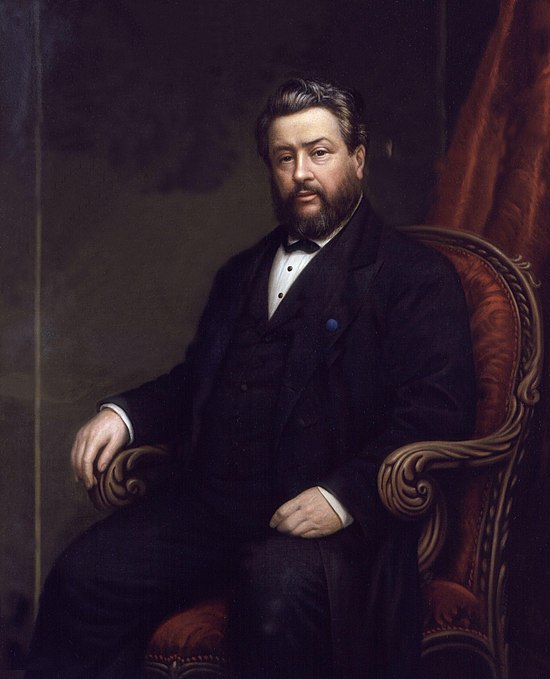
About Charles Spurgeon
Charles Haddon Spurgeon (19 June 1834 — 31 January 1892) was an English Particular Baptist preacher. His nickname is the "Prince of Preachers."
Comments
Your comment has been submitted and is awaiting moderation. Once approved, it will appear on this page.
Be the first to comment!