Bootstrap
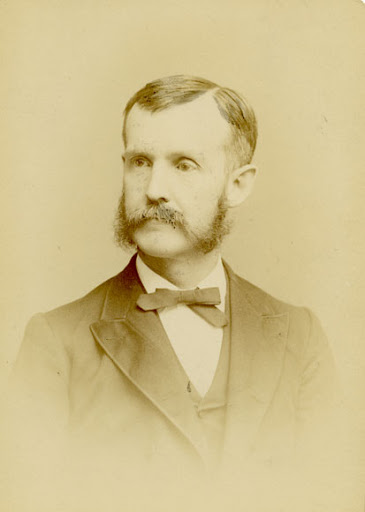
J.R. Miller

01. Silent Times

2 Timothy 3:16; Psalm 19:7-11
J.R. Miller January, 18 2022 Audio
0 Comments
"Silent Times, A Book to Help in Reading the Bible into Life!" by J.R. Miller, 1886

You will find it helpful to READ the texts--as you LISTEN to the audios.

The TEXTS for the entire 24 chapter book, can be bound here:
https://gracegems.org/C/Miller_silent_times.htm

The AUDIOS for the entire 24 chapter book can be bound here:
https://www.gracegems.org/SermonAudio.htm?sa_ac...

J.R. Miller's "Silent Times, A Book to Help in Reading the Bible into Life" has been professionally read, and graciously supplied by Christopher Glyn. Please visit his YouTube channel at: https://www.youtube.com/c/ChristopherGlyn where you can view a wide variety of Christopher's devotional readings with read-a-long texts online.
Sermon Transcript

Auto-generated transcript • May contain errors

100%
Chapter 1 Silent Times In Wellesley
College a special feature of the daily life of the household
is the morning and evening silent time. Both at the opening and
closing of the day there is a brief period, marked by the strokes
of a bell, in which all the house is quiet. Every pupil is in her
room, there's no conversation, no step is heard in the corridors.
The whole great house, with its thronging life, is as quiet as
if all its hundreds of inmates were sleeping. is no positively
prescribed way of spending these silent minutes in the rooms.
But it is understood that all whose hearts so incline them
shall devote the time to devotional reading, meditation, and prayer. At least the design of establishing
this period of quiet as part of the daily life of the school
is to give the opportunity for such devotional exercises. and
by its solemn hush to suggest to all the fitness, the helpfulness,
and the need of such periods of communion with God. The bell
that calls for silence also calls to thought and prayer, and even
the most indifferent must be affected by its continual recurrence. Every true Christian life needs
its daily silent times, when all shall be still, when the
busy activity of other hours shall cease, and when the heart,
in holy hush, shall commune with God. One of the greatest needs
in Christian life in these days is more devotion. Ours is not
an age of prayer so much as an age of work. The tendency is
to action rather than to worship, to busy toil rather than to quiet,
sitting at the Savior's feet to commune with Him. The keynote
of our present Christian life is consecration, which is understood
to mean devotion to active service. On every hand we're incited to
work. Our zeal is stirred by every
inspiring incentive. The calls to duty come to us
from a thousand earnest voices. And this is well. There is little
fear that we shall ever grow too earnest in working for our
Master, or that our enthusiasm in His service shall ever become
too intense. We are set on earth to toil for
the world's good and for God's glory. The day's heat is not
to draw us from our active duty. Till death comes as God's messenger
to call us from toil, we're not to seek to be freed from service.
Devotion is not all. Peter wished to stay on the Mount
of Transfiguration, to go back no more to the cold, sin-stricken
world below, but no. Down at the mountain's base,
human suffering and sorrow were waiting for the coming of the
Healer, and the Master and His disciples must leave the rapture
of heavenly communion and hasten down to carry healing and comfort. It is always so. While we enjoy
the blessedness of fellowship with God in the closet, there
comes in at our closed doors and break upon our ears the cries
of human need and sorrow outside. Amid the raptures of devotion,
we hear the calls for duty waiting without. We should never allow
our ecstasies of spiritual enjoyment to make us forgetful of the needs
of others around us. Even the Mount of Transfiguration
must not hold us away from ministry. The truest religious life is
one whose devotion gives food and strength for service. The
way to spiritual health lies in the paths of consecrated activity. It is related in the monastic
legends of St. Francesca that, although she
was unwearied in her devotions, yet if, during her prayers, she
was summoned away by any domestic duty, she would close her book
cheerfully, saying that a wife and a mother, when called upon,
must quit her God at the altar. to find him in her domestic affairs. Yet the other side is just as
true. Before there can be a strong, vigorous, healthy tree, able
to bear much fruit, to stand the storm, to endure the heat
and cold, There must be a well-planted and well-nourished root. And
before there can be a prosperous, noble, enduring Christian life
in the presence of the world, safe in temptation, unshaken
in trials, full of good fruits, perennial and unfading in its
leaf, There must be a close walk with God in secret. We must receive
from God before we can give to others. For we have nothing of
our own with which to feed men's hunger or quench their thirst. We are but empty vessels at the
best, and must wait to be filled before we have anything to carry
to those who need. We must listen at heaven's gates
before we can go out to sing the heavenly songs in the ears
of human weariness and sorrow. Our lips must be touched with
a call from God's altar before we can become God's messengers
to man. Isaiah chapter 6 verse 6. We
must lie much upon Christ's bosom before our poor earthly lives
can be struck through with the spirit of Christ and made to
shine in the transfigured beauty of his blessed life. Devotion
is never to displace duty. It often brings new duties to
our hands, but it fits us for activity. That thy glory may
abound, increase, and so thy likeness shall be formed in me.
I pray the answer is not rest or peace, but charges, duties,
wants, anxieties, till there seems room for everything but
thee, and never time for anything but these. The busy fingers fly,
the eyes may see only the glancing needle which they hold, but all
my life is blossoming inwardly, and every breath is like a litany. while through each labor, like
a thread of gold, is woven the sweet consciousness of thee. In order to this preparation
for usefulness and service, we all need to get into the course
of our lives, many quiet hours, when we shall sit alone with
Christ in personal communion with Him, listening to His voice,
renewing our wasted strength from His fullness, and being
transformed in character by looking into His face. Busy men need
such quiet periods of spiritual communion, for their days of
toil, care, and struggle tend to wear out the fiber of their
spiritual life and exhaust their inner strength. Earnest women
need such silent times. For there are many things in
their daily household life and social life to exhaust their
supplies of grace. The care of their children, the
very routine of their home life, the thousand little things that
try their patience, vex their spirits, and tend to break their
calm. The influences of much of their
social life, with its manifold temptations to artificialness,
insincerity, formality, unreality, or, on the other hand, to frivolity,
idleness, vanity, and worldliness. Amid all these distracting, dissipating,
secularizing influences, every earnest woman needs to get into
her life at least one quiet hour every day, when, like Mary, she
can wait at the feet of Jesus and have her own soul calmed
and fed. Creatures, teachers, Christian
workers all need the same. How can men stand in the Lord's
house to speak His words to the people unless they've first waited
at Christ's feet to get their message? How can anyone teach
the children the truths of life without having been himself freshly
taught of God? How can anyone bear heavenly
gifts to needy souls if he's not been at the Lord's treasure
house to get these gifts? Dr. Austin Phelps, in speaking
of the danger of incessant Christian activity without a corresponding
secret life with God, says, The very obvious peril is that the
vitality of holiness may be exhausted by inward decay through the want
of an increase of its devotional spirit proportioned to the expansion
of its active forces. Individual experience may become
shallow for the want of meditative habits and much communion with
God. Activity can never sustain itself,
withdraw the vital force which animates and propels it, and
it falls like a dead arm. We cannot then too keenly feel,
each one for himself, that a still and secret life with God must
energize all holy duty, as vigor in every fiber of the body must
come from the strong, calm, faithful beat of the heart. A Christian
man of intense business enterprise and activity was laid aside by
sickness. He, who never would intermit
his labors, was compelled to come to a dead halt. His restless
limbs were stretched motionless on the bed. He was so weak that
he could scarcely utter a word. Speaking to a friend of the contrast
between his condition now and when he had been driving his
immense business, he said, Now I am growing. I have been running
my soul thin by my activity. Now I am growing in the knowledge
of myself and of some things which most intimately concern
me. No doubt there are many of us
who are running our souls thin by our incessant action, without
finding quiet hours for feeding and waiting upon God. The world
is too much with us. Late and soon, getting and spending,
we lay waste our powers, Little we see in nature that is ours. We have given our souls away,
a sordid boon. Blessed, then, is sickness or
sorrow, or any experience that compels us to stop, that takes
the work out of our hands for a little season, that empties
our hearts of their thousand cares, and turns them toward
God to be taught of Him. But why should we wait for sickness
or sorrow to compel into our lives these necessary quiet hours? Would it not be far better for
us to train ourselves to go apart each day for a little season
from the noisy, chilling world? To look into God's face and into
our own hearts? To learn the things we need so
much to learn? and to draw the secret strength
and life from the fountain of life in God. By all means, use
sometimes to be alone. Salute thyself, see what thy
soul doth wear, dare to look into thy closet, for it is thine
own, and tumble up and down, what thou findest there. With
these sacred, silent times in every day of toil and struggle,
we shall be always strong, and prepared unto every good work. Waiting thus upon God, we shall
daily renew our wasted strength, and be able to run and not be
weary, to walk and not be faint, and to mount up with wings as
eagles in bold spiritual flights.
J.R. Miller
About J.R. Miller
James Russell Miller (20 March 1840 — 2 July 1912) was a popular Christian author, Editorial Superintendent of the Presbyterian Board of Publication, and pastor of several churches in Pennsylvania and Illinois.
Broadcaster:

Comments

0 / 2000 characters
Comments are moderated before appearing.

Be the first to comment!