Bootstrap
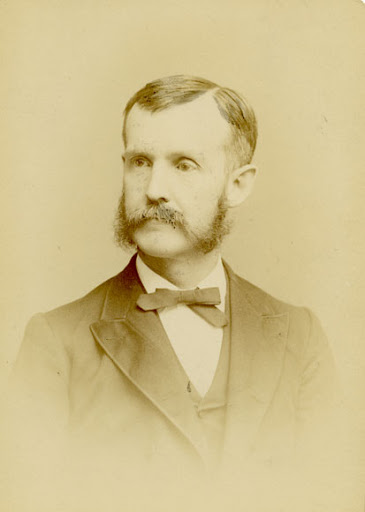
J.R. Miller

02. Personal Friendship with Christ

Psalm 19:7-11
J.R. Miller January, 18 2022 Audio
0 Comments
"Silent Times, A Book to Help in Reading the Bible into Life!" by J.R. Miller, 1886

You will find it helpful to READ the texts--as you LISTEN to the audios.

The TEXTS for the entire 24 chapter book, can be bound here:
https://gracegems.org/C/Miller_silent_times.htm

The AUDIOS for the entire 24 chapter book can be bound here:
https://www.gracegems.org/SermonAudio.htm?sa_ac...


J.R. Miller's "Silent Times, A Book to Help in Reading the Bible into Life" has been professionally read, and graciously supplied by Christopher Glyn. Please visit his YouTube channel at: https://www.youtube.com/c/ChristopherGlyn where you can view a wide variety of Christopher's devotional readings with read-a-long texts online.
Sermon Transcript

Auto-generated transcript • May contain errors

100%
personal friendship with Christ.
I would converse with thee from day to day, With heart intent
on what thou hast to say, And through my pilgrim walk, whatever
fall, Consult with thee, O Lord, about it all. Since thou art
willing thus to condescend To be my intimate familiar friend,
O, let me to the great occasion rise, And count thy friendship
life's most glorious prize. We are in danger, on several
sides, of superficial and shallow conceptions of a religious life. One of these is that it consists
in correct doctrinal beliefs, that holding firmly and intelligently
to the truths of the gospel about Christ makes one a Christian.
Another is the liturgical, that the faithful observance of the
forms of worship is the essential element in a Christian life.
Still another is that conduct is all, that Christianity is
but a system of morality. Then, even among those who fully
accept the doctrine of Christ's atonement for sin, there is oft
times an inadequate conception of the life of faith, the dependence
for salvation upon one great past act of Christ, His death,
without forming with Him a personal relation as a present, living
Savior. In the New Testament, the Christian's
relation to Christ is represented as a personal acquaintance with
Him, which ripens into a close and tender friendship. This was
our Lord's own ideal of discipleship. He invited men to come to Him.
to break other ties and attach themselves personally to him,
to leave all and go with him. He claimed the full allegiance
of men's hearts and lives. He must be first in their affections
and first in their obedience and service. He offered himself
to men not merely as a helper from without, not merely as one
who would save them by taking their sins and dying for them.
but as one who desired to form with them a close, intimate,
and indissoluble friendship. It was not a tie of duty merely,
or of obligation, or of doctrine, or of cause, by which he sought
to bind his followers to himself, but a tie of personal friendship. That which makes one a Christian
is not, therefore, the acceptance of Christ's teachings, the uniting
with his church, the adoption of his morals, the espousing
of his cause. but the receiving of Him as a
personal Savior, the entering into a covenant of eternal friendship
with Him. We're not saved by a creed, which
gathers up in a few golden sentences the essence of the truth about
Christ's person and work. We must have the Christ Himself,
whom the creed holds forth in His radiant beauty and grace. We're in the habit of saying
that Christ saved us by dying for us on the cross. In an important
sense, this is true. We never could have been saved
if he'd not died for us. But we are actually saved by
our relation to a living, loving, personal Savior into whose hands
we commit all the interests of our lives, and who becomes our
friend, our helper, our keeper, our caretaker, our all-in-all. Christian faith is not merely
laying our sins on the Lamb of God and trusting to his one great
sacrifice. It is the laying of ourselves
on the living, loving heart of one whose friendship becomes
thenceforward the sweetest joy of our lives. The importance
of this personal knowledge of Christ is seen when we think
of him as the revealer of the Father. The disciples first learned
to know Christ in His disguise, with His divine glory veiled. He led them on, talking to them,
walking with them, winning their confidence and their love. At
length they learned that the Being who had grown so inexpressibly
dear to them was the manifestation of God Himself, and that by their
relation to Him as His friends, Their poor, sinful humanity was
lifted up into union with the Father. They became children
of God through their attachment to the Only Begotten Son of God. Clinging to him and cleaving
to him in deathless friendship, in his humiliation, he exalted
them, in his exaltation, to be joint heirs with him in divine
inheritance. It was as if a royal prince should
leave his father's palace for a time and in disguise dwell
among the plain people as one of themselves, winning their
love and binding them to him in strong personal friendship,
and then, disclosing his royalty, should lead them to his palace
and keep them about him ever after as his friends and brothers,
sharing his rank and honours with them. The friends of Christ,
one in His lowly condescension, He did not cast off when He went
back to His glory. He lifted them up with Him to
share His heavenly blessedness. It is in the same way that Christ
now saves man. He wins their love and trust
by the manifestation of his love for them, and then exalts them
to the possession of the privileges which belong to himself as the
Son of God. Anyone whose life is knit to
Christ in love and faith is lifted up into the family of God. Someone
has represented this truth in this way. A vine has been torn
from the tree on which it grew and clung, and lies on the ground. It never can lift itself up again
to its place. Then the tree bends down low
until it touches the earth. The vine unclasps its tendrils
which have twined about frail and unworthy weeds, and feebly
reaching upward, fixes them upon the tree's strong living branches. The tree again, lifting itself
up, carries the vine with it to its natural and original place
of beauty and fruitfulness, where it shares the tree's glory. This is a parable of soul history. We were torn from our place and
lay perishing in our sins. Clinging to the earth's treacherous
trusts, we could never lift ourselves up to God. Then God himself stooped
down in the incarnation, bending low to touch these souls of ours. And when our hearts let go of
earth's sins and its frail false trusts, and lay hold never so
feebly by the tendrils of faith and love upon Christ, we are
lifted up and become children and heirs of God. But how may
we form a personal acquaintance with Christ? It was easy enough
for John and Mary and the others who knew him in the flesh. His
eyes looked into theirs, they heard his words, they sat at
his feet or leaned upon his bosom. We cannot know Christ in this
way, for he's gone from the earth. And we ask how it is possible
for us to have more than a biographical acquaintance with him. If he
were a mere man, nothing more than this would be possible.
It were absurd to talk about knowing the Apostle John personally
or forming an intimate friendship with the Apostle Paul. We may
learn much of the character of these men from the fragments
of their story which are preserved in the Scriptures, but we can
never become personally acquainted with them until we meet them
in the heavenly world. With Christ, however, it is different. The church did not lose him when
he ascended from Olivet. He never was more really in the
world than he is now. He is as much to those who now
love and believe on him as he was to his friends in Bethany.
He is a present, living Savior, and we may form with him an actual
relation of personal friendship which will grow closer and tenderer
as the years go on, deepening with each new experience, shining
more and more in our hearts, until at last, passing through
the portal which men misname death, but which really is the
beautiful gate of life, we shall see Him face to face and know
Him even as we are known. Is it possible for all Christians
to attain this personal conscious intimacy with Christ? There are
some who do not seem to realize it. To them, Christ is a creed,
a rule of life, an example, a teacher, but not a friend. There are some
excellent Christians who seem to know Christ only biographically. They have no experimental knowledge
of Him. He is to them, at best, an absent
friend, living, faithful, entrusted, but still absent. No word of
discouragement, however, should be spoken to such. The Old Testament
usually goes before the New in experience as well as in the
biblical order. Most Christians begin with the
historical Christ, knowing of him before they know him. Conscious personal intimacy with
him is ordinarily a later fruit of spiritual growth. Yet it certainly
appears from the Scriptures that such intimacy is possible to
all who truly believe in Christ. Christ himself hungers for our
friendship and for recognition by us and answering affection
from us. And if we take his gifts without
himself and his love, we surely rob ourselves of much joy and
blessedness. The way to this experimental
knowledge of Christ is very plainly marked out for us by the Lord
Himself. He says that if we love Him and
keep His words, that He will manifest Himself unto us, and
He and His Father will come and make their abode with us. It
is in loving Him and doing His will that we learn to know Christ,
and we learn to love Him by trusting Him. A dying youth looked up
into the face of a friend, and with troubled tones said, I want
to love Christ. Will you tell me how? Trust Him
first, was the answer, and you will learn to love Him without
trying at all. It was a new revelation. I always
thought I must love Christ before I could have any right to trust
Him. What's the answer? Oftentimes we learn to know our
human friends by trusting them. We see no special beauty or worth
in them as they move by our side in the ordinary experiences of
life. But we pass at length into circumstances
of trial where we need friendship. And then the noble qualities
of our friends appear as we trust them and they come nearer to
us and prove themselves true. In like manner, most of us really
get acquainted with Christ only in experiences of need in which
his love and faithfulness are revealed. The value of a personal
acquaintance with Christ is incalculable. There are men and women whom
it is worth a great deal to have as friends. As our intimacy with
them ripens, their lives open out like sweet flowers, disclosing
rich beauty to our sight and pouring fragrance upon our spirits. A true and great friendship is
one of Earth's richest and best blessings. It is ever-breathing
songs into our hearts, kindling aspirations and hopes, starting
impulses of good, teaching holy lessons, and shedding all manner
of gracious influences upon our lives. But the friendship of
Christ does infinitely more than this for us. It purifies our
sinful lives. It makes us brave and strong. It inspires us ever to the best
and noblest service. Its influence, perpetually brooding
over us, woos out the most winsome graces of mind and spirit. The richest, the sweetest, and
the only perennial and never-failing fountain of good in this world
is the personal experimental knowledge of Christ. that Christ
should condescend thus to give to us sinful men His pure, divine
friendship, is the greatest wonder of the world. But there is no
doubt of the fact, no human friendship can ever be half so close and
intimate as that which the lowliest of us may enjoy with our Saviour. If we but realize our privileges
the enriching that will come to our lives through this glorious
relationship will be better than all gold and precious gems.
J.R. Miller
About J.R. Miller
James Russell Miller (20 March 1840 — 2 July 1912) was a popular Christian author, Editorial Superintendent of the Presbyterian Board of Publication, and pastor of several churches in Pennsylvania and Illinois.
Broadcaster:

Comments

0 / 2000 characters
Comments are moderated before appearing.

Be the first to comment!