Bootstrap
J.R. Miller

08. Afterward

2 Timothy 3:16; Psalm 19:7-11
J.R. Miller January, 18 2022 Audio
0 Comments
"Silent Times, A Book to Help in Reading the Bible into Life!" by J.R. Miller, 1886

You will find it helpful to READ the texts--as you LISTEN to the audios.

The TEXTS for the entire 24 chapter book, can be bound here:
https://gracegems.org/C/Miller_silent_times.htm

The AUDIOS for the entire 24 chapter book can be bound here:
https://www.gracegems.org/SermonAudio.htm?sa_ac...


J.R. Miller's "Silent Times, A Book to Help in Reading the Bible into Life" has been professionally read, and graciously supplied by Christopher Glyn. Please visit his YouTube channel at: https://www.youtube.com/c/ChristopherGlyn where you can view a wide variety of Christopher's devotional readings with read-a-long texts online.
Sermon Transcript

Auto-generated transcript • May contain errors

100%
Chapter 8 Afterward There is
a wondrous power of explanation in that word, afterward. Things
do not seem to us today as they will seem tomorrow. This is the
key which the Scriptures give us for the solution of the strange
mystery of affliction. No chastening for the present
seems to be joyous, but grievous. Nevertheless, afterward it yields
the peaceable fruit of righteousness. There are many things in God's
way with His people which at the time are dark and obscure,
but which the future makes clear and plain. Today's heavy clouds
tomorrow are gone, and under the bright shining of the sun
and the deep blue of the sky, the flowers are sweeter, the
grass is greener, and all life is more beautiful. Today's tears,
tomorrow are turned to lenses through which eyes dim no longer,
see far into the clear heavens, and behold the kindliness and
radiance of God's face. One reason for the present obscurity
of life is our ignorance, our limited knowledge. We know now
only in part. We see only in a mirror darkly.
We have learned merely the rudiments and cannot understand the more
advanced and obscure things. A boy enters a school and the
teacher puts into his hand a Greek book and asks him to read from
the page before him, but he cannot make out a word of it. He does
not even know the alphabet. It is a page of hieroglyphics
to him. But the years roll on, he applies
himself with diligence to the study of the Greek language,
and by patient degrees masters it. The day of his graduation
comes, and the teacher again places in his hand the same page
that puzzled and perplexed him on the day of his entrance. It
is all plain to him now. He reads it with ease. readily
understands every word. He sees beauty in every line. Every sentence contains some
golden truth. It is a page of the Apostle John's
Gospel. The words are those which fell
from the lips of Christ himself and are full of love, of wisdom,
of heavenly instruction. As he reads them, they thrill
his soul and fill his heart with warmth and joy. Every line is
bright now with the hidden fires of God's love. Riper knowledge
has cleared away all the mystery and unlocked the precious treasures. We are all scholars in God's
school. The book of Providence is written
in a language we do not yet understand, but the passing years with their
experiences bring riper knowledge. And as we learn more and more,
the painful mysteries vanish. When we stand at length at the
end of our school days, The old confusing pages will be plain
and clear to us, Just as childhood's earliest lessons, though hard
at the time, Are afterward to ripe manly wisdom. Then we shall
see that every perplexed line Held a golden lesson of wisdom
for our hearts, and that the Book of Providence is but another
of God's many testaments of love. In one of George MacDonald's
poems, a little child runs to her father as he sits absorbed
in his mental conflicts and asks, Father, what is poetry? One of
the most beautiful things that God has ever made, he replies.
He opens a book and shows her some poetry. She looks at it
eagerly But a shadow comes over her face and she says, I do not
think that is so pretty. He then reads aloud some verses
and the reading pleases her, but she still cannot understand
how poetry is beautiful. Her mother is beautiful. The
flowers and the stars are beautiful. but poetry is not like any of
these, and she cannot see the beauty in it. Then her father
tells her she cannot understand until she is older, but that
she will then find out for herself, and will love poetry well. But
the father's lesson was more for his own puzzled heart than
for his child's. He too must wait until he had
grown older and wiser, and then he would see the beauty he could
not now see in God's strange providence. We are all like little
children. God writes in poetry, which no
doubt is very beautiful, as His eyes look upon it and read its
sentences. but we must wait to learn more
before we can read the precious truths and golden thoughts which
lie in the lines. In our sorrows and disappointments,
godly men come to us and tell us that the Lord does all things
well, that there's some blessing for us in every bitter cup, that
the strange answers we get to our prayers are the very best
things of God's love, though so disguised. We open the Bible
and we find there the same assurances, but we cannot see the blessing,
the good, the love in the painful and perplexing experiences of
our lives. To our dim eyes, all is darkness
and our faith is well near staggered. Then our Lord's word comes to
us. What I do, you know not now. But you shall know hereafter. Afterward is the key. Possibly
in this world, certainly in the great hereafter of heaven, we
shall see that every providence of God, even the providences
that were painful and that seemed adverse, meant blessing and good. No doubt we shall see, too, that
many of the richest blessings of our lives, as they stand in
radiant brightness before Christ's face, have come from the experiences
that were most painful and most unwelcome. Another reason why
many of God's ways seem so strange to us is because we see them
only in their incompleteness. We must wait until they are finished
before we can fully understand God's intention in them or see
the beauty that is in His thought. We stand by the sculptor's block
when he's busy upon it with mallet and chisel And to our eye it
appears rough, with no lines of beauty. But we see it afterward,
when it is unveiled to the world, and it seems almost to breathe,
so perfect is the finished statue. A building is going up. There
is now but an unsightly excavation, with piles of stones, timbers,
and iron columns lying all about in confusion. Afterward, however,
we return, and a fine structure stands before our eyes, noble
and majestic. Neither the statue nor the building
was beautiful in its incompleteness. At present we see God's work
in us and for us only in the process, not in its finished
state. Only when it is complete we shall
understand why it was done in this way or in that. The marble
might complain of the strokes, which seem only to cut it away,
wasting its substance, but when the statue stands forth, the
marvel and admiration of all eyes it would complain no longer. The vine might cry out unto the
sharpness of the pruning-knife as many of its finest branches
are removed, but when it hangs laden with purple clusters, its
cry of pain would become a song of joy. Now the pruning, sharp,
unsparing, scattered blossom, bleeding shoot, afterward the
plenteous bearing of the master's pleasant fruit. Most things look
different when viewed from different points and in different lights. Events and experiences do not
appear the same when we are in the midst of them, and after
we have passed through and beyond them. The after-view, however,
is the truest perspective. This is especially so of life's
sorrows. As we endure them, they are grievous,
but afterward the fruits of peace appear. In the canton of Bern,
in the Swiss Oberland, a mountain stream rushes in a torrent toward
the valley, as if it would carry destruction to the villages below. But leaping from the sheer precipice
of nearly nine hundred feet, it is caught in the clutch of
the winds, and sifted down in fine soft spray, whose benignant
showering covers the fields with perpetual green. Just so does
sorrow come, as a dashing torrent, threatening to destroy us. But
by the breath of God's Spirit, it is changed as it falls and
pours its soft, gentle showers upon our hearts, bedoing our
withering graces, and leaving rich blessings upon our whole
life. We should learn to trust God,
even when the hour is darkest. The morning will surely come. And in its light the things that
alarm us now will appear in friendly aspect. And in the forms we have
dreaded so much, we shall see the gracious face of Jesus as
he comes to us in love. The plowings of our hearts are
but the preparation for fruitfulness. The black clouds that appear
so portentous of evil pass by. leaving only gentle rain which
renews all the life and changes desert into garden.
J.R. Miller
About J.R. Miller
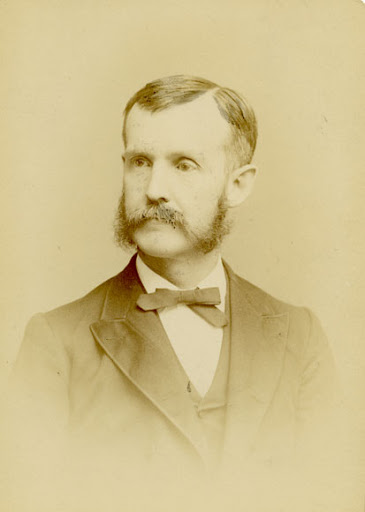
James Russell Miller (20 March 1840 — 2 July 1912) was a popular Christian author, Editorial Superintendent of the Presbyterian Board of Publication, and pastor of several churches in Pennsylvania and Illinois.
Broadcaster:

Comments

0 / 2000 characters
Comments are moderated before appearing.

Be the first to comment!