Bootstrap
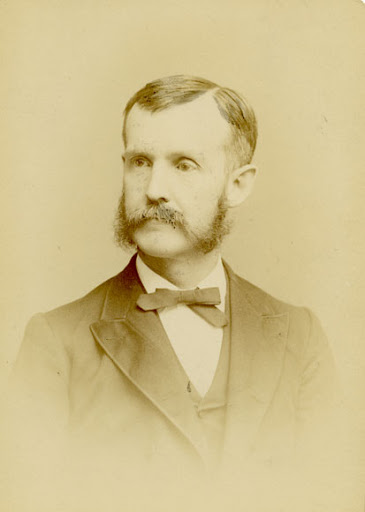
J.R. Miller

11. Finding One's Mission

2 Timothy 3:16; Psalm 19:7-11
J.R. Miller January, 18 2022 Audio
0 Comments
"Silent Times, A Book to Help in Reading the Bible into Life!" by J.R. Miller, 1886

You will find it helpful to READ the texts--as you LISTEN to the audios.

The TEXTS for the entire 24 chapter book, can be bound here:
https://gracegems.org/C/Miller_silent_times.htm

The AUDIOS for the entire 24 chapter book can be bound here:
https://www.gracegems.org/SermonAudio.htm?sa_ac...


J.R. Miller's "Silent Times, A Book to Help in Reading the Bible into Life" has been professionally read, and graciously supplied by Christopher Glyn. Please visit his YouTube channel at: https://www.youtube.com/c/ChristopherGlyn where you can view a wide variety of Christopher's devotional readings with read-a-long texts online.
Sermon Transcript

Auto-generated transcript • May contain errors

100%
Chapter 11 Finding One's Mission
One of the most inspiring of truths is that God has a distinct
plan for each one of us in sending us into this world. Not only
does he create us all to be useful, to take some part in the world's
affairs, to honor and glorify him in some way, but he designs
each person for some definite place and some specific work. He does not send us into life
merely to fill any niche into which we may chance to be lifted
by the vicissitudes of life, or to do whatever bits of work
may drift to our hands in the vast and complicated mesh of
human affairs. God has a great plan, embracing
all his creatures and all their actions, and in this plan every
person has an allotted place and an assigned part. God has,
therefore, a distinct plan and purpose for each one of us, and
a true life is one in which we simply fulfill the divine intention
concerning us, occupy the place for which we were made, and do
the particular work set down for us in God's plan. A distinguished
preacher has said, There is a definite and proper end and outcome for
every man's existence, an end which to the heart of God is
the good intended for him or for which he was intended, that
which he is privileged to become, called to become, ought to become,
that which God will assist him to become, and which he cannot
miss except by his own fault. Every human soul has a complete
and perfect plan cherished for it in the heart of God, a divine
biography marked out which it enters into life to live. Surely this is a great thought,
and one that gives to life, to each and every life, the smallest
life, the obscurest life, a sacred dignity and importance. Nothing
can be trivial or common which the great God thinks about, plans,
and creates. The lowliest place in this world,
to the person whom God made to occupy that place, is a position
of rank and honor as glorious as an angel's seat, because it
is the one which God formed an immortal being in his own image
and with immeasurable possibilities to fill. George MacDonald says,
I would rather be what God chose to make me than the most glorious
creature that I could think of, for to have been thought about
born in God's thought and then made by God is the dearest, grandest,
and most precious thing in all thinking. The question of small
or great has no place here. To have been thought about at
all and then fashioned by God's hands to fill any place is glory
enough for the grandest and most aspiring life. And the highest
place to which anyone can attain in life is that for which he
was designed and made. The greatest thing anyone can
do in this world is what God made him to do, whether it be
to rule a kingdom, to write a nation's songs, or to keep a little home
clean and tidy. The true goal of life is not
to be great or to do great things, but to be just what God meant
us to be. If we fail in this, though we
win a place far more conspicuous, Our life is a failure. An intensely practical question,
therefore, is how may we find our place, the place for which
God made us? How can we learn what he wants
us to do in this great world with its infinity of spheres
and occupations? How may we be sure that we are
fulfilling our part in God's great plan? In the olden days,
men were sometimes guided to their missions by special revelation. In the absence of such supernatural
direction, how may we know what God made us for? It is very clear,
for one thing, that we must put ourselves under God's specific
guidance. We get this lesson from Christ's
perfect life. He did only and always His Father's
will. On his lips continually were
words like these, I must work the works of him who sent me.
I came not to do my own will, but the will of him who sent
me. Even in the garden, in the hour of his bitterest agony,
it was, nevertheless, not my will, but yours be done. Moment by moment he took his
work from his father's hand. He made no plans of his own.
He knew there was a definite part in the Father's great plan
which belonged to him, and he wished only to do that. If we
would find our mission and fill our allotted place and do the
work God assigned to us, we must do God's will, not our own. All our personal ambitions must
be laid at His feet. All our plans submitted to Him
either to be accepted and wrought into His plan or set aside for
His better way. If we have truly given ourselves
to God, we have nothing to say about the disposal of our lives.
They are in His hands to do with as He pleases. If He interrupts
us in our favorite pursuits, or breaks into our plans with
some other work, or by laying us aside for a time, we should
not chafe or fret. Our time belongs to Him and He
knows what He wants us to do any day. If we are truly taking
our life's direction from Him, we must always be ready to forego
our schemes and plans and take instead whatever He allots. This is where the hardest battle
has to be fought, for we are reluctant to give up our personal
ambitions. But when we have gotten thus
far along, what remains is not so hard. One who is really ready
to do God's will and be just what God wants him to be will
surely in some way be led into his true place. As for the direction
itself, God gives it in many ways. The Bible is the basis
of all right living. There we learn the divine will
and our duty. No one can ever find his allotted
place in God's plan who does not follow the divine commandments. There's no use asking about our
mission unless we are walking in the straight and clean paths
marked out by the Holy Scriptures. For specific guidance at points
along the way, Conscience, the voice of God in our own soul,
must be listened for continually and promptly and affectionately
heeded. Providence also must be watched.
God opens doors and closes doors. He brings us face to face with
duties. He leads us up to opportunities. If we are ready to be guided
and have a clear eye for the handwriting of providence, we
shall not fail to be directed in the path on which God wants
us to walk. People sometimes chafe because
in their circumstances they cannot do any great things, as if nothing
could be really a divine mission unless it is something conspicuous.
A mother occupied with the care of her little children laments
that she has no time nor leisure for any mission that God may
have marked out for her. Does she not know that caring
well for her children may be the grandest thing that could
be found for her in all the range of possible duties? Certainly
for her hands, for the time at least, there's nothing else in
all the world so great. Organizing missionary meetings,
speaking at conventions, attending charitable societies, writing
books, painting pictures, these are all fine things. when they're
the things that God gives. But if the mother neglects her
children to do any of these, she has simply put out of her
hands the greatest things to take up those which are exceedingly
small. In other words, that which the
master gives anyone to do is always the grandest work he can
find, The doing of God's will for any moment is ever the sublimest
thing possible for that moment. Another thing to be remembered
in asking after one's mission is that God does not usually
map it all out at the beginning for anyone. When the newly converted
Saul accepted Christ as his life's master and asked what he should
do, he got for an answer only that moment's duty. He was to
arise and go into the city, and there he would learn what to
do next. That is the way the Lord generally shows men what
their mission is. Just one step at a time. Just
one day's or one hour's work now, and then another, and another,
as they go on. A young man at school grows anxious
about what he shall do after he completes his course, what
profession he shall choose, and frets and worries because he
can get no guidance. He wonders why God does not make
his duty plain to him. But what is the young man to
do now, with his profession or life calling, when it must be
years yet before he can enter upon it? His present duty is
all he has to think of now. and that is simply to attend
diligently and faithfully to his studies, to make the best
possible use of his time and opportunities. One step at a
time is the way God leads. One day's duty, well done, fits
for the next. A young schoolgirl is sorely
perplexed over the problem of her life duty. ought she to go
to a foreign mission field or devote herself to work at home?
It will take her at least five years to complete the course
of education on which she has just entered. Very clearly she
has nothing to do as yet with the question which is causing
her such perplexity. Her present duty is all that
concerns her at the present time, and that is to lay broad and
strong foundations for a thorough education. What her ultimate
mission in this world may be, God will show her in due time. About her mission just now, there
need not be a moment's perplexity, for it is very plain. She has
just to do well each day's routine of work, spending her time in
diligent study. Common duties are the steps that
lead upward and heavenward. God lights only one step of the
path at a time, but as we take that step, the light falls on
another, and so on and on, thus lighting the whole path for our
feet, until we are led at last to the gate that opens into heaven. The way, therefore, to find out
what God's plan is for our life is to surrender ourselves to
Him in simple consecration and then take up, hour by hour, the
plain duties He brings to our hand. Do not worry about our
mission as a whole. Our only concern is with the
moment we are now living and the thing God wants us now to
do. If each hour's work is faithfully
done, we shall have at the last a whole life work faithfully
done. If we neglect the duties of the
commonplace days while waiting for our mission, we shall simply
throw our lives away and utterly fail to fulfill the purpose of
our creation.
J.R. Miller
About J.R. Miller
James Russell Miller (20 March 1840 — 2 July 1912) was a popular Christian author, Editorial Superintendent of the Presbyterian Board of Publication, and pastor of several churches in Pennsylvania and Illinois.
Broadcaster:

Comments

0 / 2000 characters
Comments are moderated before appearing.

Be the first to comment!