Bootstrap
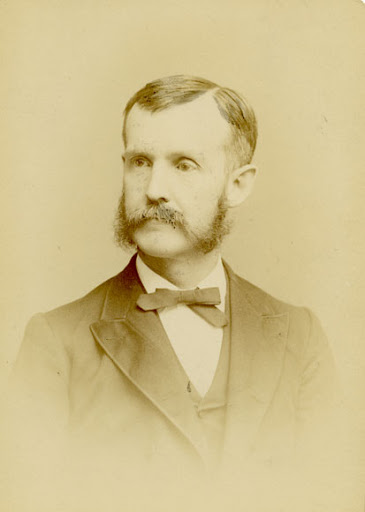
J.R. Miller

13. Life's Double Ministry

2 Timothy 3:16; Psalm 19:7-11
J.R. Miller January, 18 2022 Audio
0 Comments
"Silent Times, A Book to Help in Reading the Bible into Life!" by J.R. Miller, 1886

You will find it helpful to READ the texts--as you LISTEN to the audios.

The TEXTS for the entire 24 chapter book, can be bound here:
https://gracegems.org/C/Miller_silent_times.htm

The AUDIOS for the entire 24 chapter book can be bound here:
https://www.gracegems.org/SermonAudio.htm?sa_ac...


J.R. Miller's "Silent Times, A Book to Help in Reading the Bible into Life" has been professionally read, and graciously supplied by Christopher Glyn. Please visit his YouTube channel at: https://www.youtube.com/c/ChristopherGlyn where you can view a wide variety of Christopher's devotional readings with read-a-long texts online.
Sermon Transcript

Auto-generated transcript • May contain errors

100%
Chapter 13 Life's Double Ministry
A two-fold influence attends and follows every life. The one
is planned and intentional, the other is unpurposed and unconscious. A man lives 50 years of active
life in a community, growing from poverty to wealth, and there
are two classes of results left behind him when he is gone. There
are the buildings he has erected, the business he has established
and organized, the improvements he has made in the town, and
the wealth he has accumulated. These are all purposed results. He lived to do these things.
He thought about them, and then with labor and pains wrought
them out. But while he has been toiling
and building with earnest ambition and intense energy, he has, day
by day, been leaving behind him another class of results which
were not in his plans, and the columns of which he does not
calculate up when he estimates how much he has made during his
life, or which he does not bequeath when he writes his will. These
are the things he has done along the years of his busy life, by
the words he has spoken in daily fellowship with men, by his attitudes
and his dispositions, by the little wayside ministries which
he has wrought, oft-times without conscious thought or intention,
and through the silent influence that has flowed forth from his
character and example, as fragrance is poured on the air by a sweet
flower or as the soft beams of light stream in welcome radiance
from a star. Every life has this double history,
and leaves this double record. In the ordinary reckoning of
the results achieved by men, only the purposed things are
counted. We say he made a million dollars,
or we point to the bridges he built, or the cathedrals he planned,
or the pictures he painted, or the books he wrote. or we say
he travelled so many miles, and preached so many sermons, and
made so many visits, or we sum up in our funeral eulogy the
great and conspicuous things of his career, and we think we
have given all his biography, but we have not. There is a part
of his history that is never written, that cannot be written,
and it is probable that in nearly every life this is the better
part that a godly man's unconscious, unrecorded, unintended influence
accomplishes more good in the end than his purposed acts. Anyone who carefully notes the
comparative value of lives in a community will soon learn that
the element which counts for the most is that subtle thing
which we call personal influence. One may give much money to religious
and charitable objects. Another may be an eloquent talker,
and his voice may often be heard in public meetings. Another may
be enterprising, foremost in all progressive movements. Another
may be scholarly, a writer, an author, an oracle on all questions
of learning. Another may represent the best
things in art, in taste, in whatever is beautiful and refined. Yet
not one of these may impress himself on the community as does
some quiet man. without either wealth or eloquence
or public spirit or scholarship, but who possesses that mysterious,
indescribable power, a beneficent personal influence. There's something
in him more subtle than money or speech or activity or beauty,
a spiritual force which flows out from his life and touches
all other lives and strangely affects It is to him what fragrance
is to a flower, what light is to a lamp. It is part of himself,
and yet it reaches outside and beyond himself. It is, so to
speak, the projection of the man's own character, the flowing
out of his own life into other lives. It is the energy of man's
spirit working, as it were, beyond his body and working without
hands. In the godly man, it is goodness,
goodness dwelling in his soul and pouring out like light from
the windows of a cottage on a dark night. In the Christian, there
is more than mere human goodness. God's spirit dwells in him. Every true Christian is, in a
sense, a new incarnation. The Apostle Paul said, Christ
lives in me. And he prayed for others that
they might be filled with all the fullness of God. The lamp
that burns in a Christian's heart is the flame of the divine spirit. And the personal influence of
a Christian becomes spiritual power. It's like the shadow of
Peter. It has a healing, life-giving
effect wherever it falls. Such a man goes about his daily
duty as other men do, but while he is engaged in common things,
he is continually dropping seeds of blessing which spring up behind
him in heavenly beauty and fragrance. Every godly life is constantly
scattering these unconscious, unpurposed influences. A mother
works hard all day in her home, keeping her house in order, preparing
comforts for her family, watching over her children. She can tell
in the evening just how many garments she has mended, how
many rooms she has swept, and the entire day's history. But
all day long she was patient, gentle, kind. At every turn she
had a bright smile for her children. She had cheering words and fond
attentions for her husband. She had a pleasant welcome for
the friends who called. In all these things she was unconsciously
scattering seeds that will spring up in sweet flowers in other
hearts and lives. Who doubts which of these two
ministries is in reality the richer and the more effective? Yet the tired woman does not
think of counting these wayside influencers and services at all
in her retrospect of the day's work. If she could do so, it
would greatly cheer her and strengthen her for a new day's life when
it begins. She oft times comes to the day's
close, discouraged and depressed, because she has seemed to do
little beyond the endless routine of her household duties. When
she sits down with her Bible, after all are quiet in the household,
and looks back, she can scarcely recall one earnest word she has
spoken for her Master. The whole day has been filled
with earthly commonplace, and she thinks of it with pain and
disheartenment. Yet if she has lived sweetly
and patiently amid her toils and worries, dropping cheerful
words in the ears of her household, singing bits of song as she went
about her work, bearing herself with love and faith amid all
the experiences of the day, she has unconsciously performed a
ministry of blessing whose value she can never know until she
gets to heaven. A bit of written biography fits
in here. A young man, away from home,
slept in the same room with another young man, a stranger. Before
retiring for the night, he knelt down, as was his custom, and
silently prayed. His companion had long resisted
the grace of God, but this noble example aroused him and was the
means of his awakening. In old age he testified up to
a life of rare usefulness. Nearly half a century has rolled
away with all its multitudinous events since then, but that little
chamber, that humble, silent, praying youth, are still present
to my imagination and will never be forgotten amid the splendors
of heaven and through the ages of eternity. It was but a simple
act of common faithfulness, unostentatious and without thought or purpose
of doing good, except as the prayer that would bless his own
soul. Yet there went out from it an unconscious influence which
gave to the world a ministry of rare power and value. We do
not realize the importance of this unconscious part of our
life ministry. It goes on continually. In every
greeting we give to another on the street, in every moment's
conversation, in every letter we write, in every contact with
other lives, there is a subtle influence that goes from us that
often reaches farther and leaves a deeper impression than the
things themselves that we're doing at the time. After all,
it is life itself, sanctified life, that is God's holiest and
most effective ministry in this world. Pure, sweet, patient,
earnest, unselfish, loving life. It is not so much what we do
in this world as what we are that counts in spiritual results
and impressions. For good life is like a flower. which, though it neither toils
nor spins, yet ever pours out a rich perfume, and thus performs
a holy ministry. There is no place where this
unconscious ministry is so potent as in the home. The lessons which
parents teach their children are not one thousandth part so
important as the life they live before them, day after day. This
incident has appeared in some of the newspapers, and though
so homely, it has its illustrative value. A gentleman who has a
golden-haired little daughter, three years of age, took her
to church for the first time the other day. At home she causes
much amusement by attempts in cunning baby fashion to do just
as her father does. It was an Episcopal church, and
she sat through the service and sermon with mature gravity and
sedateness. It happened to be Communion Sunday,
and being a communicant, her father went with the others toward
the altar. unconscious that his little daughter
was following him. As he knelt and bowed his head,
she took her place beside him, and bowed her head upon her tiny
hands. The story is an example of what
is going on perpetually in every home. The child is not merely
imitating the parents' acts, but is drinking in their spirit. As flowers drink in the morning
dew and the sunshine, to reproduce the same in permanent dispositions,
tempers, and principles. How, then, can we give direction
and character to this unconscious ministry of our lives? When we
do things voluntarily and with purpose, we can give shape to
the effects. But how can we guard this perpetual
outgoing of unintended influence? only by looking well to our hearts. It is what we are when we're
not posing before men that we are really. And it is this which
counts in this subtle ministry. We must be therefore in our own
inner secret lives what we want our permanent influence to be. This we can become only by seeking
more and more the permeation of our whole being by the loving,
indwelling Spirit of Christ. No one will say that this unconscious
and undesigned ministry of holy living is not under God's direction. Though it is not in our thought
to scatter the blessings which we thus unconsciously give out,
it is certainly in His thought every influence of our lives
God uses as he will to do good to whoever it pleases him to
send the blessing. Part of our every morning prayer
should be that God would use our influence for himself and
take the smallest fragments of power for good that drop from
our lives and employ them all for his glory and as seeds to
grow into beauty in some of this world's desert spots.
J.R. Miller
About J.R. Miller
James Russell Miller (20 March 1840 — 2 July 1912) was a popular Christian author, Editorial Superintendent of the Presbyterian Board of Publication, and pastor of several churches in Pennsylvania and Illinois.
Broadcaster:

Comments

0 / 2000 characters
Comments are moderated before appearing.

Be the first to comment!