Bootstrap
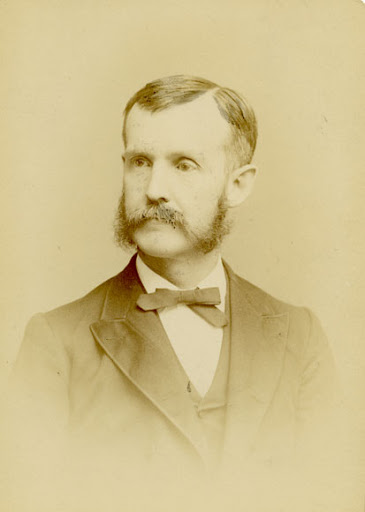
J.R. Miller

15. Helping Without Money

2 Timothy 3:16-17; Psalm 19:7-11
J.R. Miller January, 18 2022 Audio
0 Comments
"Silent Times, A Book to Help in Reading the Bible into Life!" by J.R. Miller, 1886

You will find it helpful to READ the texts--as you LISTEN to the audios.

The TEXTS for the entire 24 chapter book, can be bound here:
https://gracegems.org/C/Miller_silent_times.htm

The AUDIOS for the entire 24 chapter book can be bound here:
https://www.gracegems.org/SermonAudio.htm?sa_ac...


J.R. Miller's "Silent Times, A Book to Help in Reading the Bible into Life" has been professionally read, and graciously supplied by Christopher Glyn. Please visit his YouTube channel at: https://www.youtube.com/c/ChristopherGlyn where you can view a wide variety of Christopher's devotional readings with read-a-long texts online.

2 Timothy 3:16-17
Psalm 19:7-11

Puritans Spurgeon Edwards Pink Ryle Devotional meditation prayer Christ trials Calvin Luther reformed Calvinistic grace sovereign election predestination
Sermon Transcript

Auto-generated transcript • May contain errors

100%
Chapter 15 HELPING WITHOUT MONEY There are many good people with
benevolent hearts and kindly impulses who think they cannot
do much good in the world because they have no money to give. They
envy those who have wealth at their disposal and who can so
easily lift off the burdens of the poor and give substantial
aid to those who are in distress. They lament that because of their
own poverty they cannot relieve the human needs which they see
about them. They do not know of any way of
doing good without money, and sit discouraged in the midst
of human needs and sorrows, not supposing that they, with their
empty hands, could render any help or comfort. No doubt there
are necessities which money only can relieve. Love, however rich
and true and tender, will not pay the widow's rent, nor buy
medicines for the sick man, nor put shoes on the orphan's feet.
There always will be need for almsgiving, while sin and sorrow
continue on the earth. And he who has money to give,
must give it. Whoever has the world's goods,
and beholds his brother in need, and shuts up his compassion from
him, How does the love of God abide in him? Our professed love
for Christ will, if real, exhibit itself in love to his friends
who are in need. We cannot now serve Christ in
person with our acts and ministries, for he does not need what we
can give, but his people are with us, and what we do for them,
we do for him. There is need of times for money,
and those who have it must use it to relieve the needs of their
suffering neighbors. Yet it should be remembered that
the help which human lives need in nine cases out of ten is not
money help. Silver and gold have I none,
said Peter to the lame man at the beautiful gate, but such
as I have, give I you. And what he gave was infinitely
better than gold or silver would have been. He said to him, In
the name of Jesus Christ of Nazareth, rise up and walk. Then, taking
the lame man by the hand, he lifted him up. And at once his
weak limbs became strong, so that he could walk alone, needing
no longer to sit by the temple entrance and ask for alms. better help had been given him
than any alms the poor man ever received. This story is a parable
as well as a fact. Its lesson is that there are
better things to give than gold and silver. If we can put new
life and hope into the heart of a discouraged man so that
he rises out of his weak despair and takes his place again in
the ranks of active life, we have done a far better thing
for him than if we put our hands into our pockets and given him
money to help him nurse his miserable and unmanly despair a little
longer. The truest sympathy is not that
weak emotion which only sits down and weeps with the sufferer,
imparting no courage or hope, but that wiser love which, while
it is touched by his pain and grief, and feels tenderly toward
him, seeks to put new strength into his heart, to enable him
to endure his suffering in a victorious way. What most people really
need in their troubles is not to have the burden lifted off
or even lightened, but to have their own hearts strengthened
with fresh cheer and hope so that they shall not fail in their
duty. and that they may overcome in their struggles. Not assistance
in carrying the load, but a new inspiration of courage and energy,
that they may carry it themselves, is, for most men, the wisest
help. The true problem of living is
not to get along easily with the least exertion and the fewest
crosses, but to grow by every experience into stronger men. Hence, we show real unkindness
to those who are enduring hardship when we seek merely to make life
easier for them, regardless of their own highest good. Usually
it is a great deal better for people to fight their own battles
through, and carry their own burdens, and bear the crosses
God gives them to carry, unlightened. He knows better than we do what
they need, and is ever watching. that the trial may not become
more than they shall be able to bear. He will have relief
ready when it is wisest that there should be relief. We may
interfere with God's discipline when we come running up with
our help at every moment of stress. By encouragement and cheer and
inspiration we may put new hope and energy into the hearts that
are fainting. But usually that is the only
aid we should give. It is always vastly better to
give a man something to do by which he can earn his own bread,
than to put the bread into his hand and leave him idle. In the
former case we encourage him to be brave and manly. In the
latter case we make it easy for him to be weak and despairing,
and rob him of a lesson which God had set for him to learn.
It is the worst kindness to do a child's homework for him, and
to tell him the answers to the questions assigned to him. In
doing so we make the lessons of little or no use to him. The
mere having of correct answers is a matter of small importance
to him in comparison with the mental discipline to be gotten
from the personal and even painful search after the truth. We can
show him no greater unkindness than to make his lessons easy
for him by doing all the hard part for him. The truly kind
thing is to encourage him to solve the examples and to search
out the answers for himself. Each bit of knowledge which he
gets for himself through persistent struggle he will keep forever.
It is then his own by virtue of search and discovery, and
he will never lose it. Besides, the wrestling with the
hard problem has added new power to his own mental faculties,
and the victory over the difficulty has inspired him with fresh hope
for new struggles. The same is true in all spheres
of life. We may do others the greatest
harm, by unwisely helping them. If having an easy life were the
highest aim, it would be better that we should lift off every
burden under which others bow, and do every hard thing for them,
and save them from every struggle and difficulty. But life is a
school, and tasks and hardships and battles and toils and sufferings
are lessons set for us. by which we are to be trained
and disciplined into strength and nobleness. Therefore he who
tries only to make easy paths for another robs him of that
experience by which God designed to make a man of him. Hence they
are the best comforters and helpers of their fellow men, who go about
with large hopefulness and cheerfulness in their own hearts, trying to
put a little more hope and cheer into the life of every one they
meet. Gifts of money, oft times while they relieve immediate
distress, and make life for one hour easier, only help to encourage
disheartenment and to perpetuate nervelessness and indolence. It would be a great deal better
by a few brave words to incite the person to rise up and grasp
life anew and conquer for himself. It is evident from this view
of what is best for men that we can all do a great deal of
good. and of the wisest, truest good
in this world without having much money to bestow. If we have
not gold and silver to give, we can take those who've fallen
in the way by the hand and help them to rise again. We can put
fresh courage into the hearts of the faint so that they can
take up their burdens afresh and start forward once more in
the race. We can give cheer and comfort
to those who are weary through toil or through sorrow. We can
impart inspirations of joy and kindle new hope in the bosoms
of those who've begun to lag behind. We can make life a little
easier for everyone we meet, not by taking anything from his
burden, but by making him more able to bear it. And in the end,
although we may never be able to give a dollar of money to
relieve distress, it may be seen that the blessings we have scattered
or have gotten into people's very lives are far more in number
and greater in value than if with our lavish hand we had been
dispensing gold and silver all along our years. There is never
an end of opportunities for such personal helpfulness as this. There is a rich possible wayside
ministry, for instance, made up of countless small courtesies,
gentle words, mere passing touches on the lives of those we casually
meet. impulses given by putting a little
more warmth into our ordinary salutations, influences flowing
directly or indirectly from the things we do and the words we
speak. For example, we meet a friend
on the street whose heart is heavy. We stop a moment in passing
to speak a word of thoughtful cheer and hope, and it sings
in his breast all day like a note of angel song. We walk a little
way with a young man who is in danger of turning out of the
path of safety, and we let fall a sincere word of kindly interest
in him, or of affectionate warning which may help to save him. Amid
the busiest scenes, when engaged in the most momentous labours,
we may yet carry on a never-ceasing ministry of personal helpfulness,
whose results shall spring up like flowers in the path behind
us, or echo in the hearts of others like notes of holy song,
or glow in other lives in touches of radiant beauty. It is related
of Leonardo da Vinci that in his boyhood, when he saw caged
birds exposed for sale on the streets of Florence, he would
buy them and set them free. It was a rare trait in a boy,
and spoke of a noble heart full of genuine sympathy. As we go
about the streets, we find many caged birds which we may set
free, imprisoned joys that we may liberate by the power that
is in us of helping others. Naturalists say that the stork,
having most tenderly fed its young, will sail under them when
they first attempt to fly, and if they begin to fall, will bear
them up and support them, and that when one stork is wounded
by the sportsman, the able ones gather about it, put their wings
under it, and try to carry it away. These instincts in the
birds teach us the lesson of helpfulness. We should come up
close to those who are in any way overburdened or weak or faint,
and putting our own strength underneath them, help them along. And when another fellow being
is wounded or crushed, whether by sorrow or by sin, it is our
duty to gather about him and try to lift him up and save him. There is scarcely a limit to
our possibilities of helpfulness in these ways. There is a man,
said his neighbor, speaking of the village carpenter, who's
done more good, I really believe, in this community than any other
person who ever lived in it. He cannot talk very well in a
prayer meeting, and he doesn't often try. He isn't worth $2,000,
and it's very little he can donate to the spread of the gospel.
But a new family never moves into the village that he does
not find them out to give them a neighborly welcome and to offer
any little service he can render. He is always on the lookout to
help strangers. He is always ready to watch with
his sick neighbor and look after his affairs for him. I have sometimes
thought that he and his wife keep houseplants in winter just
to be able to send flowers to infilets. He finds time for a
pleasant word for every child he meets, and you'll see the
children climbing into his own one-horse wagon when he has no
other load. He really seems to have a genius
for helping folks in all sorts of common ways, and it does me
good every day just to meet him on the street. Thus, without
money, we can make our lives abundantly useful in this world
of need. Sympathy is better than money.
So is courage, so is cheer, so is hope. It is better always
to give ourselves than to give our money. Certainly we should
give ourselves with whatever else we may give. The gift without
the giver is unacceptable. Christ himself gave no money,
but every life that came near to him in faith went away enriched
and helped. He gave love, and love is the
brightest and richest coin minted in this world. And all of us
can give love, none are too poor for that.
J.R. Miller
About J.R. Miller
James Russell Miller (20 March 1840 — 2 July 1912) was a popular Christian author, Editorial Superintendent of the Presbyterian Board of Publication, and pastor of several churches in Pennsylvania and Illinois.
Broadcaster:

Comments

0 / 2000 characters
Comments are moderated before appearing.

Be the first to comment!