Bootstrap
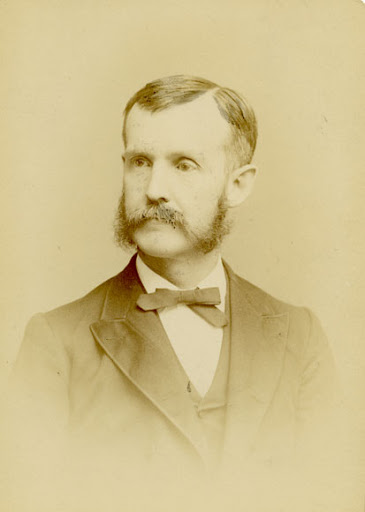
J.R. Miller

18. Living by the Day

Psalm 19:7-11
J.R. Miller January, 18 2022 Audio
0 Comments
"Silent Times, A Book to Help in Reading the Bible into Life!" by J.R. Miller, 1886

You will find it helpful to READ the texts--as you LISTEN to the audios.

The TEXTS for the entire 24 chapter book, can be bound here:
https://gracegems.org/C/Miller_silent_times.htm

The AUDIOS for the entire 24 chapter book can be bound here:
https://www.gracegems.org/SermonAudio.htm?sa_ac...


J.R. Miller's "Silent Times, A Book to Help in Reading the Bible into Life" has been professionally read, and graciously supplied by Christopher Glyn. Please visit his YouTube channel at: https://www.youtube.com/c/ChristopherGlyn where you can view a wide variety of Christopher's devotional readings with read-a-long texts online.

Sermon Transcript

Auto-generated transcript • May contain errors

100%
CHAPTER XVIII LIVING BY THE DAY Time was, is past. You cannot
it recall. Time is, you have. Employ the
portion small. Time future is not, and may never
be. Time present is the only time
for thee. As your days, so shall your strength
be." Deuteronomy 33, 25. It is life's largeness which
most discourages earnest and conscientious people. As they
think deeply of life's meaning and responsibility, they are
apt to be overwhelmed by the thought of its vastness. It has
manifold almost infinite relations toward God and toward man. Each
of these relations has its binding duties. Every individual life
must be lived amid countless antagonisms and in the face of
countless perils. Battles must be fought, trials
encountered, and sorrows endured. Every life has a divine mission
to fulfill, a plan of God to work out. Also, the brief earthly
course is but the beginning of an endless existence whose immortal
destinies hinge upon fidelity in the present life. Looked at
in this way, as a whole, there's something almost appalling in
the thought of our responsibility in living. Many a person who
thinks of life in this aspect, and sees it in its wholeness,
has not the courage to hope for success and victory, but stands
staggered, well near paralyzed, on the threshold. I cannot possibly
meet all these responsibilities and perform all these duties.
I can but fail in the end if I try. Why should I try at all,
only to suffer the shame and pain of defeat? Despair comes
to many a heart when either duty or sorrow or danger is looked
at in the aggregate. But this is not the way we should
view life. It has not come to us all in
one piece. We do not get it even in years,
but only in days, day by day. We look on before us, and as
we count up the long years with their duties, struggles, and
trials, and the bulk is like a mountain which no mortal can
carry. But we really never have more
than one day's battles to fight, or one day's work to do, Or one
day's burdens to bear, Or one day's sorrow to endure, In any
one day. I think not of to-morrow, Its
trial or its task, But still with childlike spirit For present
mercies ask. With each returning morning I
cast old things away, Life's journey lies before me, My prayer
is for today. It is wonderful how the Bible
gives emphasis to this way of viewing life. When for 40 years
God fed his chosen people with bread from heaven, he never gave
them, except on the morning before the Sabbath, more than one day's
portion at a time. He positively forbade them gathering
more than would suffice for the day. And if they should violate
his command, what they gathered above the daily portion would
become corrupt. Thus early, God began to teach
his people to live only by the day. and trust him for tomorrow. At the close of the forty years,
the promise given to one of the tribes was, As your days, so
shall your strength be. Strength was not promised in
advance, enough for all of life, or even for a year, or for a
month, But the promise was that for each day, when it came with
its own needs, duties, battles, and griefs, enough strength would
be given. As the burden increased, more
strength would be imparted. As the night grew darker, the
lamps would shine out more brightly. The important thought here is
that strength is not emptied into our hearts in bulk, a supply
for years to come, but is kept in reserve and given day by day,
just as the day's needs require. Oh, ask not how shall I bear
the burden of tomorrow. sufficient for today its care,
its evil, and its sorrow. God imparteth by the day strength
sufficient for the day. When Christ came, He gave still
further emphasis to the same method of living. He said, So
do not worry about tomorrow, for tomorrow will bring its own
worries. Today's trouble is enough for
today. Matthew 6, 34. He would have
us fence off the days by themselves, and never look over the fence
to think about tomorrow's cares. The thought is that each day
is, in a certain sense, a complete life by itself. It has its own
duties, its own trials, its own burdens, and its own needs. It
has enough to fill heart and hands for the one full day. We cannot live its life well
and use any of its strength outside of itself. The very best we can
do for any day, for the perfecting of our life as a whole, is to
live the one day well. We should put all our thought
and energy and skill into the duty of each day, wasting no
strength, either in grieving over yesterday's failures or
in anxiety about tomorrow's responsibilities. Bear the burden of the present.
Let the morrow bear its own. If the morning sky be pleasant,
why the coming night bemoan? Grief nor pain nor any sorrow
rends your heart to Him unknown. He today and He tomorrow, grace
sufficient, gives His own. Charles Kingsley says, Do today's
duty, fight today's temptation, And do not weaken and distract
yourself by looking forward to things which you cannot see and
could not understand if you saw them. Our Lord also, in the form
of prayer which He gave His disciples, taught this lesson of living
by the day. There He has told us to ask for
bread for one day only. Give us this day our daily bread. Here again he teaches us that
we have to do only with the present day. We do not need tomorrow's
bread now. When we need it, it will be soon
enough to ask God for it and get it. It is the manna lesson
over again. God is caring for us and we are
to trust him for the supply of all our needs as they press upon
us. We are to trust him, content
to have only enough in hand for the day. Why should you fill
today with sorrow About tomorrow, my heart? One watches all with
care most true. Doubt not that he will give you,
too, your part. If we can but learn to live thus
by the day, without anxiety about the future, the burden will not
be so crushing. We have nothing to do with life
in the aggregate, that great bulk of duties, responsibilities,
struggles and trials that belong to a course of years. We really
have nothing to do even with the nearest of the days before
us, tomorrow. Our sole business is with the
one little day now passing. And its burdens will not crush
us. We can easily carry them until the sun goes down. We can
get along for one short day. It is the projection of life
into the long future which dismays and appalls us. So this lesson
makes life easy and simple. One day at a time. Every heart
that aches Knows only too well how long that can seem. But it's
never today which the spirit breaks, It's the darkened future
without a gleam. One day at a time. A burden too
great to be borne for two Can be borne for one. Who knows what
will enter tomorrow's gate? While yet we are speaking, all
may be done, one day at a time, but a single day, whatever its
load, whatever its length. And there's a bit of precious
scripture to say that according to each shall be our strength. But is there to be no forethought?
The best forethought for to-morrow is to-day's duty well done. It is so in school. One lesson
well learned leads up to the next, and makes it easy. And
each day's lessons, mastered through the years, give scholarship
in the end. It is so in all life. If today
is well lived, if all its responsibilities are promptly and wisely met,
tomorrow will come bright with new hopes. God gives guidance
also by the day. One who carries a lantern at
night does not see the whole pathway home. The lantern lights
only a single step in advance. But when that step is taken,
another is thereby lighted, and so on until the end of the journey
is reached. It is thus that God lights our
way. He does not show us the whole
of it when we set out. He makes one step plain, And
then, when we take that, another, and then another. If you have
yesterday your duty done, And thereby cleared firm footing
for to-day, Whatever clouds may dark tomorrow's sun, You shall
not miss your solitary way.
J.R. Miller
About J.R. Miller
James Russell Miller (20 March 1840 — 2 July 1912) was a popular Christian author, Editorial Superintendent of the Presbyterian Board of Publication, and pastor of several churches in Pennsylvania and Illinois.
Broadcaster:

Comments

0 / 2000 characters
Comments are moderated before appearing.

Be the first to comment!

Joshua

Joshua

Shall we play a game? Ask me about articles, sermons, or theology from our library. I can also help you navigate the site.