Bootstrap
J.R. Miller

21. The Home Conversation

2 Timothy 3:16-17; Psalm 19:7-11
J.R. Miller January, 18 2022 Audio
0 Comments
"Silent Times, A Book to Help in Reading the Bible into Life!" by J.R. Miller, 1886

You will find it helpful to READ the texts--as you LISTEN to the audios.

The TEXTS for the entire 24 chapter book, can be bound here:
https://gracegems.org/C/Miller_silent_times.htm

The AUDIOS for the entire 24 chapter book can be bound here:
https://www.gracegems.org/SermonAudio.htm?sa_ac...


J.R. Miller's "Silent Times, A Book to Help in Reading the Bible into Life" has been professionally read, and graciously supplied by Christopher Glyn. Please visit his YouTube channel at: https://www.youtube.com/c/ChristopherGlyn where you can view a wide variety of Christopher's devotional readings with read-a-long texts online.

Sermon Transcript

Auto-generated transcript • May contain errors

100%
CHAPTER XXI THE HOME CONVERSATION
Few things are more important in a home than its conversation.
Yet there are few things to which less deliberate thought is given.
We take great pains to have our house well furnished. We select
our carpets and pictures with the utmost care. We send our
children to school that they may become intelligent. We strive
to bring into our homes the best conditions of happiness. But
how often is the speech of the household left untrained and
undisciplined? The good we might do in our homes
with our tongues, if we would use them to the limit of their
capacity of cheer and helpfulness, is simply impossible to state.
That in most homes the best possible results from the gift of speech
are not attained is very evident. Why should so much power for
blessing be wasted? Especially why should we ever
pervert these gifts, and use our tongues to do evil, to give
pain, or scatter seeds of bitterness? It is a sad thing when a child
is born dumb, But it were better far to be born dumb, and never
to have the gift of speech, than, having that gift, to employ it
in speaking only sharp, unloving, or angry words. While in all
places, and at all times, our words should be well chosen,
and should be full of the pure and gentle Spirit of Christ,
There are many reasons why the home conversation, preeminently,
should be loving. Home is the place for warmth
and tenderness. It should be made the brightest
and sweetest spot on earth to those who dwell within its walls. We should all carry there our
very best moods, tempers, and dispositions. Especially by our
speech should we seek to contribute to the enrichment of the home
life, helping to make it elevating and refining, and in every way
ennobling in its influence. Home should inspire every tongue
to speak its most loving words. Yet there is in many families
a great dearth of kind speech. In some cases there is no conversation
at all worthy of the name. There are no affectionate greetings
in the morning, or hearty good-nights at parting when the evening closes. The meals are eaten in silence.
There are no bright fireside chats over the events and incidents
of the day. A stranger might mistake the
home for a deaf and dumb institution, or for a hotel where strangers
were together only for a passing night. In other cases it would
be even better if silence did reign, for there are words of
miserable strife and shameful quarrelling heard from day to
day. Husband and wife who vowed at
the marriage altar to cherish each other until death, keep
up an incessant petty strife of words. Parents, who are commanded
in the Holy Word not to provoke their children to wrath lest
they be discouraged, but to bring them up in the nurture of the
Lord, scarcely ever speak to them gently and in tenderness. They seem to imagine that they
are not governing their children unless they are perpetually scolding
them. they fly into a rage against them at the smallest irritation. They issue their commands to
them in words and tones which would better suit the despot
of a petty savage tribe than the head of a Christian household. It is not strange that, under
such nurture, the children, instead of dwelling together in unity
with loving speech, only wrangle and quarrel, speaking only bitter
words in their interactions with each other. There are many homes
of just this type it is idle to deny. That prayer is offered
morning and evening in some of these families only makes the
truth the sadder. For it is mockery for the members
of a household to rise together from their knees after morning
devotion only to begin another day of strife and bitterness. Nothing in the home life needs
to be more carefully watched and more diligently cultivated
than the conversation. It should be imbued with the
spirit of love. No bitter word should ever be
spoken. The talk of husband and wife
in their companionship together should always be tender. Anger
in word or even in tone should never be allowed. Chiding and
fault-finding should never be permitted to mar the sacredness
of their speech. The warmth and tenderness of
their hearts should flow out in every word that they utter
to each other. As parents, too, in their interaction
with their children, they should never speak but in words of Christlike
gentleness. It is a fatal mistake to suppose
that children's lives can grow up into beauty in an atmosphere
of strife. Harsh, angry words are to their
sensitive souls what frosts are to the delicate flowers. To bring
them up in the nurture of the Lord is to bring them up as Christ
Himself would do, and surely that would be with infinite tenderness. It is impossible to estimate
the blessed influence of loving speech day after day and month
after month. It is like the falling of warm
spring rain and sunshine on the garden. Beauty and sweetness
of character will issue from such a home. But home conversation
needs more than love to give its best influence. It ought
to be enriched by thought. The Saviour's warning against
idle words should be remembered. Every wise-hearted parent will
seek to train his household to converse on subjects which will
yield instruction or tend towards spiritual and moral refinement. The table affords an excellent
opportunity for this kind of education. Three times each day
the family gathers there. It is a place for cheerfulness.
Simply on the grounds of health, meals should never be eaten in
silence. Bright, cheerful conversation
is an excellent source, and a prime aid to digestion. If it prolongs
the meal, and thus appears to take too much time out of the
busy day, it will, in the end, add to the years by increased
healthfulness and lengthened life. In any case, however, something
is due to spiritual and moral refinement, and still more is
due to the culture of one's home life. The table should be made
the centre of the social life of the household. There all should
appear at their best and brightest. Gloom should be banished. The
conversation should be sprightly and sparkling. It should consist
of something besides dull and threadbare commonplaces. The
idle gossip of the street is not a worthy theme for such hallowed
moments. The conversation of the table
should be of a kind to interest all the members of the family.
Hence it should vary to suit the age and intelligence of those
who form the family circle. the events and occurrences of
each day may with profit be spoken of and discussed. And now that
the daily newspaper contains so full and faithful a summary
of the world's doings and happenings, this is easy. Each one may mention
the event which has specially impressed him in reading or in
discussion without. Bits of refined humour should
always be welcome. and all wearisome recital and
dull uninteresting discussion should be avoided. Table talk
may be enriched, and at the same time the education of all the
members of the family may be advanced by bringing out at least
one new fact at each meal, to be added to the common fund of
knowledge. Suppose there are two or three
children at the table, varying in their ages from five to twelve. Let the father or the mother
have some particular subject to introduce during the meal,
which will be both interesting and profitable to the younger
members of the family. It may be some historical incident,
or some scientific fact, or an event in the life of some distinguished
man. The subject should not be above
the capacity of the younger people for whose special benefit it
is introduced, nor should the conversation be over-weighted
by attempting too much at one time. One single fact, clearly
presented, and firmly impressed so as to be remembered, is far
better than whole chapters of information poured out in a confused
jargon on minds that to-morrow cannot recall any part of it.
A little thought will show the rich benefits of a system like
this, if faithfully followed through a series of years. If
at one fact is presented at every meal, there'll be a thousand
things taught to the children in a year. If the subjects are
wisely chosen, the fund of knowledge communicated in this way will
be of no inconsiderable value. A whole system of education lies
in this suggestion. For, besides the communication
of important knowledge, the habit of mental activity is stimulated. Interest is awakened in lines
of study and research which may afterwards be followed out. Tastes
are improved, while the effect upon the family life is elevating
and refining. It may be objected that such
a system of table-talk could not be conducted without much
thought, study, and preparation on the part of parents. But if
the habit once were formed, and the plan properly introduced,
it would be found comparatively easy for parents of ordinary
intelligence to maintain it. Books are now prepared in great
numbers, giving important facts in small compass. Then there
are encyclopedias and dictionaries of various kinds. The newspapers
contain every week paragraphs and articles of great value in
such a course. A wise use of scissors and paste
will keep scrapbooks well filled with materials that can readily
be made available. It will be necessary to think
and plan for such a system, to choose the topics in advance,
and to become familiar with the facts. This work might be shared
by both parents, and thus be easy for both. That it will cost
time and thought and labor ought not to be an objection. For is
it not worth almost any cost to secure the benefits and advantages
which would result from such a system of home instruction? These are only hints of the almost
infinite possibilities of good which lie in the home conversation. that so little is realized in
most cases when so much is possible is one of the saddest things
about our current life. It may be that these suggestions
can stimulate in some families, at least, an earnest search after
something better than they have yet found in their desultory
and aimless conversational habits. Surely there should be no home
in which, amid all the light talk that flies from busy tongues,
time is not found every day in which to say at least one word
that should be instructive, suggestive, elevating, or at least, in some
way, helpful.
J.R. Miller
About J.R. Miller
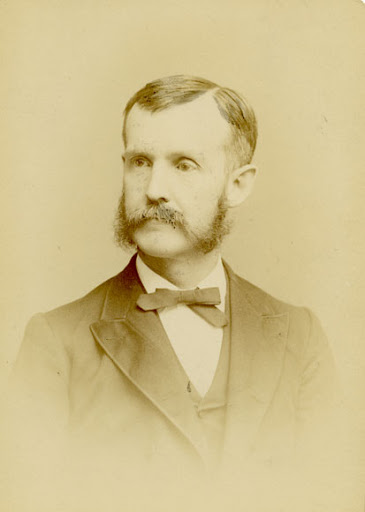
James Russell Miller (20 March 1840 — 2 July 1912) was a popular Christian author, Editorial Superintendent of the Presbyterian Board of Publication, and pastor of several churches in Pennsylvania and Illinois.
Broadcaster:

Comments

0 / 2000 characters
Comments are moderated before appearing.

Be the first to comment!

Joshua

Joshua

Shall we play a game? Ask me about articles, sermons, or theology from our library. I can also help you navigate the site.