Bootstrap
J.R. Miller

22. A Bible Portrait of Christian Motherhood

Psalm 19:7-11
J.R. Miller January, 18 2022 Audio
0 Comments
"Silent Times, A Book to Help in Reading the Bible into Life!" by J.R. Miller, 1886

You will find it helpful to READ the texts--as you LISTEN to the audios.

The TEXTS for the entire 24 chapter book, can be bound here:
https://gracegems.org/C/Miller_silent_times.htm

The AUDIOS for the entire 24 chapter book can be bound here:
https://www.gracegems.org/SermonAudio.htm?sa_ac...


J.R. Miller's "Silent Times, A Book to Help in Reading the Bible into Life" has been professionally read, and graciously supplied by Christopher Glyn. Please visit his YouTube channel at: https://www.youtube.com/c/ChristopherGlyn where you can view a wide variety of Christopher's devotional readings with read-a-long texts online.

Sermon Transcript

Auto-generated transcript • May contain errors

100%
Chapter 22 A Bible Portrait of
Christian Motherhood When Elkanah and all his household went up
to make the annual sacrifice and his vow offering to the Lord,
Hannah did not go and explained to her husband, after the child
is weaned, I'll take him to appear in the Lord's presence and to
stay there permanently. Her husband Elkanah replied,
do what you think is best and stay here until you have weaned
him. May the Lord confirm your word. So Hannah stayed there and nursed
her son until she weaned him. 1 Samuel 1 21-23 It is the picture of a mother
of the olden times that is before us. The story of Hannah is invested
with rare interest. It is one of those narratives
whose charm is their unadorned simplicity. Though living so
long since, when the world was so young, this mother stands
yet in the radiant spirit of her life, in the clearness of
her faith, in the devotion of her motherhood, as a model for
Christian mothers in these newest ages. There are some things that
grow old and out of date, but motherhood does not. It is ever
the same in its duties, its responsibilities, its sacred privileges, and its
possibilities of influence. The old picture is new and fresh,
therefore, in every age. to every true-hearted mother
who looks upon it. For one thing, Hannah, as a mother,
was enthusiastic. She was not one of those women
who think children undesirable encumbrances. She did not consider
herself in her earlier married years particularly fortunate
in being free from the cares and responsibilities of motherhood.
She believed that children were blessings from the Lord. that
motherhood was the highest honor possible to a woman, and she
sought reverently and very earnestly from God the privilege of pressing
a little child to her bosom and calling it her own. This line
in the ancient picture we must not overlook in these days, when
children are not always regarded as blessings from the Lord, nor
even always welcomed. For another thing, when Hannah's
child came, she considered it a part of her pious duty to nurture
and care for it. Instead, therefore, of going
up to Shiloh to attend all the great feasts as she had done
before, she stayed at home for some time, to give personal attention
to the little one that God had given her, and that was still
too young to be taken with safety and comfort on such long journeys. No doubt she supposed that she
was worshipping God just as acceptably in doing this, but as if she'd
gone up to all the great religious meetings. And who will say that
she was not right? A mother's first obligations
are to her children. She can have no holier or more
sacred duties than those which relate to them. No amount of
public religious service will atone for neglect of these. She may run to social and missionary
meetings, and abound in all kinds of charitable activities, and
may do very much good among the poor, carrying blessings to many
other homes, and bring a blessing to other people's children through
the Sunday school or mission school. But if she fails, meanwhile,
to care for her own children, she can scarcely be commended
as a faithful Christian mother. She has overlooked her first
and most sacred duties, while she gives her hand and heart
to those that are but secondary to her. Hannah's way evidently
was the true one. A mother had better be missed
in her church and at public meetings than be missed in her own household. Some things must be crowded out
of every earnest life, But the last thing to be crowded out
of a mother's life should be the faithful and loving care
of her children. The preacher may urge that everyone
should do something in the general work of the church, and may appeal
for teachers for the Sunday school. But the mother herself must decide
whether the master wants her to take up any religious work
outside her own home. For the work there she surely
is responsible. For that outside, she's not responsible
until her responsibility to her children is well done. and she
has time and strength for new duties. Another thing about Hannah
was that she looked after her own baby. She did the nursing
herself. She did not hire any kind of
babysitter and then commit her tender child to her care that
she might herself have a free foot for parties and visits and
operas and social and religious duties. She was old-fashioned
enough to prefer to nurse her own child. She does not seem
to have felt it any great personal deprivation to be kept rather
closely at home for a year or two on that account. She even
appears to have thought it a high honor and a distinguished privilege
to be a mother and to do with her own hands a mother's duties. And when we think what this child
that she nursed became in after years, what the outcome was of
all her pains, self-denials and toils, it certainly looks as
if Hannah was right. It is not likely that she ever
regretted that she had missed a few parties and other social
privileges in order to nurse and care for Samuel in his tender
infancy, when she saw her son in the prime and splendor of
his power and usefulness. If anything even half so good
comes ordinarily out of faithful mothering, there are certainly
few occupations open to women even in these advanced nineteenth-century
days, which will yield such satisfactory results in the end as the wise
and true bringing up of children. Many women are sighing for distinction
in the professions, or as authors, or artists, or singers, but,
after all, is there any distinction so noble, so honorable, so worthy,
and so enduring, as that which a true mother wins when she's
brought up a son who takes his place in the ranks of godly men. Could Mary, the mother of Jesus,
have found any mission in any century greater than that of
nursing and caring for the holy child that was laid in her arms?
Or, if that example be too high, could the mothers of Moses, of
Samuel, of Augustine, of Washington, have done more for the world
if they had devoted themselves to art, or poetry, or music,
or any kind of profession? Perhaps Hannah was right. And
if so, the old-fashioned motherhood is better than the new, and the
mother herself is her own child's best nurse. A hired woman may
be very skillful, but surely she cannot be the best one to
mould the soul of the child and awaken and draw out its latent
powers and affections. The mother may, by employing
such a substitute, be left free to pursue the fashionable round
of dining and dressing, of amusement and social engagements. But meanwhile,
what is becoming of the tender, immortal life at home in the
nursery, thus left practically motherless, to be nurtured and
trained by a hireling stranger? And besides, what becomes of
the holy mission of motherhood, which the birth of every child
lays upon her who gave it life? A recent writer referring to
this subject asks, Is there any malpractice of office like unto
this? Our women crowd the churches
to draw the inspiration from religion for their daily duties,
and then prove recreant to the first of all fidelities. the
most solemn of all responsibilities. We hear fashionable young mothers
boast that they're not tied down to their nurseries, but are free
to meander in the old mirthful life as though there were no
shame to the soul of womanhood therein. Such a boast is one
of the saddest confessions a mother could make. the great need of
this age as mothers who will live with their own children,
and throw over their tender lives all the mighty power of their
own rich, warm, loving natures. If we can have a generation of
Hannas, we shall then have a generation of Samuels, growing up under
their wise, devoted nurture. There is one other feature in
this all-time mother that should not be overlooked. She nursed
her child for the Lord. From the very first she looked
upon him as God's child, not hers, and considered herself
as only God's nurse, whose duty it was to bring up the child
for a holy life and service. It is easy to see what a dignity
and splendor this gave to the whole toilsome round of motherly
tasks and duties which the successive days brought to her hand. This
was God's child that she was nursing, and she was bringing
him up for the Lord's service in two worlds. Nothing ever seemed
drudgery. No duty to her little one was
hard or distasteful, with this thought ever glowing in her heart. Need any woman have loftier or
more powerful inspiration for toil and self-forgetfulness than
this? Is there any mother who may not
have the same inspiration as she goes through her round of
commonplace nursery tasks? Was Samuel God's child in any
higher sense when Hannah was nursing him than are the little
ones that lie in the arms of thousands of mothers today? In
every mother's ears, when a baby is laid in her bosom, there is
spoken by the breath of the Lord the Holy Whisper, if she but
had ears to hear the divine voice, take this child and nurse it
for me. God wants Christian mothers to
bring up their children for pure and noble lives and for holy
missions. Every mother is, by the very
lot of motherhood when it falls upon her, consecrated to the
sacred service of nursing, molding, and training an infant life for
God. Hannah understood this and found
her task full of glory. But how many, even among Christian
mothers, fail to understand it, and unsustained by a consciousness
of the dignity and blessedness of their high calling, look upon
its duties and self-denials as painful tasks, a round of toilsome,
wearisome drudgery. It will be well worthwhile for
every mother to sit down quietly beside Hannah and try to learn
her secret. It will change the humblest nursery
into a holy sanctuary and transform the commonest, lowliest duties
of motherhood into services as splendid as those the radiant
angels perform before the father's face.
J.R. Miller
About J.R. Miller
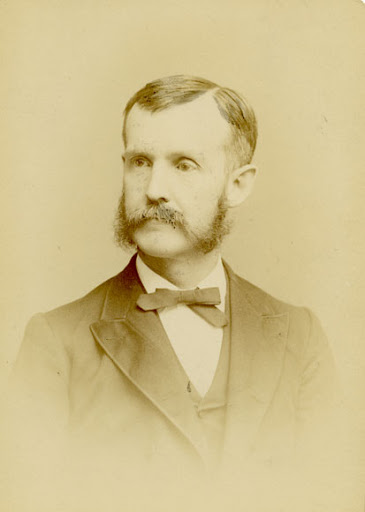
James Russell Miller (20 March 1840 — 2 July 1912) was a popular Christian author, Editorial Superintendent of the Presbyterian Board of Publication, and pastor of several churches in Pennsylvania and Illinois.
Broadcaster:

Comments

0 / 2000 characters
Comments are moderated before appearing.

Be the first to comment!

Joshua

Joshua

Shall we play a game? Ask me about articles, sermons, or theology from our library. I can also help you navigate the site.