Bootstrap
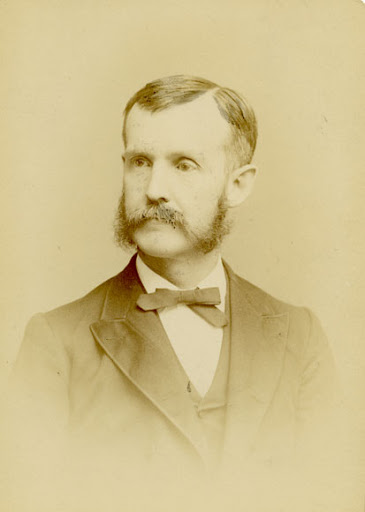
J.R. Miller

04. Copying but a Fragment

2 Timothy 3:16; Psalm 19:7-11
J.R. Miller January, 18 2022 Audio
0 Comments
"Silent Times, A Book to Help in Reading the Bible into Life!" by J.R. Miller, 1886

You will find it helpful to READ the texts--as you LISTEN to the audios.

The TEXTS for the entire 24 chapter book, can be bound here:
https://gracegems.org/C/Miller_silent_times.htm

The AUDIOS for the entire 24 chapter book can be bound here:
https://www.gracegems.org/SermonAudio.htm?sa_ac...


J.R. Miller's "Silent Times, A Book to Help in Reading the Bible into Life" has been professionally read, and graciously supplied by Christopher Glyn. Please visit his YouTube channel at: https://www.youtube.com/c/ChristopherGlyn where you can view a wide variety of Christopher's devotional readings with read-a-long texts online.

Sermon Transcript

Auto-generated transcript • May contain errors

100%
Chapter 4 COPYING BUT A FRAGMENT
Nothing is more striking to a close observer of human life than the
almost infinite variety of character which exists among those who
profess to be Christians. No two are alike. Even those
who are alike revered for their saintliness, who alike seem to
wear the image of their Lord, whose lives are alike attractive
in their beauty, show the widest diversity in individual traits
and in the cast and mould of their character. Yet all are
sitting before the same model, all are striving after the same
ideal, all are imitators of the same blessed life. There is but
one standard of true Christian character, likeness to Christ. It is into His image that we
are to be transformed, and it is toward His holy beauty that
we are always to strive. We are to live as He lived. We
are to copy His features into our lives. Wherever in all the
world true disciples of Christ are found, they are all trying
to reproduce the likeness of their master in themselves. Whoever
claims to live in him must walk as Jesus did. 1 John 2.6 Why
is it, then, that there's so much variety of character and
disposition among those who aim to follow the same example? Why
are not all just alike? If a thousand artists were to
paint the picture of the same person, their pictures, if faithful,
would show the same features. But a thousand people seek to
copy into their own lives the likeness of Christ. And the result
is a thousand different representations of that likeness, no two the
same. Why is there this strange diversity
in Christian lives when all have before them the same original
type? One reason for this is that God
does not bestow upon all His children the same gifts, or the
same natural qualities. The Creator loves variety, as
all His works attest. No two animals are precisely
alike in every feature. No two plants are exactly similar
in their structure. No two human lives in all the
race are identical in all respects. And Divine Grace does not recast
all dispositions in the same mold. When gold is minted, each
coin of a kind is stamped by the same dye, and a million coins
of the same value will all be precisely alike. But life is
not minted as gold is. Grace does not transform Peter
into a John, nor Paul into a Barnabas, nor Luther into a Calvin. Regeneration
does not make busy, bustling Martha quiet and reposeful like
her sister Mary. Nor does grace change Mary's
calm, restful spirit into the anxious and distracted activity
of Martha. It makes them both friends of
Jesus, devoted to him in love and loyalty and service, but
it leaves each of them herself in all her individual characteristics. It makes them both like Christ
in holiness, in consecration, in heavenly longings, but it
does not touch those features which give to each one her personal
identity. You drop twenty different seeds
in the same garden bed and they spring up into twenty different
kinds of plants, from the delicate minonette to the flaunting sunflower. No skill of gardening can make
all the plants alike. The fuchsia will always be a
fuchsia. The rose will always be a rose.
The geranium will always be a geranium. In the same soil, with the same
sunshine and rain, and the same culture, each grows up after
its kind. In like manner, divine grace
does not make all Christian women either Marys, or Marthas, or
Dorcas, or Priscilla, nor all Christian men either Johns, or
Peters, or Barnabas, or Aquilas. Each believer grows up into his
own peculiar self. Regeneration neither adds nor
takes from our natural gifts, and since there is infinite variety
in the endowments and qualities originally bestowed upon different
individuals, there is the same variety in the company of Christ's
followers. Another reason for this diversity
among Christians is because even the best and holiest saints realize
but little of the image of Christ, and have only one little fraction
and fragment of His likeness in their souls. In one of his
followers there is some one feature of Christ's blessed life which
appears, in another there's another feature, in a third still a different
feature. One seeks to copy Christ's gentleness,
another his patience, another his sympathy, another his meekness. A thousand believers may all,
in a certain sense, be like Christ, and yet no two of them have,
or consciously strive after, just the same features of Christ
in their souls. The reason is that the character
of Christ is so great, so majestic, so glorious, that it is impossible
to copy all of it into any one little human life. And again,
each human character is so imperfect and limited that it cannot reach
out in all directions after the boundless and infinite character
of Christ. It is as if a great company of
artists were sent to paint each one a picture of the Alps. Each
chooses his own point of observation and selects the particular feature
of the Alps he desires to paint. They all bring back their pictures,
but, alas, no two of them are alike. One canvas presents a
sweet valley scene with its quiet stream and bright flowers. Another
has for its central figure a wild crag among the clouds. Another
a snow-crowned peak, glittering in the sunshine. Another a rushing
torrent, leaping over the rocks. Another a mighty glacier. Yet
none of the artists can say that the pictures of the others are
not true. They're probably as true as his
own. But there's not one of them who has painted the whole Alps.
Each one has put upon his canvas only the little part of the magnificent
scene which he saw. So it is with those who are striving
to reproduce the likeness of Christ in their own lives. A
thousand Christians, earnest and sincere, begin to follow
him and to imitate him. One seizes upon one feature which
to him seems to be the central beauty of Christ's character.
Another Christian, looking upon the same glorious person with
different eyes or from the viewpoint of different experiences, sees
another feature altogether and calls it Christ. Each one strives
to copy the particular elements of Christly character which he
sees. No two reproductions are precisely the same. No two have
the same conception of Christ's likeness. Yet no one can say
that the others are not true Christians, that they have not
also seen the Lord, and have not faithfully copied into their
own lives what they saw of Him. The truth is the Alps as a whole
are too varied, too vast for any one artist to take into his
perspective and fully paint upon his canvas. The best he can do
is to portray some one or two features, the features his eye
can see from where he stands. Just in the same way, Christ
is too great in His infinite perfections, in the majestic
sweep of His character, in the many-sidedness of His beauty,
for any one of His finite followers to copy the whole of His image
into his own little life. The most that any of us can do
is to get into our own soul a few little fragments of the wonderful
likeness of our Lord. Thus it is that there is such
variety in the individual dispositions of Christians while all seek
to follow the same copy, and while all may be equally faithful
in their noble endeavors. The practical lesson from this
fact is that no one follower of Christ should condemn another
because the other's spiritual life is not of the same stamp
as his own. Let not Martha, busied with her
much-serving, running everywhere to missionary meetings or to
visit the sick and the poor, find fault with Mary in her quiet
devotion, peaceful, thoughtful, gentle, loving, because she does
not abound in the same activities. Nor let Mary in her turn judge
Martha and call her piety superficial. Let us honour it rather as the
copy of another and different feature of the infinite loveliness
of Christ. There is the greatest diversity
in the modes of service rendered by different followers of Christ.
All may be alike, loyal and acceptable, and yet no two be precisely the
same. Each follows Christ along his
own path and does his work in his own way. Whatever we may
say about the sweetness and beauty of Mary, as we see her sitting
in such peaceful attitude at the feet of her Lord, We must
not forget that it was not Martha's service which Jesus reproved,
but her anxious, fretful worry. Her service was important, was
even essential to our Lord's own comfort, and to her true
and hospitable entertainment of Him in her home. The Marys
are very lovely. and every woman should have the
merry spirit of peace, and should sit much, merry-like, at the
master's feet to hear his words, in order to be fitted for the
best service. But Martha's work must be done
too. No true Christian woman will
neglect her duties of service in her privileges of devotion.
Let each of these good women follow the Master closely, see
as much as possible of the infinite loveliness of His character,
and copy into her own life all she can see. Yet let her not
imagine that she has seen or copied all of Christ, but let
her look at every other Christian woman's life with reverence,
as bearing another little fragment of the same divine likeness. Let every Christian do earnestly
and well the particular work which he is fitted and called
to do, but let him not imagine that he is doing the only kind
of work which God wants to have done in this world. Rather, let
him look upon every faithful servant who does a different
work as doing a part equally important and equally acceptable
to the master. The bird praises God by singing. The flower pays its tribute in
fragrant incense as its censer swings in the breeze. The tree
shakes down fruits from its bending boughs. The stars pour out their
silver beams to gladden the earth. The clouds give their blessing
in gentle rain. Yet all, with equal faithfulness,
fulfill their mission. Just so, among Christ's redeemed
servants, one serves by incessant toil in the home, caring for
a large family, another by silent example as a sufferer, patient
and uncomplaining, another with the pen, sending forth words
that inspire, help, cheer, and bless, another by the living
voice, whose eloquence moves men and starts impulses to better,
grander, holy living. Another, by the ministry of sweet
song. Another, by sitting in quiet
peace at Jesus' feet, drinking in His Spirit, and then shining
as a gentle and silent light, or pouring out the fragrance
of love like a lowly and unconscious flower. Yet each and all of these
may be serving Christ acceptably, hearing at the close of each
day the whispered word, Well done, my good and faithful servant.
J.R. Miller
About J.R. Miller
James Russell Miller (20 March 1840 — 2 July 1912) was a popular Christian author, Editorial Superintendent of the Presbyterian Board of Publication, and pastor of several churches in Pennsylvania and Illinois.
Broadcaster:

Comments

0 / 2000 characters
Comments are moderated before appearing.

Be the first to comment!

Joshua

Joshua

Shall we play a game? Ask me about articles, sermons, or theology from our library. I can also help you navigate the site.