Bootstrap
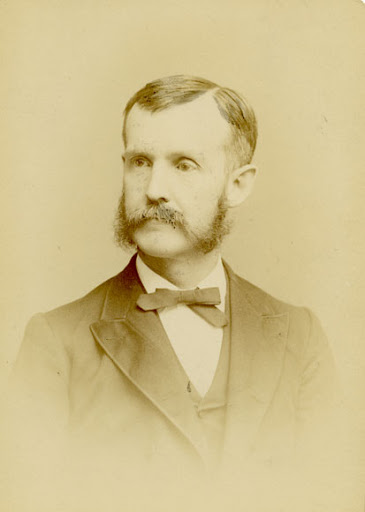
J.R. Miller

24. Dealing with Our Sins and Errors

2 Timothy 3:16-17; Psalm 19:7-11
J.R. Miller January, 18 2022 Audio
0 Comments
"Silent Times, A Book to Help in Reading the Bible into Life!" by J.R. Miller, 1886
You will find it helpful to READ the texts--as you LISTEN to the audios.

The TEXTS for the entire 24 chapter book, can be bound here:
https://gracegems.org/C/Miller_silent_times.htm

The AUDIOS for the entire 24 chapter book can be bound here:
https://www.gracegems.org/SermonAudio.htm?sa_ac...


J.R. Miller's "Silent Times, A Book to Help in Reading the Bible into Life" has been professionally read, and graciously supplied by Christopher Glyn. Please visit his YouTube channel at: https://www.youtube.com/c/ChristopherGlyn where you can view a wide variety of Christopher's devotional readings with read-a-long texts online.

Sermon Transcript

Auto-generated transcript • May contain errors

100%
Chapter 24 DEALING WITH OUR SINS
It takes courage to look our own sins in the face and to deal
with them as we would counsel another to do if the sins were
his. It was one of the old psalm writers
who said, I thought on my ways. It's not likely that even he
found it an easy thing to do. It is usually very much harder
to think on our own ways than on other people's. Most of us
do quite enough of the latter. We keep a magnifying glass to
inspect our neighbor's life, a high-power microscope to hunt
for specks in his character. But too often we forget to use
our glasses on ourselves, or, if we do, we reverse them, and
thus minify every spot and imperfection. The Pharisee in the temple confessed
a great many sins, but they were his neighbor's sins and the publican's
sins. He made no confession of sin
for himself. Most of us are in the same danger.
We like to think of our ways when they are good. It flatters
our vanity to be able to approve and commend ourselves. But when
our conduct has not been particularly satisfactory, we like to turn
our back upon it and soulless ourselves, meanwhile, by thinking
on our neighbors' sinful ways. And here, strange to say, it
seems to please many of us best to find faults and blemishes
in their lives and characters which we point out to others.
One of the last lessons of Christian charity, which most of us learn,
to rejoice with others in their attainments of Christian character.
and to be pained and grieved when we find blemishes and stains
in their lives. But it is a brave thing for a
man to say, I will think upon my own ways, and to say it when
he knows his ways have not been holy and right but wrong. It
is an excellent thing for us to turn our lenses in upon our
own hearts in order to see if our own ways are right. This
should always be our first duty. We should take heed to ourselves
before we try to look after the mistakes of others and point
them out. There's only one person in all the world for whose ways
any of us are really personally responsible, for whose life anyone
will be required to give account, and that is one's self. Other people's wrong ways may
pain us and offend our sense of right, and it is our duty
to do all we can in the Spirit of Christ to lead our neighbors
into better ways. But after all, when we stand
before God's judgment seat, the only one person in the whole
world for whom any of us will have to be judged will be one's
self. Certainly it is most important,
then, that we give earnest heed to ourselves and our own ways
while in this world. Retrospect has a strange power. As we look back upon our ways,
they do not appear to us now as they did when we were actually
passing through them. Things that seemed hard and painful
at the time, now, as we look back upon them, appear lovely
and radiant. There are experiences in most
lives which at the time seem to be sore calamities, but in
the end prove rich blessings. Then there is another class,
things which appeared attractive and enjoyable at the time, which
afterward look repulsive and abhorrent. This is true of all
wrong actions, all deeds wrought under the influence of the evil
passions. At the time they give a thrill
of pleasure. But when the emotion has passed
and the wrongdoer turns and looks back at what he has done, it
seems horrible in his eyes. The retrospect fills him with
disgust and loathing. To look at one's ways when we've
been wrong is not by any means a pleasant thing to do. Such
looks, if honest, will produce deep sorrow. It is well that
it should be so, that regret should grow into sore pain, until
it has burned into our hearts the lessons which we ought to
learn from our follies and sins. But pain and regret should not
be all. The Scriptures speak of the sorrow
of the world, which works death. This is a false sorrow for sin,
which passes away like the morning cloud or the early dew, leaving
no impression, working no improvement, or the sorrow which ends only
in despair. Godly sorrow is the pain for
sins which leads to repentance. The prodigal in the far-off land
thought on his ways, and in his shame hid his face in his hands
and wept bitter tears over the ruin he had made of his life.
But he did more than weep. He arose and went straight home
to his father. No matter how badly one has failed,
The noble thing to do is not to sit down and waste more years
in grieving over the lost years. Weeping in the darkness of despair
amends nothing. The only true wise thing to do
is to arise and save what remains. Because ten hours out of the
allotted twelve are lost, shall we sit down and waste the other
two, in unavailing grief over the ten? Had we better not use
the two that are left, in doing what we can to retrieve the consequences
of our past folly?" We have lost the battle," said Napoleon, but,
drawing his watch from his pocket, it is only two o'clock. And we
have time to fight and win another." And the son went down on his
victorious army. No young person especially should
ever lead to despair, for in youth there is yet too wide a
margin to blot with the confession of defeat and failure. Even old
age, with a whole lifetime behind it wasted, is not hopeless in
a world on which Christ's cross stood. A few moments of sincere
penitence and true repentance are enough in which to creep
to Christ's feet and find pardon. Divine mercy is so great that
no one need perish, though his sins be as scarlet. Even though
the life is so utterly wrecked, its nobility so destroyed, its
powers so wasted that on earth it can never be anything but
a shattered ruin, it may still become radiant and beautiful
in the blessed immortality which Christian faith reveals. Life
does not end at the grave. Its path sweeps on into the eternal
years. And there'll be time enough then
to retrieve all the wasted past. Someone speaks of heaven as the
place where God makes over souls. Even lives wasted and marred
on earth, turning to Christ only in life's old age, may find mercy,
and in heaven's long blessed day be made over into grace and
beauty. But no wise and careful seaman
will run his ship twice on the same rock or reef. Even a child
will not be likely to put his hand into the flame a second
time. We should learn by experience in living, and should not repeat
the same folly, mistake, or sin over and over. Every error we
make should be marked and never made again. Thus, we should use
our very failures as stepping-stones by which to climb to a higher,
better life. Nothing comes of thinking on
our ways if we do not turn from whatever we find to be wrong.
Godly sorrow works repentance. A few tears amount to nothing
if one goes on tomorrow in the same old paths. Someone says,
the true science of blundering consists in never making the
same mistake twice. This rule applies to sins as
well as to mistakes. The true science of living is
never to commit the same sin a second time. But even this
falls short. We're not saved by negatives. We can never go to heaven by
merely turning from wrong ways. True repentance leads to Christ
and into His ways. It is the man who forsakes his
wicked ways and his wicked thoughts and returns to the Lord who is
abundantly pardoned. When there's this kind of repentance,
it does not matter how black the sin is. Even Christ does
not undo the wrong past and make that which has been done as though
it had never been done. It never can be made true that
the thief did not once steal. But grace may so make over a
marred life that where the blemish was, some special beauty may
appear. The oyster mends its shell with
a pearl. Where the ugly wound was, there
comes with the healing not a scar, but a pearl. The same is true
in human souls when divine grace heals the wounds of sins. Sins that we truly repent of
become pearls in the character. It is the experience of all who
grow into Christ-like nobleness that many of the golden lines
of their later lives have been wrought out through their regrets
and the repentings of wrongdoings. Someone says, the besetting sin
may become the guardian angel. Yes, this sin that has sent me
weary-hearted to bed and desperate in heart to morning work can
be conquered. I do not say annihilated, but
better than that, conquered, captured, and transfigured into
a friend, so that I at last shall say my temptation has become
my strength, for to the very fight with it I owe my growth
in grace. An old man sat thinking one day
about his past, recounting to himself his mistakes and follies
and regretting them, wishing he'd never committed them, and
if there was some way of undoing them. He took his pen, and on
a sheet of paper made a list of twenty things in his life
of which he was ashamed. and was about to seize an imaginary
sponge and rub them all out of his biography. He was thinking
how much more beautiful his character would have been at the close
of his years if these wrong things had never been committed. But
to his amazement, as he thought of wiping out these evil things,
he found that if there were any golden threads of beauty running
through his life, which had been woven into the web by the regrets
he had felt over his wrongdoings, and that, if he should wipe out
these wrong acts, he would at the same time destroy the fairest
lines of nobleness and worth in his present character. He
learned in his meditation that out of his sins and follies,
he had gotten all his best things, the painful regrets, the wise
lessons, the true repentings, and the new life which followed. There's a deep truth in this
record of experience. It is that even our mistakes
and sins, if we leave them and find our way to Christ, will
be transmuted into growth and the upbuilding of character.
We can so deal with the past that we can make it give up to
us virtue and wisdom. We can make wrong the seed of
right and righteousness. We can transmute error into wisdom. We can make sorrow bloom into
a thousand forms like fragrant flowers. If we truly repent of
our sins, then, where they grew with their thorns and poisoned
seeds, there will be in our lives trees and plants of beauty, with
sweet flowers and rich fruits. Our very slips and falls, if
we rise again and in lowly penitence and sincere return creep to the
feet of Christ, become new births to our souls. His tender grace
heals the wounds our sins have made and restores our lives to
strength and beauty. But it must never be forgotten
that Christ alone can thus save us from our sins and transmute
their evil into good. This wondrous alchemy exists
only in the Saviour's cross and blood. Left to itself, sin works
death, but brought to Christ, the poison is destroyed. And
death is changed to life. In every life there are mistakes
and sins. The holiest men do not live perfectly. The strongest are liable to fall
in sudden and unexpected temptation. The wisest will commit grave
errors and follies at some time. We should know well in such cases
how to deal with our sins. They must not be simply excused
and left lying in the path behind us while we hurry on, nor must
they bring despair to our hearts as we sorrow over them. They
must be sincerely and heartily repented of, and forgiveness
for them sought at the feet of Him we have offended and grieved. Then we must rise from disaster
and defeat, stronger, purer, and nobler through Christ, victorious
over our own sins, and a conqueror over our own defeat.
J.R. Miller
About J.R. Miller
James Russell Miller (20 March 1840 — 2 July 1912) was a popular Christian author, Editorial Superintendent of the Presbyterian Board of Publication, and pastor of several churches in Pennsylvania and Illinois.
Broadcaster:

Comments

0 / 2000 characters
Comments are moderated before appearing.

Be the first to comment!

Joshua

Joshua

Shall we play a game? Ask me about articles, sermons, or theology from our library. I can also help you navigate the site.