Bootstrap
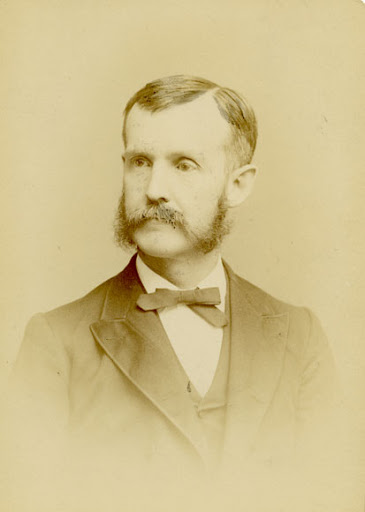
J.R. Miller

In Perfect Peace!

Isaiah 26:3; John 14:27
J.R. Miller January, 18 2022 Audio
0 Comments
You will find it helpful to READ the texts--as you LISTEN to the audios.

The TEXTS for this superb article can be bound here:
https://gracegems.org/Miller/in_perfect_peace.htm

J.R. Miller's "In Perfect Peace!" has been professionally read, and graciously supplied by Christopher Glyn. Please visit his YouTube channel at: https://www.youtube.com/c/ChristopherGlyn where you can view a wide variety of Christopher's devotional readings with read-a-long texts online.

Sermon Transcript

Auto-generated transcript • May contain errors

100%
Peace, that is what we all want. That too is what Christ offers
us in his gospel. Among his farewell words we find
this bequest, peace I leave with you, my peace I give unto you,
John 14 27. After his return from the grave,
on three occasions he gave the same blessing to his disciples.
Peace be unto you. John chapter 20 verse 19, 21
and 26. Peace is thus part of the blessed
gospel and an essential element of true and full Christian life.
Christ desires us to have peace. If we do not have it, we've missed
part of the blessing of being a Christian, part of our inheritance
as children of God. It is not a peculiar privilege,
which is only for a favored few. It is for everyone who believes
in Christ and will accept it. Yet do all Christians possess
peace? Have all taken into their heart
and life this blessing from the Master? How many of us really
have Christ's peace today? How many of us lived in the peace
of Christ the past week? How many of us are kept in perfect
peace through all the circumstances and experiences of our changing
lives? What is wrong Is the gospel really
not what it claims to be? Are the blessings it promises
only lovely dreams which can never be fulfilled, which cannot
be fulfilled? Is grace not able to help us
to attain that peace? The Bible is full of great words
like rest, joy, peace, love, hope. Are these words only illusions? Or can these beautiful things
be attained? Do Christians, as a rule, expect
to get these divine qualities into their lives in this present
world? We can say with perfect confidence
that these words paint no impossible attainments. For example, peace. It is not a mocking vision which
ever flees away from one who tries to clasp it and take it
into one's heart. It is not like the sunbeam which
the child tries to gather up off the floor in its chubby hand,
but which only pours through its fingers and slips from its
clasp. Nor is it merely a heavenly attainment
which we must wait till we die to get. It is a state into which
every believer in Christ may enter here on earth, and in which
he may dwell in all life's changes. It is well worth our while to
think what is meant by peace, as the word is used in the scriptures. and then ask how we may obtain
this blessing the word runs through all the bible we find it far
back in the old testament in the benediction used by the priests
the Lord lift up his countenance upon thee and give thee peace
number 626 here peace is offered as the gift of God a blessing
dropped from heaven into trusting hearts In Job, the words of Eliphaz
the Temanite, we have the excitation, Acquaint now thyself with him,
and be at peace. Job 22.21 According to this word,
the way to find peace is by getting acquainted with God. It is because
we do not know him that we are not at rest. In the Psalms are
many words about peace. For example this, the mountains
shall bring peace to the people, Psalm 72, 3. The mountains take
the storms, which beat in fury about their tall peaks. Down
at the mountains' base, however, the sweet valleys lie in quietness
meanwhile, sheltered and in peace. So it is that Christ met the
storms which exhausted their fury upon him, while those who
trust in him nestle in security in the shelter of his love. We
have a beautiful illustration of this in two of the Psalms
which stand side by side. The 22nd psalm is called the
Psalm of the Cross. It tells the story of the crucifixion. Its first words certainly were
used by the Redeemer when he was passing through his dying
agony. The psalm is full of the experiences of Calvary. The storms
are sweeping fiercely about the mountain's brow. Then how quietly
and beautifully the twenty-third psalm nestles in the shadow of
the twenty-second, like a quiet veil at the mountain's foot.
It shows us a picture of perfect peace. We see the shepherd leading
his flock beside the still waters and making them lie down in green
pastures. Even in the deep valley there
is no gloom, for the shepherd walks with his sheep and quiets
all their fears. This sweet shepherd psalm could
come nowhere but after the psalm of the cross. The prophets also
tell us much about peace. in Isaiah especially the word
occurs again and again the Messiah is foretold as the prince of
peace Isaiah 9.6 farther on we come again under the shadow of
the cross and read that the chastisement of our peace was upon him Isaiah
53.5 the security and eternity of our peace are pledged in a
wonderful promise which says The mountains shall depart, and
the hills be removed, but my kindness shall not depart from
thee, neither shall the covenant of my peace be removed, saith
the Lord that hath mercy on thee. Isaiah 54 10 But it is in the
New Testament that the wonderful fullness of the meaning of peace
is disclosed. on every page the word shines
the angels sang at the Redeemer's birth on earth peace Luke 2.14
at the close of his ministry Jesus said to his friends in
me ye might have peace John 16.33 over 80 times the word appears
in the New Testament half of these being written by Paul the
homeless persecuted apostle The Picture of Peace An artist sought to portray peace. He put on his canvas a sea swept
by storms, filled with wrecks, a sea of terror and danger. In
the midst of the sea he painted a great rock, and high up in
the rock a cleft. with herbage and flowers, in
the midst of which he showed a dove sitting quietly on her
nest. These same elements, the rock,
the cleft, the soul's hiding place, we have in the hymn, Rock
of Ages, cleft for me, let me hide myself in thee. For Jesus said, These things
I have spoken unto you, that in me ye might have peace. In
the world ye shall have tribulation, but be of good cheer, I have
overcome the world. John 16.33 The Christian's peace is not
found in a place where there is no trouble. It is something
which enters the heart and makes it independent of all outside
conditions. In the ruins of many old English
castles, a well is found down deep among the foundations. Thus,
water was provided for use in the castle in time of siege.
The enemy might cut off the streams which ordinarily supplied the
people in the castle with water. They might shut the gates so
that no one could go out to bring in water from any stream or spring
outside. But the defenders within the
walls cared not for any siege, while the well in the foundation
gave its copious supply of pure fresh water. So it is with the
Christian in whose heart the peace of God dwells. He is not
dependent upon any outside conditions and circumstances, for he carries
in himself the secret of his joy, hope, peace and strength. It is very evident that we cannot
hope to live in this world without troubles. No such life is possible. Nor can we hope for a life without
sorrow. To love is to weep sometime in
the journey. Religion does not shelter us
from grief, but the peace promised is an experience which neither
trial nor sorrow can disturb. It is something that changes
sorrow into joy. A tourist writes of finding a
freshwater spring beside the sea as sweet as any that ever
gushed from amid the rocks on the mountainside. He took his
cup and drank of the water that bubbled up in the sand. Soon
the tide rolled in again, pouring its brackish flood over the little
spring and burying it out of sight for hours. But when again
the bitter surf flowed out, the spring was found sweet as ever. So it is with the peace of God
in the believer's heart. It dwells deep. In the day of
joy it sings and is glad. Then sorrow comes and the salt
floods pour over the life, covering it. But when the sorrow is past,
the heart's peace remains sweet and joyous as ever. A party of
tourists were travelling along a country road. As their carriage
approached a cottage near the drive, they heard singing. The
voice that sang was sweet and rich and of wondrous power. The
members of the party were entranced. They stopped to listen as the
notes of the song rose higher and clearer. Presently, a young
girl came out of the cottage with a basket on her arm. Please
tell us, who's singing so sweetly in your cottage?" one of the
party asked of her. It's my Uncle Tim, sir, answered
the girl. He's just had a bad turn with
his leg, and he's singing away the pain. Is he young? Can he get over the trouble?
asked the young man. Oh, he's getting a bit old now,
sir," replied the girl. The doctors say he'll never be
any better in this world. But he's so good, it'll make
you cry to see him suffering his terrible pain, and then hear
him singing the more sweetly, the more he's suffering. That
is what the peace of God will help us to do. It gives us songs
in the night. It puts joy into our hearts when
we are in the midst of sorest trouble. It turns our thorns
into roses. The life of Christian faith is
not freed from pain, but out of the pain comes rich blessing. The crown of thorns must be worn
by the master's friends who follow him faithfully. But the thorns
burst into sweet flowers as the light of heaven's morning touches
them. God has not promised skies always
blue, flower-strewn pathways all our lives through. God has
not promised sun without rain, joy without sorrow, peace without
pain. But God has promised strength
for the day, rest for the labor, light for the way, grace for
the trials, help from above, unfailing kindness, undying love. The secret of peace. Thou wilt keep him in perfect
peace whose mind is stayed on thee. Isaiah 26 3. There is music in these words
of the old Hebrew prophet. Why can we not get the music
into our lives? Why do we not all have this perfect
peace in our hearts? Why do we lose the quiet and
the calm of our spirits so easily in the world's distractions and
troubles? Let's see if we cannot learn
the secret of peace which lies in the Prophet's words. The secret
is in two parts. One is that the keeping is of
God, not us. We cannot keep ourselves in peace. There is a majestic power in
self-control and we should seek to have that power. Not to be
master of our own life is to be pitifully weak. We should
learn to control our feelings, our emotions, our appetites,
our passions, our desires, our temper, our speech. He that rules
his own spirit is the greatest of conquerors, greater than he
that captures a city. Proverbs 16.32 No doubt perfect
self-mastery has much to do with keeping the heart quiet in danger,
calm and undisturbed in sudden trial. But this is not the real
secret of peace. Our self-control reaches but
a little way. One may have it and remain unmoved
in the face of the most disturbing experiences and yet not have
the peace of God. How shall I quiet my heart? How
shall I keep it still? How shall I hush its tremulous
start At tidings of good or ill? How shall I gather and hold Contentment
and peace and rest, Wrapping their sweetness fold on fold
Over my troubled breast? The Spirit of God is still and
gentle and mild and sweet, what time His omnipotent, glorious
will guides the worlds at His feet, controlling all lesser
things. This turbulent heart of mine
He keeps as under His folded wings, in a peace serene, divine. That is the secret of peace which
the old prophet's words reveal. God keeps us. Thou wilt keep
him in perfect peace. The Bible teaches this truth
of the divine keeping as the source of all true security and
confidence. There is no other keeping that
really avails. It is only when God is our refuge
and strength that we can say, therefore will not we fear though
the earth be removed and though the mountains be carried into
the midst of the sea. Psalm 46, 2. There is a story
of a saintly old man who desired that the only epitaph on his
grave should be the word kept. This word contained the whole
history of his life. In one of the Psalms, the lesson
is written out for us in full. The Lord is thy keeper. He that
keeps thee will not slumber. The Lord shall preserve thee
from all evil. He shall preserve thy soul. Psalm
121, 3, 5, and 7. It is God who keeps us. It is
God alone who can keep us in perfect peace. Only God is eternal, the same
yesterday and today and forever, and only when we rest in God
and trust in Him can we have a peace which cannot be disturbed. Trust ye in the Lord for ever,
for in the Lord Jehovah is everlasting strength. Isaiah 26, 4. When
we are held in the clasp of his love we are safe from any disturbance
for he is omnipotent. Our refuge is secure forever
for he is from everlasting to everlasting. We have the same
teaching concerning the divine keeping in a passage in one of
the epistles of Paul in which he also gives us the secret of
peace. the peace of God shall guard
your hearts and your thoughts in Christ Jesus Philippians chapter
4 verse 7 the figure is military men sleep in quiet confidence
in their tents in the darkest nights in time of war in the
presence of the enemy because sentinels wake and watch through
all the darkness God's own peace keeps guard over our hearts and
thoughts, so that nothing shall ever disturb us or alarm us.
Nothing ever can disturb God. He looks without fear upon the
wildest storms. He is never dismayed by things
which seem to us calamitous. His infinite and eternal peace
will guard us and keep us in the shelter of its own blessed
quiet and calm. This is part of the great secret
of peace which we're trying to learn. Thou wilt keep him in
perfect peace. It is God's omnipotence that
keeps us. It is God's Spirit who broods
over the turbulent floods of life and brings order out of
chaos. It is God's Son who stands on
the vessel amid the wild storms and compels them to become quiet
and still at His feet. It is God's grace that enters
into the believer's heart and abides there as a well of living
water within, springing up into everlasting life. We cannot command
our own spirit and compel it to be at rest when sorrow or
peril is on every side. God alone can keep us in peace. Nothing that is not infinite
and eternal can be a safe and secure hiding place for an immortal
life. This is part of the great secret
of peace which we're trying to learn. Thou will keep him in
perfect peace. It is God's omnipotence that
keeps us. It is God's Spirit who broods
over the turbulent floods of life and brings order out of
chaos. It is God's Son who stands on
the vessel amid the wild storms and compels them to become quiet
and still at His feet. It is God's grace that enters
into the believer's heart and abides there as a well of living
water within. springing up into everlasting
life. We cannot command our own spirit
and compel it to be at rest when sorrow or peril is on every side. God alone can keep us in peace. Nothing that is not infinite
and eternal can be a safe and secure hiding place for an immortal
life. The mind of peace. But there is another part of
the secret of peace which is also important for us to learn.
Thou wilt keep him in perfect peace whose mind is stayed on
thee. Isaiah 26 3. There is something
for us to do. There is no doubt that God has
power to keep us in perfect peace. He is omnipotent and His strength
is a defense and a shelter to all who hide in Him. But even
God will never compel us into submission. We must yield ourselves
to Him. Even omnipotence will not gather
us into its invincible shelter by force. We must be willing
in the day of God's power, Psalm 110, 3. All we need to do is
to stay our minds upon God. That means to trust Him, to rest
in Him, to nestle in His love. We remember where God was found
the night of the Lord's last supper with his disciples. John
was leaning on Jesus's breast. He crept into that holy shelter
and reposed upon the infinite love which beat in that bosom. John simply trusted and was kept
in holy peace. A beautiful story is told of
Rudyard Kipling during a serious illness. The nurse was sitting
at his bedside on one of the anxious nights when the sick
man's condition was most critical. She was watching him intently
and noticed that his lips began to move. She bent over him thinking
he wished to say something to her. She heard him whisper very
softly the words of the old familiar prayer of childhood. Now I lay
me down to sleep. The nurse, realizing that her
patient was not needing her services and that he was praying, said
in apology for having intruded upon him, I beg your pardon,
Mr. Kipling, I thought you wanted
something. I do, faintly replied the sick man. I want my Heavenly
Father. He only can care for me now. In his great weakness there was
nothing that human help could do. And he turned to God, seeking
the blessing and the care which none but God can give. That is
what we need to do in every time of danger, of trial, of sorrow,
when the gentlest human love can do nothing, creep into our
Heavenly Father's bosom, saying, Now I lay me down to sleep. That is the way to peace. Earth has no shelter in which
it can be found, but in God the feeblest may find it. Let not
your heart be troubled, said the Master. Believe in God, believe
also in me. John 14, 1. This is the one great
lesson of Christian faith. Believe. Into thine hands I commit
my spirit, Psalm 31 5, Luke 23 46. Thou wilt keep him in perfect
peace, whose mind is stayed on thee, stayed on thee. These words tell the whole story.
They picture a child nestling in the mother's arms, letting
its whole little weight down upon her. It has no fear, and
nothing disturbs it, for the mother's love is all around it.
Stayed means reposing. It suggests also the thought
of continuousness of trust and abiding. Too much of our trust
is broken, intermittent, this hour singing, the next hour in
tears dismayed. If we would have unbroken peace,
we must have unbroken trust. Our minds stayed upon God all
the while. The God of Peace. God is strong, omnipotent. We need not fear that his power
to keep us will ever fail. There never is a moment when
he's not able to sustain us. When the question is asked, from
whence shall my help come? The answer is, my help cometh
from Jehovah who made heaven and earth. Psalm 121 verse one. He who made all the world can
surely bear up one little human life and protect it from harm.
God is wise. We are not wise enough to direct
the affairs of our own lives, even if we had the power to shape
things to our minds. Our outlook is limited, cut off
by life's close horizons. We do not know what the final
outcome of this or that choice would be. Oftentimes the think
we Oftentimes the things we think
we need and think would bring us happiness and good would only
work us harm in the end. Things we dread and shrink from,
supposing they would bring us hurt and evil, are oftentimes
the bearers to us of rich blessings. We are not wise enough to choose
our own circumstances or to guide our own affairs. Only God can
do this for us. He not only has strength, he
also has knowledge of us and of our need and of our danger.
He knows all about us. Our condition, our sufferings,
our trials, our griefs, the little things that vex us, as well as
the great things that would crush us. The following lines give
the great lesson of faith. the little sharp fixations, and
the briars that catch and fret, why not take all to the Helper,
who never has failed you yet? Tell Him about the heartache,
and tell Him the longing too. Tell Him the baffled purpose,
when you scarce know what to do. Then, leaving all your weakness
with the one divinely strong, forget that you bore the burden,
and carry away the song. God is love. Strength alone would
not be enough. Strength is not always gentle.
A tyrant may be strong, but we would not care to entrust our
life to him. We crave affection, tenderness. God is love. His gentleness is
infinite. The hands into which we are asked
to commit our spirit are wounded hands, wounded in saving us. The heart over which we are asked
to nestle is the heart that was broken on the cross in love for
us. We need not fear to entrust our
cares and our lives to such a being. God is eternal. Human love is
very sweet. A mother's sheltering arms are
a wondrously gentle place for a child to nestle in. A loving
marriage is a haven of joy to the couple within its encircling
embrace. All that human love can do, all
that money can do, all that skill can do, avails nothing. Human
arms may clasp us very firmly, yet their clasp cannot keep us
from the power of disease or from the cold hand of death.
But the love and strength of God are everlasting. Nothing
can ever separate us from Him. Romans 8, 38 and 39. An Old Testament promise reads,
The eternal God is thy refuge, and underneath are the everlasting
arms. If we are stayed upon the eternal
God, nothing ever can disturb us, for nothing can disturb Him
on whom we are reposing. If we are held in the clasp of
the everlasting arms, we need not fear that we shall ever be
separated from the enfolding. These arms are always underneath
us. No matter how low we sink, in
weakness, in faintness, in pain, in sorrow, we can never sink
below these everlasting arms. We can never drop out of their
clasp. The everlasting arms will be
underneath the feeblest, most imperiled child of God. Sorrow
is very deep, but still and forever, in the greatest grief, these
arms of love are underneath the sufferer. And when death comes,
and every earthly support is gone from beneath us, when every
human arm unclasps and every face of love fades from before
our eyes, and we sink away into what seems darkness and the shadow
of death, we shall only sink into the everlasting arms beneath
us. The word are, too, must not be
overlooked. Underneath are the everlasting
arms. This is one of the wonderful
present tenses of the Bible. To every trusting believer, to
each one, in all the ages, to you who today are reading these
words and trying to learn this lesson, as well as to those to
whom the words were first spoken, God says, underneath you are
now, this moment, every moment, the everlasting arms. The rest of peace. whose mind is stayed on thee. That is the final secret of peace.
The reason so many of us do not find the blessing and are disturbed
so often by such trifles of care or sorrow or loss is because
our minds are not stayed on God. We are distressed by every little
disappointment, by every failure in plan or expectation of ours,
by every hardness in our circumstances or our condition, by every most
trivial loss of money, as if money were life's sole dependence,
as if man lived by bread only. A trifling illness frightens
us. The most trivial things in our
common life disturb us and send us off into pitiable fits of
anxiety, spoiling our days for us, blotting the blue of the
sky and putting out the stars. The trouble is we're not trusting
God. Our minds are not stayed on Him. That is what we need to learn.
To rest in the Lord. To be silent in Him. To commit our way to Him. Paul puts it very clearly in
a remarkable passage in which he tells us how to find peace. In nothing be anxious, Philippians
4.6. That is the first part of the
lesson. Nothing means really nothing. There are to be no exceptions.
No matter what comes, in nothing be anxious. Do not try to make
out that your case is peculiar and that you may rightly be anxious
even if others have no reason for worry. In nothing be anxious. What then shall we do with the
things that would naturally make us anxious? For there are such
things in every life. Here is the answer. In everything
by prayer and supplication with thanksgiving, let your requests
be made known unto God. Philippians 4, 6. Instead of
carrying your trials and troubles yourself and worrying about them,
take the frets and vexations to God. not forgetting to mingle
praise and thanksgiving with your requests. Get them completely
out of your hands into God's hands and leave them there. Yes, leave it with Him. The lilies
all do, and they grow. They grow in the rain, and they
grow in the dew. Yes, they grow. They grow in
the darkness, all hid in the night. They grow in the sunshine,
revealed by the light. Still, they grow. Yes, leave
it with him. It is more dear to his heart,
you well know, than the lilies that bloom or the flowers that
start neath the snow. What you need, if you ask it
in prayer, you can leave it with him, for you are his care. You, you know. The path of peace. The staying of the mind upon
God suggests that we are to let ourselves down upon his strength
into the arms of his love and to rest there without fear, without
question. But this does not mean that we
should drop our tasks and duties out of our hands. Always, in
every exhortation to trust God, obedience is implied and presupposed. Seek ye first the kingdom of
God and His righteousness, said the Master. When we do this,
he continued, we need never be anxious, for then all our needs
shall be supplied. If our peace is disturbed by
some sudden trial or sorrow or by overwhelming trouble, God
very gently helps back into the nest those who have been thrown
out of it by any such experience. One day, President Lincoln was
walking beside a hedgerow and came upon a young bird fluttering
in the grass. It had fallen out of its nest
in the bushes and could not get back again. The great, gentle-hearted
man stopped in his walk, picked up the little thing, sought along
the hedge until he found the nest, and put the bird back again
into its place. That is what Christ is seeking
to do every day with lives that have been jostled out of the
nest of peace. With hands infinitely gentle,
he would ever help us back to the peace we have lost a while. Love is the law of spiritual
life. We do not begin to live in any
worthy sense until we have learned to love and to serve others.
Selfishness is always a hinderer of peace. Peace is the music
which the life makes when it is in perfect tune, and this
can only be when all its chords are attuned to the keynote of
love. Peace gives such blessedness
to the heart and is such an adornment to the life that no one ever
should be willing to miss it. Whatever other graces God has
bestowed upon us, we should not be content without peace, the
most beautiful of them all. However beautiful a character
may be, if it has not peace, it lacks the highest charm of
spiritual adornment. And the master is willing to
bestow upon the lowliest of us the divinest of all graces. Peace, his own blessed peace. you
J.R. Miller
About J.R. Miller
James Russell Miller (20 March 1840 — 2 July 1912) was a popular Christian author, Editorial Superintendent of the Presbyterian Board of Publication, and pastor of several churches in Pennsylvania and Illinois.
Broadcaster:

Comments

0 / 2000 characters
Comments are moderated before appearing.

Be the first to comment!

Joshua

Joshua

Shall we play a game? Ask me about articles, sermons, or theology from our library. I can also help you navigate the site.